Category Archives: Uncategorized

Macro or Micro?

A picture is worth 1,000 words…or so they say.  And then I’ve been thinking about words and the meanings and shades of meaning they carry with them.

Today’s #sdawpphotovoices prompt was macro.  I love using my macro lens to zoom in on tiny details, those that are almost too small to see without the lens.  It’s definitely challenging to use the macro lens.  You must get close…nearly touching the object to be photographed.  And then you have to get the focal length just right, bringing the object into focus.  And…you have to hold very still to get a crisp, detailed shot.

I always think about macro photography as small and detailed.  You move in close, discovering the smallest of details.
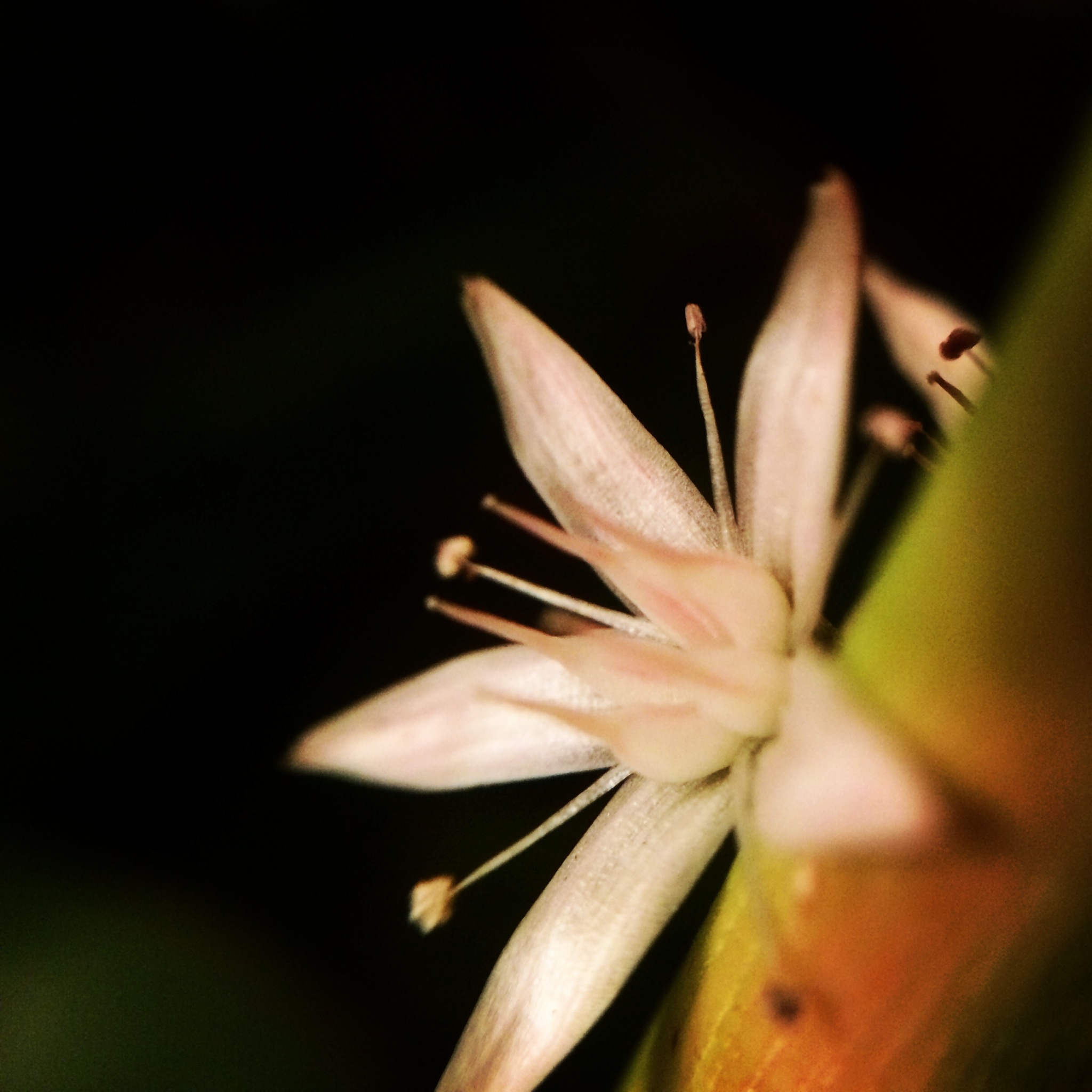
succulent flower

But as I was thinking about the word macro, I realized that macro means large…it’s micro that means small!  I get that the macro lens makes what is small look large by magnifying it…but should it actually be called the micro lens?  Isn’t it kind of like a microscope?

Using the internet, I went looking for some information about where the macro in macro photography came from.  I learned a lot and it’s always interesting to find out that unexpected word meanings come from some historical reference…in this case using macro to distinguish it from photo-micrographs.

I also learned that macro comes from the size of the actual photograph in reference to the size of the object photographed.  And that relationship of the object to the completed photographs is one of the things I like best about using my macro lens.

I really love the way the macro lens changes the use of space in the photograph.  Negative space appears as I angle the lens to lean in close and focus.
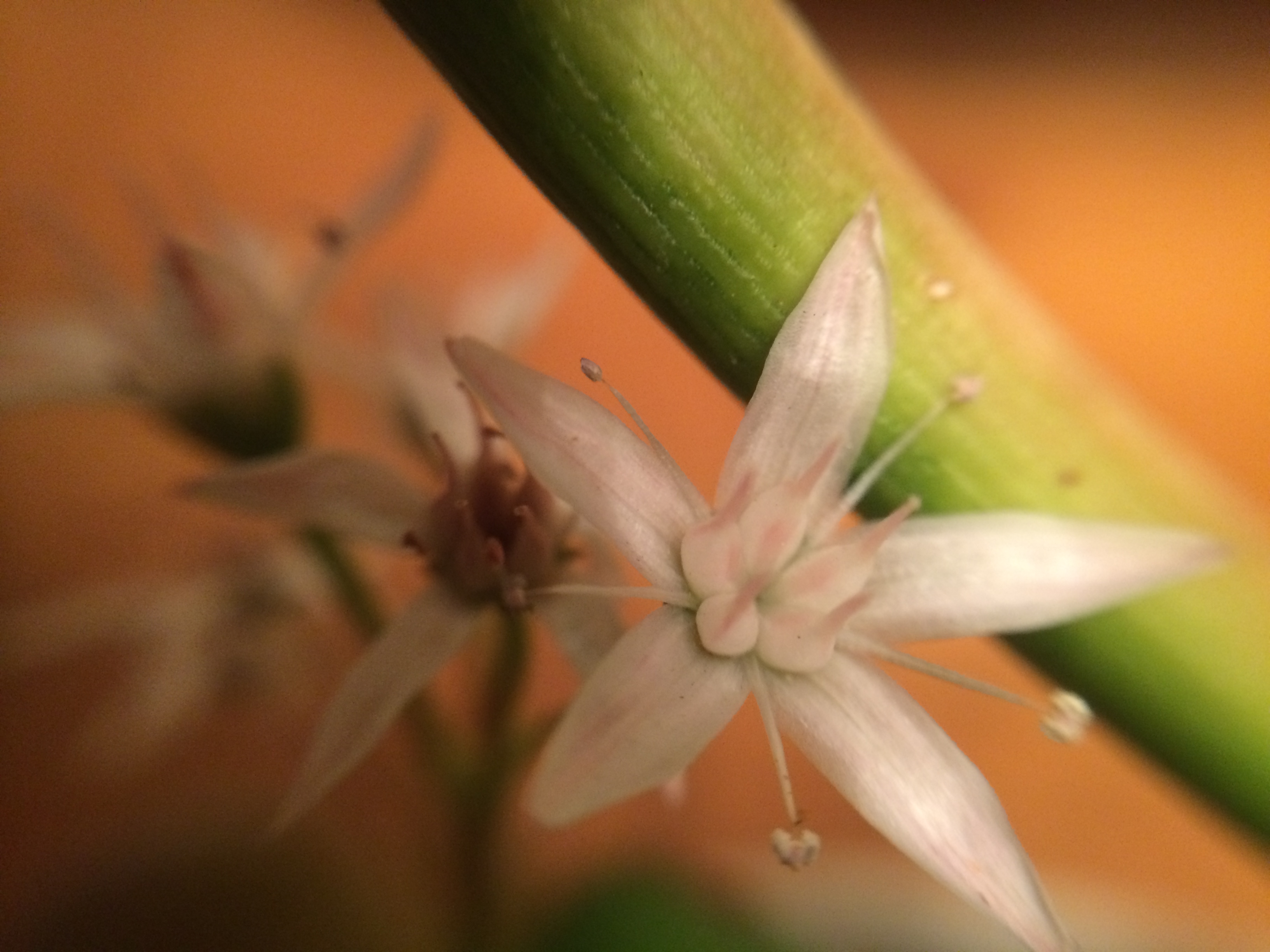
macro flowers

I love the way these blossoms line up behind each other with the one in the foreground in focus.  I think you would be surprised to know that these flowers are barely noticeable in the pot where they live.
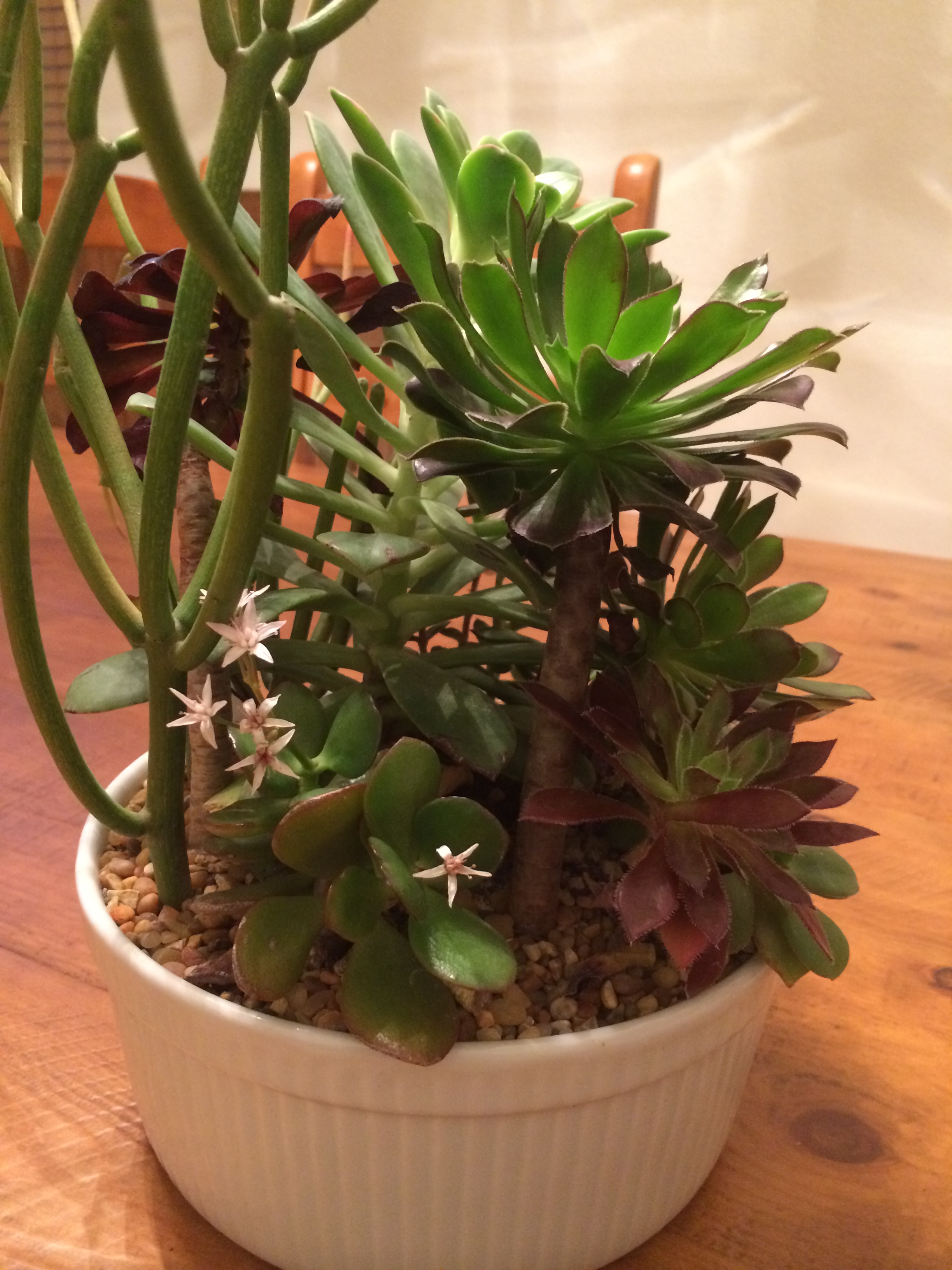
succulent in a pot

The macro lens even seems to have an impact on the color my eye is able to see.  At first glance these blossoms look white.  But with the macro lens, the pigments are enhanced and the pinkness emerges.
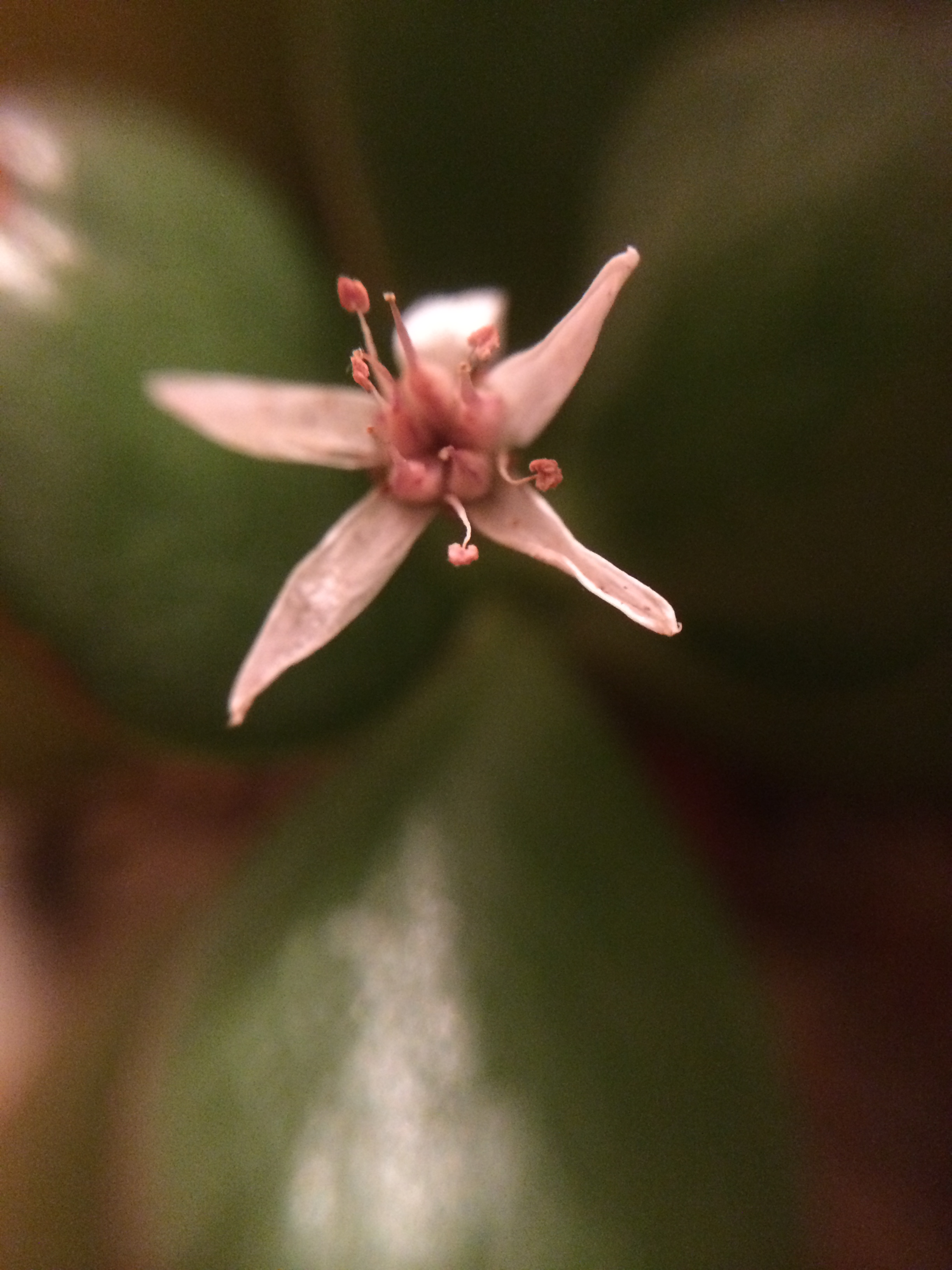
pink flower-macro

There is a magical quality to these macro photos that takes tiny and makes it big.  So, while macro means very large in scale, scope, or capability in a general definition, my understanding of macro as it relates to photography is more nuanced.  Yes–there is a largeness in scale involved…but also a sense of the small, and that is where the magic lives.

So, a picture may be worth 1,000 words…and the words create new meanings for the pictures too.  What words fascinate or perplex you?  How can an image change your understanding of the word?  Or better yet, how do words and images work together to create new understandings for you?
Weekly Photo Challenge: Color

Here’s the week 4 Weekly Photo Challenge prompt for the NWP iAnthology!  (Here are weeks 123, and 4 if you want to look back.)

Every year Pantone, a company that describes itself as the authority on color, selects a color of the year.  This year’s color is radiant orchid (it’s a pinkish purple), last year’s was emerald.  The color they select shows up in fashion, interior design, and other places that color matters.

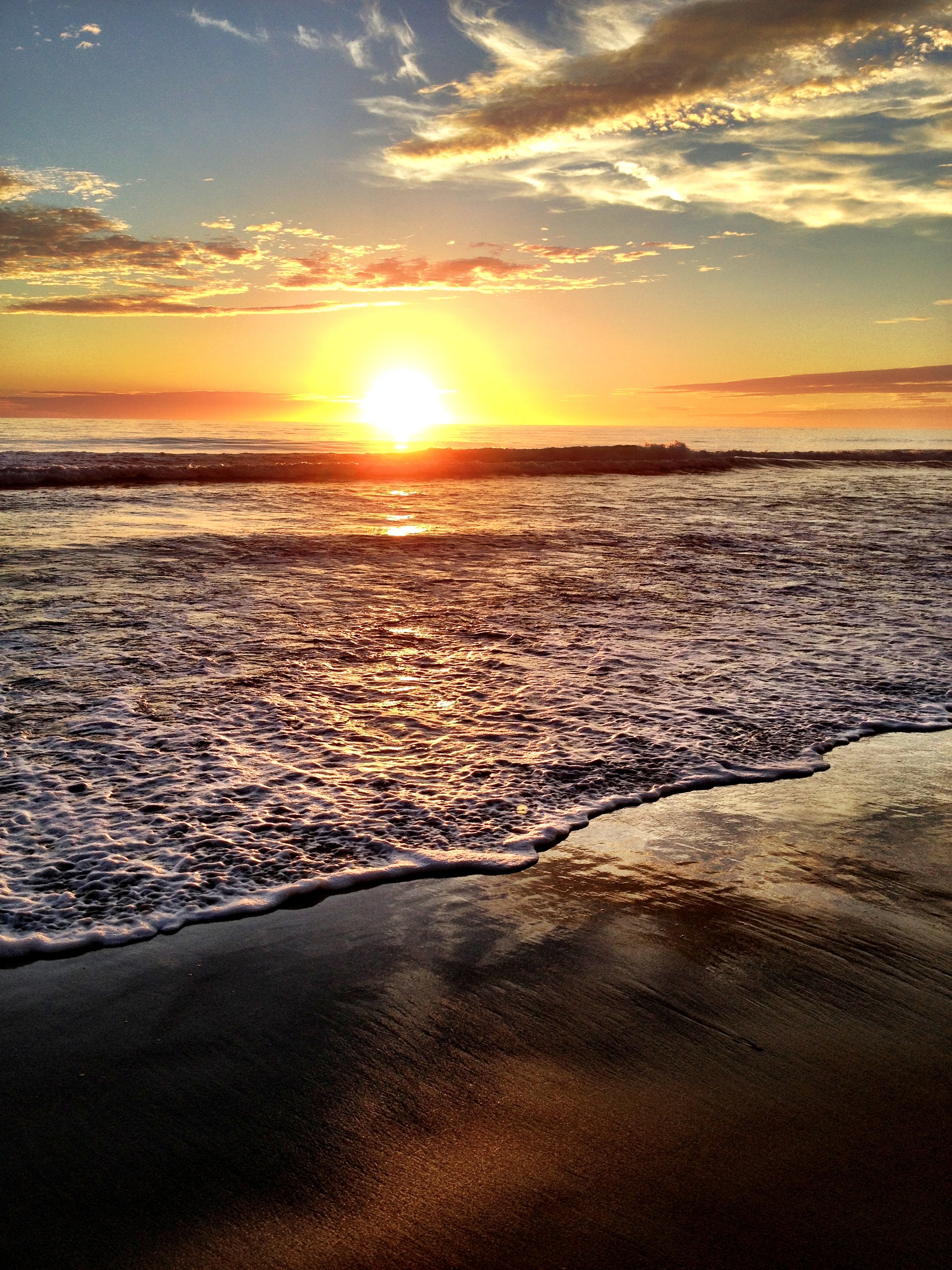
I notice that I am drawn to certain colors in my photography.  In the warm fall, I couldn’t resist the oranges and yellows of the sunset over the ocean.  I took many, many photos trying to capture the intensity of color as the sun sunk into the sea.

photo

And I love trying to capture the colors in flower petals.  Using my macro lens, I got a close look at this orchid…and the beauty of the purples and the contrasting oranges.

Processed with VSCOcam with c1 preset

So this week’s photo challenge is to explore color. What colors are calling to you?  Do you have a color of the year like the Pantone company?  Share a photo that represents your exploration of color.  Post either the photo alone or along with writing inspired by the photo.  I also invite you to use others’ photos as inspiration for your own writing and photography.  I often use another photographer’s image as “mentor text” for my own photography, trying to capture some element in my own way.

I like to share my images and writing on social media…and I invite you to share yours widely too. (You might consider Twitter, Instagram, Facebook, Google+) Use the hashtag #intersection and include @nwpianthology to make it easy for us to find and enjoy.  You can find me on Twitter and Instagram @kd0602.  I’d love to follow you if you share your handle.

You can also share your photos and writing by linking to this blog post or sharing in the comment section below.  I am excited to see how you express color through your lens!

Clouds and Rain: Objects of Fascination

It seems that we always yearn for what we don’t have.  Around Christmas time I was fascinated by snow…I longed to try my hand at capturing a macro photo of a single snowflake.  But I live in a place where it never snows…I didn’t see snow fall from the sky until I was well into adulthood and I have never had a white Christmas.

This last week some of my fellow photographers at the iAnthology have been posting pictures of snow and ice in response to the prompt, Playing with Light.  One particular photo of an icicle lingers in my mind and I find myself wishing for an opportunity to photograph ice…and the play of light…for myself.  And then my teaching partner emailed me a link to some photos created by a man on snowshoes…intricate, gorgeous designs…made by his intentional walk on snow.  Oh…I know a trip to somewhere cold is in my future!

But I live in Southern CA…in a place where we are having a drought and unseasonably warm winter temperatures.  More people are wearing shorts and flip flops than sweatshirts and Uggs…and umbrellas have been stashed or lost or are coated in the dust and grime caused by lack of use.

The last couple of days have teased us with hopes of rain.  The air is moist and fog has been rolling in along the coast in the mornings and evenings.  And yesterday we had some hints of rain…that misty mess that muddies the windshield but doesn’t produce any measurable precipitation.

I awoke this morning wondering if it had rained overnight.  The app on my phone said no…and gave no suggestion of rain for the day.  But as I was dressing for no rain, planning to wear the kind of shoes you wouldn’t choose on a rainy day, my husband came upstairs to announce that it was, in fact, raining!

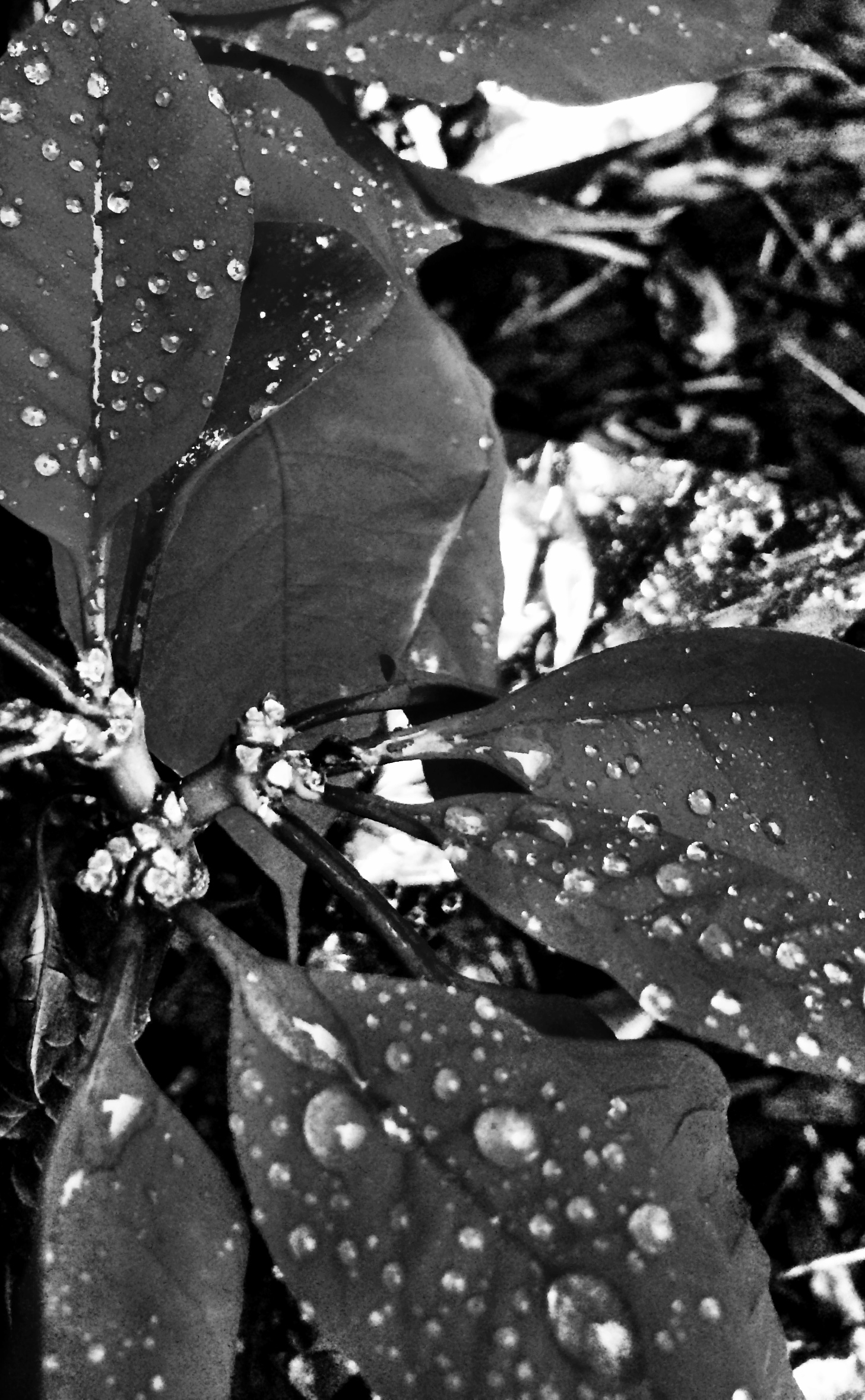
I rethought my wardrobe for the day, choosing my boots instead of my Toms, and headed out the door.  For those of you who live where rain is common, you would probably laugh that we were considering this rain at all.  But the first objects that caught my eye as I walked out the door were the poinsettias near the front door.  They were glistening with drops of rain.  I immediately pulled out my phone and began to photograph the droplets glistening on the bracts.

photo-85

I love the way the black and white photo draws attention to the precious drops–something we see so rarely these days.

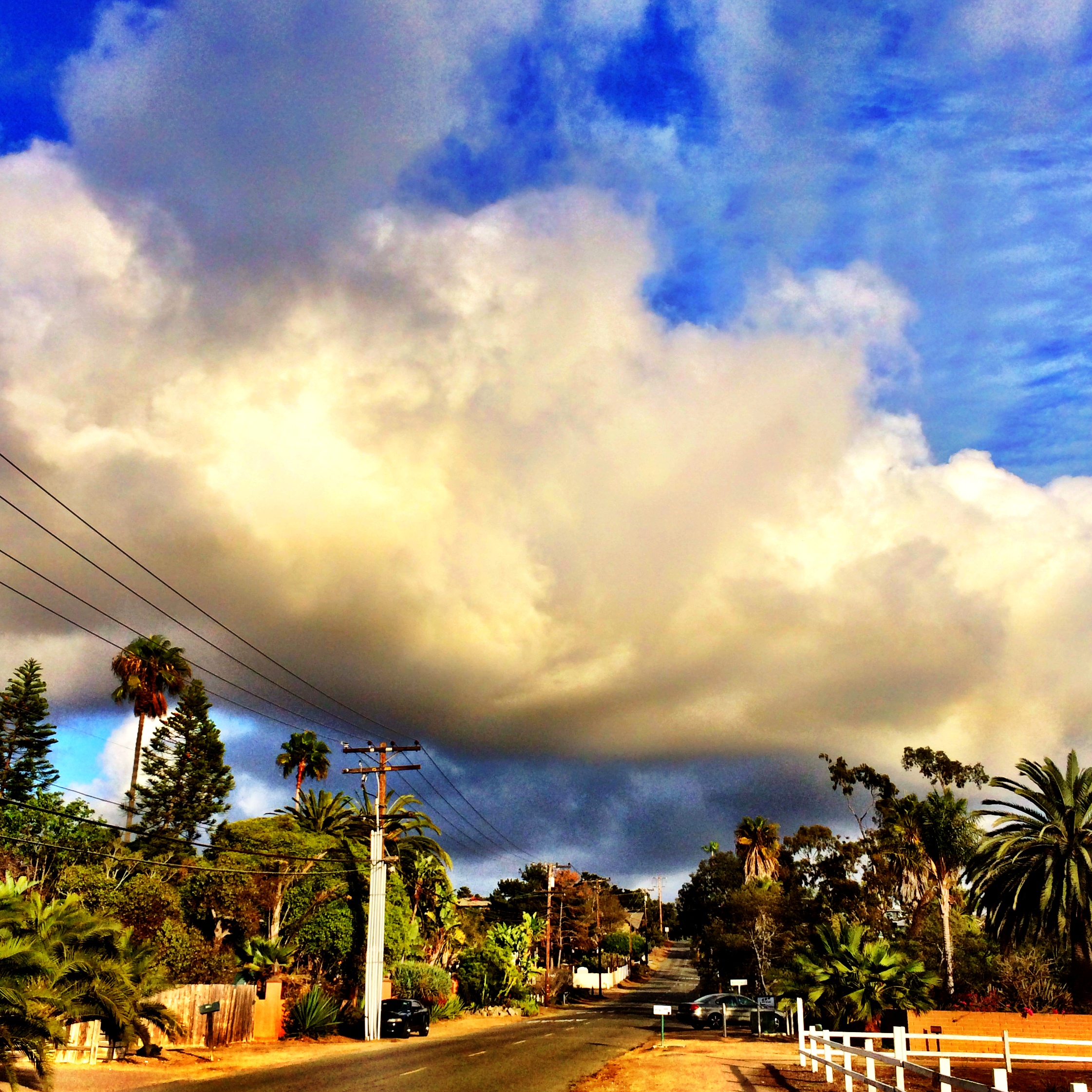
Honestly, this “rainy day” turned out to be not so rainy after all.  I would be surprised if we even measure a quarter inch of rainfall in the county.  But as I left work today, I found myself drawn to the clouds.  In some directions the clouds were white and wispy, sitting in a backdrop of blue.  In others, they gathered in tall white towers…and in others, gray and black framed the edges.

photo-86

I was compelled to drive towards the clouds on my way home…and pulled off to the side of the road to attempt to capture the complexity of the clouds with my phone’s camera.  The clouds became the object of my fascination and I took shot after shot, trying different angles to take advantage of the varieties of light available.

I don’t think I am done with clouds yet.  And I hope the clouds are not done with us yet either.  We desperately need some rain, although the forecast doesn’t look promising.

What is the object of fascination for you right now?  Is it something within reach…or are you yearning for something you don’t have?  I’d love to know more about your object!

Weekly Photo Challenge: Intersections

Here’s the week 4 Weekly Photo Challenge prompt for the NWP iAnthology!  (Here are weeks 12, and 3 if you want to look back.)

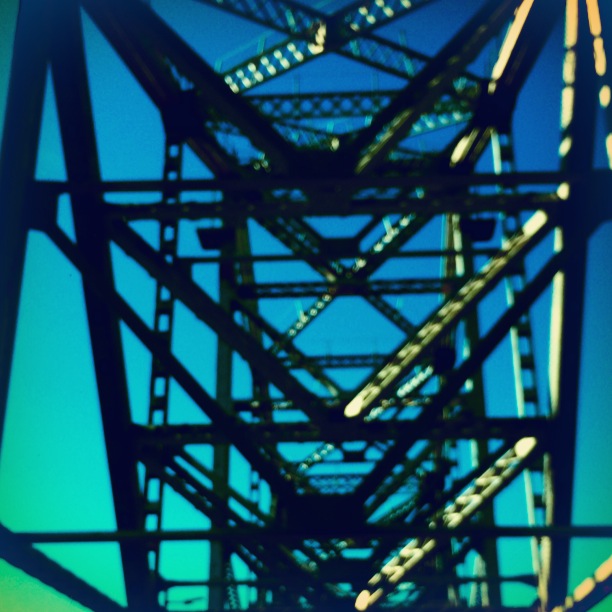
I love the ways different aspects of my life intersect, crisscrossing and overlapping in unexpected ways.  The word intersection can have a literal meaning, as I visualize the crossing of roads or the beams of a bridge.

photo-84

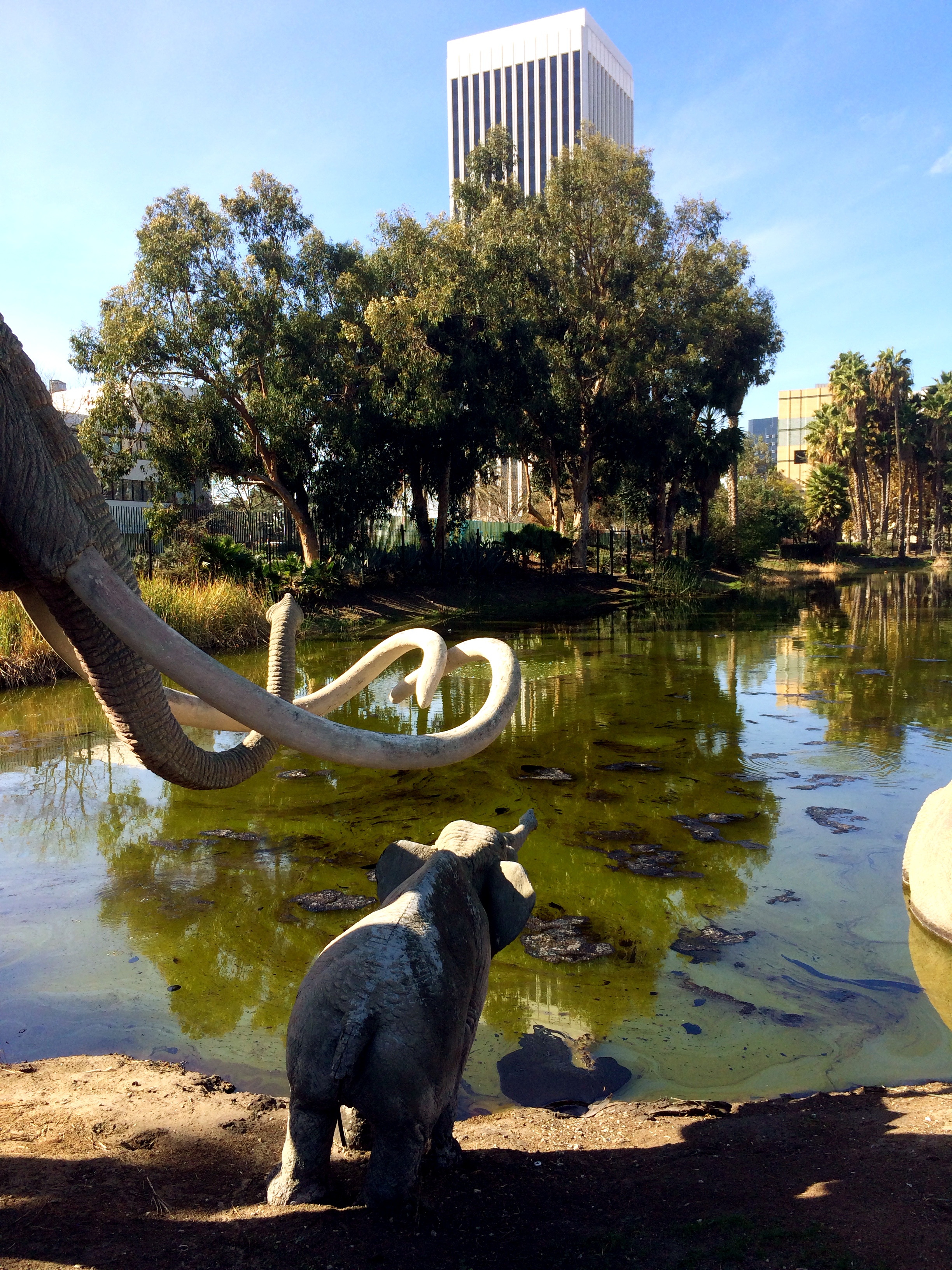
Or it can have a more conceptual meaning as ideas “bump into” each other and create new opportunities for understanding and learning.  They can be surprising meetings…like this image of the past intersecting with the present in my photo of the mammoth with the modern skyscraper in the background.

Reflection

So this week’s photo challenge is to explore the idea of intersection.  Share a photo that represents intersection in some way for you.  Post either the photo alone or along with writing inspired by the photo.  I also invite you to use others’ photos as inspiration for your own writing and photography.  I often use another photographer’s image as “mentor text” for my own photography, trying to capture some element in my own way.

I like to share my images and writing on social media…and I invite you to share yours widely too. (You might consider Twitter, Instagram, Facebook, Google+) Use the hashtag #intersection and include @nwpianthology to make it easy for us to find and enjoy.  You can find me on Twitter and Instagram @kd0602.  I’d love to follow you if you share your handle.

You can also share your photos and writing by linking to this blog post or sharing in the comment section below.  I am excited to see how you interpret intersection in your photos!

I look forward to seeing all the intersections in your life!

Weekly Photo Challenge: Frames

Here’s the week 2 Weekly Photo Challenge prompt for the NWP iAnthology.  You can look back at week one here.

I take and post a picture every day, and have for over a year and half now.  Sometimes I find myself taking the same photo over and over again.  Somehow I stand in the same place and use the same angle…and the photos begin to look the same.

So to keep myself from falling into this familiarity rut, I try different photography techniques. One I have done some experimenting with is using the natural frames I find in the environment when I am shooting pictures.

Here’s a couple of my examples.  One of my favorites is this view of the ocean through the pier.  I took several other shots, but I love the way this one is like a door opening, framing the sea.

pier frame

Here is a playful one I took during my morning playground duty using the playground equipment as the frame.

playground frame

And here’s one of a window–that includes the window frame as a frame itself.

window frame

Share a photo of a frame you have found…post either the photo alone or do some writing inspired by the photo.  And feel free to be inspired by the photos of others…and either write based on another’s photo or shoot another photograph of a frame based on the inspiration of someone else’s photo.

If you also share on other social media (Twitter, Facebook, google+, Instagram), use the hashtag #frames and include @nwpianthology to make it easy for us to find and enjoy!  You can find me @kd0602.  Be sure to share your media handles too!

And if you are reading this on my blog, feel free to share your photo/response by either linking your photo or your blog to the comment section below.  I am excited to see the frames you have explored through your lens!

Shadow

There is no doubt that my photography inspires my writing and my writing refines and refocuses my photography.  (There is something about the reflective process of examining the photos and critiquing them for myself that pushes my “eye” in terms of photos I shoot.)

This evening I noticed on A Word in Your Ear that the A Word a Week Photograph Challenge was shadow.  And that single word got me to flip back through some recent photos thinking about shadow and just what that word means to me.

This accidental shadow from the weekend caught my attention.  I struggled in the bright sunlight to capture a photo of these pea fowl that really captured their beauty, their markings…and made them show up.  They tend to blend in with the dirt.

photo-3

I think the shadow of me taking the photo is crisper than the photo of the peacock.  As I noticed my shadow I found myself shifting and turning as I figured out how to work the sun and shadow.  I found that my best photos of the pea fowl were a bit later when the sun dipped behind the clouds.

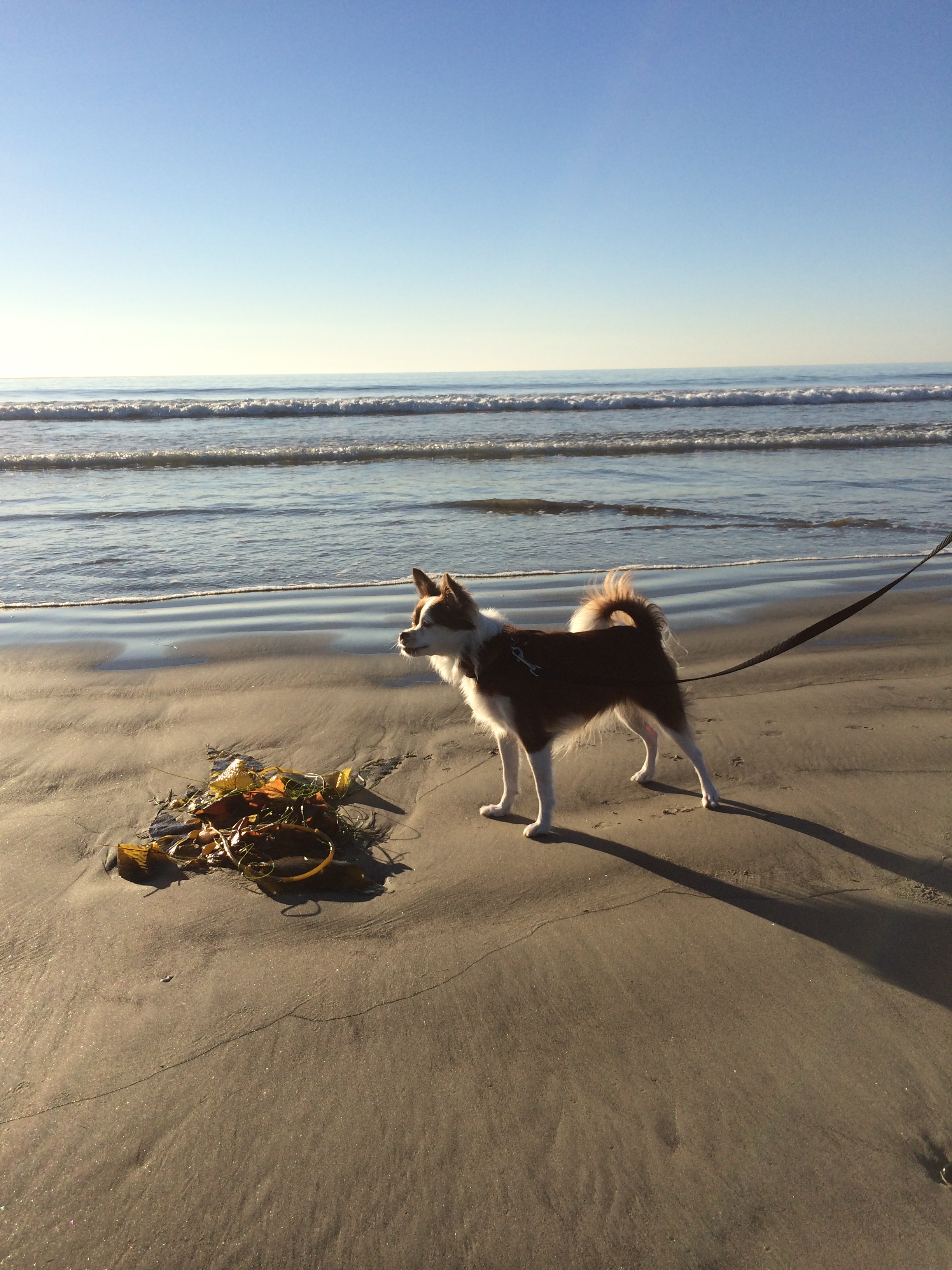
Earlier that week I had been at the beach taking some photos.  I love the way the shadow in this picture of Elli (a long-haired chihuahua) plays with her image of herself as a big dog.  She seems to think she is the protector of her people–and fiercely protects them as though she were five times her size.  (Like the shadow suggests!)

photo

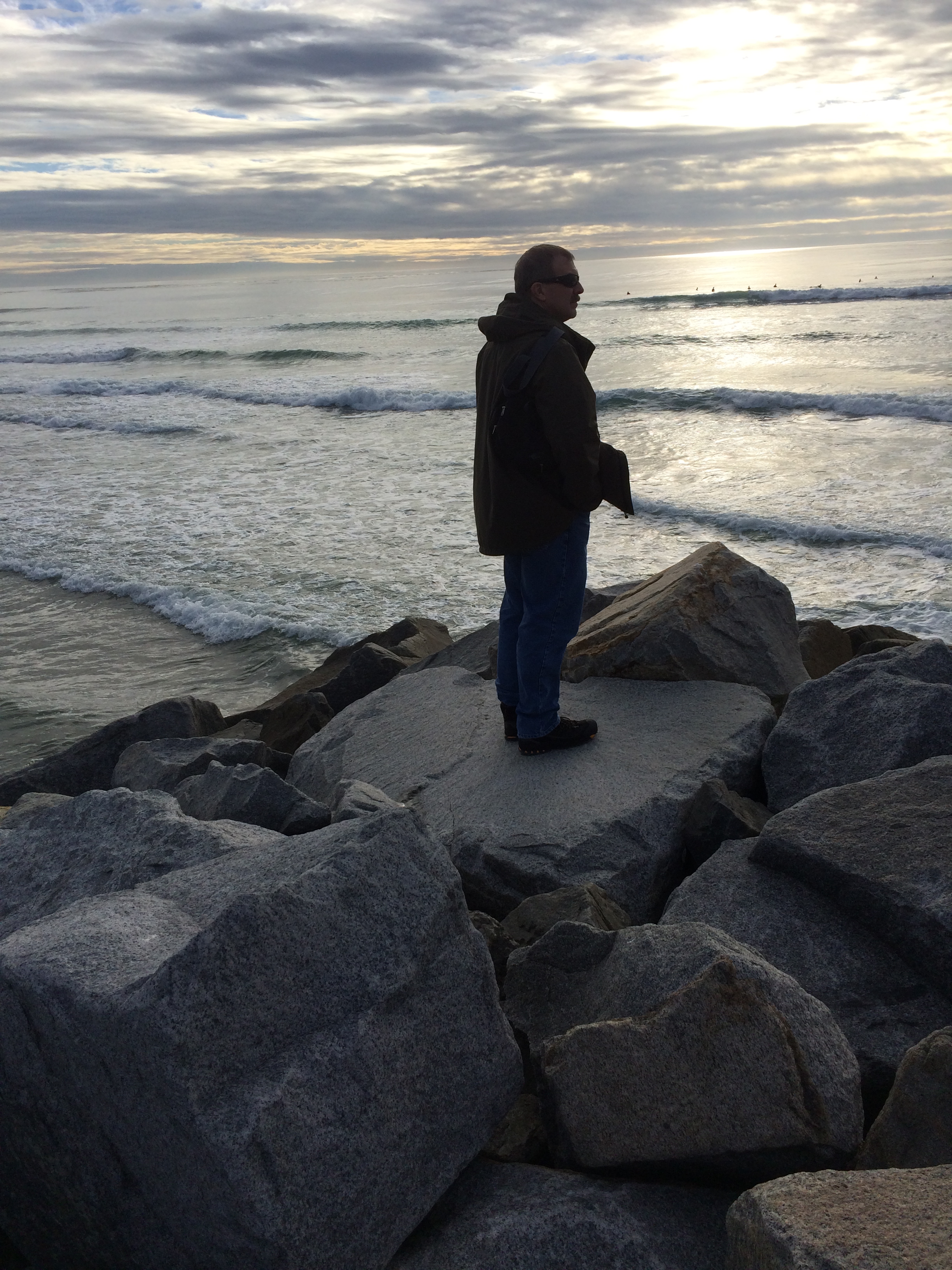
And I like playing with light sources…and the resulting shadows.  This post was all about light and its impact…and how it often results in shadows or silhouettes.  I love this silhouetted view of my husband looking to the light.

beach silhouette

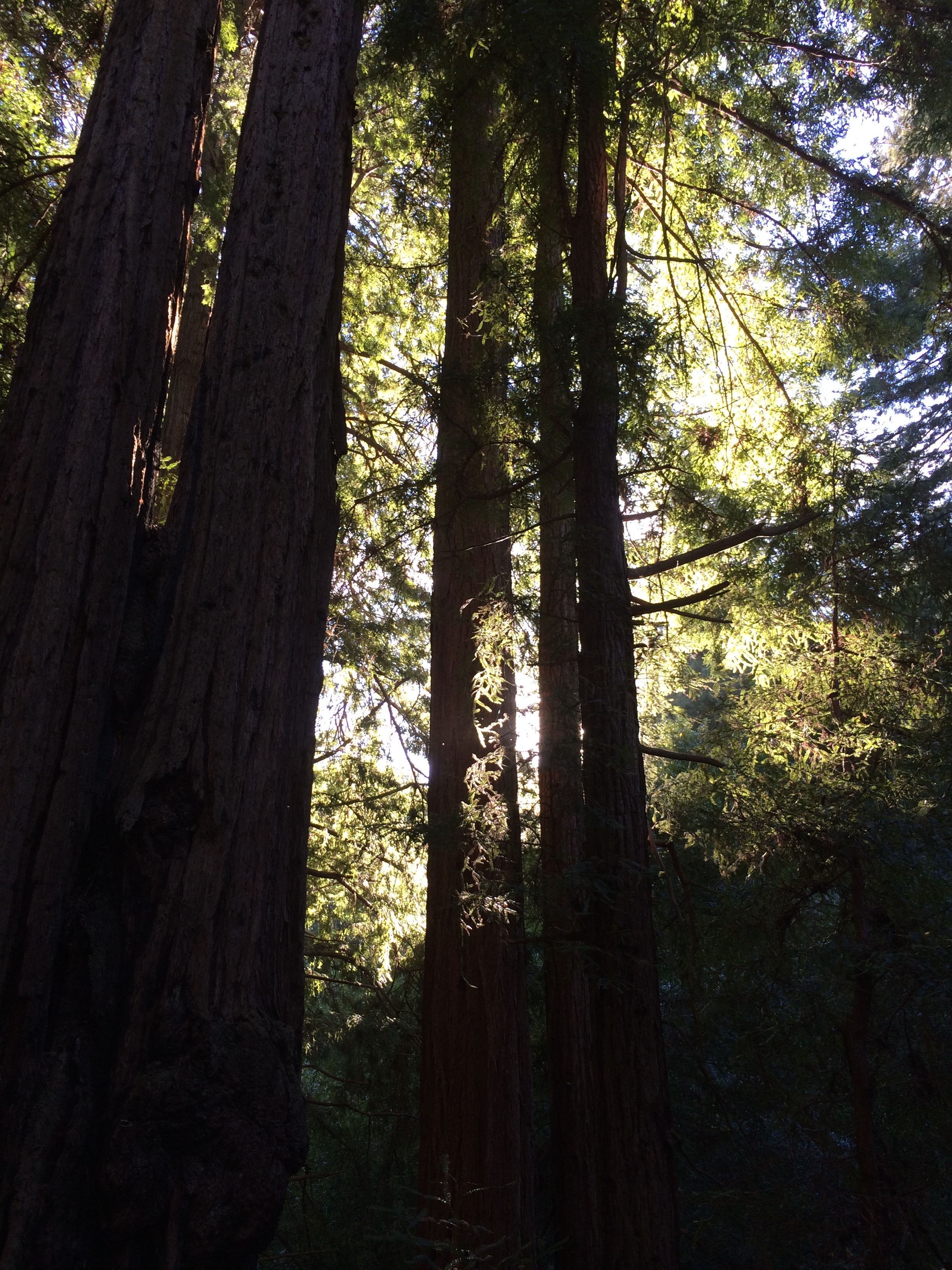
And one of my favorite photos of shadows comes from my visit to the Giant Redwoods a few weeks ago.  These magnificent giants cast shadows that veil the forest floor, keeping the air cool and the sun at a distance.  The shadows create a magical world where the sun sneaks in to make unexpected appearances…creating an otherworldly glow here and there.

photo-2

Shadow…revealing, playful, contemplative, magical…  But what about the shadow of tragedy, sadness, horror, poverty, crime?  Not that I am looking for darkness, but I am sure there are many more shadows to explore.

On Being a Connected Educator

What does it mean to be a connected educator?  This is a question some National Writing Project (NWP) colleagues and I will be exploring on tomorrow’s NWP radio show Thursday afternoon.

“Take it from an educator or thousands” is the call of this year’s Connected Educator Month set for October 2013. A partner of the NWP through our Educator Innovator Initiative, Connected Educator Month (CEM) seeks to broaden and deepen educator participation in online communities of practice and move towards a more fully connected and collaborative profession. This NWP Radio will explore what it means to be a connected educator in the 21st century, what the implications are for writing project sites today, and how to get involved in CEM in October and connect with the larger Educator Innovator Initiative throughout the year.

I guess it’s time to claim that label for myself.  I am a connected educator.  But what does that mean?  For me it means access to professional resources…quickly and easily, and from educators from all over who I have come to know and trust from their online presence.  I do know some of these people from face-to-face interactions while others I only know virtually.  We connect on Twitter, Facebook, Google+, Instagram, and through our blogs.  And while our interactions are primarily professional, we do get to know each other as people as well.

And being connected means more than that.  Being connected pushes me to try on and develop my digital literacies.  This summer I explored Connected Learning principles through the CLMOOC (Connected Learning Massive Open Online Collaboration).

DG_Macarthur_r03

I focused on “making”–mostly through my interest in photography, experiencing firsthand the power of interest-driven and peer supported learning.  I tried new tools and pushed myself to be more open and public with my own processes.  As a result I learned a lot, connected with an amazing group of educators, and had tons of fun!  And all of that also transfers both into my classroom and to my local writing project (SDAWP).

And I also learned that all of this is an ongoing work in progress.  You don’t suddenly become a connected educator and then you’re done.  It’s a lot like being a writer.  You’re a writer when you write.  You’re a connected educator when you stay connected–and produce as well as receive.  It’s the give and take that makes all the learning possible and supports us, as educators, to support our students in their connected lives.

I hope you can join us for the radio show tomorrow (or listen to the archive).  I look forward to the opportunity to talk about being a connected educator with a group of others exploring this possibility.  Oh, and October is Connected Educator Month…how will you connect?

Rights to Write

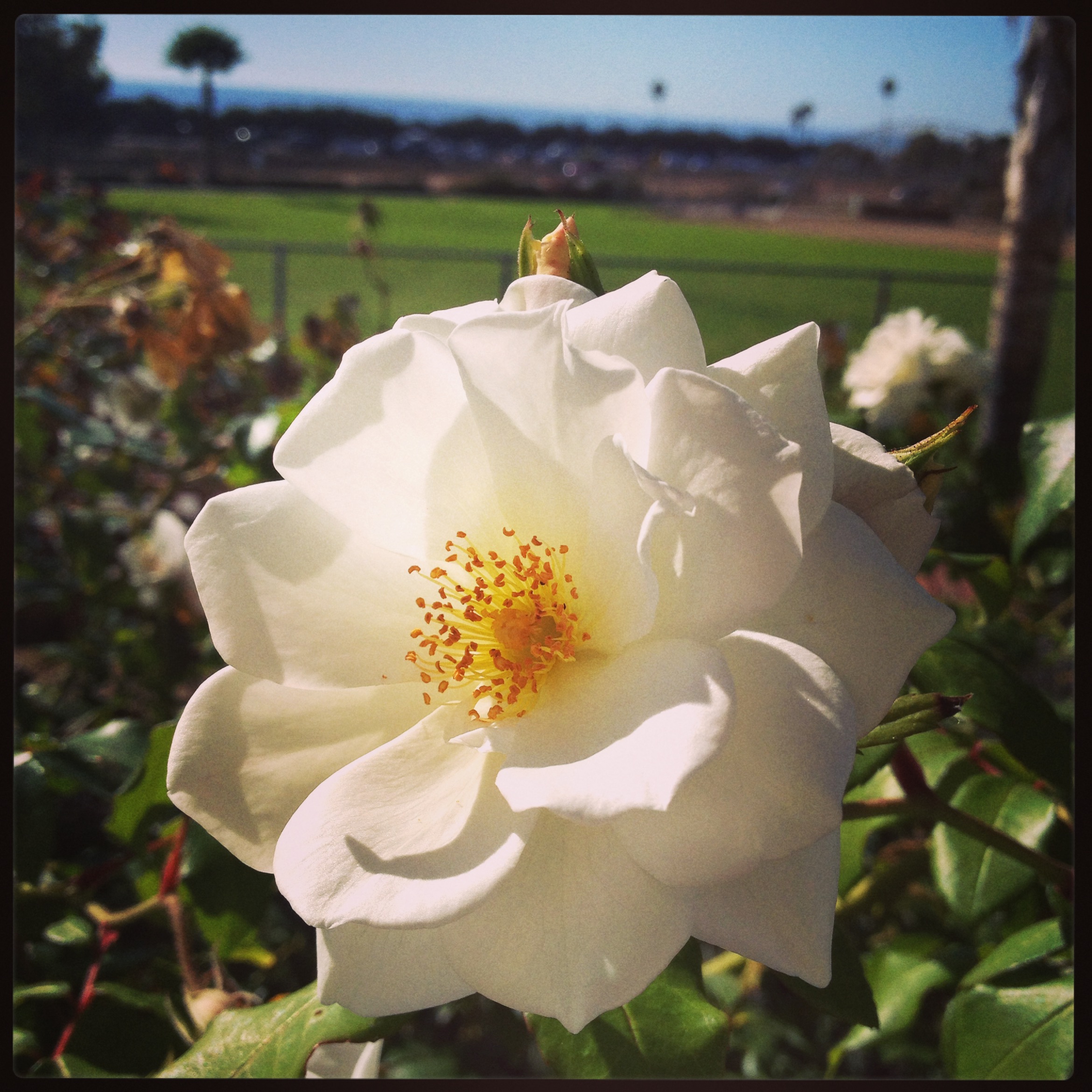
I love those unexpected treasures that pop up in the classroom.  I was lucky enough to experience one today!  (Not unlike these beautiful silky white roses that grow along the edge of our playground!)

photo-5

We ask our students to write at home each week in something we call a Homework Writer’s Notebook (HWN).  Our goal is to help students establish a writerly habit of generating writing primarily for their own purposes (we look at the notebook on Monday’s).  We encourage students to use this notebook to play with writing and language and experiment with different kinds of writing.  They pick their own topics (although we do make suggestions of possibilities as they occur to us during the day) and create their own writing schedules.  We talk about how excited we are to read their writing…and how this writing helps us know them better, and teach them better.

Today was my first day of spending time with students’ HWNs this year (they went home for the first time last week).  I was immediately impressed that almost all of the notebooks made it into the classroom today…and almost all our students wrote at least two entries in their notebooks, and some wrote many more.  And then I came across this gem written by a second grader.

My Rights to Write

I have the right to write a story that will fill your mind with enchantment and glory.  I also have the right to write a story that will give you a pinch of fright and I’m warning you it might give you terrible dreams at night.  I have the the right to pick up a pencil and let it glide through day and night.  I have the right to let my imagination run wild.  I have the right to borrow ideas of books that have gorgeous language and place them in my pencil.  I have the right to make my stories expand through the sea, forest to open land…

This did not come out of the notebook of my most prolific writer or the one that loves to write the most. It wasn’t from a student looking for my approval, rushing to see me with notebook in hand. This is a student who is growing into a writer. Who is finding the stamina and desire to let her writerly voice emerge.

I love that this writer is thinking about her rights to write.  Not because we suggested it as a topic (we didn’t), although we do have a poster about rights of readers in the classroom.  And I’m certain she hasn’t read Spandel’s 9 Rights of Every Writer (although I thought of it when I read this piece this morning).  It appears to me that she is claiming her rights as a writer!

And then I read Deanna Mascle’s blog post this afternoon asking whether we should stop teaching writing and instead focus on teaching writers (musings based on her college level experience).  And I do think we need to focus on writers, helping them develop confidence, fluency, and processes that support the development of their own writing rather than tracking them into classes with teacher-focused writing assignments that leave little room for writers to emerge.

Working with young writers can be a challenge.  They have so much to juggle as they tackle each writing opportunity.  They not only have to find topics and develop their ideas, they also have to concentrate on forming letters, figure out how to spell the words they need, and deal with the complications of punctuation and other mechanics.

And working with young writers is inspirational!  They have fresh ideas–and when things are going well they are unfettered by the constraints of the expectations that adult writers often place on themselves.  This young writer today reignited my passion for supporting writers.  She reminded me that writers have the right to express themselves in ways that make sense to them.  I know I will hear her voice in my head as I meet with young writers in my classroom tomorrow…and I will remember that they have the rights to write!

Do you give your students the rights to write?  Do you claim your own rights to write?

Too Much of an Interesting Thing…

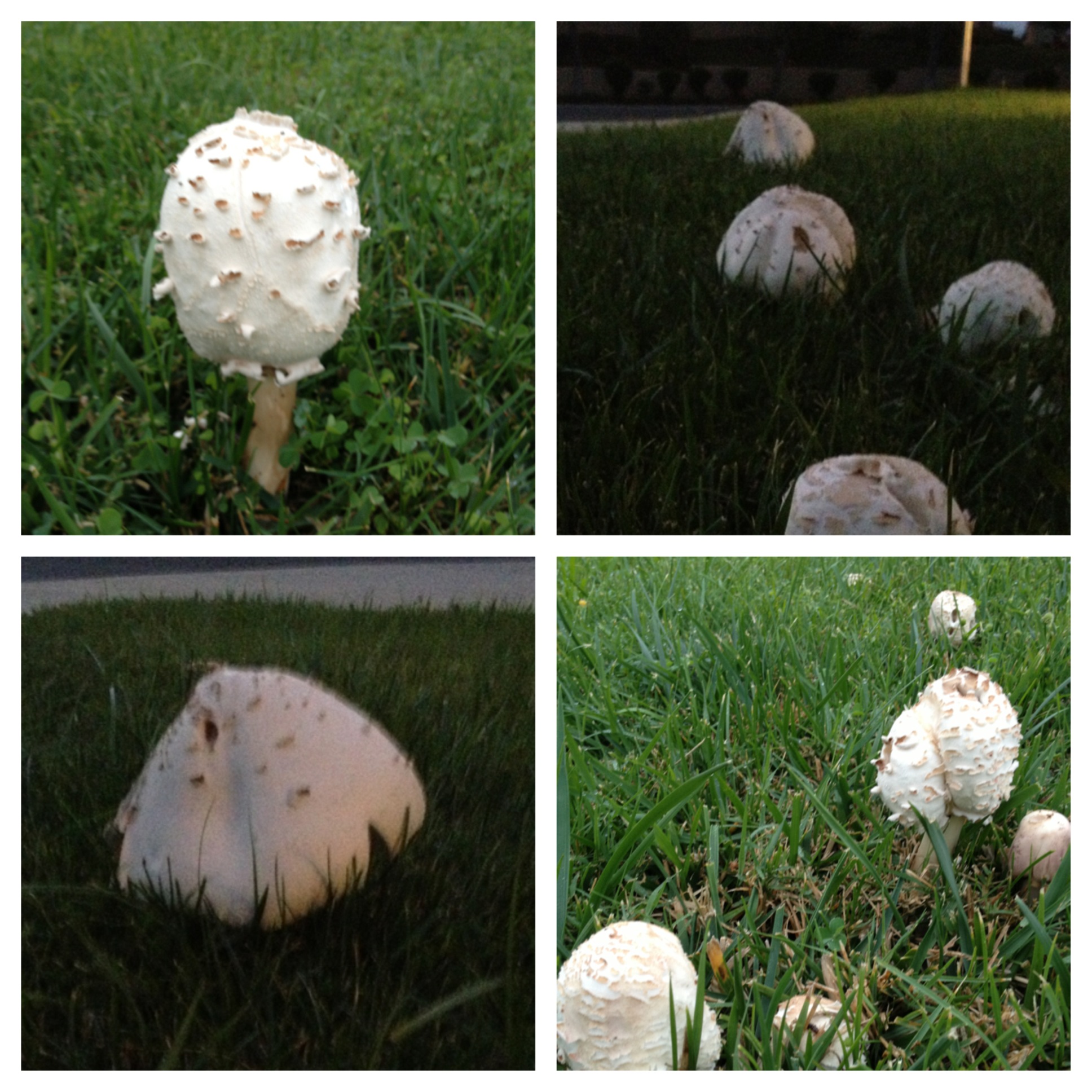
When I first spied the mushroom in my front yard I saw it as a photo opportunity.  I watched it grow, seeming to magnify right before my eyes.  I watched it for days until I found it kicked across the yard one morning–and then, once it was turn upside down, I captured what I had missed by looking at only the outside surface with my camera.

The following week I noticed a few more mushrooms growing in my lawn.  Again, I watched them grow…this time with some “portholes” to look inside and see what was beneath the surface.  I got out my macro lens and worked to capture my secret view of the underside of the mushroom.

And then this morning it seemed that an entire forest of mushrooms has exploded on my lawn!  One was so round and on a tall stem…looking almost like a lollipop.  When I got home–late (meeting and then traffic)–that forest had ballooned, each mushroom doubling in size from this morning.  And while my photos don’t really capture the drama of the growth, my eyes registered it.

photo

And now I’m thinking that these fascinating mushrooms are becoming a problem.  What started as an interesting novelty has become a bit of an eyesore.  Just where do these mushrooms come from?  What effect do they have on my lawn?  How do they multiply?  What is making them thrive in my lawn?  And now…how do I get rid of them?

Early morning update:  As my husband was leaving for work, he came back into the house saying, “The fairies are having a field day at our house!”  I looked out the door…the mushrooms are enormous this morning!  They ballooned overnight–and the biggest among them are between 6 and 8 inches across.  Here’s a picture trying to capture the magnitude.  (The photos don’t really capture the size adequately!)

photo-1

A #Scratchy Week

Taking photos of textures is tricky.  It’s easy to find smooth and rough…and even scratchy. But it’s much more challenging to compose an interesting photo that also highlights the texture intended.  For the last several months I have been working to push out of my comfort zone and NOT photograph the most obvious  thing associated with any given prompt.  This week was no different.

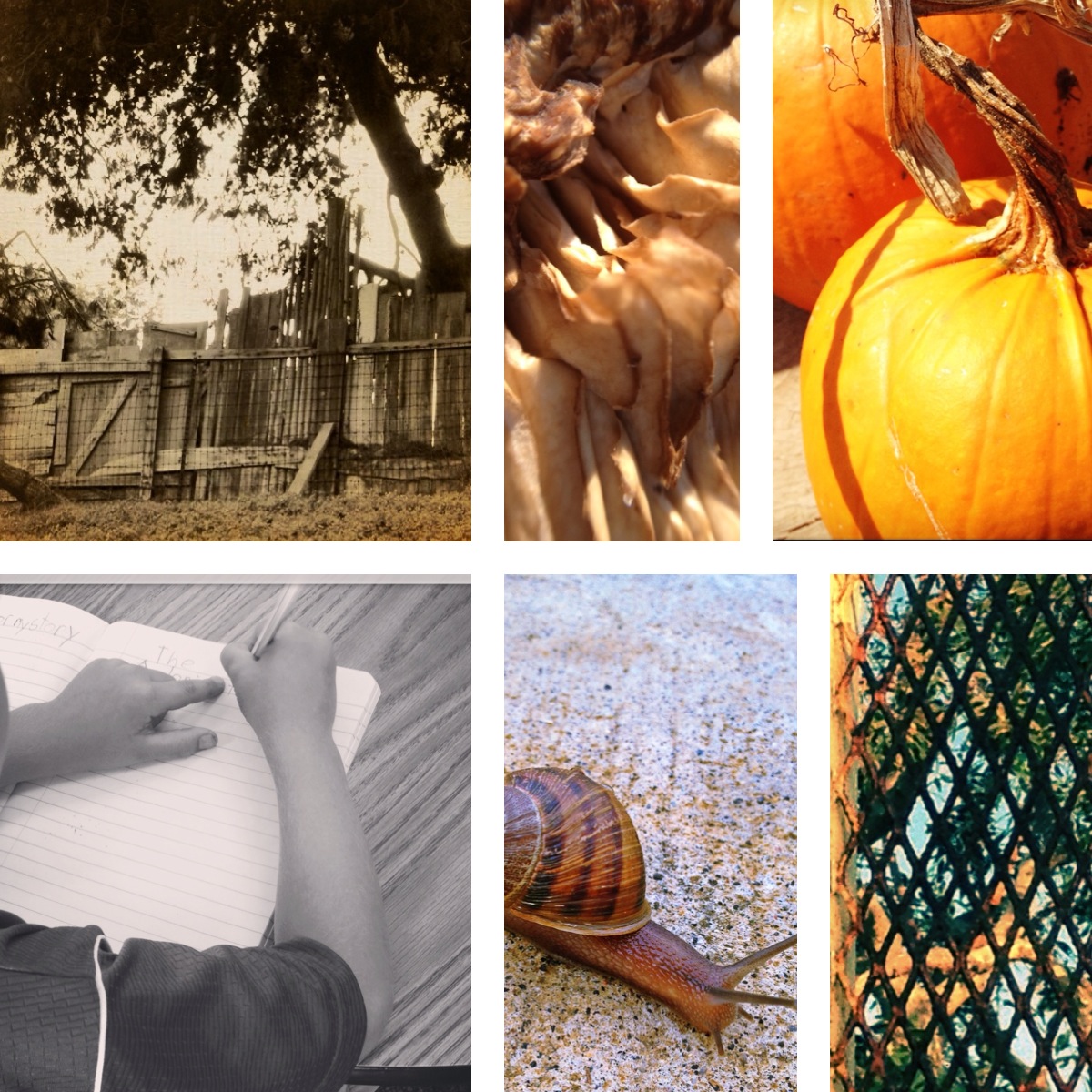
Here is a collage of my first 6 days (in random order thanks to the app collageit) of scratchy.

photo

Monday’s photo was a scratchy old fence that I see on my way to work.  I’ve been eyeing this ramshackle construction for a while, waiting for the perfect time to capture its dilapidated beauty.  Tuesday I was in the school garden and couldn’t resist the scratchy pumpkin stems. Wednesday was probably technically cheating since I used scratching rather than scratchy to describe a student hard at work with writing…and scratching out ideas!  Thursday I was back to my mushrooms…and using my macro lens to capture the scratchy texture on the underside. Friday I played with shooting a tree through a screen to create the scratchy texture.  Saturday I used this snail–whose slow pace allowed me to capture it as it crept across the scratchy sidewalk in front of my house.  And I love my Sunday photo…the scratchy spine of an aloe plant with a spiderweb attached, highlighted by the use of the vintique app.

aloe w:web

It’s always a little bittersweet to move from one prompt to the next as I start to see the world anew.  It always seems to take a week to really see and notice the prompt in interesting ways.

How was your scratchy week?  Today I began to look at my world through the scaly lens, who knows what the week will bring…