Exploring My Community

When people think of the beach, first thoughts usually go to sunny days, warm sand, and frothy waves crashing on the shore.

And for those of us who live in the beach community and see the ocean in all its glory every day, it can be easy to take this natural beauty for granted.

As I work to grow my photographic eye, I have been paying attention to conditions that will produce photos that are different than those I have taken before.

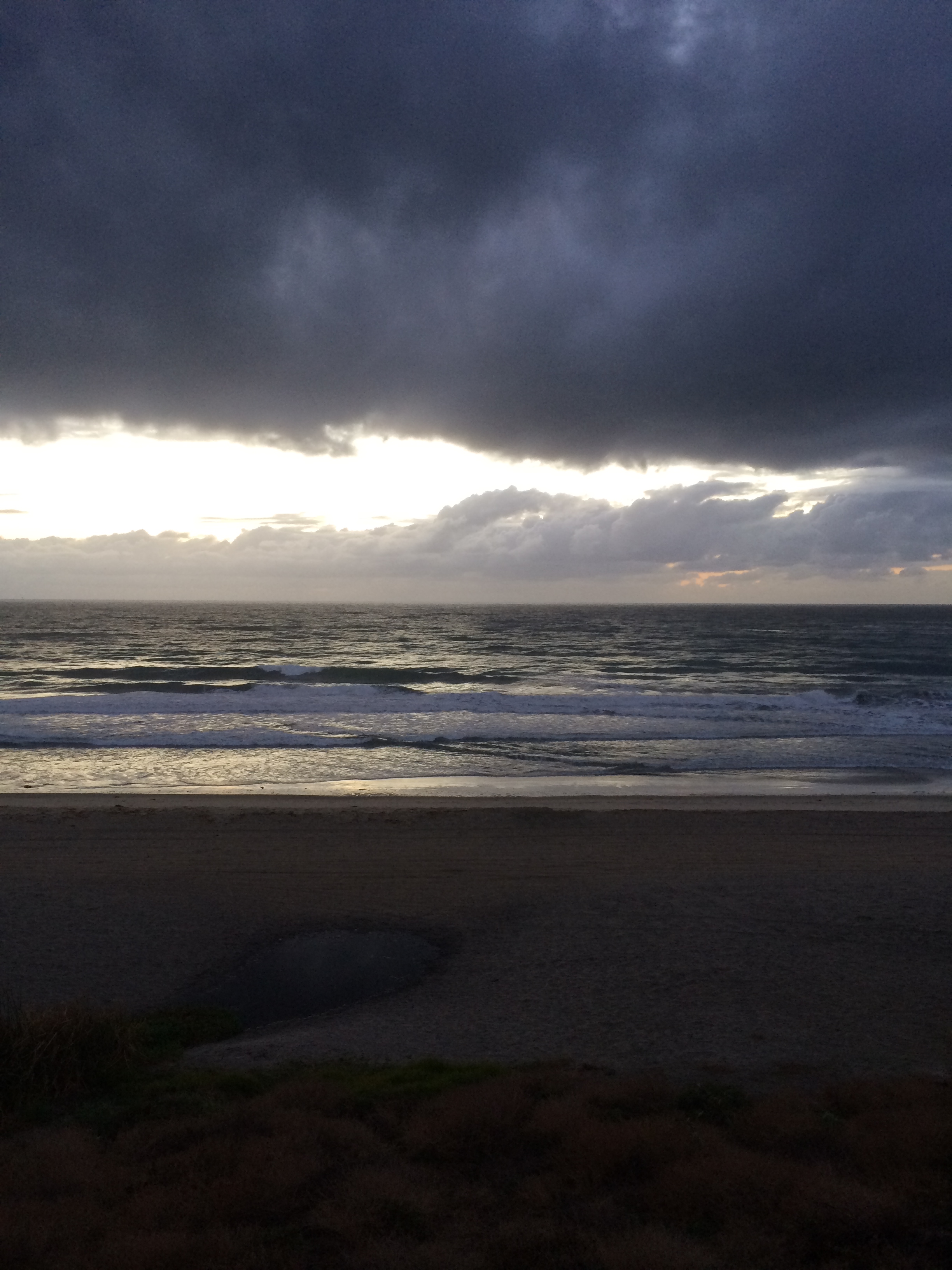
Today was a rainy day with a dark sky filled with ominous clouds.  Sun broke through periodically…and as I was driving through rush hour traffic to an appointment this afternoon, I decided to stop by the beach to see if I could capture the ocean against the dark sky.

Traffic was worse than usual–a typical side effect of rain in our community–and I missed many beautiful photo opportunities as I drove through the heavy traffic towards my destination (and convenient parking).  When I did park, I wanted to capture darkness…with the light peeking through.

photo-5

This is an unedited photo as the sun was sinking behind the thick clouds.  You can see the gray rain clouds above…and the spot of clearing lighting up the sea.

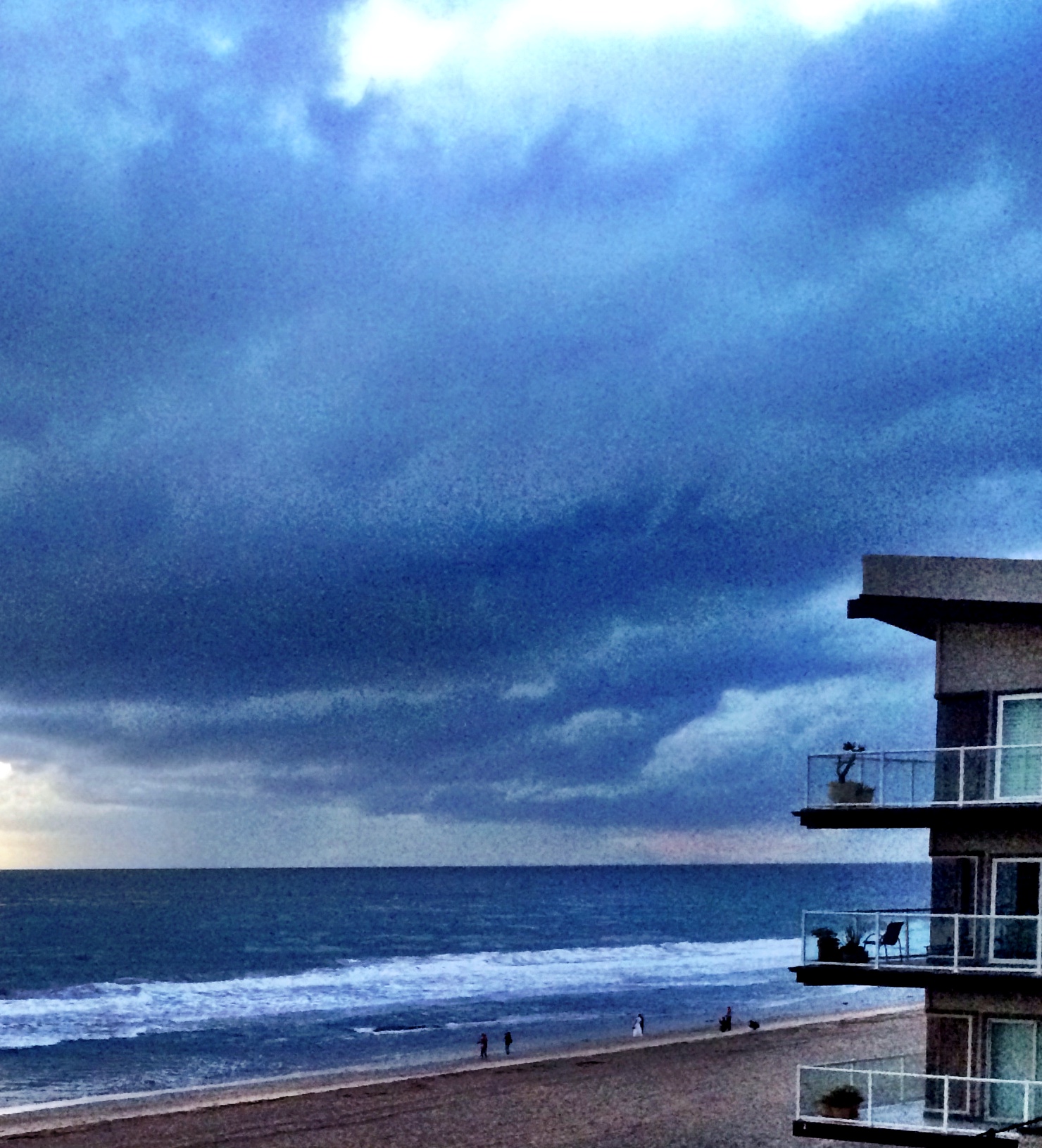
As I was enjoying the dusky beach, I noticed what appeared to be a bride in the distance at the water’s edge.  iPhone photography is not great for distance shots…but I shot anyway, hoping to capture a glimpse of the bride (and her groom) in the distance.  I used Camera+ to crop the photo and the clarify filter to bring the bride into view.

photo-3

It’s a bit pixilated…but I kind of like the effect.  (Can you spot the bride in the distance?)

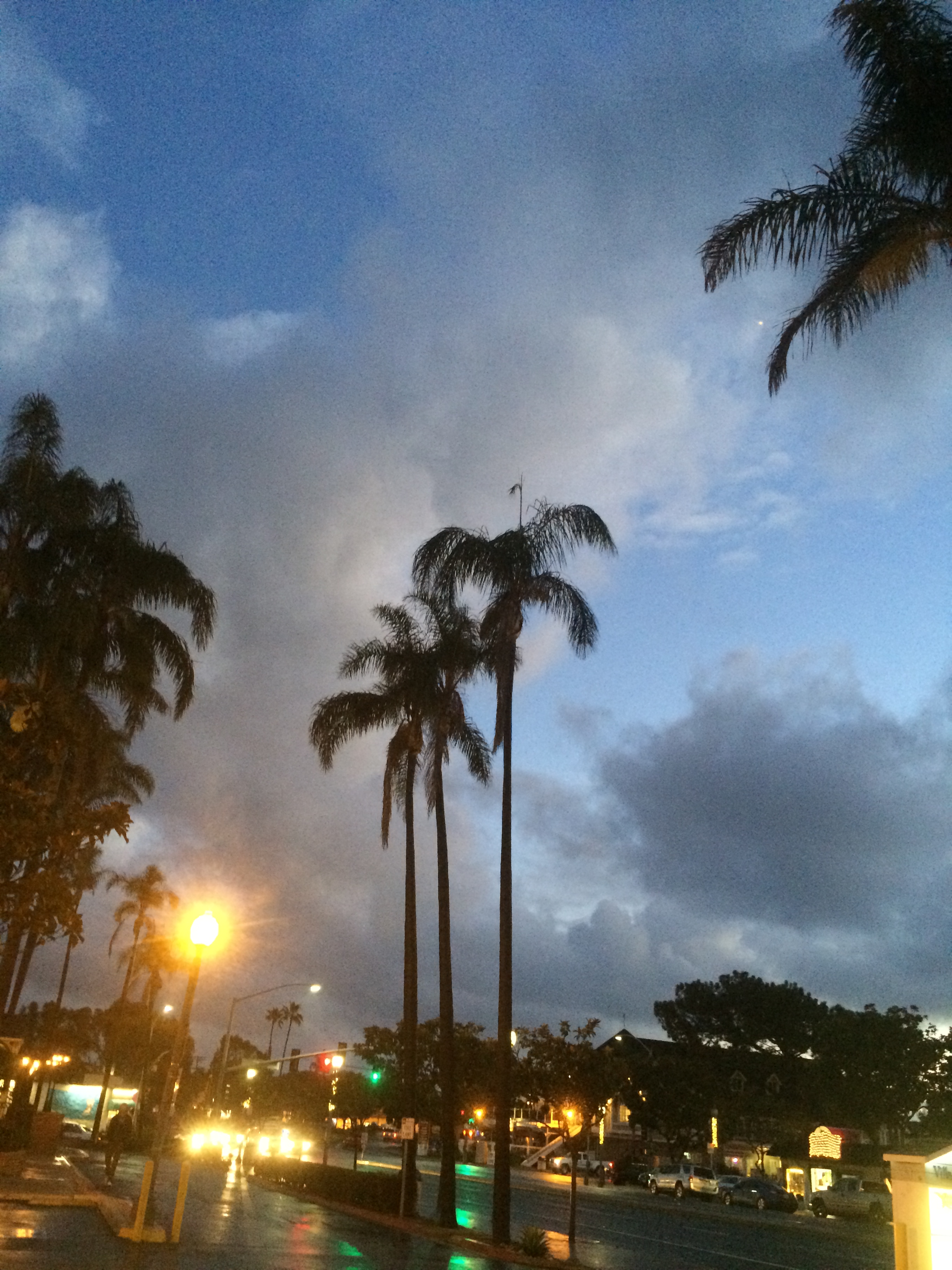
And after I stopped for a cup of coffee (a favorite evening habit), I noticed these palm trees against the darkening sky.  I stopped in the parking lot, set my coffee down on the ground and snapped this view.

photo-4

This is another unedited photo.  I love the way the wet roads reflect the street lights and traffic lights and the palms stand tall, an iconic beach symbol.

Paying attention to the nuances of this beach community where I live helps me to appreciate its unique qualities in deeper and more thoughtful ways.

What nuances make your community home for you?

Wind

Over at A Word in Your Ear, the word a week challenge this week is wind.  So how do I show wind in a photo?  Remember, I live in a place with little in the way of weather.  Our usual is a bit of fog and some gentle sea breezes…and this week (remember, it’s the week before Christmas) we had HOT weather.  The kids were back in shorts and their sweatshirts are littering the playground!

Earlier this week one of my students came to school is a sweater dress, tights, and fur-lined boots.  By recess it was already about 75 degrees.  I noticed a mom at the door…and she had a bag of clothes for her daughter.  After a few minutes in the restroom, my student returned in a skirt, t-shirt, and tennies!  (And boy, did she feel better!)

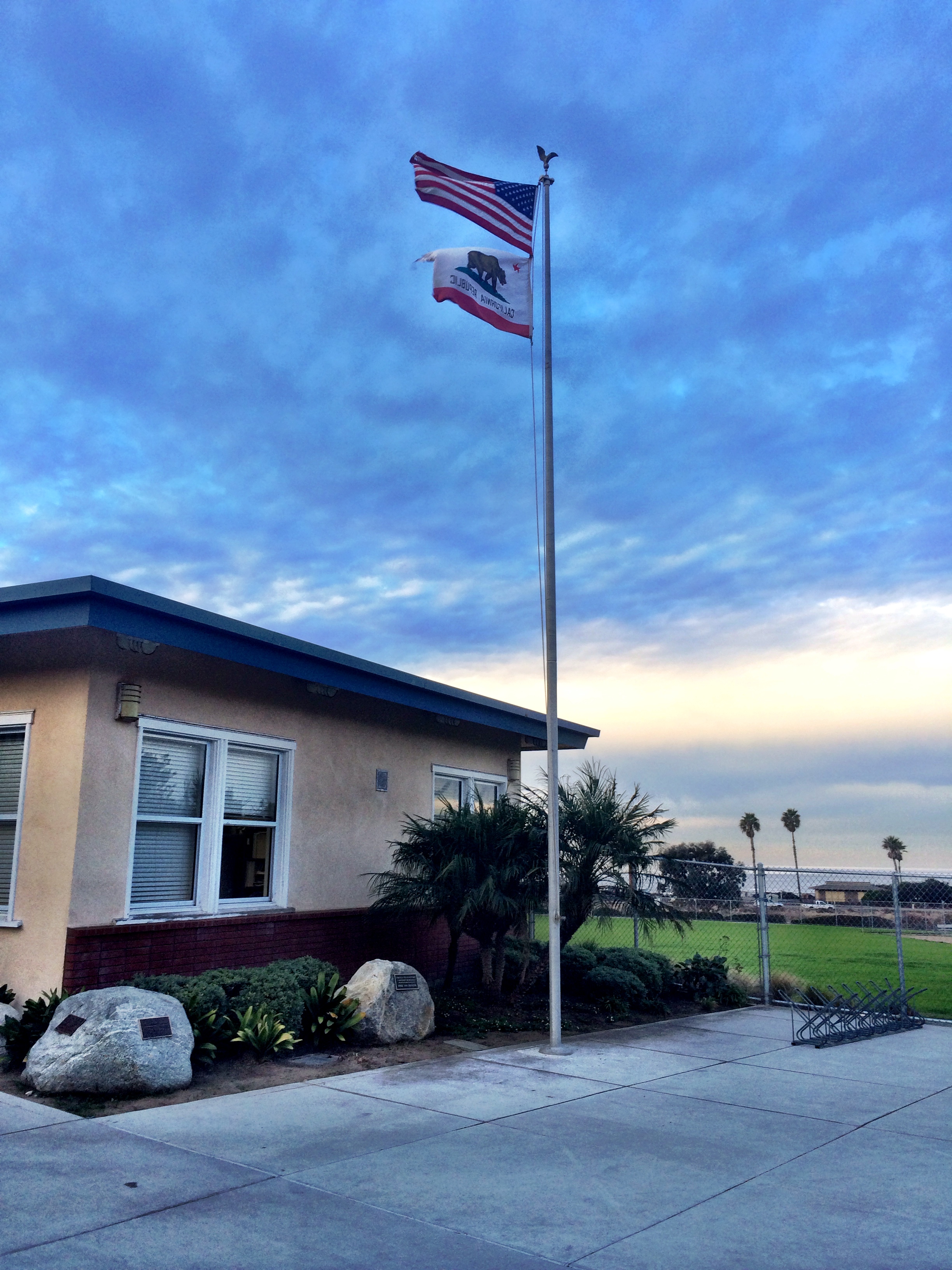
But this morning change was in the air.  I knew that the day would be cooler.  I parked at school, and laden with too much to carry, I felt the wind and heard the pulleys knocking against the flagpole.  I looked up and noticed the flapping flags against the beautiful cloudy sky.

Carefully balancing my phone in one hand (my other was full), I managed to snap this photo of the flags and the sky.

photo-2

I love that I managed to capture the movement of the wind in the photo…and the interesting dimensions of the sky in the background.

The day turned out to be nice and sunny…and we’re expecting rain tomorrow.  If it arrives as expected, it will be an exciting school day…a rainy day schedule the day before school lets out for winter break!

A Gift to Ourselves

Is there ever a good time to work on your house?

For some reason we seem to get motivated sometime around Christmas to do major home renovation.  Last year a plumbing issue initiated some major work shortly after Christmas.  And this year we had planned to replace the floor in our living/dining room so that it would be done before Thanksgiving.  But given our hectic schedules, we are deep in the midst of it right now…a week before Christmas.

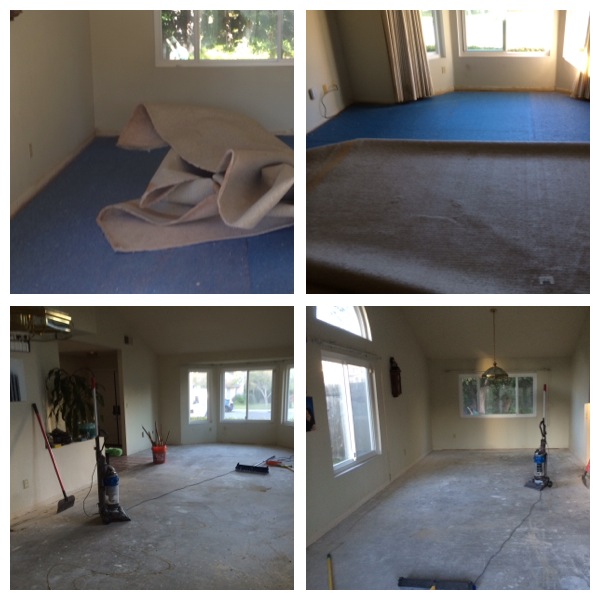
This weekend was spent tearing out carpet and throwing away draperies that had seen better days.

renovation collage

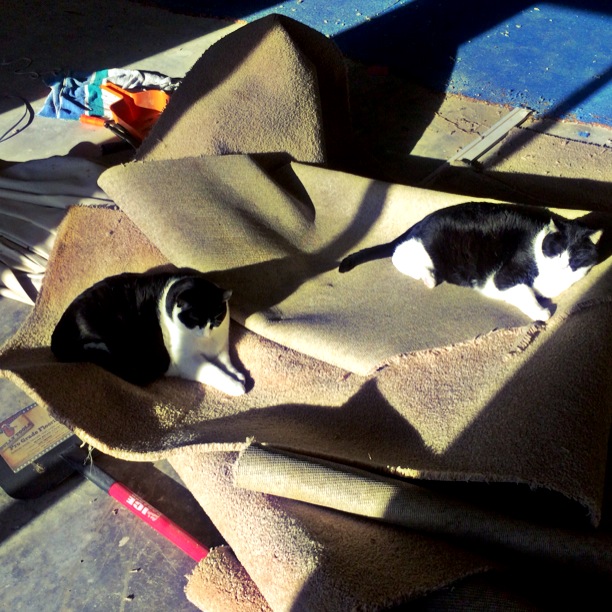
The emptiness of the room creates a cavernous echo that magnifies every sound in the house.  And the cats are not quite sure what to make of it.  They did spend a good portion of time on Saturday in supervision mode…making themselves comfortable in the midst of pulled up carpet.

cat supervisors

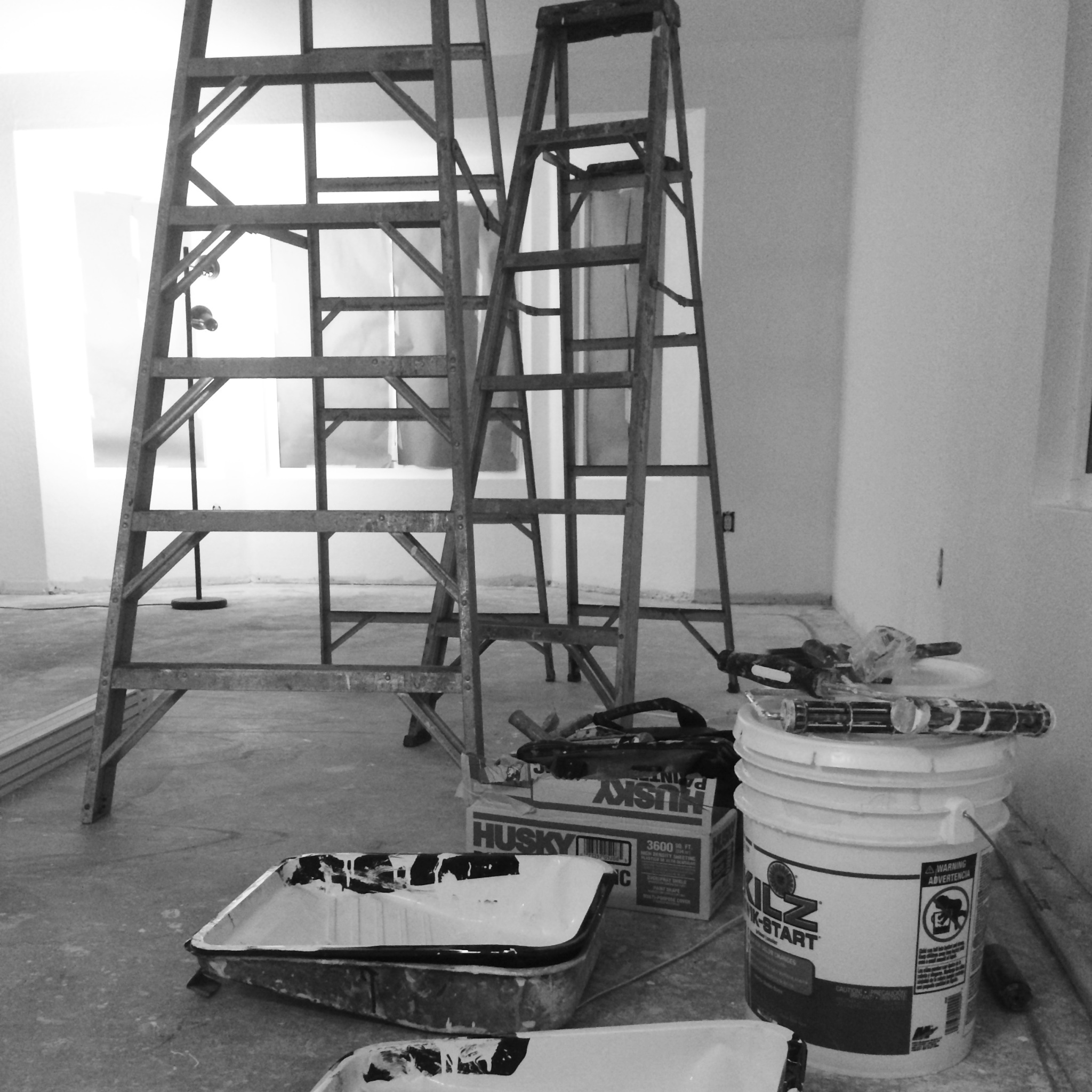
I’m amazed at the difference paint makes on a space!  It feels fresh and clean, ready for the new floor that will be laid tomorrow.

photo

So we may or may not get a Christmas tree up and decorated this year…and somehow that feels okay.  There is something about the process of clearing out, reevaluating what we need and want to keep, and donating usable goods to someone else that is satisfying.

The neighbors are curious.  They’re wondering if we are planning to move since that often happens when people do major work on their homes.  But this work is a gift to ourselves…updating and improving our home to make our living environment more comfortable and welcoming.

It sure takes a lot of work and discomfort to make things better.  I can’t wait til the end of the week when we have a freshly painted room with a new floor and new window coverings.  There’s no furniture…guess we’ll have to stand to admire our freshly transformed living room.

Poverty and Programming…and Questions

My internet crashed last night.  The TV wasn’t working, my computer wouldn’t pick up the wireless, and the micro-cell that boosts the cellular phone signal was down too.  I had digital devices…but no connection at all.

I had big plans…to watch some Sunday night football, to do some online holiday shopping, to put together a blog post, and to catch up on some reading of posts made by others.  Instead, I finished my book, put some laundry away, and went to bed a bit earlier than I might have otherwise.

My internet is back up and working today…but my experience last night turned my thoughts to issues of equity and access for students.

It seems that when people think about access to technology, devices are at the front of their thinking.  If only we could put a device in the student’s hand, issues of access are solved.

But there is just so much more to access.  Last night I had access to devices…but none of them would connect me to the internet or allow me to connect in any other way (text, phone, social media, even TV).  I thought about getting in my car and heading down to the local Starbucks to have a cup of coffee and accomplish some of what I planned to do at home.  I didn’t have any hard deadlines…and I knew that I would have internet access when I got to work this morning, so I decided to stay home and do without the connection.

But what if I were a high school student with a Monday morning deadline?  What if I didn’t have reliable internet access in my home…and what if I didn’t have transportation as an option to get me to the Starbucks, the library, or even a friend’s house with internet access? Even if the school provided me with a device, there are so many things I couldn’t do without internet access.

I know there are programs to provide internet service to families with limited means, but I also know that they require paperwork be filled out…and may even require some kind of bank account or credit card to pay the nominal monthly fee.

So why am I writing about this?  I’m thinking about the amount of school work that is assigned as homework. to be completed outside of school and the role that digital tools increasing play in our lives and I’m wondering about how access impacts our students.  Can they create digital portfolios to showcase their learning?  Can they access the information they need to locate resources for research, find scholarship and grant opportunities, secure internships or apply for employment?

How does access change when connectivity is only available outside of your home?  In public spaces?  Places with limited hours of operation?

And what do we take for granted?  We ask students to blog, to research, to reply to discussion boards, to collaborate with Google docs…often outside of the school day.  Which of our students have access…and what happens to those who don’t?  Do our students who come from the poorest families see themselves as producers of technology?  Who is learning to code?  Who is primarily consuming in our digital world and who is producing?  How often do we ask those questions…and how do the answers change the way we think about access and equity?

Last week on Teachers Teaching Teachers, we were on a Google Hangout talking about the Hour of Code and about Dasani.  Two disparate topics…or are they?  Poverty and programming…and questions of equity, voice, agency… What roles do schools play?  What roles should they play? What does it mean to be a learner in the 21st century?  How does “producing” change the learner…the learning?  I have many more questions than answers…and I would love to continue the conversation.  What do you think?

The Power of Multiple Mentor Texts

Writing is hard work.  Some days the writing flows and I know how to put my words together to achieve the desired effect…but at other times I feel  stuck or confused or unsure about how to approach the writing task in front of me.

That’s where mentor texts come in.  I look for pieces written by others that do what I am trying to achieve…and study them to learn from those writers who are acting as my mentors. Sometimes I learn about structure and how to organize my ideas.  Sometimes I am inspired by word choice and craft elements.  Sometimes I notice text features and literary devices.

And for the young writers in our classroom, we work for find mentor texts to support their development as writers.  We like to use multiple texts, knowing that not all texts work for all students…and to show that not all writers approach the same kind of writing in the same way.

And sometimes the just-right mentor text sings.

Last week our students studied four poets and their poems about snow as they got ready to write poems about snowflakes.  We started with an old friend, Valerie Worth.  Her small poems are a treasure: short and rich, filled with imagery and powerful language.  And then we turned to an unusual mentor text…an “old” poem with some unfamiliar language.

On a Night of Snow

Cat, if you go outdoors you must walk in the snow.  You will come back with little white shoes on your feet, little white slippers of snow that have heels of sleet.  Stay by the fire, my Cat.  Lie still, do not go.  See how the flames are leaping and hissing low, I will bring you a saucer of milk like a marguerite, so white and so smooth, so spherical and so sweet–Stay with me Cat.  Outdoors the wild winds blow.

Outdoors the wild winds blow, Mistress, and dark is the night.  Strange voices cry in the trees, intoning strange lore; and more than cats move, lit by our eyes’ green light, on silent feet where the meadow grasses hang hoar–Mistress, there are portents abroad of magic and might, and things that are yet to be done.  Open the door!

Elizabeth Coatsworth

The first response from my students was, “What?”  We reminded them to focus on what they understood about the poem rather than what they didn’t…and they picked up on the “little white shoes” right away.  Then one of our students pointed out that each of the stanzas was told from a different point of view…the first was talking to the cat, the second was the cat talking to the Mistress.  With that comment, one of our third graders, M,  couldn’t contain herself!  “Oh, now I see it!  I want to try that!”

When we went to write, she started immediately.  M had already talked about the metaphor she wanted to try on…an idea about a blank canvas to represent the whiteness of snow…when we had studied Valerie Worth’s poem the day before.

Here’s her poem:

The Snowflake Outside

Snowflake, you have no choice but to fall. So keep dancing down like a ballerina, making the world empty of color like a frustrated artist’s blank canvas. Snowflake, keep whirling magically and descend daintily onto my sleeve. From a great sky you fell.

Yes, from a great sky I fell so let me keep falling forever and ever. Don’t let me land on the frosty ground. I want to have my life forever. I want to show my style and unique ways. I don’t want to land, melt, or be unnoticed. Let me keep falling and blowing with the wild whistling wind.

M

There’s magic when the just-right mentor text provides the just-right support for the writer. You can see how M used the structure of Coatsworth’s poem as a container for her ideas, images, and feelings about snowflakes.  Before she was introduced to this poem she had already done some writing about snowflakes, thinking about movement, metaphor, and imagery.  The idea of shifting the speaker inspired her writing and gave her the shape she was looking for.

Most of the time we try to avoid mentor texts that directly address the topic/subject we are focused on.  But poems about snow are plentiful and we had many choices of mentor texts about snow…and our students have little experience with snow and snowflakes (except those they made by cutting paper) beyond what they have seen in books, movies, and photographs since it doesn’t snow where we live.

I love when a mentor text nudges a writer to try something new and stretch her wings.  And I am reminded that writers need a variety of mentor texts to learn from…rather than a single model.

What mentor texts have you used lately?

photo_2-2

Following the Tracks of Lights

It’s December and the frenzy of the holidays is in full swing.  With only a week until school breaks for the winter there are projects to complete, plans to create…not to mention the shopping, decorating, event attending and more that comes with the season.

Our neighborhood is one that hangs their Christmas lights on Thanksgiving weekend, with each house just a bit more sparkly than the one next door.  With the short days and early dark I notice the lights coming on as I head home on the evening.  We’ve been talking about taking time to go out and walk our neighborhood after dinner one night so we can look closely at the lights rather than simply drive by them on the way home.

So, in spite of being tired on a Friday evening after a busy, work-filled week, we headed out tonight to follow the tracks left by the lights.

Bundled up in heavy (Southern CA heavy) jackets and with camera in hand, we set off.  We decided to go in the direction that we don’t see on our way home each day, up and around the corner.  In addition to the lights on the houses, we also noticed the tracks left by the stars in the sky.  As I photographed electric lights, my husband searched the sky for tracks of constellations (and consulted his constellation app for more information about what he was seeing).

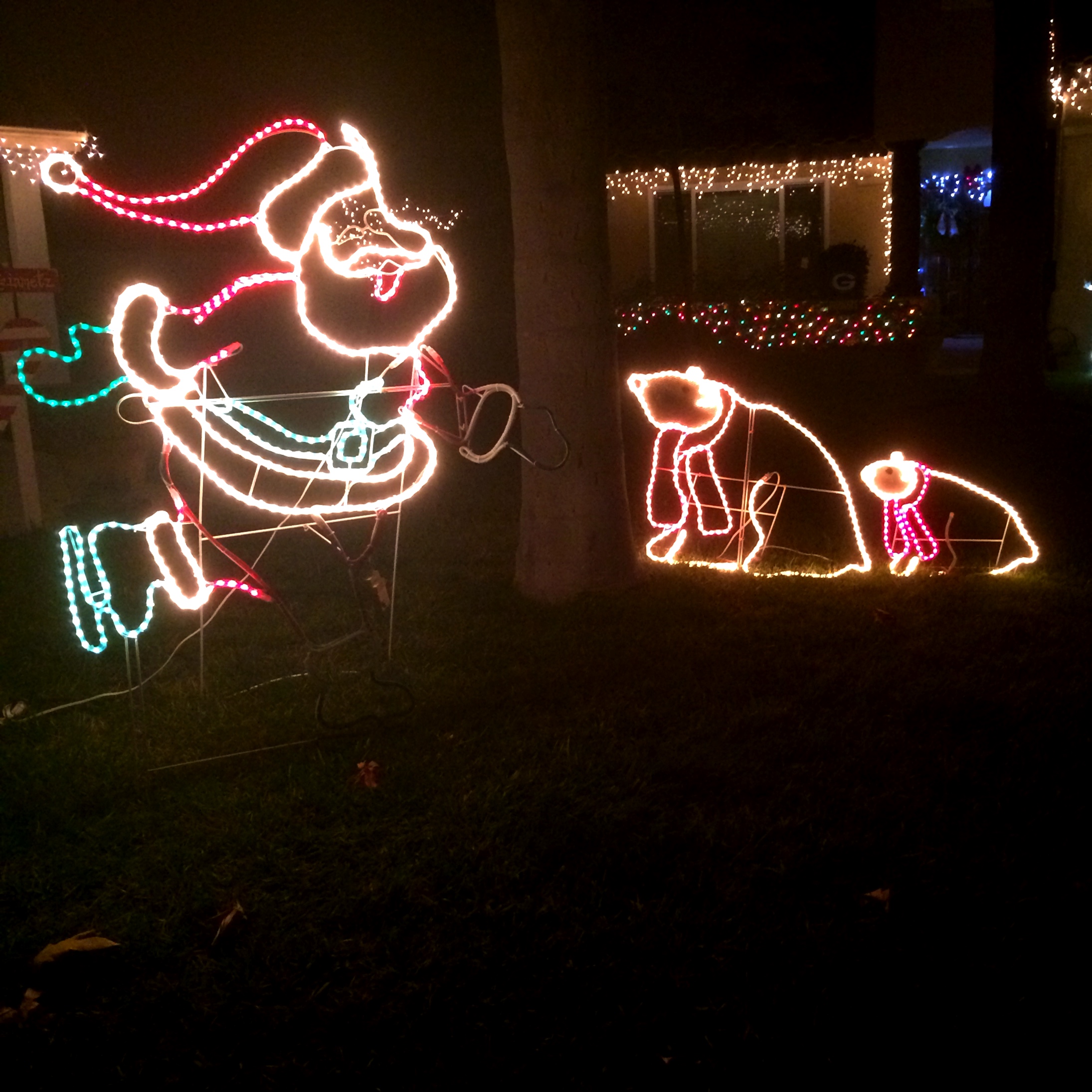
The traditional white icicle lights are definitely the most common decoration in the neighborhood.  But there is no shortage of the traditional trappings of Christmas.  We found Santa…with a couple of arctic bears.

photo-3

And a variety of versions of reindeer, including the red-nosed Rudolph.  I’m partial to this more natural version set in among the trees (even if they are palm trees).

photo

And it wouldn’t be Christmas without a trail marked by candy canes!

photo-2

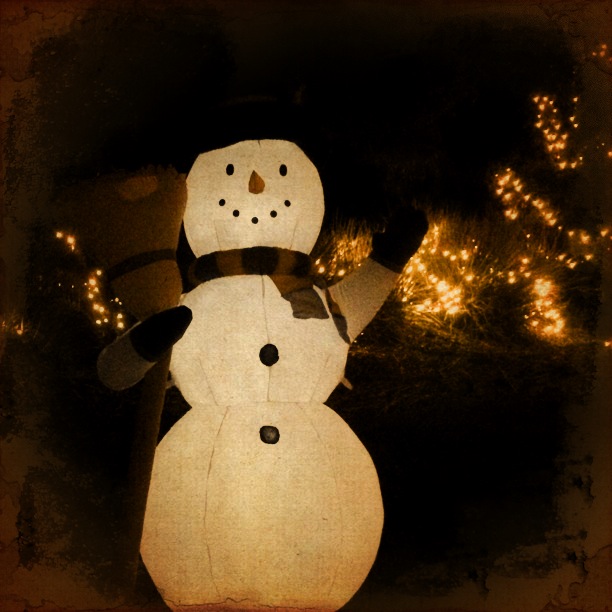
A couple of houses sported these inflatable characters.  During the day they appear to be melted as they sit deflated until they are plugged in at dusk.

photo-5

We saw twinkling lights, flashing lights, lights that were all red, lights in trees, on bushes, wrapped around pillars and poles.  Lights arranged in the shapes of trees and wreaths. Sometimes the simplest were the most beautiful.

photo-4

I often wonder about the electric bill of the people with the most lights.  Do they plan for the increased usage as part of their annual budget?  I have to admit, my house is one of the unadorned with only the porch lights to penetrate the dark.  And yet I enjoy the display of lights my neighbors set out, adding light to the long nights of December.

photo-6

Following the tracks of lights was a perfect ending to a busy week.  Walking in the crisp cool evening was energizing and it was fun to notice the details of the displays and even get some new perspectives on decorations I had only previously seen from a particular angle.

I might just add this activity as a December tradition…and maybe even branch out a bit further to take a look at how others create tracks with lights.  This was definitely a learning walk…my first focused on lights!

Making Time for Making

We’ve been doing a lot of making in our classroom this past week and a half.  Snowflakes, poinsettias, Hopscotch projects…  It’s not that we don’t make at other times, but it seems that we have really gotten in the flow of making lately.

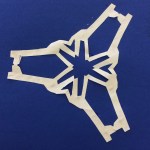
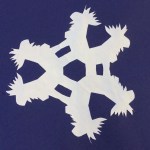
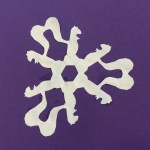
I love it when we can give ourselves and our students the time to plan, design, improve, and finalize a project.  Our snowflakes were just such a project.  Math and science, reading and writing, along with problem solving and some systems thinking all came together to create animal shaped snowflakes that will be accompanied by original snowflake poems later this week.

I wrote about the start of the project here and the value of tenacity and iteration for students.  Our students had at least four opportunities to create their snowflake designs–with time to study their own and others’ attempts in between.  And yesterday, all of our students successfully created an animal-shaped snowflake of their own design.  (We did not provide templates, although we did help the few students who needed some additional scaffolding.)

Here are a few examples…and remember these students are 6, 7, and 8 years old!

If you look closely you will notice a moose, a giraffe, a squirrel, and a lizard in these four designs.

Students also created winter scenes using computer programming yesterday.  You can read about it here.  And then today, in addition to writing about snowflakes, we began assembling the poinsettias we are making from the paper we painted on Monday.

They still need their finishing touches…but already are beautiful!  And students have learned a lot about poinsettias and a bit about their history.  (The Ecke family, locals from our area, established themselves as primary producers of poinsettias around  the world!)

But what I love best about this making is the productivity and collaboration from our students.  They love making…and once they get past the fear of failure, are willing to take risks and try new ideas to improve their products.  And we see evidence of students taking these ideas home and trying them out there.

One of our students came in this morning with a huge snowflake…a good three feet across…that she made at home.  She had talked her mom into a trip to Michaels to get the big paper that she designed (a butterfly), cut and decorated…and then brought to school so we could see what she had done.

I know there are people who might call these activities “fluff” and complain that this isn’t real learning.  For those people, I wish they could see the energy and enthusiasm, the collaboration and problem solving…and all the reading, writing, math, science and history that are learned in the process of the making.

Have you made time for making lately?

Hour of Code

Coding, programming…words that are used to describe the process of “speaking” a machine language.  This week classrooms and schools all over are participating in the Hour of Code, an attempt to get 10 million students to try computer science for an hour during Computer Science Education Week.

If you read this blog you already know that we have been working on computer programming using the Hopscotch app for a while now.  (See here, here, and here)  So in honor of the Hour of Code, we decided to pose a Winter Scene Design Challenge for our students.

Today was the day.  Students were asked to create a scene using Hopscotch that depicts some aspect of winter.  As you might expect, students thought snow, snowmen, Christmas trees, and more.  They were super excited…with my speech students arranging to get out of speech (something they love!) so they could be part of the challenge.

And there were many highlights today–lots of successes, lots of students genuinely collaborating with one another and supporting each other without teacher direction.  But my favorite moment was Esther.  Esther is an 84 year old grandmother who lives in Australia and visits her daughter in our town each year in the winter.  I taught her grandson and granddaughter many years ago (they are both college students now) and Esther has continued to come to our classroom several days a week when she is in town to help out and hang out.

As Esther began to watch the students at work on their winter scenes, I asked her if she would like to try it too.  I handed her my iPad and asked Sophie if she would show Ms. Esther how Hopscotch (and the iPad) worked.

photo

Esther was delighted!  And so was Sophie.  It is wonderful for my students to see the embodiment of lifelong learning…and Esther is just that!

An article I read recently points out the advantages of learning to code:  problem solving, (digital) confidence, and understanding the world.  And I see those advantages when my students work to program.  They also learn about systems…and working through the many variables to figure out why their plan isn’t working as they imagined.  They become persistent and learn the value of iteration.  Each mistake becomes another opportunity for learning rather than a sign of failure.

Here are a few examples of students’ winter scenes:

photo

A first grader who figured out how to use o’s as text features for eyes and nose on his snowman.

photo-2

A second grader’s winter tree.

photo-3

A third grader’s winter scene.

photo-4

A peppermint candy created by a third grader.

photo-5

And a holiday greeting card, Hopscotch style!

You can see that students are gaining confidence and expertise with this programming tool. Most of these projects were completed in less than 30 minutes and they represent only a fraction of the programming that was happening in the classroom today.  Some of our students are still struggling while others can’t wait to go home and try some more programming on their own time.

Next week we plan to have student-led tutorials where students will teach and learn from each other in small groups.

How was your Hour of Code?  What did students learn and create?

Frosty Beauty

White crystalline structures, both fragile and surprisingly strong, appeared this morning on the lawns and cars in my neighborhood.

All too often frost is just another annoyance…evidence of cold weather and the need to either scrape the windshield or wait for the defroster to gain enough traction to melt it so I can see through the windshield to drive off to work.

But this morning, when I heard there was frost on the cars, I put the macro lens on my phone, grabbed my jacket and headed outside…before even taking time for breakfast or coffee.

And I was rewarded by the intricate lacy beauty of this micro winter wonderland.

photo-4

When viewed through my macro lens, those ordinary blades of grass were transformed.

photo-3

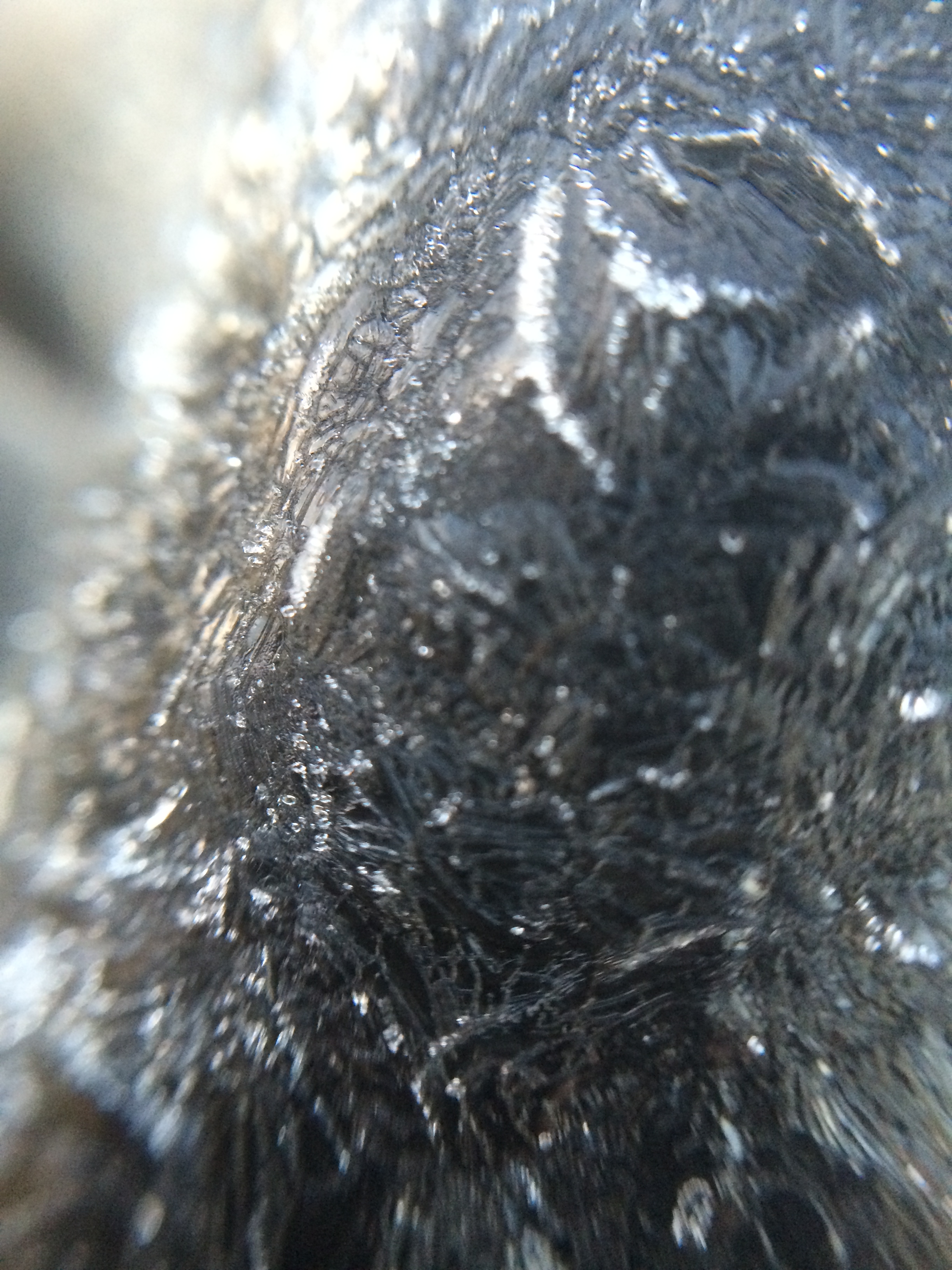
This stray leaf blossomed with delicate white crystals of ice.  I was afraid to breathe too heavily for fear of melting these structures before I could capture them through my lens.

photo-5

The frozen moisture seems to grow, creating intricate pathways of texture extending over the roof of the car.  It seemed to stay colder there longer than along the sides.  I’m sure the neighbors thought I was crazy as I crawled along the lawn photographing blades of grass and peered along the top of my car examining the patterns of frost in the crisp, cooler-than-usual morning air.

But for me, I rediscovered my sense of wonder and curiosity as I worked intently to find and capture this minute beauty.

photo-6

My macro lens has reminded me once again to take the time to look closely and appreciate the beauty in those things that seem uninteresting or annoying on the surface.

I didn’t get to work quite as early as I usually do this morning, but I had the perfect start to my day…just by looking a bit more closely.