
Yesterday was International Dot Day, a day inspired by the creativity of Peter Reynolds and the power of each of us having the courage and confidence to “make our mark.” To celebrate dots and creativity and confidence, we began our week with the poem What is a Dot? by Laura Purdie Salas. The first graders in my class had an endless list of ideas of what a dot could be and eagerly illustrated the poem with their own “dotty” ideas. Of course, we also read and discussed The Dot by Peter Reynolds.
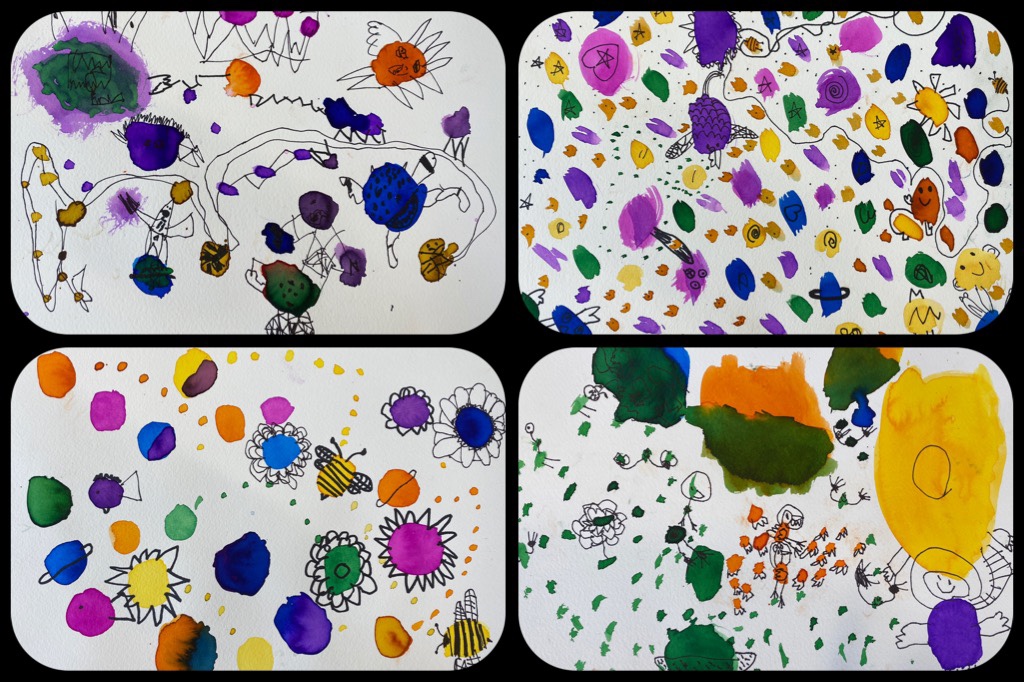
The week got dottier on Tuesday. We broke out the liquid watercolors and painted a page full of dots. These mostly 6-year-old artists knew that making the dots was just the start of this project. They would be transforming their dots into something else using a black sharpie marker the following day. They joyfully and freely painted dot after dot, experimenting with size and placement. They dripped one color onto another, while carrying on a constant narrative of alternative worlds, descriptive details about color, and oohs and aahs of their own discovery. We ended the day by reading Ish, yet another Peter Reynold’s book and talking about encouraging others and not judging our first attempts too harshly when we draw (or try other things too).
Wednesday was the day…International Dot Day! Students came to school dressed in dots and so did I. I l love their creativity in finding dots in their wardrobe. One child found a solar system shirt, each planet a dot. Another noticed the cat faces on her sweater were dots with more dots showing the natural coloring of the cat. There were polka-dotted masks (COVID makes us creative too), socks painted with dot markers, dotted bows in the hair, and I even found a pair of polka dotted earrings! With wardrobe dots in place, students were eager to get started transforming their watercolor dots from the previous day into beautiful pieces of art.
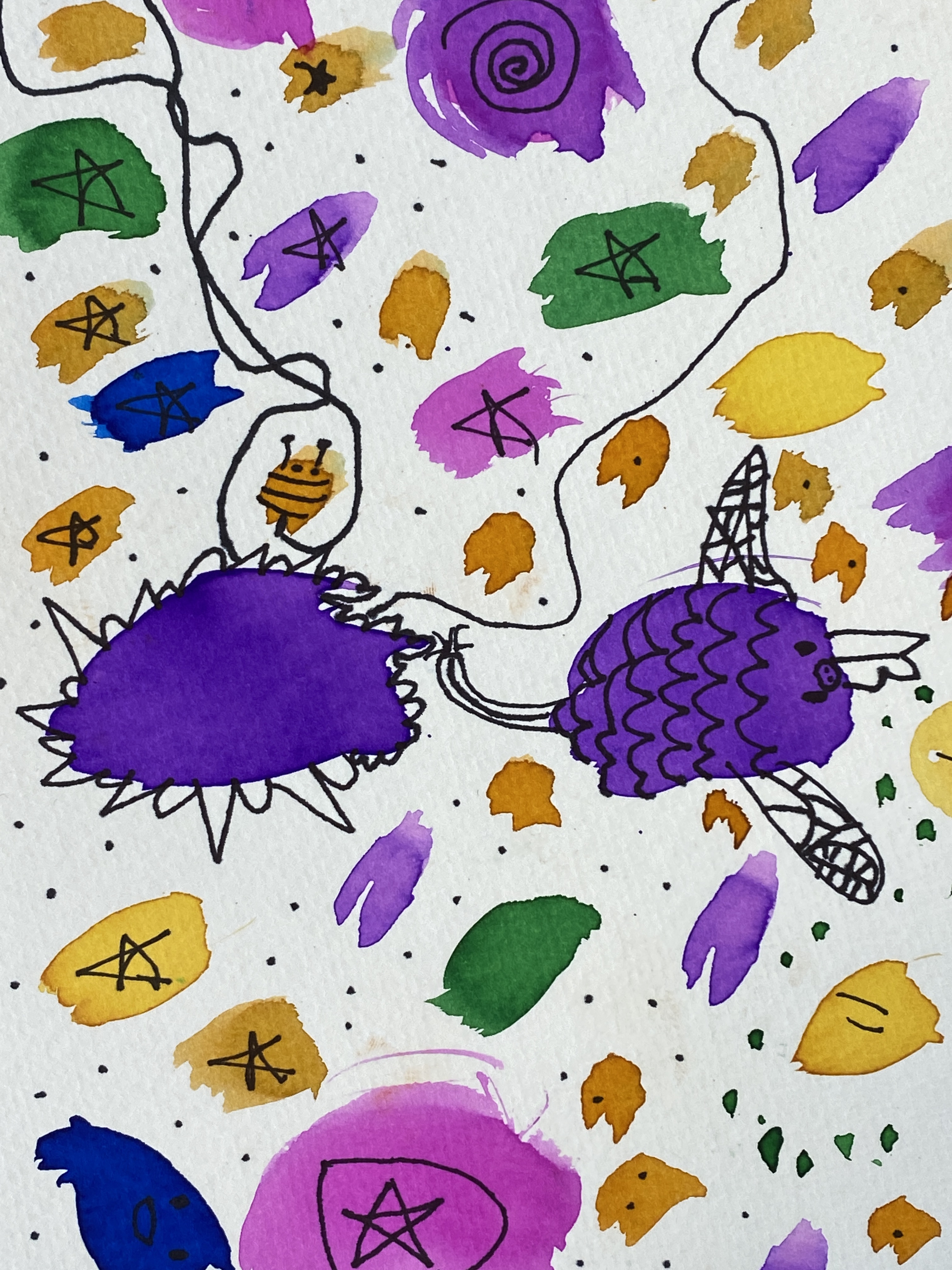
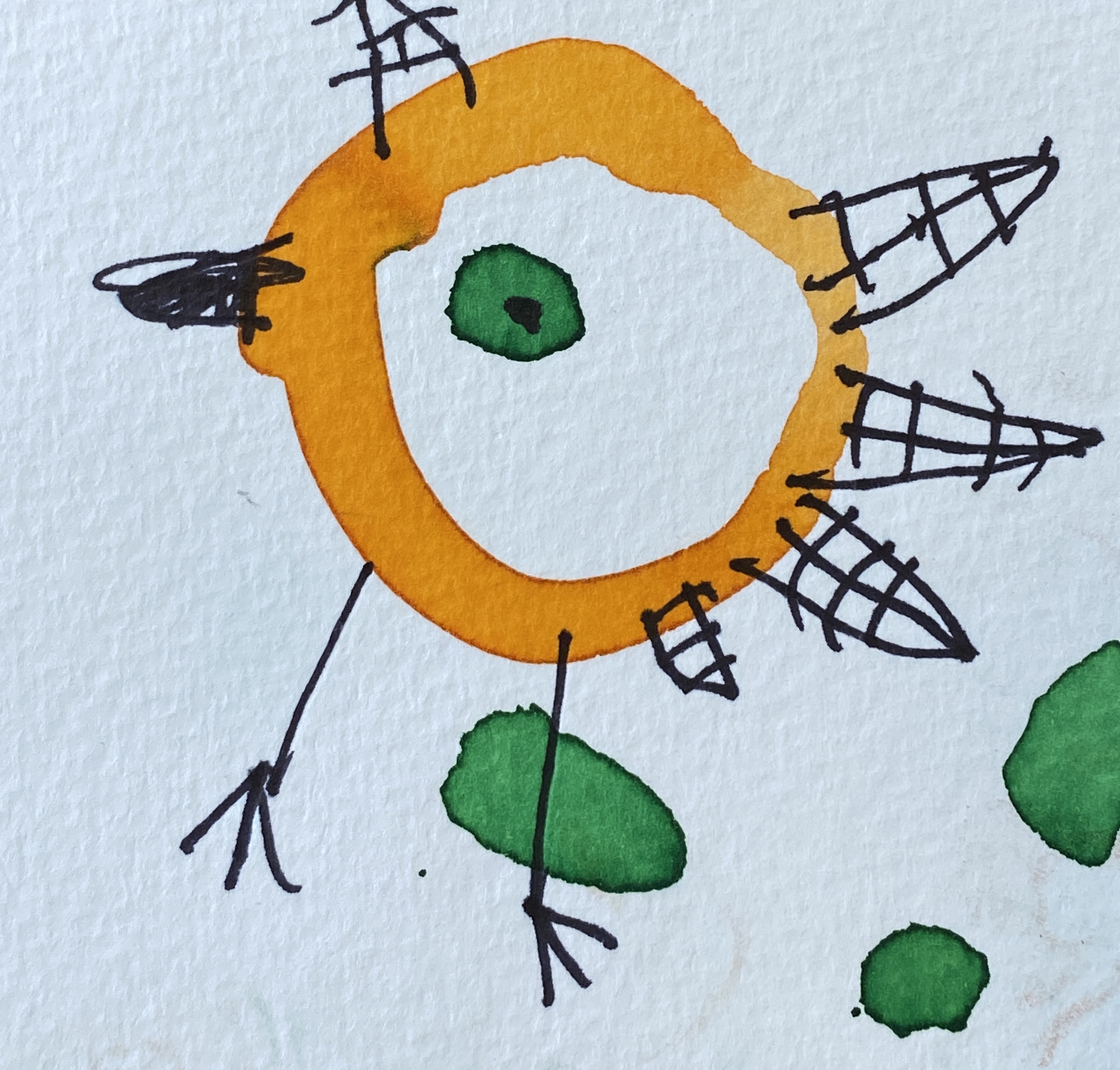
After a bit of modeling by showing what I might do with my own watercolor dots, I handed out the sharpie markers–a thicker one and a thinner one, and reminded students to start thinking about what story they might tell about the dot creation. I love the artistic freedom and courage of first graders. They uncap a permanent marker and confidently draw whatever is on their minds. Dots turned into chickens with space helmets, planets from unnamed galaxies, insects galore (bees, spiders, June bugs, ladybugs…), jellyfish, dragons, and of course, lots and lots of flowers. Along with the drawing was the buzz of conversation, telling the story of the things they were drawing. Clearly kids need to talk their ideas through as they draw.
Once the pens were capped and the drawings done, we took out our writer’s notebooks and set out to put down words to go along with the the art. We started with the simple frame, a dot can be… I showed how as a writer, instead of a sentence like A dot can be a bee, I could expand that sentence saying, A dot can be a pink bee buzzing from flower to flower leaving a trail of heart shaped pollen behind. (And they could see how that sentence also matched my drawing.) And with that short mini lesson, my students were off and writing.
Here’s a few examples:
A dot can be a bee. And a monkey that is blue and yellow. And a purple dragon and the purple dragon is swooping through the clouds. R
A dot can be a flower garden with a hot air balloon with a chicken and a bee and a sleeping cat. The chicken is looking for food. C
The best part of the writing time was that every student, even those who are less confident writers, were engaged with their writing. I heard lots of sounding out to get the words on the page. And students began to stretch their ideas, adding details that bring writing to life. I hope as the year progresses that they become as fearless with their writing as they are with their artwork, knowing that small mistakes might just become a “beautiful oops” or the stepping stone to something magnificent. Risk taking is essential to learning, as is joy. We had a wonderful International Dot Day filled with playfulness, creativity, and lots and lots of learning.
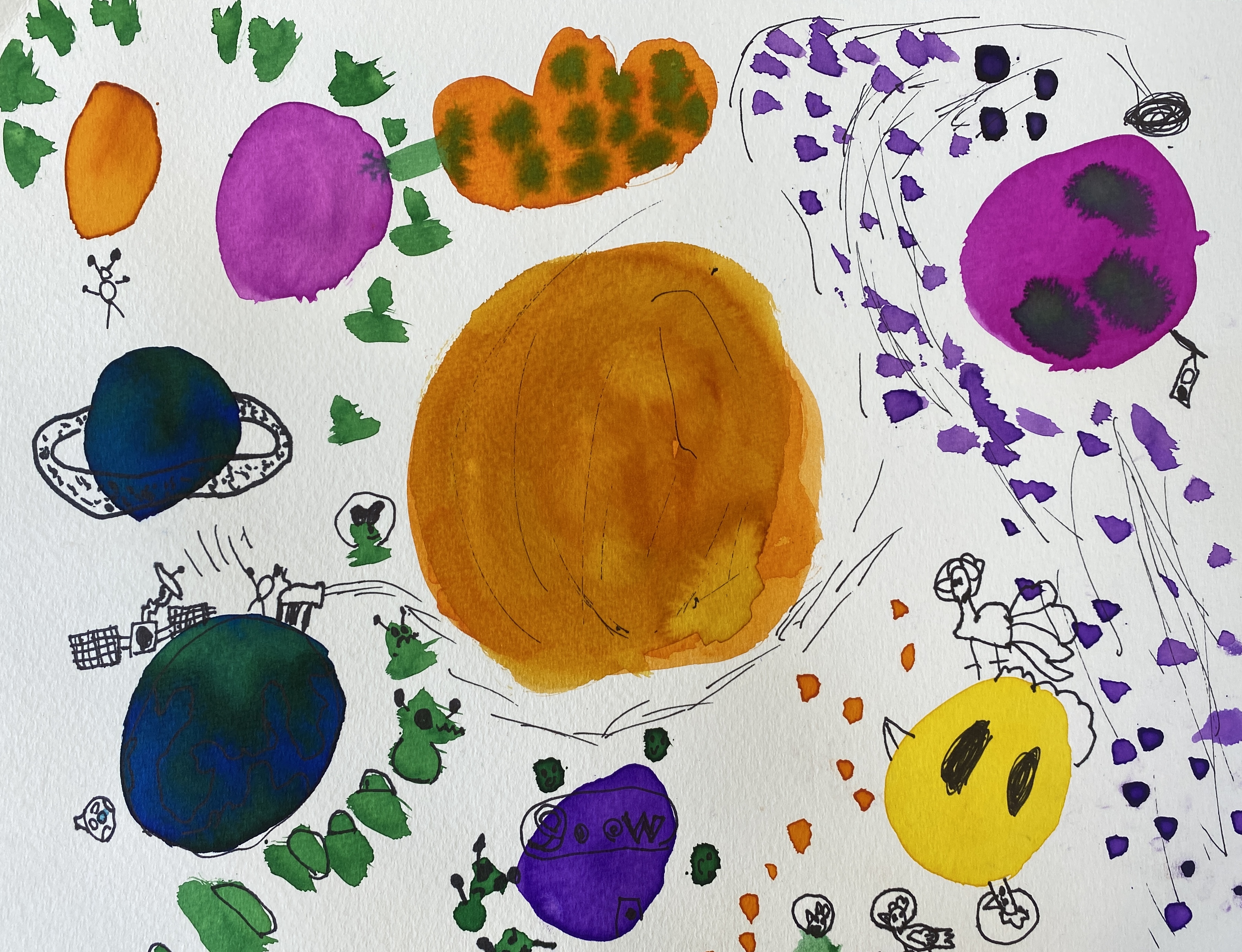
What might you do with a dot? It’s never too late to make your mark!

It’s still August, we’re deep into summer and yet school started on Tuesday. Now my days are filled with first graders. I love their unfiltered questions, their earnest effort, and unbridled joy. After a few years of not teaching these young ones, it’s refreshing to be reminded that these learners are eager to make things, to say things, and to play, play, play!
Tuesday was loooooooong. That first day back after summer’s break requires stamina that has dimmed since June. And on the first day of school in first grade, teachers are busy! Just remembering my new schedule took a crazy amount of effort!
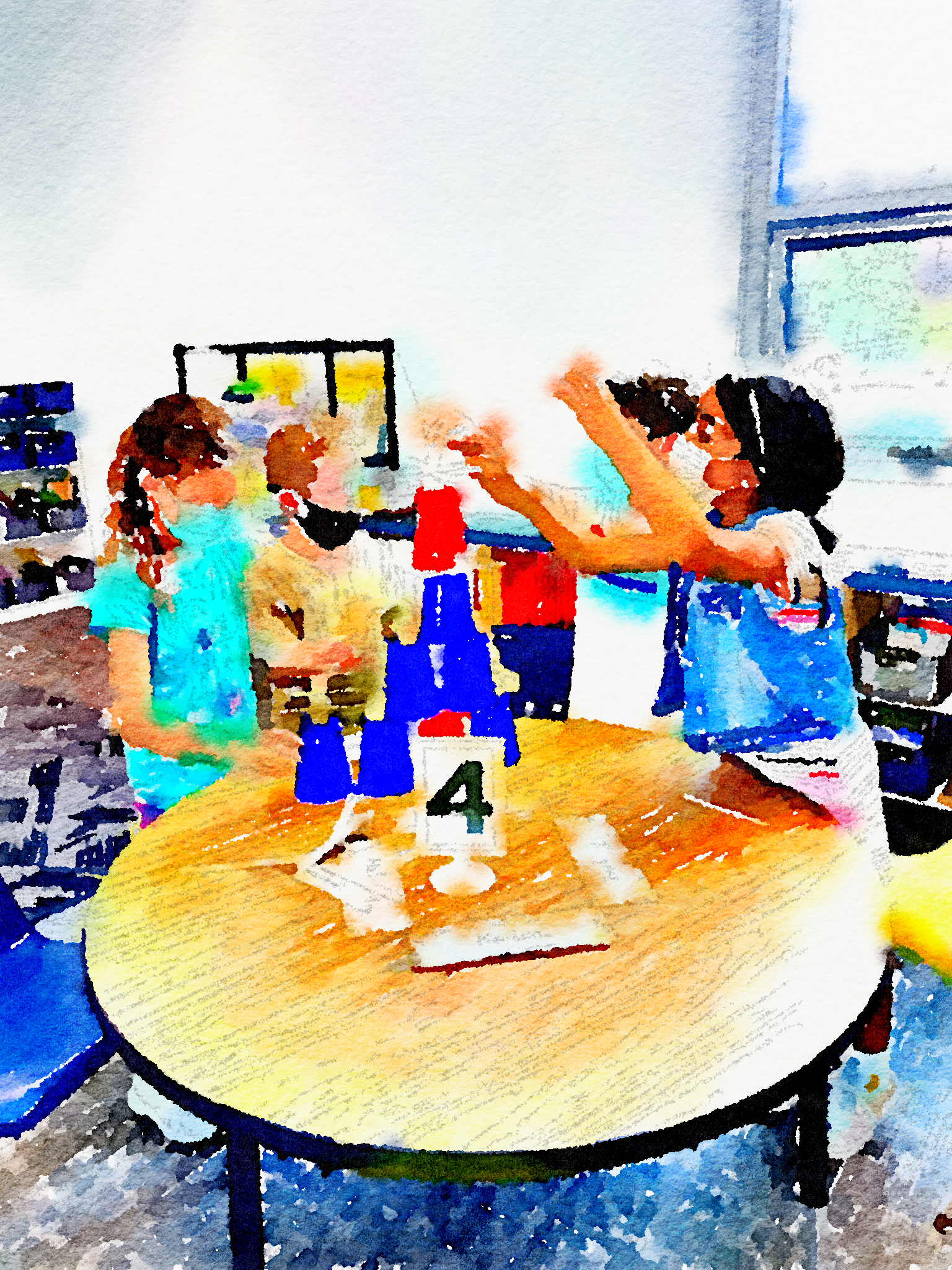
But there was also lots of room for fun (which also doubled as formative assessment for me). I braved the paint (on day one!) and students watercolored their self portraits. Collaborative tower building revealed gaps between students who already knew how to work smoothly with others and those who clearly wanted all the control of the build. For some groups, collaboration meant building separately and then looking for ways to combine the small builds into something larger.
One of my favorite activities was inspired by author and artist Debbie Ohi. She has a series of illustrations created emerging from broken crayons. As part of our morning message yesterday, I asked each student what they could imagine coming out of a broken crayon. I heard about dragons, strawberries, flamingos and more.
We studied Valerie Worth’s poem, Crayons, noticing her use of the words grubby and stubs. We talked about how crayons work even if they are broken. And each student drew an illustration to accompany the poem.
But the true magic happened when each student selected a crayon, broke it, and created an image emerging from the broken crayon. After drawing, each 6-year old carefully glued their crayon pieces to their creation and carried their art over to a counter to dry. Then it was time to write.
I led with the assumption that they could all write. I reminded them that if they weren’t sure how to spell a word, they should write the sounds they hear when they say it. And they were off. I asked for a sentence about their crayon art. Some stayed safe, writing a simple sentence like, I made a cat. Others included more elaboration and showed confidence as writers. But all successfully used their imaginations and created something wonderful.

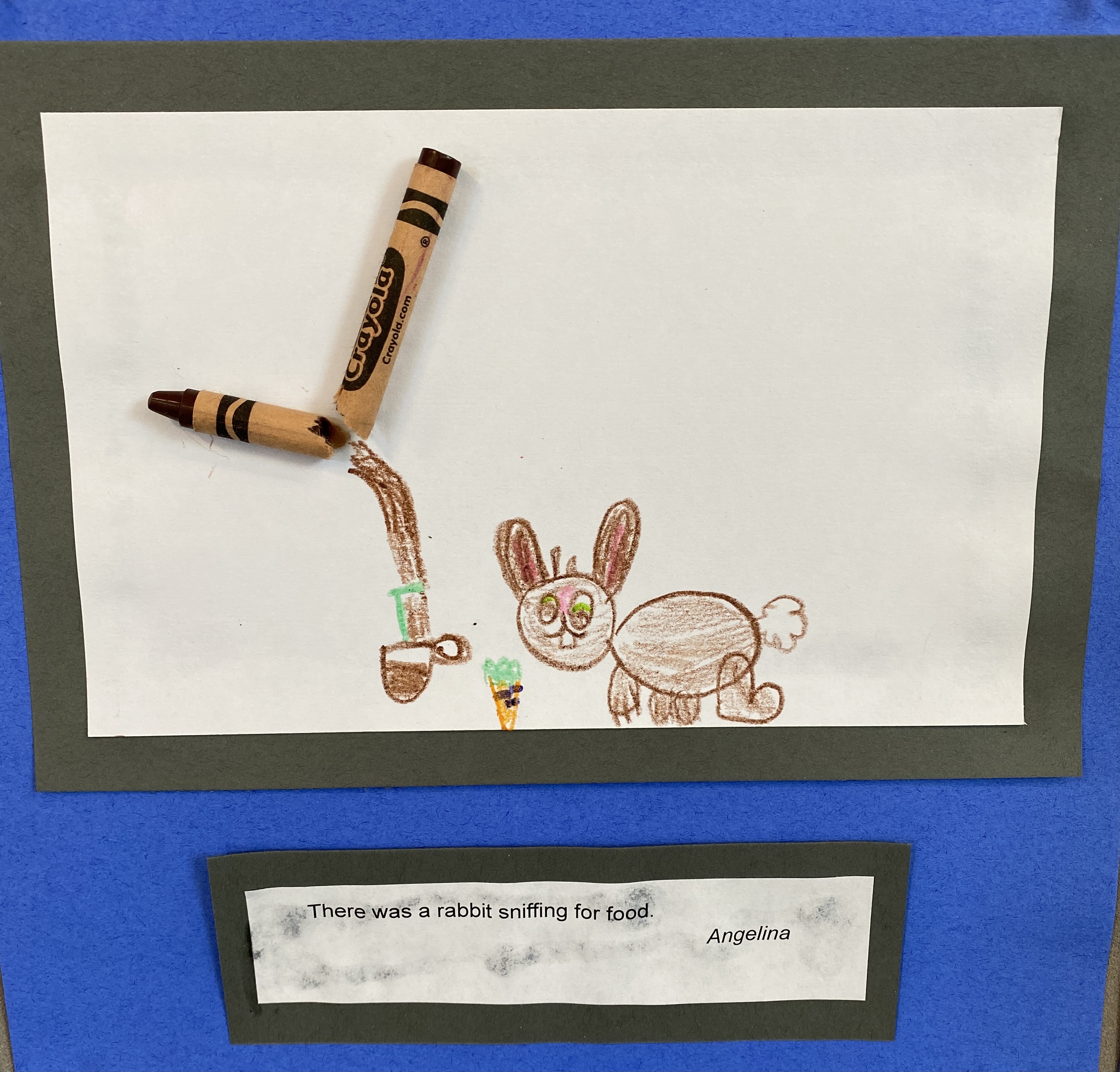
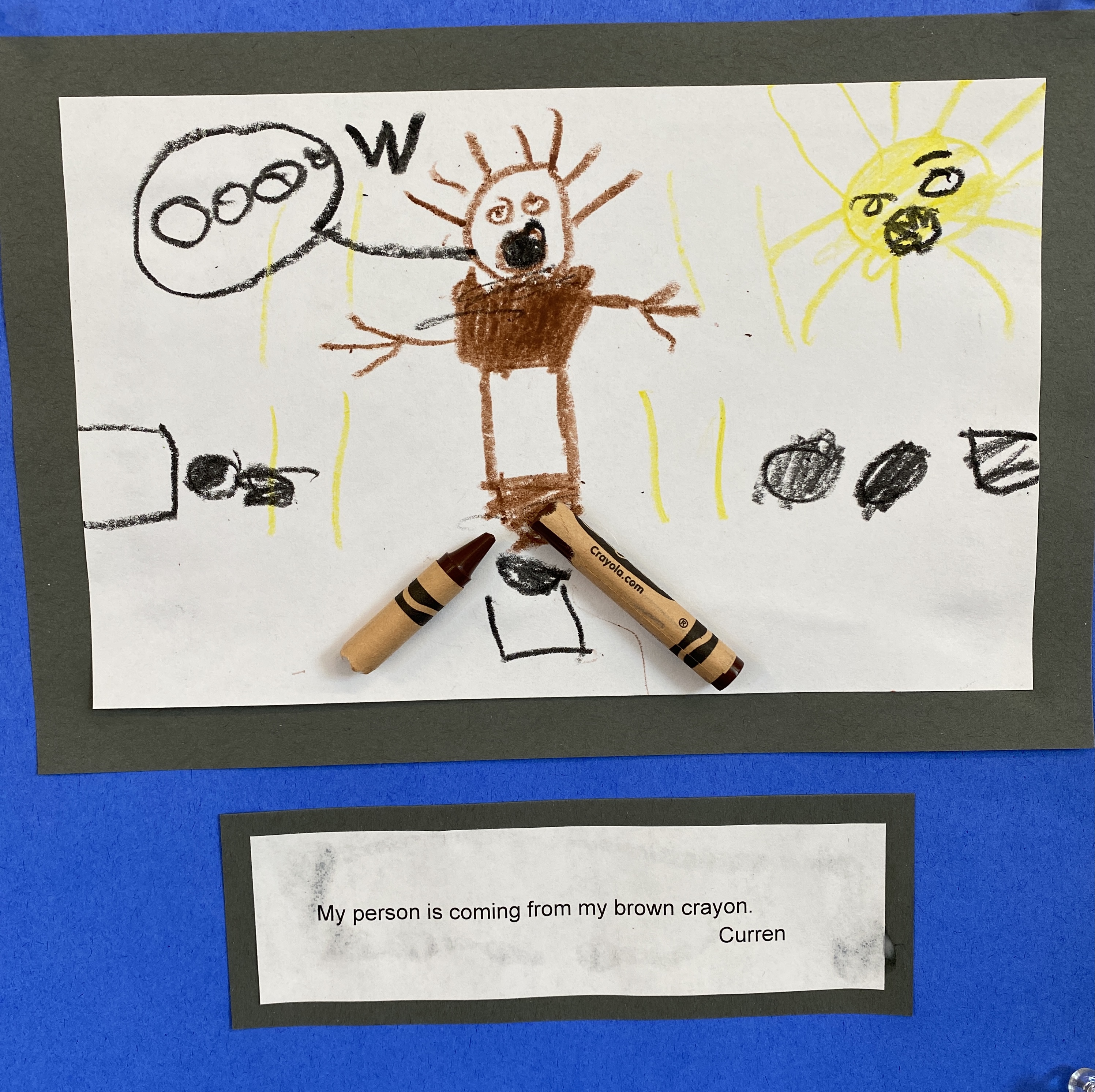
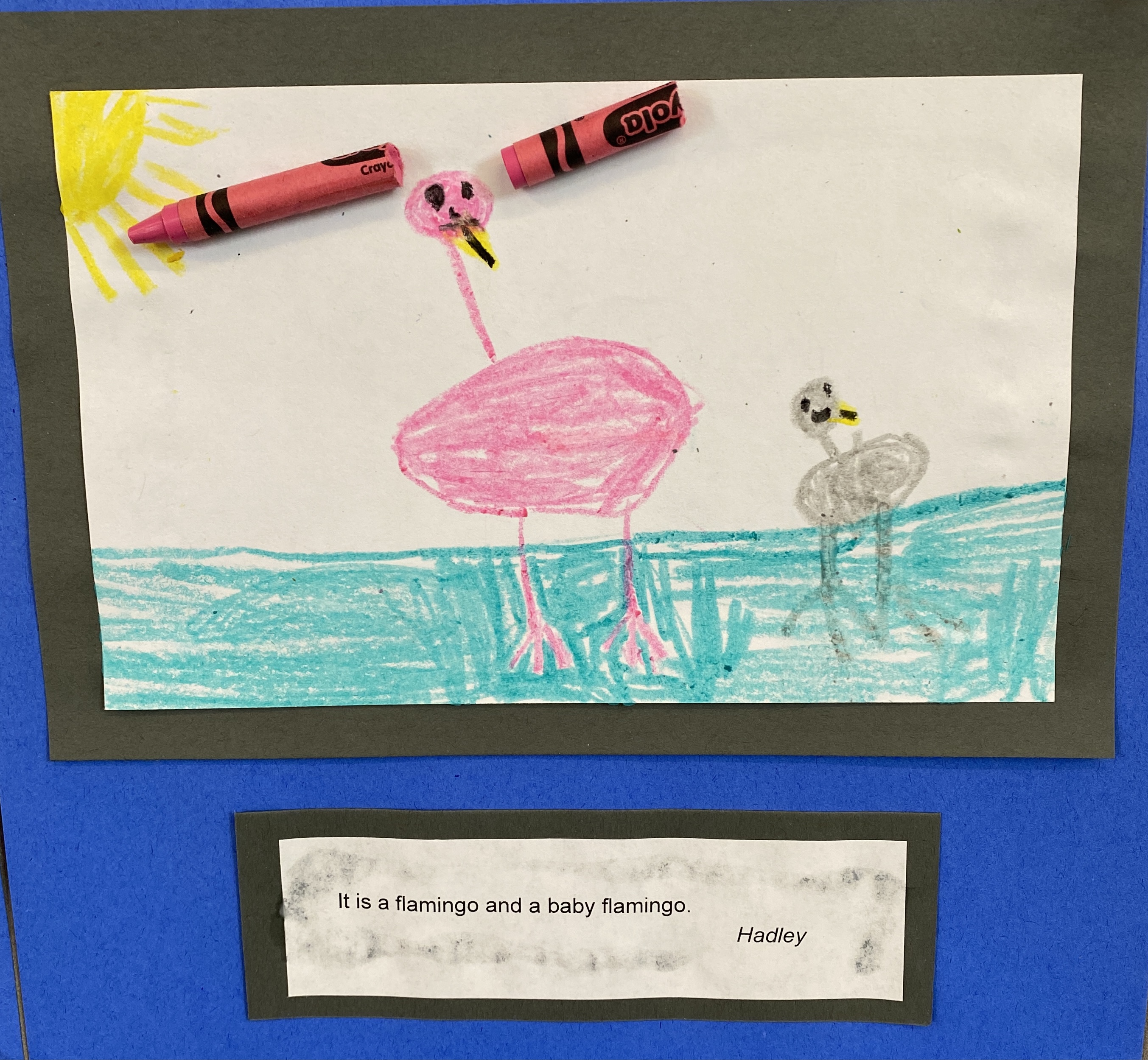

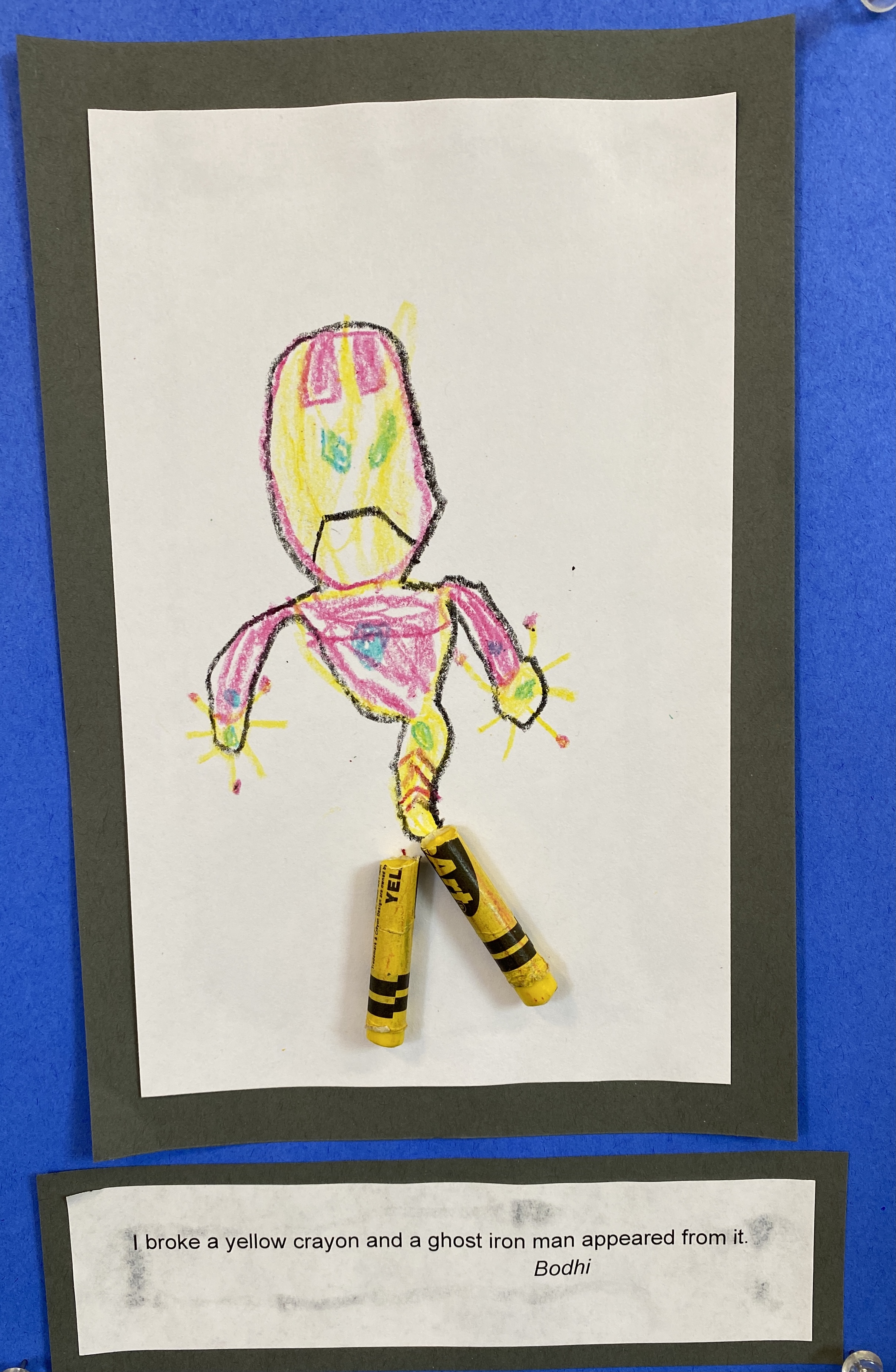


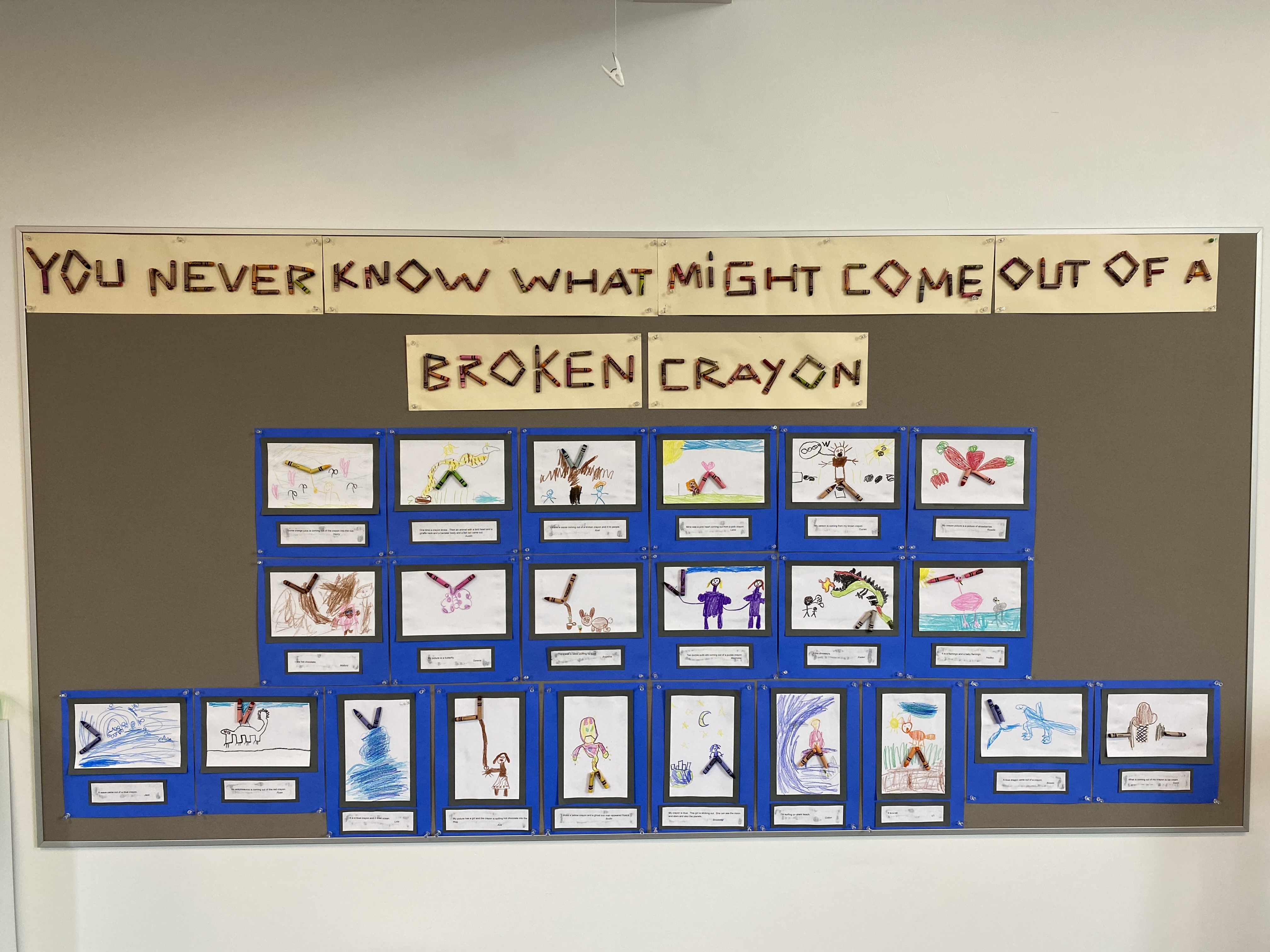
After school ended, I typed up their sentences and created a display for parents to browse when they come to school for Back to School Night next week. I hope they enjoy their children’s early first grade work as much as I do!

 Thinking Through My Lens