It feels like tying things is becoming a lost art. The majority of the first graders in my class don’t know how to tie their shoes, most opting for Velcro or slip-ons as alternatives to the dreaded shoe tying.
Bows on packages are often premade. You can just peel off the paper and stick them directly on the wrapping paper. Maybe I’m showing my age, but tying used to feel like a rite of passage rather than an avoidable annoyance.
We recently sent our grandsons knot tying kits — kind of in the same genre of the Swiss Army knives we got them for their birthdays (and I wrote about here). And I’m wondering if they will take up the challenge of learning to tie a variety of knots. I think the kit includes directions for 23 essential knots. (What knots are essential? And for who?)
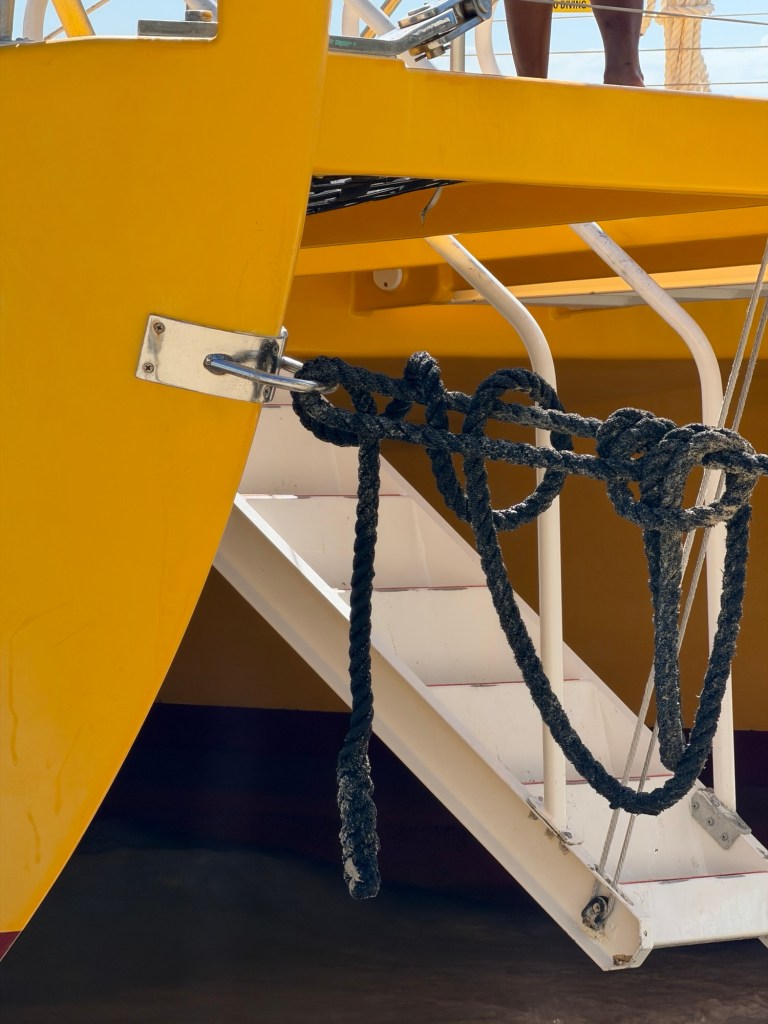
Sitting in a beach chair, reading a novel, I heard the horn of a catamaran alerting people to move so they could land on the beach. And probably about 10 yards from me the boat landed on the sand and two young women ran down the stairs, hopped off, each grabbing a long and thick rope that they then looped through a metal ring and tied with confidence. I have no idea what kind of knot it is, but I’m guessing if you work on that catamaran, that knot is essential.
What other professions and hobbies depend on knots? How do we get our children and students interested in these lost arts? How many knots do you know how to tie?
I’m gulping in the beach walks this week, taking advantage of the warm weather and the low tides and attempting to counter balance the intensity of parent-conference week.
Shore birds are regular beach goers too. From the most common seagulls, those pesky scavengers who make a practice of poking their beaks into any beach bags left unattended and then chasing one another around, squawking to high volume, trying to abscond with the treasure, to infrequent sightings of great blue herons, tall and stately cousins to the snowy egrets that I delight in photographing.
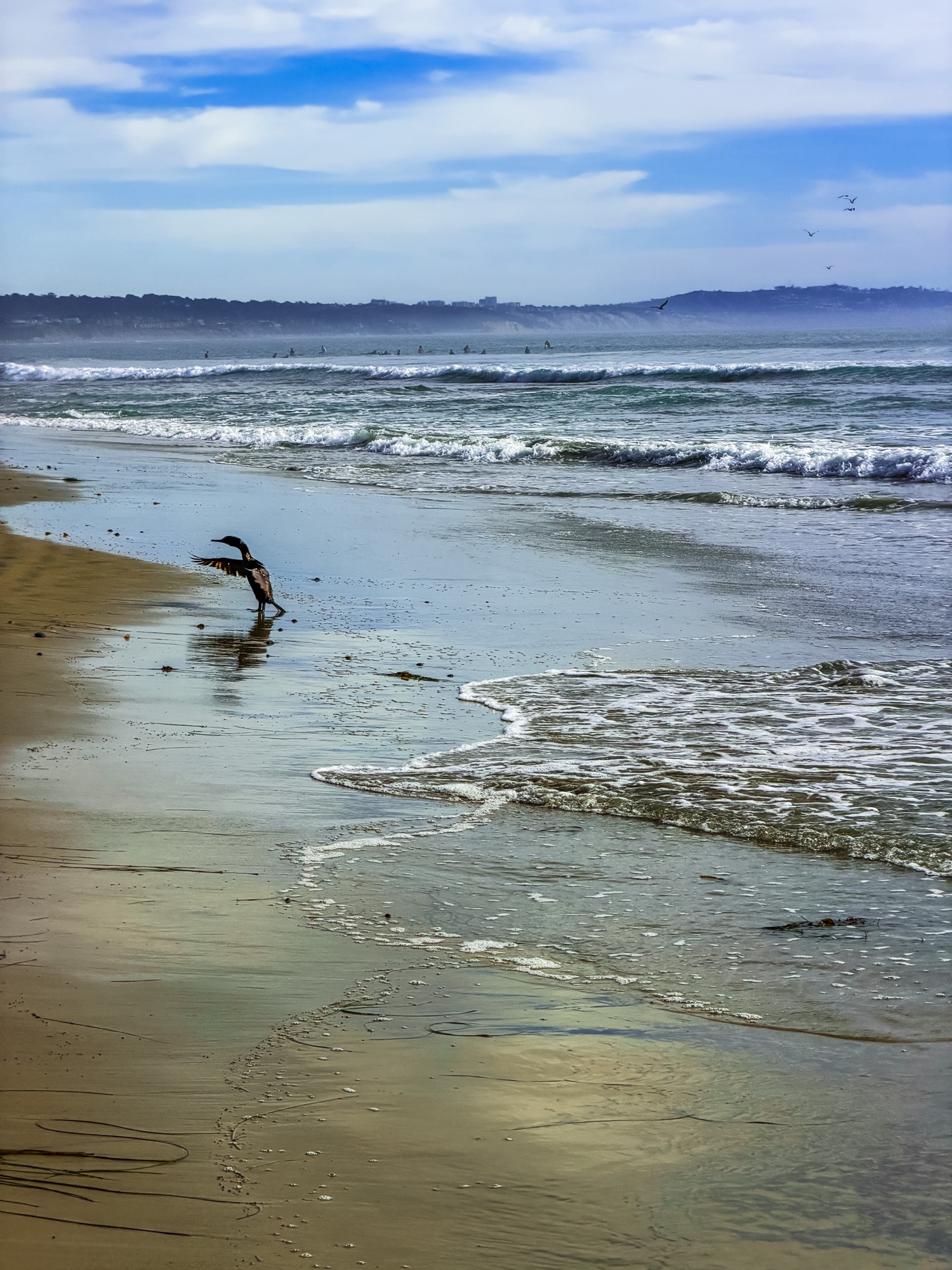
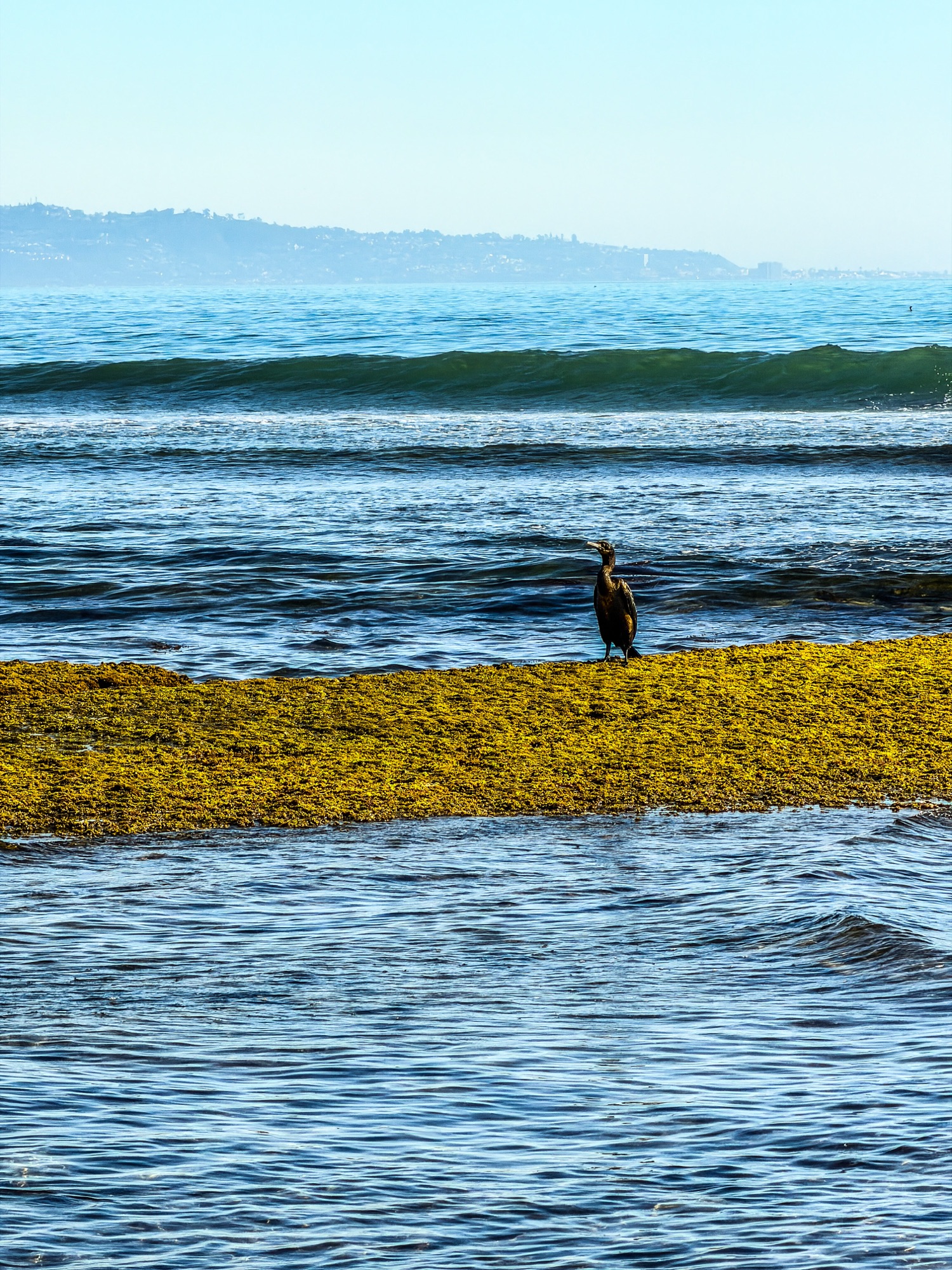
In the last few days it has been cormorants that I keep seeing on the beach. I don’t think they are technically shore birds, I more commonly see them flying over the beach or sunning themselves on piers or in lagoons. They are described as strong swimmers and they have these big, awkward webbed feet that are definitely not ideal for walks on the beach!
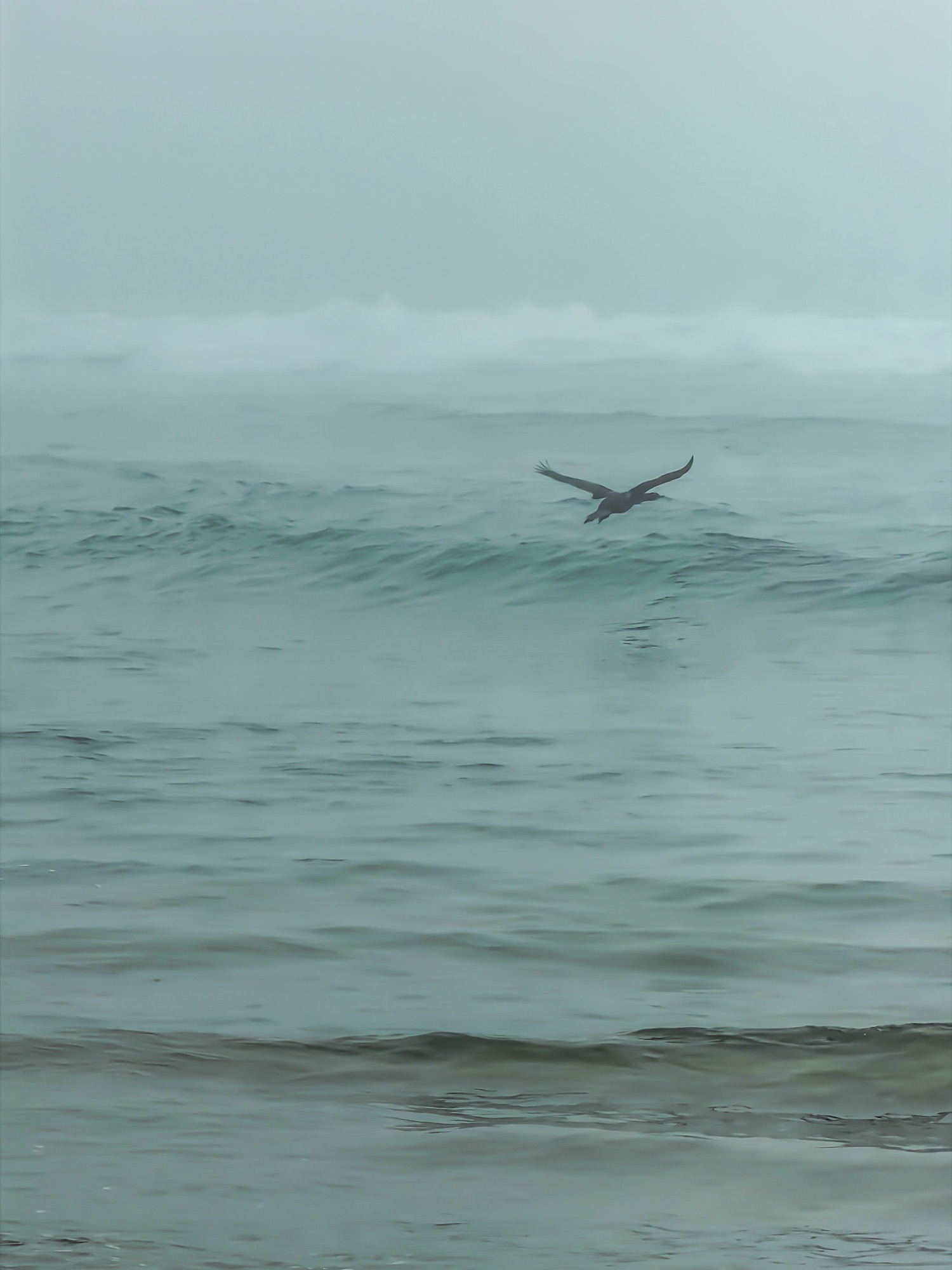
I even spied one flying in the fog on Monday. They have a distinctive flying style, flapping their wings much more quickly than other birds. It makes them seem like they are in a big hurry and trying to catch up.
I find myself wondering if these cormorant sighting are related to the weird weather, the high heat, the lack of winter… Are they confused, lost, having trouble finding their usual food?
Clearly I have some research to do! But for now, I will enjoy watching these distinctive birds and appreciating their unique characteristics. And I can never take enough photos!
Yesterday I wrote about my moist and cool foggy walk on the beach, today was like whiplash. Clear and twenty degrees warmer meant the beach felt like summer. At almost 7pm it is still in the low 80s! (Thinking of all my friends not on the west coast who are dealing with storms and cold temperatures!). None of this is normal or expected. While spring breakers are loving it, I’m not convinced this is a good thing.
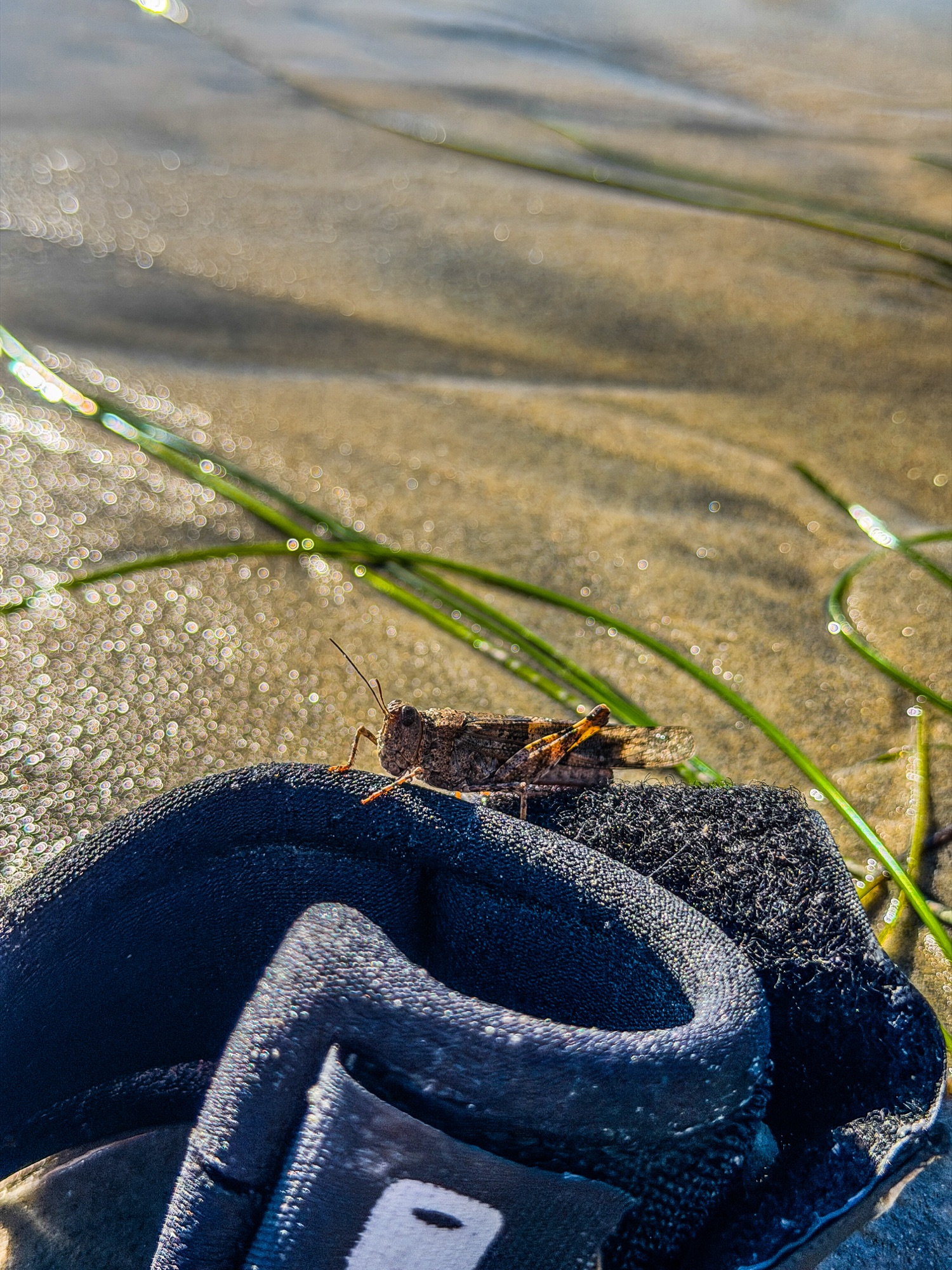
As we meandered along the shore I noticed a grasshopper perched on an abandoned piece of surfboard leash. What? Grasshoppers are not usual beach inhabitants. I leaned in close, trying to get a grasshopper portrait without making it leap away. I wanted to get close enough to see details and not capture that blur that happens when the focus and distance don’t line up. After a few tries, I got this unexpected shot.
I was feeling a bit uncertain about how this St. Patrick’s Day would go, especially when my students greeted me this morning with tales of leprechaun escapades that happened in their homes overnight. Glitter in the toilet, messes in the kitchen–and kids so excited they could barely contain themselves. But somehow, all that excitement channeled into a pretty calm classroom–that was unexpected (and felt like a St. Patrick’s Day gift).
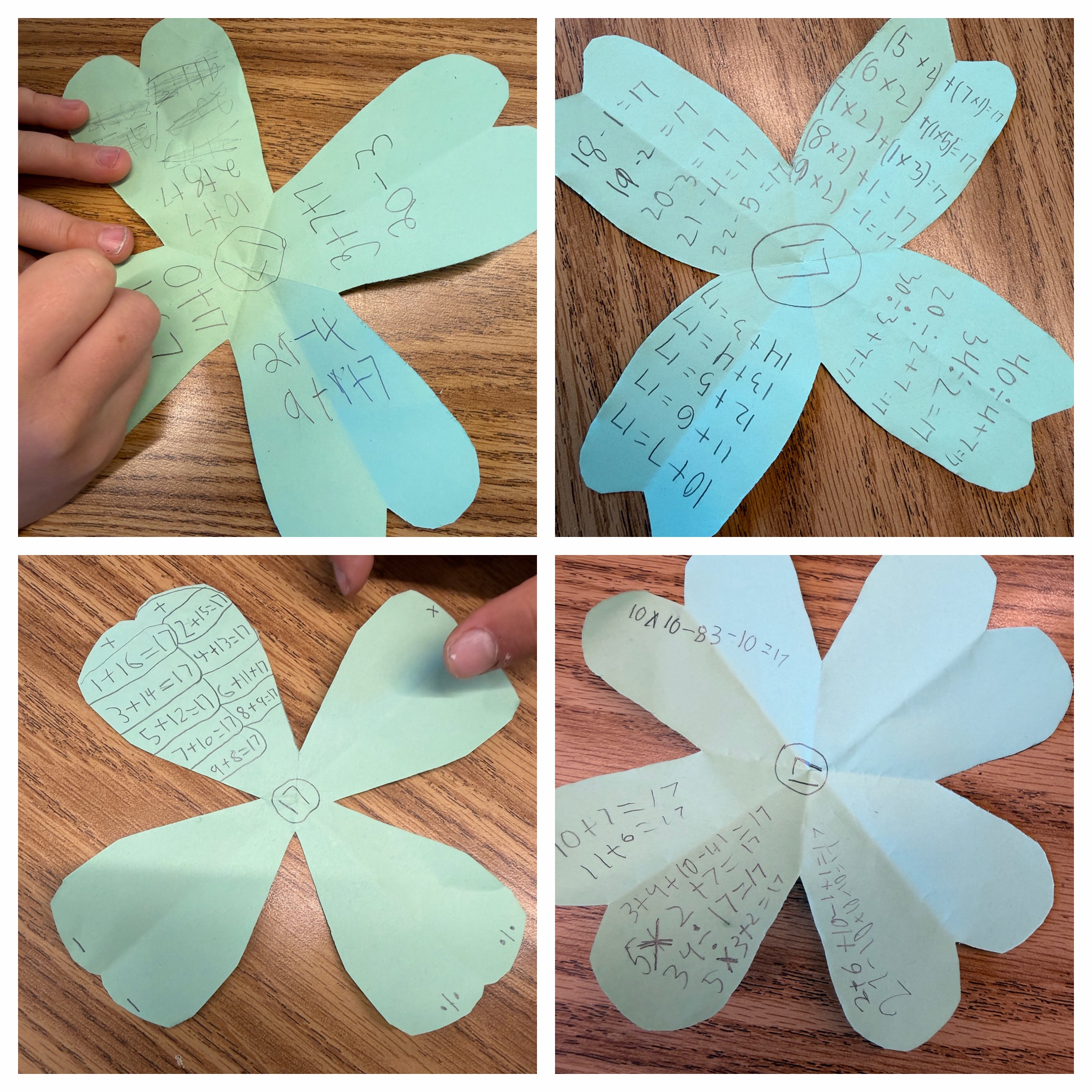
We did some folding and cutting to create some lucky 4-leaf clovers–after we talked about their magical qualities (many of the first graders said they had experienced finding these rare and magical items). Most students were successful right away, and those who weren’t got theirs to come out whole on their second attempt. Then we turned them into some fun math. They wrote the number 17 in the middle (after all, it is March 17th) and then wrote math problems that equaled 17. Another unexpectedly fun and successful activity.
I like when the unexpected makes my day easier and more interesting. I also like paying attention to what is unexpected and why I identify it that way. Is it too much to wish for the rest of the week to be as pleasingly unexpected?
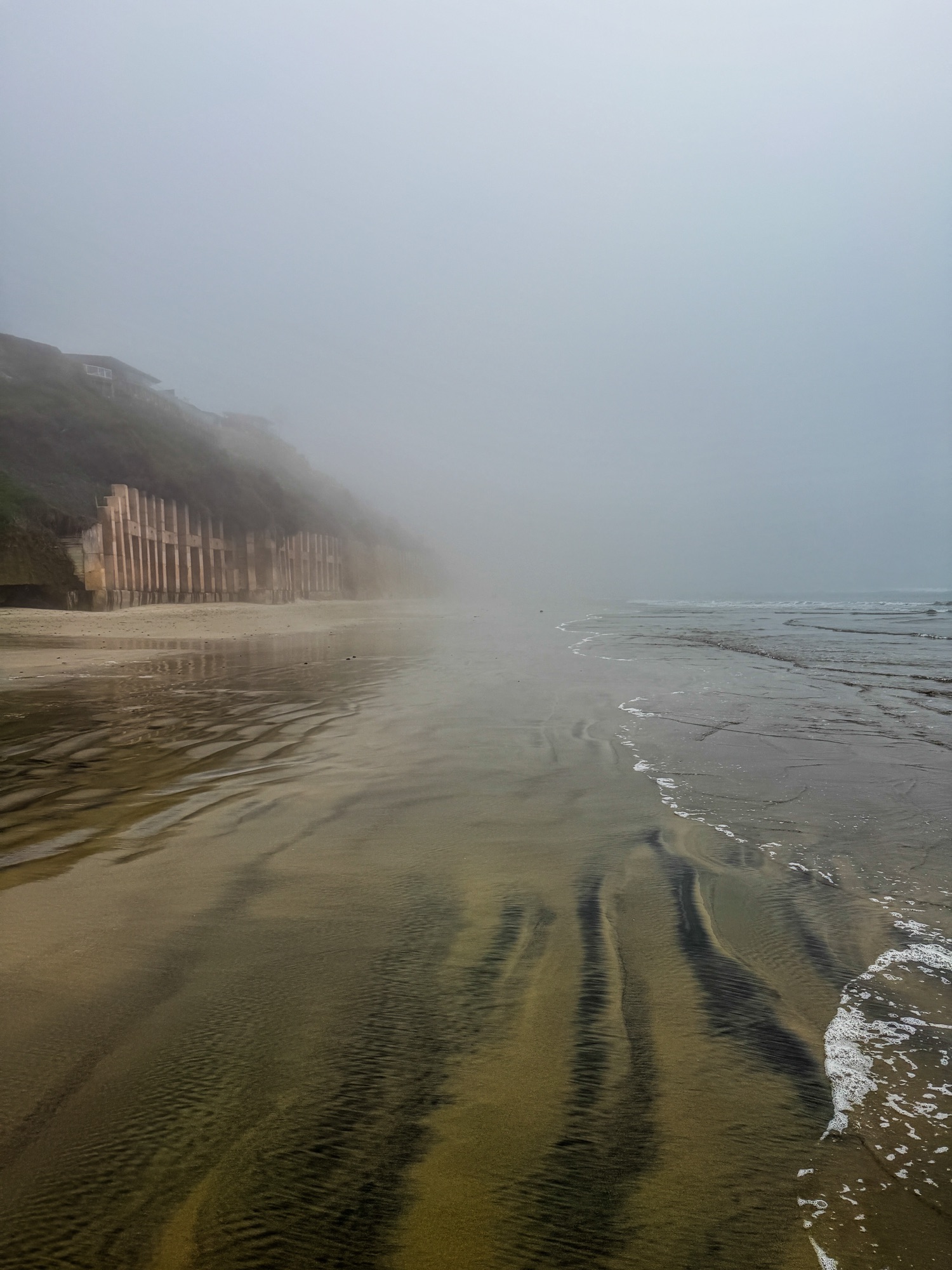
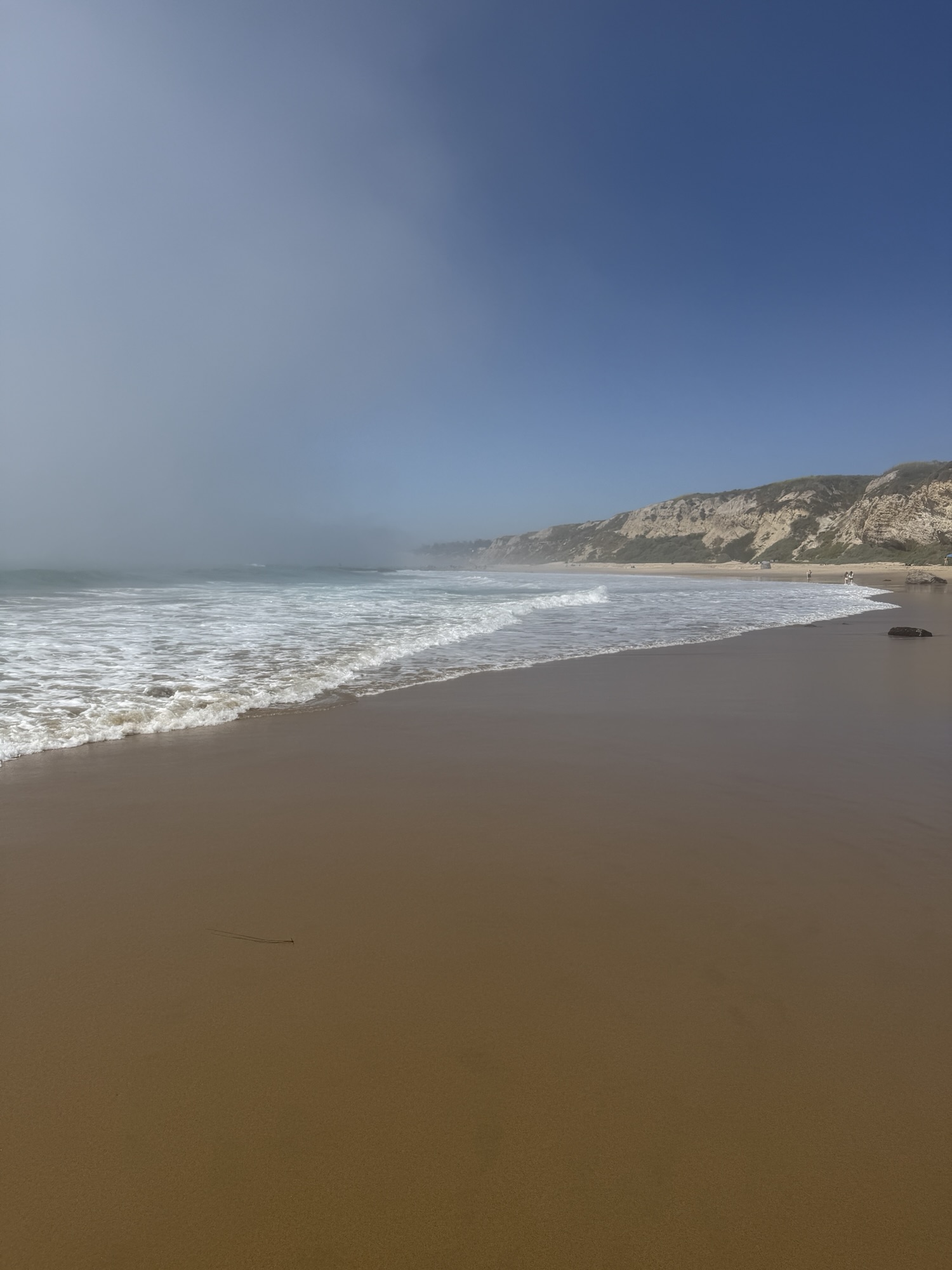
I should have known–my student meteorologist this morning posted foggy and cool (while the sun was shining) in spite of the protests of his classmates. With a heat advisory posted on the weather app, everyone was expecting hot and sunny with record March temperatures, not a thick marine layer. But sure enough, by about 11:30 this morning, that pesky blanket of gray was wafting onto the playground. By the time I left school after 3, the coast was pretty much socked in the fog.
But the tides are low this week during my walking time, and walking on the beach is always better than walking around the neighborhood, so I pulled on my sweatshirt and headed into those very low clouds.
Dense fog is a lot like walking into a tunnel. Peripheral vision is limited, you can only see what is immediately before you. I found myself trusting the muscle memory of my feet and legs rather than depending on landmarks to find my way. In some ways it made distance fade away as I was forced to stay in the present rather than anticipate what lay ahead. Before I knew it miles passed.
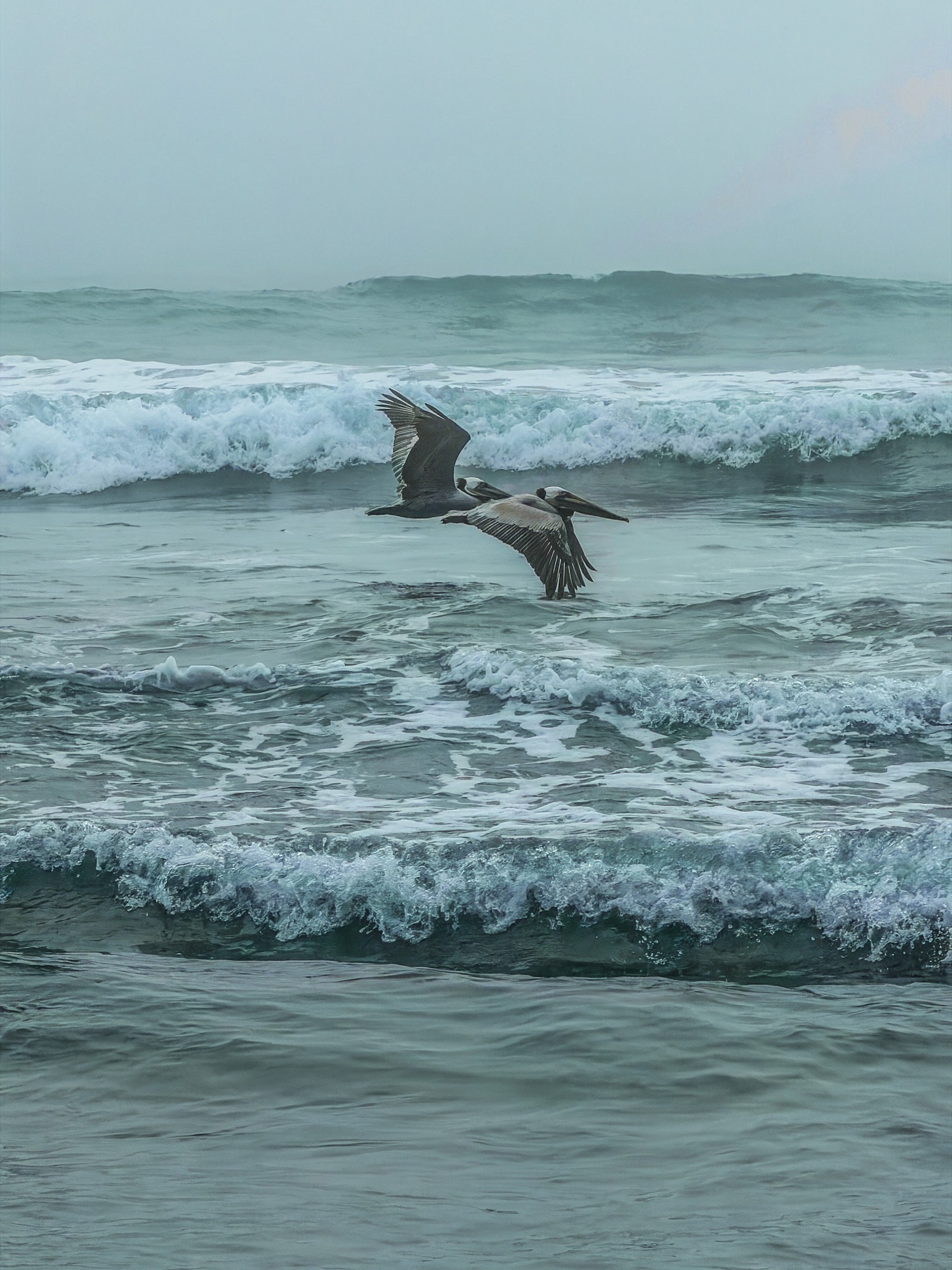
Along the way back I noticed pelicans. Often they fly overhead, dipping and diving, surfing the waves. But today they were hanging out near the shore…just floating in the shallows. Sometimes lifting into flight just as I pulled my phone from my pocket to take a photo. Were they also experiencing the tunnel effect? Seeing the ocean differently through the thick gray damp of fog?
I enjoyed my tunnel view this afternoon, staying present and available to the shrouded beauty right in front of me. I soaked in the cool damp air, breathing in the sea and exhaling the worries about the world as my feet were treated to nature’s spa treatment–a cool salt water rinse. A perfect way to end my work day.
Sometimes I feel like I can only see the world through smudged glasses, details obscured or invented to serve someone’s agenda rather than the greater good. Like walking in dense fog, you can only see what is immediately in front of you rather than any insights the big picture offers.
The classroom can be like that too. Vision blurred by the marine layer created by the chemistry in the room. It’s too easy to lose focus and only see the largest obstacles rather than picking out the beauty in the diversity of details that appear when you are able to shine light on them.
It’s report card time in my school district, a time that forces me to see past the marine layer as I consider the strengths and growth of each child in the room. It’s a reminder to look and listen carefully, to find the spaces and places where the sun turns the sky from gray and colorless to vibrant and so blue that possibilities are endless.
Today we decided to drive north to walk a beach we love, but don’t get to too often. We braved some crazy traffic (a parade was taking place a block off the main road, causing gridlock) as we hoped the heavy fog would burn off by the time we arrived at the beach.
It was noon when we arrived, later than we planned for. The sky was blue and bright with sun at the parking area. As we walked toward the beach, we walked into the fog. It was warmish (high 60s) and the tide was low. As we walked south along the shore, we explored the tide pools exposed by the low tide. Sea anemones were abundant. I watched hermit crabs in their adopted shells skitter in the shallows. We could feel the damp on our faces as we walked, and the beach ahead of us disappeared. Landmarks that tell us how far we’ve gone and how much farther we have to go disappear, changing the landscape, making the familiar unfamiliar.
Near the end of the stretch of beach we walked, the sun prevailed and we stopped to watch surfers, seemingly too close to the cliffs, ride waves and duck into the brilliant translucent tubes of water. We headed back, finding the fog again…a little less dense this time. At one point I noticed the beach split between the fog and sun.
Can I read the sky like others read the palms of hands or the remains of tea leaves? Does this mean that clarity is right in front of me? Or does it mean that I need to keep wading through the fog, wiping away those smudges, shining light into dark spaces until it becomes second nature and I know clarity when I see it?
Shore birds are fascinating. They come in many shapes and sizes and have distinctive ways of moving. There are different beaks, adapted to whatever they love to eat, and different feet. I love the elegance of egrets with their sleek curved necks and bright yellow feet. I’ve written about them and photographed them frequently, here are just a couple of the many posts. You can find them here and here. I love the power of ospreys who patiently watch the world from on high and then dive, picking up their prey (large-ish fish) in their sharp talons. You can find posts about them here and here.
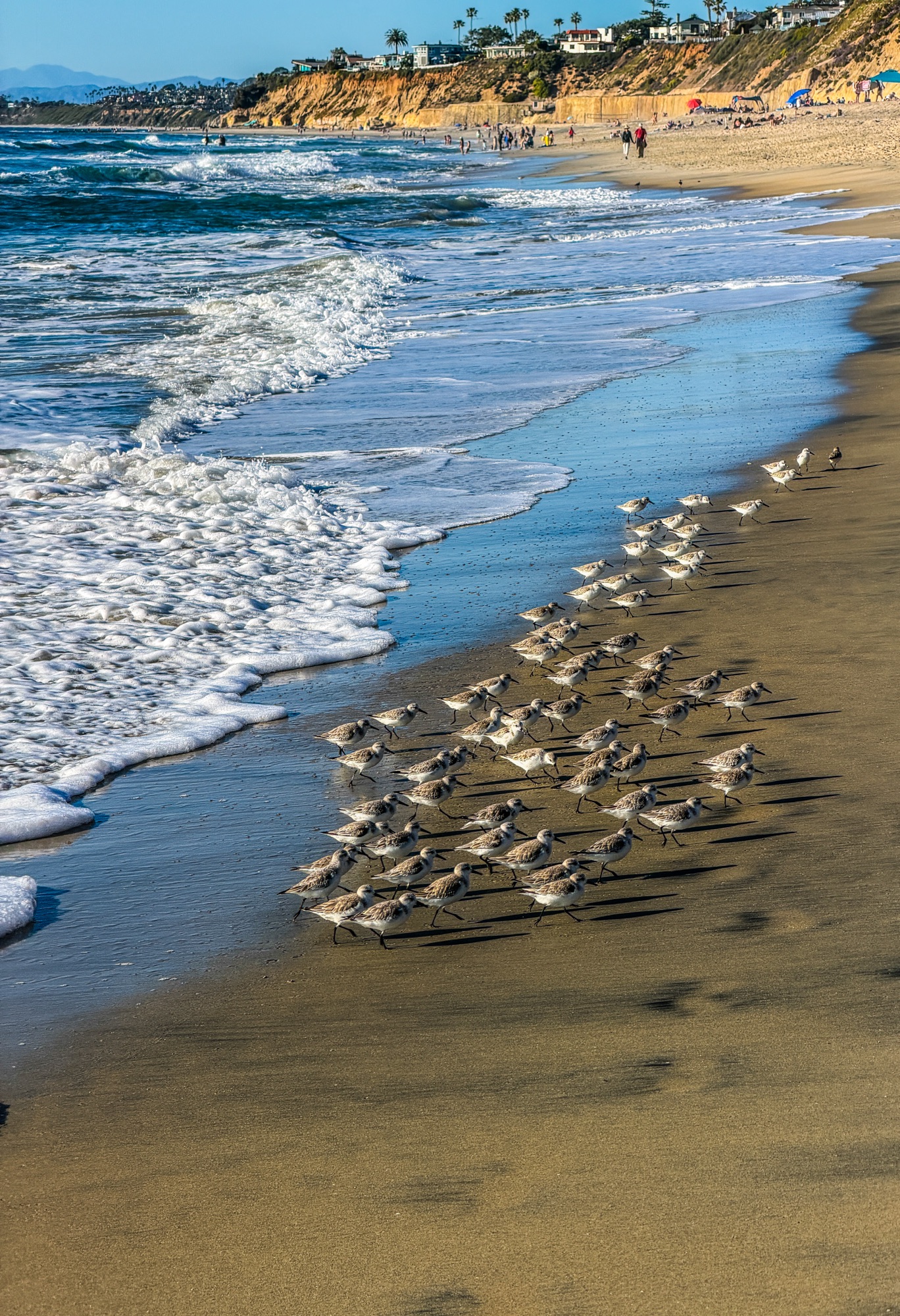
Sandpipers, tiny and nimble, mostly move as a unit. They remind me of those cartoons of the roadrunner where their feet move so fast they almost look like wheels. Waves flow in and the birds move up the shoreline, the tide ebbs back and they rush down to find some tasty tidbits, somehow always staying just along the edges of the water. Their colors change as their direction changes, almost like a wave themselves.
If I move too close, they lift en masse, flying out over the sea, often settling back on the shore a few hundred feet away. I watch and snap photos endlessly, continually curious about these tiny little birds.
What piques your curiosity? What sends you out with your camera and a bottomless pit of questions?
Sometimes a prompt inspires me. That was my experience when I read Padraig O Tuama’s prompt– the one that arrives in my email inbox each week. After reading a poem by Jane Mead, O Tuama suggested describing a place you go to. I’m a beach goer–and this week offers low-tide walking beaches timed to fit in after I finish work each day. So instead of taking my daily walk around the neighborhood, I’m heading to the beach each afternoon–my favorite beach–to walk and breathe and appreciate this place not far from where I live.
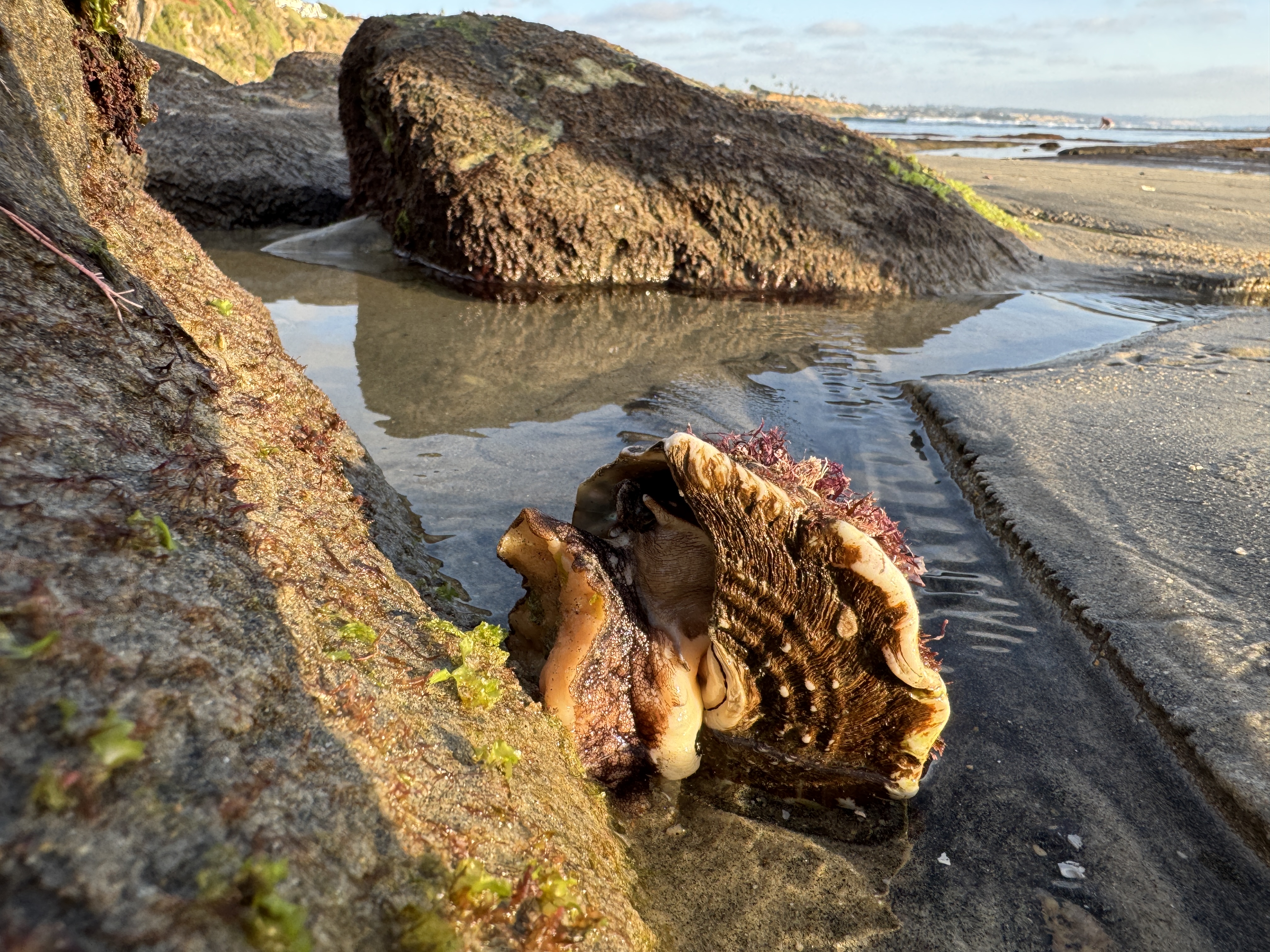
Today I decided to go with a Haibun–that form that allows for some meandering prose followed by Haiku. And while the beach is always enough, it is such a delight when I come across something special. Today it was a wavy turban snail–one of those hearty sea creatures that thrives in the intertidal zone, a harsh place that is exposed during low tide.
The puzzle of tides keeps me guessing as I walk the shoreline. Familiarity interlaced with mystery, each day brings new treasures to discover. Fall, summers’s sister, opens space to breathe, mixes heat with edges of crispy coolness, feet immersed in the translucent turquoise only the sea can offer. This is my place, ordinarily extraordinary.
Most people see the beach as a playground, a gym, an opportunity to commune with nature, a place to get away from stresses and routines of the work week. Sometimes, though, I notice artists at work.
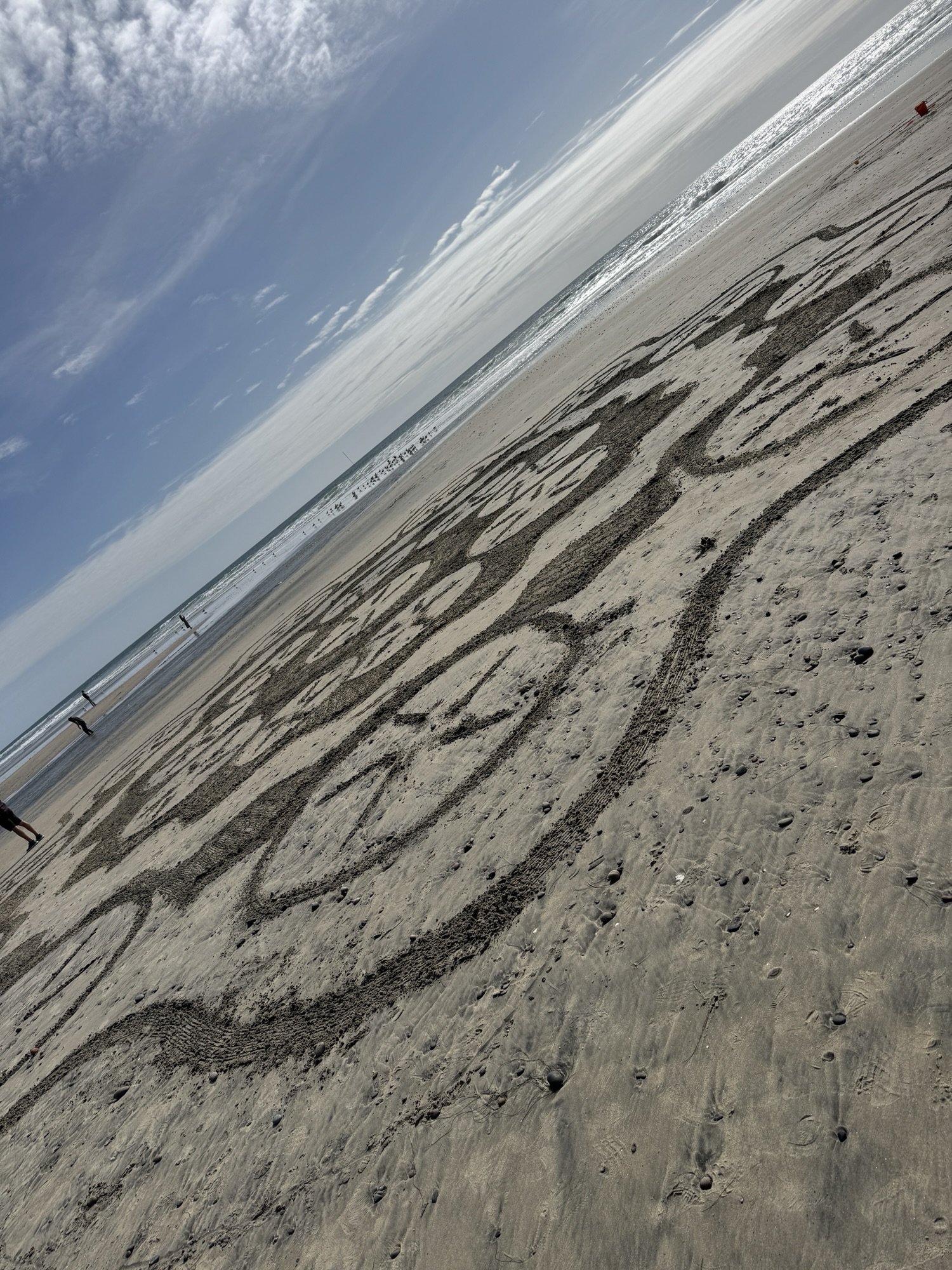
There are artists who are inspired by the natural beauty of the beach and drag their easels, paints, and canvases to the shore and set up to work en plein air trying to capture what they see in front of them. Today’s artist used the sand as both canvas and paint and a rake as his brush.
When my walk began, he was just getting started and had traced some circles on a large flat spot near where I walked onto the beach. I paused long enough to watch his technique for creating even circles–although I doubt I could replicate his motions. I walked some miles, stopping to watch egrets and other shore birds. I noticed some places where the cliffs have crumbled since my last visit to this beach. I took photos of sand dollars, sea birds, and the piling remnants of a structure that existed on this beach about a hundred years ago.
As I returned back to where I began, I noticed the completed art raked into the sand. As the mom of an artist, I’m fascinated by artists’ processes. I see the compulsion to create, the need to express, and how artists find their own tools of choice. When I see the scale of a piece like this in the sand, I have so many questions!
Is the work pre-planned? Does the size relate to the size of the rake? The size of the artist? Are the measurements a felt sense that the artist intuitively knows as the pole end of the rake traces circles and then the rake is turned to brush in the texture?
What is it about temporary art that is so question-invoking? I’ve seen other sand artists who place their art strategically where they can stand above it and photograph their work. Did the artist take a photo before he left his art for beachgoers to admire?
I did notice others like me taking the time to photograph this piece of temporary art, admiring its scale and shape. And there is something spectacular about art with the Pacific Ocean as its backdrop.
What found art have you come across? What surprised you? What wonderings did you have?
I’m not particularly lucky. When I insert coins in a slot machine, the bells don’t ring and money doesn’t come out. When I play lotto (definitely not regularly), my numbers do not come up. When I find a scratcher in my Christmas stocking, there’s no prize that appears to cash in. My name doesn’t get pulled for raffle prizes and I can’t even imagine how badly I would fare on a TV reality game like Deal of No Deal Island!
In life, I count my lucky stars (where did I pull that phrase from?). My family is mostly healthy–as am I. I am in a happy long-term relationship. My children are independent and making their way in the world. I love my work and my life.
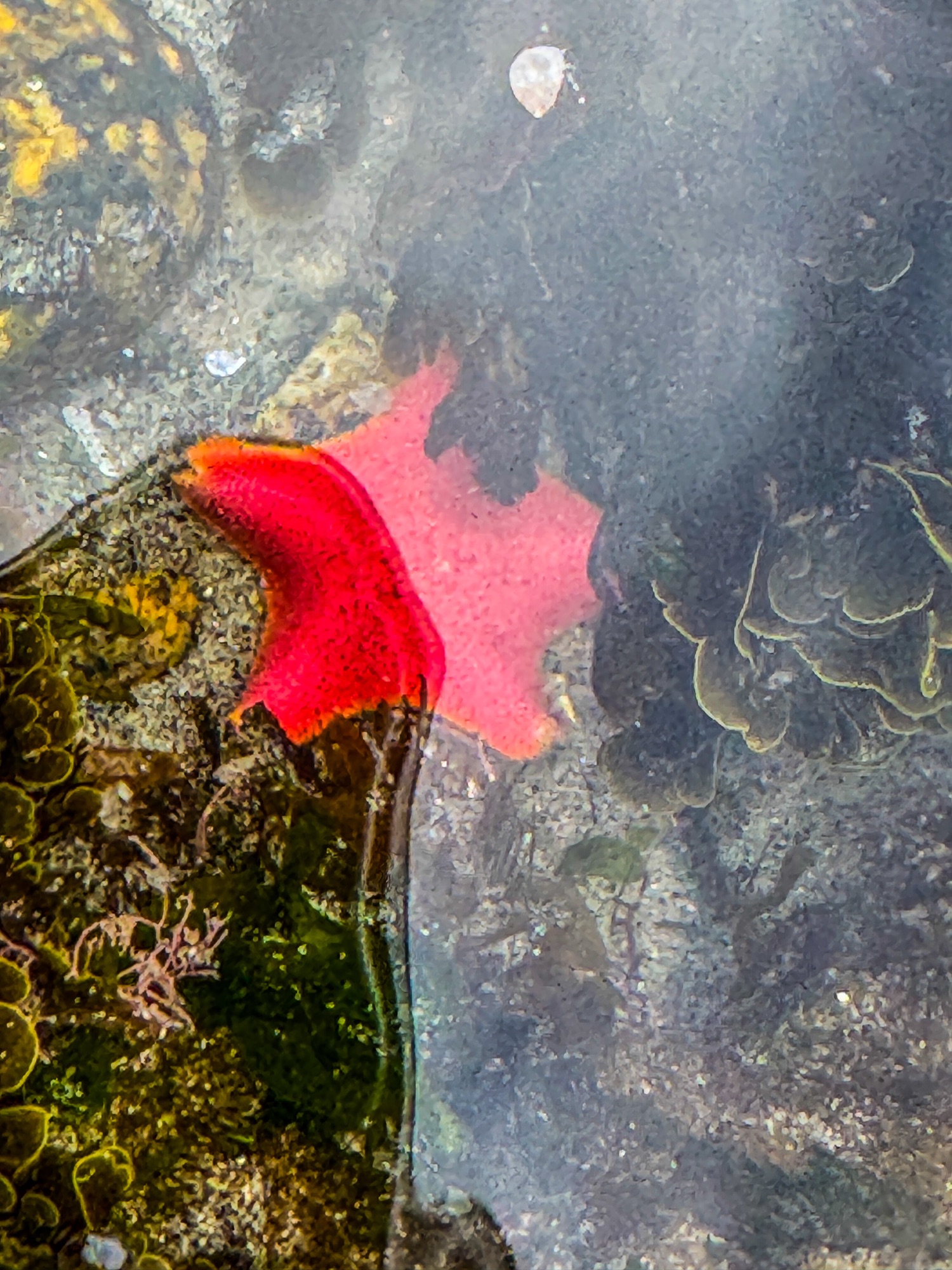
2025 has been a sea star year for me. I count myself lucky every time I see one. I started the year by coming across a beautiful specimen in the tide pool on New Year’s Day–and wrote about how lucky that felt–a hopeful talisman for the year! Rather than choosing one little word to guide the year, sea stars are giving me direction, hope, and energy. I’ve had a number of other sea star sightings this year. Each one brings that same surge of euphoria and feeling of luck.
As I walked the beach this afternoon (a perfect way to end the work week), my husband and I were commenting that we hadn’t seen any tide pool critters lately. We aren’t the people who wade in and turn over rocks, stirring up the tide pool in search of aquatic life. We look, as patiently as possible, to see creatures in their undisturbed place.
And then, a bright pop of orange caught my eye! It was a sea star. Just a small one, about the size of a quarter. Just when I moved in closer to take a photo, the water surged, covering my shoes and soaking my socks. Oh well, I thought. I still felt so lucky to start the weekend with the dopamine spike of seeing and enjoying the sea star in its natural habitat!
Today I am counting my lucky sea stars!
What makes you feel lucky? Or are you one of those naturally lucky people?
“What is it that you feel you have the need to have 13 ways of looking at?” That was the question posed by Poetry Unbound’s Padraig O’Tuama in a recent post. A question that got me thinking this morning…and also had me rereading Wallace Stevens’ Thirteen Ways of Looking at a Blackbird. My mind went to the beach–a place I spend lots of time for lots of different reasons.
Thirteen Ways of Knowing the Beach
I
I match my breath with the ins and outs of the waves. Salty water molecules swirl around me, seasoning my skin. I fall into perfect sinus rhythm.
II
Seagulls shout. Bossy voices command attention as they probe the shore for handouts and scout out their next heist. Don’t turn your back on the sea or the seagull.
III
Curled toes, deep in the wet and squishy sand. Ankle deep, knee deep, splash! Cool or downright cold. Goosebumps form and squeals of childhood echo. A time machine.
IV
Sun’s out, skin’s out. Memories of baby oil and sunburn mix with realities of skin damage, SPF, and UV index. Trickster sun makes its mark even when hiding behind the clouds.
V
Wind whips and whirls sending sand in sinuous swirls. Waves in white caps wash, breaking barriers, reclaiming all within reach.
VI
Cliffs crumble uncovering geologic stories in layer upon layer, shells on mountain tops where lands rose and sea retreated. History in sediment, conglomerate, sandstone until time, pressure, and heat works its metamorphic magic. Change is constant.
VII
Ospreys hunt, eagle of the sea. Fishing claws grabbing dinner from the deep, no poles or lines. Transported by talons for treetop dining. A creature of sea and sky.
VIII
Squadrons of pelicans in perfect Vs oversee hoards of beachgoers. Gliding on gusts, flapping in formation, surfing the swells, their bellies nearly touching the waves when they rise. Pause and dive. Pouch first approach to prey retrieval. Dramatic drops for seaside lunch.
IX
Artists with rakes trace circles, designs larger than life with perfect symmetry, perfect Pi. Fleeting beauty etched in the sand, hangs in the gallery of your mind’s eye.
X
Tide pools hold secret worlds that live in the in-between. Sometimes completely covered, other times exposed. Life teems under the kelp, sea grass, algae. Sea stars creep on tube-feet, nudibranchs with psychedelic seventies colors strike a pose, pudgy squirting sea cucumbers move only at the sea’s whim. Hermit crabs seek new homes, dwellings abandoned by their former residents.
XI
Snowy egrets with their bright yellow socks stomp the pools at low tide. Lunch counter is open. Neck with an S-curve, stretched out or curled in, dancers in fluid motion.
XII
Beach combing, treasure hunting, shore sweeping. Colored glass roughed and smoothed by the sea, bits and pieces of green, white, amber, sometimes even blue. Sea diamonds. Picking up plastics, multiplying by mitosis, never ending source of damage, destruction. Pollution of our precious life source.
XIII
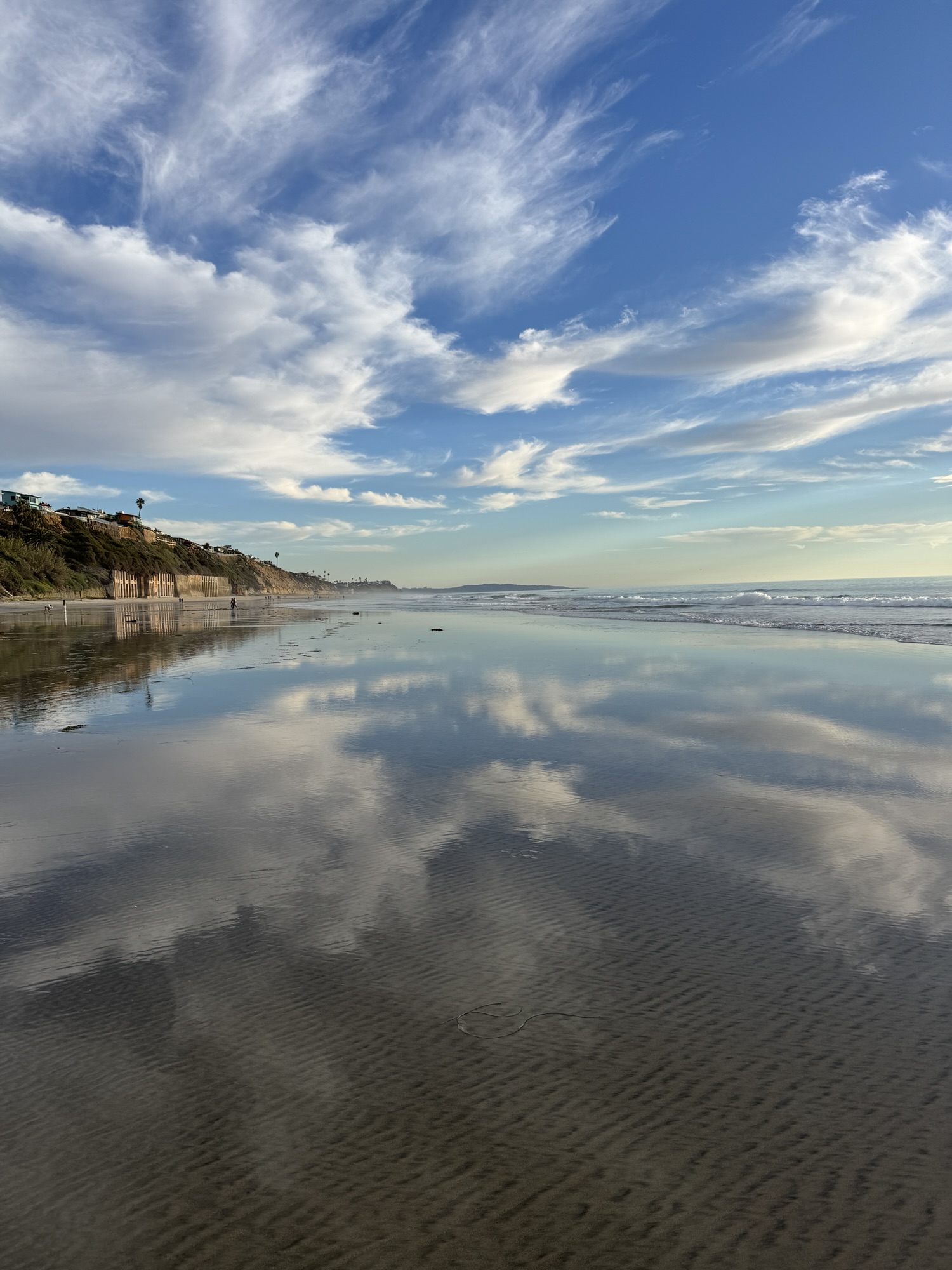
My playground, location of endless possibility. I walk on water, I walk on clouds. My ears fill with the soothing sounds of whispering waves. I can taste the salt on my lips and feel the release as stress runs down my shoulders and swims out to sea. My heart matches the rhythm of my breath, the rhythm of the sea.

 Thinking Through My Lens