Tag Archives: collaboration

Something, Someday: SOL24 Day 13

I got a text from a colleague last night with a photo of Amanda Gorman’s new book, Something, Someday. In the text she said it reminded her of the project I had done with my students creating iMovie PSAs about something that needed attention at our school. (You can read more about it here and here.)

So this morning as I headed back to the classroom with my students like ducklings behind me, she saw me, darted into her classroom and came out with the book in her hand.

After taking attendance, I did a quick read of the book while my students were doing some math practice. Yes! This is definitely a perfect book for the project we had done. It is all about making change, finding solutions, working together, and the power of small actions to add up to big change. And in the moment, I rearranged my teaching day in a way that allowed me to read it to my students.

Earlier in the week we read The Watcher: Jane Goodall’s Life with the Chimps by Jeanette Winter, learning about her lifelong work to protect wildlife and our planet. We talked about how both Jane Goodall and Amanda Gorman are living activists working to care for our planet.

Today we also studied the poem, Things to do if you are RAIN by Elaine Magliaro, noticing all the ways she described what rain does…”Polka dot sidewalks. Freckle Windowpanes. … Tap dance on the roof. …” Little did my students know that this would soon become a mentor text for a collaborative poem inspired by the books we’ve read and this poem!

As we got ready to write I asked students for a topic for a Things to do poem. (I had an idea in my back pocket, but hands shot up right away.). O suggested, Things to do if the World is Filled with Problems. Okay–a much heavier topic than I had in mind, but not surprising given our recent project and the books we’ve been reading.

So we did some brainstorming, focusing on the list like qualities of Magliaro’s poem. It took some work getting to some ideas to start and end the poem. And who doesn’t love the student who says, I have some metaphorical thinking to add, and says, “Treat the world like a rainbow.” Okay. So here’s what we came up with:

Things to do if the World is filled with Problems

by Room 3 First Graders

Don’t Give up!

Solve it! Fix it!

We can do this together.

Clean up trash. Don’t pollute.

Put the balls away. Sit up straight.

Water plants. Don’t waste water.

Be kind to your old grandfather

AND everyone else.

Eat your snack. Share with others. Include everyone.

Only take what you need.

Have fun. Smile at a stranger.

Treat the world like a rainbow.

Together we can brighten and color the world.

More Poetry Please

Last week we returned to school after our two-week winter break. The first graders in my class were eager to talk, telling each other about all the things that had happened while they were apart. Knowing that students would be chatty, I planned lessons that would allow interaction and conversation on our first day back in class. 

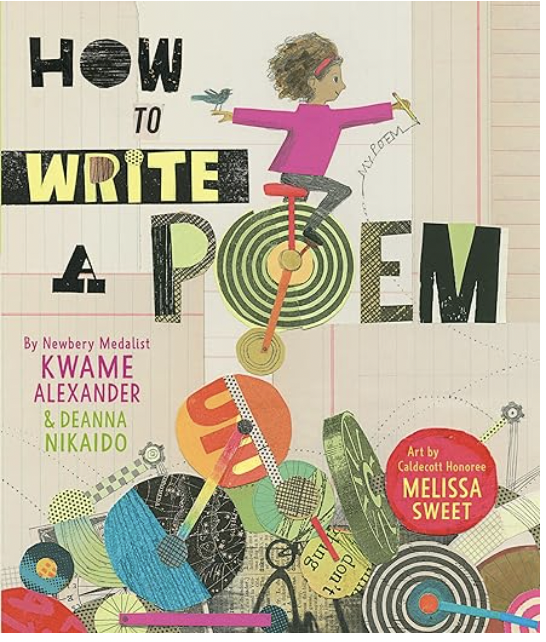
I’d been thinking about having students craft a collaborative poem for a while now. We’ve been studying poems and writing some of our own all school year, but still, it seemed that the time was ripe for something more. I began our lesson with Kwame Alexander’s delightful picture book, How to Write a Poem, illustrated brilliantly by Melissa Sweet. We read and noticed first, with students intrigued by the use of collage, the lyrical language, and colorful images. Before I began reading, I had asked my students what they knew about metaphorical thinking. What? That was their response. So after reading and talking about the book, we went back through the book so I could point out examples of metaphor…and just about then, my principal walked in. She comes in from time to time, pulls up a chair and sits and listens. She doesn’t interact and her poker face is nearly unreadable. I just went on with the lesson, feeling students pulled in as we talked about words falling from the sky like rain. We imagined ourselves outside, heads tipped, tongues out, ready to catch those words. As we became the metaphors we were studying, we talked about how metaphor lets us use ideas from our imaginations to make our writing become more clear…and more fun! When my principal left, I still had my students full attention as they grappled with this abstract idea of metaphorical thinking. 

Now, we needed to try it on for ourselves. I decided on having students create a collaborative poem by having each student contribute one line to a “winter is…” poem. So I asked them, how might you use metaphorical thinking to describe what winter is? The first responses had them leaning back on what they already knew. Winter is cold, winter is when trees lose their leaves. In some ways, this was the perfect next step. We talked about how those are facts about winter…now we needed to think about how to make comparisons that were surprising. When one of my students got to snow was white cotton candy, I knew we were heading in the right direction! I had them try a few “winter is…” lines, and just when they were running out of steam, I pulled out the colorful sticky note sentence strips for each student to write their favorite “winter is…” line on. I could feel the motivation lift and even my most reluctant student eagerly chose a color and started writing his line (although there were none written in the notebook at this point). Once they had written, they stuck their post it on the white board.

I wasn’t quite sure where we were at this point. I let the post its sit over night and pulled them off the next morning with the intention of typing up their lines to form a poem. As I typed I divided the ideas into 3-line stanzas, that seemed to help give the poem shape. I was pleasantly surprised when the ideas seemed to come together into a poem that I felt we could all appreciate. 

Winter Is…

Winter is white puffy cotton candy

A time for snowflakes that look like crystals

When snow foxes dig holes to keep their cubs warm

Winter is a cold hug in your heart

The wind at the beach

Time for hot chocolate

Winter is snowflakes blowing

Clouds melting

A freezing tree giving words to my pencil to write down

Winter is a snowflake full of thoughts

A snowflake falling down as fast a rocket

Pine trees covered with snow

Winter is a cold place to relax and slide your pencil to write down your mind

Snow soft and crunchy like people walking on the snow

Full of puffy snow like white cotton candy

Winter is a frozen lake waiting for spring

Holidays in your mind

A snow of thoughts flying through the air

Winter is a chilly place where it snows

Winter is so fun because you can play

Winter is a time for joy!

By Room 3 First Graders

1-8-24

I can see where students were inspired by their classmates and where some students are still not quite there when it comes to moving away from facts as they craft a line about winter, but I am pleased with this as a starting point. And even better, my principal saw me eating lunch on Wednesday and commented on the book and lesson–in a very positive way. She loved that I was introducing metaphorical thinking to first graders.

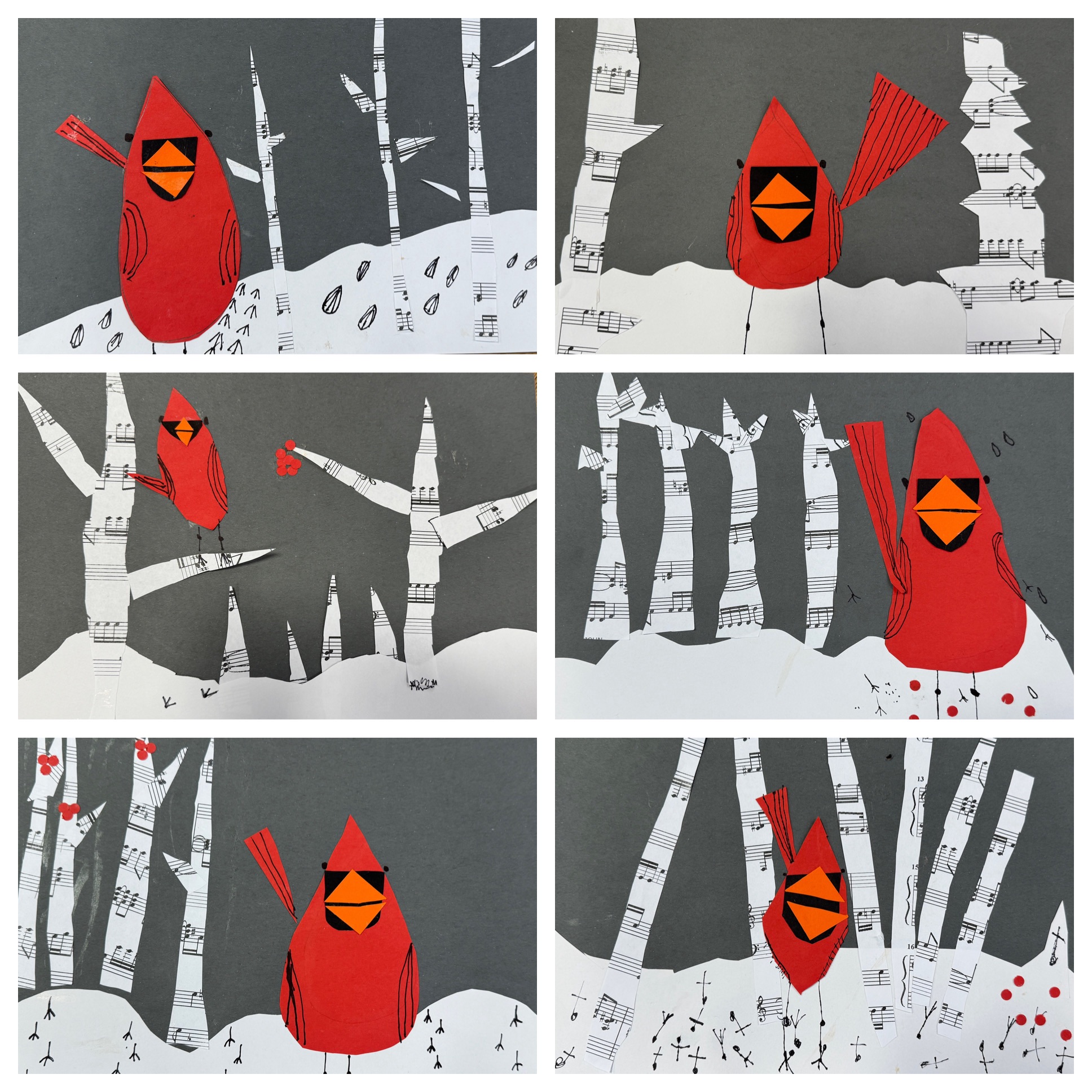
But honestly, the real payoff started to emerge in small moments as the week went on. My students started to point out metaphorical thinking throughout the school day, and in their own speech. On Tuesday, we returned to the book, Kiyoshi’s Walk by Mark Karlins as we embarked on writing 3-line poems about the cardinals we had created in the style of Charley Harper the day before. 

As I read the Haiku in Kiyoshi’s Walk, they pointed out the metaphors…a pile of oranges described as a “hill of orange suns.” Again, not every student is yet ready to employ metaphor effectively…yet, but the seeds are planted. So we wrote 3-line poems on Tuesday (I try not to have these poems be about syllable counts–trying instead to focus on ideas and word choice) and then on Wednesday, I asked students to go back to their poems and improve them by changing a word or two or adding another detail (revision!). Here’s a student who was clearly influenced by Eto’s poem in Kiyoshi’s Walk.

Cardinals

Champ 1964 St. Louis Wins

Cardinals fly to win

Trophy of suns

By J

When J read the poem to me, he pointed out that since trophies are golden, they are shiny like golden suns–something he changed from his first draft the day before. And I know, clearly his mind was on the St. Louis Cardinals (a favorite team) rather than on the bird we crafted the day before. But the win is in the poem–three lines, metaphor, revision…and pride in writing! I’ll take it! Another student wrote this to describe his cardinal.

The Red Cardinal

The red poinsettia feathers

keep me warm

and they fill the forest with love

By F

And there were also more subtle attempts like this.

Flying in the Wind

I see that cardinal

flying in the tree

just like the wind

By O

What I see is students experimenting, playing with ideas, playing with words…and growing as writers and poets (as well as readers and thinkers). I love that something as deceptively simple as reading How to Write a Poem resulted in our writing community learning together, composing together, and risking trying on some new techniques together. I am reminded once again of the power of poetry…so yes, I will continue to say, “More poetry please.”

Poetry Teller Part 2

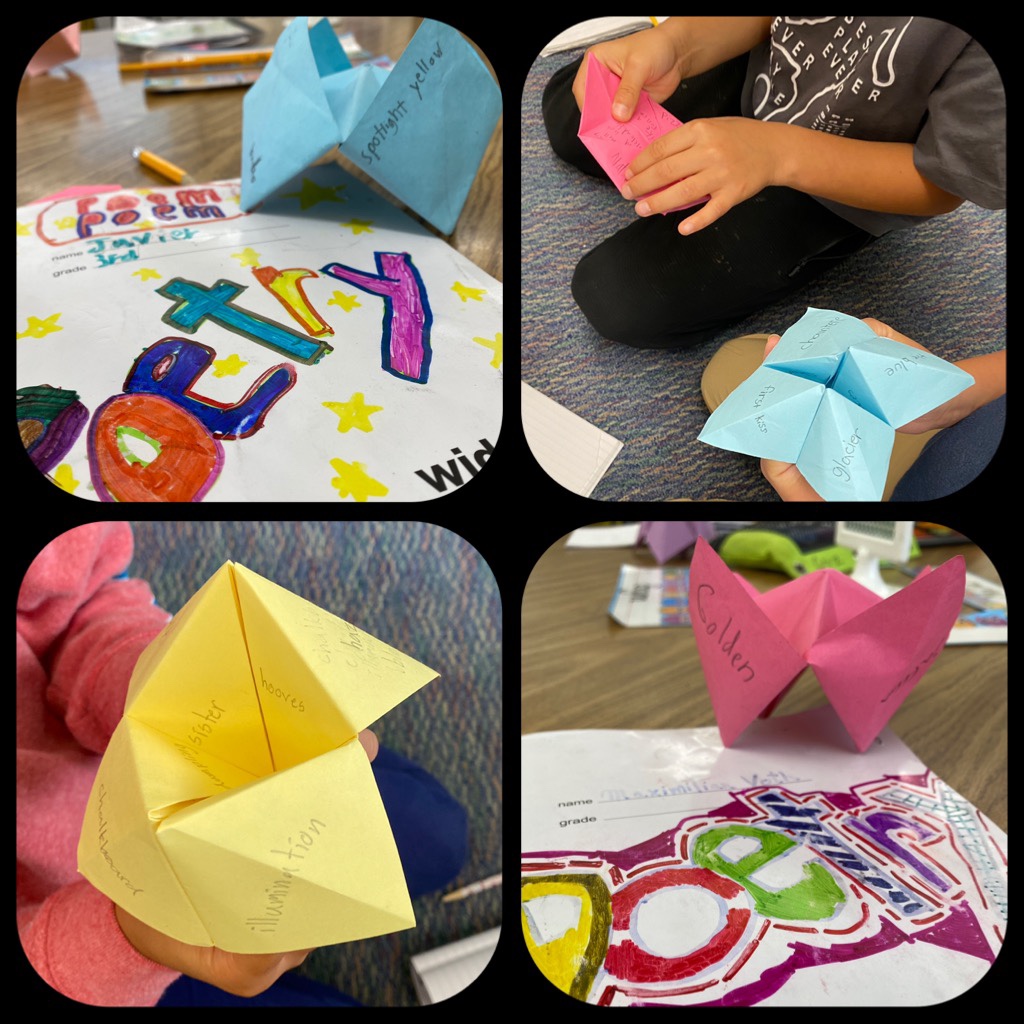
We did it! I wrote last week about my experimentation with a poetry teller, a way for my students to go back through their own poetry and then play around with remixing their poetry with a classmate.

So this morning, students folded their way into their collaborative game. Some students were familiar with classic fortune tellers and were eager to put their fingers into the folds and start moving the teller around. And no one seemed to think it was one bit strange to make this into a poetry tool. They found colors, they located interesting nouns, and pinpointed some poetic phrases–all from their cache of poems written during April. In partners they played with their poetry tellers, collecting words and phrases that they knew they would use soon for some poetry writing.

I set the parameters: use the words you collected (it’s okay if there is a word you decide not to use), you can add extra words of your choice, make the poem make sense, and have fun! We used that magical 7 minute timer and students’ pencils flew across the page. When the chime sounded, hands shot up. They had poems to share!

Here’s a couple (these are third graders, 8 and 9 years old):

Words collected: blood orange, green, snow, lamp, the sun is cotton candy, the puddles of the ditch

Poem:

Unusual

The sky is blood orange

the lamp is green

the trees are snow

the sun is cotton candy

the puddles of the ditch are rainbow

there’s something fishy today

And another:

Words collected: ice, profusion, cats, frame, the sunlight bounces into my eyes, illumination, snowy caps, sister, hooves, the cloud is as soft and big, it covers the sky like a blanket

Poem:

Transition to Spring

Ice.

A very cold word

You see it a lot during brutal winters.

Hooves pounding on cold snow under our feet.

Cats.

Sinking their paws into the snow.

The snowy caps on mountain tops

are guarded by a forest.

There are many natural frames in the

tree tops.

Then the snow is illuminated by the sun.

I step outside and the sunlight bounces into my eyes.

My sister’s snowman melts away.

The clouds are so soft and big.

They cover the sky like a blanket.

It is spring now.

Making games out of writing definitely infuses playfulness into the process for kids. They loved manipulating their poetry tellers and would have played with them much longer than I had time for today. I count this as a win–and as a great way to have students remix poems. I’d love to hear what you would do with a tool/toy like this one. How would you modify it to support writers and learners?

An Invitation to Connect and Make Poetry: NPM20 Day 2

Last night on our National Writing Project connecting the network zoom call, my colleague and I were asked to facilitate a “making” session–a place for a small group to make something together. And since writing is making, we thought about some way to have our group engage in a small writing piece that collectively made something bigger.

Inspired by the Springtime in Washington Haiku Contest: Poems on a Pandemic article another colleague shared with me earlier in the week, we decided to create a shareable slide deck of our own version of Coronavirus Haiku. We invited participants in our breakout session to create a Haiku (short poem, 17 syllables, 5-7-5 pattern), and then add the poem and an image to a slide in the collaborative deck.

I offered my own as example:

So this post serves as an invitation to all of you. Take a few minutes to write a Haiku or other short poem about some aspect of your coronavirus experience. It can be funny, somber, documentary, whimsical, sad, angry…

You can access the slide deck here: Coronavirus Haiku: Short Poems Documenting Life During a Pandemic. Writing is not only making, it is also connecting. And can be healing as well. A few years back I wrote a post about my response to another blogger and colleague’s invitation to write #haikuforHealing–a balm for the tired spirit. So let’s connect and heal as we write together.

SOLC Day 6: The Power of the Invisible

I’m particularly interested in the volume of invisible work in our world.  As a teacher, I experience firsthand just how much work it takes outside the classroom to ensure that students learn, that parents are communicated with, that accountability boxes are marked.  Those school hours don’t even begin to contain the lesson plans, the emails, communication with colleagues, professional learning, and the preparation of “stuff” for students that are necessary to a successful classroom learning environment.

I’ve also been working on a National Writing Project research team with the primary goal of supporting an evaluation study of upper elementary (grades 4 and 5) argument writing.  And while an evaluation system was already in place for middle and high school students, the development of grade appropriate materials to make the system work for younger students has been an amazing learning experience–and involved hours and hours of invisible work.

Evaluating student writing is not as easy as simply checking boxes and assigning the writing a score.  In the case of this argument writing, we developed sourced-based prompts that would reflect the kinds of tasks students would experience in lessons supported by the professional development their teachers received.  We piloted the prompts to ensure that the tasks put together by adults would be relevant and accessible to students.  We refined the prompts and then sent them out into the field to be administered in pre/post situations with students who are a part of the study.

Our research partners culled writing that we then sifted to establish a set of anchor papers to be used to operationalize our scoring continuum, each anchor helping to define the range of particular score points.  These will be used to train scorers to ensure that they are calibrated to the scoring system, increasing the reliability of the scores.  Anticipating potential questions from scorers drives the development of mini lessons to clarify the scoring system, again working to ensure that scorers are calibrated to the system and reliable in their scores.

And while most of the this work is invisible to those outside our small research team, when we come together in our work, powerful collaborative learning takes place.  It’s as if this process opens the faucet that pours out words to describe all the moves that writers make. Even the most basic and underdeveloped of essays contains promising next steps, illustrates what the writer does know and can do, and fits somewhere on the continuum of what argument writing at this level looks like.

img_5813

And the camaraderie of our team turns what could be drudgery into pure joy.  We laugh, delighting in a student’s turn of phrase, unexpected use of evidence, or insightful interpretation of source material.  We argue over score points until we can agree unequivocally on the boundaries of each score–sure enough that we can convey this understanding to a team of scorers who will tackle scoring thousands of papers during a week this coming summer.

And while much of the work is invisible, it isn’t unimportant.  This groundwork will ensure that student writing will teach us about the effectiveness of professional development–and about the power of looking closely at student writing.


Collaboration: Learning from a Mentor Text

Have you ever written an etheree?  I hadn’t–and hadn’t even heard of this particular poetic form until I came across the book Thanku: Poems of Gratitude by Miranda Paul.  As I read I came across a poem–an etheree-All This by Liz Garton Scanlon.  A poem that begins with one syllable and builds one syllable at a time until it reaches ten syllables in line ten.  In All This, Scanlon shows appreciation and gratitude for a small pleasure (or maybe a collection of small pleasures)…the snow, a book, a bubble bath, a cat…

Coming back from our winter break in early January, this seemed like a perfect alternative to resolution making and would ease us all back into writing and reading and thinking and planning.  So, in #collaboration with Liz Garton Scanlon, my students and I embarked on some etheree writing…and finally…today, I got their finished Postcards to Myself up on the classroom wall!

It feels like serendipity that this culmination coincided with the #clmooc poetry port invitation #collaboration!  I love that I can celebrate my students’ poetry and the power of a mentor text…and my own poem too.

postcard to myself

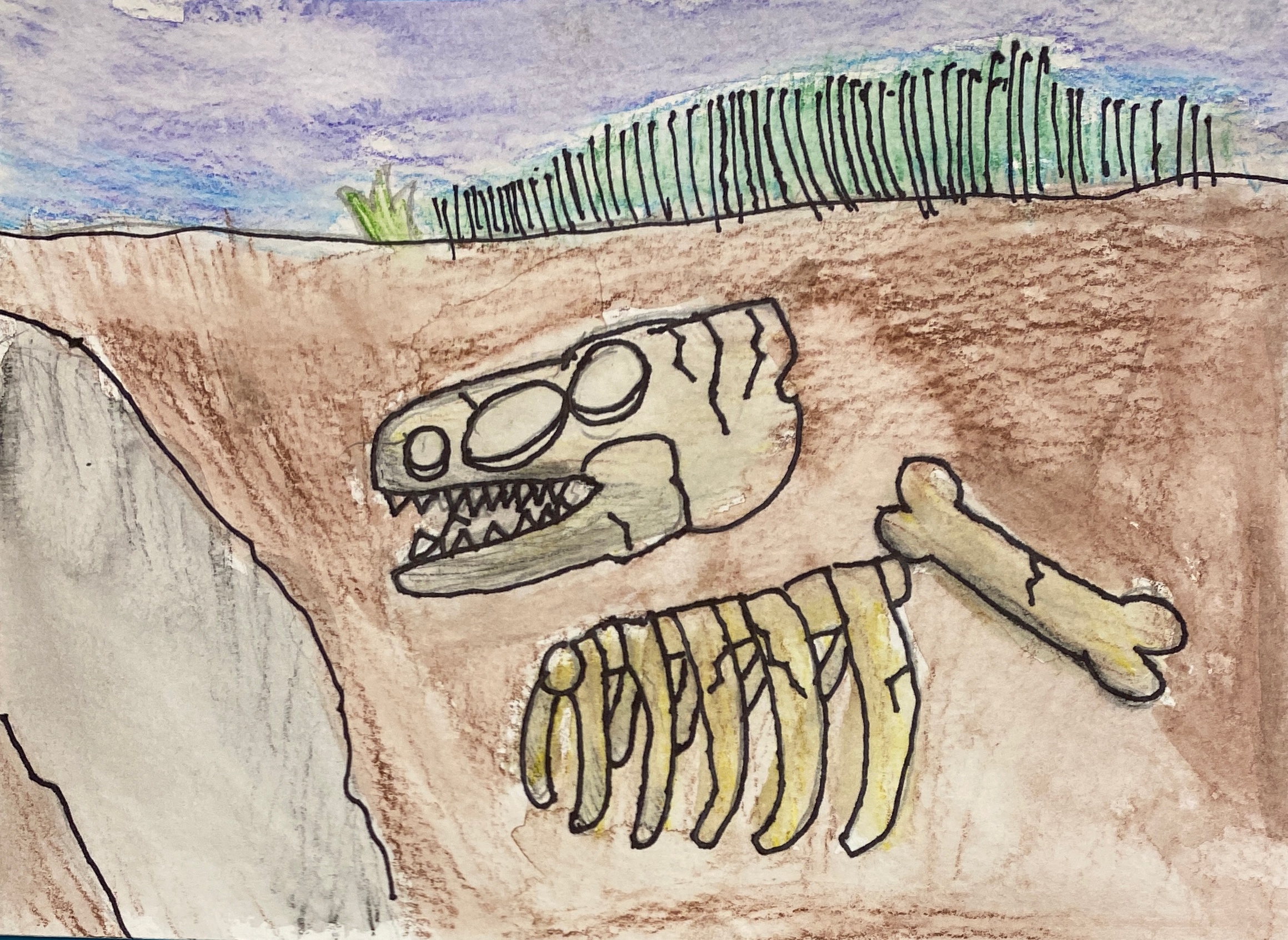
And here is a a closer view of a couple of student creations (8 and 9 year olds)…the first by H:

Bone


Skull

Fossil

Dinosaur

Bones in the ground

Brushing off the dust

Prehistoric fossils

Putting on the soft plaster

Breaking the hard rock to find bone

T-Rex has a small name but it’s huge

Fossils are everywhere in the world.

Bones

And another by B:

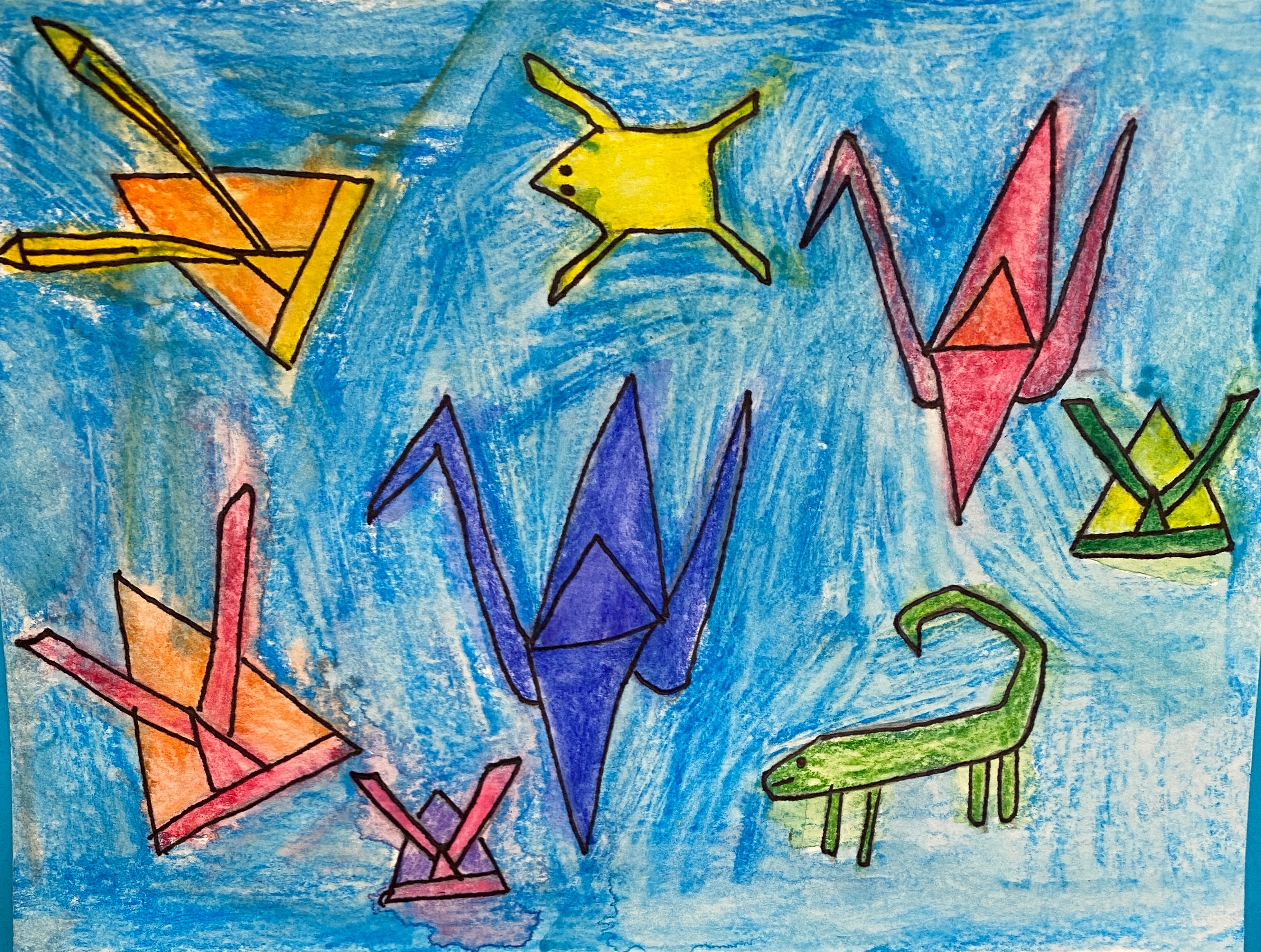
The Art of Folding Origami


Fold

sharp ends

crisp paper.

Origami

the art of folding

take your time, be precise

make sure you use square paper.

I can fold cranes, swords, hats, and more

fold until your run out of paper

origami is hard, so keep trying.

origami

And my own:

Inhale


Beach

with sand

bright sunshine

cool frothy waves

and perky sea birds.

I walk and watch and shoot

camera ready, focused

helping me see the world clearly.

I have so much to be grateful for

and I breathe in: inhaling sea’s bounty.


®Douillard

egret with reflection

Now it’s your turn to join in the collaboration!  Will you try an etheree?


Re-Imagining Oneself Through the Lens of the World

This post was originally posted at Digital Writing Month:  http://www.digitalwritingmonth.com/2015/11/09/re-imagining-oneself-through-the-lens-of-the-world/

A few years ago I noticed a colleague of mine taking photos with her iPhone. They weren’t the usual photos of a group of friends or of your cute child or even the requisite selfie to document a moment in time, instead, she took photos to a prompt…and posted them on Instagram. I was intrigued.

Photography was always something that interested me, but I simply couldn’t be bothered lugging around all that equipment, setting up for perfect shots…or even knowing what made a perfect shot. But with my phone (and camera) in my pocket, it was handy…and I was ready for a challenge.

So I found a photo-a-day challenge with daily prompts and set out to give it a try. Prompts like one, logo, spoon, and inside sparked my imagination and I started looking at my environment through different eyes.  I not only took at least a photo a day, I also posted at least one photo a day to my Instagram account (you can find me @kd0602). I took photos for a month, then a year…and now I continue to take and post photos regularly to Instagram. Somehow the more I took photos, the more I started thinking about the idea of blogging—an opportunity to write and share my writing in a public way.

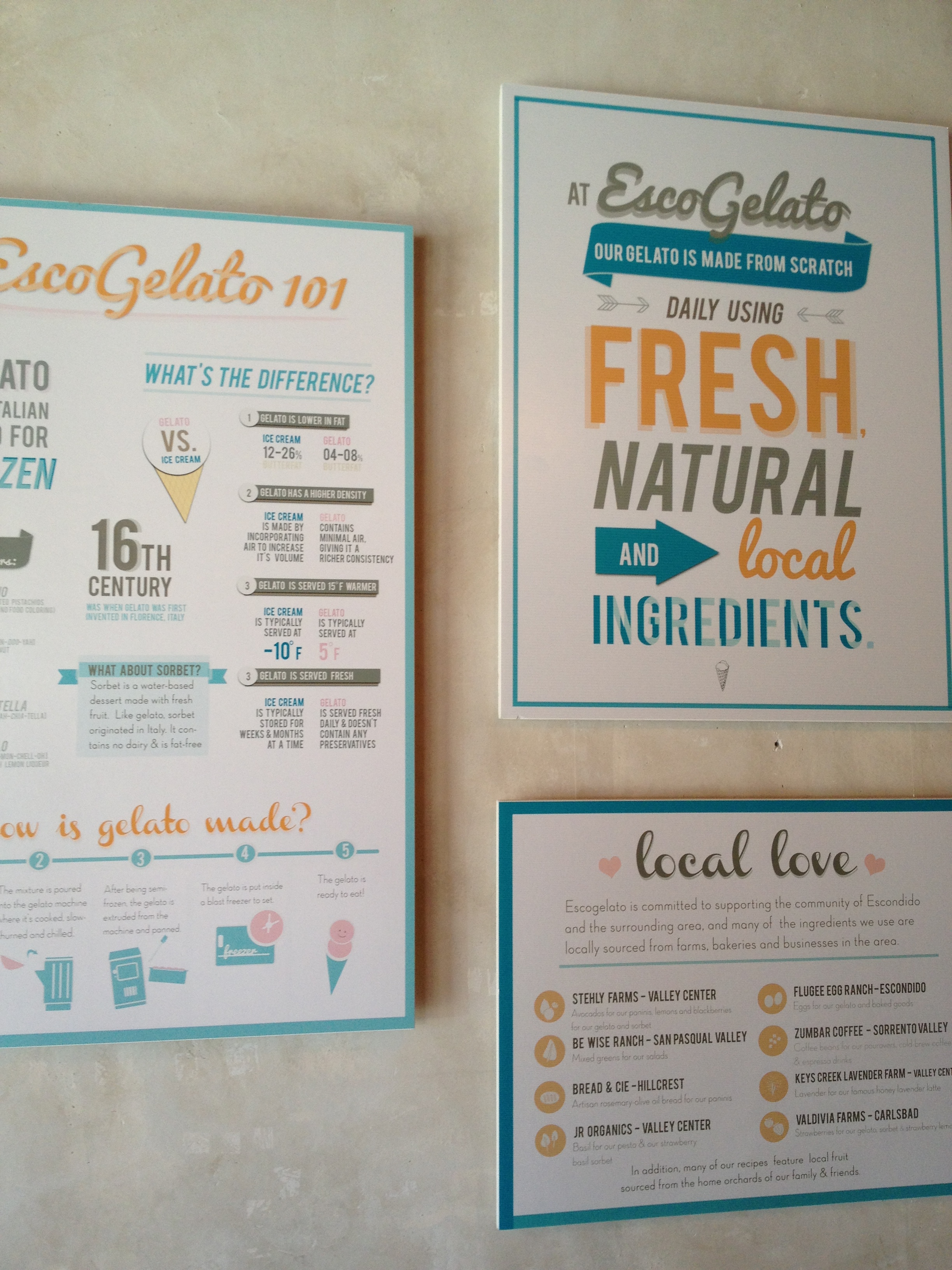
When I started blogging in July of 2013, my goal was to write a blog post every day for 30 days.  I knew that was ambitious and I also knew that I needed to challenge myself and keep to it to create a sustainable habit.  Even as I picked a theme for my blog, I already knew that making a connection to my photography would motivate me.  I called my blog Thinking Through My Lens–a play on the double meaning of the camera lens and my own perspective on the world. What I didn’t realize until I started to blog every day was the power that the images I was snapping would have to stimulate my writing and help me frame my thinking.  A yellow sign I photographed at a gelato shop featuring locally sourced ingredients became inspiration for a post about the importance of growing and valuing local leadership in writing projects and educational settings. Each image I took filled my head with language as I sorted through my thinking.

When I’m out viewing the world through my camera lens, I find myself thinking…about teaching, about life, about the world.  My photos stimulate my thinking and my thinking sets me out in search of images.  

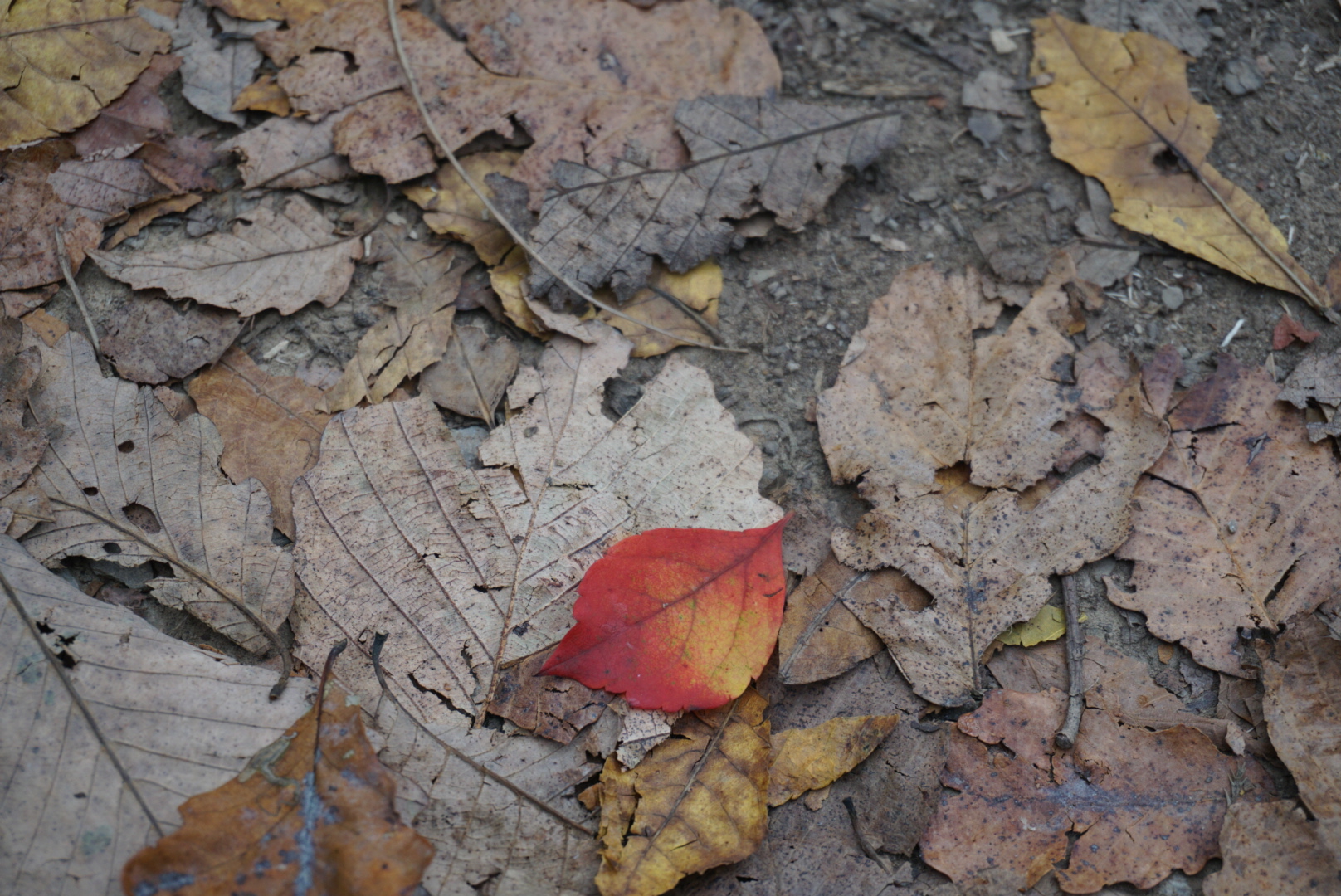
Recently I was out in the mountains of Alabama, looking for the foliage that represents autumn in so many places–and that is mostly missing in my place (San Diego).  Although the unseasonably warm (high 70s) and cloudy weather made the colors less vibrant, I noticed trees of gold and some touches of red.  As I walked along some forest paths, I spied this brilliant red leaf among the brown, crunchy leaves and stooped to photograph it.
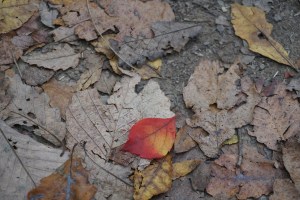
red leaf

And as I look at it, I find myself composing the writing…about standing out in a crowd…about being different…about risk taking.  t’s not written yet, but it’s brewing.  I also found myself composing the photo, leaning in close to capture the details.  And then later, maybe I’ll crop it, moving the red leaf away from the center of the frame, add a filter to brighten the red and increase the contrast…  As with the writing, composing is a process and the framing, the editing, the balance of color and light all impact the ways the image will be read and understood.  The images speak to me…and I hope they also speak to others, telling them stories that are likely different from mine.

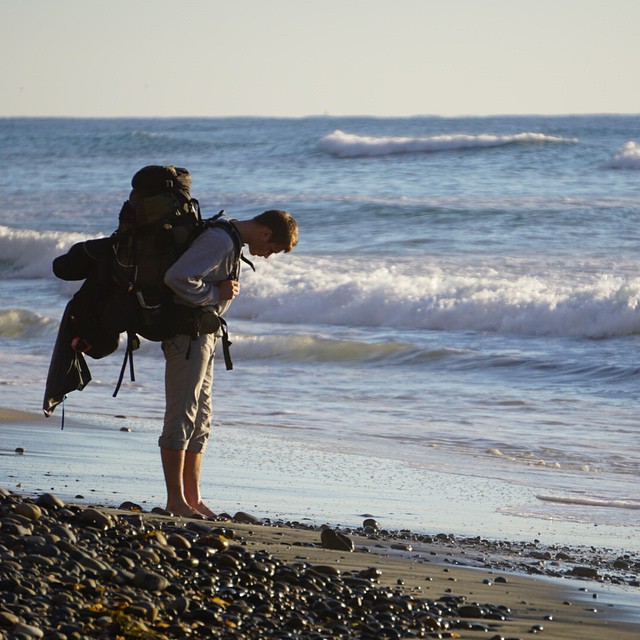
Some images capture moods…the quiet introspection of a traveler with pant legs rolled up and his feet in the surf,

to-go-out-with-the-setting-sun-on-an-empty-beach-is-to-truly-embrace-your-solitude-jeannemoreau-sdawpphotovoices-gifts-nofilter-beachpeople_15520774664_o

or the somber quality of birds silhouetted in a tree on a cloudy day.

birds in a tree

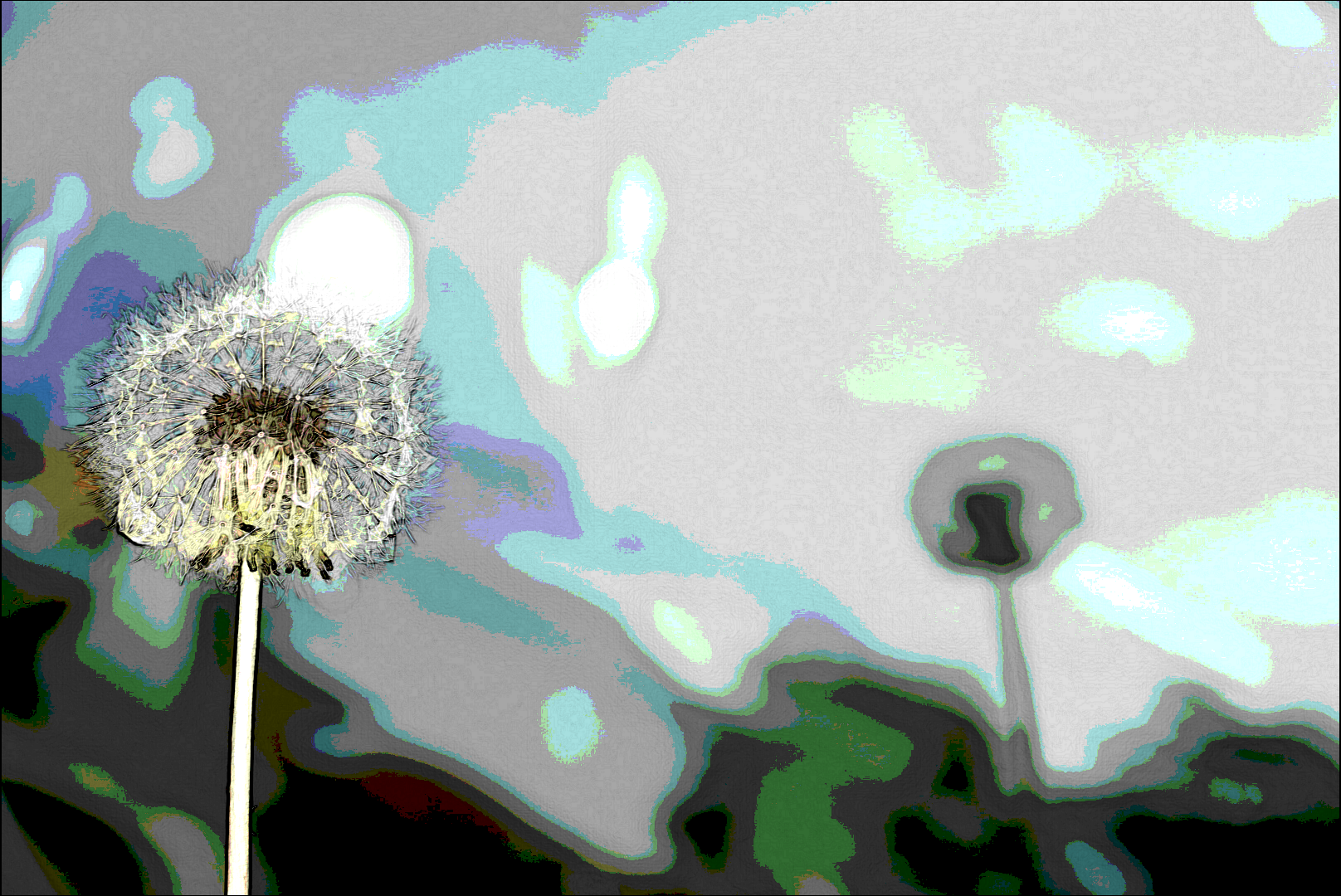
And sometimes when it seems that there is nothing interesting to see and photograph, I head outside and explore. I push myself to play and re-imagine possible images. On one of those days not so long ago I picked a dandelion from my front yard (those glorious weeds seem to bring out my playfulness—and oh, does my husband rue their existence in our lawn!) and wondered how to photograph it in a different way. I noticed my car in the driveway and considered how I might capture the image if I blew on the dandelion near the rear-view mirror, but I didn’t seem to have enough hands for that. But as I was contemplating that idea, I noticed the reflection of the dandelion in the paint of the car…and I started snapping. I continued my play with some apps…and created this image.

dandelions make art

And by embracing the ordinary, I experienced the exhilaration of exploration and play, which also led me to composing a teacher-artist manifesto using my photographs and my words to express the importance of play in the learning process.  You can see it here.

So what comes first?  The image or the words?  It’s that age-old chicken and egg dilemma…it all depends on how you look at it, and the particulars of any given situation.  And it seems to work that way for my students too.  Sometimes they have a full blown idea that appears in words on a page and other times they see something, maybe even something they have seen many times before, and the image inspires their thinking and words.  Even more fun happens when they start to really look closely at an image and they start to talk with each other and build on ideas presented by their classmates.  

An Activity: Make Writing … Digital

Head out with your camera in hand (the one on your phone or iPad or a “real” camera) and take a look around.  Let your camera lens give you “new eyes” and seek out the extraordinary in the ordinary around you.  Get low, find the light.  Tilt your lens up, try a new perspective.  Watch and wait, take more shots than you think you’ll need.  Then spend some time with your images, let your images release your imagination.  Let yourself soak in them, let them wash over you, splashing you with inspiration and wonder.  Then pick one.  You can let it speak for itself and post it naked.  Or you can let it whisper in your ear, guiding your words and your thoughts–framing an idea that you didn’t know you were ready for.

For inspiration, we encourage you to add a photograph of your “sky” to a collaborative project we are calling “Our Eyes on the Skies” — which uses an open Google Slide format. To add yours, just take a photograph of your sky. Head to “Our Eyes on the Skies.” Grab a slide. Upload your picture and label it. We hope to create a rich visual documentation of the world above our heads. You are invited.  We look forward to a collection of skies from all over the world!

(Go to slideshow for collaboration)

We hope you will share out your work across the various Digital Writing Month spaces that you inhabit. That could be right here at the Digital Writing Month blog; at your own blog or writing space; on Twitter with the #digiwrimo hashtag; in the DiGiWriMo Google Plus Community; at the DiGiWriMo Facebook page; or wherever you find yourself writing digitally.

Mini Bio:

Kim Douillard is a teacher-writer-blogger-photographer who also directs the San Diego Area Writing Project.  You can find her on Twitter and Instagram @kd0602 and on her blog at http://www.thinkingthroughmylens.wordpress.com

Sorting Quiet

Today was a sorting and categorizing kind of day in my classroom.  Yesterday we read The Quiet Book by Deborah Underwood.

quietbook

In it she describes quiet in lots of evocative ways…here’s a couple of lines:

Last one to get picked up from school quiet.  Swimming underwater quiet.  Pretending you’re invisible quiet.  Lollipop quiet.  First look at your new haircut quiet.  Sleeping sister quiet.

Then we asked our students to think about the best kinds of quiet they have experienced. They had so many wonderful ideas including things like lost in a good book quiet, waking up before everyone else quiet, playing your favorite video game quiet, watching your favorite cartoon on television quiet…  They wrote their best kind of quiet on an index card before the end of the day.

Today to help us think about sorting and categories we read Shoes, Shoes, Shoes by Ann Morris–a book about shoes from around the world used for a variety of purposes.  We thought about the categories our shoes fit into…and the ways they cross categories: school shoes, running shoes, playing shoes…  And then, in groups of four students shared their best kinds of quiet and thought about ways to group their “bests” into categories.  We asked each group of four to try to find 2 categories that their 4 index cards would fit.  They came up with lots of categories: electronics quiet, family quiet, in-the-zone quiet, playing quiet, learning quiet…

And as a class we were able to narrow their categories down to four that we will use to create a class graph of our best kinds of quiet tomorrow.  Can’t wait to see what the data tells us!

What’s your best kind of quiet?

Eat…and Lead Locally

Local Love.  That was the phrase that caught my eye while enjoying some yummy gelato for my mom’s birthday on Sunday.  EscoGelato makes a point of highlighting all the ways their products are local—using local bakeries for their breads, local farms for their avocados, eggs, strawberries…

photo

Yesterday I ate locally again.  At Urban Plate with my friend and San Diego Area Writing Project (SDAWP) colleague Abby, I also noticed signs in the restaurant pointing to the sources of the local produce and other food products.  It feels good to eat locally—in both places the food was delicious and the feel in each place was friendly and welcoming…accessible.

As we ate, Abby and I caught up on the progress of our summer and moved to the topic of professional development for teachers.  We talked about how teachers need to not just hear about some new approach or instructional technique, but to try it out and think about how and why it is useful for themselves as learners and for their students before they can truly implement effectively in their own classrooms.  And that, as professional developers, our hearts drop when participants say, “Can’t you just come to my classroom and teach it for me?”

Abby and I talked about the power of connectedness and collaboration for professional growth.  How opportunities to talk about our ideas caused those ideas to grow and develop and transform into something more than where they began.  And how that collaboration makes us a bit braver and more willing to take risks with our teaching practice…and in the process we grow as educators.  We also talked about how important it is for someone in your local place—your school site, your district, your writing project or other organization—to see you as a leader.  We grow leadership when we nurture leaders.

At the SDAWP, we’re right in the middle of the Invitational Summer Institute…a place for nurturing local leaders.  And I’m not so sure that all of the participants see themselves as leaders—yet.  But we’re ready to help them and to ease them into some accessible spaces where their leadership can emerge and continue to grow whether that is in their own classrooms, at their school sites, or beyond.  Maybe that, too, is local love.