Some days in the first grade classroom chaos rules. It seems that everyone needs help at the same moment and a single word (think birthday, soccer, lunch…) makes every voice rise in frenzied simultaneous conversation.
But today was different. We had started a writing project on Friday, but ran out of time (and focus) before we got it completed. And since it is March and I had some time this morning after our class watched another first grade class perform a play, I gave my students a list of four things to do.
Reread the writing from Friday and finish, making sure all five senses are represented
Use voice to text (something we have done before) to type the writing into Pages
Meet with me for a quick review and a reminder of how to share the document with me
Go onto a particular app for independent math practice
When we started this, I wasn’t sure I would be able to meet with students with others working independently. But…my students proved their maturity today and that magical buzz settled over the room. Students focused on completing their writing. They helped each other navigate the iPad and reminded each other how to make the technology work. If I was working with a student, others waited patiently for their turn with me. And those on the app worked without needing reminders to stay focused. It wasn’t quiet, but the noise was productive. Most students were able to complete and share their writing and everyone had meaningful learning work to do.
I love when this breakthrough happens. Now I will stay alert for opportunities for students to exercise this independence and work as a team. That magical buzz is priceless!
I picked today…October 20ish…to celebrate the National Day on Writing (NDOW) with my students. And since we are also into #writeout, we combined the two.
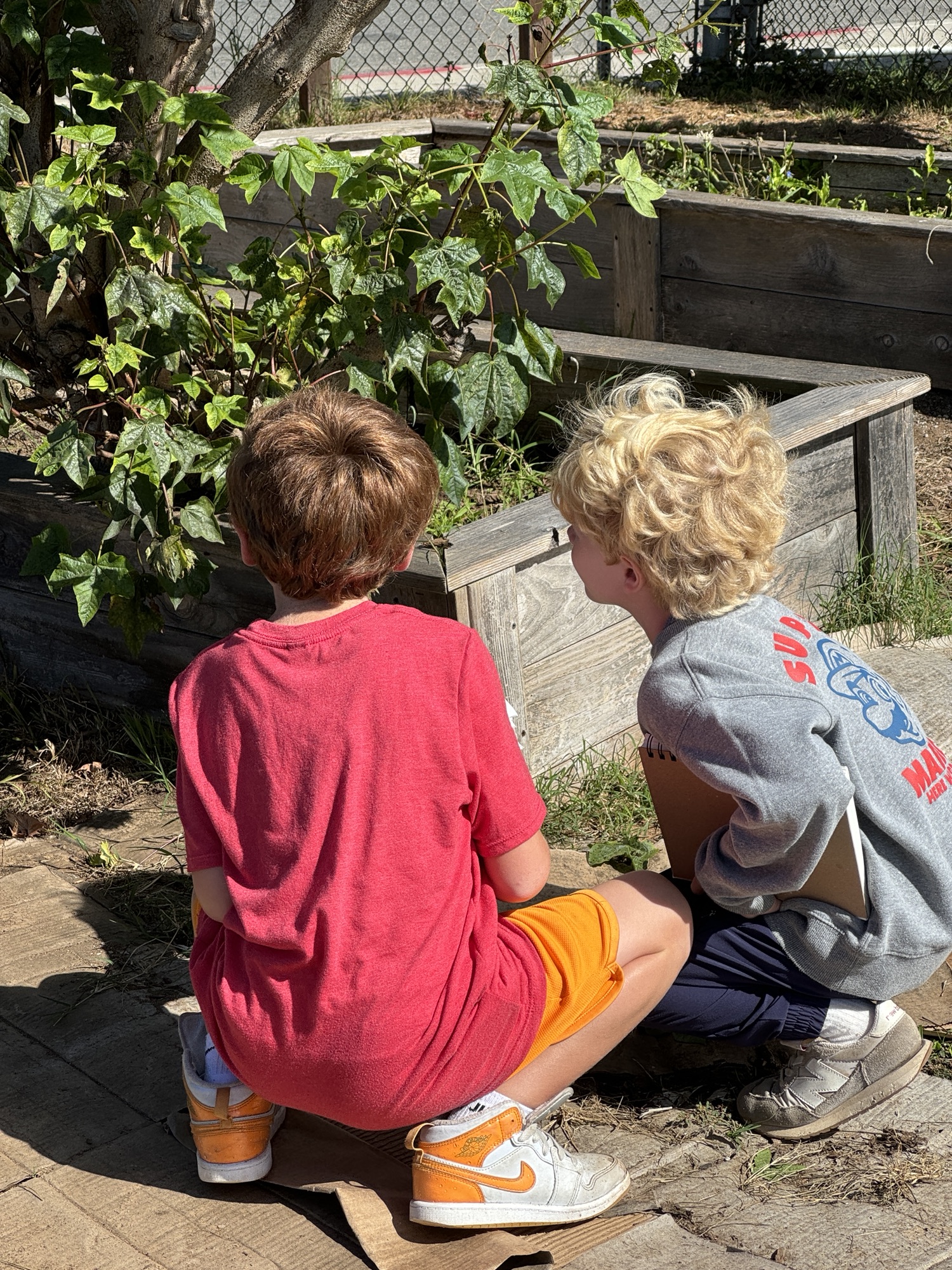
We are lucky to have a school garden and while it is not exactly exploding with plant life (yet), it does have some plants growing, some rustic seating, shade (essential on a sunny fall day like today), and hosts bugs and worms and dirt and all the other things kids love.
So, after recess today when I walked my students back to the classroom, I read them the book Outside In by Deborah Underwood. This gorgeous book talks about the wonders of the natural world–and the ways we often do not pay attention to those wonders. It also includes all five senses in wonderfully descriptive and somewhat subtle ways.
I recently had the opportunity to interview author Kate Messner, who is serving as an author ambassador for the National Writing Project’s #writeout, as part of their Write Time series. In response to one of my questions, she talked about the power of the senses to help students (and writers) extend their writing. So before we headed out with our sketchpads to write, I asked my students to pay attention to not only to what they saw, but to all five senses. As we walked we noticed…and once we arrived at the garden, we began to write.
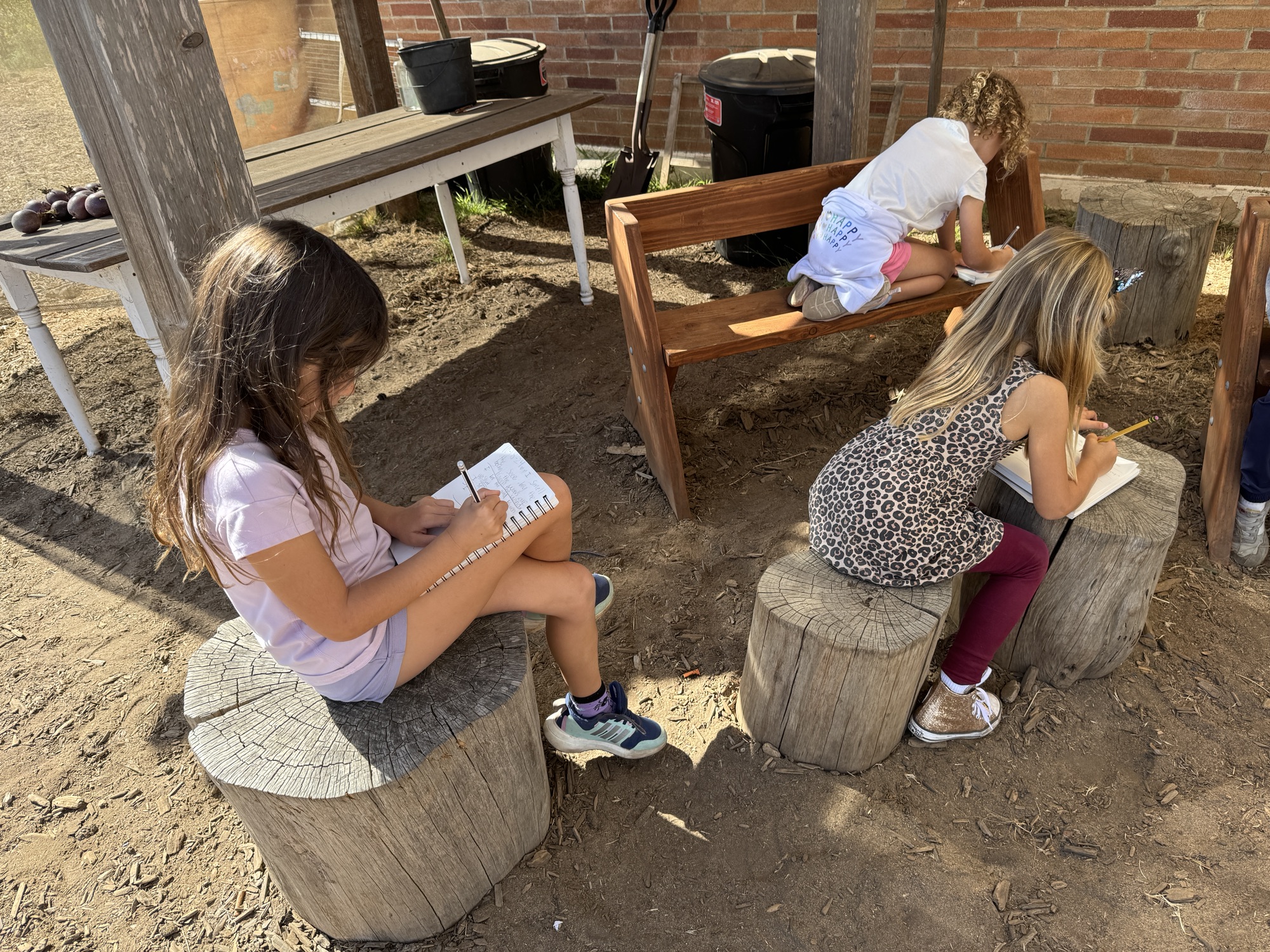
Students listened and sniffed. They rubbed leaves, touched pumpkins, and imagined the taste of fruits and vegetables. And they noticed bugs and birds and spider webs. When they needed inspiration, they moved around the garden and wrote some more.
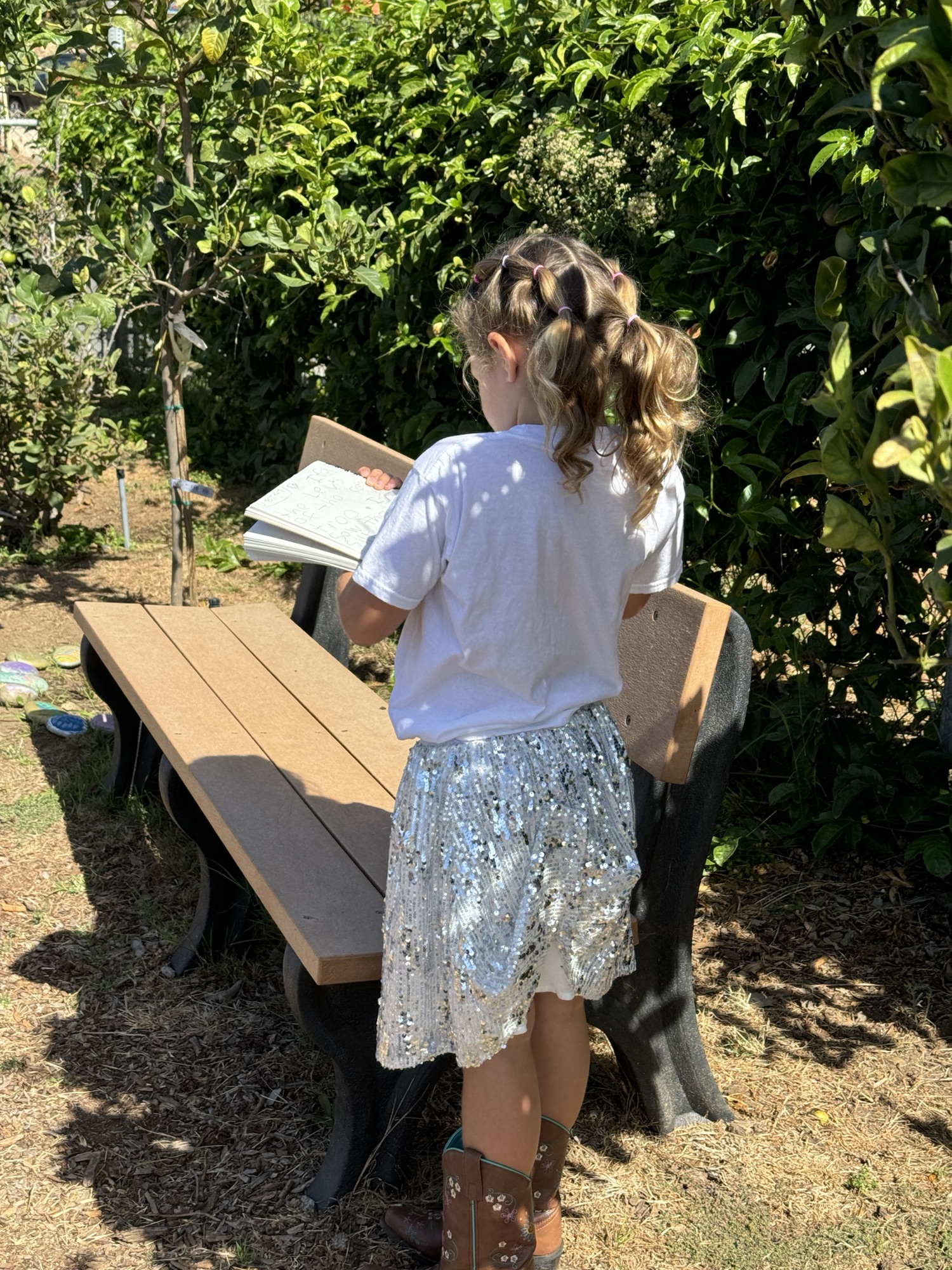
I love watching my students develop stamina and confidence as writers. There is something freeing and motivating about writing outdoors, writing in a sketchbook, sitting on a stump, and even writing standing up. Writing still takes effort when you are six or seven. Putting all that wonderful thinking onto the page is an opportunity to put phonics into action, exercise those developing fine motor skills, and focus attention for a sustained period of time.
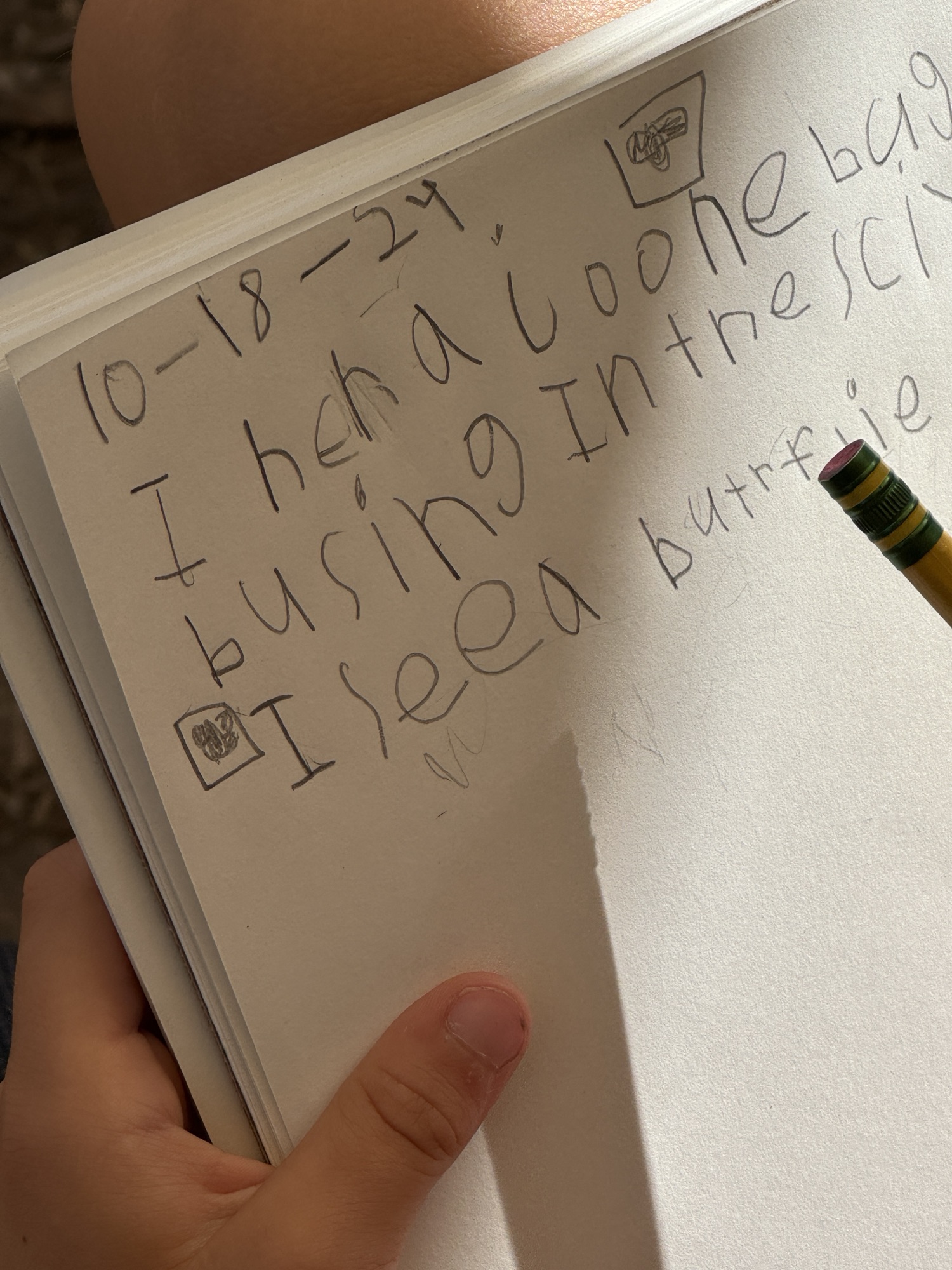
I hear a June bug buzzing in the sky.
When we returned to the classroom, I asked student to pick their favorite sensory description to read in a classroom whip around. Student were all willing to pick and read their descriptions, creating a symphony of voices celebrating our garden and our community of writers.
Here is the collaborative poem that includes a line from each student in our first grade class.
Senses in the Garden
A National Day on Writing Celebration
I hear a car. It sounds like a dinosaur roaring. Rooaarr!
I see the leaves swirling in the wind going to land on the ground.
I smell the sea by the beach. The waves are blowing in the wind.
Taste is like tasting popcorn.
I hear a june bug buzzing in the sky.
I hear the tip tap of my shoes. I see the reflection of my sparkle skirt.
I hear the birds chirping in the sky.
I see the spiky squash on a stem.
I can hear a hummingbird humming. It was sucking pollen.
I see a passion fruit on the table.
I touched a pumpkin. It was soft and it had a hole in it.
I hear waves crashing on the shore that the surfers ride on.
I can smell oak sap flowing down the bark of the tree.
I can taste blackberries getting eaten by me.
I smell a passion fruit.
I spy with my little eye someone walking by. A game!
I feel a pencil in my hand.
I see a moth fly like a jet.
I hear birds chirping and flying.
I smell the acorns. They are like the seed and the trees.
I see a big pile of dirt.
I hear leaves getting smashed.
I see and feel and hear the garden.
By Room 3 First Graders
10/18/24
How will you and/or your students celebrate the National Day on Writing (and #writeout) on or around October 20th? My students and I would love to see what you do!
Most weeks I work with my friend and colleague Carol over Zoom since we live in different parts of the state. So when we got to meet in person a few weeks ago, I was delighted to be gifted with a bag of acorns to explore with my students. The acorns where Carol lives are huge…and they have the caps that look like knitted beanies.
So, in honor of #writeout, a collaboration between the National Writing Project and the National Park Service, we got out the acorns and the hand lenses AND our sketchbooks to really study them carefully. We also read two wonderful picture books: Because of an Acorn by Lola Schaefer–a book about the interdependence of the ecosystem where acorns thrive–and Acorn Was a Little Wild by Jen Arena–a fanciful book about an adventurous acorn who after an encounter with a hungry squirrel preparing for winter, ended up as an adventurous oak tree.
And…we had to watch the wonderful video with Ranger McKenzie from Sequoia National Park about how oak trees drop tremendous numbers of acorns every few years…all at the same time in a process called masting, and that scientists have figured out that trees “talk” to each other through their root systems.
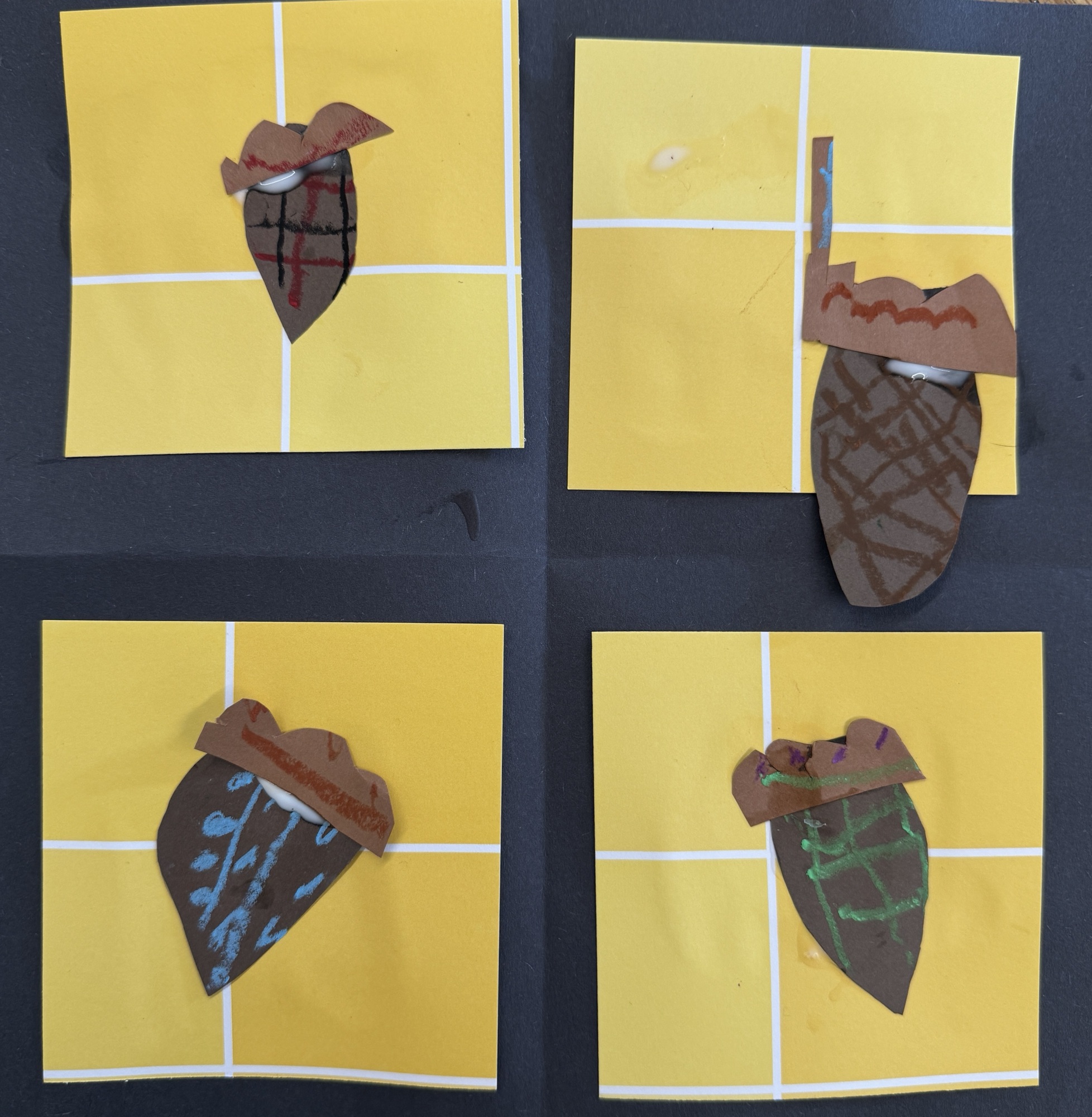
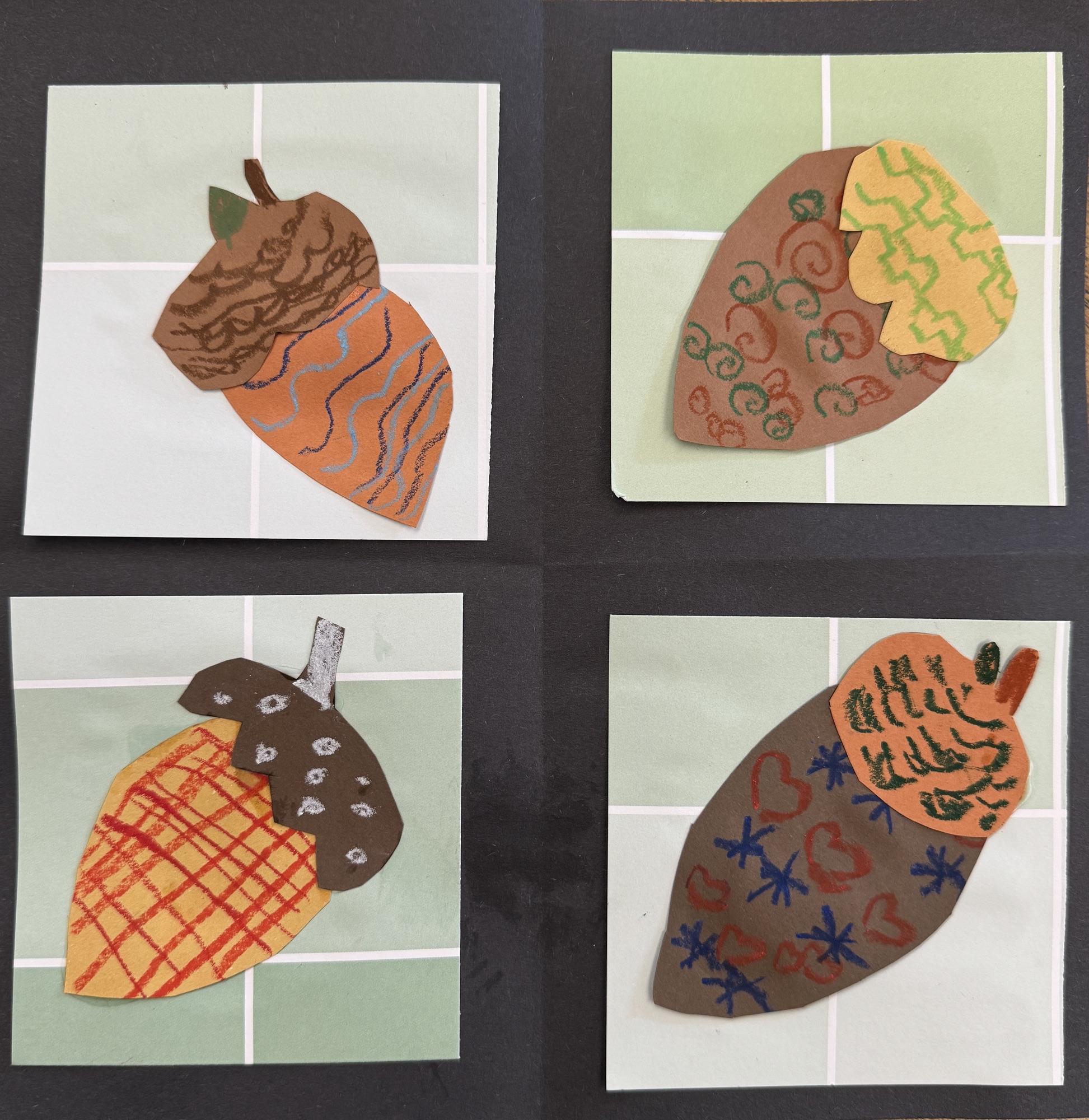
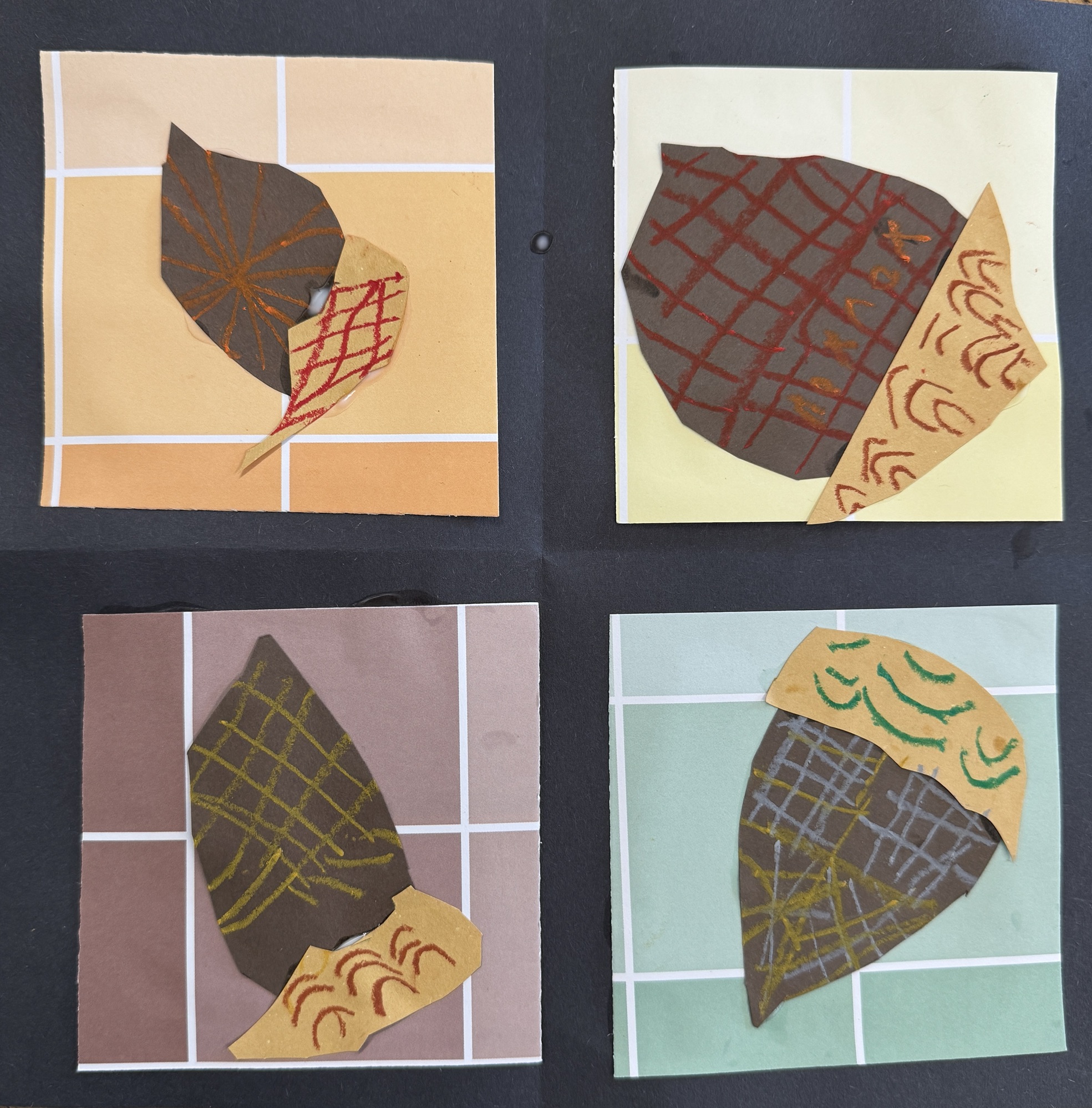
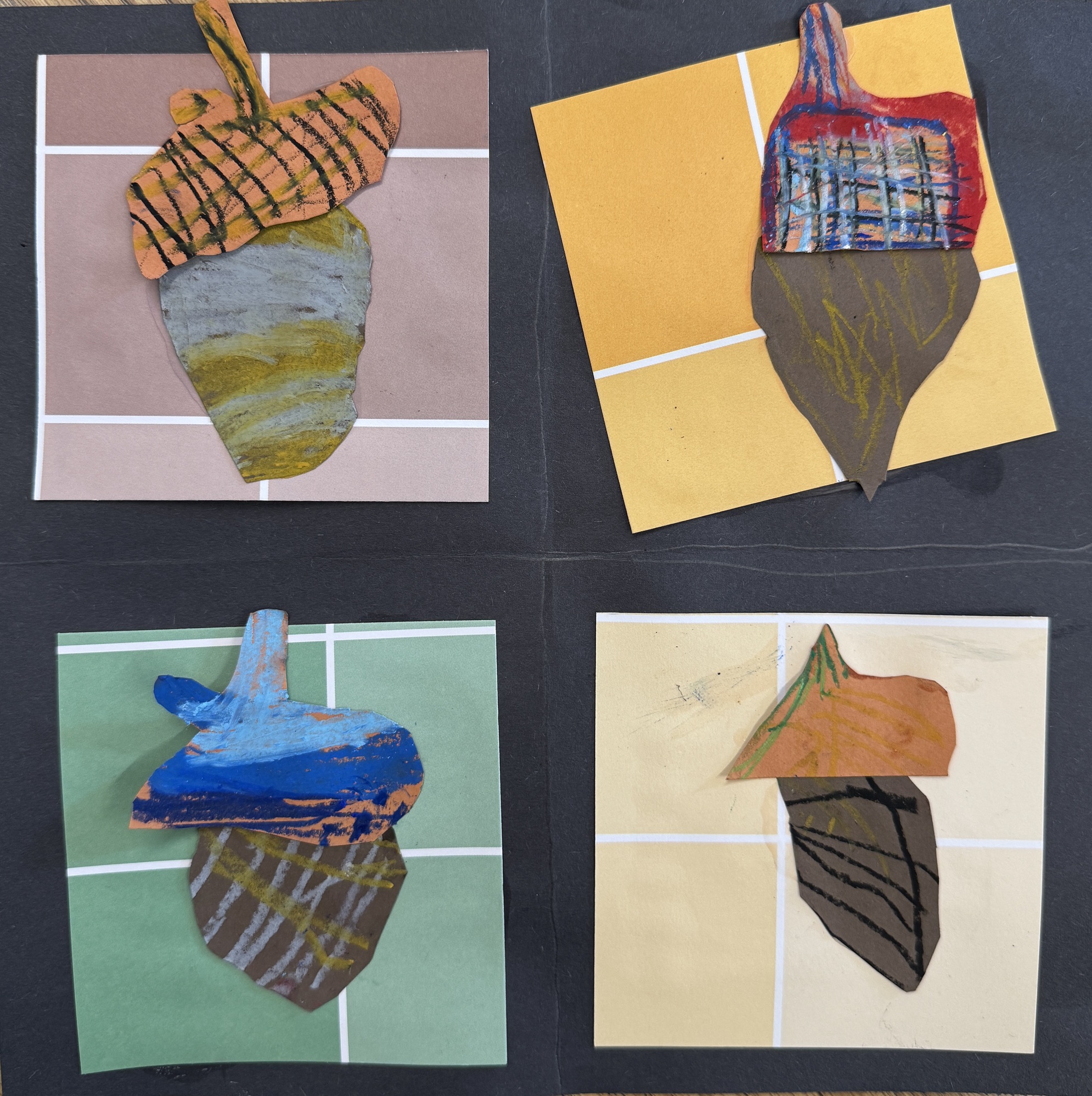
All this science and nature provided the perfect foundation for an art project inspired by Andy Warhol and the Pop Art movement. Today the first graders in my classroom used scissors, construction paper, oil pastels…and wait for it…white glue to create the most adorable acorn art. Scissor work can be challenging for young learners, and to add to the scissor demand I didn’t provide a template. Instead I showed them how to trim the square of paper into the shape of the acorn nut…and another square of paper into the shape of an acorn cap. A few students expressed frustration, but with some encouragement and insistence that they keep trying, all students were able to cut out acorns and their caps independently.
We added some whimsical texture with oil pastels…and then the most challenging part, they had to use white glue to attach their acorn pieces to the background we had assembled. Trust me, white glue can be downright scary in the hands of young artists! But with admonitions to use the glue sparingly, we were successful!
Of course we had to do some writing. Poetry seemed in order–after all this year’s #writeout theme is Poetry for the Planet and I was wanting to keep it short…so we attempted a first grade version of Haiku–a three line poem (without worrying about the syllable count). Here are a few first grade attempts.
J wrote:
Acorns are hard
cozy as fall nears
Spiny as a hedgehog
O wrote:
Don’t fall yet.
Squirrels will get you.
Crunch!
And R wrote:
Acorns look like a balloon that got blown by a man.
Acorns look like a man with a helmet riding a bike to the store.
Acorns look like a top that someone is spinning on the table.
#Writeout we’re off and running! We’d love to know how all of you are celebrating nature and the outdoors in your classrooms and in your lives!
All this month I have challenged myself to write a poem and post it here…AND I have been working with my young students, creating opportunities for them to write poems in lots of different ways. I’ve been inspired by poets at #verselove who have offered daily prompts and thoughtful feedback to my mostly first draft poems. So on day 30, what would I offer my students…and myself as impetus for composing?
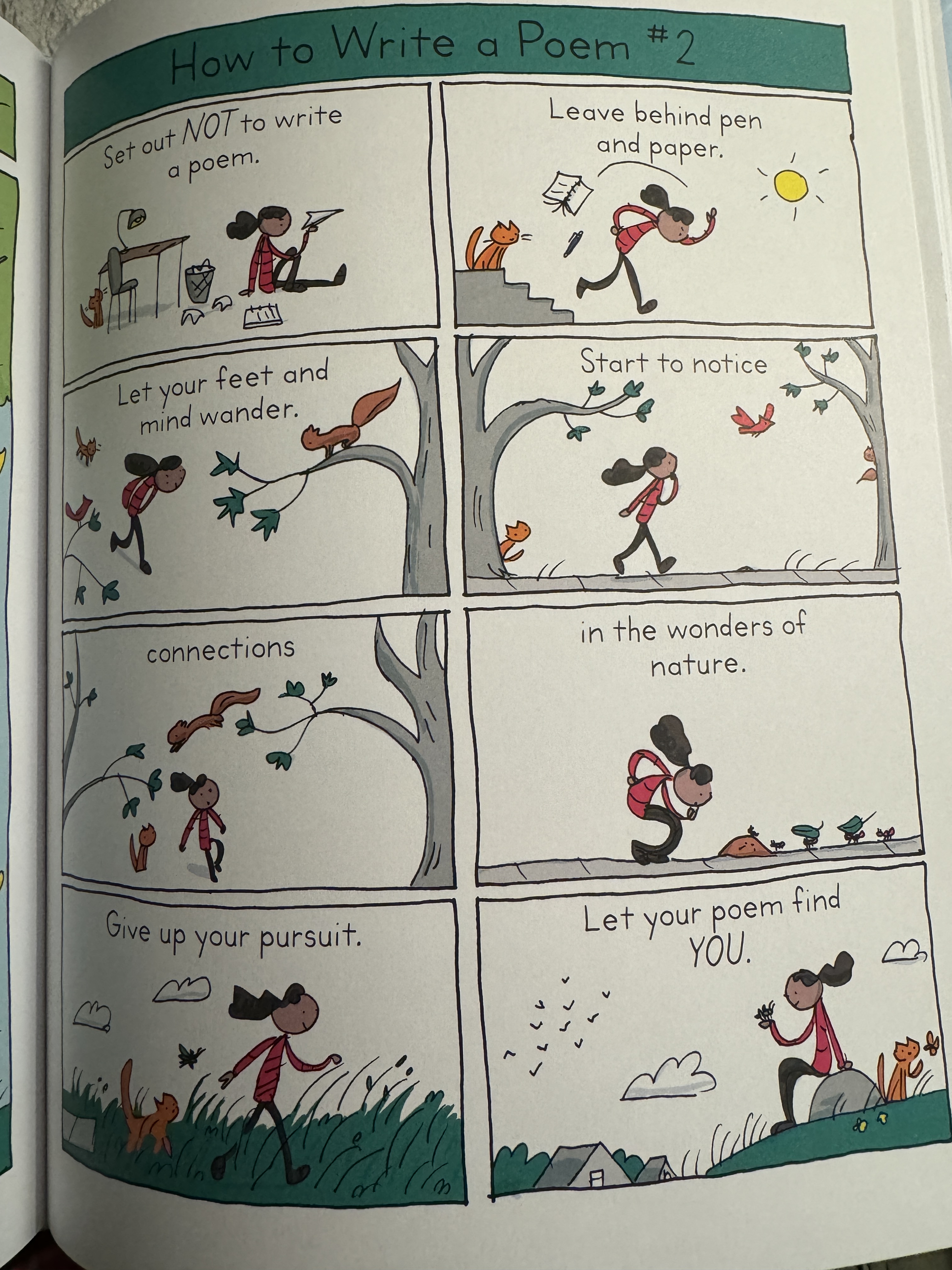
Today we headed back to Grant Snider and his book Poetry Comics. (You can read a mini book review here and a bit about Haikomics here). I read them the four “how to Write a Poem” pieces from the book and we talked about what advice we might give aspiring poets. Grant recently wrote a blog post teaching his readers how to make a poetry comic. When I read his post, working my way all the way down to the end I found my own students’ Haikomics featured there! So after reading Grant’s blog post and showing my students all the ideas he shared about how to create a poetry comic–I also showed them that some of their poems were a part of his post! (That definitely created a lot of excitement!)
With all of that as inspiration, I invited students to write their own poetry comics–maybe even a “how to write a poem” poem. And they are off and running! Unfortunately, creating a poetry comic takes a bit more time…I’m hoping we can get them finished tomorrow.
Of course I wrote with my students…and I, too, need more time to get the comic bit completed. But I did take some time to revise my poem when I got home today…and will share the words that hopefully will become a poetry comic with some work with my students tomorrow.
On this second to the last day of National Poetry Month my students and I are still writing poems. I woke this morning to a suggestion from Abigail at #writeout in the NWP Teachers Studio to go outside and find a poem.
So I pushed and shoved at my lesson plans for today to make room for getting out of the classroom to collect a poem. We grabbed our sketchbooks and pencils and headed out toward the pollinator garden which sits on the edge of the playground. My directions to my first graders were to collect 5 words or ideas (they could sketch if there was time) and that when we returned to the classroom, they would turn those words or ideas into a poem.
As they reminded me, we do this kind of thing pretty regularly–sometimes by taking photos, sometimes with sketchbooks. So, they knew what to do. There’s plenty for curious kids to pay attention to: the playground ball stuck in the tree, the plant growing in the middle of another plant, bees buzzing, rocks and wood chips and so much more.
And when we got back inside, the writing began. All this happened toward the end of the school day, so there was not much time left for the writing, but we did take the time to share a few of these poems in progress. Here’s a sampling.
M asked me if showering was a real word as he composed.
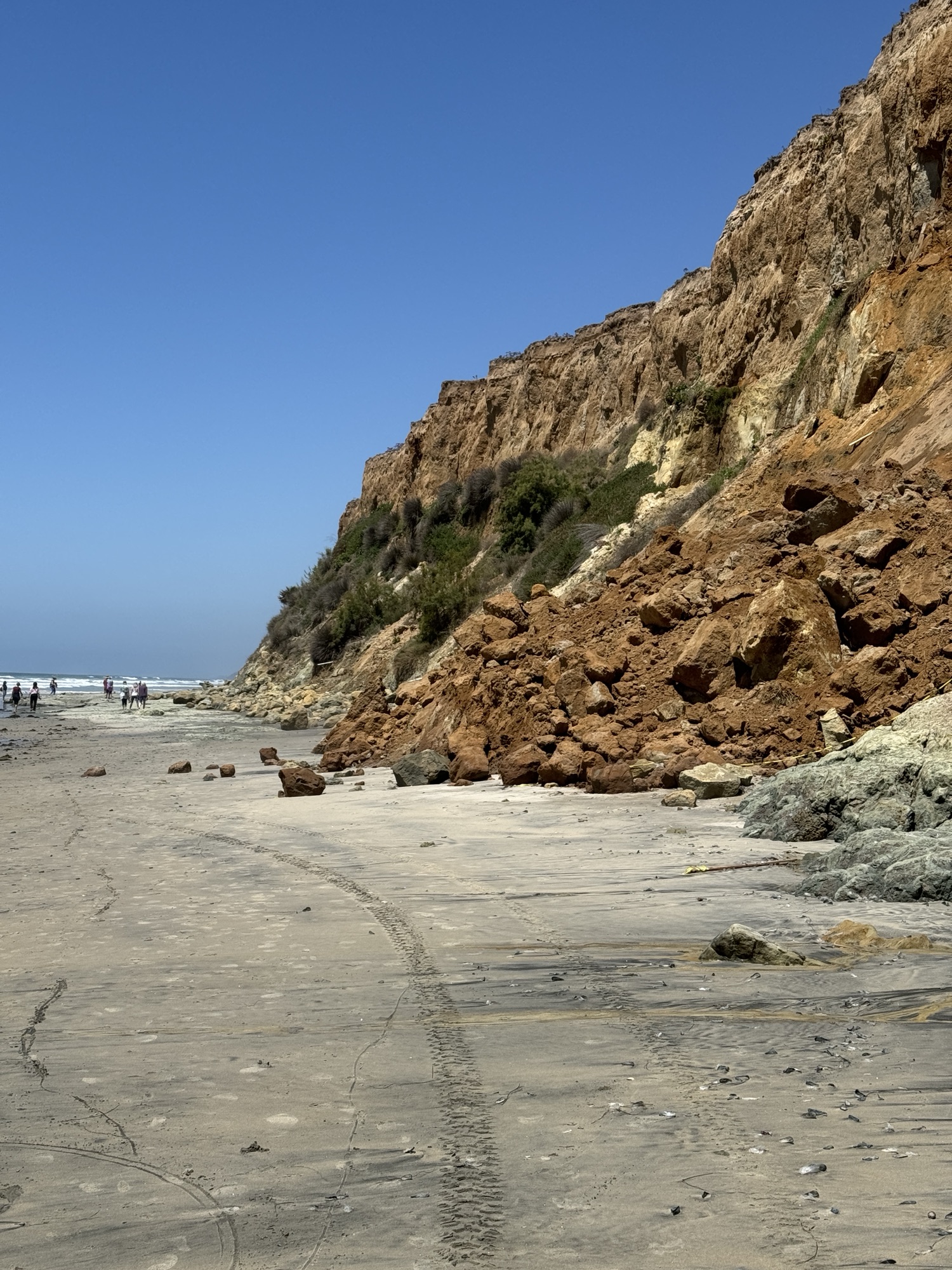
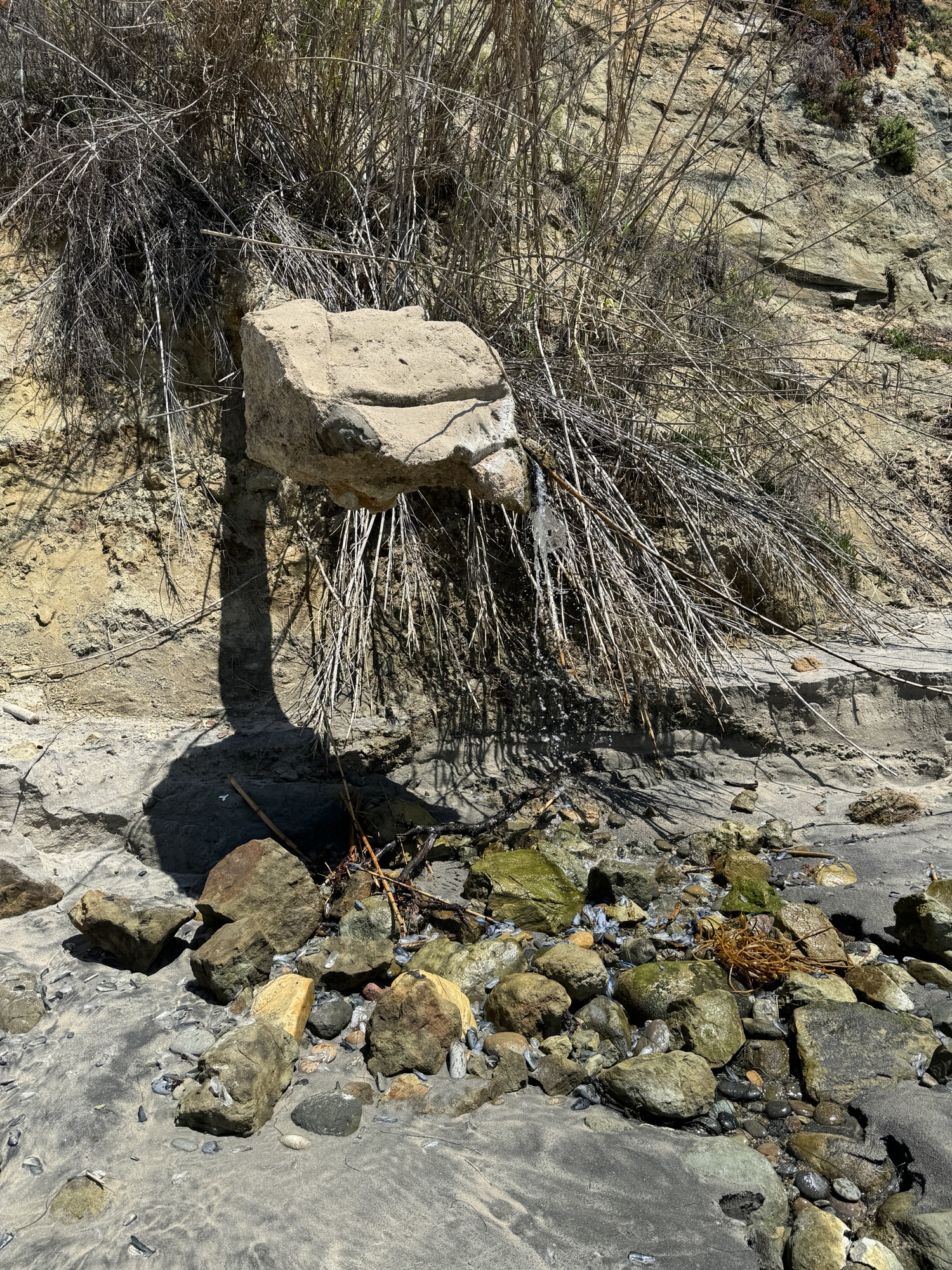
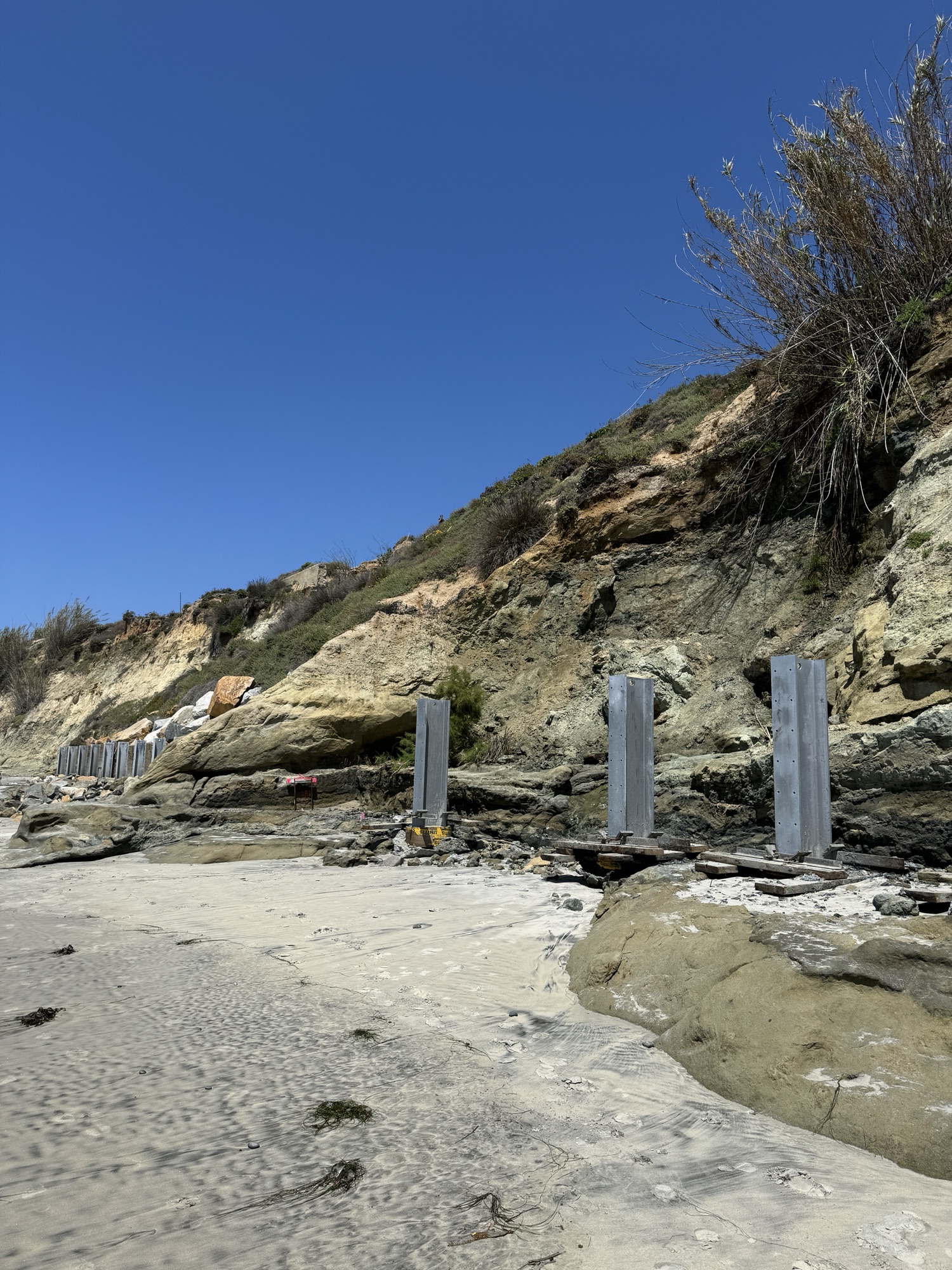
Today as I walked the beach I was struck once again by the fragility of our planet. I noticed the crumbling cliffs pouring onto the sand below, those same cliffs where the amtrak and coaster trains run daily. The cliffs that support multimillion dollar homes in danger of sliding into the ocean. The cliffs that have been whittled away by wind and water, by weather, by building, by human life. Yes, erosion is a natural phenomenon, but there is more to it than that.
My mind wandered from the damage to poetry. The way poetry can offer healing by pushing words into the world, letting us examine our thinking, play with ideas, connect with the earth, the wind, the water, each other.
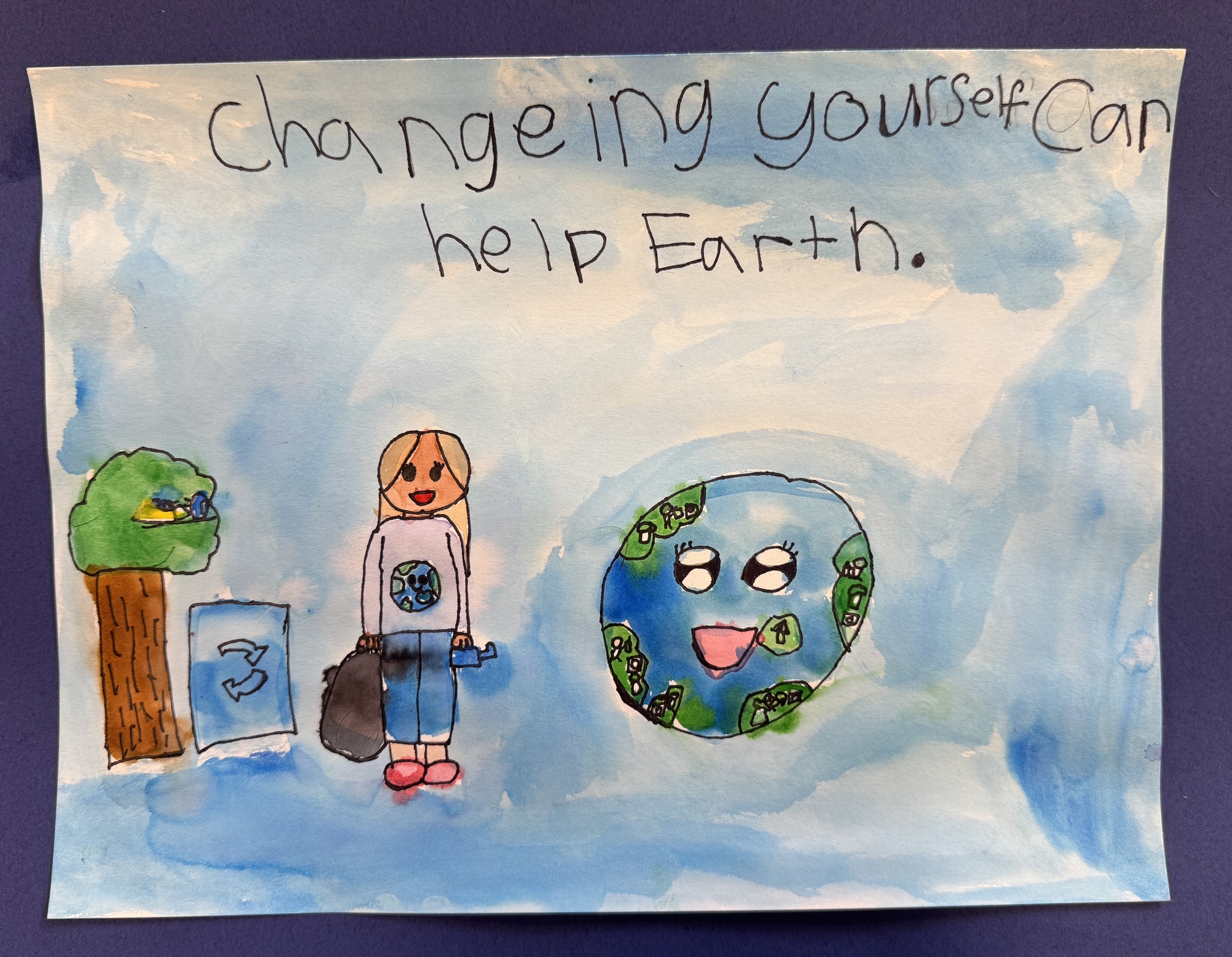
My students wrote their own 6 words for the environment a week ago and then created a poster to share their words and their thinking with others. The words of this first grader continue to resonate with me.
I think she’s right. It’s time to change ourselves so we can help each other and help the earth. Which led me to a 100-word rant for my poetry today.
I don’t think it’s a coincidence that poetry and earth share the month of April as their time of attention. We need poetry to understand our planet, to appreciate our planet, to save the planet from our reckless disregard for its limits. As we spin on this planet we call home, let’s consider the harm that comes from the use and abuse philosophy that has become so prevalent. It’s time for solving. More leaning in than lashing out. Instead of global clashing and teeth gnashing it’s time for change. For ourselves, our community, our nation, our world. It’s our moment.
I’ve been inspired by Grant Snider’s comics for a while now and was super excited when I learned about his book Poetry Comics published at the end of March. (I wrote a mini review here). I knew I would be doing something inspired by his poetry comics with my first grade students this month. When I saw he had done a Haiku comic style, I knew this would be a perfect format for my students.
We’ve written Haiku this year–well, mostly 3-line poems without much attention to the syllable count. So when we took a look at Grant’s Haikomic this morning, students immediately understood (and recognized the metaphorical thinking in his last line).
I’ve learned when teaching first graders that sometimes a novel paper use can propel young writers forward, somehow tricking that treacherous writer’s block into disappearing. So instead of writing in their notebooks or on lined paper, I handed each student a 3″ square post-it note to draft their Haiku. It didn’t take long for students to have their Haiku ready to be transformed by the comic making process.
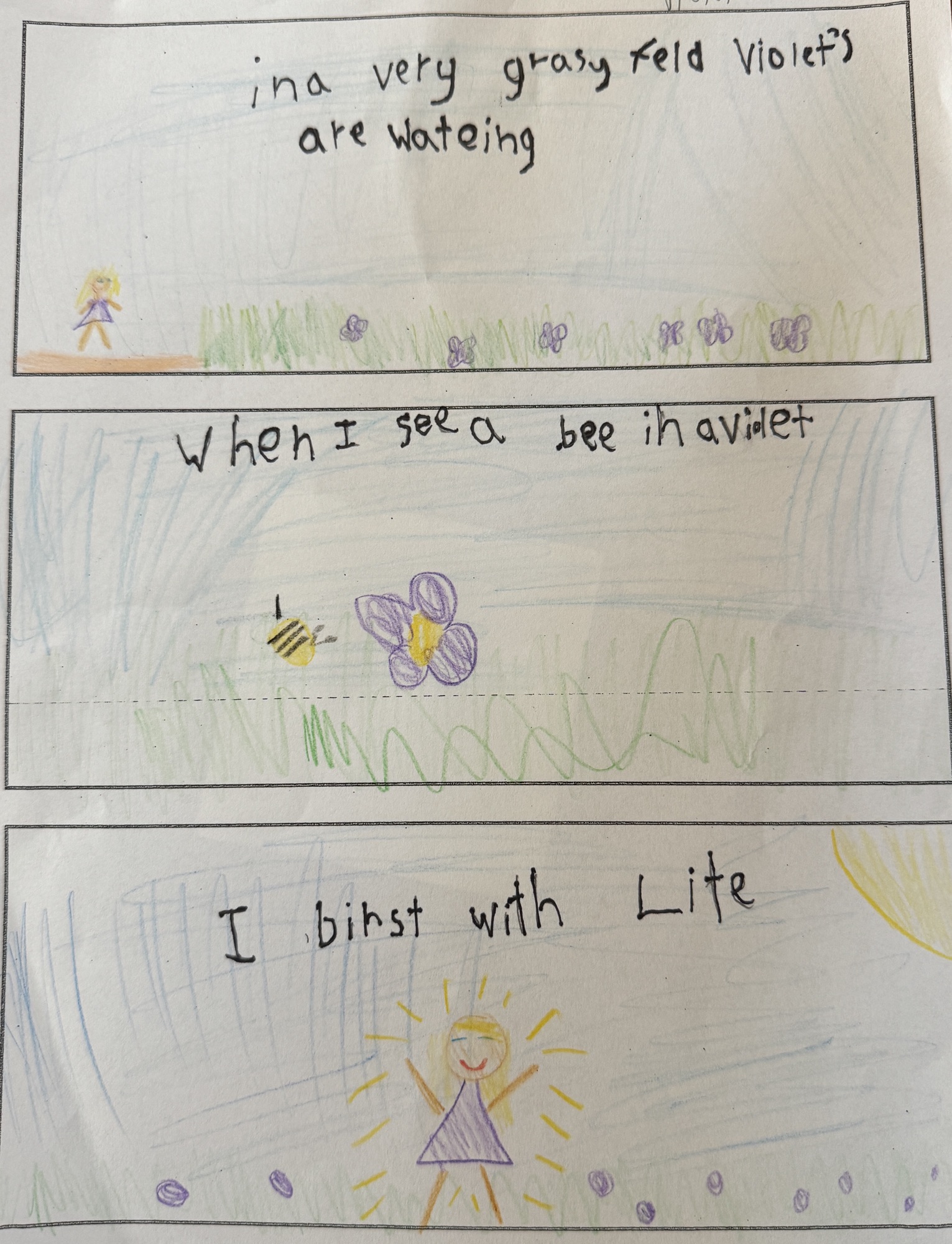
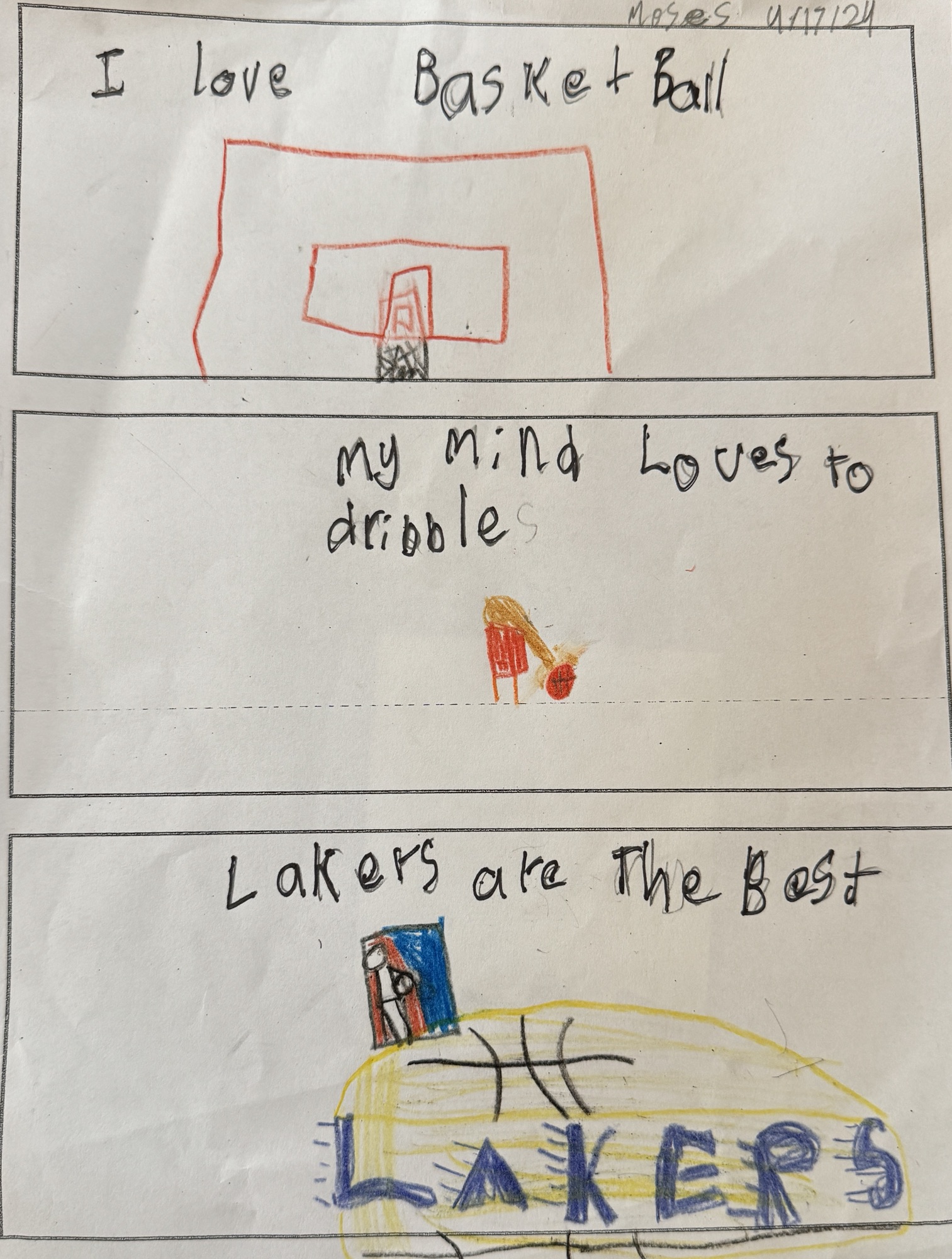
I distributed the comic paper–in this case, a page with three horizontal rectangular panels. Students wrote one line of their Haiku in each panel and added their comic drawing with colored pencil. As a final last step, they traced over the writing with a Sharpie marker.
Here are a few examples:
V can never help writing about violets!
M is obsessed with basketball!
In her piece, “I” decided to add speech bubbles.
And O celebrated flowers and springtime
While I wrote my Haiku about egrets with my students and drew along with them, later this afternoon with a group of Writing Project colleagues we crafted our Haikomics using photos instead of drawing (mostly due to severe time constraints). I then used Canva to write my Haiku directly onto my photo.
Maybe you’ll want to try your hand at a Haikomic too. I’d love to see what you come up with!
I think this was the first day in my long teaching career that I have ever taught during a solar eclipse. Unfortunately, this wasn’t a total eclipse in our area, but still an eclipse. And on this first day back from Spring Break, we were fortunate. All our of classes were supplied with eclipse viewing glasses…so why not turn the day into an eclipse-centric science phenomenon-based day of learning?
Even before the eclipse began (around 10am our time) we reviewed what we had learned about solar eclipses before our break by watching and listening to a song called “Total Eclipse of the Sun” by PBS kids. I did remind students that we were not going to see totality, but the energy in the classroom was rising. We took our first peek at the sun shortly before recess. With glasses in place, we looked up and could see right away that our usually round sun had a big bite right out of it! From that moment, these first graders were hooked.
After recess, I set up the livestream so that we could keep track of the eclipse for those places in the path of totality and we headed outside with our solar glasses to view the partial eclipse progress about every ten minutes, coming in to sketch and document the time after each viewing.
Totality, even via livestream was exhilarating! “The diamond ring!” they shouted as we watched the sun just about disappear. Four minutes of “nighttime” passed so quickly and then we watched the sun reappear. And just when students thought there was nothing more to notice about our partial eclipse, one more viewing before we headed out for lunch revealed that the “bite” of the sun had changed sides!
And no day of science learning would be complete without adding in some art and writing. After lunch we tried our hand at creating our own eclipses using oil pastels and a masking technique. Students were encouraged to use some artistic license with color–and enjoyed creating these colorful coronas.
Inspired by a poem from the book Welcome to the Wonder House by Rebecca Kai Dotlich made up of all questions, students took a first try at crafting a question poem about their eclipse experience. While we ran out of time before we really had time to finish, here is an early look at a first grade question poem by F.
The Solar Eclipse
When is the next solar eclipse?
Can America have a full eclipse?
Who can track the eclipse?
Can someone see the eclipse from inside an airplane?
Why do we have the moon come in front of the sun on special days?
When was the last eclipse?
When I look up at the moon at night I see a smile on it, but why?
For my own poem, I turned the #verselove Zip Poem prompt into an eclipse teaching poem using my school zip code (and using emoji’s as suggested for the zeros). Thanks for the inspiration Mo!
Zip Poem: Teaching Under the Influence of a Partial Eclipse
9-Solar science eclipsing school day, igniting first grade wonder
2-Planetary alignment
0-☀️
0-🌙
7-Young astronomers’ energy fueling totality-free sky learning
Math is everywhere. That’s what I’m always telling my students. But at 6 and 7 years old, my students mostly think math is either counting things one by one or solving equations someone else puts on a page for them.
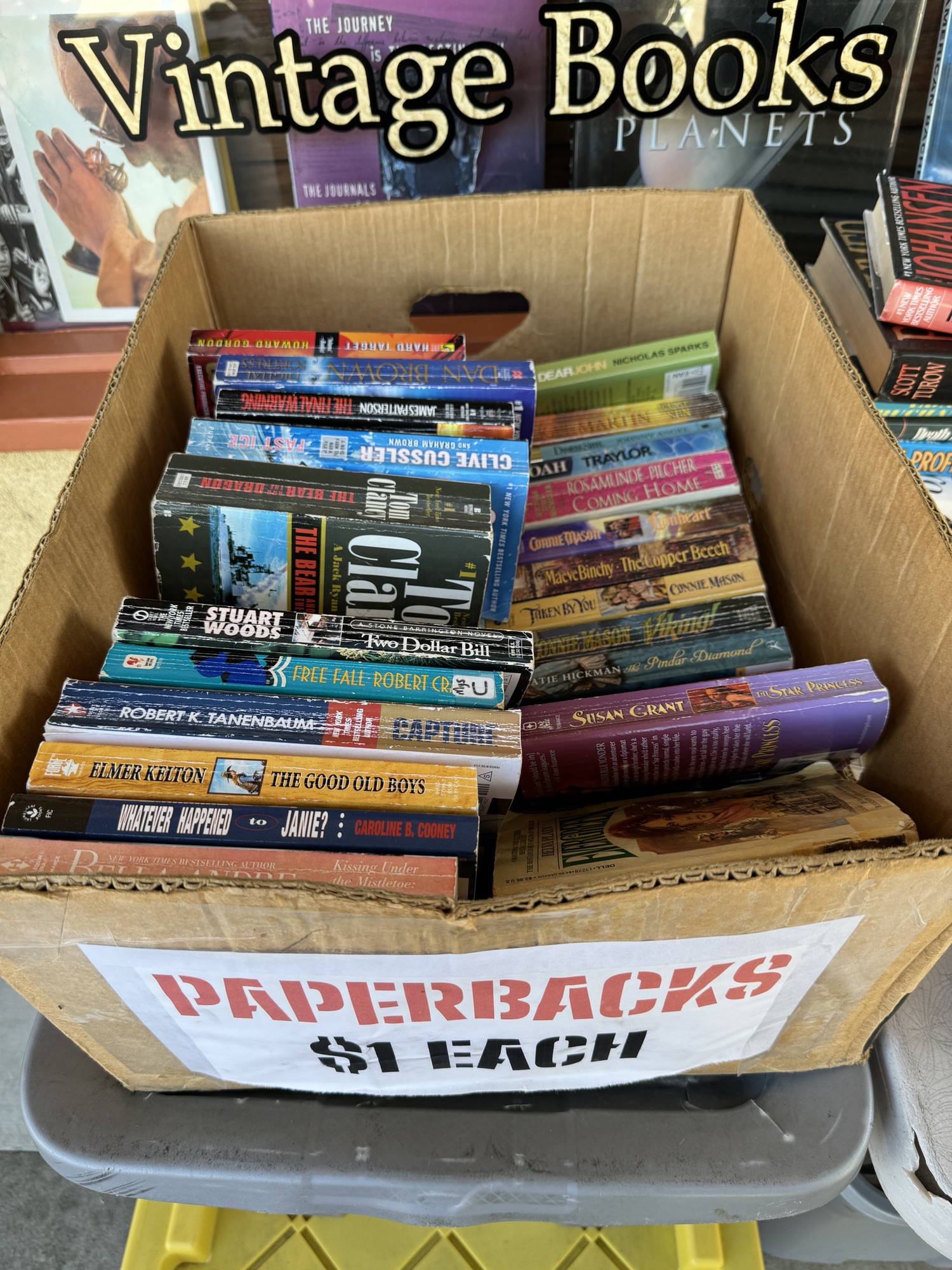
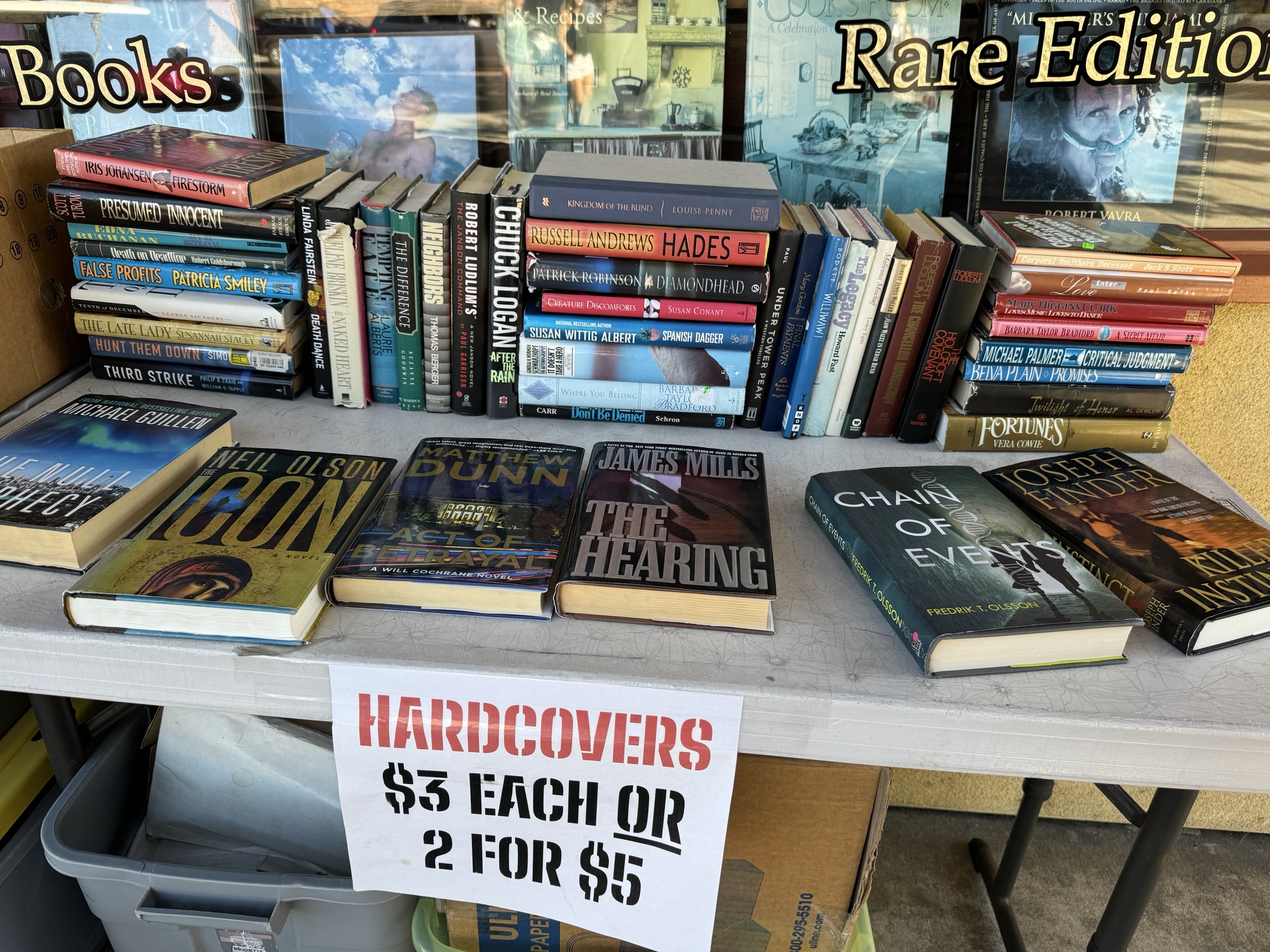
So I’m trying to get in the habit of finding math in my own daily life. And somedays I’m pretty good at it. On a walk in a local downtown I saw these boxes of books at the local used book store. What perfect math for students (or just ordinary people) to think about. What question(s) might you ask to evoke a mathematical response?
When I see these local trashcans I want to challenge my first graders to figure out how many tiles there are without counting each individually. How might you figure it out? Is there more than one strategy to help figure it out?
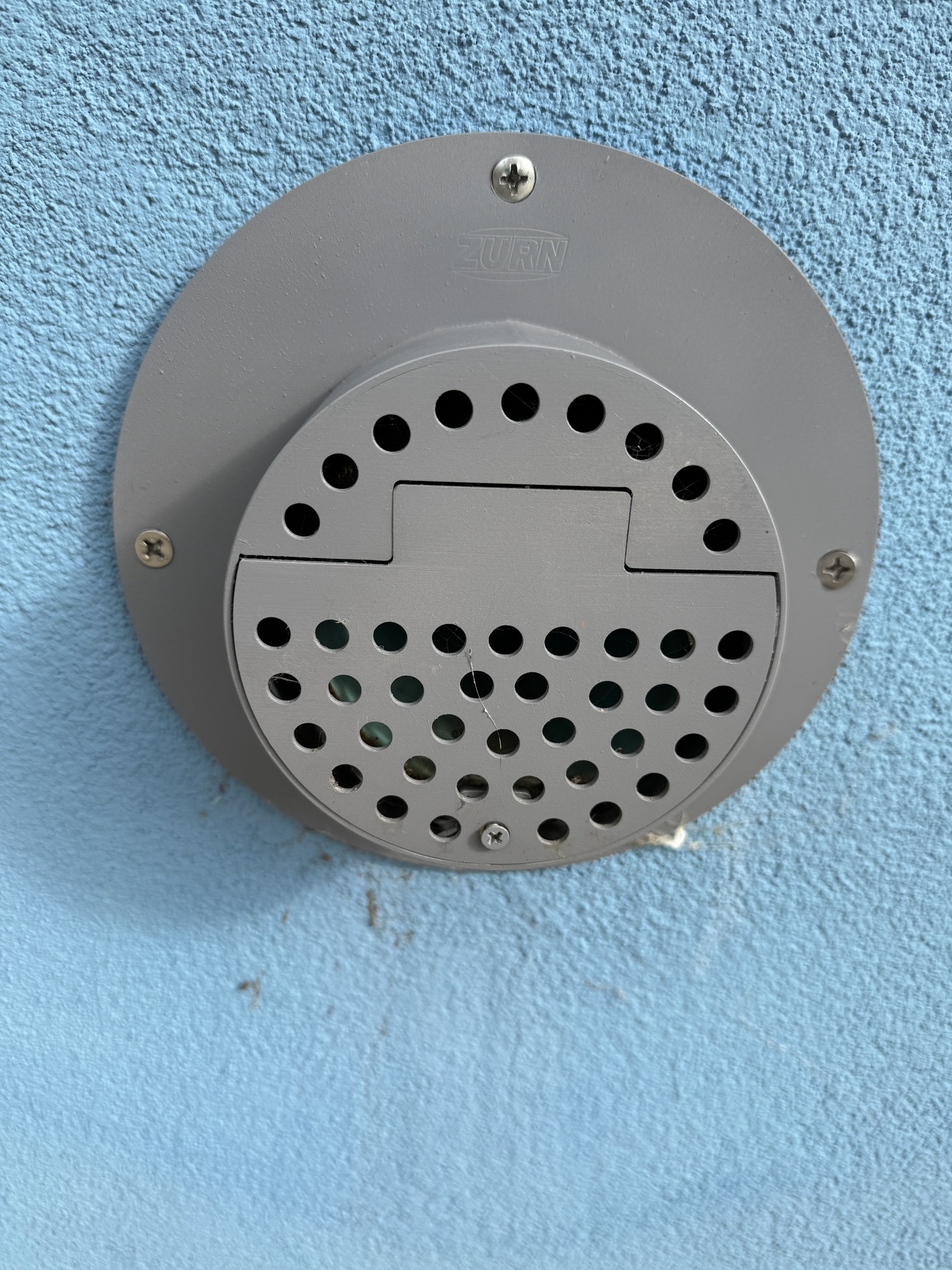
There’s the holes in this drain. Is there an easy way to count them? How might you keep track?
Today we headed out on our playground in search of math. But I’m not so sure that I managed to convey how to look for math. Some students noticed the squares of the climbing ladder on the play structure and were figuring out how many were outlined by the ropes. The inaccuracy of their sketches were definitely not helping them find the solution.
When I prompted, “Do you see any fractions?” a few students were able to see the eight “slices” outlined on the floor of the spinning merry go round thing–and could even articulate that each was an eighth.
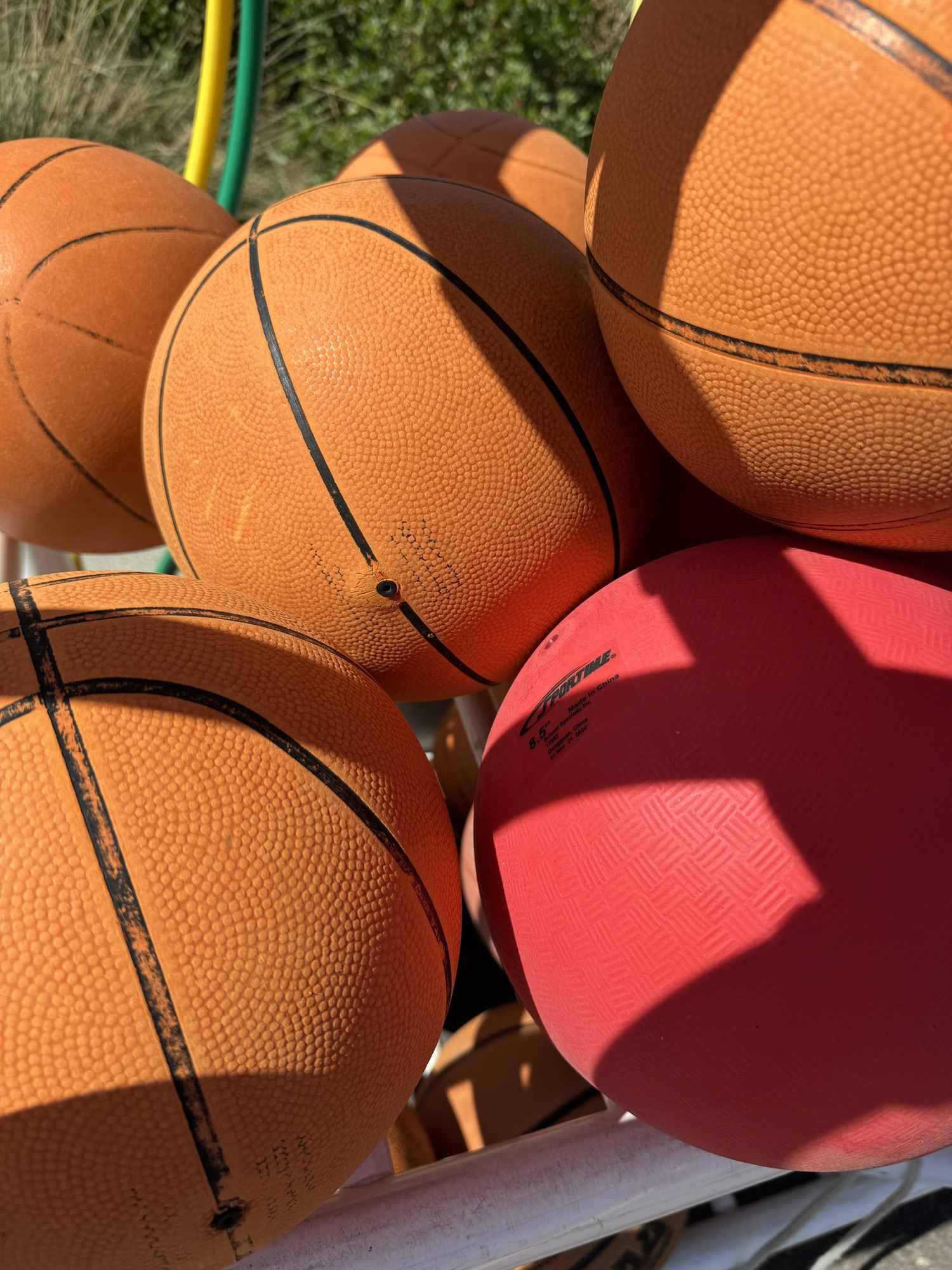
But I see that more practice and maybe a bit more direction are still in order. I think I may practice by showing my students one of these photos and then asking some questions to provoke a mathematical response.
So, let me practice on you. What mathematical situations might come from the close up of these balls on the cart in the playground?
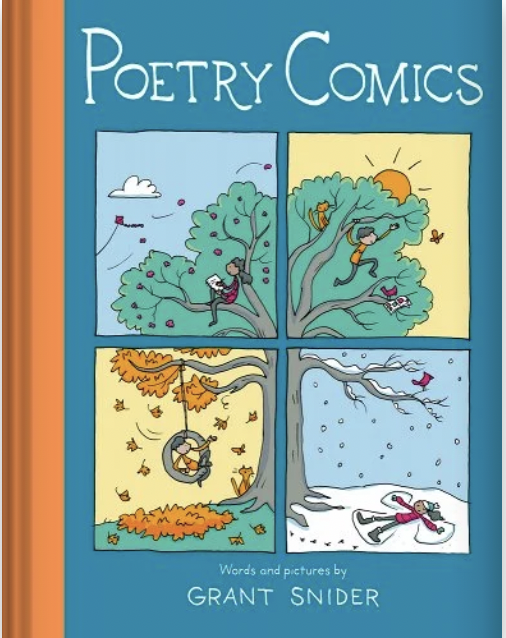
Another book review? Is it even allowable to write three slices that double as book reviews?
But I simply couldn’t resist. I’ve been following Grant Snider for a while on Instagram/X and I am constantly inspired by his comic writing (for lack of a better term). Somehow he has a knack for simplifying complex ideas into 4 panels or 9 panels where the combination of images and words slices through and hits me right in the heart.
I preordered Poetry Comics, knowing that I needed to have this book not on my Kindle, not from the library, but right in my hands. Ironically, my school librarian got a copy last week and put it in my box a week before my preorder arrived today. I’ve been savoring each page, connecting both as an adult and as a teacher.
I know I will be having my students study a few of these poems and try their own hand at crafting their own poetry comic. There are so many great choices it’s making it hard for me to choose. Here’s one I am considering.
I can’t wait to see what my students will create as they explore poetry comics! How about you? Will you try to craft a poetry comic as we head into National Poetry Month?
Even if you don’t, I highly recommend Grant Snider’s Poetry Comics. There’s plenty to love in this deceptively simple volume.




 Thinking Through My Lens