Tag Archives: learning

Making Biscuits

I’m a bit behind in my participation in the Learning Creative Learning MOOC, put on by the MIT Media Lab, P2PU and sponsored by the MacArthur Foundation.  So I am going back to last week’s activity, which involves reading Seymore Papert’s essay Gears of My Childhood and then using that essay as an invitation to reflect and write about my own childhood experience with object-based learning.

Unlike Papert, I don’t have an immediate memory of a particular object that influenced my view of the world from a very early age.  (It’s probably more of a memory problem than of a lack of interest in an object!)  But as I continued to think about influences on my outlook toward learning and curiosity, I found myself thinking of many different influences–most of them including important people in my life: my mom, my dad, and my Grandma Millie come immediately to mind.  And then I thought about my experiences making biscuits with my Uncle Bob.

Uncle Bob (actually my dad’s uncle–so my great uncle) lived in a trailer somewhere in the same county where we lived and we would visit on Sunday mornings (I think).  He would make biscuits and always invited me and my little sister to help him.  (He seemed old from the time I knew him and we were very little girls at the time)  We would climb up on a chair of the trailer table and watch closely as he kneaded and smoothed the floury dough.  Then he would roll it out and hand each of us a drinking glass, the same kind we would drink 7-up in a bit later, and we would carefully cut the biscuits using the glass.  He would then take the biscuits, place them on the pan, and put them in the oven.  I still love biscuits, especially when they are made from scratch like that!

And I think the important lesson I learned from that drinking glass/biscuit cutter is that the right tool for the job is often the tool you have access to.  Uncle Bob didn’t need fancy biscuit cutters that were just the right size, he just pulled a glass out of the cupboard.  And better yet, my sister and I each had one to work on cutting those tasty biscuits from the dough.  We all worked together and, in spite of our age, were trusted to do this important work.

And to this day, so many years later, I know that using what you have access to is an important truth to experimenting, to figuring things out, to designing, and to feeling like making is within your grasp.  I still don’t have to go out and buy the perfect kit or have the just right materials to get started with exploring…I just have to be interested, and it really helps to have someone like Uncle Bob (or my mom, dad, and Grandma Millie) around to support you as you’re getting started.

Uncle Bob

Reflecting on Weeds

I’ve been pretty obsessed with weeds over the last few weeks.  These much maligned plants are resilient, tenacious, and often quite beautiful…traits I admire.

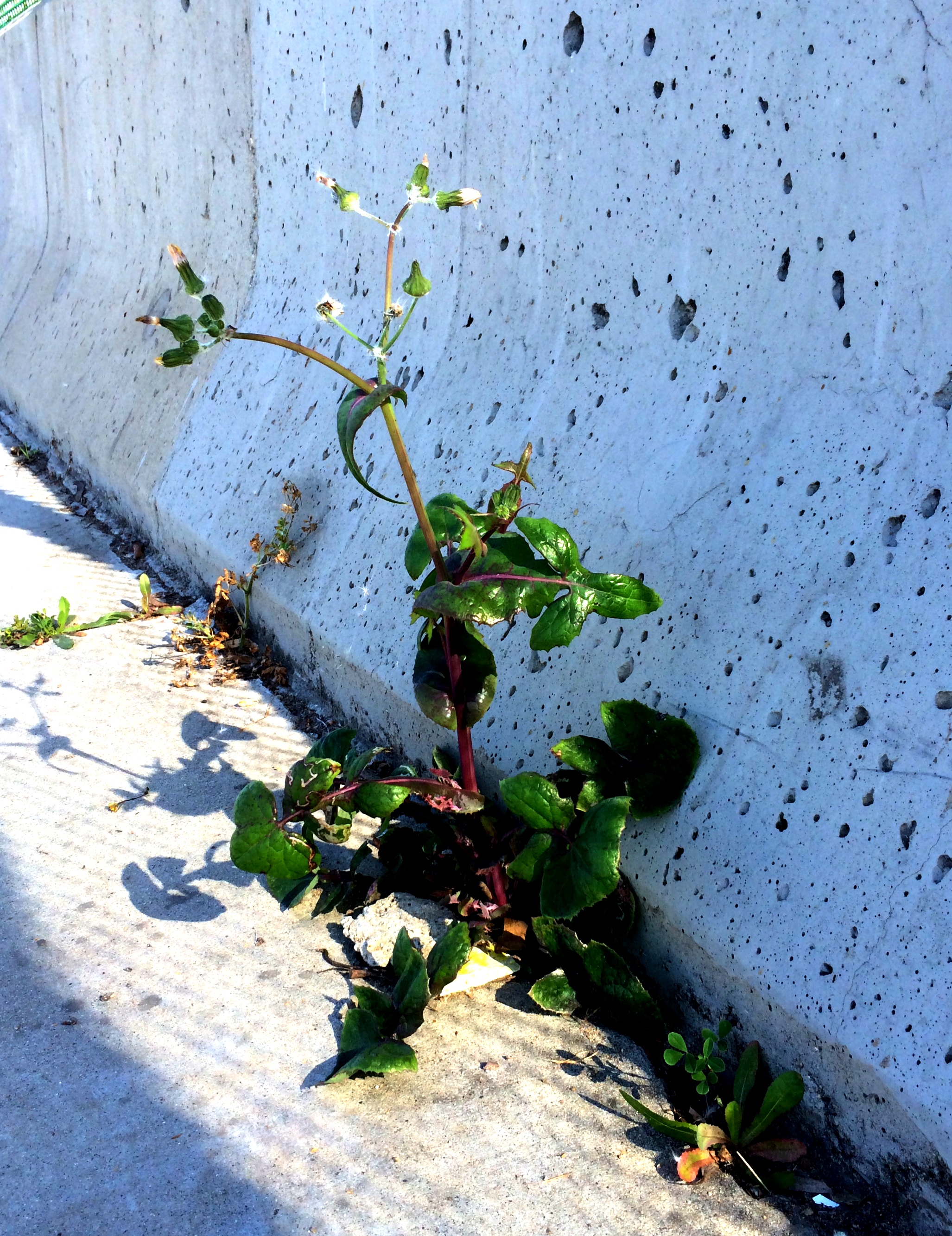
On my way home from work today I noticed that the greenhouses I passed were ablaze with color, so I pulled off the road, parked and walked to take a closer look and a few pictures.  And on my way I noticed this weed growing along the cement wall in a crack between the sidewalk and the wall.

urban weeds

When I got home I noticed that today’s Daily Post Weekly Photo Challenge was reflection…and instead of thinking about the many photos I take of literal reflections (mostly involving water), my mind immediately went to this photo of a dandelion weed growing in the crack of a sidewalk.

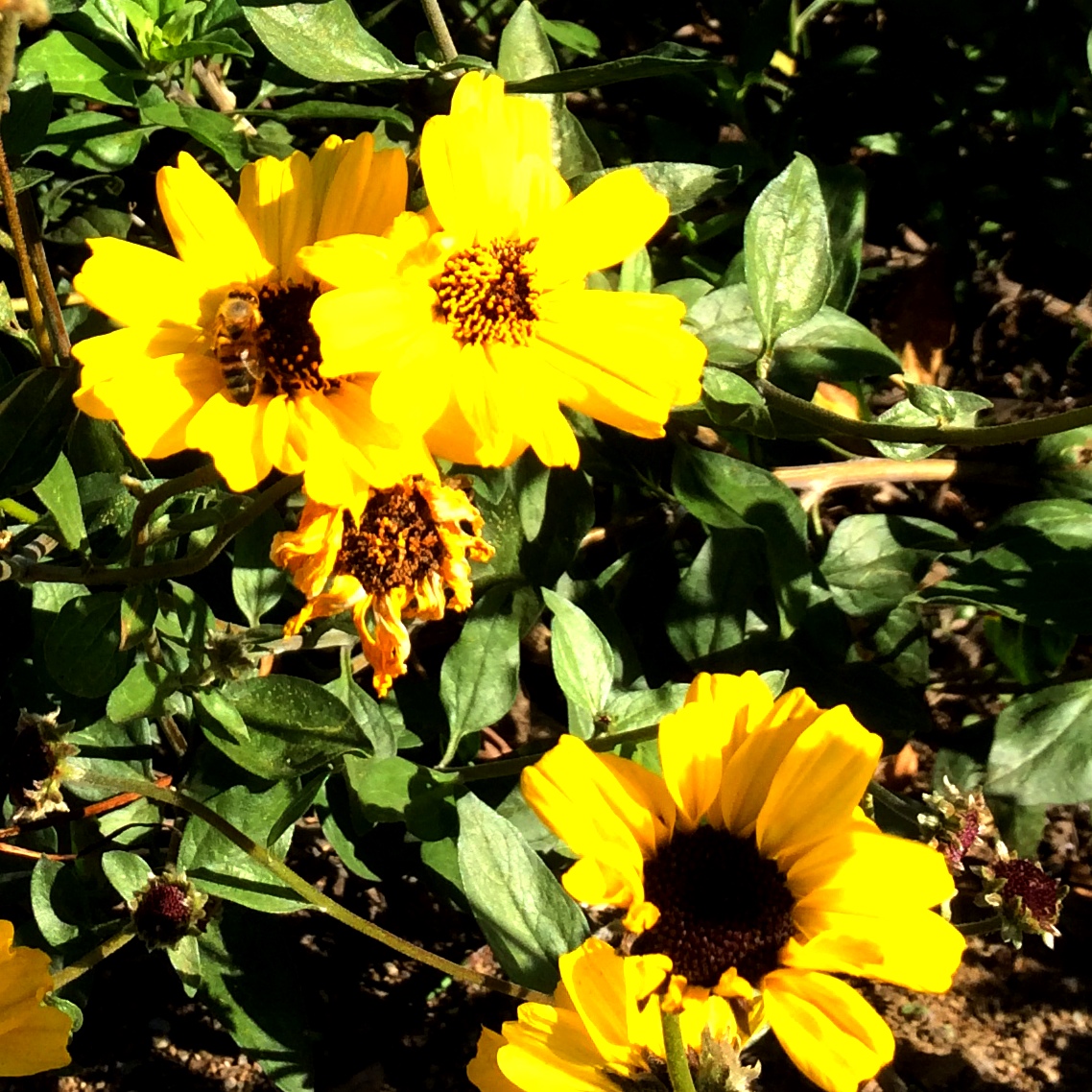
I’ve reflected on many aspects of weeds in the last couple of weeks: their beauty, the role of a negative label, and about things that we see as expendable. Every time I see a weed I find myself thinking about its positive qualities…and wondering if a particular plant is seen as a weed depending on the context.  After I photographed the dandelion weed I also noticed the salty susans growing wild in the dirt where the sidewalk stopped.  I wondered…are these weeds or are they native plants?  And really, what is the difference?  If these yellow blossoms were in the crack of the sidewalk would that make them a weed?

salty susan

And as I finished my parent-student-teacher conferences today I was thinking about the qualities the educational establishment values in learners.  What about the students who don’t quite fit the profile of the ideal learner?

I heard a piece on the radio this morning about the rate of suspension and expulsion in schools of students of color…and know that there is no reasonable explanation for these statistics. These children are being seen as “weeds” in the system, intentionally or unintentionally, and this has to change.  How we talk about kids and how we define success plays a huge role in the ways kids are treated in schools and other contexts.  Plucking them out is not a viable solution…and there’s plenty of research to support that premise.

I think the answer lies in broadening our definitions of school success.  I also think we need to consider what we expect of students.  Do we want them to sit quietly or do we want them to learn?  Is reading from a textbook or listening to lectures the best pathway to learning?  How do we support students in finding their own experiences in the content we teach?  What environments do we cultivate to encourage the growth of students who are quite different from each other?  How do we engage families and learn from them and with them about their children?

For me, weeds are an object of reflection…and of fascination.  And they generate question after question for me to consider as I strive to improve my teaching practice.

And watch out…I might just have an entire garden full of weeds one of these days!

A Pink Fedora

It was a pink fedora kind of day.  What does that mean, you ask?

This is parent-student-teacher conference week.  I love the opportunity to talk to families and yet, it’s a tough week for teachers.  Three hours of back to back to back conferences takes its toll…and it takes those precious after school moments usually devoted to planning and preparation and pushes them aside to make room for the conferences.  And, in conversation after conversation I find myself reminding students to be playful in their learning–that learning doesn’t mean routine and boring and something you dread.  You have to find ways to make it fun and interesting.  And that, in turn, reminds me to be more playful in my teaching and other responsibilities.  I have to find ways to make my hard days fun and rewarding too.

It seems odd to remind children to play, but when it comes to school and learning they seem to think that the path to learning is narrow.  They are looking for the one right way, which sometimes transfers to battles at home about that thing called homework.

I want “homework” to be curiosity and experimentation.  I want students to go home and explore ideas that came up in the classroom.  I want them to play with numbers and play with language.  I want them to figure out new ways to express their ideas in words…and in pictures. And I want them to come back to school and spread that energy and excitement around.  And some of my students do.

This morning, one of my students arrived at school wearing a pink fedora.  It was the first thing I noticed when I walked out to pick up my students this morning.  I could see him from quite a distance…smiling broadly and walking with the air of assurance that comes from knowing with confidence that a pink fedora makes a statement!

photo-101

Somehow that pink fedora represents that playfulness I hope for in our learning community. Playful doesn’t have to mean silly or distracting…and that fedora was neither today.  For me that jaunty pink hat was a talisman of fun, of individuality, of style, with a bit of hopefulness and joy thrown in.  I’m not so sure that the hat will arrive at school again…and that’s okay.  One day of the bright pink fedora reminds me…and helps me remind my students…to find the fun and the playfulness in our work and our learning.

I hope you had a pink fedora kind of day too!

Stars Emerge

Writing is hard.  Teaching writing is harder. And every once in a while the effort of teaching writing and supporting and inspiring writers comes together in ways that make your heart sing and tears flow.

I had one of those moments yesterday.

The first, second, and third grade bloggers were hard at work in our classroom.  The room was filled with the productive hum of writers at work.  I moved around the room, helping with inserting youtube links to the digital stories we had created, troubleshooting technical issues, and helping those emerging writers get their ideas pinned to the digital page.

One of my students called me over, asking for help with a formatting issue.  And that’s when I noticed the poem.  “Where is the poem from?” I wondered.  “I wrote it,” he replied.  “Will you read it to me?” I asked.  And he did.

Stars

A poem

Two stars diverge sending each other down to earth like eagles mating, gripping each other so hard that before they descend and hit the ground they turn into dust. As all the stars shine and shimmer with a shine so big it blinds eyes.

The portal of time, a hole, may it be a dimension to another world? Might it have different forms of life? Or does it hold the keys to the past as you turn the engine?

May it be a beach of darkness or is it truly where your body is when you pass away.

Still a star inside, you shine, a star big enough to fill this sad place with colors and light up the world.

Are all the stars just a puzzle or are they illusions that move and move as you play the game, the game of life?

I have loved watching this writer go from a reluctant and troubled writer to a creative, confident, and willing writer over the three years in our class.  Writers don’t follow easy, uncluttered pathways, instead, like stars and diamonds they emerge from from pressure and heat and time and the tumultuous intricacies of the universe.  I am so lucky to spend three years with my students, it often takes that long for writers to emerge–finding both confidence and voice as writing instruction, practice, and a supportive writing community come together over time.

I’m still thinking about Brit’s poem…great writing does that.  It ignites a fire in the reader, kindled by the writer.  It’s burning bright and hot.

photo-102

You might want to stop by Brit’s blog and leave a comment.  I know I will.

At the Intersection

What do you find at the intersection of science and writing?  In my experience that’s a place filled with energy, inquiry, and amazingly devoted educators!

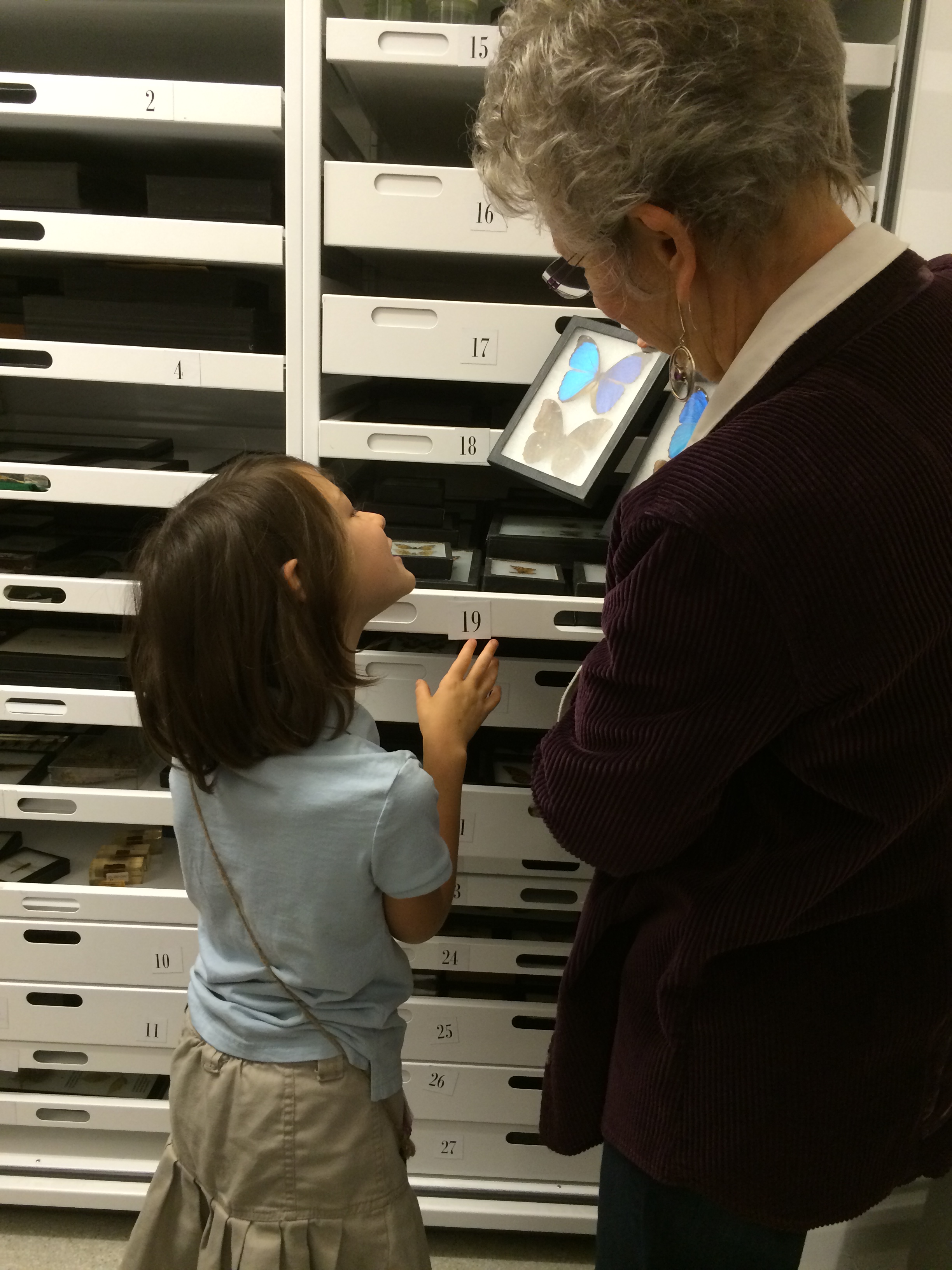
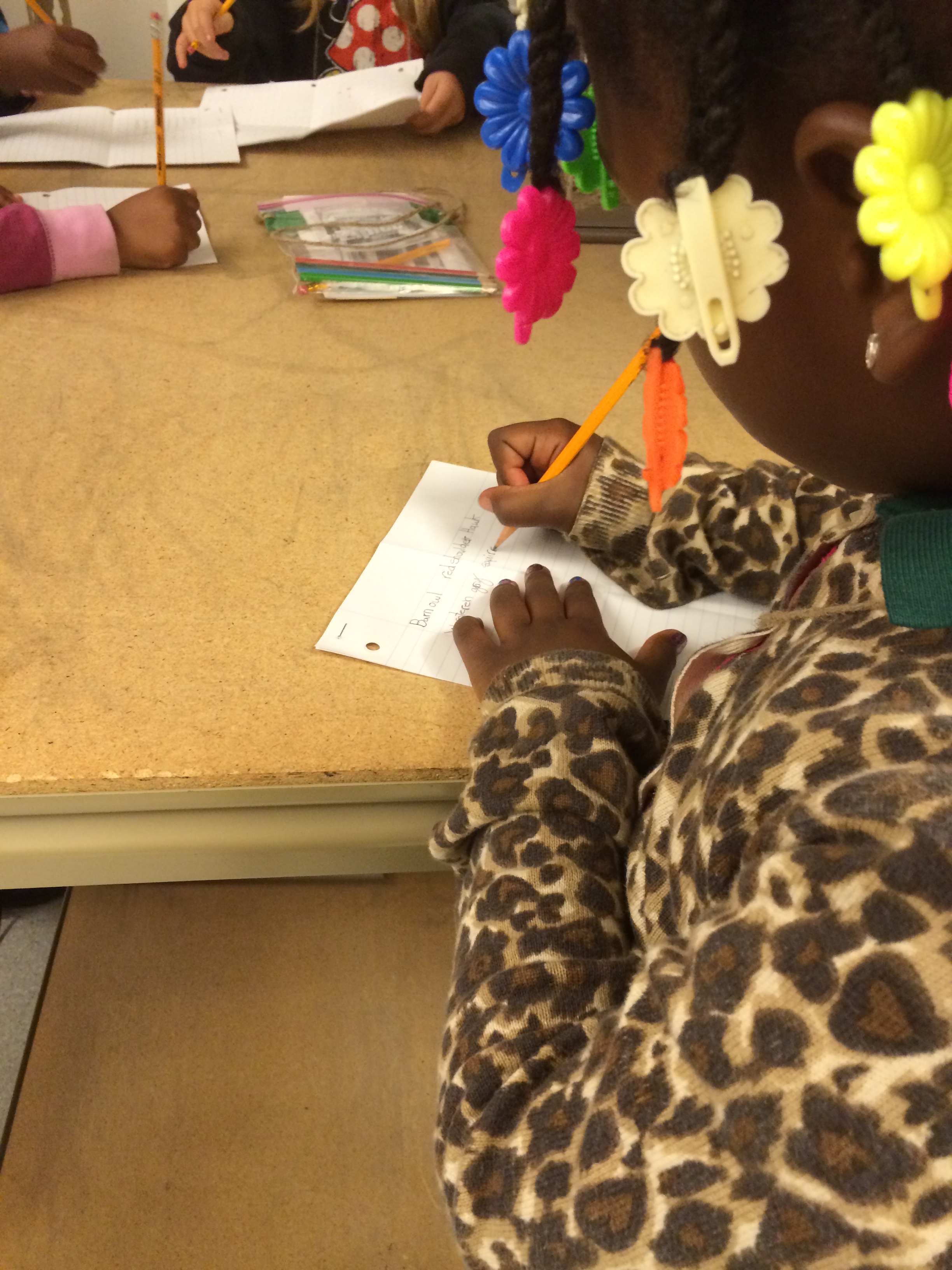
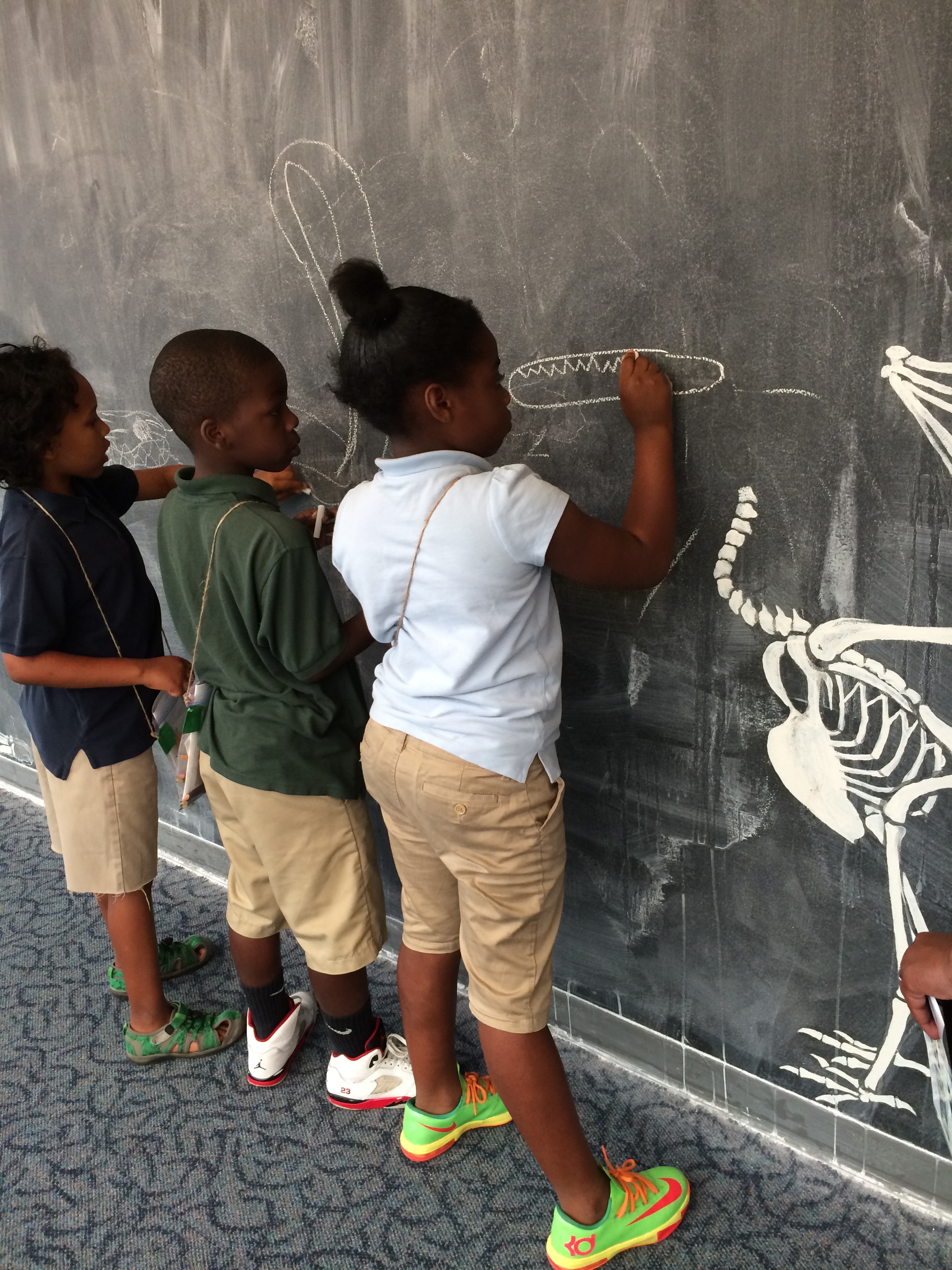
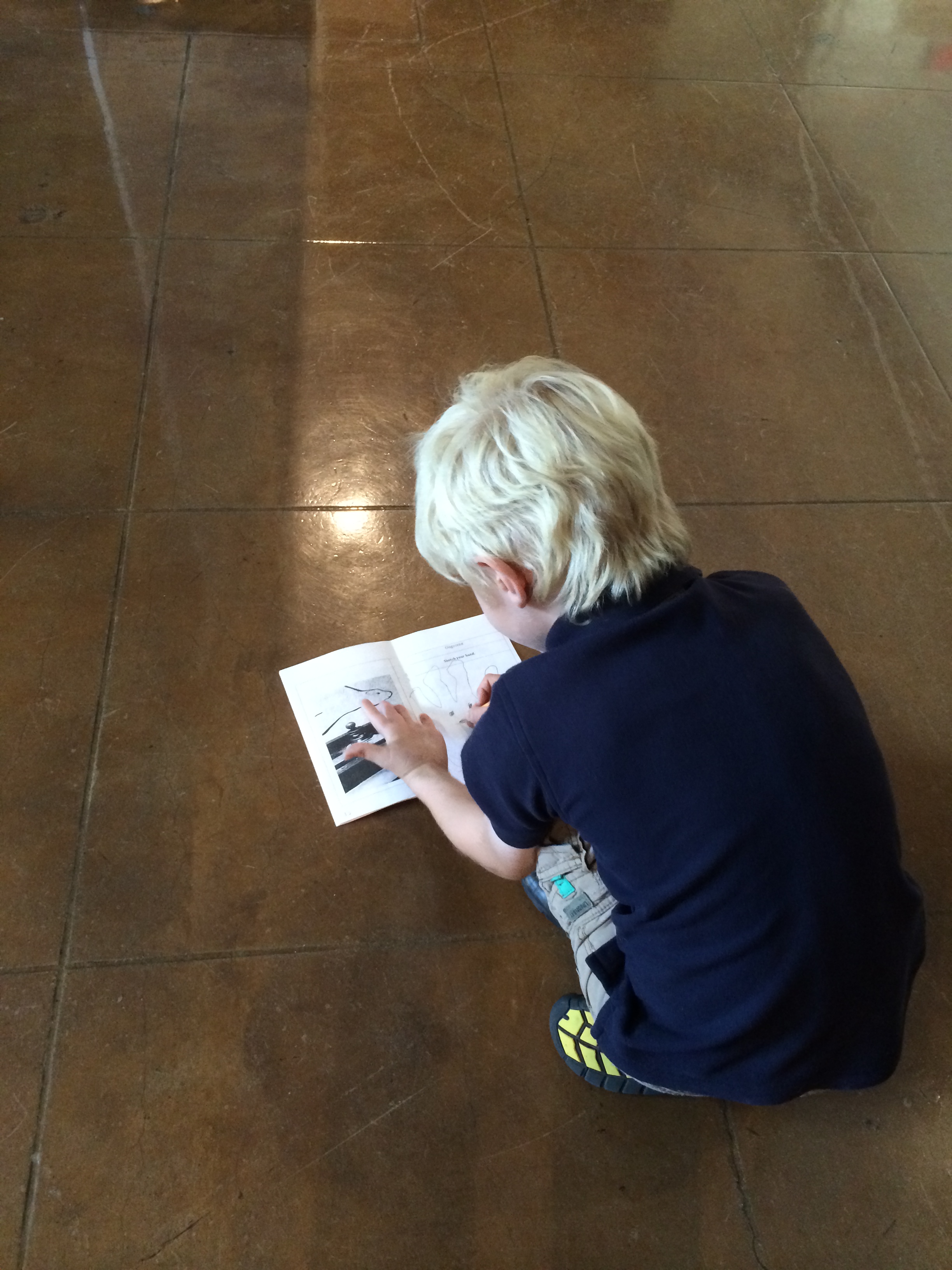
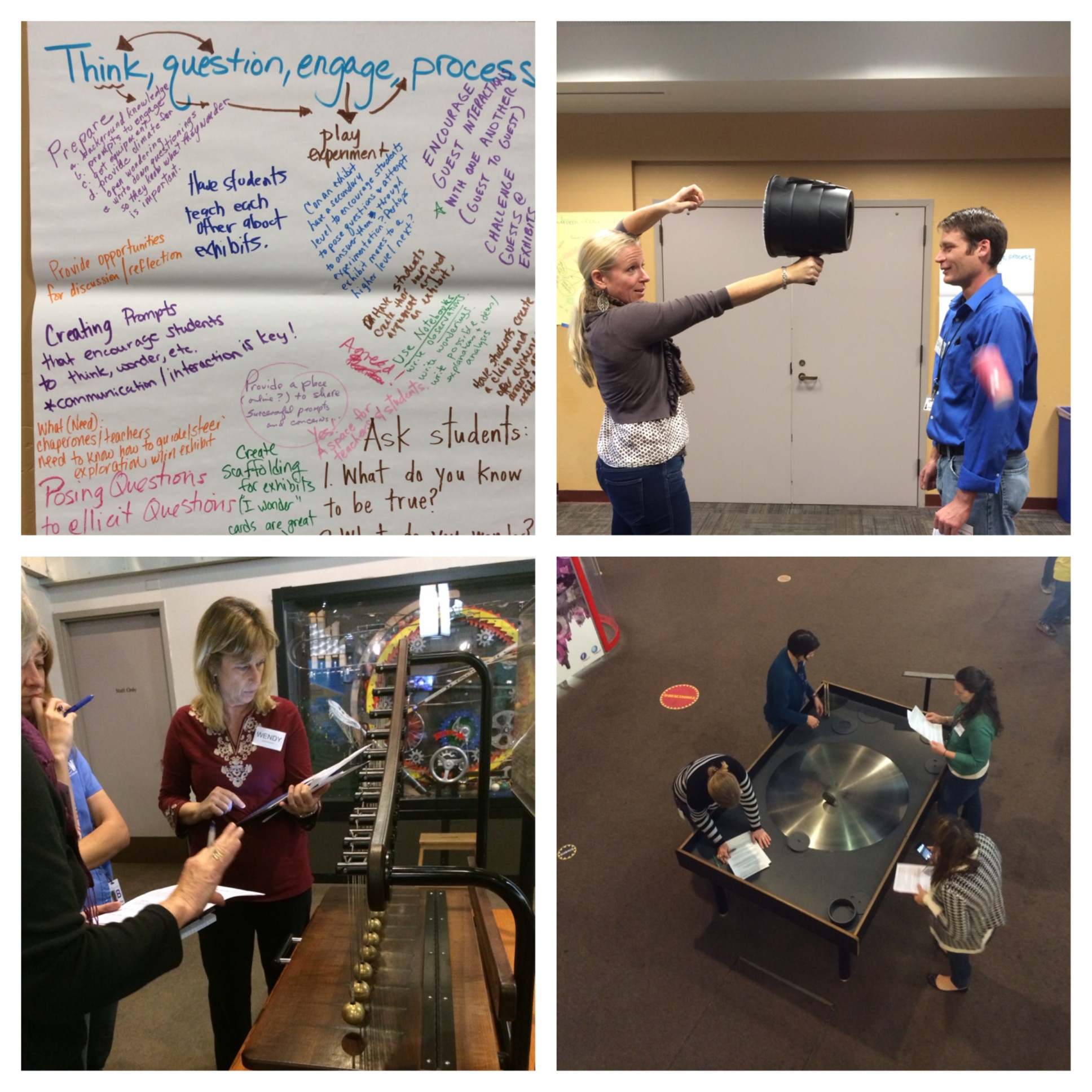
This morning, early on a Saturday, I had the pleasure of working with a group of educators (half who are public school teachers, half who are museum educators) creating tools to improve the field trip experience for students.  (Here’s an earlier post.)

What’s wrong with field trips…you might ask.  You may have fond memories of setting out in a bus as a student and exploring some museum, enjoying a day off from school in the name of learning. And for some students, I am confident that is the case.  It could be that the field trip even stimulated a life-long passion for natural history or science or art…

But all too often, field trips become either a day where the teacher doesn’t have to teach and students are “enriched” but not necessarily learning, or a day of frustration for teachers, chaperones, and museum staff–spent managing student behavior rather than stimulating curiosity and interest in natural history, science, or art.

So…on Saturday mornings this school year, we’ve been learning together.  Thinking about science and writing and inquiry and motivation.  Asking and answering open-ended questions and considering all the different ways we and our students learn.

photo-97

We’ve spent time in the science and natural history museums exploring the exhibits, observing, writing, and thinking.  We’ve read articles and searched for resources.  We’ve examined what other museums have done and looked at our own local resources.  All that in preparation for creating a “toolbox” of sorts for use with field trips.  This toolbox has tools for teachers, tools for students, tools for chaperones.  This morning was spent developing these tools in preparation for our first opportunity to test them.  Later this week we will be seeing how these resources work with students, teachers, and chaperones on a field trip to two museums.

And what I know for sure is that the process of thinking about and creating these tools will improve field trips for students touched by the educators in the room this morning.

The bigger and much harder to answer question is, how do we take our experiences and learning and share them with those who have not been part of our process?  Can we translate our passion, interests and expertise into a “toolbox” that will help others?  And how do we make sure that the tools we create are user-friendly and help to shape inquiry-based learning for students?

I feel confident that our learning will happen in the intersections.  The intersections of our tools and the students, of schools and museums, and of writing and science.  It’s in the intersections of powerful ideas and perspectives that the energy and inquiry lives.

Integrating Digital Learning

Today was Digital Learning Day.  And I’m all for focusing attention on digital learning to cast a spotlight and encourage more widespread participation.  But I’m also thinking about the ways digital learning doesn’t fit in a day.

A glance at my Twitter feed today showed students blogging, making movies, writing arguments, voicing opinions, speaking out against bullying, creating digital stories, exploring stop motion animation, using QR codes, tweeting 6 word literacy memoirs, having silent discussions on digital discussion boards…and lots of collaboration, experimentation, and students and teachers learning together.  I’m excited that so many of the examples of digital learning I saw were about students creating and producing rather than a passive use of the digital.

But I’m wishing for an “Integrating Digital Learning” day or week or month or year.  I feel like we need a push for districts and schools and educators to think carefully about the ways digital learning can and should be integrated into the overall school curriculum,  We could still have a “try something new” with Digital Learning Day to encourage experimentation and push educators and students to continue their learning about the possibilities of digital learning, but also focus attention on intentional integration of digital learning…which would also highlight the very real needs related to digital integration.

It’s hard to integrate digital learning when you don’t have access to digital devices, or when the internet is spotty…or sites you need access to are blocked.  When the digital devices can’t be depended on, it’s hard to make plans to seamlessly integrate their use into the day to day plans for learning.

As we talked about Digital Learning Day with our students this morning, they reminded us of ways we use digital tools that have become so commonplace that we take them for granted. They pointed out that we (their teachers) use our computers (and printer)  to print their math “sticker problems” and we depend on our Apple TV devices to allow us to share work wirelessly from our laptops…and our students to share their work from their iPads.  We use the document camera to display song lyrics and share poetry and computers for showing digital video clips.  My teaching partner and I also regularly use our phones to snap photos of students in action, documenting and highlighting student learning.

And then there are the iPads.  Many of our students gather in the classroom before school to work on programming with Hopscotch, continue a blog post, or practice math on a district-wide digital math program.  They love this informal “workshop” where they share discoveries and support each other in this unstructured learning environment.

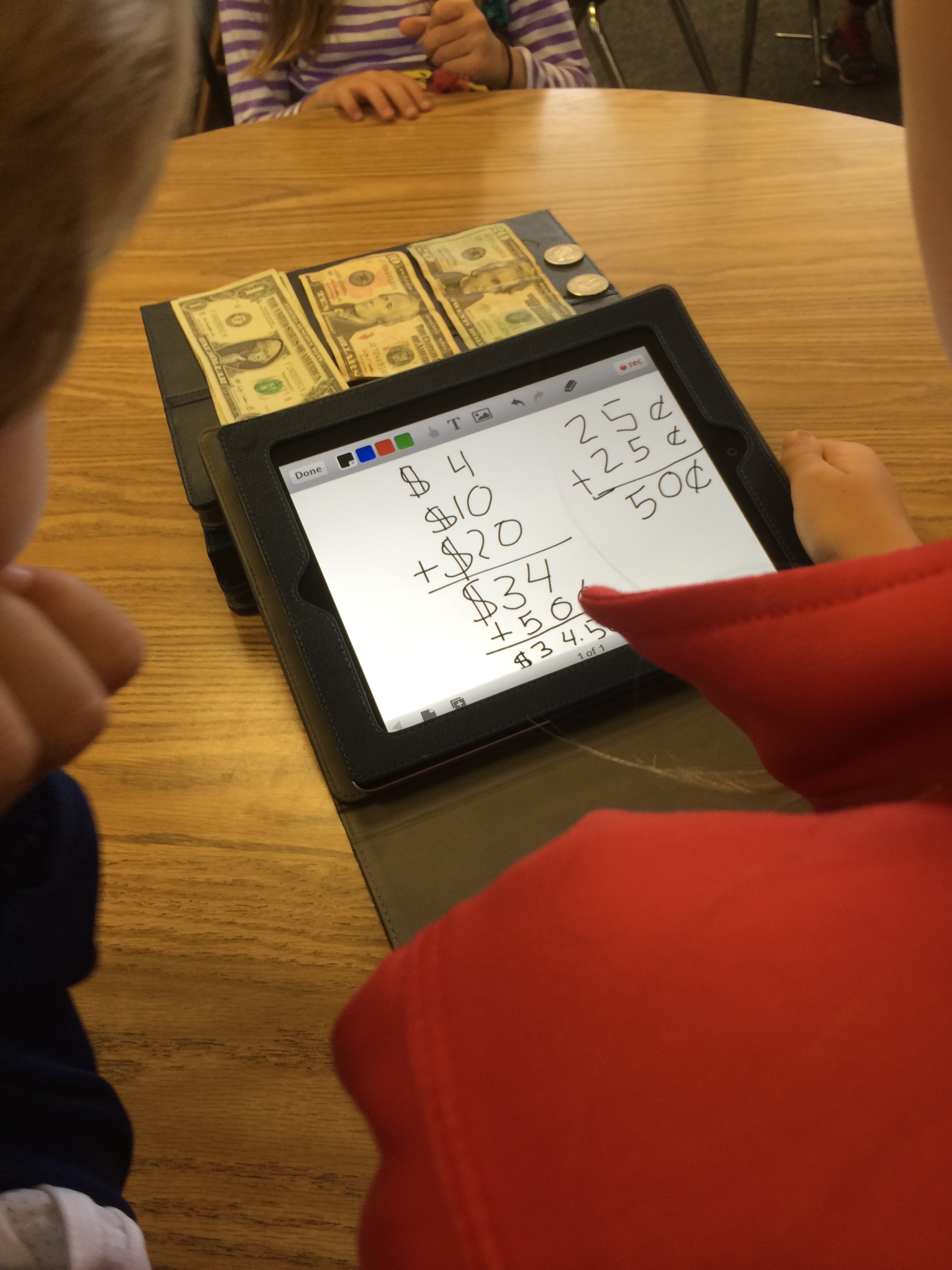
We aim for our devices to become as invisible as pencils and paper.  Today we needed to count the money we had raised for our micro loan.  We suggested that students use the whiteboard function of Educreations to keep track of their calculations as they counted a portion of the cash.  They document their process…and we don’t need paper.  (Although we did have one group who found that they needed paper and pencil!)

photo-89

We also embarked on our digital story project…an opportunity for students to tell the story of our micro loan project.  Students examined an example of a digital story, noticed the parts, considered potential tools, and set to work. In teams they will develop a digital story, so today was all about the planning…figuring out what story they will need to tell in their finished product.  They are already talking about the iterations they will need to go through…and can’t wait to draw pictures to digitize!  This is not a one-day project.  We hope they will be done by the end of next week!

The biggest difference for us on this Digital Learning Day was that we highlighted, both in class and publicly, the ways digital learning takes place in our class.  Digital learning is becoming routine in our classroom, and we often don’t notice whether we are using digital tools or not.  Some of our most successful digital projects often include more traditional classroom tools like pencils, paper, paint, and books as part of the digital process.  And I think that is what we want with digital learning.  Digital is another option.  Sometimes it’s the best option, sometimes it’s not necessary…but it’s nice when we can choose to use what works best, not what is least expensive.

Although Digital Learning Day has come and gone, our students will continue their digital learning.  What will learning look like in your classroom tomorrow?  How do you integrate digital learning in your teaching and your students’ learning?

An Architectural Learning Walk

Sometimes I’m surprised at what interests me.  With my camera in my hand, I find myself drawn to shapes and angles, light and shadows, things that shine and things that crumble, the cute and the hideous…  Contradictions make for interesting photographs.

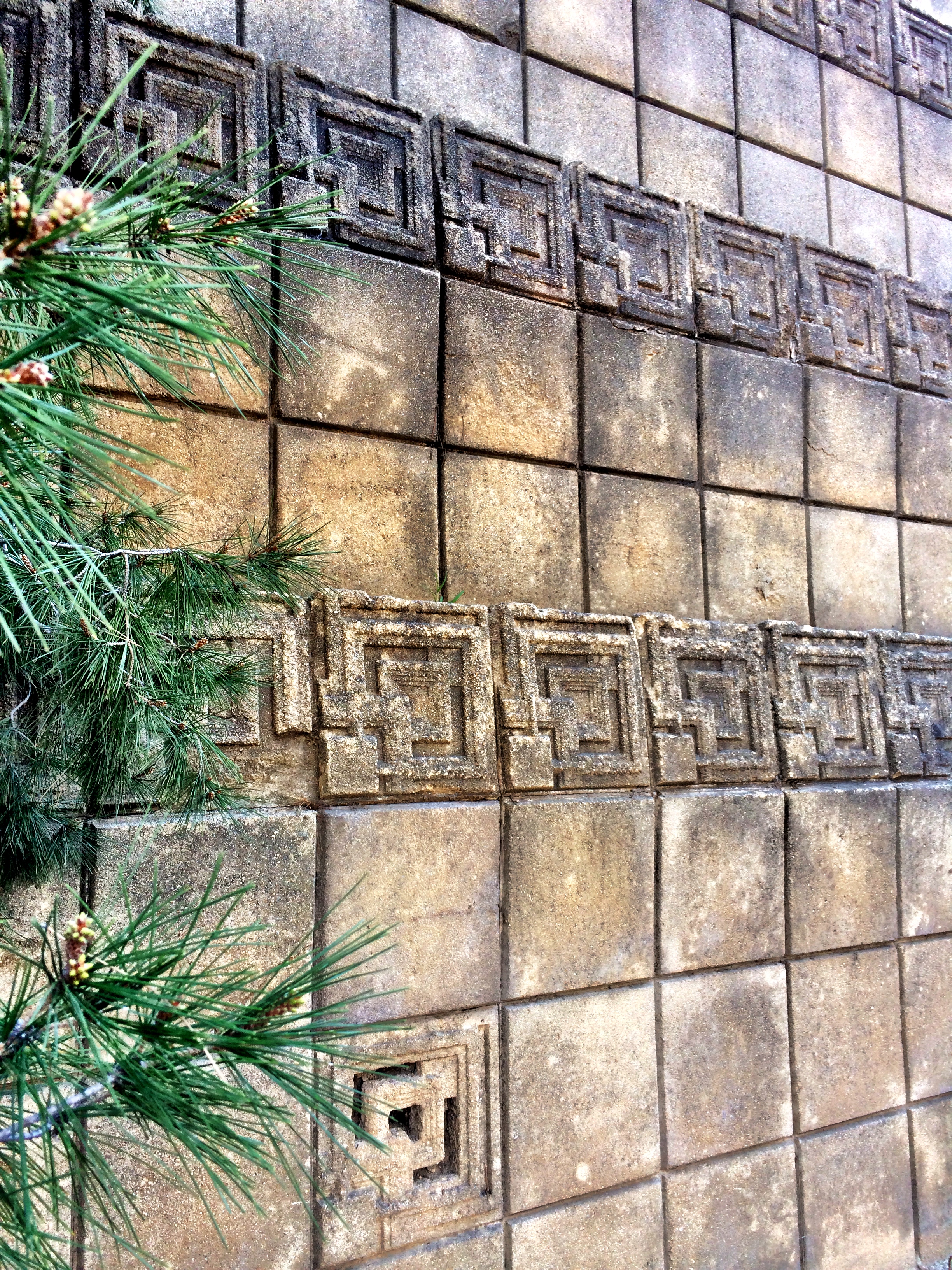
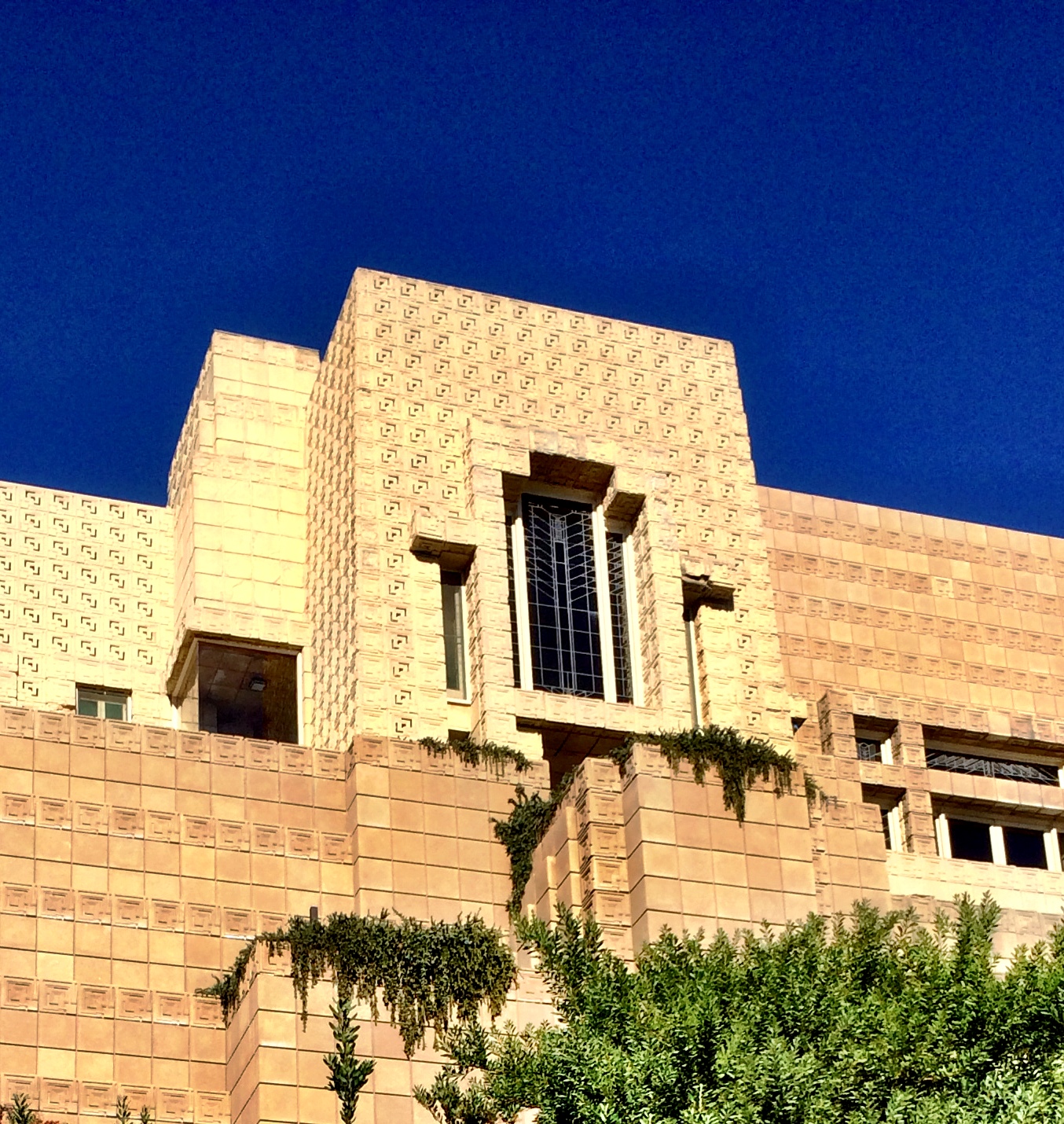
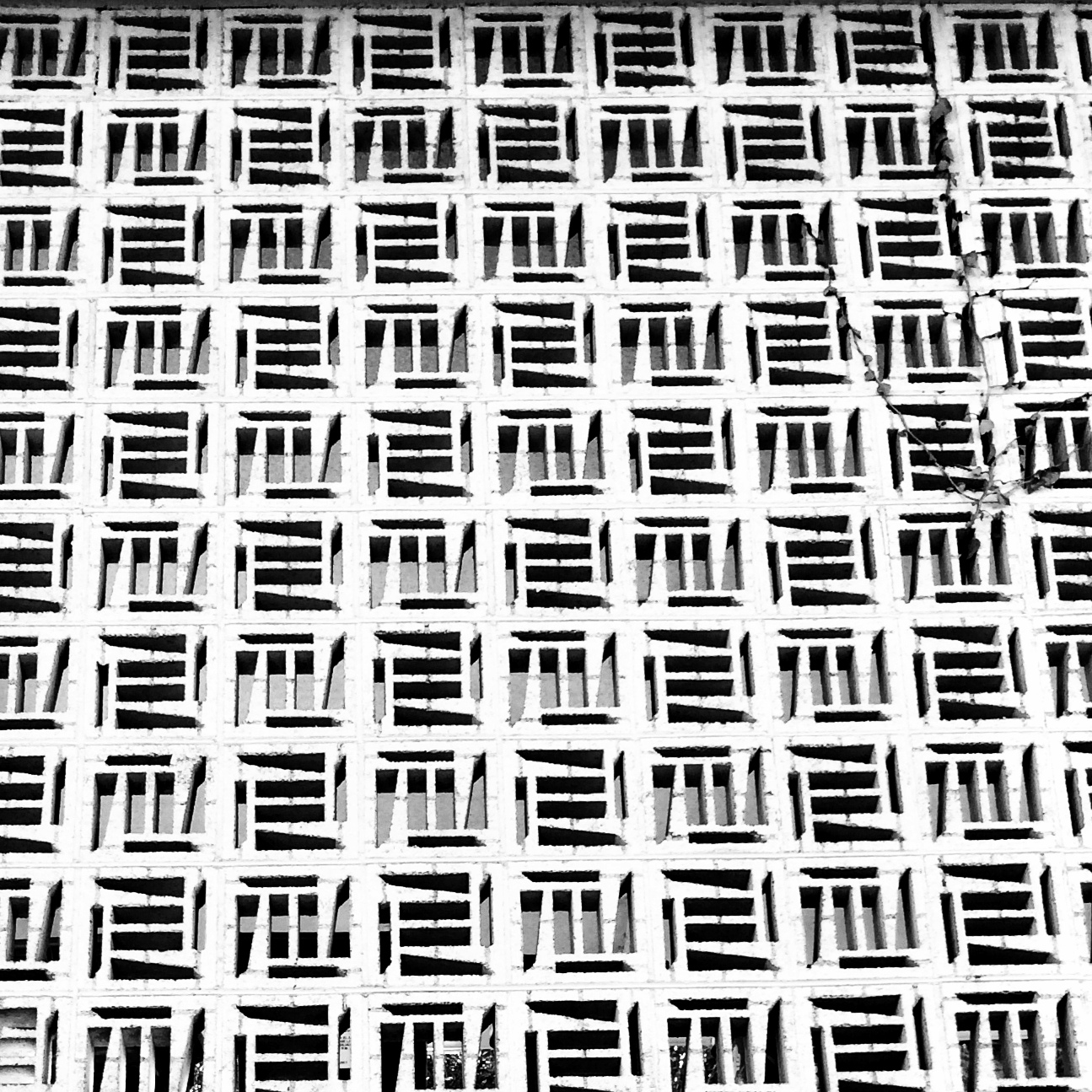
I mentioned earlier this week that I had gone exploring in the Los Angeles area on Monday with my son.  We headed into the hills in search of the Ennis House, a residence designed by Frank Lloyd Wright.  This house is made of “textile blocks”–intricate patterns pressed into the concrete.  The concrete has deteriorated over time (it was built in 1924), putting the building in danger.   Since being purchased a few years ago by billionaire Ron Burkle, it is now being restored to its original state.

photo-69

This is a huge place and has a history of being used by the film industry as a setting for movies, Blade Runner is one example.  I can only imagine what the view must be from the interior of the house from its perch on the side of the hill above downtown Los Angeles.

photo-71

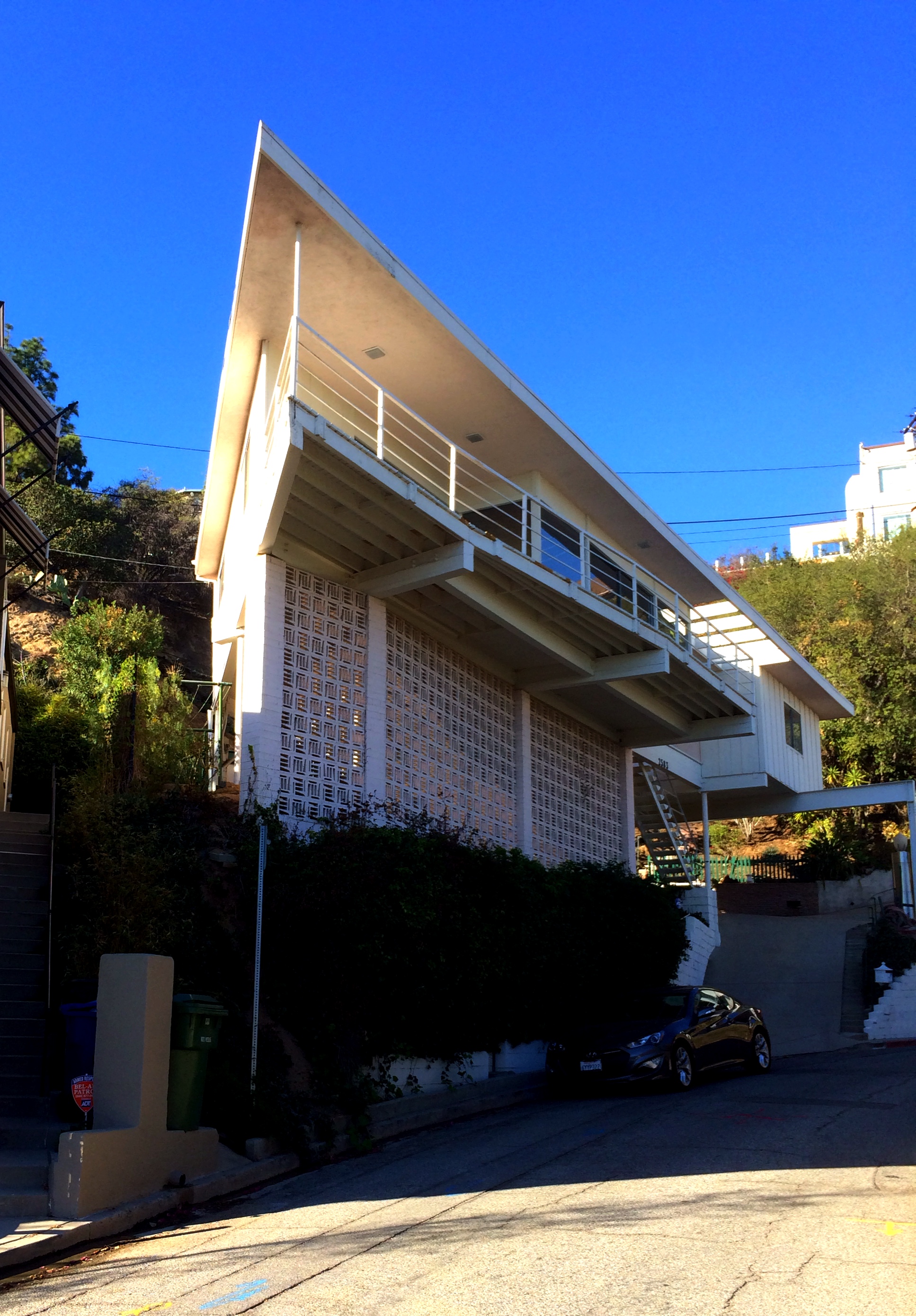
In our climb up to the house, we noticed other interesting architecture in the neighborhood. After parking and walking around, we examined the interesting collection of eclectic design built into the hillside.

photo-72

This one that juts out at an angle also sports an interesting screen along the bottom.

photo-70

The one right next door seemed to built on stilts, lifting the living quarters up high enough to catch the view below.

photo-79

If you asked me last week if I was interested in architecture, I might have said no.  But after my day exploring through photography, I found myself looking up information about the Ennis House and interested in finding out more about other architectural styles.

This happens in my classroom too.  Once students engage in learning about something…especially in an active, student-centered way, their interest is piqued and they can’t wait to learn more.  They seem to notice the new information everywhere and make connections well beyond the classroom walls.

What new interests have you found recently?  What inspires your learning?

While We Wait

We do a lot of waiting.  In line at the coffee shop, in the lobby at the doctor’s office, to get through the TSA screening at the airport, for meetings to start, movies to start, for our kids to get home…

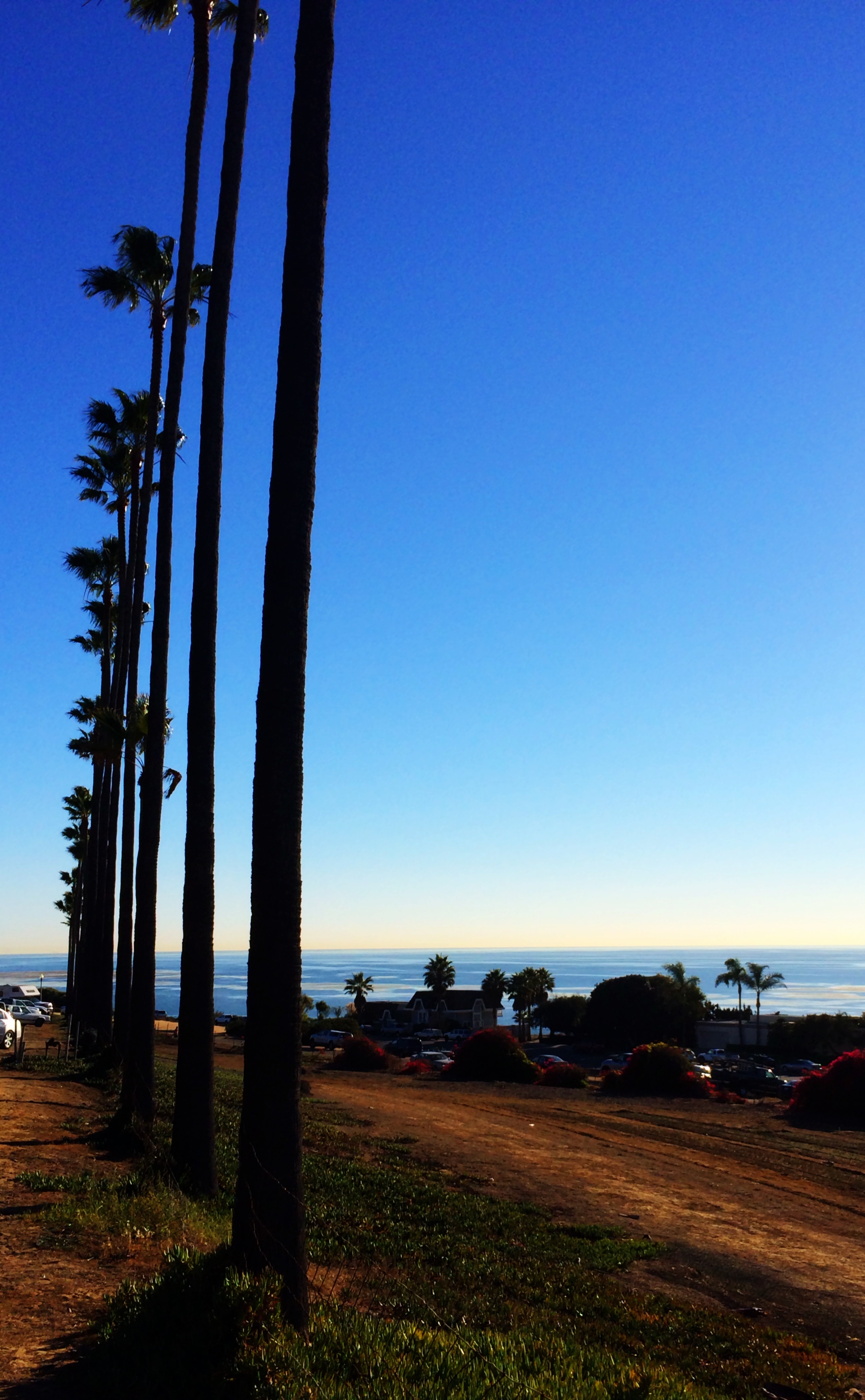
Sometimes I welcome the opportunity to wait.  It gives me a chance to catch my breath, check in on my email and social media, read a few pages of my book, text my sons, daydream, or just take the time to reflect on my day.  These trees remind me of that good waiting…patiently waiting in line, enjoying the sunshine and the view…

photo-64

The worst kind of waiting is when you have to stay alert and attentive.  When you’re waiting in traffic, about to board your flight, trying to be on time to that afternoon meeting and behind the person with 50 coupons in the grocery store…  At those times you can’t turn your attention to something else and take advantage of waiting as down time.

My students do a lot of waiting too.  They wait in line after recess for us to pick them up and walk back to class, they wait for directions, they wait for their classmates to take their turns ahead of them…

So I find myself thinking about good waiting and frustrating waiting…and wanting to make sure my students have time for reflection and to catch their breath.  But not spend precious time spinning their wheels when they could be doing something more productive.

Today my students were amazing.  They were about to embark on a sewing project (I’ll expand on that in another post) and needed to wait for supplies and wait for help with needle threading, knot tying…  And yet, they were not frustrated.  Instead I saw them watching carefully as they waited, making plans as they waited, and studying every move of someone nearby who started before them.

Attitude is everything.  They were ready to wait today.  They knew waiting was inevitable given the complexity and newness of the task ahead of us…and they waited with joy and anticipation.  This is going to be a great project…my students demonstrated that today!

Making and Learning into the New Year!

2013 has been a year of making for me.  It’s not that I haven’t made things in the past…but this last year I have been making things with the focus less about the product and more about what I learn through the making process.  And throughout my making, I’m also thinking about my students and how they might approach a similar make…and what they might learn from the process.

Photography has been a focus of my making this year.  I’ve gone from taking pictures to crafting photos and creating images…and I love the way that the focus on photography and continually working to improve my craft influences the way I view the world and think about learning and making.

So tonight, on New Year’s Eve, I am enjoying a quiet evening at home with my husband, youngest son, and daughter-in-law.  The fire is roaring in the fireplace, the house is filled with delicious smells, and we’re catching up on stories of all the time we spend away from one another since they live in another city.

And…with my son’s help, I made my first stop motion video!

We started with a basic concept based on fireworks on New Year’s (after he showed me a few examples by making some quick stop motion videos in front of me using found items in the living room).  Using a combination of drawing and paper cut outs, we prepared our materials before starting to film.

Together we created our video shooting frame after frame as we built up the motion, carefully moving elements for each shot.  Our goal was not a fancy professional level video–but instead something that my students would be able to do on their iPads.  We shot the entire video on my phone using the imotion HD app.

Since we had shot the video with a white paper background, we searched for ways to invert the colors and make the background black to give the video an evening sky quality.  We looked for apps to use to create the effect, but finally gave up and used After Effects on my son’s computer.  (My students wouldn’t have this ability–but I may also find out about some other apps before then!)

Finally, I loaded the video to Youtube, edited it to loop (since it was only 4 seconds long) and added some New Year’s music from the Youtube library…and voila!

I know I will need to spend some more time trying out stop motion for myself and experimenting with the possibilities.  But already, I know enough to be able to get my students started! Our only problem in the classroom is figuring out how to fit in all the learning and making we want to be doing!  There is simply not enough time in the school day…or in the school year for all the learning we want to be doing!

Happy New Year to all of you!  What did you make and learn on this last day of 2013?  What plans for making and learning do you have for 2014?  If you have any advice for making stop motion videos with students, I’d love to hear it!

Screen Shot 2013-12-31 at 8.41.56 PM

P.S.  If you are interested in trying out a photo-a-day challenge and need some prompts to get you started, check out the photo-a-day prompts we are using in January by clicking here.

Poverty and Programming…and Questions

My internet crashed last night.  The TV wasn’t working, my computer wouldn’t pick up the wireless, and the micro-cell that boosts the cellular phone signal was down too.  I had digital devices…but no connection at all.

I had big plans…to watch some Sunday night football, to do some online holiday shopping, to put together a blog post, and to catch up on some reading of posts made by others.  Instead, I finished my book, put some laundry away, and went to bed a bit earlier than I might have otherwise.

My internet is back up and working today…but my experience last night turned my thoughts to issues of equity and access for students.

It seems that when people think about access to technology, devices are at the front of their thinking.  If only we could put a device in the student’s hand, issues of access are solved.

But there is just so much more to access.  Last night I had access to devices…but none of them would connect me to the internet or allow me to connect in any other way (text, phone, social media, even TV).  I thought about getting in my car and heading down to the local Starbucks to have a cup of coffee and accomplish some of what I planned to do at home.  I didn’t have any hard deadlines…and I knew that I would have internet access when I got to work this morning, so I decided to stay home and do without the connection.

But what if I were a high school student with a Monday morning deadline?  What if I didn’t have reliable internet access in my home…and what if I didn’t have transportation as an option to get me to the Starbucks, the library, or even a friend’s house with internet access? Even if the school provided me with a device, there are so many things I couldn’t do without internet access.

I know there are programs to provide internet service to families with limited means, but I also know that they require paperwork be filled out…and may even require some kind of bank account or credit card to pay the nominal monthly fee.

So why am I writing about this?  I’m thinking about the amount of school work that is assigned as homework. to be completed outside of school and the role that digital tools increasing play in our lives and I’m wondering about how access impacts our students.  Can they create digital portfolios to showcase their learning?  Can they access the information they need to locate resources for research, find scholarship and grant opportunities, secure internships or apply for employment?

How does access change when connectivity is only available outside of your home?  In public spaces?  Places with limited hours of operation?

And what do we take for granted?  We ask students to blog, to research, to reply to discussion boards, to collaborate with Google docs…often outside of the school day.  Which of our students have access…and what happens to those who don’t?  Do our students who come from the poorest families see themselves as producers of technology?  Who is learning to code?  Who is primarily consuming in our digital world and who is producing?  How often do we ask those questions…and how do the answers change the way we think about access and equity?

Last week on Teachers Teaching Teachers, we were on a Google Hangout talking about the Hour of Code and about Dasani.  Two disparate topics…or are they?  Poverty and programming…and questions of equity, voice, agency… What roles do schools play?  What roles should they play? What does it mean to be a learner in the 21st century?  How does “producing” change the learner…the learning?  I have many more questions than answers…and I would love to continue the conversation.  What do you think?