There’s something contagious about play that brings up belly laughs–even in serious adults!
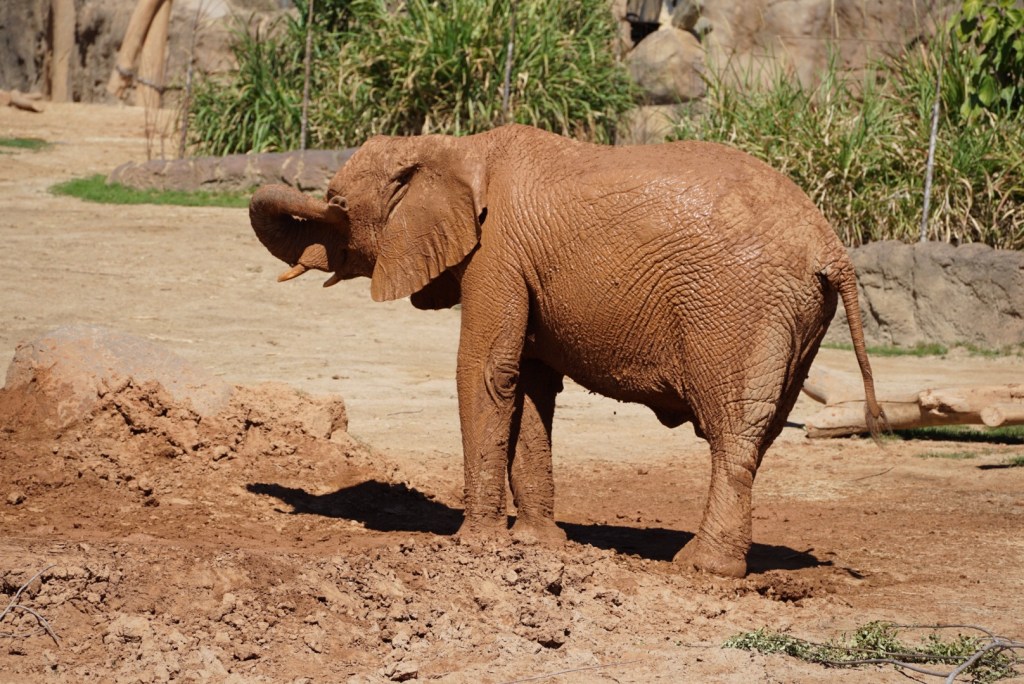
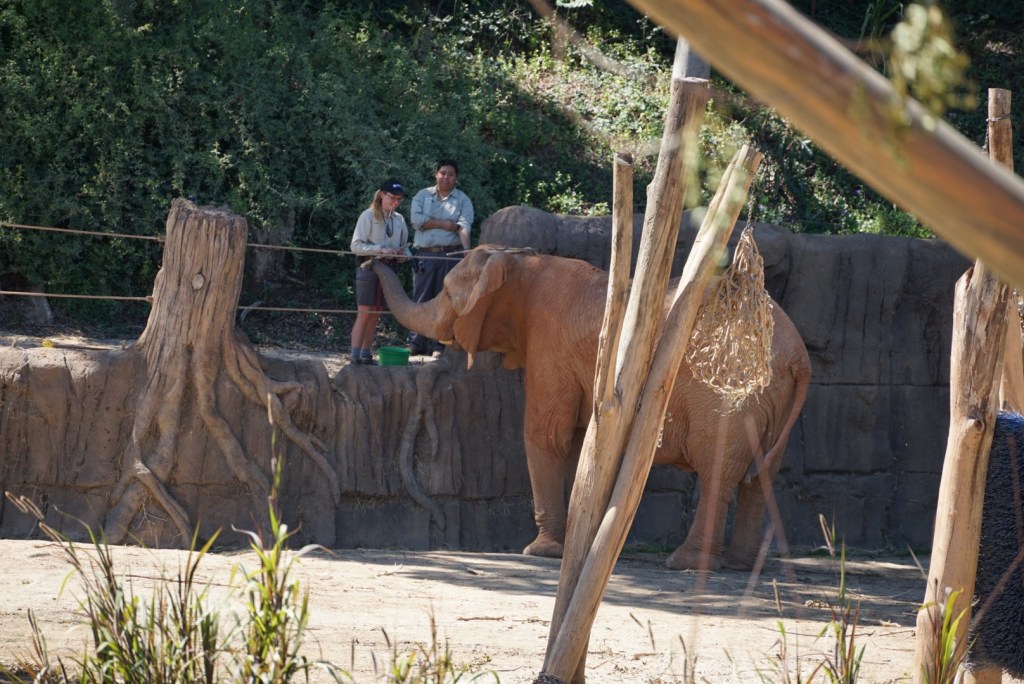
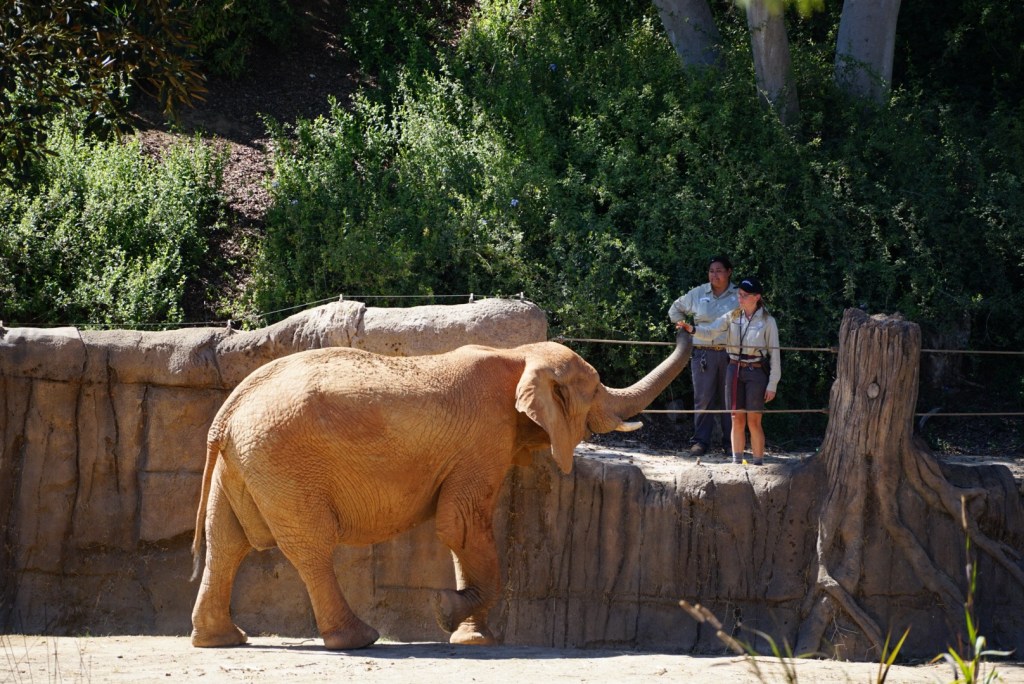
It was hot today–in the high 80s at our local Safari Park. We headed out to attend a preview of the new Elephant Valley–the enclosure where the eight elephants live. Elephants are special–smart, social, and full of personality. And I have to admit, I have gotten to know a lot more about them since my niece became an elephant keeper.
This new enclosure is special. It gives the elephants lots of space…and makes it easy to watch elephants. This preview meant the crowds were large–and that is never my favorite. We were lucky enough the find a place to sit in the shade (many thanks to the couple who shared their table with us)–right in front of the little pond and a mud hole.
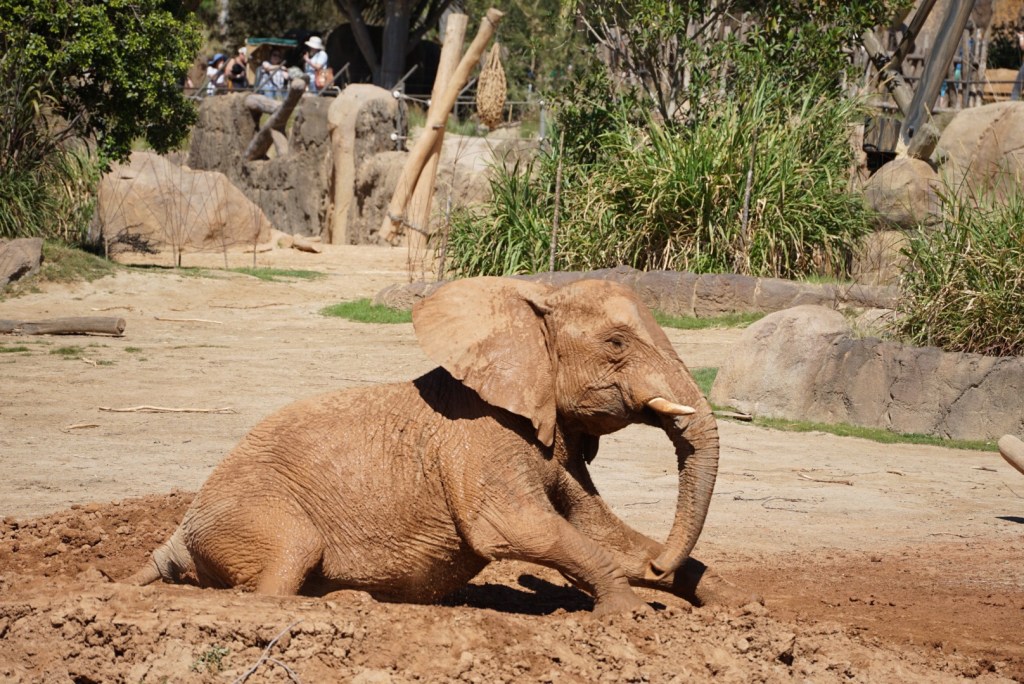
The elephant keepers were doing some enrichment/training with the elephants, creating spectacular moments for visitors. And afterwards, the elephants clearly needed to cool off. As we sat we watched one of the teenaged elephants head over to the mud hole and start rolling and splashing the mud all over. Watching these huge animals nimbly get down to the ground and play in the mud is a delight! We could hear the echoes of laughter as visitors enjoyed the spectacle. Then another elephant moves toward the mud–a hole clearly big enough for one, but for two? We watch the elephants nudge and push until they fall into a full-on wrestling match, playful and muddy, trunks swinging, mud flying. At some points butt to butt, fully enjoying the cool mud and each other as they played together in the not-quite-big-enough-for two mud hole.
I am reminded again and again of the importance of play–not just for children and not just for elephants…but for all of us. It is so easy to get serious, to spend our time worrying about the world, worrying about our families, taking care of business, getting through the daily stuff of living and forget to take time to play, to laugh, to delight, to find a place in the mud to cool off and let off some steam.
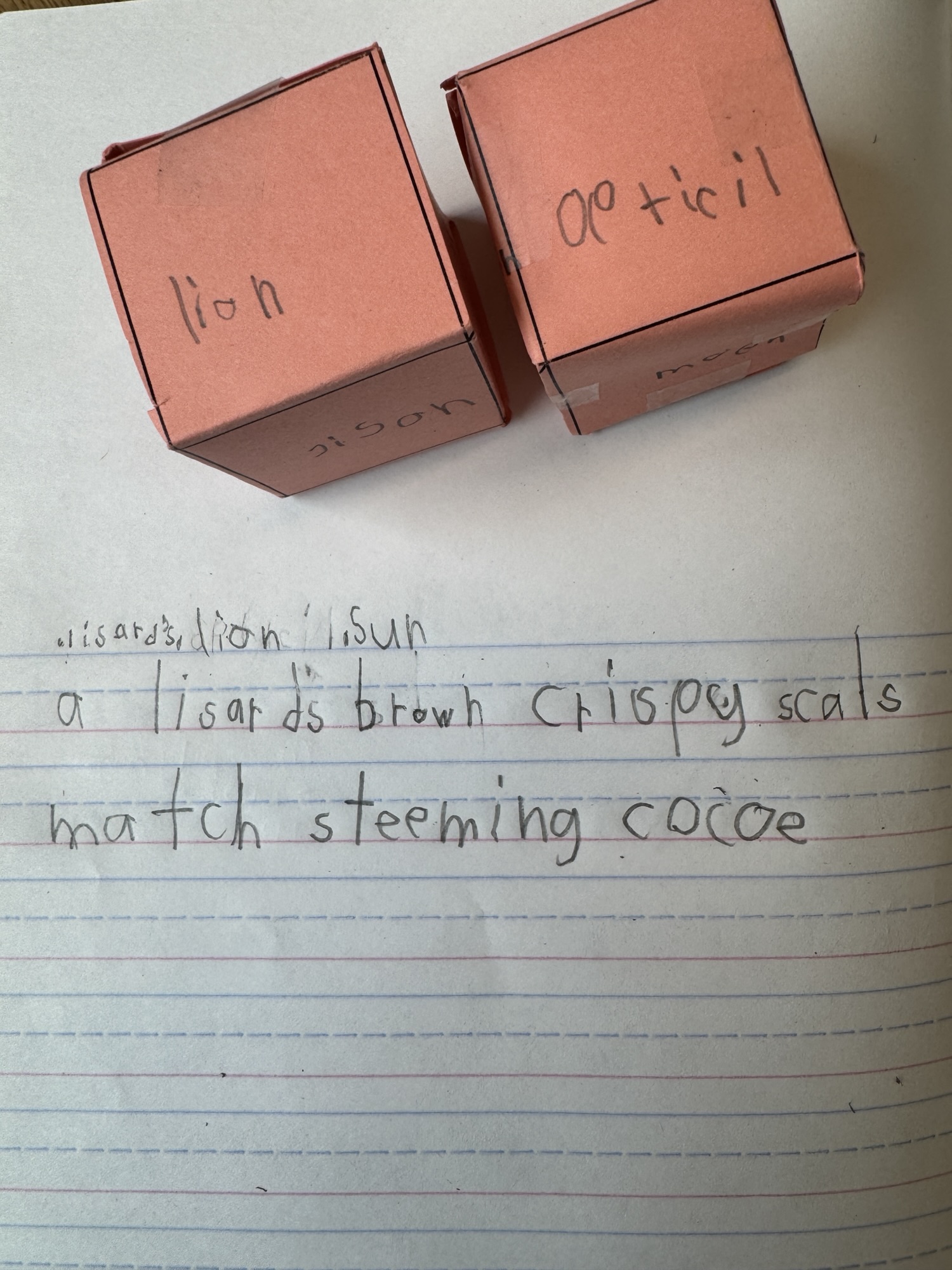
During the pandemic I accidentally discovered the power of poetry dice. Not the pre-made ones that you purchase. Those are great, but when my students weren’t in my classroom, I figured out a way they could make their own dice at home. At the time, I saw those homemade dice as a replacement for the ones I had used in the classroom. But I have learned after making our own dice in the classroom that they are so much more than that!
The prelude to making the dice is important. We began this week by reading Peter Reynold’s book The Word Collector. This book is rich with language and encourages a delight in words: short words, multi-syllabic words, words that sing…. The book is great on its own…and then as my students predicted–we would be making our own word collections!
To keep them from collecting only one kind of word, I gave them some categories…and a few restrictions. They collected nouns (but not people), verbs, describing words, and colors. They chatted as they wrote their words, sharing ideas with each other. Then we folded the collections, placed them in our notebooks, and left them for a while.
Today, we returned to our word collections. I suggested that they might want to trade out some of the words they had collected on Monday. I showed them on my list by crossing out a word that felt ordinary and adding another that I had thought about since then. Then I gave them some time to read over their words, trade them out, or just add to their list.
Then I pulled out the highlighters. (The magic of office supplies is real!). Since we were going to make poetry dice, students would need to narrow their collection down to 12 words (for a pair of dice). We talked about including words from different categories and again, I talked aloud about some of my decisions as I highlighted my list. Once the 12 words were highlighted, it was time to distribute the cube templates. I use colored card stock so that the dice will have some firmness.
Students wrote their words, one per face, onto their cube template. And at that point, it was time for the cutting. This can be a tricky step with first graders, but they persevered and were careful, even with the tight corners. We had time to fold before recess, but not time to tape, so we left our unfinished dice and headed out for a snack and some playtime.
When we returned I pulled out an old favorite of a poetry book, I am Writing a Poem About… edited by Myra Cohn Livingston. (This is one of those oldie but goodie books–and I think it might be out of print!) In the book, described as a poetry game, authors are challenged to write a poem using certain words. We read through quite a few poems that used 3 words: drum, blanket, and ring. Right away students tuned in to listening to hear those 3 words in each poem. They noticed that sometimes the poet used a different form of the word, like drumbeat instead of drum. After marinating in the poetry game, we headed back to our tables to tape our dice together.
Pulling the edges of the cube together and taping them was challenging for some of these young poets, but again, they were up for the challenge. And then it was time to start rolling the dice. They were directed to roll 3 or 4 words, write them in their notebook and then to write their own poem including the words, along with some action, metaphorical thinking, and maybe the use of some of their senses.
I’m convinced that the making of the dice creates fertile ground for poetry to grow. Time to think about words, to play around with words, to list words, to select words, to hear words, to consider the words of others, and then to roll dice and write…and then roll some more and write some more. In our last few minutes before going home, we took some time to read some of these pieces-in-progress out loud.
O, who doesn’t usually read, was ready to share today. Rolling robot, rainbow, and teal, O wrote:
A rainbow in the sunset
with a robot running through all the colors
with not a speck of teal
B seems to be using poetry to process feelings, rolled scared, blue, purple, and green. B wrote:
Making new friends
is scary
but blue, purple, and green
fill my heart
And J rolled three words, but ended up with just one of the words in the poem. J wrote:
A lizard’s brown crispy scales
match steaming cocoa
first smell
then blow
I rolled kaleidoscope, microscopic, collect, and singing and wrote alongside my students. Here’s my draft:
They collect words like gems
holding them up
to reflect the sun
A kaleidoscope of poems
emerge from this microscopic
piece of the universe
singing out a world
imagined by children
I’d love to hear your experiences making and playing around with poetry dice–either for yourself or with your students. Any variations to suggest?
I’m lucky enough to walk the beach regularly, which means I’ve become quite familiar with the variety of characters you might come across on any given day.
There are the surfers. They come in all ages and genders and pretty much all wear the same uniform: a black, long sleeved, long legged wetsuit. For the most part, they do not heed warnings about the water (stay out of the water for 72 hours after a rain event), they come no matter what the surf report says (small waves, crumbly waves, rough surf) and seem to enjoy themselves even when worthy surfing waves are few and far between.
There are players. The ocean is their playroom. They often bring toys: kites, footballs, frisbees, shovels…you get the idea. Players give play their full effort and attention. Teenagers are common in this category–especially teenaged boys. Adults, however, are the ones I notice (and secretly admire) who fall in to this category. They clearly derive intense joy from this play…and make me want to try whatever they are doing.
There are the artists. They see the beach as a blank canvas, a place to express their artistic vision. Some create with rocks, carefully balancing stones to create unfathomable towers using only gravity to hold the creation together. Others come armed only with a rake or stick and create intricate designs in the sand, proportions in alignment yet they bring no measurements that are visible–the vision seems to be firmly in the artist’s head and arms and body.
There are also the characters who don’t fit into any category–instead they are their own unique character, like the guy we call the naked guy. This guy walks miles on the beach wearing his private parts in a small bag slung on a string worn around his hips. Today I heard some young boys behind me describing his attire as “a very tight speedo.” The naked guy seems to know quite a few beach regulars, he sometimes chats as he walks. I’m not sure if this is his version of sunbathing, his exercise regime, or if he just enjoys the feel of the.briny sea breeze on all of his skin, but his practice definitely makes him stand out as noticeable on the beach.
I wonder if other places have a similar cast of characters–or unique categories of characters that inhabit the space. I’d love to know about the characters your come across in the places you frequent.
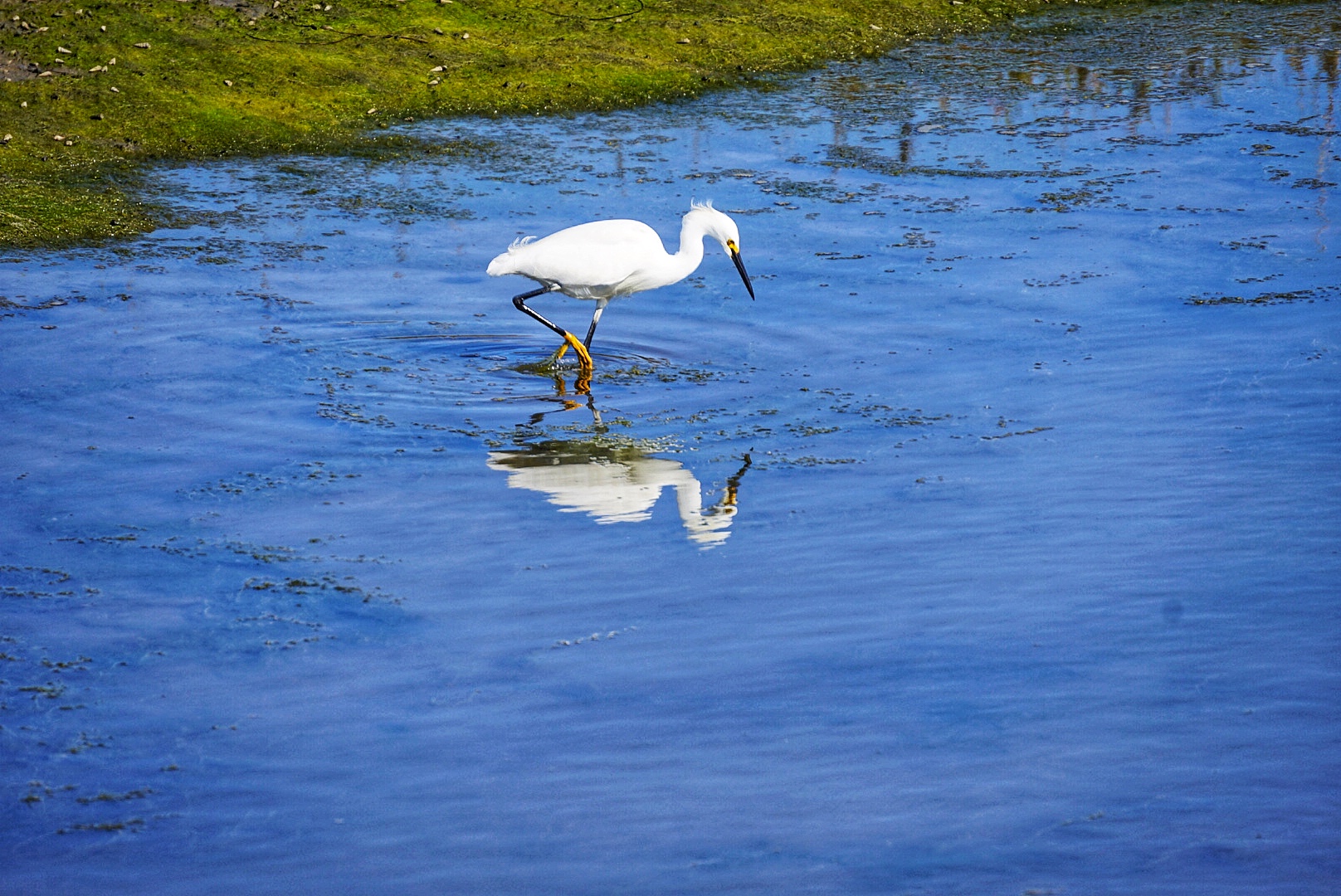
I rolled the virtual metaphor dice inspired by Stefani over at Ethical ELA coming up with the words poetry, well worn, and brand new toy. Combined with my afternoon lagoon walk, words tumbled and fell into today’s poem.
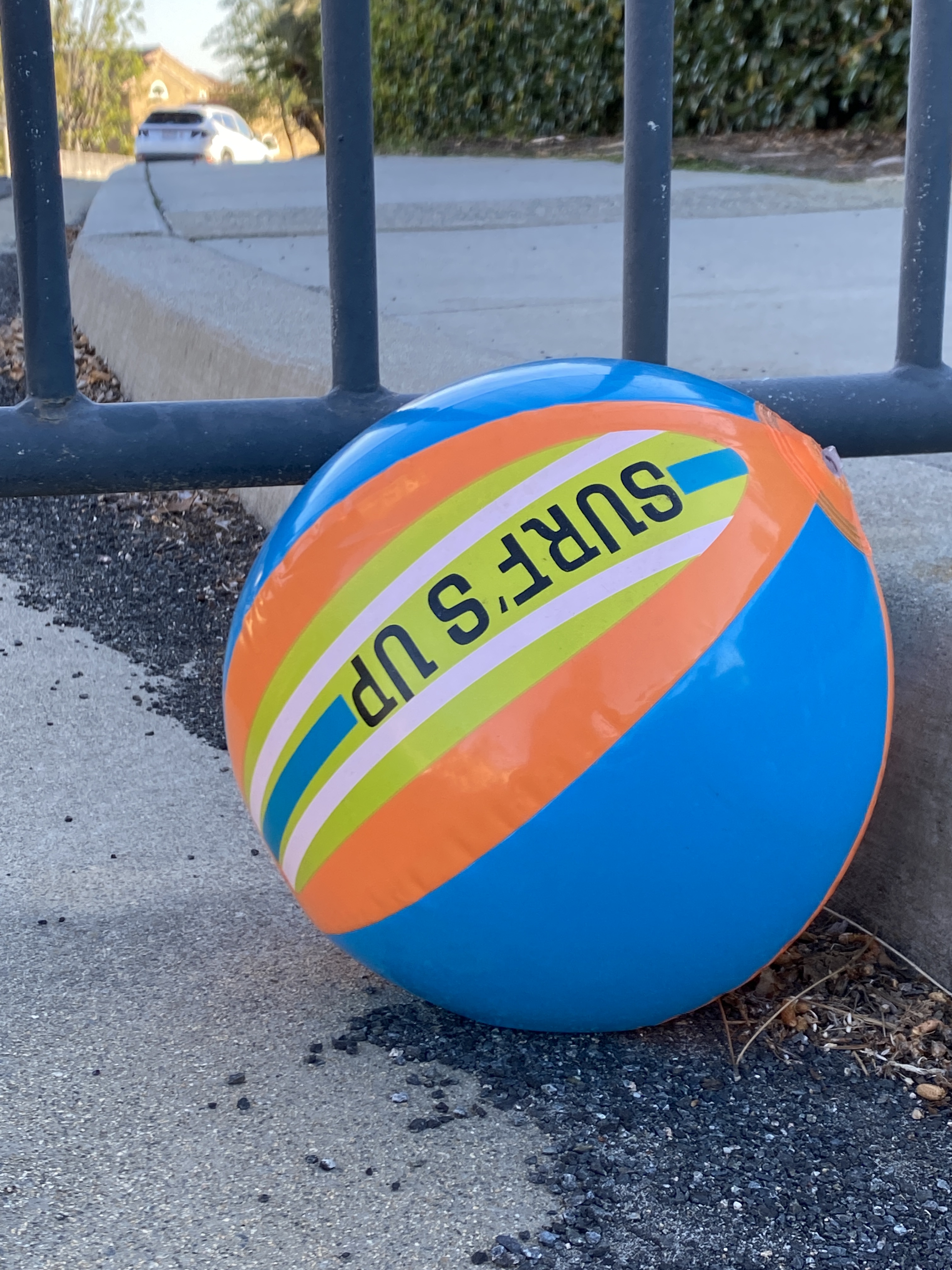
This abandoned beach ball emblazoned with “surf’s up” and wedged against the fence caught my eye this afternoon.
And my mind wandered to a slice I read yesterday written by Charlene Doland over at Reflections, Ruminations, and Renderings where Charlene talked about the value of pruning in the garden…and the need for it in her life.
I’ve also been watching my students play at recess time. There is an urgency and energy that is palpable. They verbally plan their play from the moment they realize it’s recess time, anticipating the interactions to come. And they are flexible. If some other play looks better, the plan is changed and they run headlong into the new activity.
I think we adults need to pay attention and learn from children at play. Full immersion in pure joy should be a daily priority. When was the last time you reveled in activity just for the fun of it?
I had one of those moments when I was in Yosemite a couple of weeks ago. I had a snow moment. (Anyone who regularly reads my blog knows I am SoCal through and through and can count the times I’ve spent in the snow in my lifetime on my fingers and toes.) It was snowing. Not flurries and not a blizzard–just a steady fall of soft, fluffy snowflakes that piled up on my shoulders, on my hat, in the hood that hung down from my collar. It transformed an already gorgeous scene into a magical winter wonderland. I caught flakes on my tongue, crunched them under my boots, held them on my gloved palm, and viewed them as precious jewels bestowed by nature.
Clearly I need to find more of these moments–moments of play and pure joy. How do we make space and create conditions for play? How do we “prune” back all the “ought tos” and “shoulds” to make room for unstructured exploration–without a goal attached? Maybe awareness is the first step…
Like so many others on social media (at least my feeds), I have been participating in the Wordle craze. I like that I can only play once a day, that it is limited to 6 guesses, that the words are all 5 letters long and that the whole world is playing this one word each day. There is something about limitations that funnels my focus, and while my first guesses often seem fruitless, somehow I usually pull it out by guess 4 or 5.
The first graders in my classroom have been playing a math game called digit place. In this game, I think of a 2-digit number and students make guesses to determine what it is. With each guess I indicate whether there are correct digits and whether they are in the correct place. For example, if my number is 12 and students guess the number 27 I would put a 1 in the digit column to represent a correct digit (the 2) and a 0 in the place column to show that it is not in the correct place. Subsequent guesses narrow down the possibilities leading students to a correct response. At first there were lots of random guesses, but the class is becoming strategic and quite successful. (I’ve had third graders who played this game with much less strategy and success!).
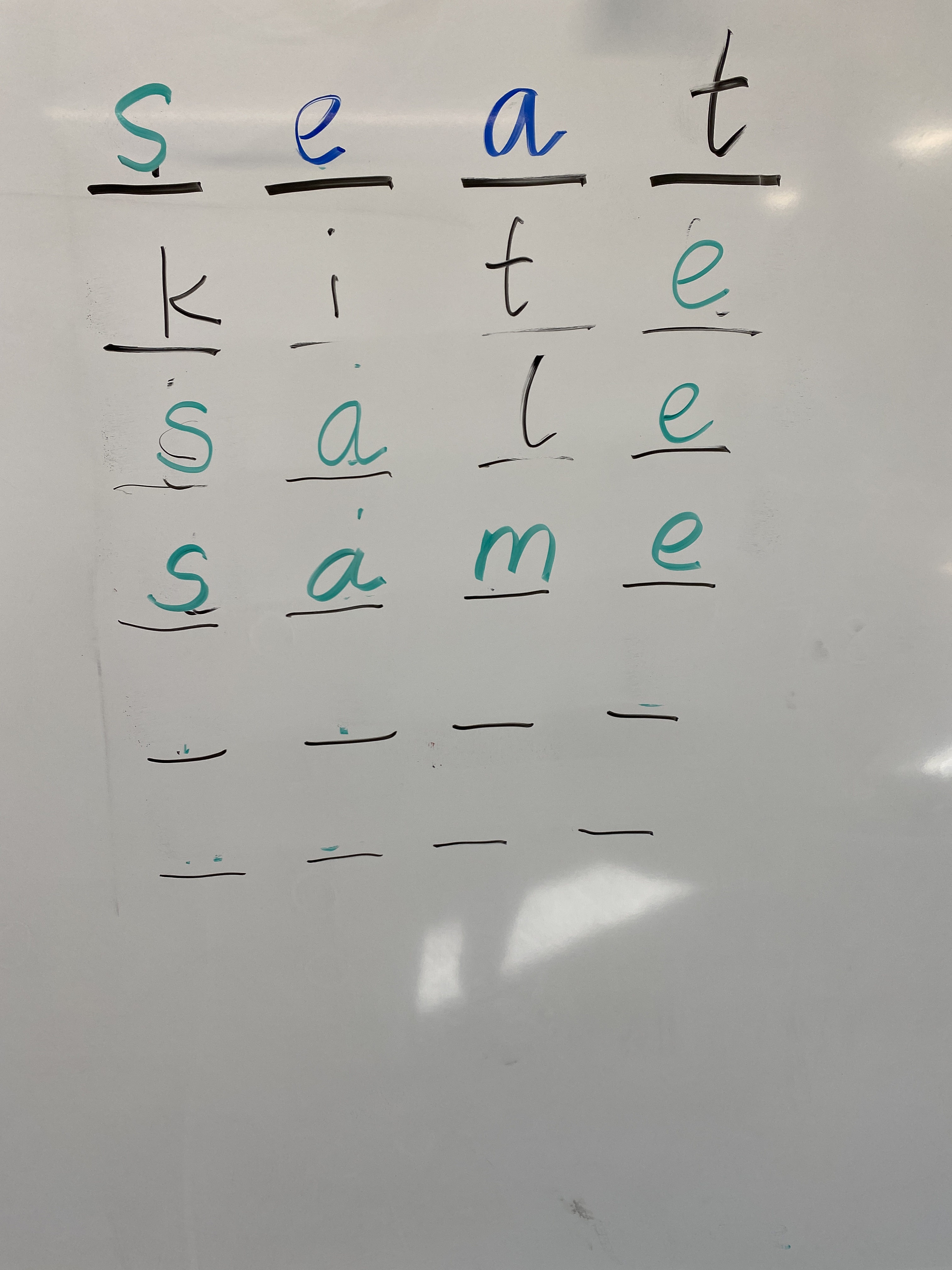
We’ve been focusing on 4-letter words ending with a silent e in the last week, building word ladders and noticing how this e causes the other vowel to be a long vowel. Students are building their skills and getting better at changing just a single letter to make another word that fits the rules of this ladder. Today, I found myself thinking about Wordle, digit place, and word ladders…and decided to try my own version of Wordle–first grade style.
So…I introduced this new game to my students. I drew 4 lines to represent the 4 letters in the word I was thinking of. I grabbed a black, blue, and green white-board marker announcing that letters in black were not in the word, blue meant the letter was correct but in the wrong place, and green meant the letter was correct and in the right place. I wasn’t sure how this game would work out–or if it would even make sense to my students. But…it was great! Students loved this process–and caught right on. I could hear them telling each other whether a guess was a good one (“…we already know there is not an “s” or “h” in the word…) and the game definitely caught their attention. We played several rounds today…and I remembered to take a photo of the last one.
My social media involvement was put to good use in the classroom today. I love having a new engaging, educational, and no prep game in my back pocket for those few minutes that need filling from time to time. Wordle for first graders–and we don’t even need the internet!
Yesterday was International Dot Day, a day inspired by the creativity of Peter Reynolds and the power of each of us having the courage and confidence to “make our mark.” To celebrate dots and creativity and confidence, we began our week with the poem What is a Dot? by Laura Purdie Salas. The first graders in my class had an endless list of ideas of what a dot could be and eagerly illustrated the poem with their own “dotty” ideas. Of course, we also read and discussed The Dot by Peter Reynolds.
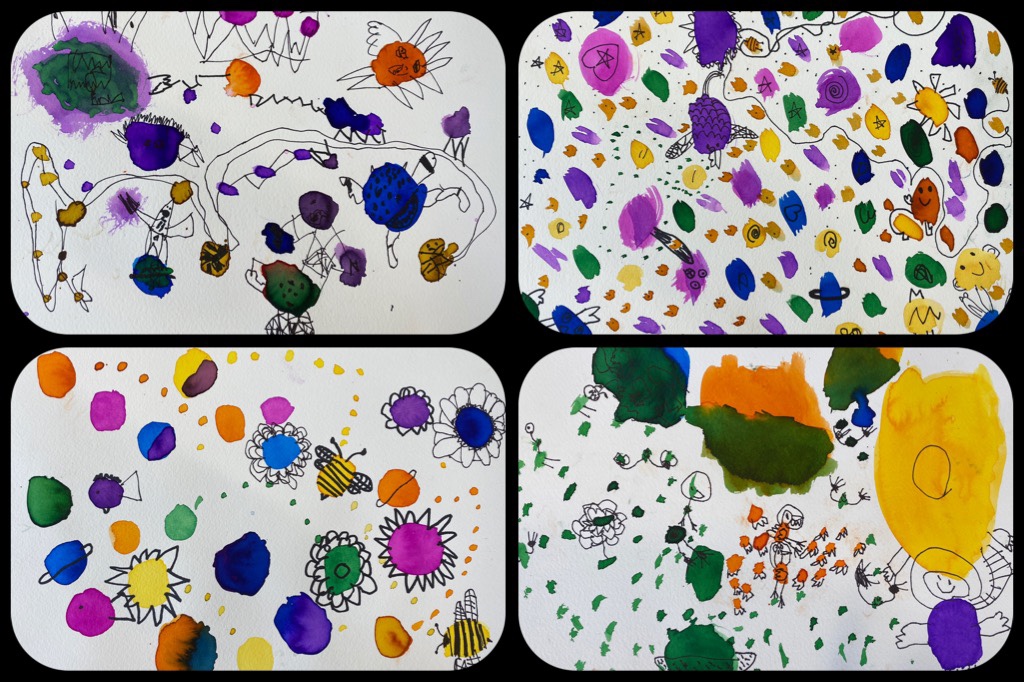
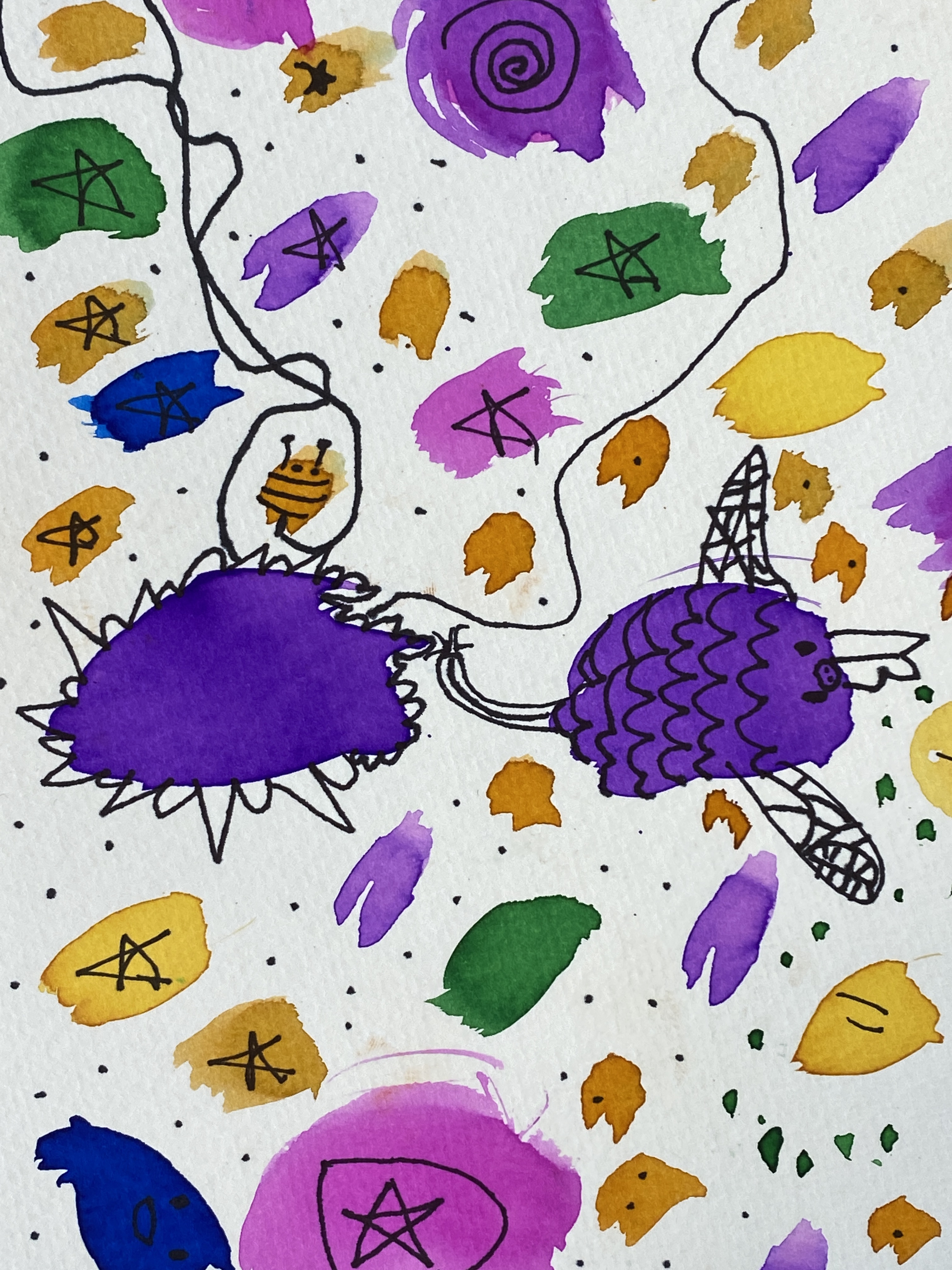
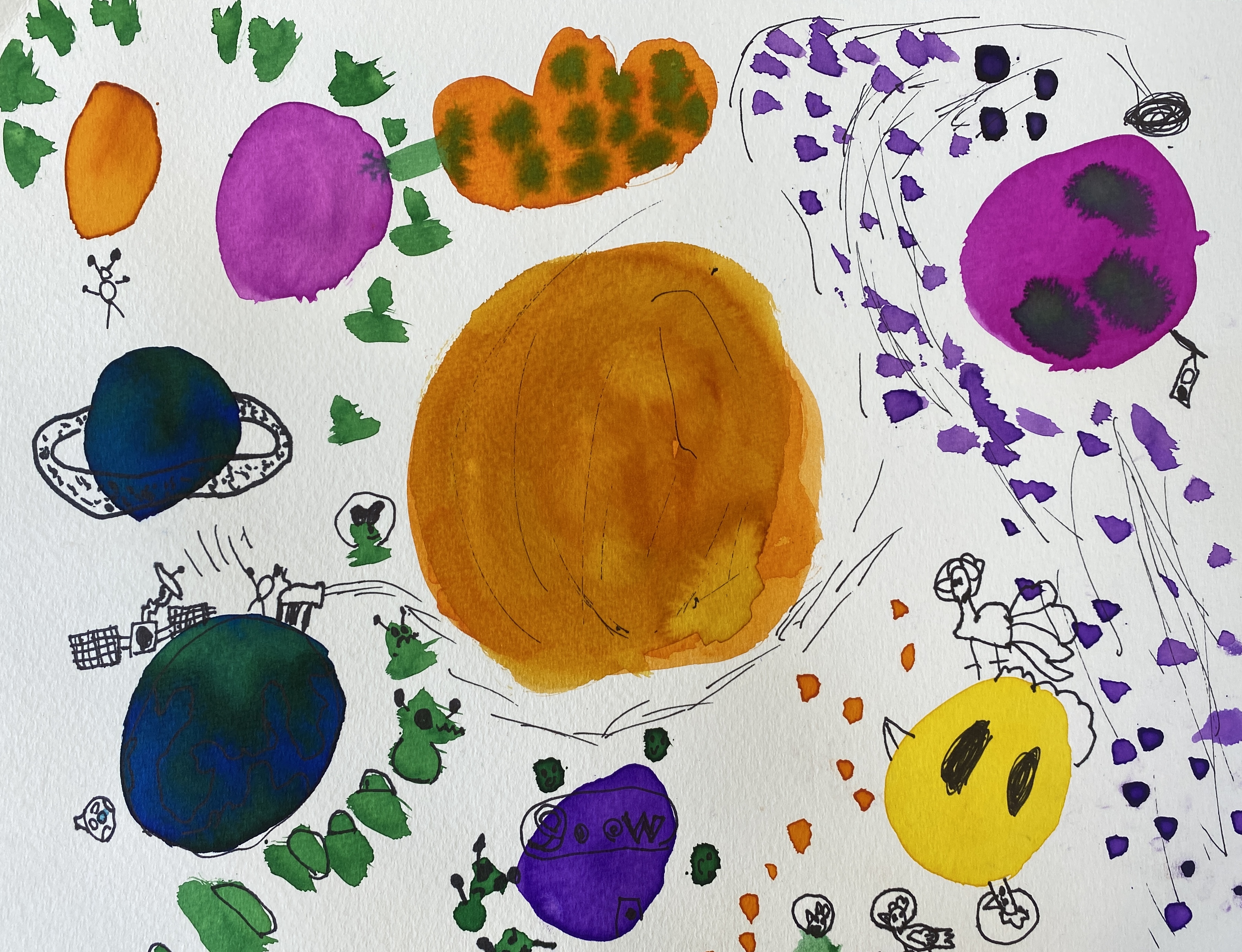
The week got dottier on Tuesday. We broke out the liquid watercolors and painted a page full of dots. These mostly 6-year-old artists knew that making the dots was just the start of this project. They would be transforming their dots into something else using a black sharpie marker the following day. They joyfully and freely painted dot after dot, experimenting with size and placement. They dripped one color onto another, while carrying on a constant narrative of alternative worlds, descriptive details about color, and oohs and aahs of their own discovery. We ended the day by reading Ish, yet another Peter Reynold’s book and talking about encouraging others and not judging our first attempts too harshly when we draw (or try other things too).
Wednesday was the day…International Dot Day! Students came to school dressed in dots and so did I. I l love their creativity in finding dots in their wardrobe. One child found a solar system shirt, each planet a dot. Another noticed the cat faces on her sweater were dots with more dots showing the natural coloring of the cat. There were polka-dotted masks (COVID makes us creative too), socks painted with dot markers, dotted bows in the hair, and I even found a pair of polka dotted earrings! With wardrobe dots in place, students were eager to get started transforming their watercolor dots from the previous day into beautiful pieces of art.
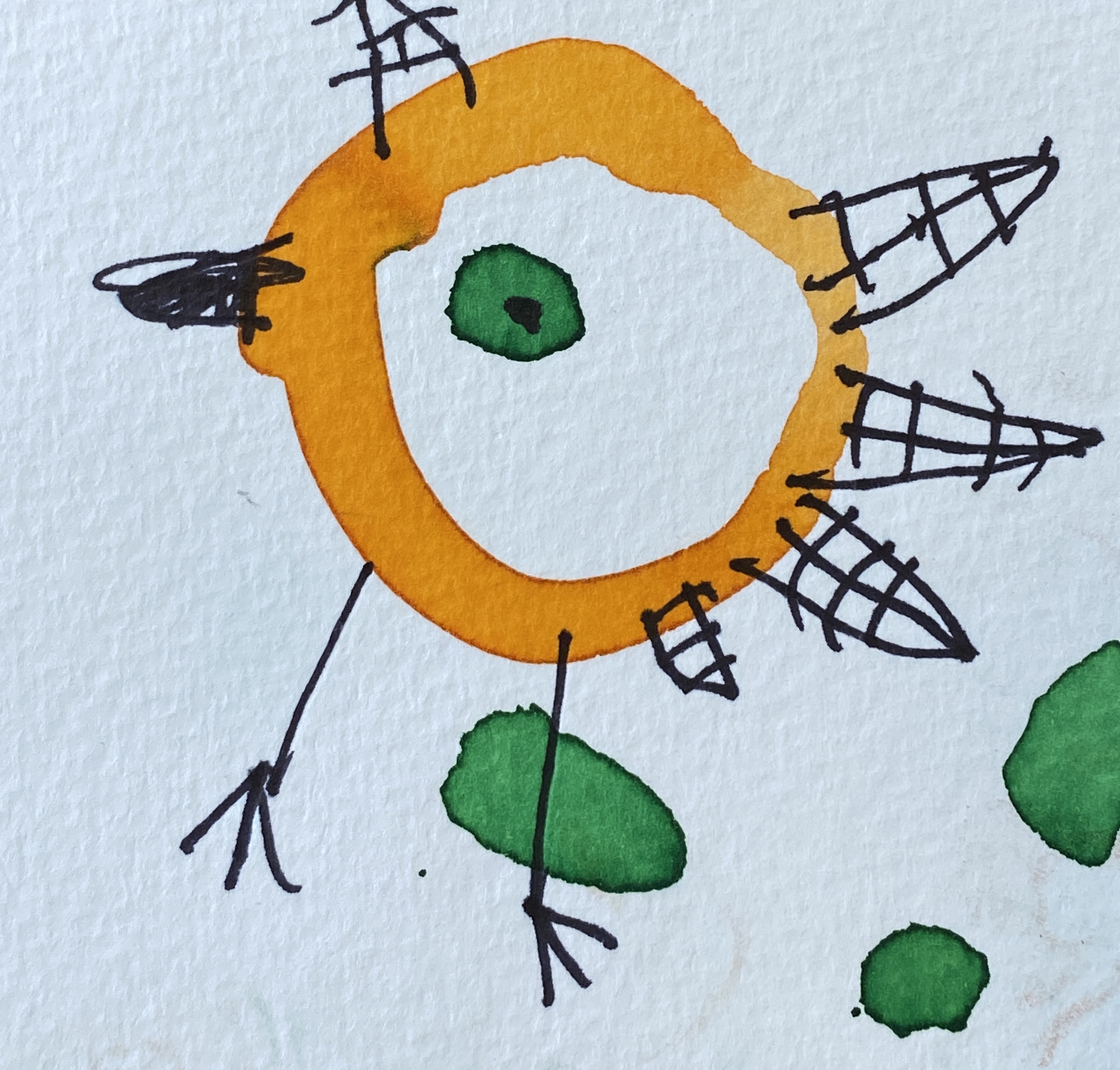
After a bit of modeling by showing what I might do with my own watercolor dots, I handed out the sharpie markers–a thicker one and a thinner one, and reminded students to start thinking about what story they might tell about the dot creation. I love the artistic freedom and courage of first graders. They uncap a permanent marker and confidently draw whatever is on their minds. Dots turned into chickens with space helmets, planets from unnamed galaxies, insects galore (bees, spiders, June bugs, ladybugs…), jellyfish, dragons, and of course, lots and lots of flowers. Along with the drawing was the buzz of conversation, telling the story of the things they were drawing. Clearly kids need to talk their ideas through as they draw.
Once the pens were capped and the drawings done, we took out our writer’s notebooks and set out to put down words to go along with the the art. We started with the simple frame, a dot can be… I showed how as a writer, instead of a sentence like A dot can be a bee, I could expand that sentence saying, A dot can be a pink bee buzzing from flower to flower leaving a trail of heart shaped pollen behind. (And they could see how that sentence also matched my drawing.) And with that short mini lesson, my students were off and writing.
Here’s a few examples:
A dot can be a bee. And a monkey that is blue and yellow. And a purple dragon and the purple dragon is swooping through the clouds. R
A dot can be a flower garden with a hot air balloon with a chicken and a bee and a sleeping cat. The chicken is looking for food. C
The best part of the writing time was that every student, even those who are less confident writers, were engaged with their writing. I heard lots of sounding out to get the words on the page. And students began to stretch their ideas, adding details that bring writing to life. I hope as the year progresses that they become as fearless with their writing as they are with their artwork, knowing that small mistakes might just become a “beautiful oops” or the stepping stone to something magnificent. Risk taking is essential to learning, as is joy. We had a wonderful International Dot Day filled with playfulness, creativity, and lots and lots of learning.
What might you do with a dot? It’s never too late to make your mark!
With the school year coming to a close, I wanted to come up with an activity for students that felt like play–like a party–and still provide academic content to satisfy my ever-present need to make use of all available instructional minutes. (Yes, even in the last week of school)
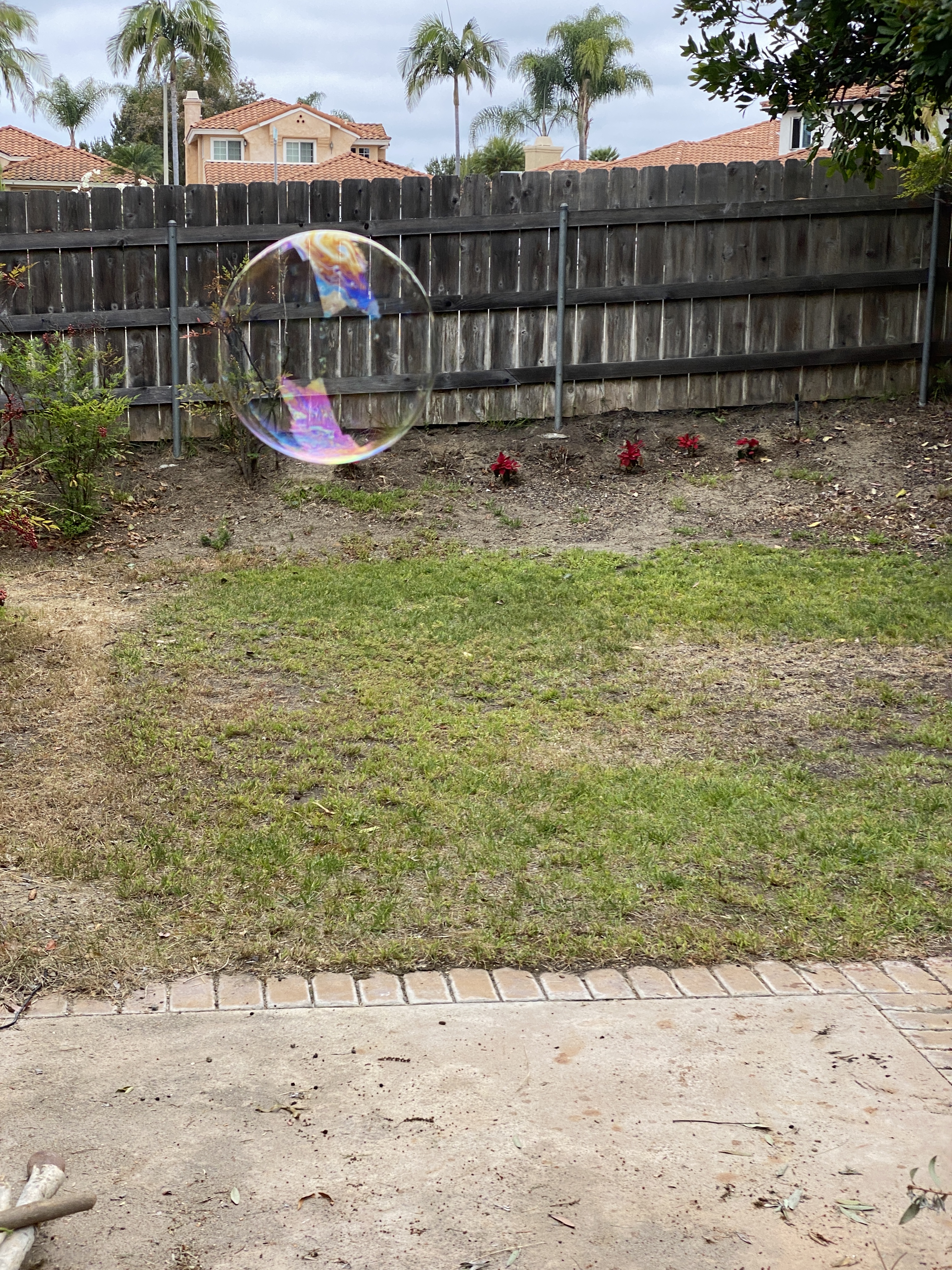
So, when I came across a blog post about making giant bubbles and bubble art, I knew I could turn this into a meaningful day of learning and fun…all wrapped up in a soapy bubble! I’m pretty fascinated by bubbles. I’ve spent quite a bit of time photographing giant bubbles at the beach and I’ve written about the “bubble man” a time or two (or more). I know that the trick to great bubbles is the solution–so prior to having my students explore and experiment, my husband and I tried our hand at bubbles over the weekend.
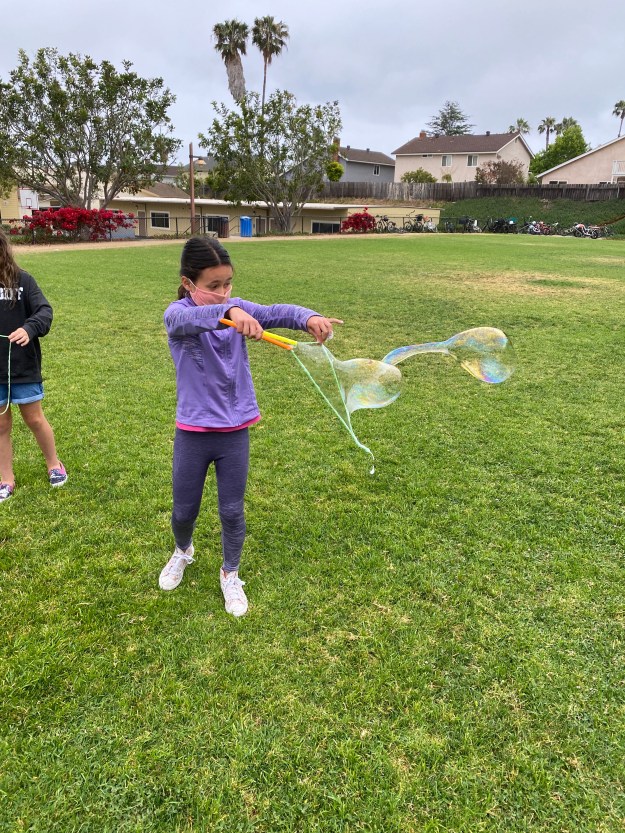
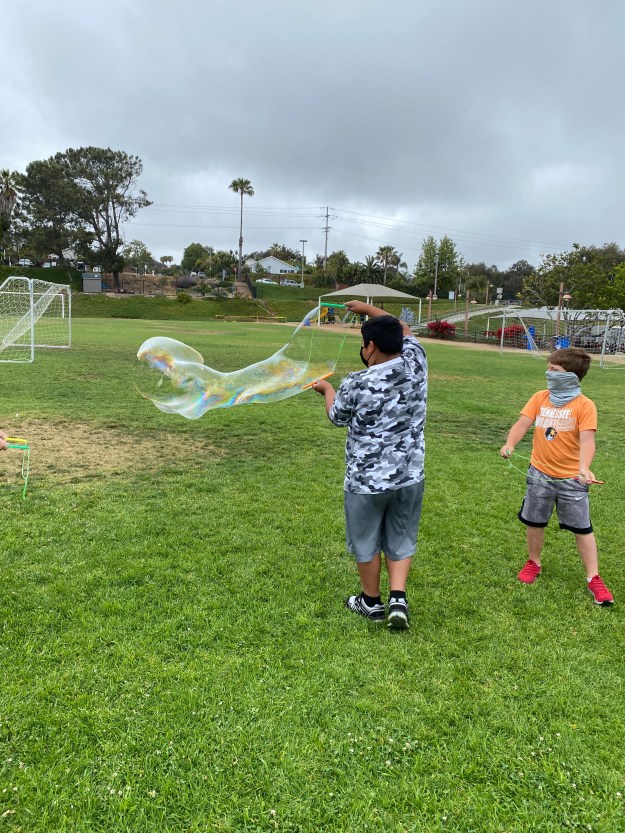
The basis of all bubbles is soap and water. But if you want the bubbles to be big and to have a bit of staying power, a bit of corn syrup and some glycerin need to be added to the mix. Using smoothie straws and yarn, I created a bubble wand that my students would be able to make on their own and started dipping and waving in my own attempt to create bubbles. This bubble thing is harder than it looks! I didn’t immediately get big beautiful bubbles flying from the wand. But with some patience, some tinkering, and some exploration of how to get a thin film filling with air onto my yarn…bubbles happened. At that point, with bubble solution pre-made, I was ready for a day of bubbles with third graders!
We started with a very interesting TED Talk titled, The Fascinating Science of Bubbles, from Soap to Champagne. We learned about surface tension, the geometry of bubbles and so much more. (If I were to do this in the future, I think I might devote an entire week rather than a whole day to bubbles!) Then we made our bubble wands and headed up to the field to make bubbles.
In spite of warning students that making these bubbles would take patience and experimentation, there was plenty of initial whining that “it’s not working!” I reminded them to keep trying. And then it happened…the first child experienced success! Like wildfire, bubbles emerged, filling the air with irridescent spheres.
The soap solution ran out before student interest waned, which is probably the best possible result! We headed back to the classroom with soapy hands, happy hearts and filled with visions and language about bubbles.
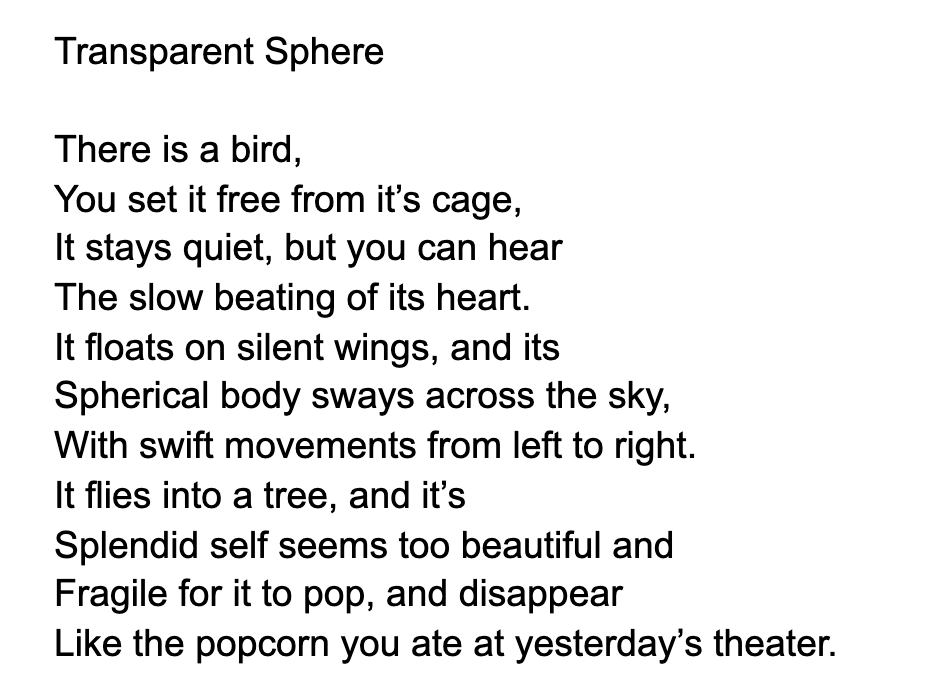
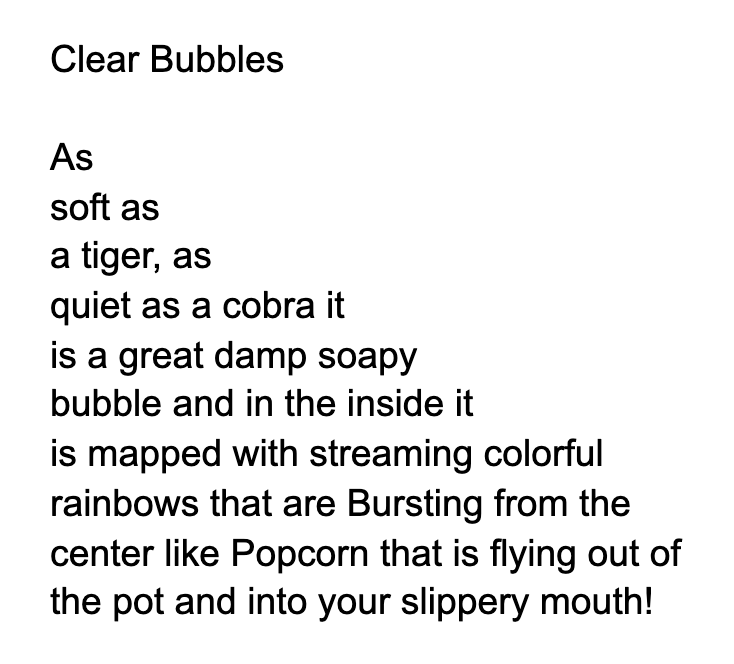
These young scientists are also prolific readers and writers, so after studying Valerie Worth’s short poem, Soap Bubbles, we created a list of bubble words and a list of potential bubble metaphors and then set the magic 7-minute writing timer and started writing. Like bubbles, colorful, delicate, evocative poems floated up, emerging from the points of students’ pencils.
Here’s a couple:
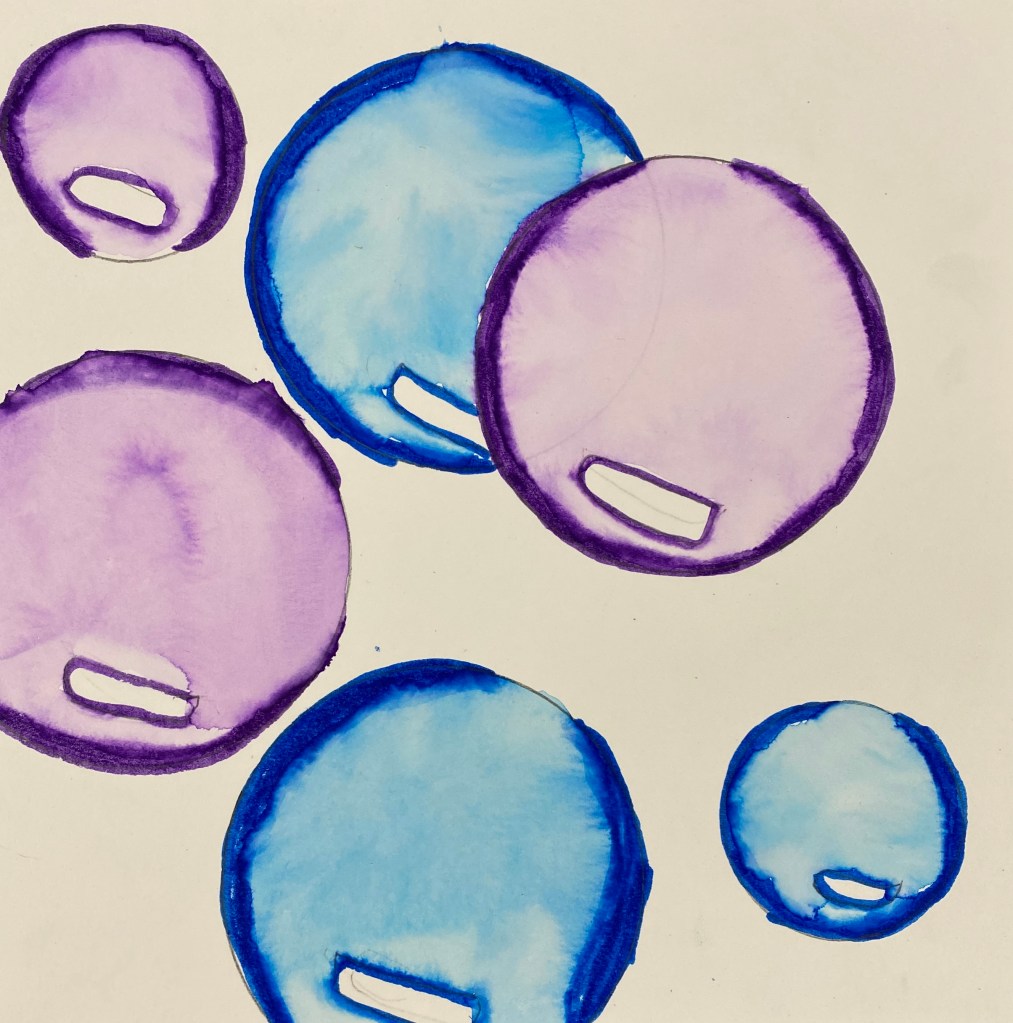
To complement the poetry and the elusive, temporary soap bubbles, we got out paper, pencils, water-based markers and some water and created bubbles…as art! Each artist created their own composition, tracing round shapes, adding a space where a light source reflected off each bubble. Then they added marker and finally, using just water and a paint brush, urged the marker to follow the water, creating beautiful dimensional bubbles on watercolor paper.
There is so much more we could have done with bubbles–including exploring the mathematics of spheres. Overall, it was an amazing day. Students could not believe that an entire school day had passed before they even realized it. Engagement was high, work quality was inspiring…it was an amazing last Monday of the school year! Based on this success, I know I will be working some bubble science into future teaching and learning!
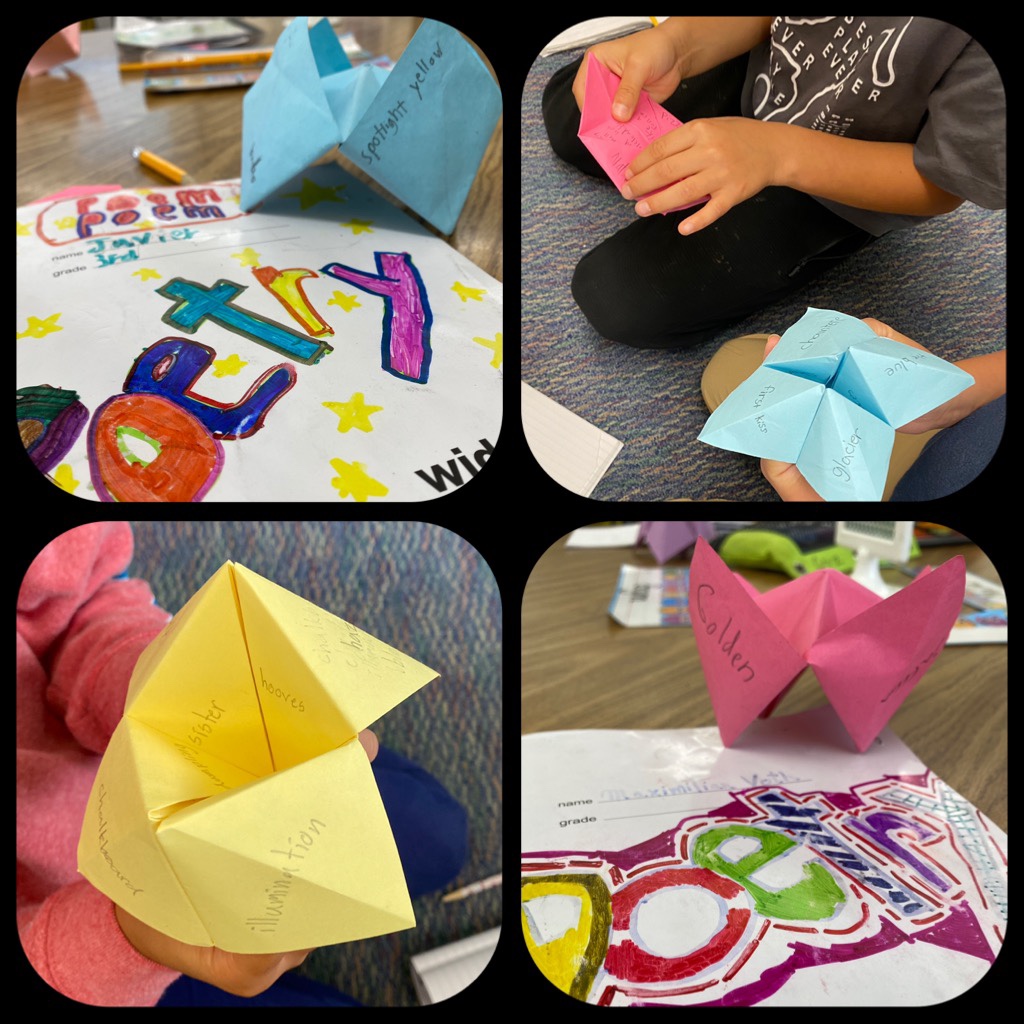
We did it! I wrote last week about my experimentation with a poetry teller, a way for my students to go back through their own poetry and then play around with remixing their poetry with a classmate.
So this morning, students folded their way into their collaborative game. Some students were familiar with classic fortune tellers and were eager to put their fingers into the folds and start moving the teller around. And no one seemed to think it was one bit strange to make this into a poetry tool. They found colors, they located interesting nouns, and pinpointed some poetic phrases–all from their cache of poems written during April. In partners they played with their poetry tellers, collecting words and phrases that they knew they would use soon for some poetry writing.
I set the parameters: use the words you collected (it’s okay if there is a word you decide not to use), you can add extra words of your choice, make the poem make sense, and have fun! We used that magical 7 minute timer and students’ pencils flew across the page. When the chime sounded, hands shot up. They had poems to share!
Here’s a couple (these are third graders, 8 and 9 years old):
Words collected: blood orange, green, snow, lamp, the sun is cotton candy, the puddles of the ditch
Poem:
Unusual
The sky is blood orange
the lamp is green
the trees are snow
the sun is cotton candy
the puddles of the ditch are rainbow
there’s something fishy today
And another:
Words collected: ice, profusion, cats, frame, the sunlight bounces into my eyes, illumination, snowy caps, sister, hooves, the cloud is as soft and big, it covers the sky like a blanket
Poem:
Transition to Spring
Ice.
A very cold word
You see it a lot during brutal winters.
Hooves pounding on cold snow under our feet.
Cats.
Sinking their paws into the snow.
The snowy caps on mountain tops
are guarded by a forest.
There are many natural frames in the
tree tops.
Then the snow is illuminated by the sun.
I step outside and the sunlight bounces into my eyes.
My sister’s snowman melts away.
The clouds are so soft and big.
They cover the sky like a blanket.
It is spring now.
Making games out of writing definitely infuses playfulness into the process for kids. They loved manipulating their poetry tellers and would have played with them much longer than I had time for today. I count this as a win–and as a great way to have students remix poems. I’d love to hear what you would do with a tool/toy like this one. How would you modify it to support writers and learners?
Inspired by this blog post, I had my students write a slice of life poem this morning. They had plenty of fodder, coming off our spring break. And while they wrote, I wrote too. Here is my slice of life poem.






 Thinking Through My Lens