I was talking with my sister last weekend and she mentioned she had done a color walk with a friend at the beach. I’ve done color walks with my students around the school, often picking a color that I think they’ll have to look hard to find. I like the way that a focus on something: a color, a shape, a something…opens up new possibilities for what you might notice.
Of course, for me a color walk is also a photography walk…and lately a poetry walk as well. The tide has been low this week during my walking times, so the tide pools have been calling my name.
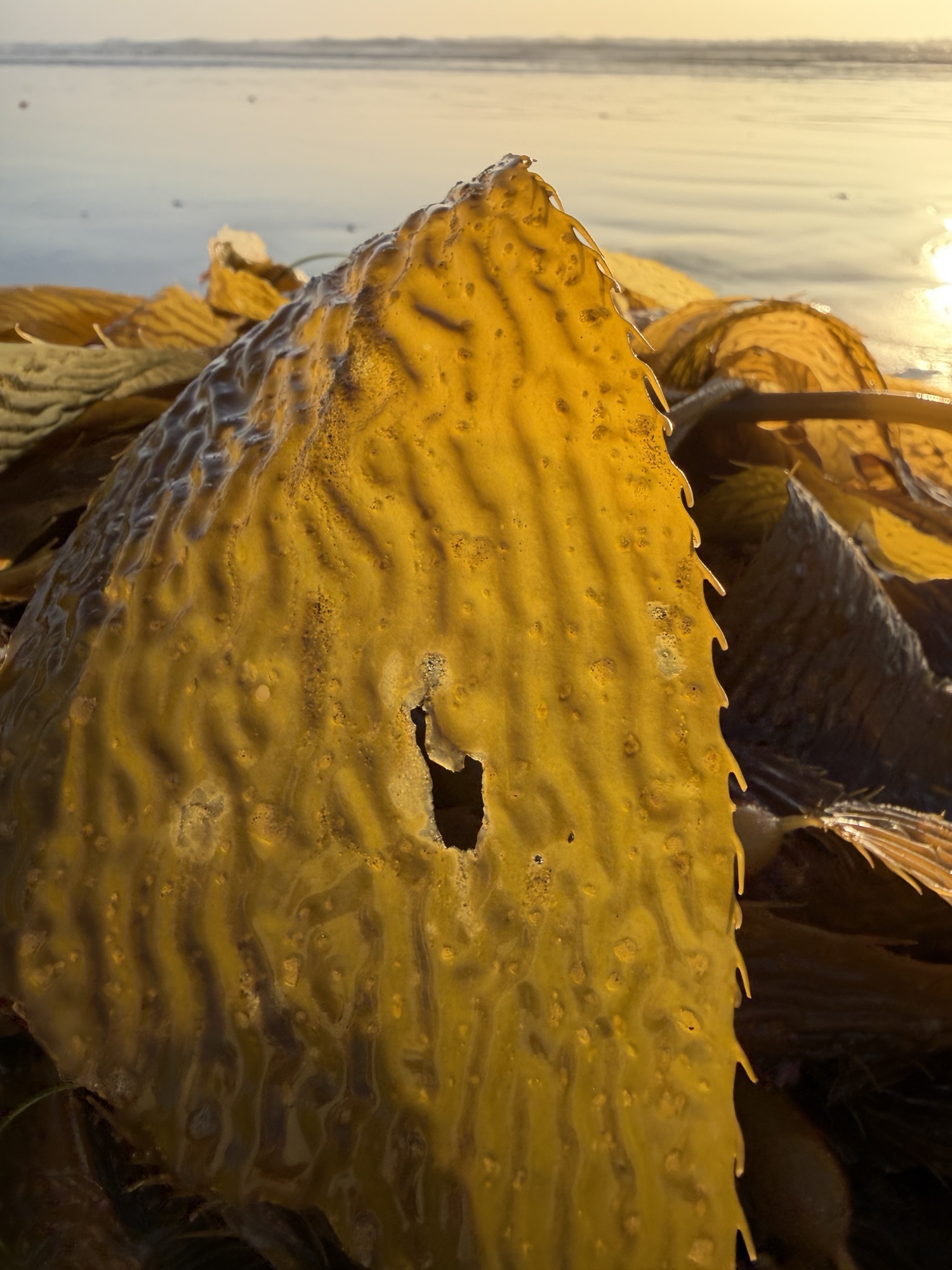
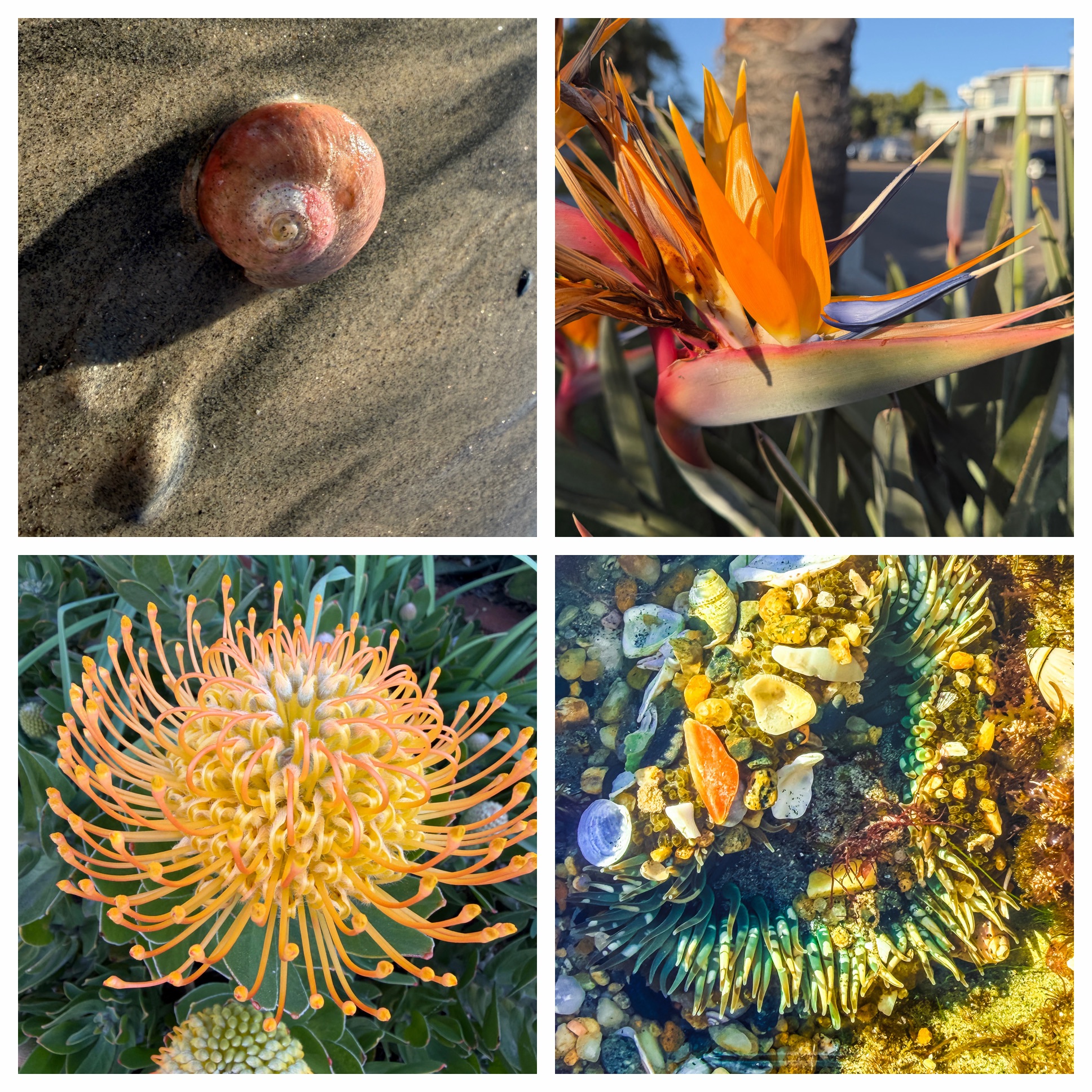
The color of giant kelp (macrocystis pyrifera) kept calling my name. An amber, goldish, kind of orangish color. And weirdly enough I felt like it was echoed in the landscaping I walked by (I did have quite a trek since we had summer over the weekend and parking also felt like summer–like looking for a needle in a haystack!).
With orangish on my mind, I pulled a small collection of photos from my walk, and then used them to inspire some small poetry. To be honest, I dreamed poems all night on Sunday, tossing and turning, writing and revising in my head. And then when I woke up it was all gone.
So, in the spirit of orangish, I’m going to try again. (Although I doubt I can conjure what seemed so urgent and perfect in those busy, persistent writing dreams.)
A poem a day for 30 days, which also means I have read poem upon poem upon poem for 30 days. I’ve read poems to my students, poems written by my students, poems offered as invitations, poems written by others in this poem writing community. I’ve struggled with words, celebrated with words, thrown words at my notebook to see which stuck, deleted words from my digital pages (again and again and again), fallen in love with words, admired the words written by others, and amassed quite a number of words written. I’ve chuckled and giggled, gasped and wondered…and shed a few tears too. I feel like I know poets I have never met, connected with poets from other time zones and places, and learned to recognized poets by their style, their posting time, their poetic voice and the way they respond to my poems. My poet heart feels both empty and full at the same time, grateful for all the words and already missing the demand for still more words. Will I write tomorrow? I’m sure I will. Will it be a poem? Probably not. But then again, who knows? My email box offered up Georgia Heard’s May Poetry Calendar today along with explicit permission to write small. Who can resist that?
I love small poems. Those deceptively simple compositions that are packed with possibilities of layered meaning. I also love that they invite my young students into their mystery.
Today we read 16 Words William Carlos Williams & “The Red Wheelbarrow” by Lisa Rogers & Chuck Groenink and learned about this well-known poet and his famous short poem. We studied The Red Wheelbarrow and students were ready with their noticings. They counted those words carefully–yes there were 16 (at least the way it was written). They noticed the four stanzas and that each stanza had four words. They noticed the color words and felt that the line “glazed with rain water” was a bit metaphorical. (It also brought to mind donuts–got to love the literal interpretations from first graders!)
I handed out post it notes–it worked last week–small paper for small poems. And they set off with a mere five minutes before they needed to head off to their reading groups. We came back to our poems after lunch. Some students wrote several (I have plenty of post-its!) and all wrote at least one.
Here’s the one inspired by donuts
a sweet donut
with raining sprinkles
is waiting for someone
to pick it up
chomp
Many of my students continued to be inspired by sports
balls flying
like blue birds
flying in
the air
flies into a brown
kids glove
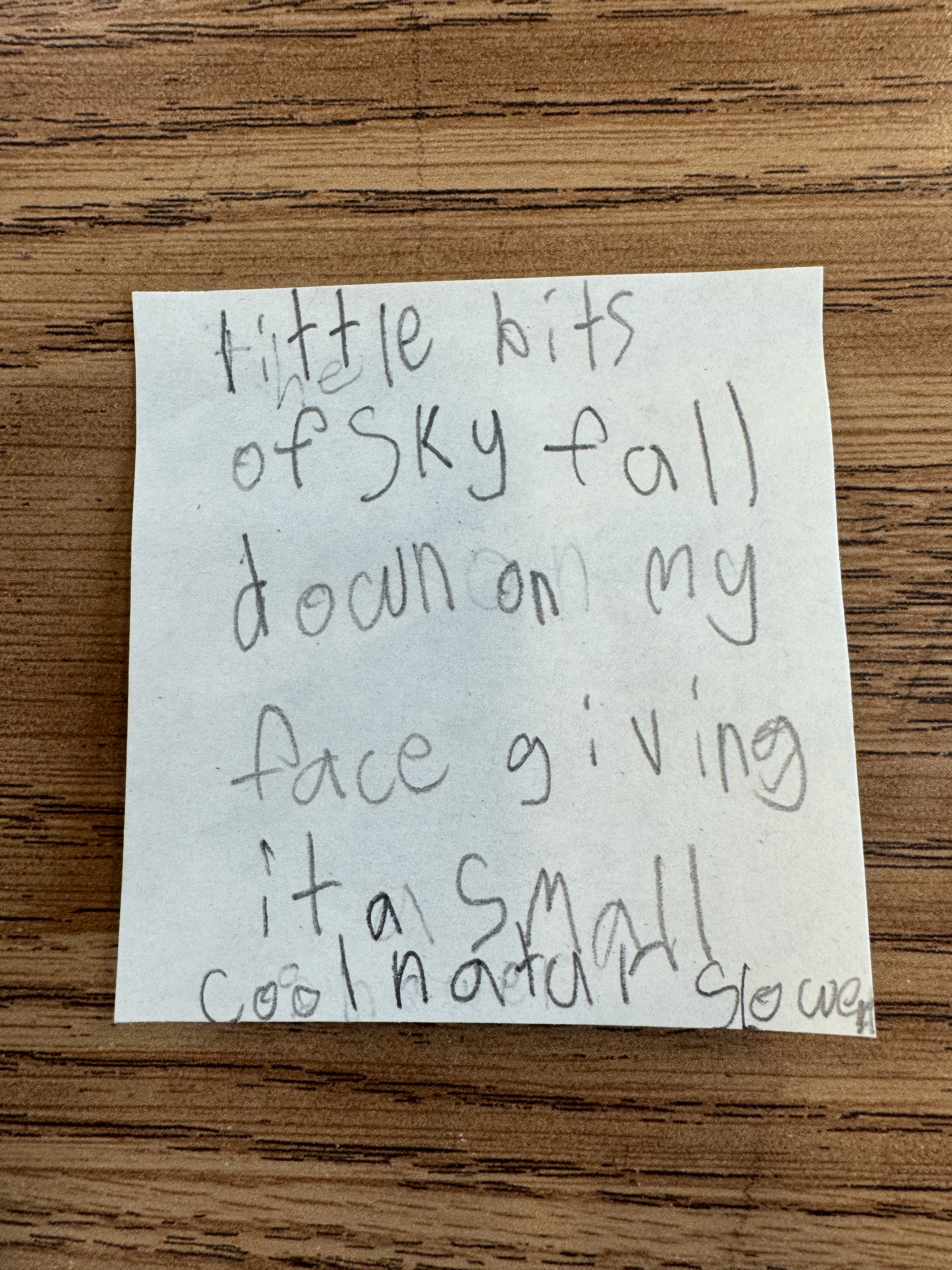
And the one I fell in love with (I’m sure I didn’t write like this when I was in first grade!)
little bits
of sky fall
down on my
face giving
it a small
cool nature shower
And my own poem is trying to conjure spring. There are hints here and there, but the pervasive marine layer is back–something that brings out the complaining in us Southern Californians!
I can be a bit serious. Okay, maybe a lot serious. And sometimes that means that the classroom can seem like all work and no play…and we all know that first graders (and maybe all students) both want and NEED some play to help learning move along.
For some reason, my school decided that again this year our winter holidays (two weeks of no school) would bump right up against Christmas. I’ll be loving the holiday when January gets here, but to be honest, it’s brutal right now. Instead of children who are focused on learning to read and write (and all our other subjects of study), they have visions of sugarplums dancing in their heads! (Or maybe that is just the candy cane overload coursing through their bodies!)
I made a deal with myself as I planned lessons for this week–leave spaces for play, expect silliness and louder than usual volume, smile and laugh more, enjoy the moments.
So…I planned a small writing lesson.
I remembered this wonderful book of poems called The Proper Way to Meet a Hedgehog and Other How To Poems selected by Paul Janeczko and started flipping through. If I had my students write a “how to” something, they would have many choices of topic and could draw on all that they already know. But which poem would work as a useful mentor text to get them started? There are many good choices…but I was looking for something short, a bit whimsical, and an idea that my students might find unexpected. How to Scare Monsters by Rebecca Kai Dotlich was just right! It starts out easy, “Keep a light on, that’s the thing… and turns a bit in the second (of two) stanzas with “Aim for the toe (did you know this?)…
I read it a few times, letting students soak into the language. They noticed the strange notation (parentheses) and were intrigued. We talked about the extra information in there and they definitely picked up on the personal, friendly tone. We brainstormed things we are “experts” at doing, and that list included A LOT of sports! After I wrote a poem in front of them (How to take Photos of Egrets), they opened their notebooks and began their own How To poems.
Students immediately got to their writing (along with plenty of talking) and a number of them included the parentheses in their poems. As they began to finish and read their writing to me, I could feel the smile genuinely creeping onto my face. The poems were fresh and their voices came through loud and clear. Some of the topics were predictable, but some were not…like this one by O:
How to Catch a Rattlesnake
Go to a desert.
Find a hole.
(Maybe it’s a snake hole.)
If it’s a snake hole,
get a good stick.
And do not grab it by the tail,
grab it by the neck.
If you grab it by the tail
they will swing and bite you.
If you grab it by the neck
they will not move
except their tail.
Did you notice the parentheses? I had encouraged students to pick small topics rather than trying to explain a whole game. But, you know, some students want to do what they want to do. But somehow J captured this game in a nutshell. I bet you know what game it is!
How to Play Ball
Get two teams
9 is enough
9 innings
1,2,3 bases and
one home plate in a square.
(One out is three hittable balls
Four balls you can not hit go to 1st base)
A hit
run as fast as you can go
until you are thrown out
or tagged out
You are out.
Three outs is an inning
touch home plate to get a point.
who has the most points wins
if you are tied
overtime.
And who doesn’t love a how to poem about riding a bike? It’s obviously a childhood classic! Here is O’s rendition. (This is a different O–I have many in this year’s class!)
How to Ride a Bike
This is how we ride a bike
without training wheels.
First put your helmet on
and then get on your bike.
And try not to look down
look straight ahead and pedal
and make sure nothing is in front of you.
And that is how you ride a bike
without training wheels.
And a short but sweet one by V who did take my advice and decided not to capture all of gymnastics but to instead focus on a single trick.
How to do a Cartwheel
Start in a lunge
Put your hands on the ground
Then when you put your hands on the ground
Kick your legs up
(One foot up first, then the other)
Land with hands by your ears.
These small poems started this week off with a dose of joy. Students enjoyed writing and reading them, I enjoyed hearing them and rereading them. No one whined that they had nothing to write about, no one got teary with frustration (including me), and we all enjoyed writing and sharing and teaching someone else about our individual expertise.
Reminder to myself: be playful, small can be powerful, enjoy the wonders of childhood and read and write more poems!
So…if you need to add a bit of joy to your teaching or writing life, take a look at How to Scare Monsters and write some how to poems!
I realized today that I forgot to post my poem for day 9. #verselove had prompted a poem that breaks rules–but instead my poem was all about the end of my spring break. I suppose since it began as a Haiku, it did break those rules along the way as well.
Break the Break
At the break of break
Songbirds trill, sun warms the now-spring air, breath flows in and out
I suppress the urge to throw the alarm clock across the room
Today’s #verseloveprompt was about choices…and I made a choice that was different from the intended direction (I think). So, today I decided to write a #smallpoem (close to Haiku) to go with a photograph–where I wrote with light.
One of the things my colleague Wendy talked about yesterday during her conference session was how Haiku doesn’t have to be all about syllable count (our American school version)–instead, she talked about Haiku being a poem in one breath.
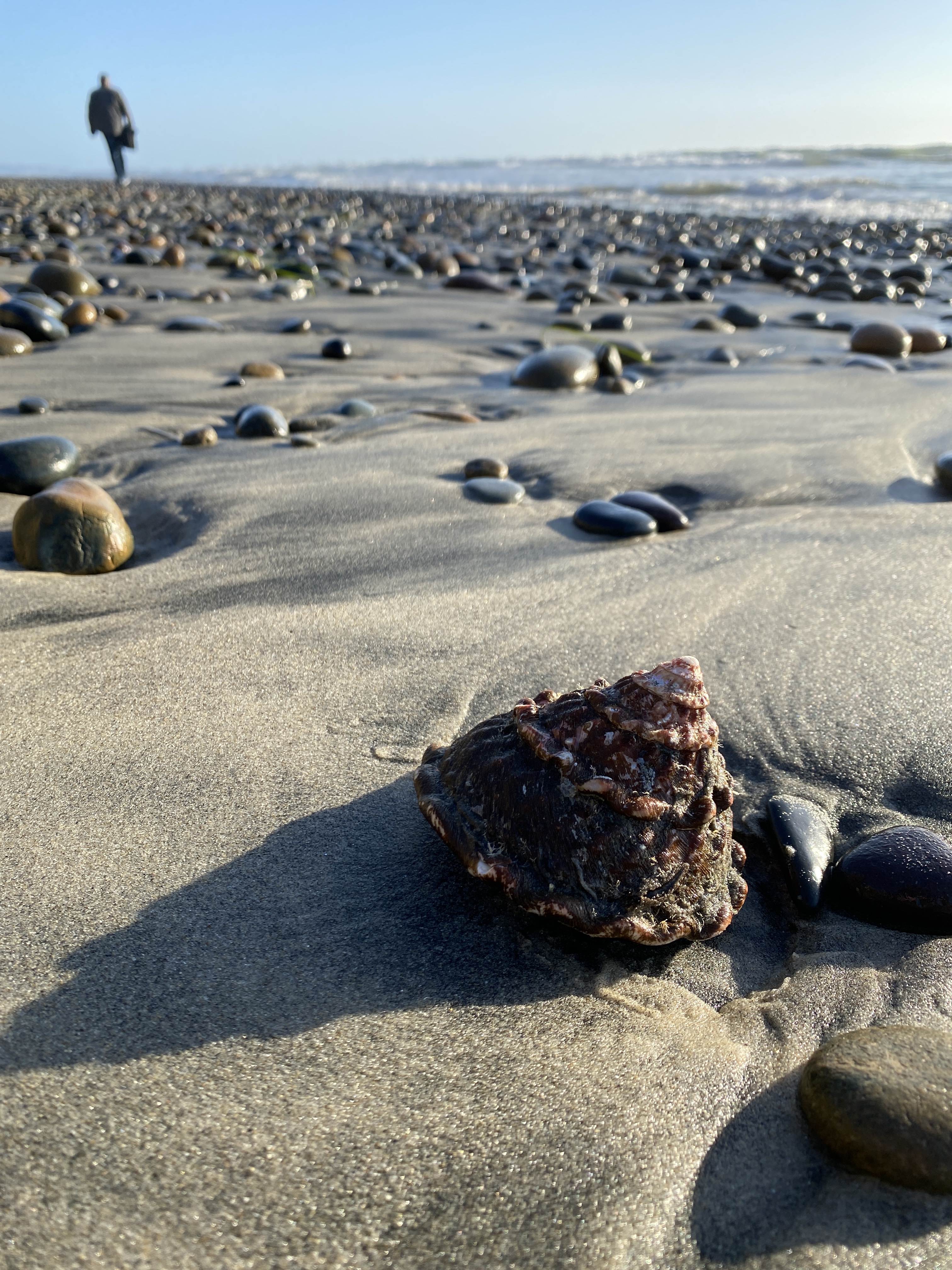
I love that idea! So I thought I would try it out–inspired by the wavy turban snail shell I saw on the beach this afternoon. I picked it up to see if the snail was inside, but it was empty–just the shell resting on the shore.
On the sandy shore
a castle spirals upward
but no one is home
@kd0602
Ironically, this one fits the 5-7-5 syllable format without even trying! I’d love for you to try one–with or without counting syllables, but aiming for a single breath. Feel free to leave your Haiku as a comment.
I love the garden as an outdoor learning space for students. As you may have read yesterday, we began the process of experimenting with some photography techniques in preparation for some writing today. The PM group was rained out of the garden yesterday, but today was bright and sunny so they were able to catch up and try their hand at using the photography techniques.
Today students selected a photo from the garden, and in the spirit of Ansel Adams, transformed the photo to black and white using a filter in the iPad. This photo along with Eve Merriam’s poem, Peeling an Orange, became the inspiration and mentor text for their own original small poems. Before starting our own poems, we took the time to study Peeling an Orange carefully. We named what we noticed: the use of comparisons (similes and metaphors), the opposition of the words carelessly and meticulously (serendipitously, meticulous had been a vocabulary word earlier this year), the inclusion of sensory use (smell). Then I set a timer (something that I find focuses these third grade writers) for 7 minutes and off they wrote!
We shared a few, noticing the interesting comparisons, the use of strong verbs and other vocabulary and moved to the next step: creating a shared Google slide deck to display the photos and poems. While not everyone finished today, I did ask if students were okay with me sharing some of their writing on my blog. They were excited by the prospect.
Here’s a couple of student examples:
And one of mine (since I always write with students):
I’ve been intentionally prioritizing time for writing–from start to finish–in the classroom, in spite of the short time we have in our hybrid schedule. It is totally worth the time spent–and I am seeing the writing improve when students write in community. I look forward to more time for writing as my students return to the classroom for full days, in one group, beginning in mid-April.
My daily walk to the mailbox is generally uneventful. I follow the sidewalk down the hill, past the five or six houses that look similar to my own. I notice the groomed lawns, the xeriscaped designs where lawns once grew, those miniature citrus trees. And today, I noticed the tall thin palm dancing in the breeze.
Inspired by the National Writing Project post, Writing In with #WriteOut, I wrote a Poet-Tree #smallpoem today.
Yesterday’s photography foray into the garden was still on students’ minds today. I always seem to be living (and teaching) on borrowed time, so after finishing up some other work I was able to give students time to go back and look through the photographs they took yesterday. I asked them to select their three “best” photos…thinking about the categories/compositional strategies they had tried yesterday. Then of the three, figure out which one would be best as a black and white image. I showed my own process, talking through the three photos I selected and showing my black and white image (you can see it on yesterday’s post). They were excited…eager to select, eager to edit, and I smartly limited the time to minutes in the single digits. I called them together, iPads in hand, and had them all hold up their images. Stunning, striking, interesting, and sometimes surprising…all words that described those photographs.
And with a few minutes until recess, I reminded students about the poem we had read and studied yesterday: Peeling an Orange by Eve Merriam. I started my own poem in front of my students, thinking aloud as I talked through what I saw in this mentor text and writing my poem’s first lines. I knew they were ready as they suggested ideas for my writing, questioned my decisions, and started asking questions about their own writing-to-be.
There is something magical about writing under the influence. EVERY SINGLE STUDENT in my class had a title and an path forward for their poem in less than 5 minutes…and were asking when they would have time to return to this writing as we walked out to recess.
Just enough structure and lots choice meant students took photos of what caught their eyes. Being outdoors, wandering through the garden felt more like play than work–offering opportunities for creativity and exploration. Selecting meant making some intentional choices–but choices again. And nothing makes my students happier than messing with filters in editing mode!
We read and study a poem each week, so my students are familiar with poetry as a mentor text. They know me well, expecting to write any time we do something creative and artistic. And there is something wonderful about writing short. Small poems invite students to try something new, explore language, and still know the end is in sight. The lift is somehow just right.
Here’s a tiny taste:
And on some crazy whim, I decided to have my students create a slide deck of their small poems and photographs this afternoon. (Reminiscent of something we did for #writeout and #clmooc) So here they are: first draft small poems and Ansel Adam-inspired photos from the garden. We were definitely under the influence: of nature, of photography, of freedom and choice, of a mentor text, and of a community of writers composing together.





 Thinking Through My Lens