Tag Archives: writing

Field Trippin’ Through the Intersections

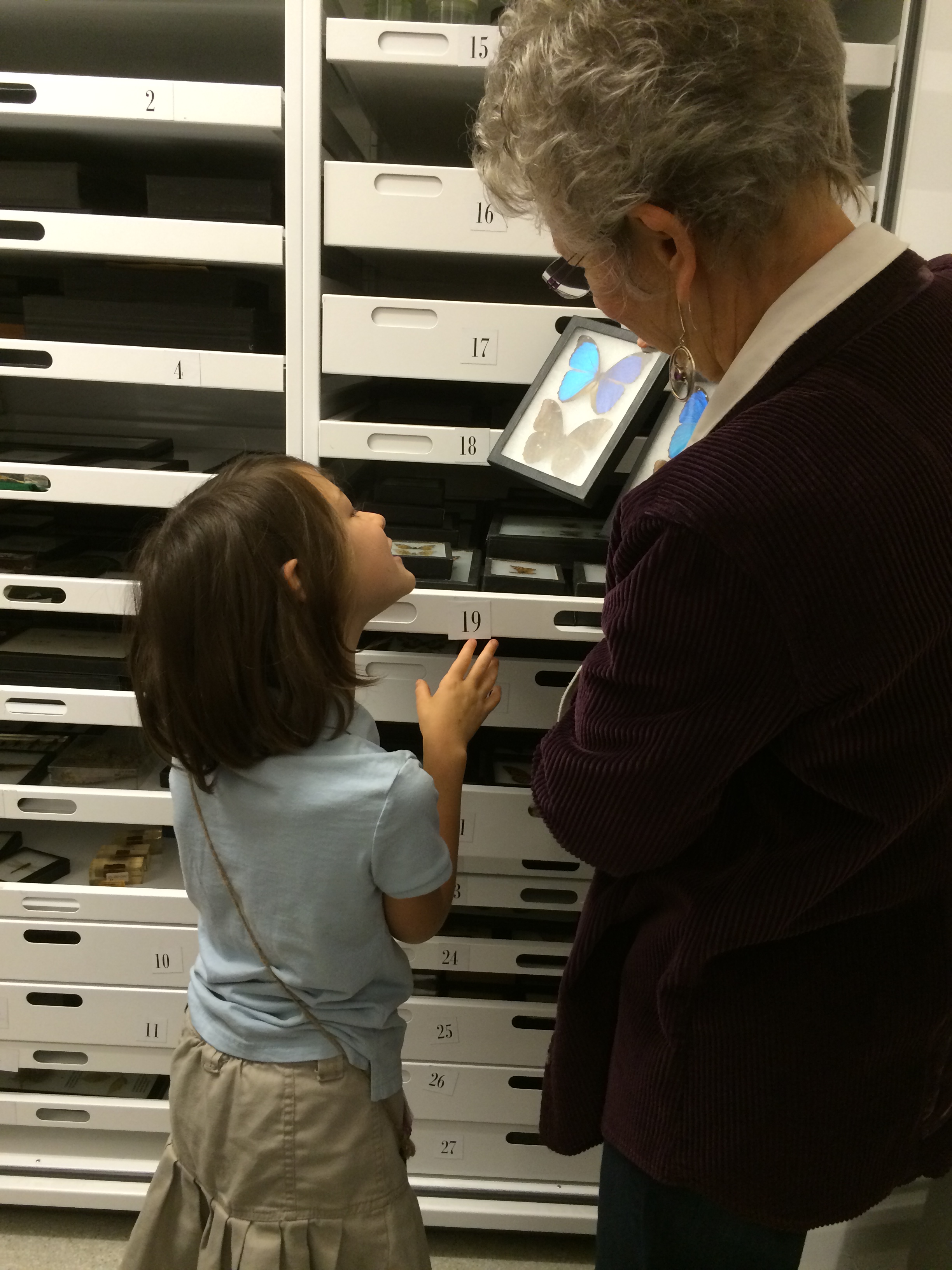
The bus pulled up in front of the Reuben H. Fleet Science Center as the much-needed rain pelted down.  Excited fifth graders poured from the bus into the rain, ready to explore.

photo-97

And waiting just inside were a group of classroom teachers and museum educators ready to watch closely and think carefully about how these students’ teachers and chaperones support student learning and promote student inquiry during the field trip.

This was the pilot of the materials developed by the participants of the Intersections project–a collaboration between the San Diego Area Writing Project (SDAWP), the Reuben H. Fleet Science Center, and the San Diego Natural History Museum funded by a National Science Foundation Grant to the National Writing Project and the Association of Science and Technology Centers.  This group of educators has been meeting and learning together–with a focus on inquiry, science, writing, and field trips since the fall.  And just a week ago they designed “tools” for use to prepare for and facilitate the field trip to the two museums.

And the field trip was an opportunity to examine the tools in use, with the aim of improving them in a next iteration.  We watched the kids in action, noting their conversation, their body language, their interaction with the exhibits…taking pictures, detailed field notes, video and audiotape…all with the goal of understanding their experience in order to improve students’ opportunities for learning and engagement.  And…we were under strict orders to only observe–something very difficult for this group of hands-on educators dedicated to facilitating engaging learning experiences for students!

photo-98

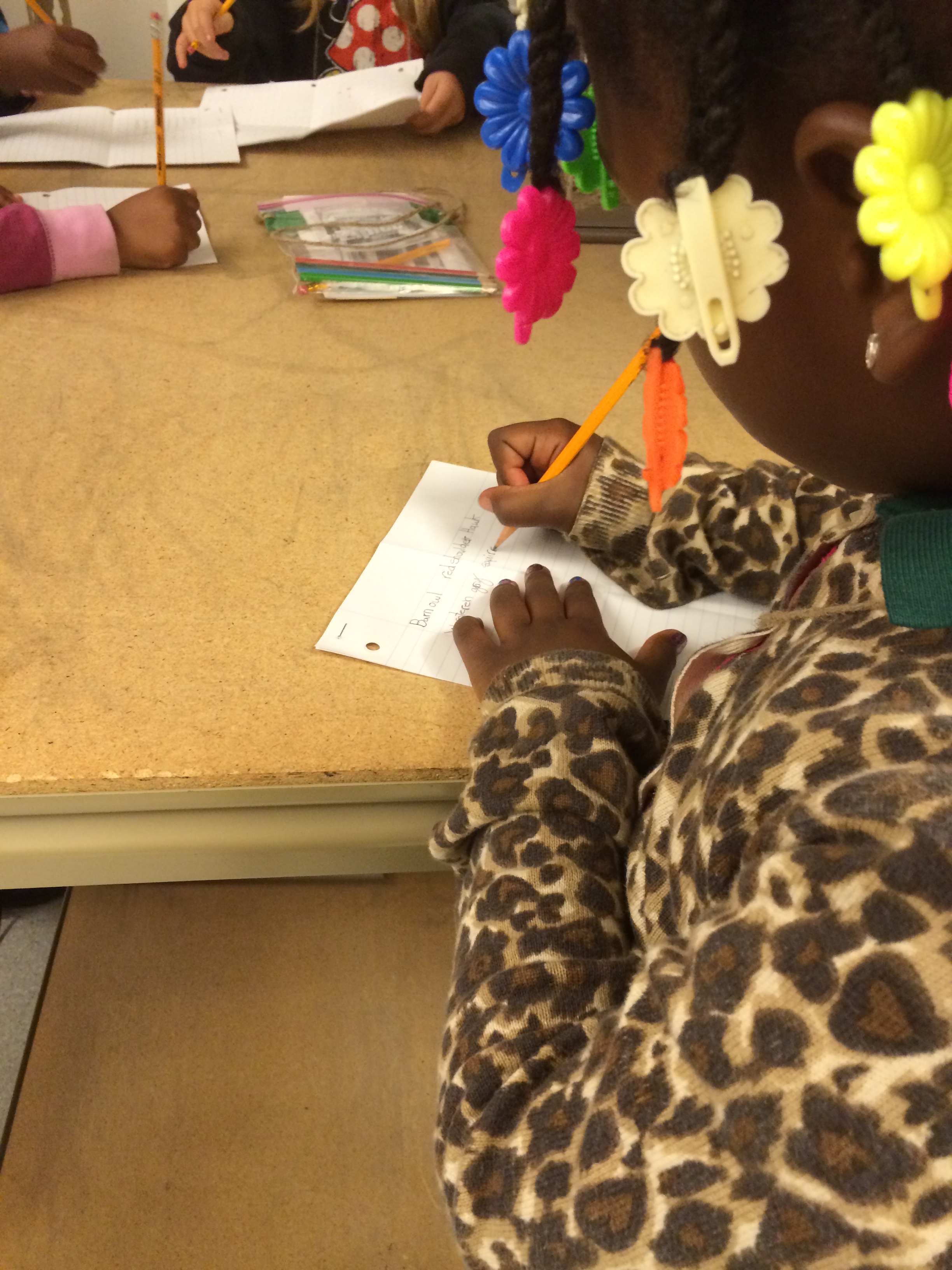
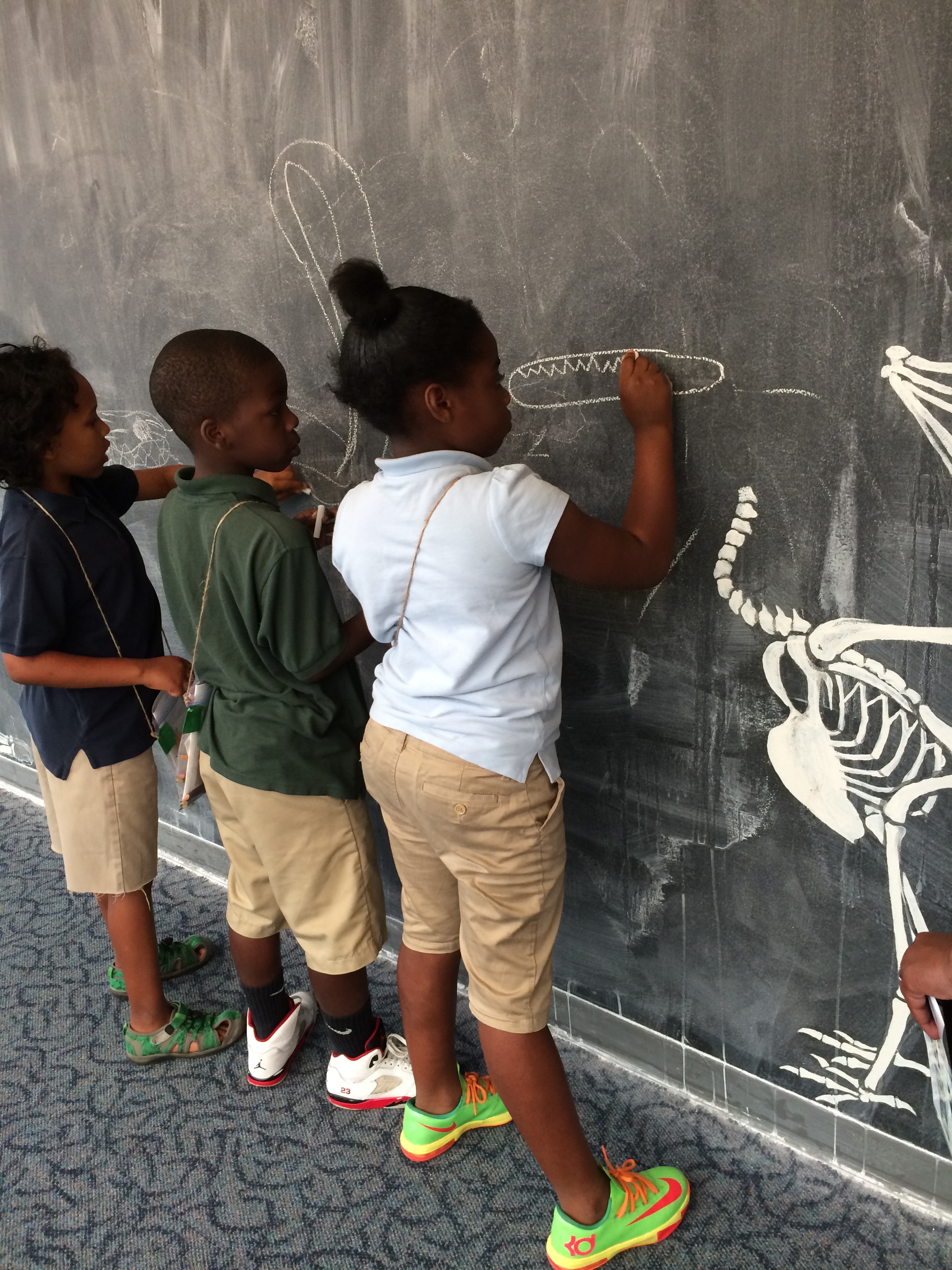
After lunch, students moved across the park plaza to the NAT and we repeated the process.

photo-99

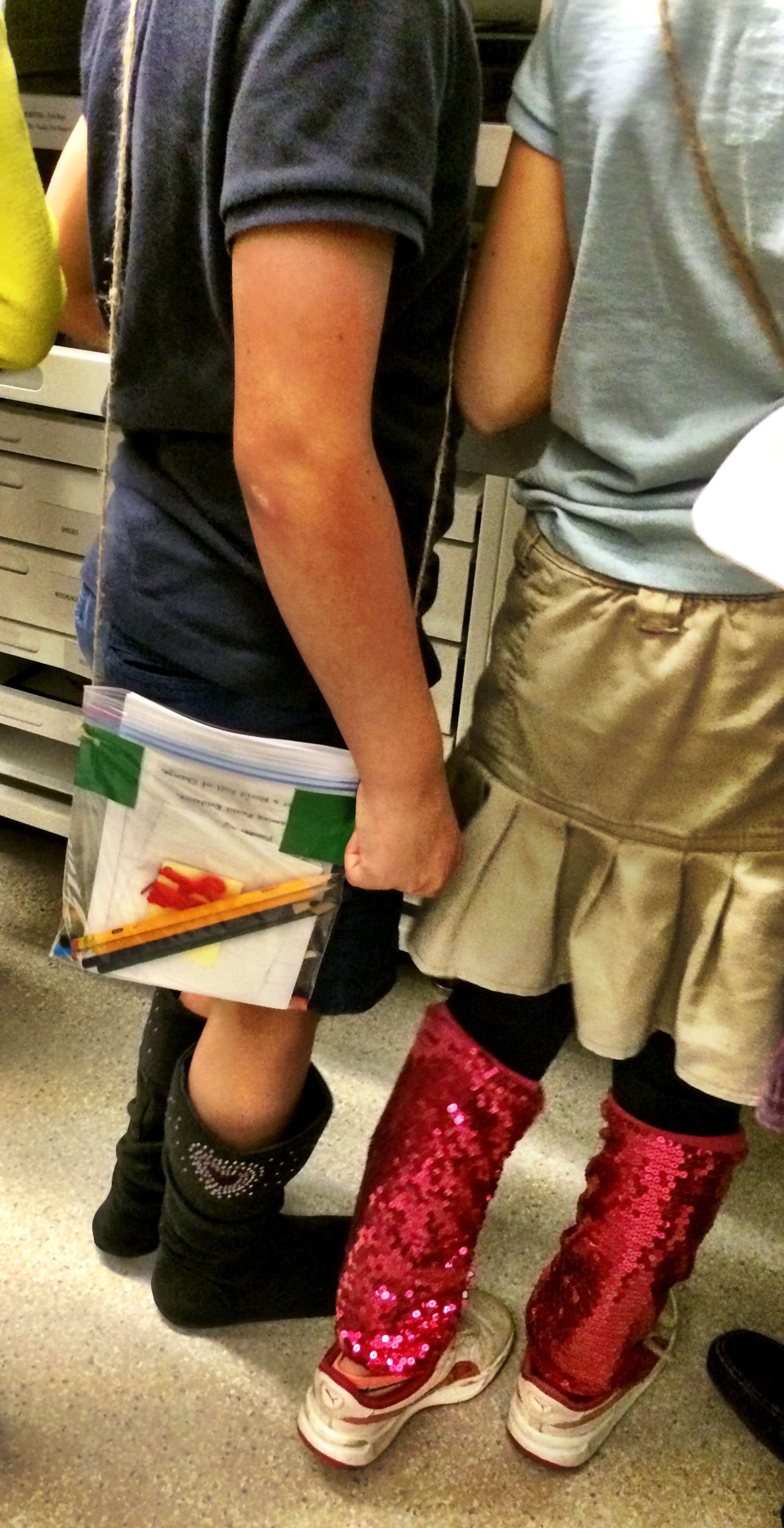
Students sketched and wrote, questioned and connected what they were seeing and learning to things they already knew.

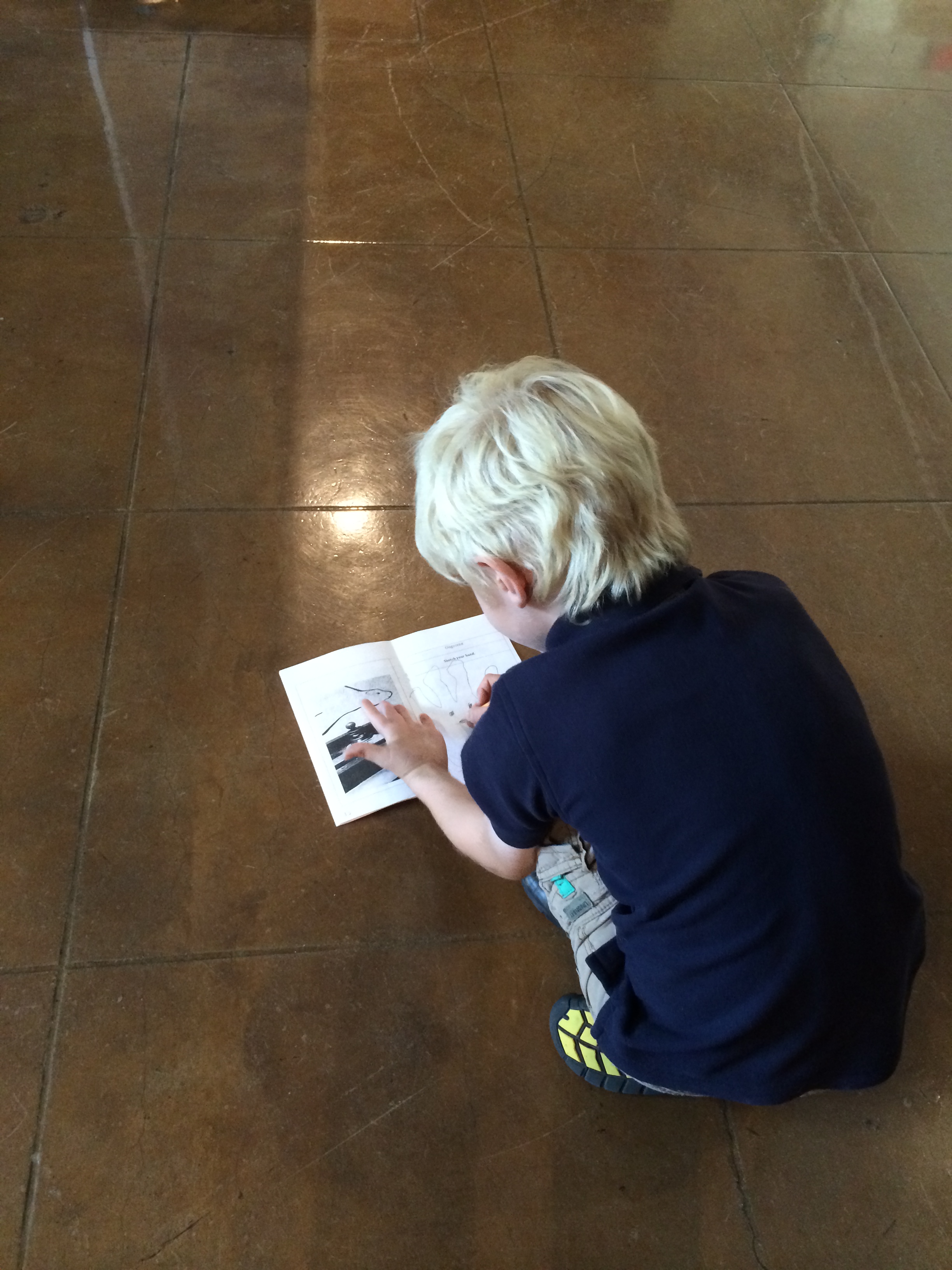
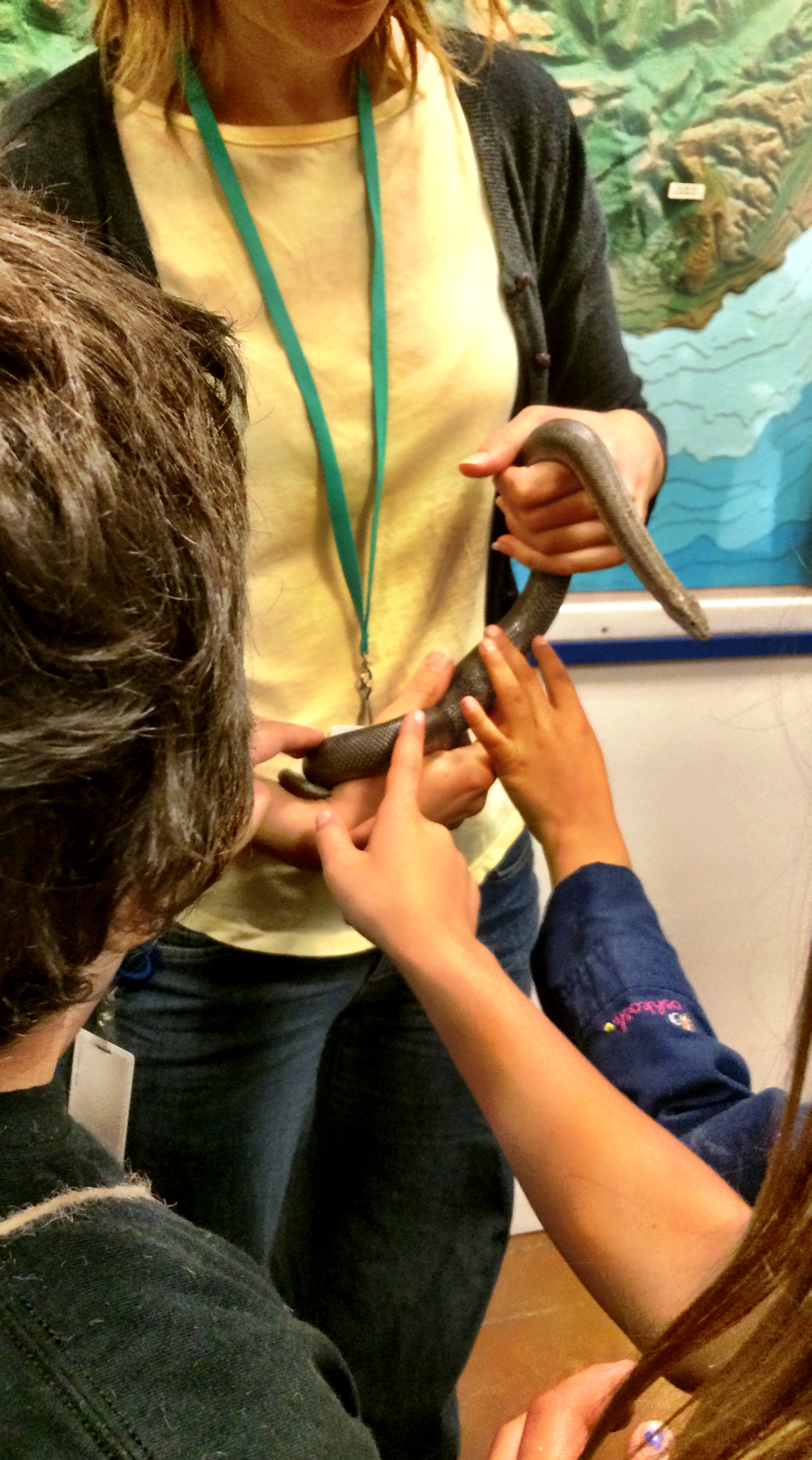
And one of my favorite moments was at the end of the trip, just before the students headed back to board their bus for the ride back home.  They had discovered the pendulum at the NAT and were curious about the little blocks set up inside the circle where the pendulum swung.  Would the ball of the pendulum knock the blocks over?  They started watching by learning on the rail…and then got lower…until they were laying on their bellies on the floor, feet bent up behind them, noses pushed up against the railing.  And they watched, almost holding their breath as the ball closely avoided the tiny blocks.  And then it happened.  The block fell…and the cheer broke the quiet!

photo-103

After the students left we took some time to reflect on our experience…and also hear the experience of the teachers in our group who brought these students to the museums.  There were lots of things that went well…and plenty that we still want to improve.  And plans are already being made for improved tools and new tools for our next field trip pilot…sometime in April.

There is something amazing about the opportunity for educators to collaborate, to design and then to test, to take time for careful, considered observation and data collection, and then time to reflect on their learning.  If only there were more opportunities like this one, for educators to come together to make sure that students have optimal learning experiences…how would that change our world?

Weekly Photo Challenge: Culture

Here’s the week 8 Weekly Photo Challenge prompt for the NWP iAnthology!  (Here are weeks 123456, and 7 if you want to look back.)

If we’re lucky, there are places in our communities where cultural experiences take place.  That word culture has lots of different meanings depending on your frame of reference.  But commonly, culture has to do with access to music, art, and other learning opportunities.

In San Diego we are lucky to have Balboa Park, a beautiful urban park right in the downtown area.  It has many museums, our world famous zoo, a botanical garden and lily pond, international houses, a theatre, an organ pavilion, gardens, a world class restaurant, lots and lots of walking and hiking trails and so much more.  It was the site of the Panama-California Exposition in 1915, and is about to celebrate its centennial anniversary.

balboa park fountain

This iconic fountain is a favorite place for people to meet, to relax, to cool off, to people watch, and to enjoy the outdoors.  Even on a rainy day like today (hooray for rain!), you can sense the beauty and specialness of this place.  And for me Balboa Park is a cultural experience–whether I am exploring the museums or simply people watching, this is a place where culture is alive and well.

So this week’s photo challenge is to share a photo that represents culture to you. What image stirs up a cultural experience or helps you explore your own culture?  Share a photo (or several) that pictures culture in some way.  Post either the photo alone or along with writing inspired by the photo.  I also invite you to use others’ photos as inspiration for your own writing and photography.  I often use another photographer’s image as “mentor text” for my own photography, trying to capture some element in my own way.

I like to share my images and writing on social media…and I invite you to share yours widely too. (You might consider Twitter, Instagram, Facebook, Google+) Use the hashtag #culture and include @nwpianthology to make it easy for us to find and enjoy.  You can find me on Twitter and Instagram @kd0602.  I’d love to follow you if you share your handle.

You can also share your photos and writing by linking to this blog post or sharing in the comment section below.  I am excited to see how you represent culture through your lens!

Weekly Photo Challenge: Playing with Light

Here’s the week 3 Weekly Photo Challenge prompt for the NWP iAnthology!  (Here are weeks 1 and 2 if you want to look back.)

As I continue to learn the art and craft of photography, I both wrestle with and delight in light. Lighting is essential to a great photograph and although there are “rules” about working with light, sometimes breaking those rules creates the most interesting effect.

I often hear that photographs are best shot with the sun behind the camera, with the light coming in over your shoulder as the photographer.  But sometimes I just can’t resist shooting into the light like I did this morning in my attempt to capture the sunrise flaming through the fog as I peered through my car window.

photo-78

And sometimes I’m able to capture the just-right lighting, almost by accident.  This still life of a narcissus paperwhite plant on my dining room table is delicately lit by the chandelier above.  I love the way the light is refracted by the chandelier glass onto the walls.  This photo, taken with my iPhone, is completely unedited.

photo-77

So this week’s photo challenge is to play with light.  Share a photo that features light in some way.  Post either the photo alone or along with writing inspired by the photo.  I also invite you to use others’ photos as inspiration for your own writing and photography.  I often use another photographer’s image as “mentor text” for my own photography, trying to capture some element in my own way.

I like to share my images and writing on social media…and I invite you to share your widely too. (You might consider Twitter, Instagram, Facebook, Google+) Use the hashtag #light and include @nwpianthology to make it easy for us to find and enjoy.  You can find me on Twitter and Instagram @kd0602.  I’d love to follow you if you share your handle.

You can also share your photos and writing by linking to this blog post or sharing in the comment section below.  I am excited to see how you use light in your photos!

So, have fun and play with light!

Weekly Photo Challenge: Frames

Here’s the week 2 Weekly Photo Challenge prompt for the NWP iAnthology.  You can look back at week one here.

I take and post a picture every day, and have for over a year and half now.  Sometimes I find myself taking the same photo over and over again.  Somehow I stand in the same place and use the same angle…and the photos begin to look the same.

So to keep myself from falling into this familiarity rut, I try different photography techniques. One I have done some experimenting with is using the natural frames I find in the environment when I am shooting pictures.

Here’s a couple of my examples.  One of my favorites is this view of the ocean through the pier.  I took several other shots, but I love the way this one is like a door opening, framing the sea.

pier frame

Here is a playful one I took during my morning playground duty using the playground equipment as the frame.

playground frame

And here’s one of a window–that includes the window frame as a frame itself.

window frame

Share a photo of a frame you have found…post either the photo alone or do some writing inspired by the photo.  And feel free to be inspired by the photos of others…and either write based on another’s photo or shoot another photograph of a frame based on the inspiration of someone else’s photo.

If you also share on other social media (Twitter, Facebook, google+, Instagram), use the hashtag #frames and include @nwpianthology to make it easy for us to find and enjoy!  You can find me @kd0602.  Be sure to share your media handles too!

And if you are reading this on my blog, feel free to share your photo/response by either linking your photo or your blog to the comment section below.  I am excited to see the frames you have explored through your lens!

Weekly Photo Challenge: My Place

Some colleagues over at the National Writing Project iAnthology asked me if I would be willing to post weekly photo challenge prompts for their site.  Personally, I enjoy weekly photo challenges and find that they also tend to prompt writing for me as well.  I often participate in the weekly photo challenge at the Daily Post…I love that I have an entire week to figure out how to respond to the prompt, visually and/or in writing…and I love seeing the different ways that each prompt is interpreted.

So along with posting this challenge over at the iAnthology, I thought I would also post it here on my blog so others could participate.  Here’s my first weekly photo challenge prompt:

Photography gives me the opportunity to explore the places I see everyday and come to know them in new ways.  Sometimes I zoom in and discover the beauty of something I had walked by hundreds of times before or just pause and appreciate something I had otherwise taken for granted.  Once in while, a change in the weather or other conditions paints my place and when I take the time to look through the lens, I see what on the surface seems to be an annoyance as an opportunity to reflect, learn, and appreciate another layer of my place.

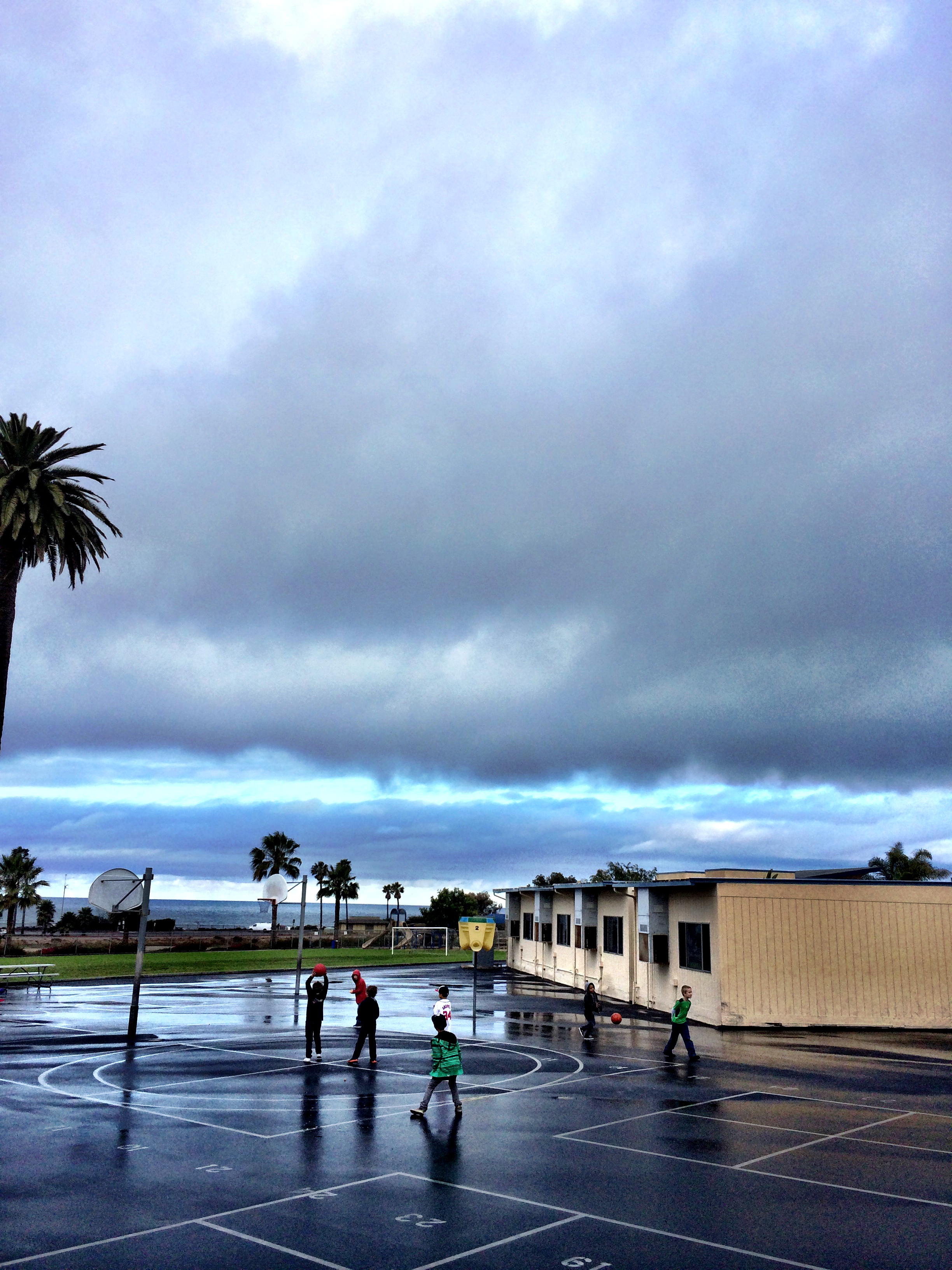
Here’s a photo I recently took on a stormy day (a relatively rare occurrence) in my place.  Rain makes the roads crazy (even just a light drizzle) and people grumpy, but taking photographs has encouraged me to seek out the beauty and wonder that stormy days have to offer.

photo

Share a photo of your place…either the photo alone or do some writing inspired by the photo.  And feel free to be inspired by the photos of others…and either write based on another’s photo or shoot another photograph of your place based on the inspiration of someone else’s photo.

If you also share on other social media (Twitter, Facebook, google+, Instagram), use the hashtag #myplace and include @nwpianthology to make it easy for us to find and enjoy!  You can find me @kd0602.  Be sure to share your media handles too!

And if you are reading this on my blog, feel free to share your photo/response by either linking your photo or your blog to the comment section below.  I am excited to see “your place” through your lens!

Making and Learning

Instead of thinking about teaching on Tuesday, I spent my day thinking about learning.  On the plane Tuesday morning I sat next to a young family who had vacationed in San Diego to go to Legoland with their two young boys…and got stuck Monday night because of the domino effect of the weather in the midwest and east coast.  For being pretty tired, the boys were great.  The littlest guy (maybe 3 or 4) was playing a game on his DS system.  Whenever he got “stuck,” he would hand the game system up to his older brother (who was maybe 5) in the seat in front of him and ask for help.  Brother would play the troublesome spot and then hand the game back and little guy would go on with his play.  After his brother tired of helping, mom would help…and coach as she did so.

At the same time I was reading Invent to Learn, a book about the maker movement and the value of engaging learners in meaningful activity to maximize learning.  It begins with the theory behind making as learning…including information about Piaget, Montessori, Dewey, Vygotsky, the Reggio Emilia system, and folks at MIT, including Seymore Papert.  The book emphasizes what they call the constructionist (rather than the constructivist) theory of learning.  Their argument is that through the concrete construction of meaningful projects, learners gain rich, layered skills that serve them in school and beyond.  They also emphasize the value of play.

I landed in Oakland and made it on time for my 9:00 meeting at the National Writing Project offices in Berkeley with a small group of like-minded educators interested in the maker movement, interested in the intersections of literacy and science and STEM-related learning, interested in meaningful learning, both in and out of schools, for young people in their community. We gathered to consider ways schools and writing projects might collaborate with other organizations to further these goals.

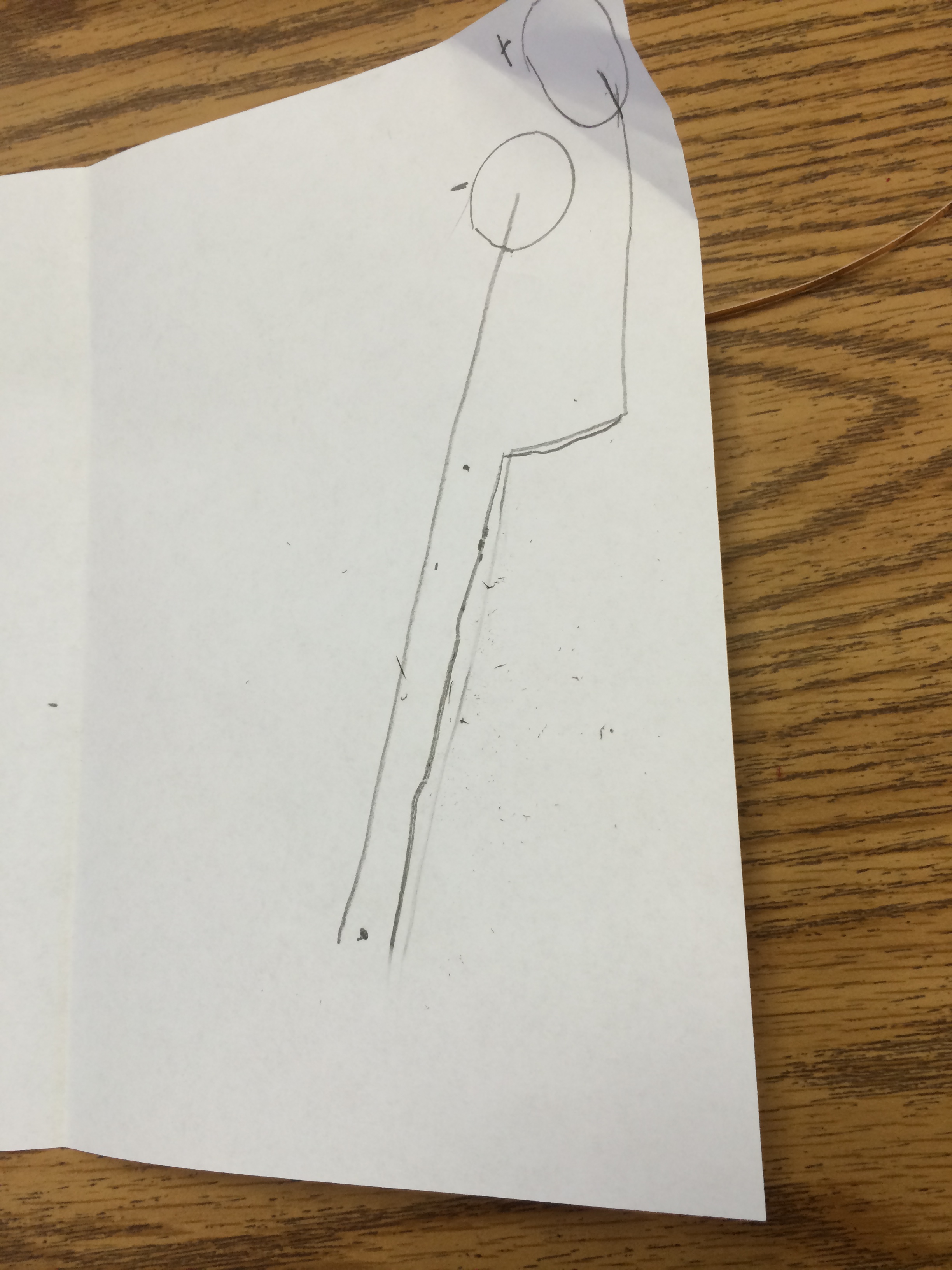
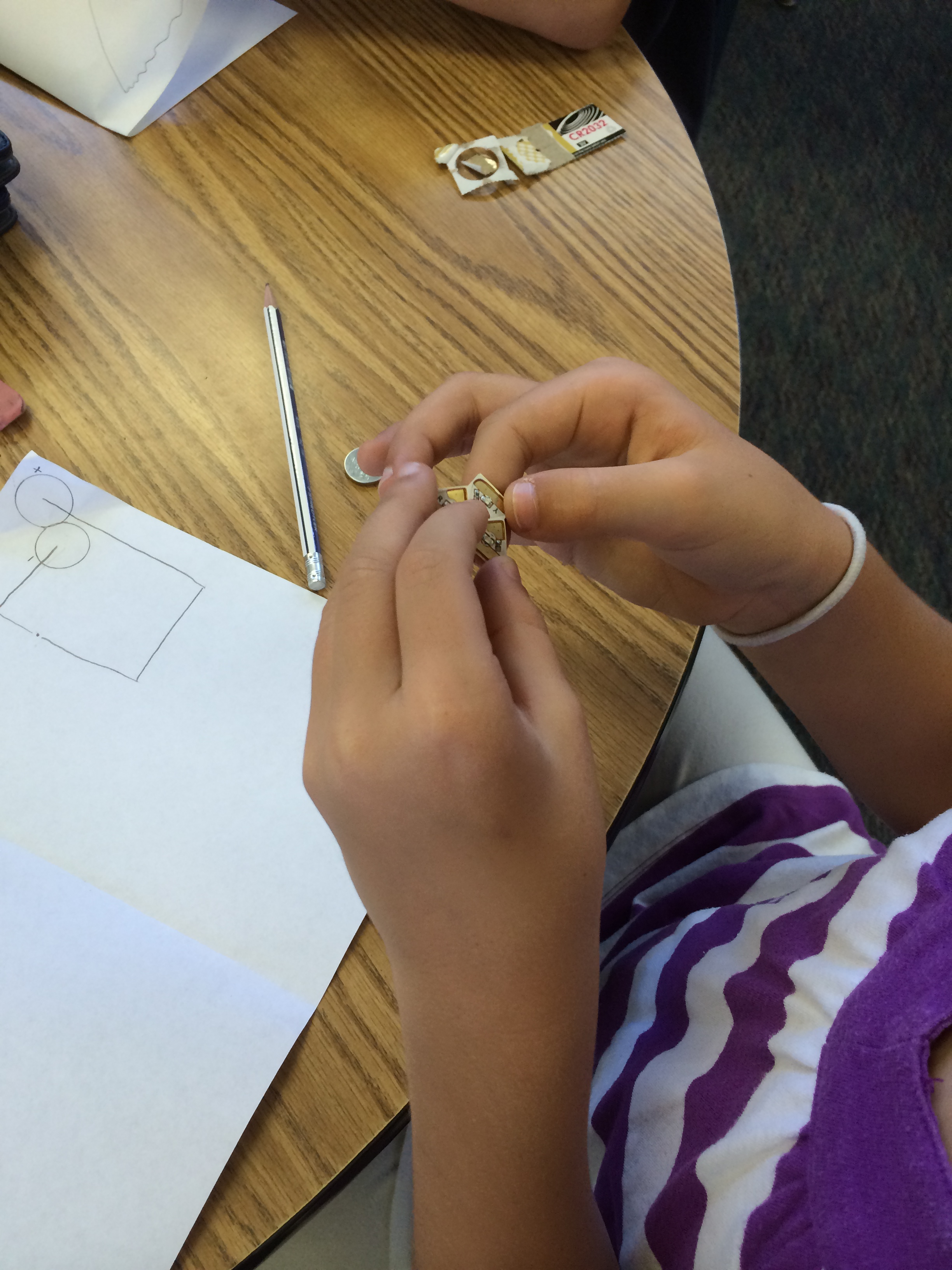
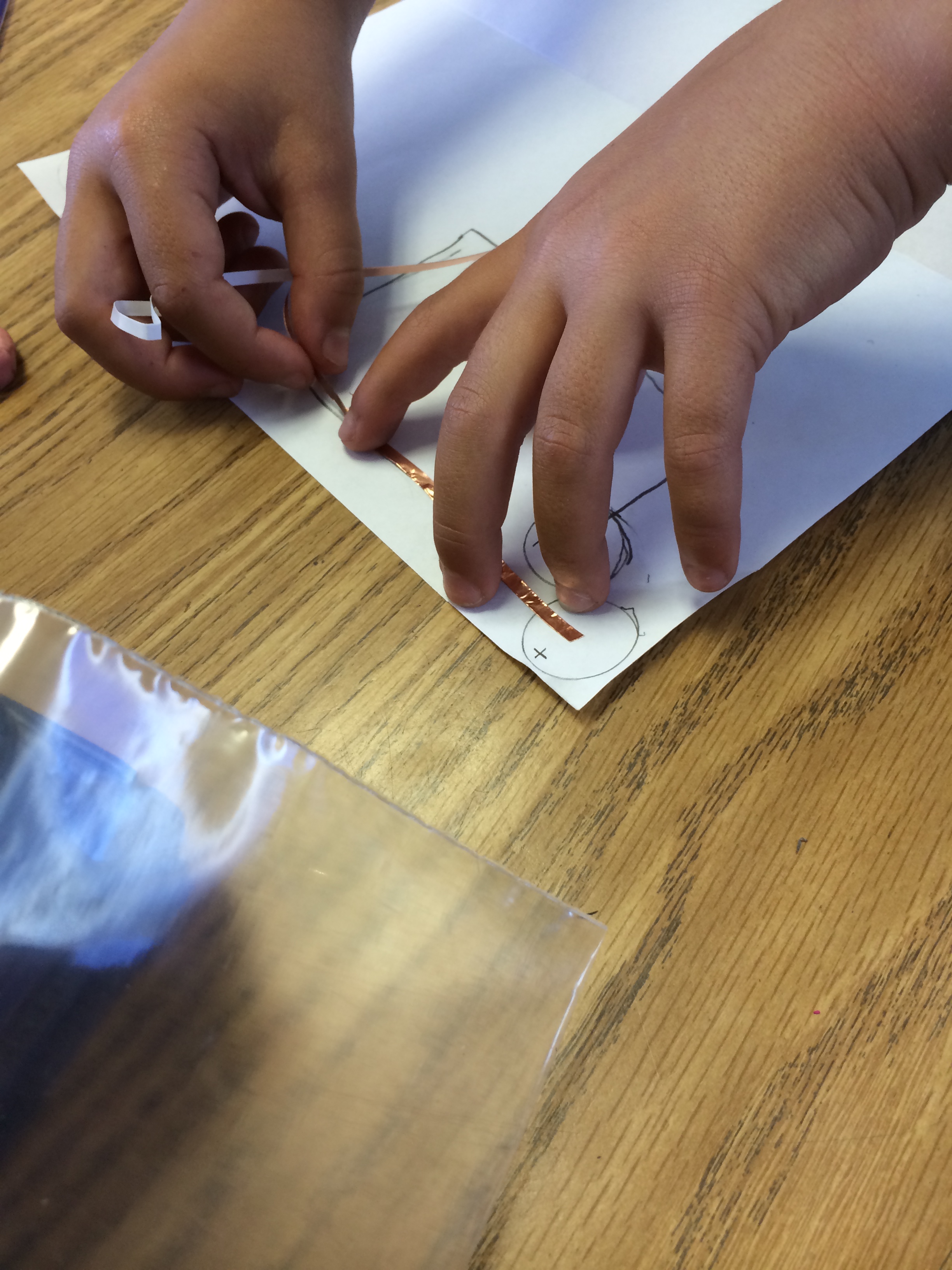
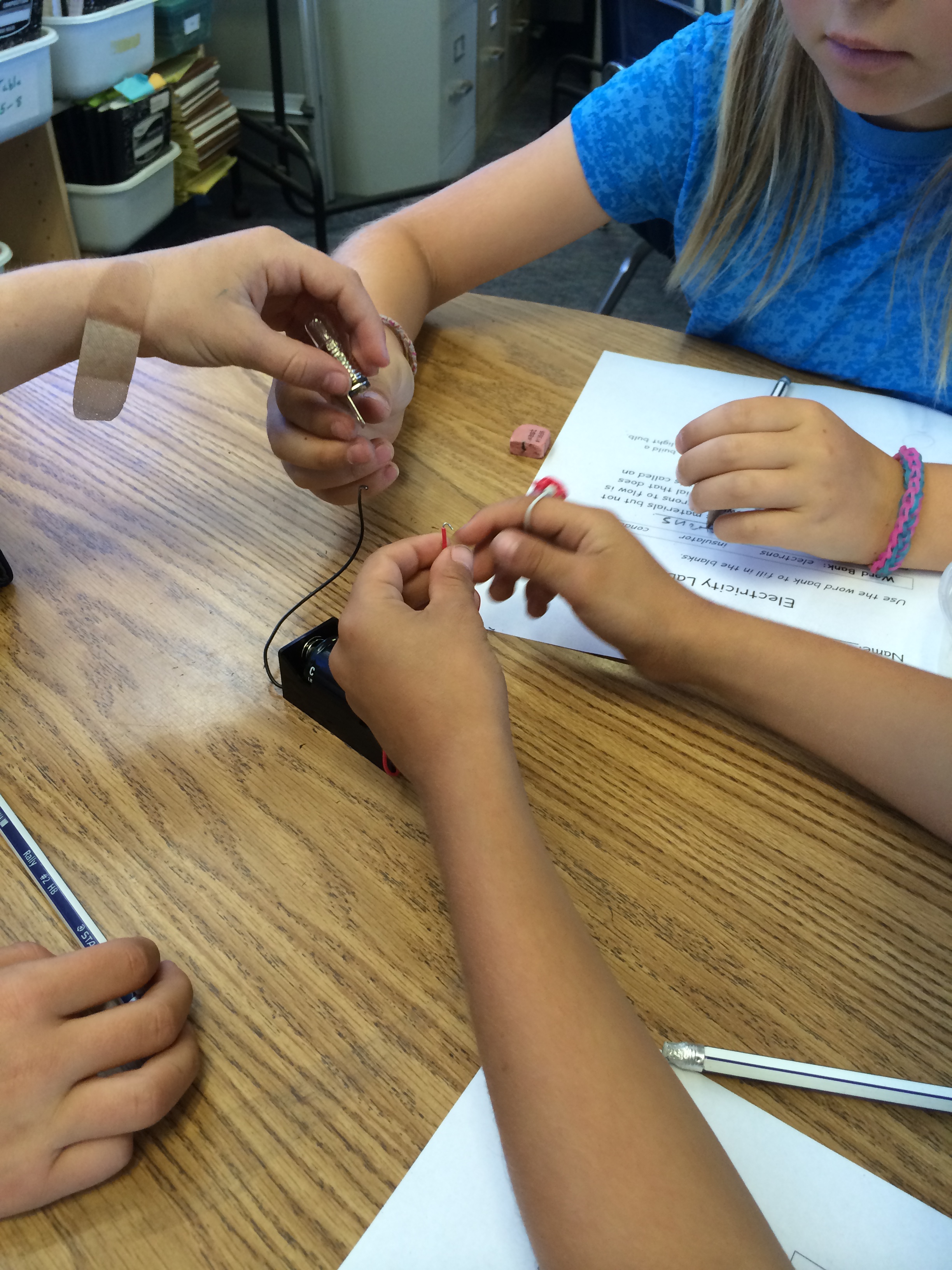
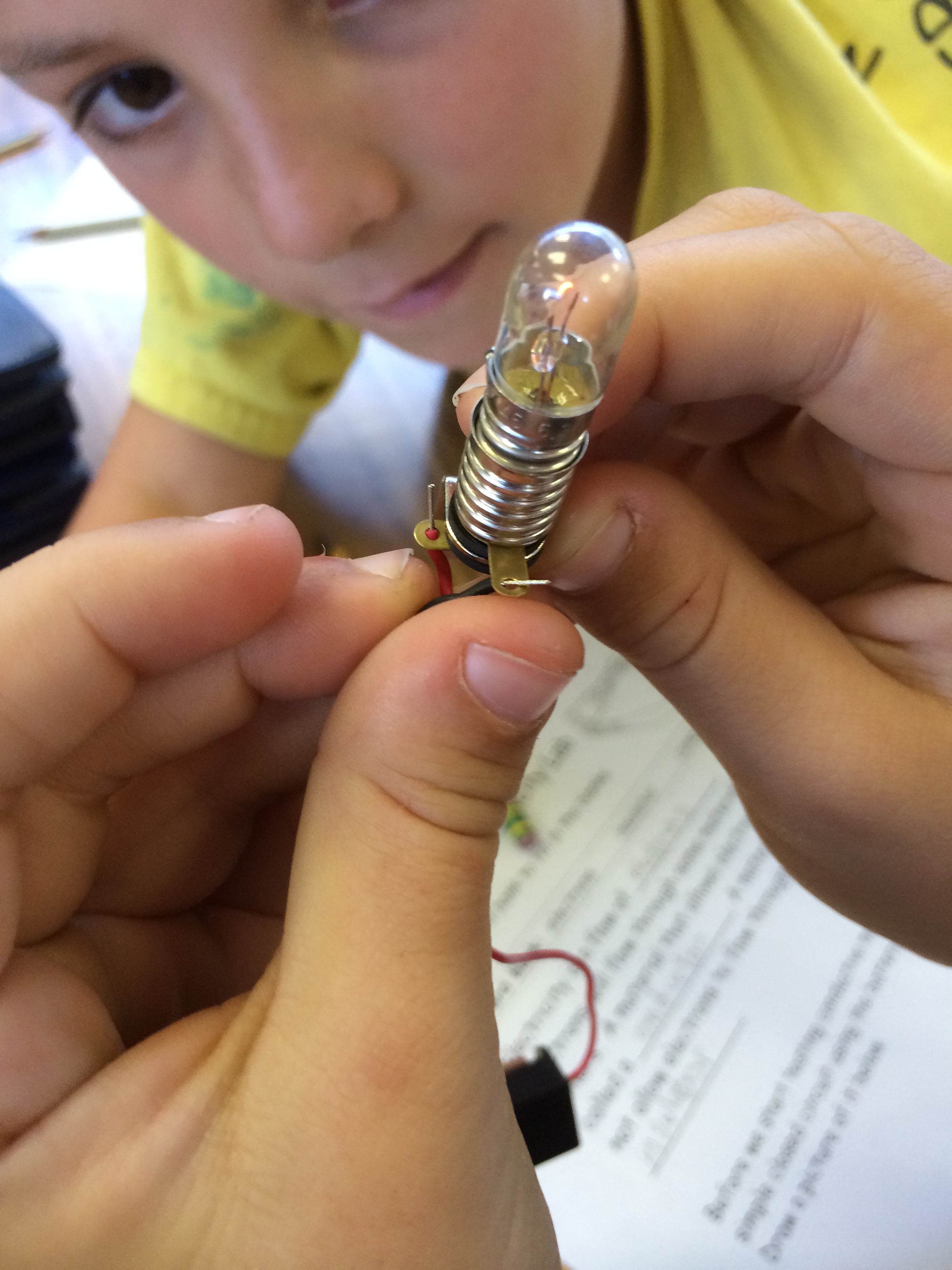
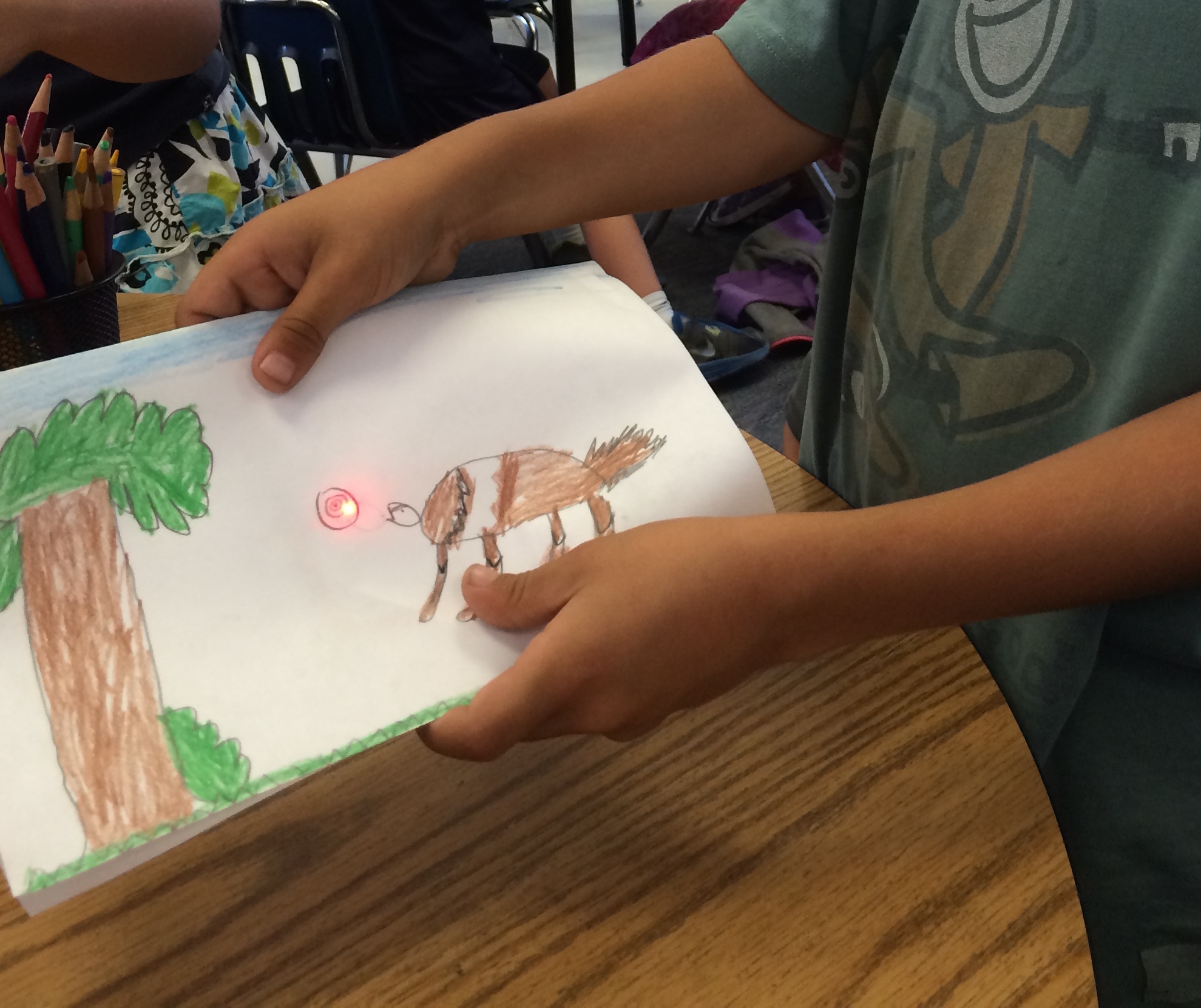
I wrote about my experience in Boston with paper circuitry here, and today we met with Jen Dick and David Cook to continue to build our relationship and thinking about the ways writing and circuitry enhance each other and might support student learning in and out of schools.  We began by talking about our own experiences with paper circuitry and the benefits and barriers to bringing it to our own contexts.  Lou had managed to secure some LED stickers from Jie in Boston and returned to his high school class in Northern California where he introduced his students to the paper circuitry project.  He described the success and excitement his students experienced and what he learned from both his students and his own children who also tried out the process.

We took our circuitry learning a step further and programmed mini controllers to make our LED lights blink on and off at intervals we selected.

photo-44

photo-43

We also learned about some other exciting new developments on the horizon for merging the science of circuits, technology with programming, and writing.  I still find myself thinking mostly about what students learn when they make a plan and then need to troubleshoot and iterate to get it to work the way they intend.  Systems thinking is a powerful tool that we employ throughout our lives across subject matter and circumstances.

Jie, the designer of the LED stickers, also Skyped with us after we worked with the circuits and we all thought together about how these stickers impact the experience of working with the circuits..and with the the experience of the creating of writing and imagery with the lights.  I appreciate Jie’s attention to the aesthetic experience of composing writing and art and how it is enhanced or impeded by the circuits rather than putting the circuits themselves at the front of the project.  By considering the work as a whole…light and drawing and writing…she reminds us that it is the integration of these elements that create the meaningful result.

The morning ended with the group thinking about how we might put these LED stickers to use back in our classrooms and at our writing project sites.  There was much more to the day…but that will have to be another post.

And I am left thinking about learning.  Those little boys on the plane, the book I was reading, my experience programming to create a blinking light all remind me that the best of learning is meaningful, active and interactive, and collaborative.  Even though I understand the basics of circuitry, sitting next to Peter and examining his working circuit informed my thinking…and since I ran out of time before completing my mini project, I will finish it on my own, at home. I’m confident that I know how to make it work and if I do run into a problem, Peter and my others colleagues are just a tweet or email away.  If you want to see Peter’s finished mini project, see his Vine here.

I can’t wait to share my experiences with my students and with my colleagues.  I look forward to exploring all the ways that writing can enhance and expand this circuitry work along with how the circuitry and lights can add another dimension to the writing.

The Power of Multiple Mentor Texts

Writing is hard work.  Some days the writing flows and I know how to put my words together to achieve the desired effect…but at other times I feel  stuck or confused or unsure about how to approach the writing task in front of me.

That’s where mentor texts come in.  I look for pieces written by others that do what I am trying to achieve…and study them to learn from those writers who are acting as my mentors. Sometimes I learn about structure and how to organize my ideas.  Sometimes I am inspired by word choice and craft elements.  Sometimes I notice text features and literary devices.

And for the young writers in our classroom, we work for find mentor texts to support their development as writers.  We like to use multiple texts, knowing that not all texts work for all students…and to show that not all writers approach the same kind of writing in the same way.

And sometimes the just-right mentor text sings.

Last week our students studied four poets and their poems about snow as they got ready to write poems about snowflakes.  We started with an old friend, Valerie Worth.  Her small poems are a treasure: short and rich, filled with imagery and powerful language.  And then we turned to an unusual mentor text…an “old” poem with some unfamiliar language.

On a Night of Snow

Cat, if you go outdoors you must walk in the snow.  You will come back with little white shoes on your feet, little white slippers of snow that have heels of sleet.  Stay by the fire, my Cat.  Lie still, do not go.  See how the flames are leaping and hissing low, I will bring you a saucer of milk like a marguerite, so white and so smooth, so spherical and so sweet–Stay with me Cat.  Outdoors the wild winds blow.

Outdoors the wild winds blow, Mistress, and dark is the night.  Strange voices cry in the trees, intoning strange lore; and more than cats move, lit by our eyes’ green light, on silent feet where the meadow grasses hang hoar–Mistress, there are portents abroad of magic and might, and things that are yet to be done.  Open the door!

Elizabeth Coatsworth

The first response from my students was, “What?”  We reminded them to focus on what they understood about the poem rather than what they didn’t…and they picked up on the “little white shoes” right away.  Then one of our students pointed out that each of the stanzas was told from a different point of view…the first was talking to the cat, the second was the cat talking to the Mistress.  With that comment, one of our third graders, M,  couldn’t contain herself!  “Oh, now I see it!  I want to try that!”

When we went to write, she started immediately.  M had already talked about the metaphor she wanted to try on…an idea about a blank canvas to represent the whiteness of snow…when we had studied Valerie Worth’s poem the day before.

Here’s her poem:

The Snowflake Outside

Snowflake, you have no choice but to fall. So keep dancing down like a ballerina, making the world empty of color like a frustrated artist’s blank canvas. Snowflake, keep whirling magically and descend daintily onto my sleeve. From a great sky you fell.

Yes, from a great sky I fell so let me keep falling forever and ever. Don’t let me land on the frosty ground. I want to have my life forever. I want to show my style and unique ways. I don’t want to land, melt, or be unnoticed. Let me keep falling and blowing with the wild whistling wind.

M

There’s magic when the just-right mentor text provides the just-right support for the writer. You can see how M used the structure of Coatsworth’s poem as a container for her ideas, images, and feelings about snowflakes.  Before she was introduced to this poem she had already done some writing about snowflakes, thinking about movement, metaphor, and imagery.  The idea of shifting the speaker inspired her writing and gave her the shape she was looking for.

Most of the time we try to avoid mentor texts that directly address the topic/subject we are focused on.  But poems about snow are plentiful and we had many choices of mentor texts about snow…and our students have little experience with snow and snowflakes (except those they made by cutting paper) beyond what they have seen in books, movies, and photographs since it doesn’t snow where we live.

I love when a mentor text nudges a writer to try something new and stretch her wings.  And I am reminded that writers need a variety of mentor texts to learn from…rather than a single model.

What mentor texts have you used lately?

photo_2-2

Work and Play

I’ve been accused–more than few times–of being a work-a-holic.  And maybe there is some truth to that notion, but it is because my work is so much fun that a lot of times it seems like play.

I headed out at the crack of dawn Wednesday morning to fly across the country to join my writing project colleagues in Boston for the National Writing Project Annual Meeting that is held every year in conjunction with the Annual National Council of Teachers of English (NCTE) conference.

20131120-231705.jpg

The Annual Meeting is an opportunity to gather with writing project people from all over the country, to learn from each other, to share ideas and reconnect.  And it is fun!

This conference begins by seeing old friends and learning about what is happening in their places and then offers more formal opportunities for learning from each other.

We’ll spend all day Thursday and Friday in more formal settings, thinking about our students and our teaching…and thinking about how to support teachers and their learning too.  We’ll consider writing in all possible contexts, across all content, across platforms, and across ages and experiences.  And even though we will think hard, write a lot, and at the end of each day feel exhausted, we will continue our conversations over dinner, walking to and from our hotels, over an evening cocktail, and maybe even into our dreams as we finally sleep.  Because these moments spent face to face with our colleagues from all over the nation are to be savored.  They are work and they are play.

We’re here, Boston!  Ready to work and play in this special place.

photo

Reach for the Sky

I spend many Saturday mornings immersed in professional learning.  This morning was our first meeting of this year’s SDAWP Study Groups (a hybrid of book study and teacher research).  Sixty teachers met this morning to participate in one of five groups…and the energy in the room was palpable!

In three hours we wrote, discussed our writing and the connections of our processes and preferences to the students we teach…and then broke into smaller groups to get to know one another, explore our new book, and make plans for reading and exploring ideas in our classrooms.  All this on our own time, because we want to grow professionally with others who are also passionate about teaching and learning.

As I was leaving, I noticed hang gliders and paragliders soaring in the sky near the university.  I remembered that the Torrey Pines Gliderport turn off was nearby, so I turned and followed the road down to a dirt parking lot.  And there, along the cliffs overlooking the Pacific Ocean, was a spectacular view of the gliders and the ocean!

photo_1

In spite of the cooler weather (after our 80 degree temps earlier in the week), the conditions were perfect for gliding…and for watching and photographing the gliders in action.

photo_2

While I have no real desire to glide over the beautiful beaches of San Diego, I understand the urge to fly…to experience the freedom and excitement of soaring with the wind currents and looking at the world from a new perspective.

In some ways my experience in study groups this morning was a lot like hang gliding.  There is energy and excitement in gathering with other interested educators to continue learning together.  Interactions with teachers of all levels (K-college) and a variety of schools, districts, and teaching demographics offers new perspectives and views of teaching.  Rich conversations stimulate thinking and encourage actions…we can’t wait to come back next month to share our beginnings and continue our conversations and learning.

photo-3

What conditions for learning allow you to soar?  How do you set up those conditions for your students?

Coming to a Close

As I wrote last week (here), beginnings and endings are challenging for young writers.  They often dive right into the heart of the writing…and then end abruptly when they come to the end of their content.  “The End” seems like a perfect ending for many of my students.

photo-9

And so…in an attempt to help our students with both beginnings and endings, we turned to some mentor texts to study and learn from.  In my work with the San Diego Area Writing Project (SDAWP), I am repeatedly asked for lists of mentor texts to use with students.  And I repeatedly remind teachers that great mentor texts are often within reach…right in their own bookshelves!

I do admit to being a bit of a book addict…constantly on the lookout for wonderful children’s books.  Books that are beautiful to look at.  Books that contain language that sings from the pages.  Books that present information in interesting and accessible ways.  And I use them as mentor texts…just like I use excerpts from text books, articles in the Scholastic News, texts from the internet…

Back to teaching conclusions…  Today we returned to the same books we used to teach introductions.  We revisited the graphic we created to remind students the importance of introductions and conclusions… (Here’s a rough sketch)

photo-8

The point of the thought bubble as a symbol for the conclusion is that we want to leave the reader thinking.  And so we studied our mentor texts with that in mind.

We started with Life in the Rain Forest, a Smart Words Reader by Scholastic.  This book concludes with an entire page that goes back to the big picture of the importance of the rain forest.  It ends with these last two sentences:

Many of the plants and animals in this book are in danger of becoming extinct.  Only by learning about rain forests can people work to protect them.

Students decided that was a “learn more” ending.  Then we turned to Let’s Go Rock Collecting by Roma Gans.  We decided that this book’s conclusion was an invitation to do something.

Rock collecting is fun.  And one of the best things about it is that you can do it anywhere. Wherever you go, try to find new rocks and add them to your collection.

In What Do You Do When Something Wants to Eat You? by Steve Jenkins, we noticed the use of a question that asks you to apply the information learned from the text.

What would you do if something wanted to eat you?

And a Scholastic News article from the October 28th issue entitled Supersized Pumpkins offered this ending.

Now Wallace is back in the pumpkin patch working on his next record breaker.  “I have my sights set on 2,500 pounds!” he says.

We decided that conclusion made us curious about what would happen next.

With those examples in mind, students returned to their writer’s notebooks to try out their own conclusions.  With the piece they had written about animal defenses in mind, they set out to “try on” some possible conclusions.

In some ways we made this a bit hard.  We didn’t give students back the writing they had done previously about animal defenses–so they had to depend on their memory.  But then, last week when we did give back the writing we had a number of students “forget” to focus on the mini lesson and instead either copied what they had already written or continued on from where they left off.

So at the “stuck” spot, we asked students who weren’t stuck to share their early attempts at conclusions.

Here’s a few examples:

From a third grader:  “Every single animal wants to stay alive…hiss…and some animals are defending themselves right now!”

From a second grader:  “All the animals try to stay alive and use their defenses.  One might be using one right now…you never know!”

From a first grader:  “Would you play dead of something wanted to eat you?”

Another third grader:  “Have you even seen an animal use its defense?  Did it play dead? Did it run? Did it roll up in a ball?”

Another second grader:  “What do you know that I don’t about animal defenses?”

I feel like it was a good first attempt.  We’ll continue with another try with a different topic tomorrow.

So here’s what I’ve learned.  Introductions and conclusions are hard.  It takes study and practice to figure out how to make them work in our writing.  And we need to experiment to see what the possibilities are.  In our class, we plan to continue to revisit introductions and conclusions throughout the year to help our students internalize this important aspect of their writing.

I also know that there is no “magic” mentor text…and in fact, especially with things like beginnings and endings it is important for students to see that there are multiple approaches rather than a “right answer” or formula.  So I will continue to “read like a writer” and mine everything I read for its potential as a mentor text…for introductions, conclusions, language use, grammatical constructions, use of evidence and examples, and more.

What mentor text is your current favorite?  How do you use it with your student writers?