Tag Archives: writing

Celebrating 100 Posts!

I never would have believed when I started this blog way back in July that I would get to 100 posts…and except for one day a week or so ago, all those posts were consecutive days!  So to celebrate, here are some thoughts on the value of blogging…and writing every day.  (And a silly picture of a balloon I saw at the grocery store)

20131014-193420.jpg

1.  Writing every day gives me authenticity as a writer.  I’m not just talking about the value of writing–I am “walking the walk” of a writer.  As my friend Janis stated in her blog post yesterday,

We must write when we are inspired, and we must write when we are not. We need to feel the joy and the pain of the process in order to understand what our students experience.

I work through my own blocks and figure out ways to find topics to write about and put words on the page.  I am also more aware of the writing of others and notice how they put words together.

2.   As a blogger, I have joined a community of other writers.  I would never have believed that I would have 99 followers to my blog…most of whom I have never met.  And yet these new friends encourage my writing and my photography by their mere presence.  And I’ve come to realize that people read my blog even when they don’t make their presence known.  I get little hints now and then from an unexpected reader and I realize again that my audience stretches beyond me.

3.  Blogging has taught me the value of commenting on other people’s blog posts.  I have definitely been guilty of reading blog post after blog post…and never commenting.  As a blogger myself, I know that comments can push my thinking and increase my motivation to write.  I now take the time to comment on a regular basis and I read blogs differently–always looking for the ways bloggers make connections and create energy around their posts.

4.  Blogging pushes me as a writer and as a photographer.  My photography inspires my writing and my writing inspires my photography.  Both practices encourage me to look closely at my world and pay attention to the little things.  And both have become regular practices in my life…habits! (The good kind!)

5.  Blogging connects me.  I am producing content on the web as well as consuming content.  I am more connected to other educators…all over the world, and more conscious of sharing ideas and resources.  I join in with challenges that other bloggers post, linking my blog posts to theirs…and inspiring some different kinds of writing that I might not undertake on my own.  I continue to look for ways to connect, to learn from others, and to share with others. That is the heart of being a connected educator.

The timing couldn’t be more perfect.  I am celebrating my 100th blog post in the middle of Connected Educator’s month!

Are you thinking about blogging?  Start small…and keep at it.  I’d love to know what you find valuable about blogging.

Ordinary

Today, out of necessity, I had to scrap a plan and invent another without notice.  For teachers, this is something that happens with some regularity and most of us pride ourselves on our flexibility. And I love it when that spontaneous plan blossoms into a wonderful learning moment.

We always have picture books at the ready to read to our class.  Some are set aside for specific purposes and lessons, others we know we want to read but are waiting for the perfect time to present itself.  Last year we read Spoon by Amy Krouse Rosenthal–a book that our students loved.  We revisited it a number of times throughout the school year for different purposes…from mentor sentences to a situation for opinion writing.

At the end of the year, I came across a new book by Amy Krouse Rosenthal: Exclamation Point. So today, in that moment when I needed a plan at a moment’s notice, I picked up Exclamation Point, reminded my returning students (two thirds of them) that this was the author of Spoon, and started to read.  I love those moments when each student’s attention is fully engaged…and they were hooked by the bright yellow cover and the whimsical smiling exclamation point. They noticed right away that there wasn’t a title…at least not written in words. The exclamation point itself stood as the title.

15815400

We read and discussed and noticed and connected all the way through the book.  We delighted in the words and the pictures and the message.  And we were inspired to write our own stories about punctuation.

And then later in the day we managed to get packed up and ready to go home with enough time for a book before the dismissal bell.  Overwhelmingly, students wanted me to read Spoon. It was sitting near Exclamation Point…and suddenly today became the day for a mini author study.  The second and third graders were treated to an old friend, and the first graders were anxious to get acquainted!

After reading, students volunteered their observations, connections, reactions, reflections. They had so many thoughtful comments and ideas for their own writing.  And one student pointed out that Amy Krouse Rosenthal wrote about ordinary things…in wonderful ways.  We started thinking about all the ordinary things we might write about and how our writing could transform them beyond the ordinary.  They were excited to write as the dismissal bell rang today…I hope they sustain that excitement long enough to actually get to the writing.

I’ve also been noticing the power of the ordinary.  Yesterday’s post was about the transformation of an ordinary photo into something I was willing to name as art.  And today on five minute friday the prompt is ordinary.  Today in the classroom the ordinary business of reading a book because an extraordinary opportunity to notice the magic of writers and writing…and turned students into active learners making meaning for themselves.  Today I was reminded that ordinary is a state of mind, and each of us has the power to re-look and re-see the ordinary in new ways.  I love when that wonderful learning moment in the classroom means that I learn too!

Planting Seeds

We planted seeds today…in the garden and in our writer’s notebooks.  There are many garden metaphors about learning and students–especially at the elementary level and as I watched my students today, I can understand why.

The beet seeds were small and for some of my students, hard to hang onto.  Some seeds slipped to the ground, blending in with the earth.  Those students needed another seed to plant in our garden bed.  Other students delighted in the tiny seeds and noticed every detail. They were able to keep track and carefully nestled the seed into the soil.

photo

During our writing lesson a bit later, I noticed that some of my students took the lesson on similes and easily “planted” their ideas in their writer’s notebooks.  A few stretched even further and played with language and the technique of simile to create fresh and interesting images.  Others had dropped their “seeds” and needed some extra support to “plant” a seed or two in their notebooks.

In the garden, after planting our seeds, students carefully watered the soil to create an environment to support the seeds’ germination.  They managed the heavy watering cans and negotiated turn taking as fledgeling gardeners.

photo-1

In the classroom, we left our writing seeds to germinate too after carefully sowing them in our notebooks.  Time was short and ideas were flowing…students can’t wait to come back to share their writing and extend their ideas.  This is an environment ripe for more writing tomorrow! Today we used Stubborn as a Mule and Other Silly Similes by Nancy Loewen to “prime the pump” and get us thinking about similes and how we might use them in our writing.

We planted beets, peas, arugula, spinach, beans, kale, and sunflowers today.  As our gardening teacher reminded the kids, we plant all the time because we want to eat all the time.  And as writers and learners, we need to write and play with language and writing so our ideas and stamina and capacity for writing and learning will also grow. We celebrate the National Day on Writing in October each year as a reminder of the importance of writing in our lives and learning.  But just as we don’t only plant our gardens in October, we can’t just plant our writing in October.  We have to write all year long, in lots of ways for lots of reasons to nurture our writing…and our writers so they too will grow strong and tall.

photo-2

How do you nurture writers and learners?  What seeds did you plant today?

Making Rockets and More…

I spent yesterday at UC Davis at a conference we threw for ourselves to celebrate the 40th anniversary of the California Writing Project.  The conference was an opportunity to teach each other strategies, structures, and approaches that we find successful at our local writing project sites across the state…and to learn together.  And we did that…and more.

At lunchtime there was an informal “making” session led by the director of the Northern California Writing Project.  Using transparency film (Finally!  A practical use for the boxes of the stuff schools have sitting around since document cameras have replaced overhead projectors.), colored electrical tape, cardboard, and hot glue, we crafted rockets (using a piece of pvc pipe as a mold).

photo_3

We would then test them by firing them from a bicycle pump, air powered launcher.  (Directions on Instructable…here) You’ll notice we sealed the tops and taped around them in hopes they would soar…rather than explode.

photo_2

When our rockets were ready, we headed outside with the launcher and our rockets to test our creations.  We had to place our rocket on the launch pad and then pump with the bicycle pump to build pressure in the system.  We aimed for between 50 and 60 pounds of pressure.

photo-4

After pumping, we pressed a button to release the pressure into our rockets and… POW!!! They shot high into the air and then turned down to land in the grass.

photo-5

I’m looking forward to offering my students more opportunities to build and test and tinker.  They might be building and launching rockets some day soon.

And building these rockets in much like the work we do in the writing project. At the San Diego Area Writing Project we build programs to support teachers and students with writing and writing instruction.  Then we test them out, paying close attention to how they “fly”–what design elements are working, where do we need to tweak our design?  What can we do to help these programs and approaches meet the “mark” we are aiming for?  And then we continue to tinker. How can we make this work better?  What improvements are needed?  Which teachers and students are we reaching?  Who is missing?

I had a lot of fun building and testing rockets with my friends and colleagues yesterday.  And I love building and testing programs for teachers and students.  Writing itself is a lot like building a rocket.  Writers need opportunities to compose and test, get some feedback, and then tinker (or start over) until it gets closer to the desired target.  Sometimes it takes some tangible tinkering with rocket design to remind me of all the tinkering that happens in my life and in my classroom and in our writing project.

So, go out and tinker today…  What rockets have you launched lately?

Informational Writing

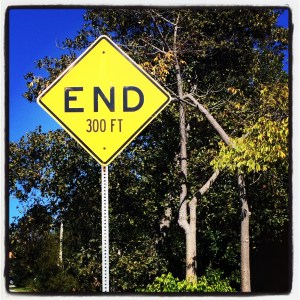
I’ve been noticing that my world is filled with text, much of it informational. When I look around I see signs that explain rules, warn me of danger, remind me of safety, let me know what is going on, and more.

20131004-234144.jpg

I’ve noticed that much of the informational text I see includes icons or images, sometimes even diagrams. It makes me wonder if this kind of text is meant to be read or merely noticed. By noticed, I mean put on warning that there are rules or dangers to heed…and the presence of the text implies that the risk, whatever it is, is yours. A notice of liability, of sorts.

This sign I saw in the Sacramento airport car rental center seems the kind of informational text that exists to fend off questions and complaints.

20131004-234750.jpg

I wonder who writes the texts like this. Is it someone’s job responsibility? Does it go through an revision and editing process? Who determines the clarity?

And what about something like this?

20131004-235159.jpg

Is it informational or just entertaining?

Tinkering with Design

Tinkering…  My students experimented with design this week…and then tinkered with their design after talking about it with their classmates.

Based on a nonfiction article about how zoos are experimenting with keeping their animals stimulated–including designing toys based on animals’ natural behaviors, we invited our students to try their hands at designing a toy for a favorite zoo animal.

They drew and labeled and explained their designs.  And evaluated their own and classmates’ designs by asking a few questions:  Is it safe for the animal?  Are the size and materials right for the animal?  Is it fun for the animal?

And then, with feedback in mind, students returned to their designs again…and created a new iteration.  They either started from scratch or improved on their original design.  This design was created by a six-year-old with an elephant in mind!

photo-2

I’m looking forward to our next tinkering opportunity–when students will take some materials and design a “thing” from them.  I can’t wait for them to start making!

Make it Write: October’s Photo-a-Day Experimentation

Maintaining an extended photo-a-day practice (mine has gone on for over a year now!) means figuring out how to keep it interesting and creative.  I depend on my friends to help me think through new ideas and consider whether my ideas are feasible or not.

So Abby suggested making this month about writing since it is the month of the National Day on Writing.  And I was thinking about what that would look like.  I know I don’t want to have to take pictures of hands and pencils all month!  But I love the idea of exploring all the ways we “write” our world.  What inspires our writing?  What impedes our writing?  Where do we find people writing?  Where do we find writing in the spaces we inhabit?  Where is writing absent? What is the writing on the wall?  (How will I incorporate macro photography with this prompt?  Hmmm….)

So all month in our photos I invite you to consider writing in the broadest sense.  Where will this open-ended experiment take you?  Will you find it restrictive or inspiring?  And as always, take some time each week to reflect on your photos, write a blog post or comment sharing those thoughts, select a favorite photo, or create a collage and share it on this post.

And here’s a photo to get you started:

photo

This is Jack, one of my two cats.  He’s wanting my undivided attention and definitely interfering with my writing as he snoozes on my computer!  (He even managed to type a few letters with his body in the process of being in the way!)

Can’t wait to see all the ways that writing can be interpreted in a photo…

Be sure to post your photo each day to Instagram, Twitter, Facebook, or Flickr using the hashtag #sdawpphotovoices.  (You can post anywhere—if you want others to be able to follow your photos, Instagram and Twitter are best!) For more information about posting click here.  At the end of each week you’re also invited to curate your pictures from the week and select one to highlight.  You might post it on your blog along with some musings about why you selected it.  If you don’t have a blog of your own, you have a couple of choices—you can create a blog (be sure to share it with us by including your blog address in the comments here—or better yet, tweet it using the hashtag #sdawpphotovoices) or you can post to the SDAWP Voices blog.

As the month goes on, come back to this post to link up your curated photos!  Click on the link up button below and add your favorites.  Or post a comment with an image on this post!

Mentor Text: September Is…

As a teacher of writing, I see mentor text everywhere.  It exists in expected places–like well-written children’s literature and in less traditional places like Youtube videos, blog posts, and even billboards and advertisements.  The tricky part about using mentor text to support writers is finding the right mentor text to use in the situation at hand.  With that in mind, sharing our successes with mentor texts is a great way to help each other as we make our own classroom selections.  The 113 Mentor Texts Challenge over at SDAWP Voices attempts to do just that–create a collection of mentor texts that educators from all levels and all over are using.

Early in the school year in addition to doing some sentence level work, we also like to use mentor text to support students’ generation of whole text.  After examining a number of texts we had for consideration, we decided last week to go with a poem to support our young writers. Bobbi Katz wrote this poem called September Is that describes some qualities of the beginning of school that are easy for students to relate to.

September Is

September is

when yellow pencils

in brand new eraser hats

bravely wait on perfect points–

ready to march across miles of lines

in empty notebooks–

and

September is

when a piece of chalk

skates across the board–

swirling and looping–

until it spells your new teacher’s

name.

Bobbi Katz

As we studied this piece as a class, students noticed that the pencils were described like people…with hats and ready to march.  (They do know that is called personification) They noticed the use of swirling and looping to further describe the skating of the chalk.  They noticed that Bobbi Katz didn’t just make a list of things in school, she picked two and then went into more detail about each of them.

As students got ready to use September Is as a mentor text for their own writing, we also talked about other ideas besides September as a focus for the writing.  They were thinking about Fall Is and School Is as other possibilities.

Students began to generate ideas on that first day and then set their writing aside.  The following day we asked a couple of volunteers to share their work in progress as we noticed what they were doing well.  Students definitely were including interesting verbs and expanded descriptions.  We all then went back to work…even those who thought they were done…to consider stronger words, to add more description and detail.

And here are a couple of student-generated drafts.

“E” — a first grader — wrote this:

Fall Is

Fall is Halloween when ghosts glide through the night sky and when leaves glide off the trees.

“S” — a third grader –wrote this:

Fall Is

Fall is…

when the reddish-brown leaves are too tired of hanging hopelessly on the weak branches so they twirl and spin in the air before they carefully float right on to the cold grassy land full of new seedlings that are going to grow in the summer.

Fall is also when you scoop all of the white tear-shaped seeds out of the big round orange pumpkin and carve a face for the spooky night when ghosts haunt the night sky and children in costumes are running about trick-or-treating and scaring everybody.

I feel like my students captured fall in their writing and that Bobbi Katz supported their ideas. They were able to use her basic structure and let her strong words and images guide them to their own compelling compositions.  That’s the power of mentor text!

photo-3

A Question? A Story?

I took the long way home from work today.  It is also a scenic route with beautiful vistas of the ocean bathed in the early evening sun, signature Torrey Pines gracing the center planters, and stop signs at regular intervals instead of evening freeway rush hour traffic.

My photography this week, scaly is the prompt, has not been terribly inspired.  I’ve been busy–too many meetings and not enough time to immerse myself in the projects that need attention, and require thoughtful time to get them done.

So on my way home, on this scenic route, I made a short detour thinking I remembered a piece of public art that just might fit my scaly search.  But the statue I remembered wasn’t there…so I drove a bit further and saw this house.

photo-2

What?  What are all these poles for?  If you look closely you’ll see they have little flags on them. Is this construction of some sort?  Installation art?  A way to keep the birds away?

I think this photo would make a great writing prompt!  What story do you see?

Looking Beneath the Surface

I suspect my neighbors thought I was crazy as I crawled around the lawn in my skirt when I got home from work today.  I had spotted some new mushrooms growing this morning and noticed that one had a hole where you can see through to the inside.

After unloading my work bag and feeding my cats, I attached the macro lens to my iphone and set out to get a closer look at the underside of the mushrooms.  One had been kicked over and lay with the underside exposed.  It was already turning brown on the exposed texture that is in such contrast to the smooth outside surface.

photo

And then I got down on my hands and knees to look through the hole along the edge of the mushroom top.  I peered through first with my eye…and then with the lens of my camera trying to capture the interesting layers I spied beneath the surface.

photo-2

These mushrooms remind me that what I see on the surface doesn’t always capture the complexity of what lies beneath.  My classroom is like that too.  There is so much about each of my students that isn’t visible unless I take the time to bend down and look carefully beneath the surface.  And sometimes I need a special tool, like my macro lens, to bring those interesting layers into focus.  Sometimes that tool is those informal conversations that I have with the students near me as we walk in lines.  Other times it is the opportunity to listen into a discussion a small group is having about a math concept or a story we have read.  Oftentimes it is through my students’ writing that I learn the most.  Their stories reveal their interests and their experiences…and show me what they know about reading and writing and science and sometimes even math and social studies.  Looking at a piece of student writing is like looking at the underside of a mushroom.  When you take the time to get beyond the surface, there are layers and layers that unfold and reveal new information that helps me know my students and helps me help them learn.

What have you learned from a student lately?