Category Archives: teaching

Kindness: A Recipe

When I woke up this morning I discovered that today is World Kindness Day. I don’t teach on Thursdays, so I didn’t have any plans to engage students today–and to be honest, I didn’t even know it was World Kindness Day until I saw it pop up on social media.

The irony is that we have been celebrating kindness in our classroom–both last week and this week. Last week, after reading Brett Vogelsinger’s blog post on Moving Writers titled Poetry Pauses for Peace Day 2 I couldn’t wait to share the mentor poem, Peace: A Recipe, with my young students. My students have a sense of recipe–they make cookies and muffins with their parents–but making a recipe for something abstract like peace was new for them.

Even before reading Anna Grossnickle Hines’ poem, I had asked my students what ingredients they might include if they were making a recipe for kindness (Brett had suggested having students write a recipe for hope, but kindness felt like a concept my first grade students would have more ideas for). There was no hesitation as hands began to raise. Honesty was the first ingredient mentioned. How much would you include, I asked? A pound was the answer. Then students contributed other ideas: caring, sharing, and including others. Every time I asked for an amount, the response came back in pounds! Even when I suggested maybe a teaspoon or a pinch–the answer was no, 5 pounds or 3 pounds or some other number of pounds. Clearly students thought we needed a extra large batch of kindness!

Studying Hines’ poem, we noticed words that were about cooking, expanding their understanding of recipe components. We underlined those words and drew illustrations for the poem before heading out for lunch. Time got away before we had time to write–but I kept my plan for writing in the back of my head to come back to when I had time.

Monday was a strange day this week. We had school followed by a holiday on Tuesday (Veterans Day)–my students had two special classes on Monday, so my time with them was limited. But…I did have time to come back to the idea of writing a recipe for kindness. Before we began we brainstormed a variety of cooking words and then students got to the writing. They started with ingredients (that expanded past the ideas we had last week)…and they wanted to be done. But, I reminded them, you have to say what to do with the ingredients. And they did.

There was so much success, even from my more reluctant writers. In celebration of World Kindness Day, here’s one example:

Kindness: A Recipe

To make kindness 

you put a pinch of honesty

And a spoonful of helping 

And a handful of respect

And you mix it

And you spread it around the world

And that’s it.

Thanks Brett for the nudge and Anna for the inspiration. And to all the first graders in my class, I’m excited that you are the ones cooking up kindness to spread around the world!
Time to #WriteOut!

I love October. The weather is warm–it’s still shorts weather. Many of the tourists have gone home, leaving the beaches and the freeways to the locals. My first graders are starting to believe they are writers–and it’s time for #WriteOut! #WriteOut is a partnership between the National Writing Project and the National Park service–a two week effort to encourage everyone to get outside, explore the nature around you, and write.

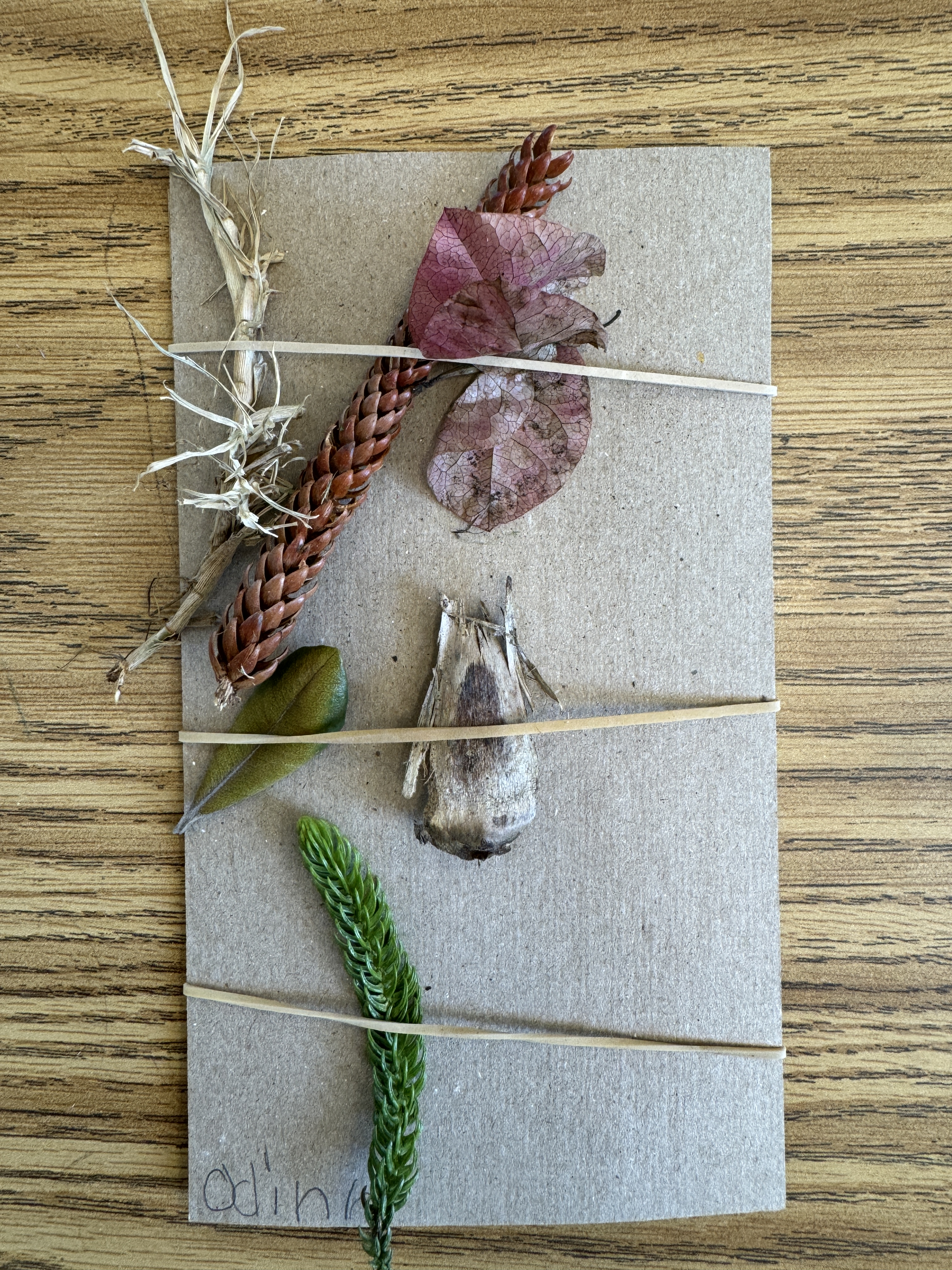
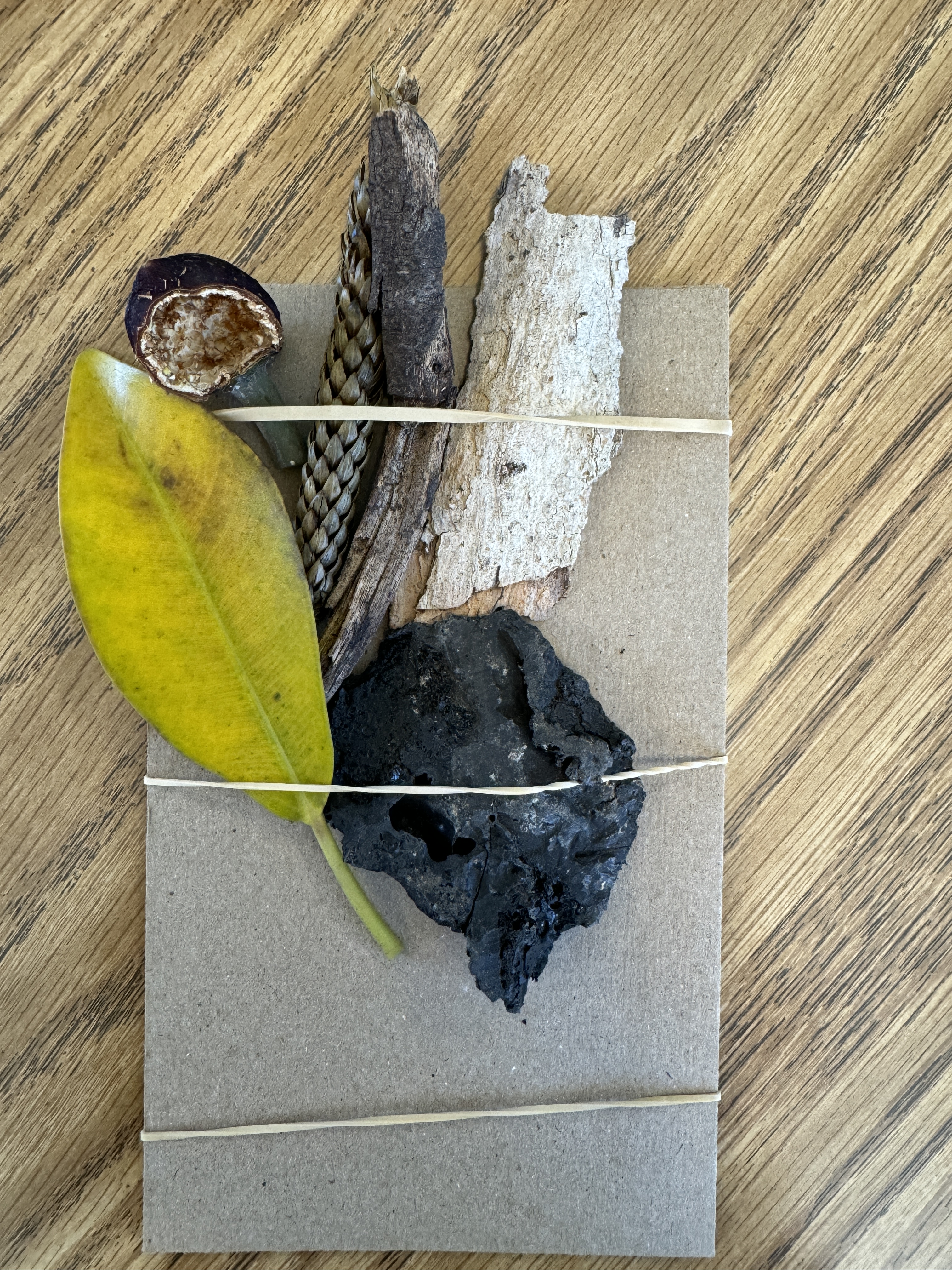
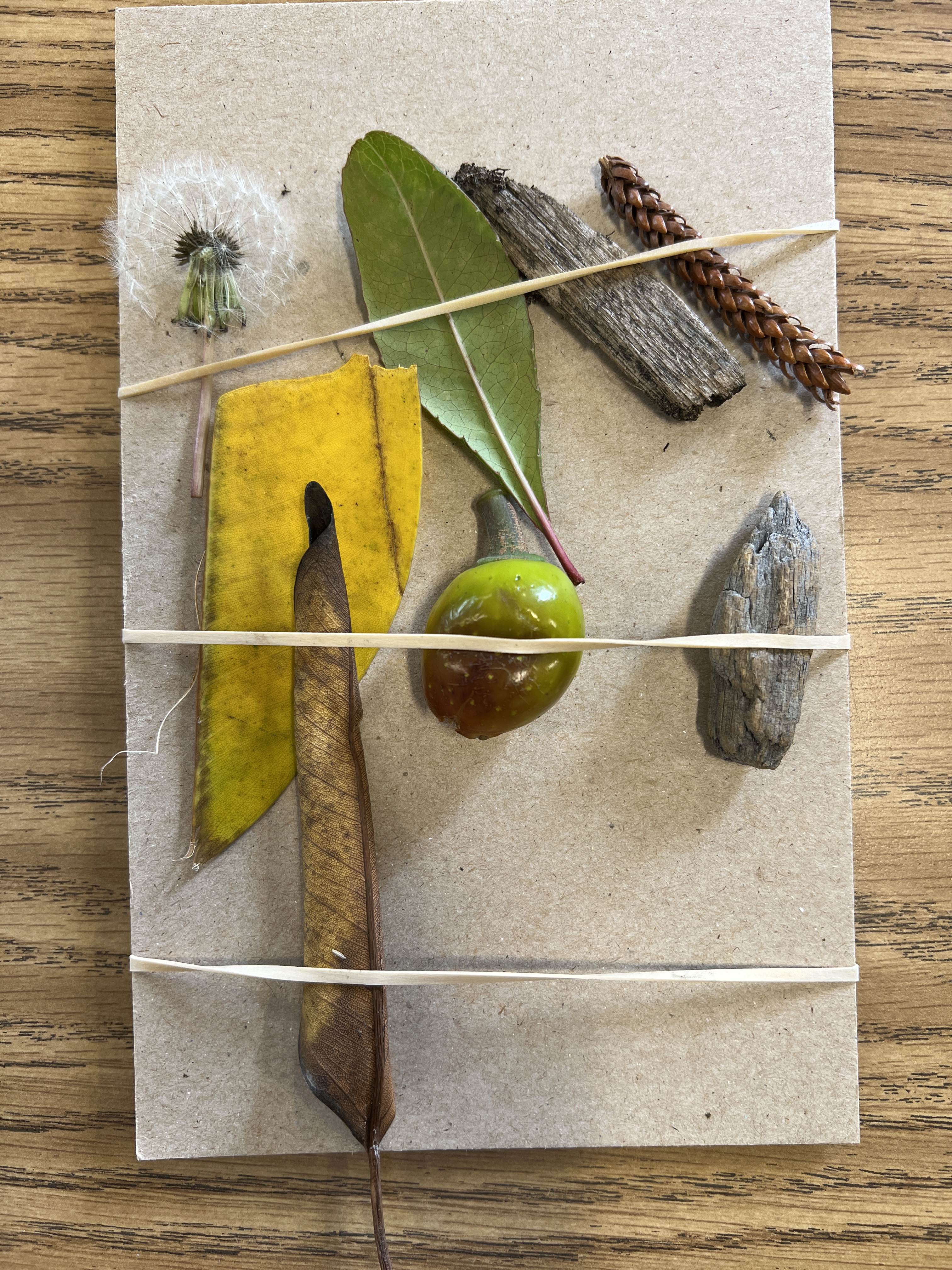
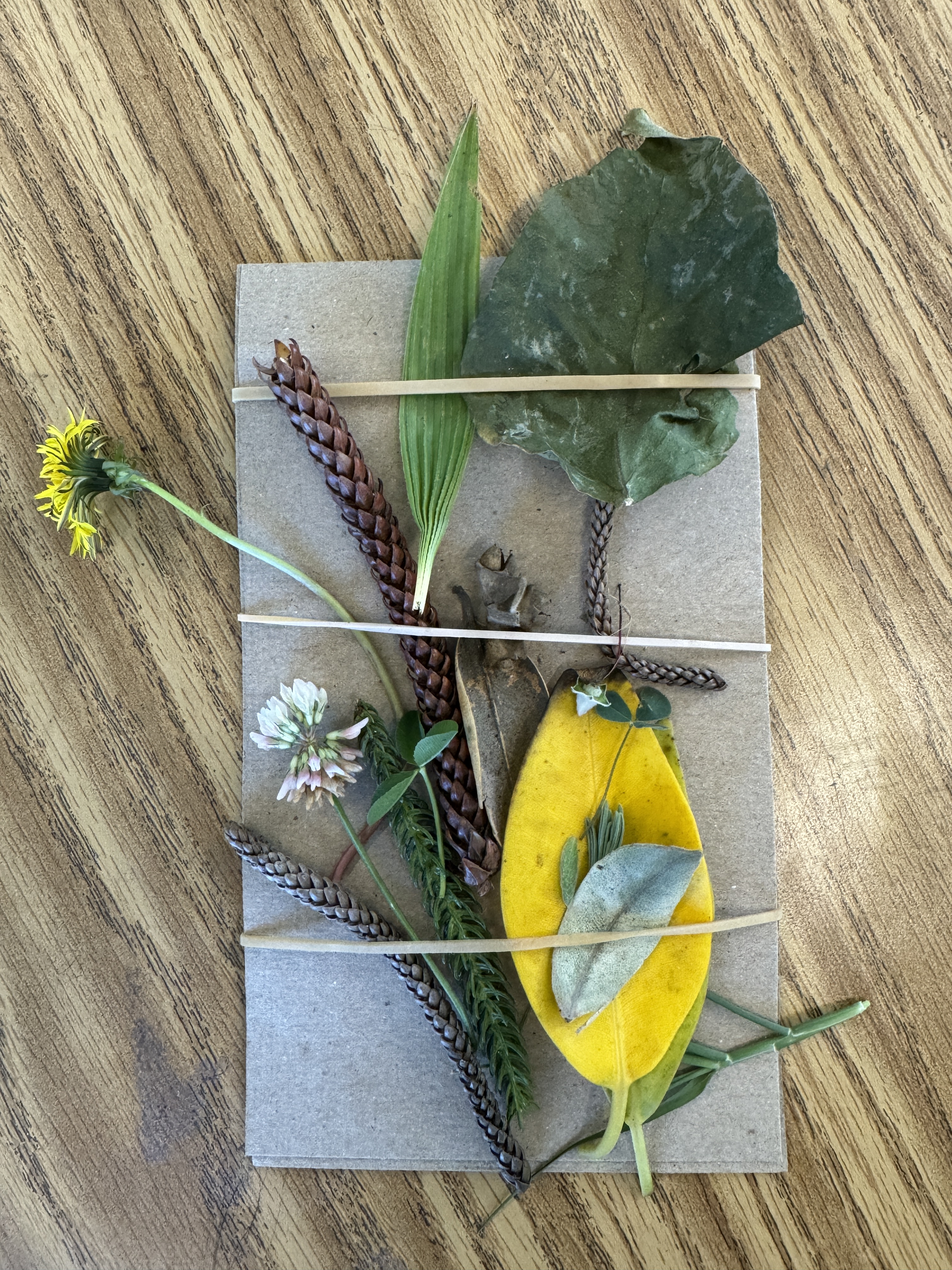
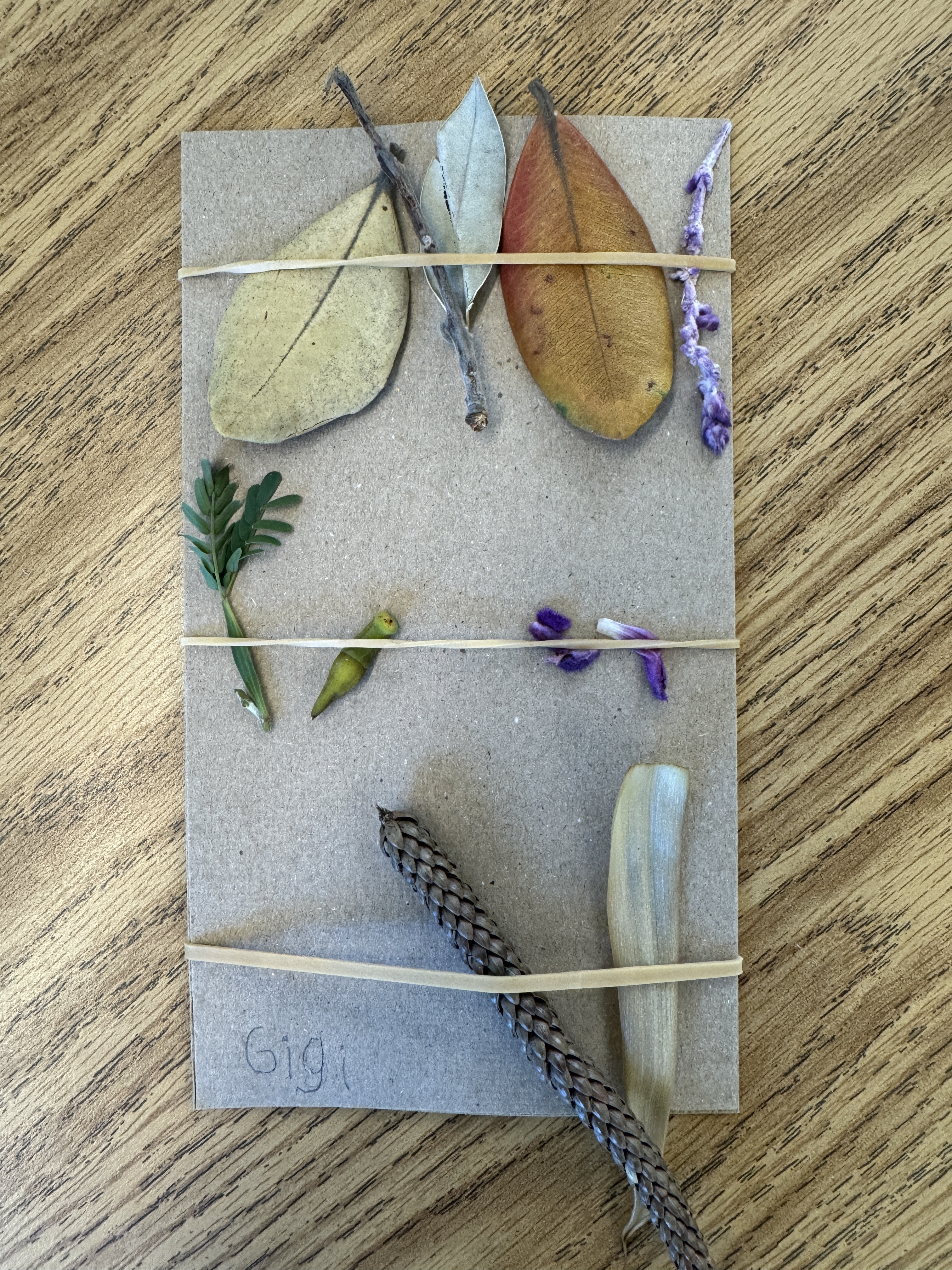
Last week we warmed up for #WriteOut by going for a Wonder Walk on our school campus. We started by reading the book Wonder Walkers by Micha Archer. This is a wonderful book full of questions like, “Is the wind the world breathing?” that also pushed my students to think beyond the literal, framing their observations through the lens of wonder. After reading and talking, students took their nature collectors (a piece of cardboard with rubber bands around it) and headed out to our pollinator garden to look and wonder and pick up some bits of nature to bring back into the classroom with us.

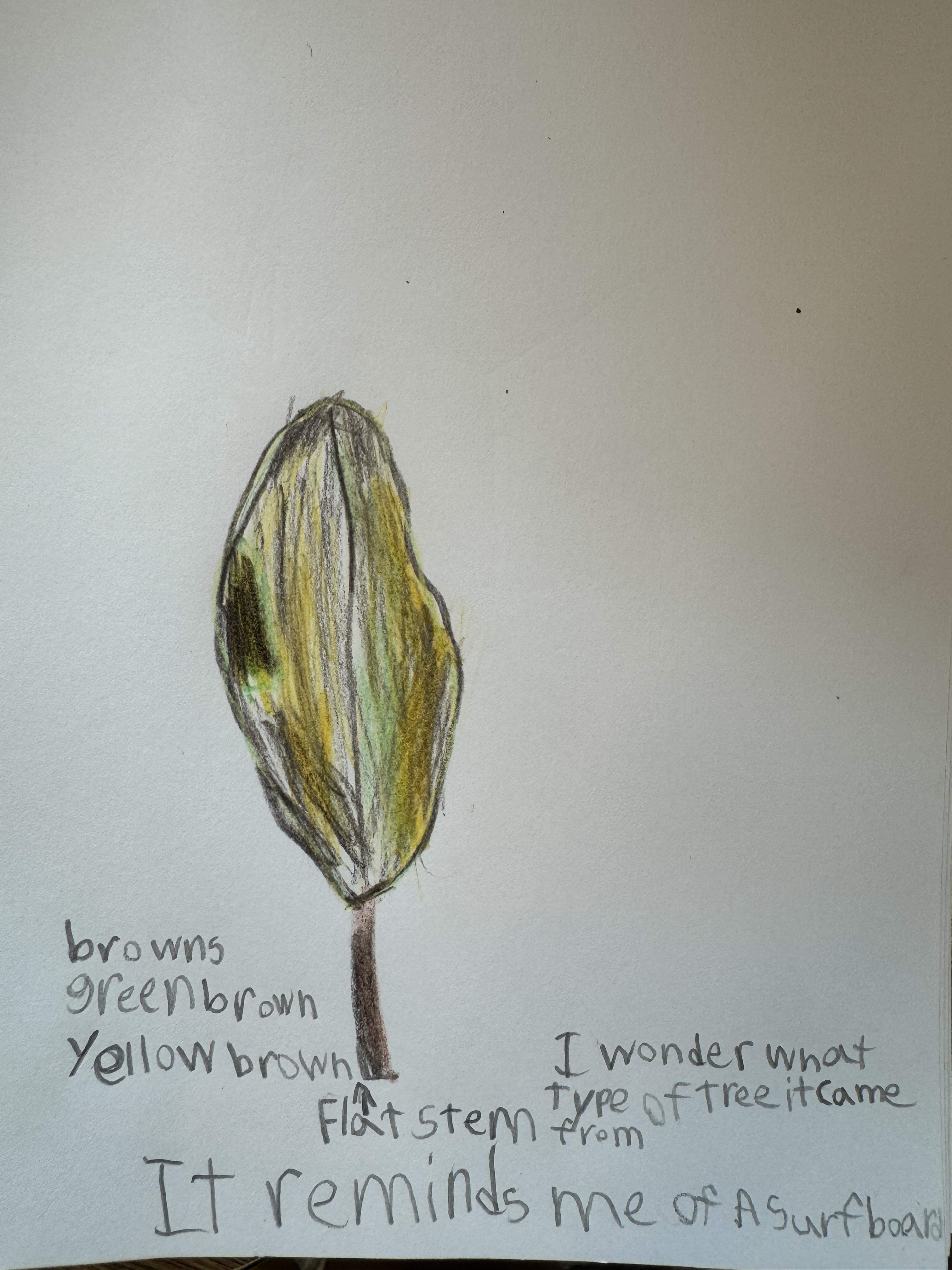
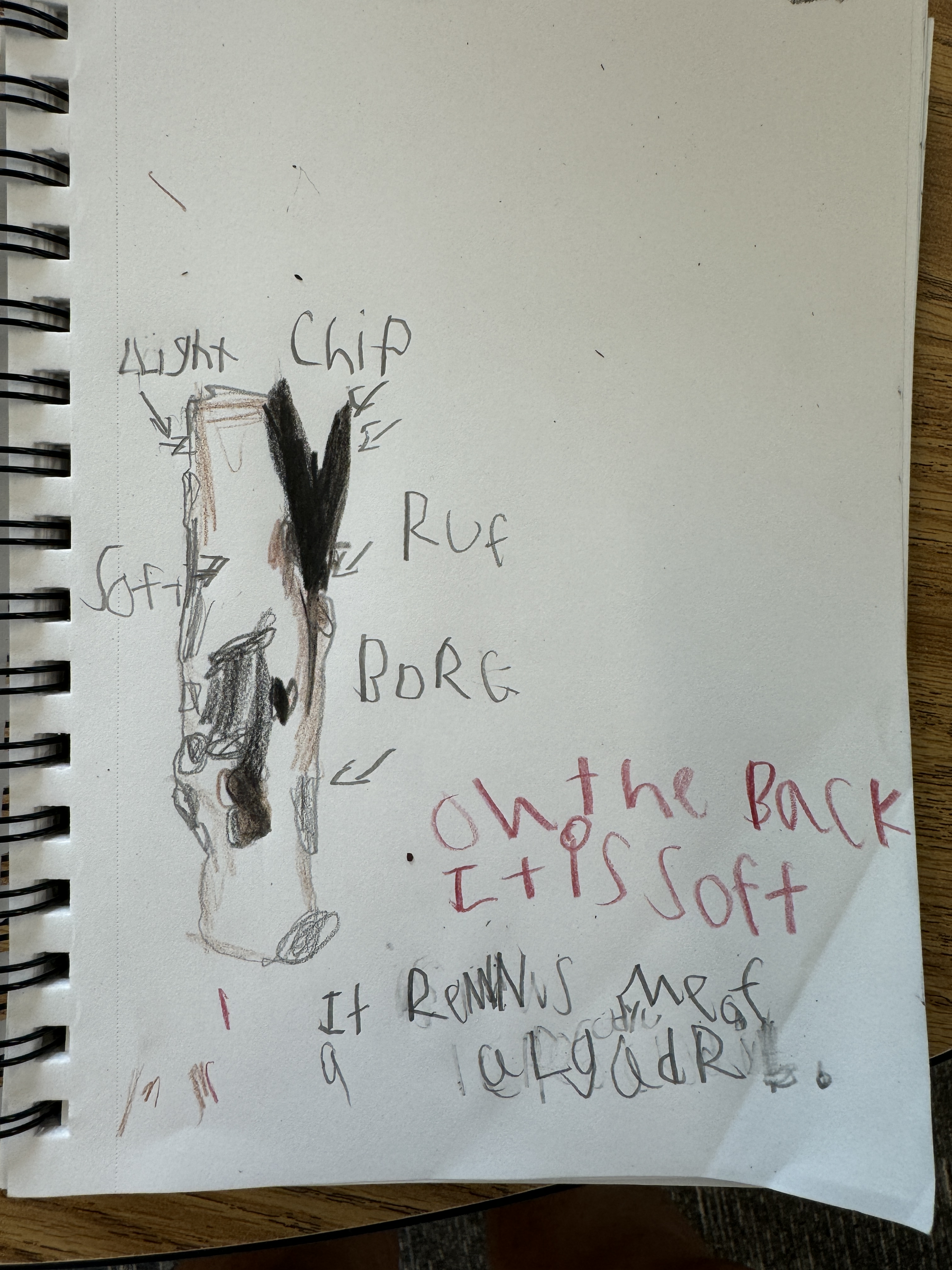
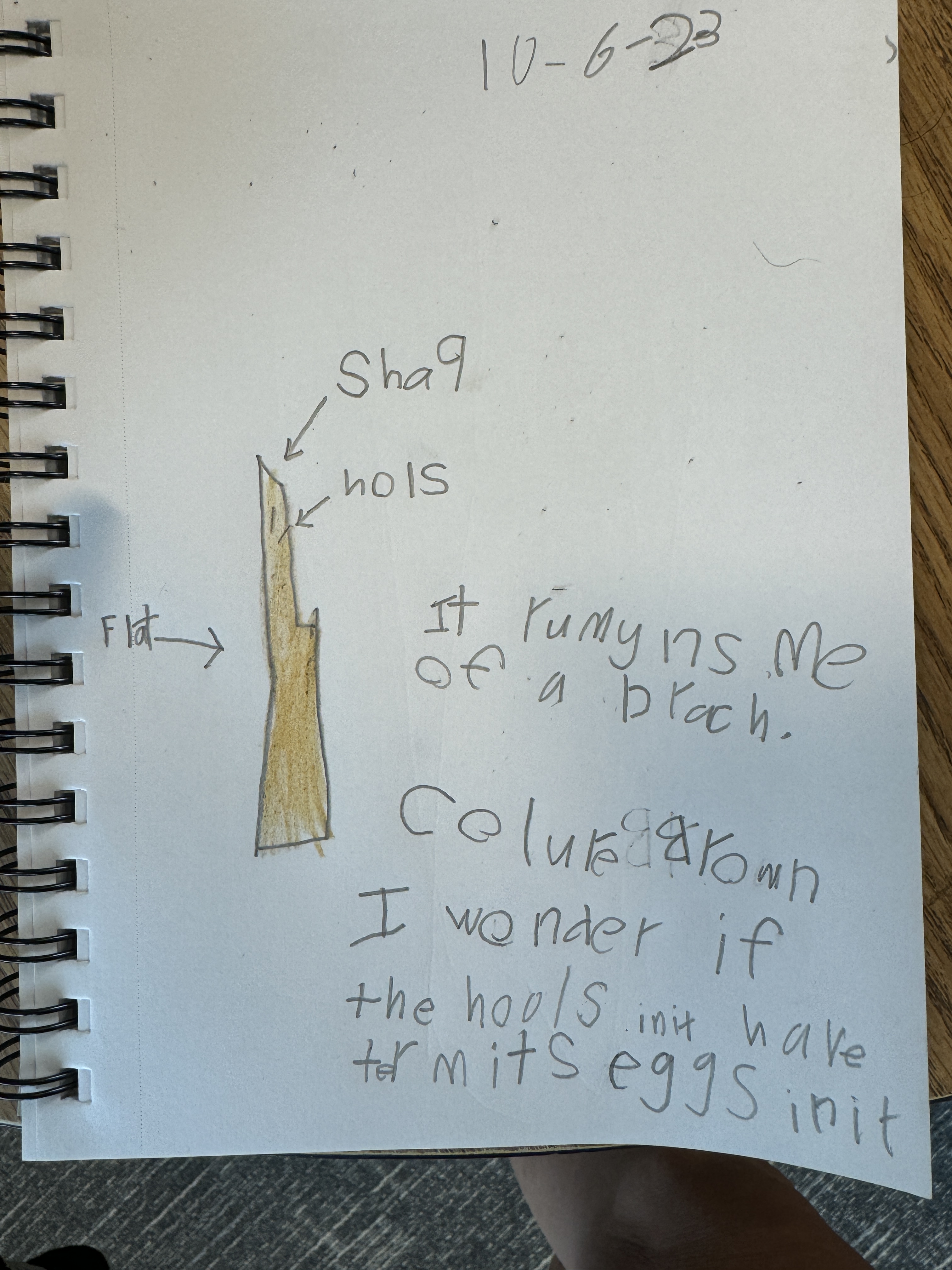
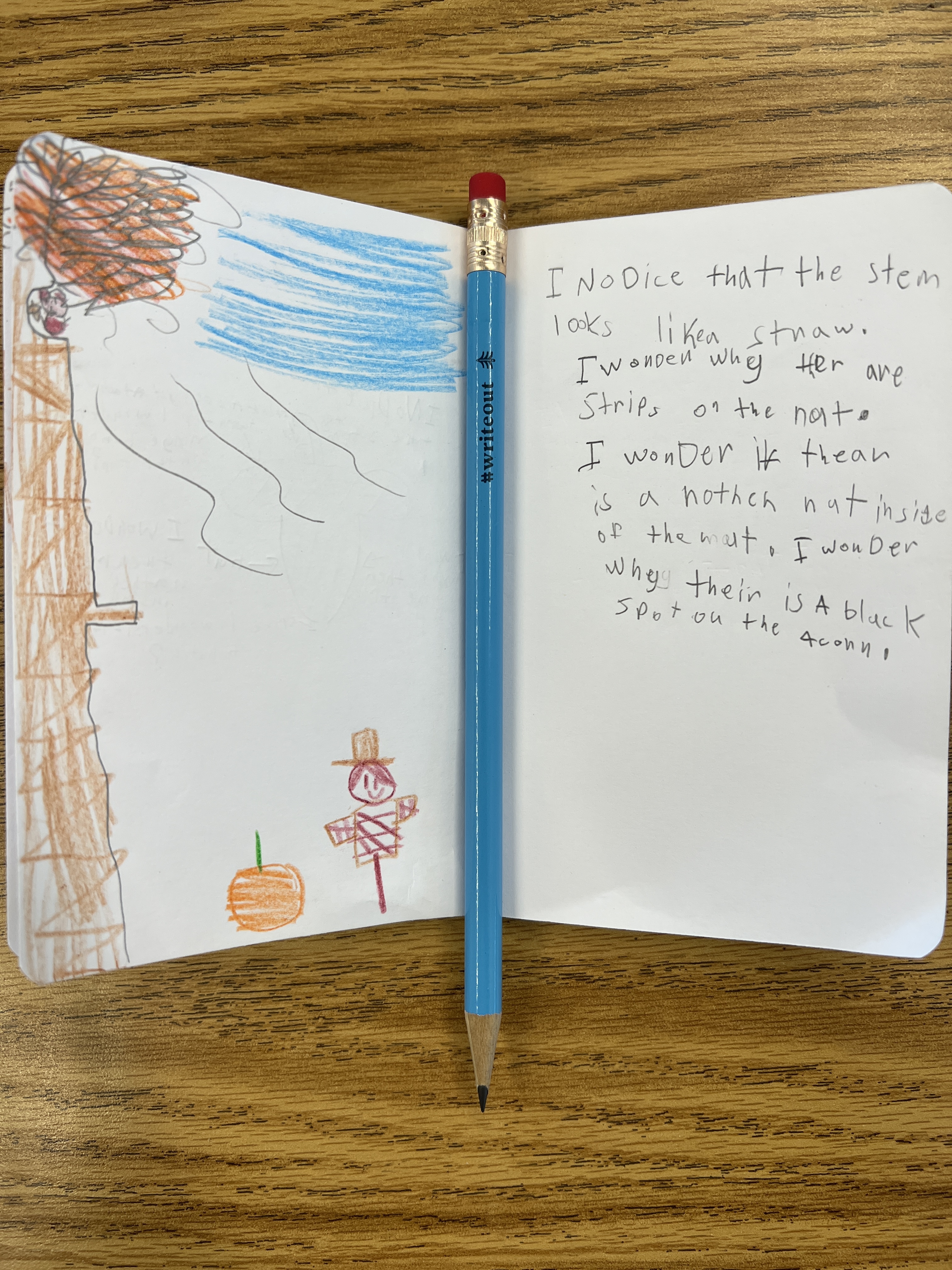
Later students had to pick just one item from their collection to examine much more closely. To facilitate that close observation, we pulled out our sketchbooks and started drawing, trying hard to capture all the details they could see in front of them. Using colored pencils to hone in on subtleties, they added dimension to their sketches. Then using nature notebooking prompts adapted from the work of John Muir Laws including labeling their sketch, adding what does it remind you of and what do you wonder about it, students completed their entry.

The results were stunning. And a perfect beginning to #WriteOut!

#writeout: Because of an Acorn

When life gives you acorns…turn it into a #writeout inspiration!

On Saturday I found myself at UC Davis meeting with an incredible group of writing project teachers from all over the state as we launched year 2 of our CWP Environmental Literacy and Justice Collaborative. In that space we imagined all the ways to support our students as they learn about the earth and its systems, grow their appreciation of the natural world and resources we share, and use writing to think, to reflect, to question, and to advocate for the world we need and want for ourselves and for our future.

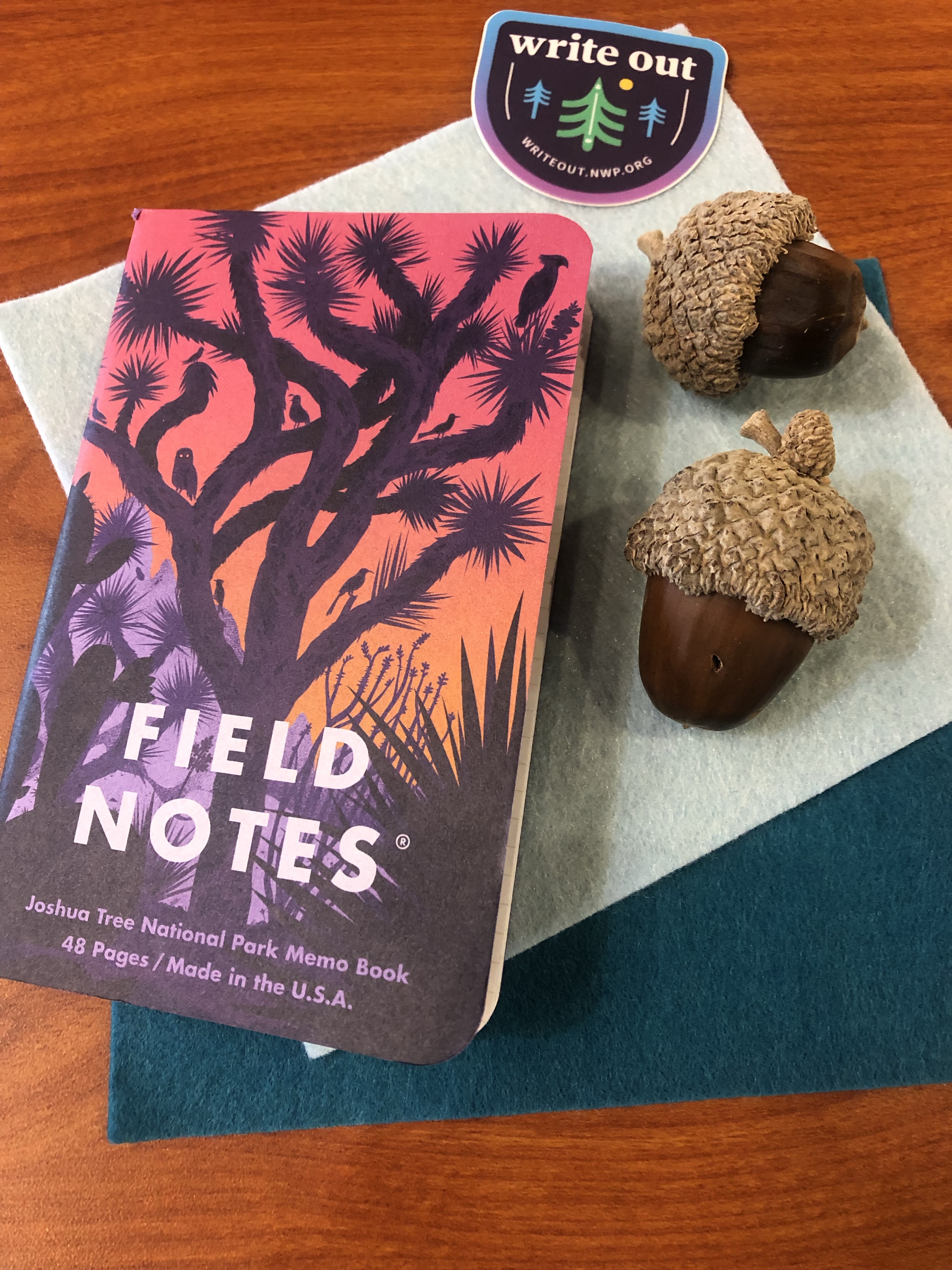
My colleague Carol brought some wonderful acorns she found in her neighborhood as inspiration for a making project…and lucky me, I ended up taking the extras home with me to use in my classroom. These acorns are bigger than the ones I am familiar with…and so beautiful!

And they were perfect for the book I had already borrowed from the library to read this week–Because of an Acorn by Lola Schaefer. After reading and studying this deceptively simple text, we talked about what they noticed in the book. They were quick to notice that it included aspects of life cycles…and they loved the cutouts on the first and last pages. Serendipitously the NWP Write Out newsletter included a link to a video about acorns by a park ranger at the Sequoia and Kings Canyon National Park. My students loved learning more about acorns–and the ways that trees communicate with each other.

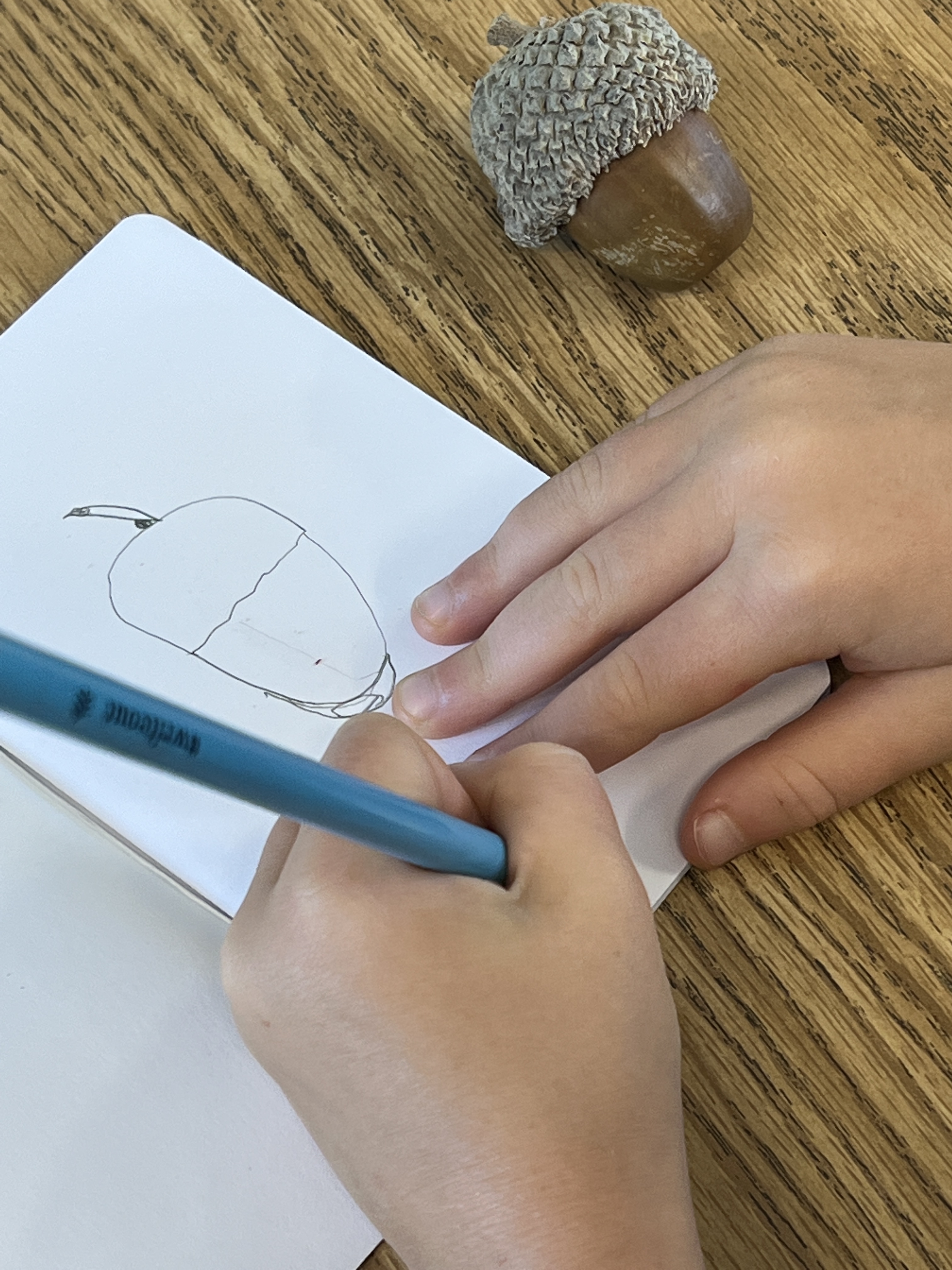
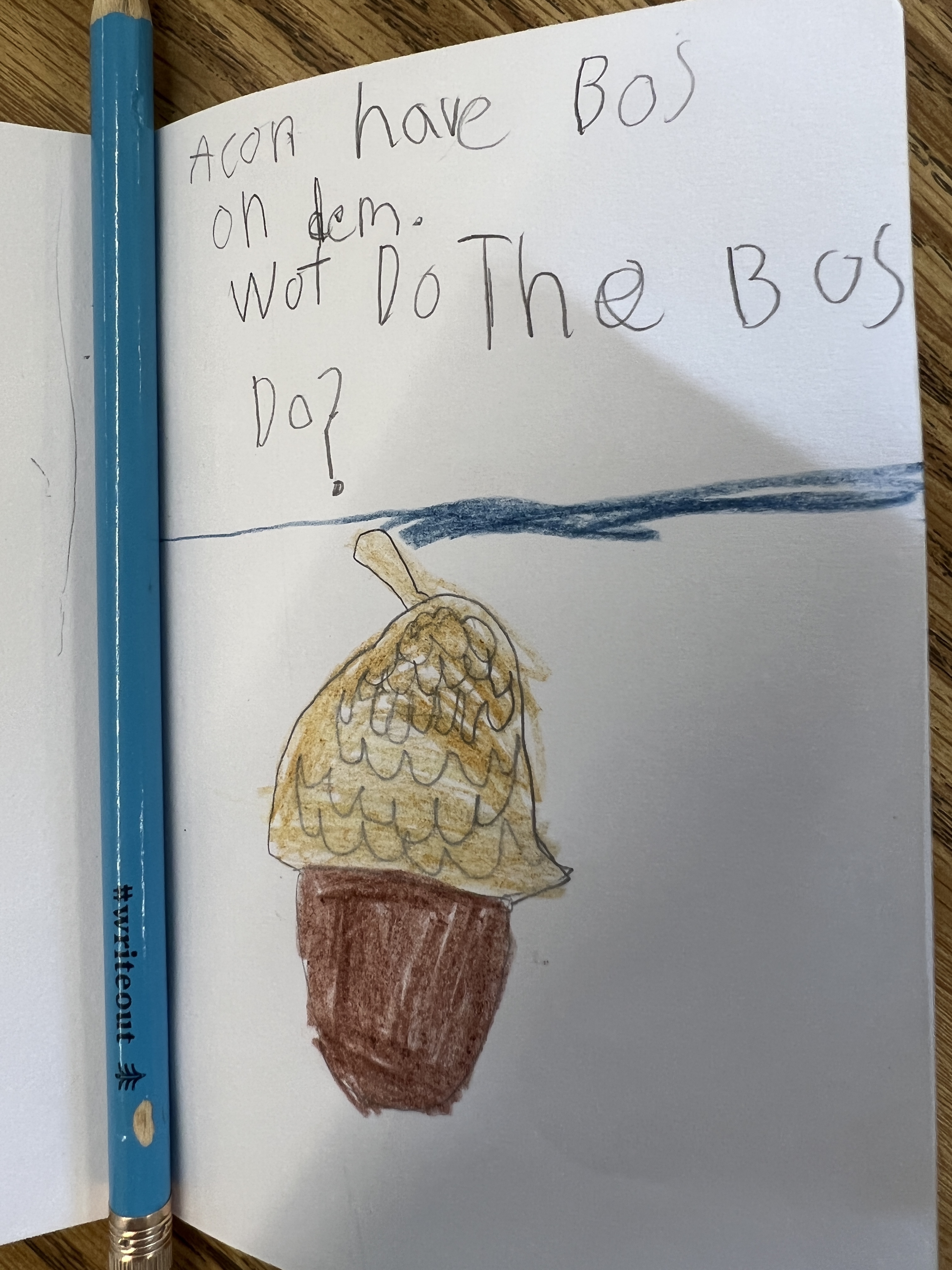
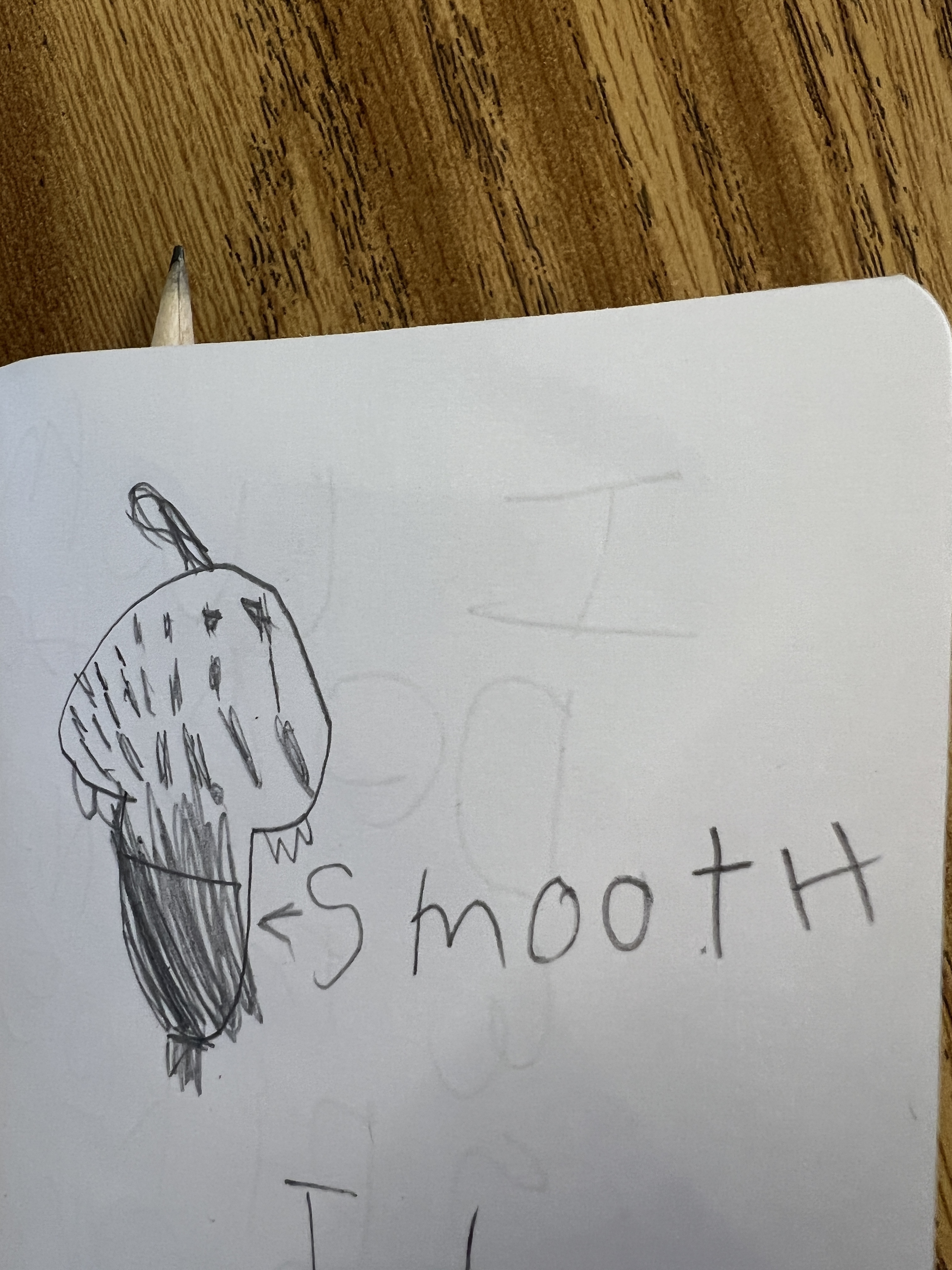
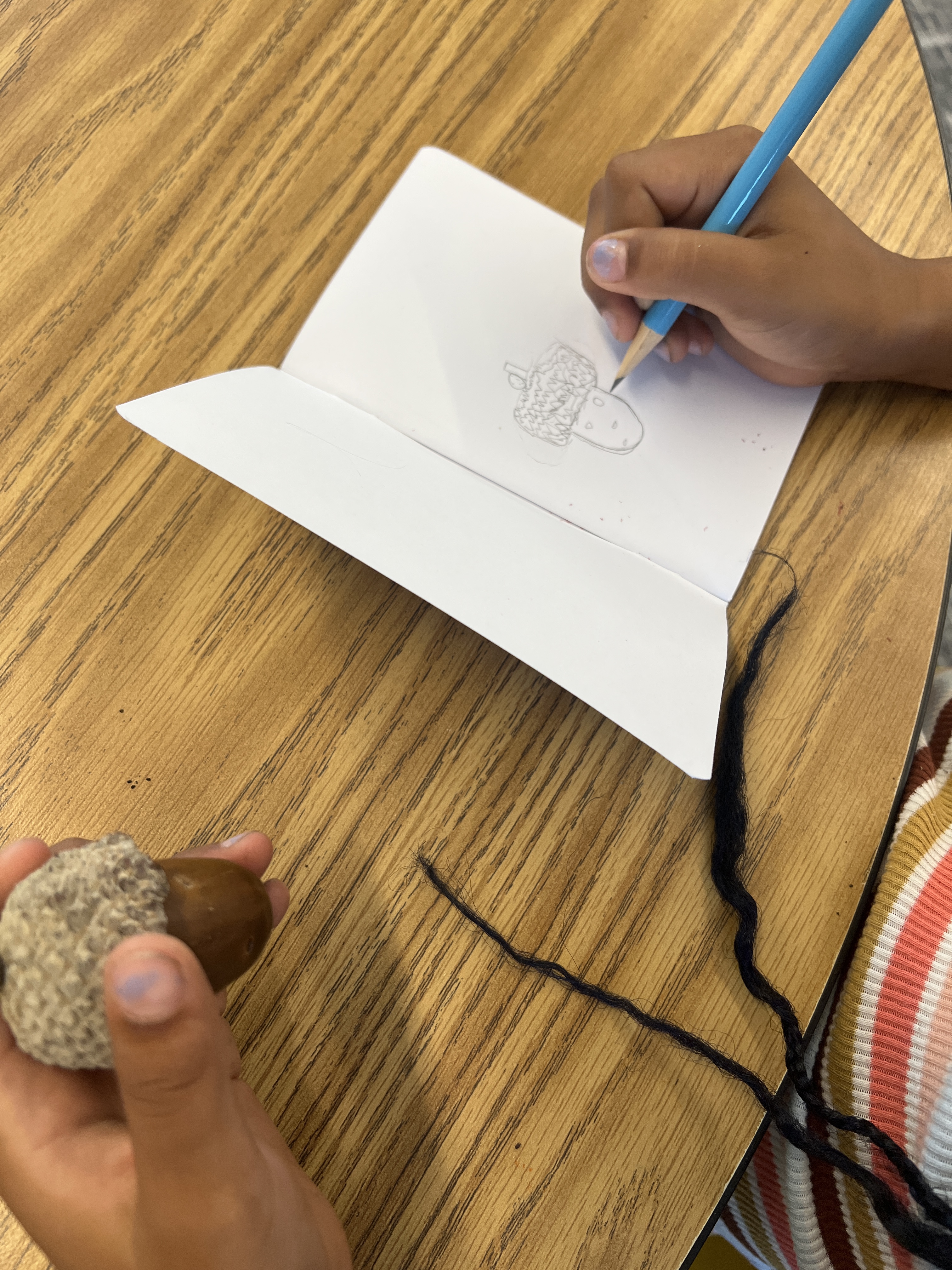
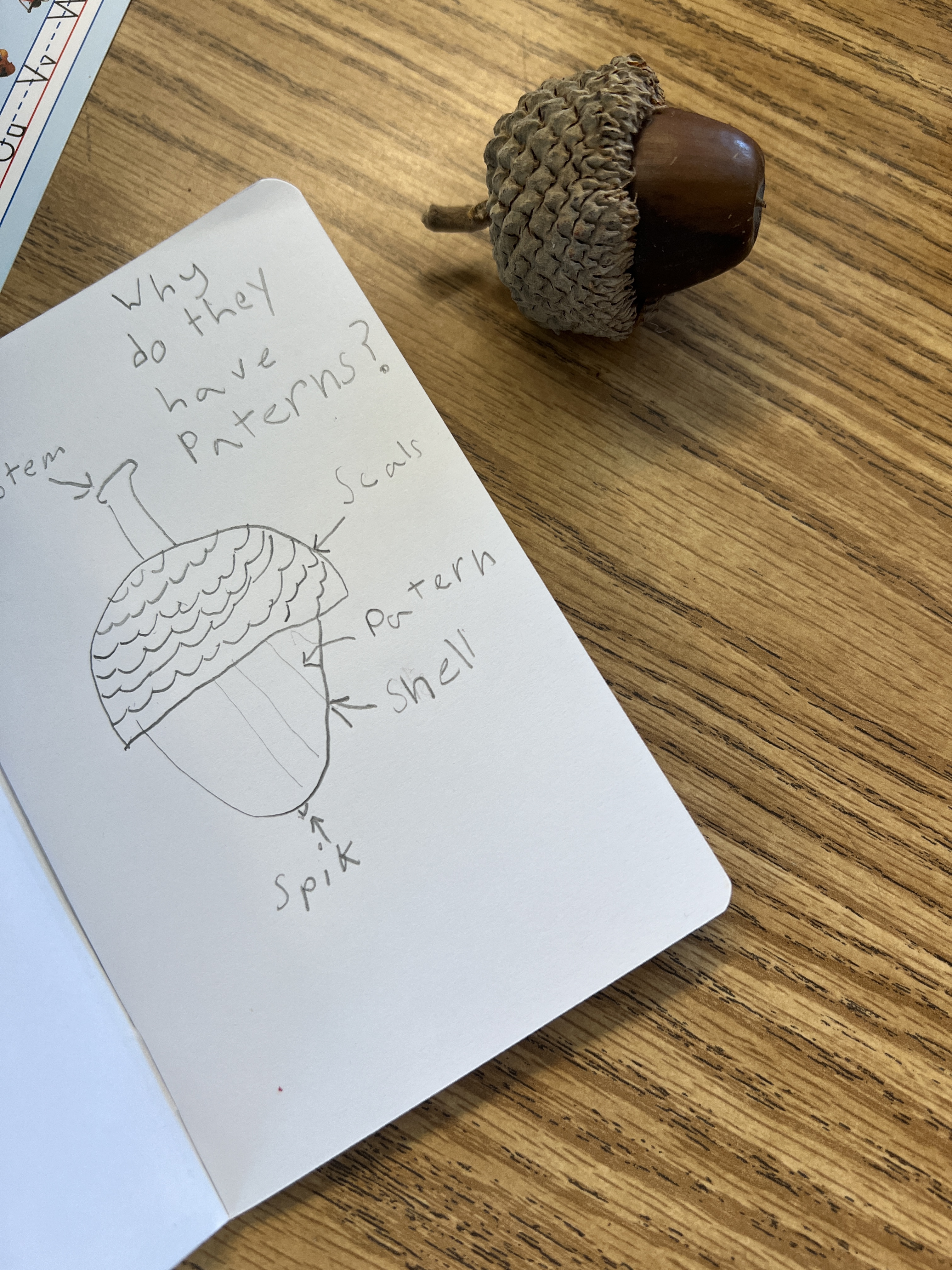
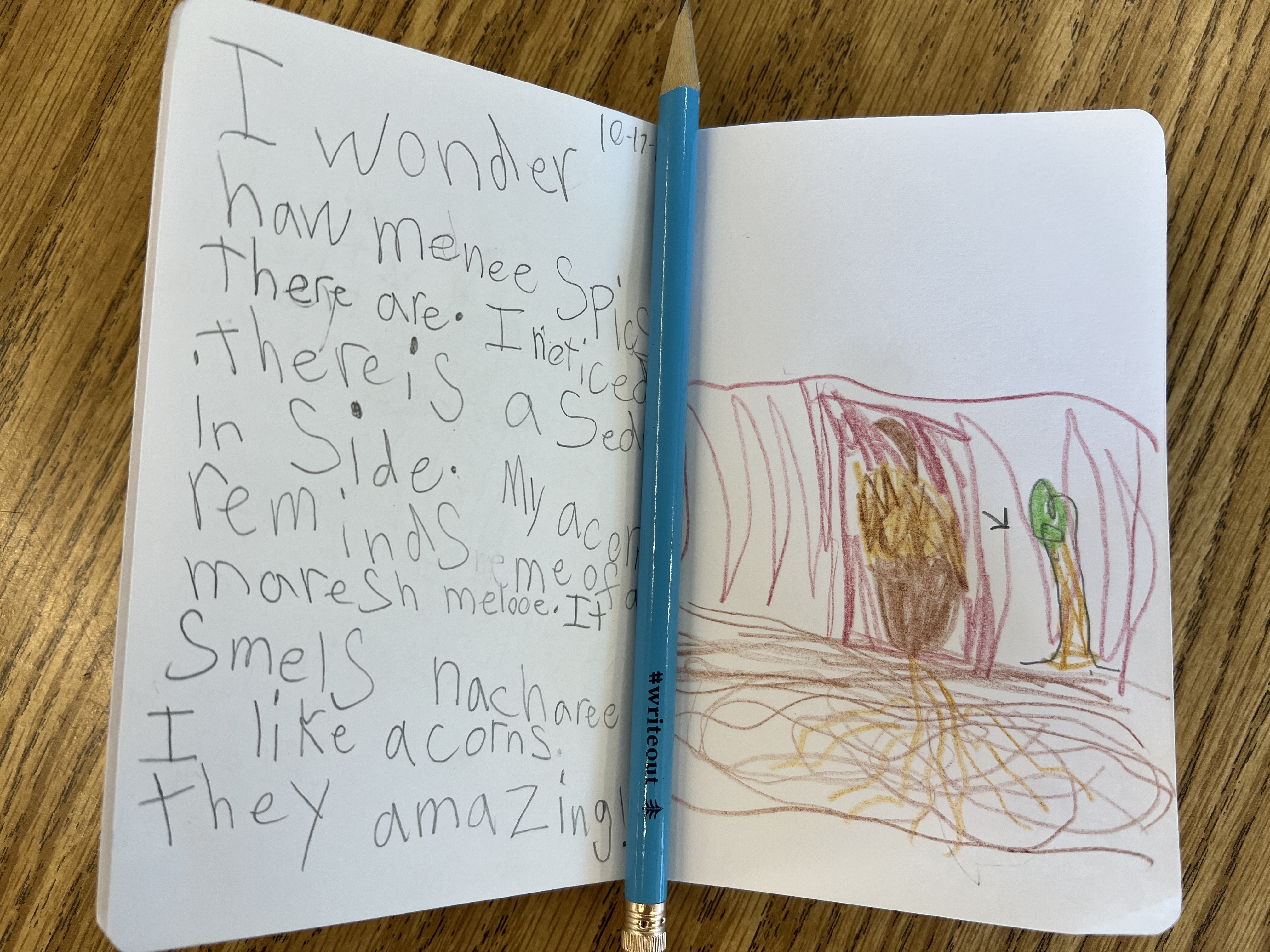
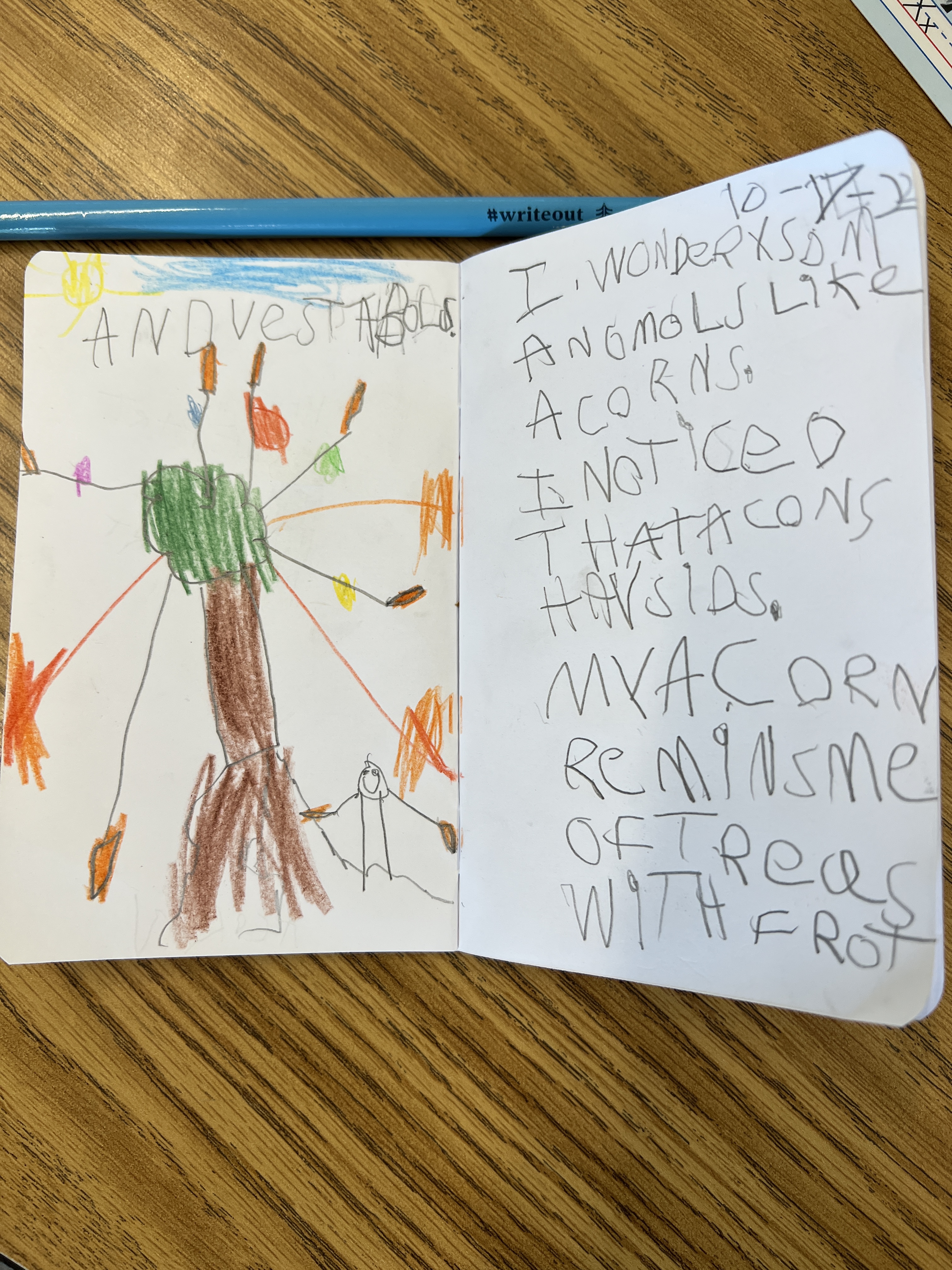
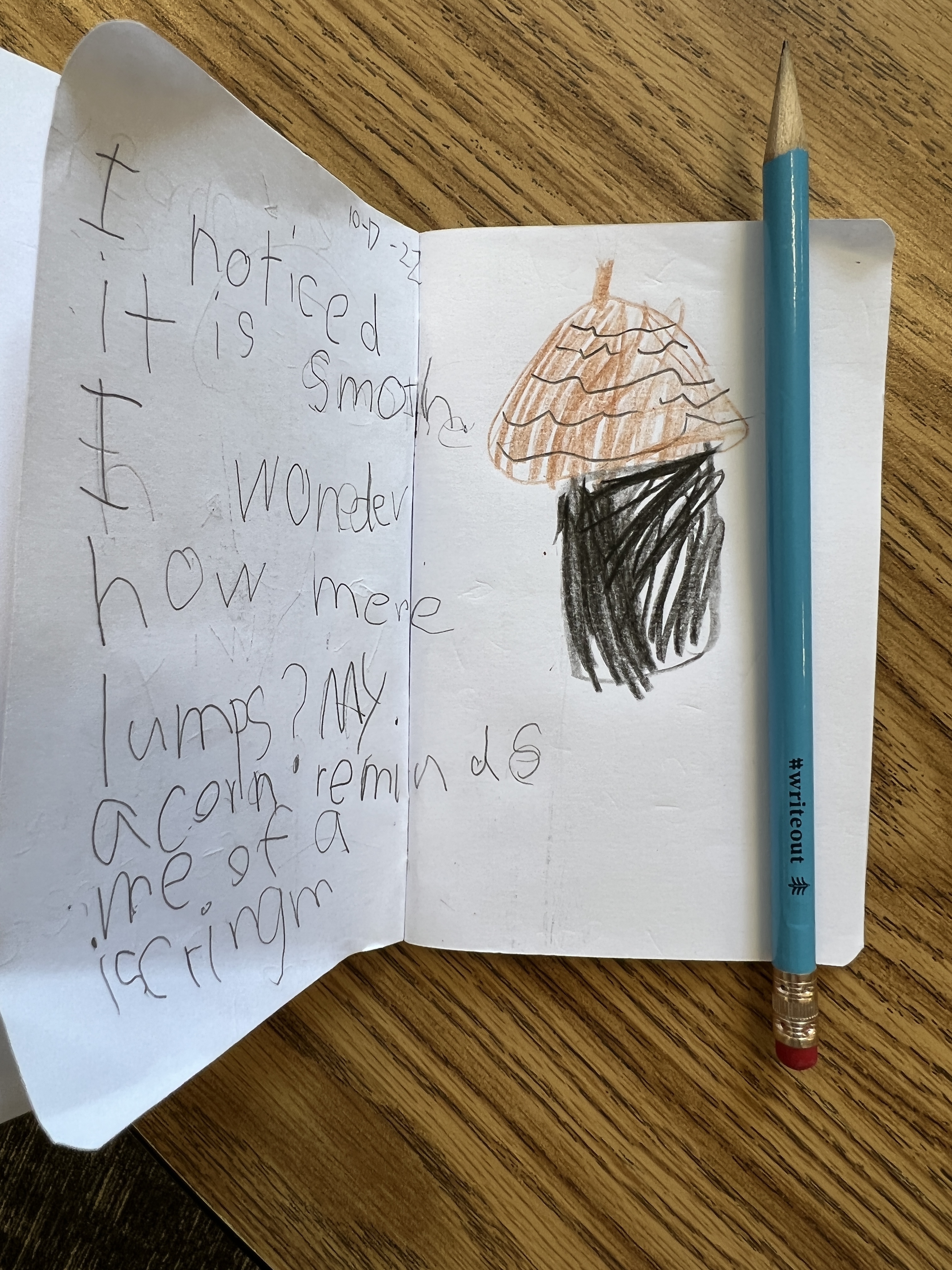
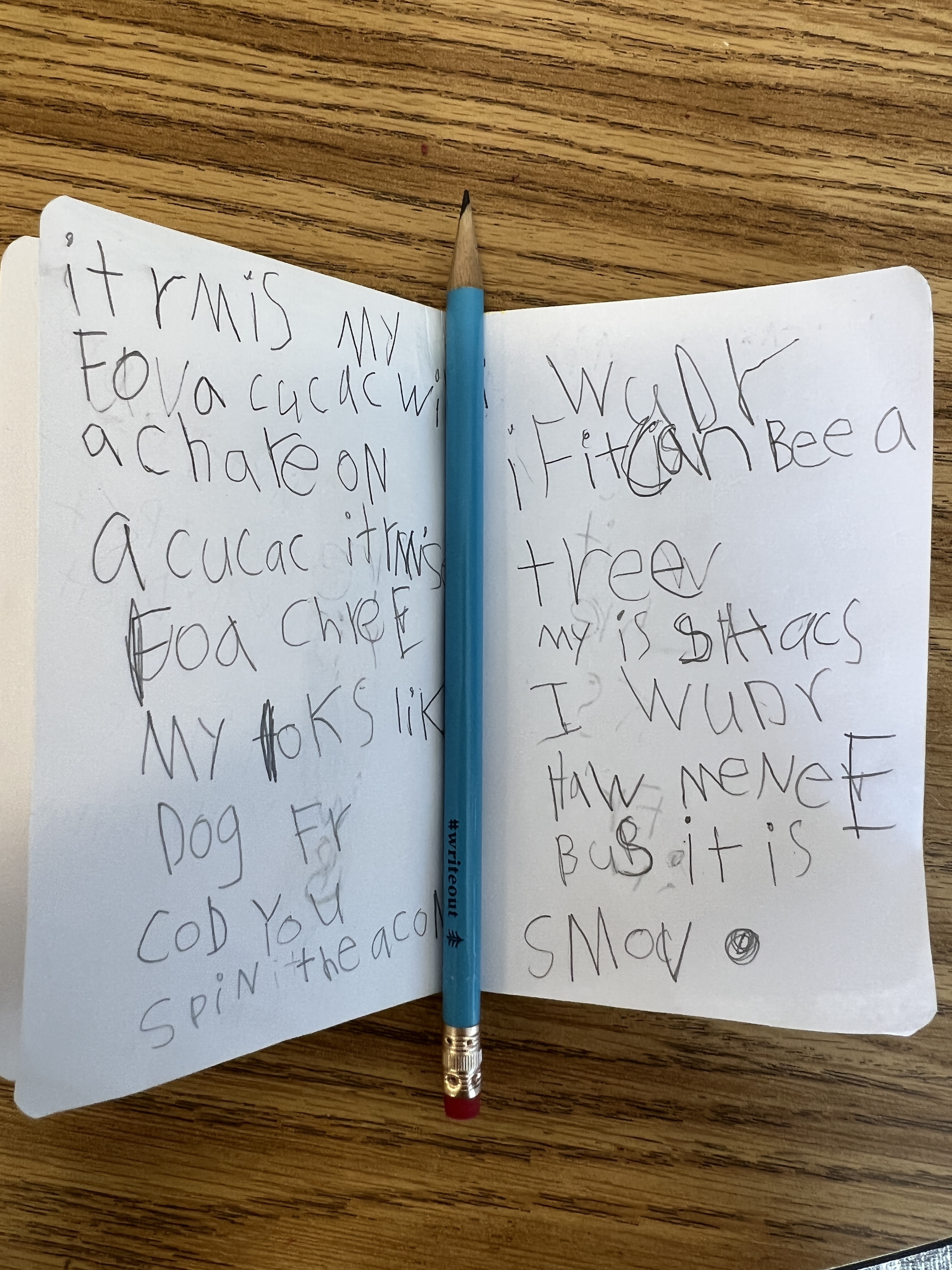
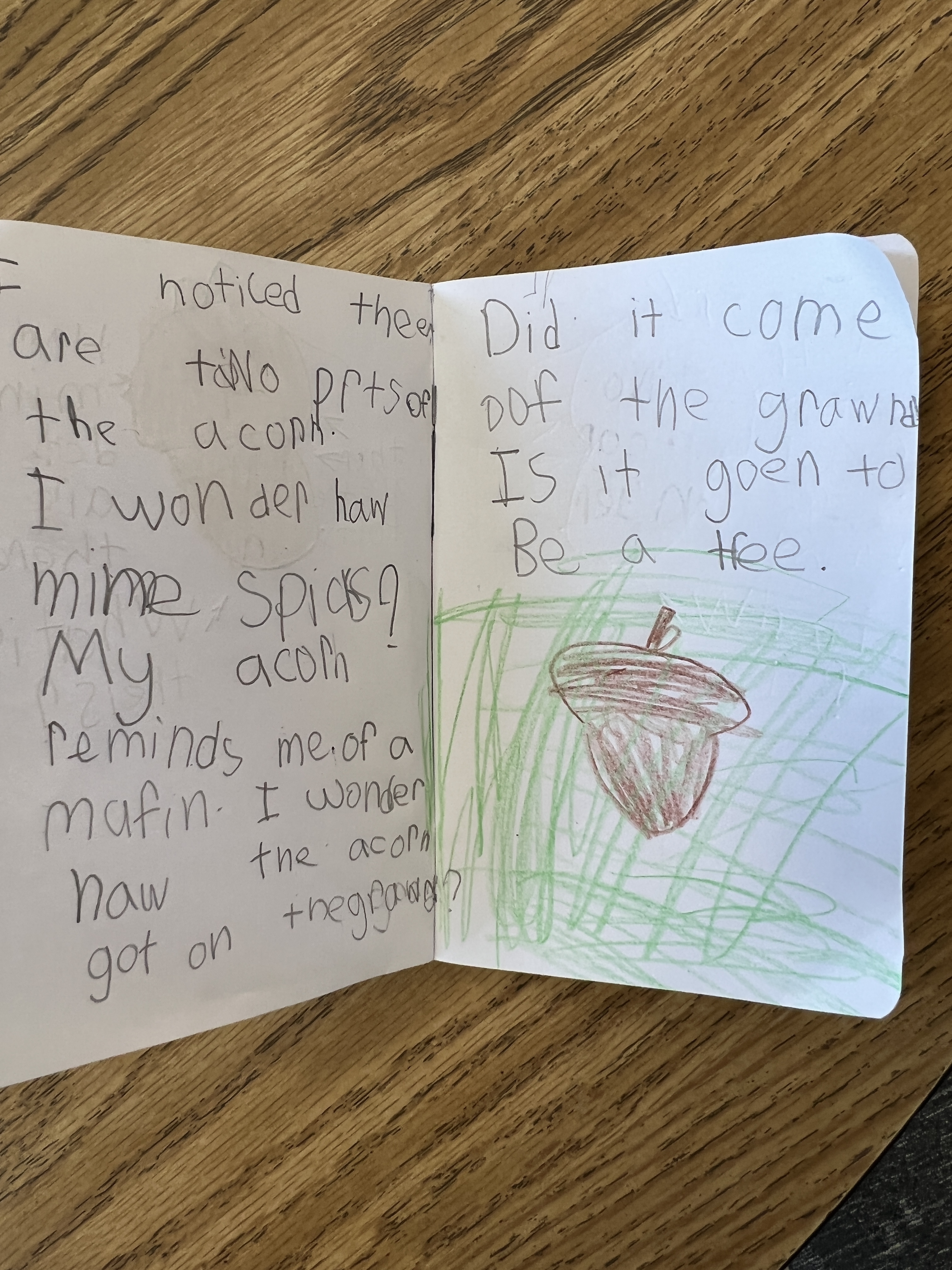
Then it was time to pull out our #writeout pencils and notebooks. We took time to look carefully at the acorns and sketch them in detail. Students were encouraged to use numbers and words in addition to their sketch to capture information about their acorn.

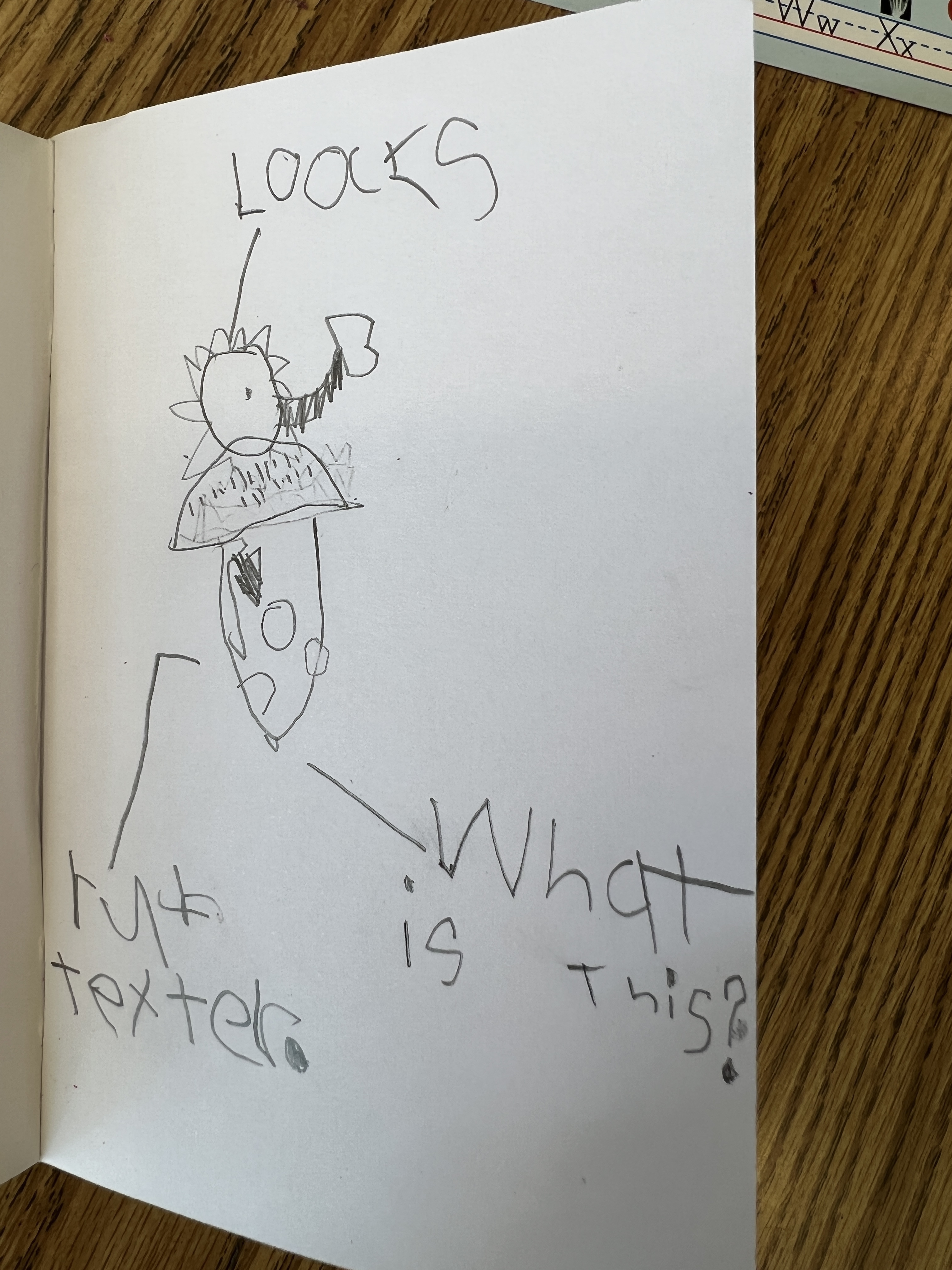
After a break for their music class and recess, we returned to our notebooks for some writing. To push students’ thinking, we used the prompts: I noticed…, I wonder…, and It reminds me of to describe the acorn we had studied and sketched. These first graders had no hesitation. They had plenty to write about and were eager to get started! To keep the words flowing, students were encouraged to use their best “kid writing” (or phonetic spelling), prioritizing ideas over correctness.

Best of all, my students are paying attention to the environment and appreciating all that it has to offer. It is my goal that this immersion in nature will lead us toward advocacy as we consider the ways all of us, as community members–young and old(er), can be a catalyst for change to make the world a better place.

A Wonder Walk

First graders are naturally filled with wonder. It doesn’t take much to get them to look closely, to pay attention to details that many others miss.

Our school has the most amazing librarian. Last week I asked her about a book–a book I know I own, but cannot find in my classroom. And she not only found me a copy of that book, but she also suggested another that was new to me…and just what I needed today when I found it in my mailbox.

#writeout is a collaboration between the National Writing Project and the National Park Service that urges all of us to get outside and find inspiration in whatever nature is around us. We started #writeout yesterday with time in the school garden. Students learned about weeds, donned child-sized gardening gloves, and dug and pulled and delighted in seeing roots break free of the dry soil.

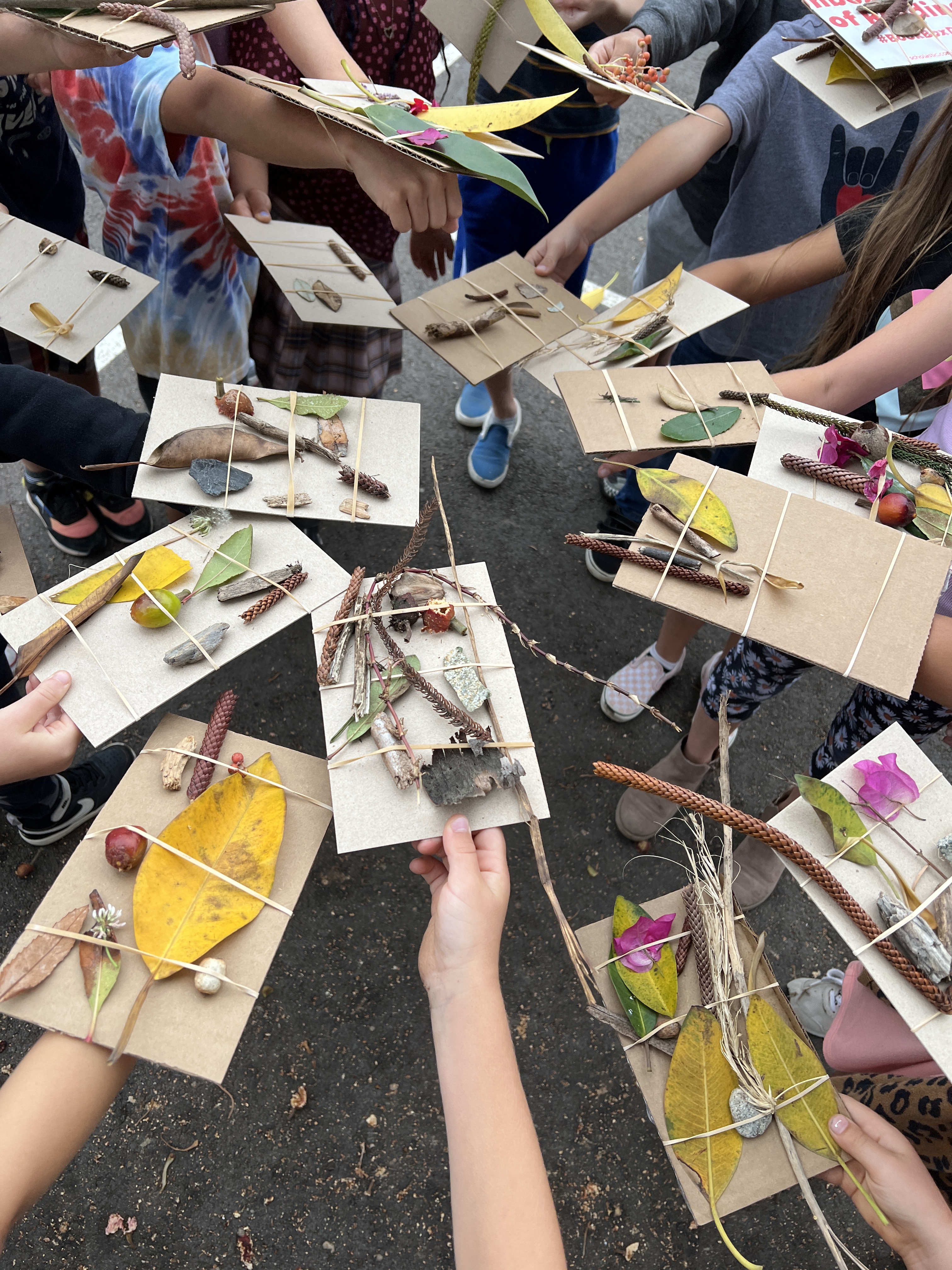
Today we read Wonder Walkers, that book our school librarian left in my mailbox. It was perfect for setting the stage for a wonder walk, time on our school grounds looking for interesting things (think leaves, seed pods, sticks, etc.) from nature that we collected using our collection tool (shout out to Little Pine Learners). Before we headed out we talked about what items we could collect and what we should not (living bugs, picking flowers and plants)–and students were excited to get started.

They looked carefully and their collectors began to fill. Some were exuberant and filled their spaces quickly, crowding dried roots and pine droppings with sticks and crunchy leaves. Others were more selective, leaving more spaces between the items collected. A child with sharp eyes found a dandelion puff that didn’t have to be picked, truly a treasure that her classmates envied!
Before we headed back into the classroom, I gathered students close and encouraged them to hold out the collectors so they could see each other’s collections and also so I could take a few pictures.

Once back in the classroom, students used their iPads to take a photo of their collector for future use. Then we settled to read another book. An old favorite, Weeds Find a Way by Cindy Jenson-Elliott, is a wonderful mentor text for students to use as a structure or frame for their writing. I loved the gasp when students realized that this book was non-fiction, yet so accessible with beautiful illustrations. They also remembered their experience with weeds from yesterday and the conversation with the garden teacher about how weeds are not “bad,” they are just not the plants you want in a particular space.

After comments and observations about the book, we tried on using the Weeds find a way… frame with objects from our collectors. “A red leaf finds a way to swish and swoosh through the air,” was one example that got us started.

We ended the day by starting a Zine to showcase our nature items through writing and drawing. We used a single sheet of copy paper to fold a small booklet (with a single cut and no tape or staples) that will soon become tiny treasures worthy of #writeout. More about that in another post!

Dot Day Doings

Yesterday was International Dot Day, a day inspired by the creativity of Peter Reynolds and the power of each of us having the courage and confidence to “make our mark.” To celebrate dots and creativity and confidence, we began our week with the poem What is a Dot? by Laura Purdie Salas. The first graders in my class had an endless list of ideas of what a dot could be and eagerly illustrated the poem with their own “dotty” ideas. Of course, we also read and discussed The Dot by Peter Reynolds.

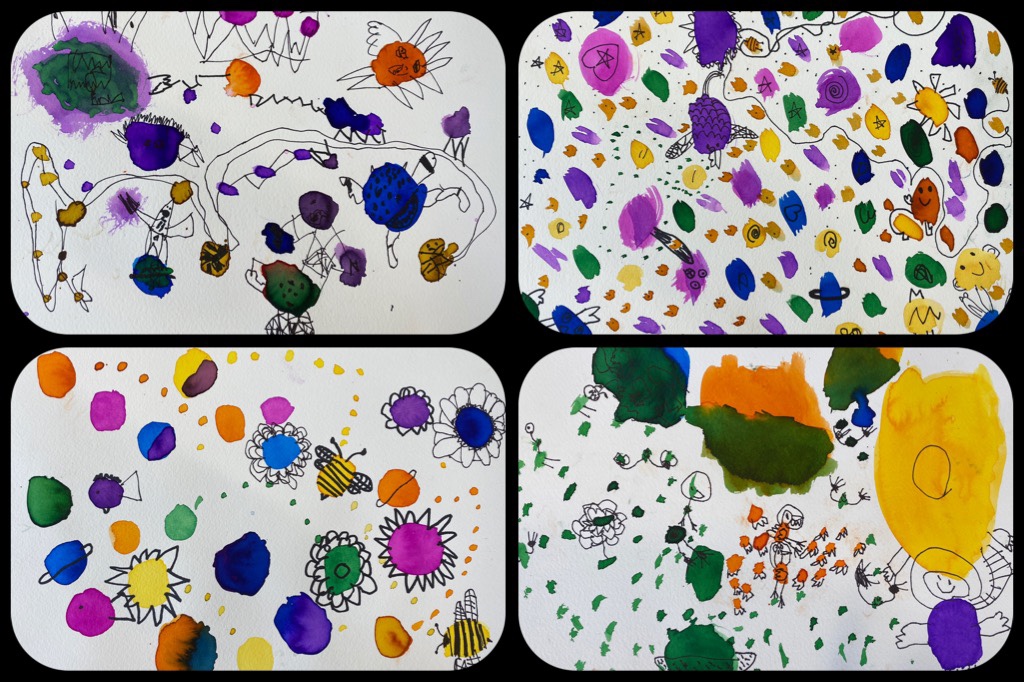
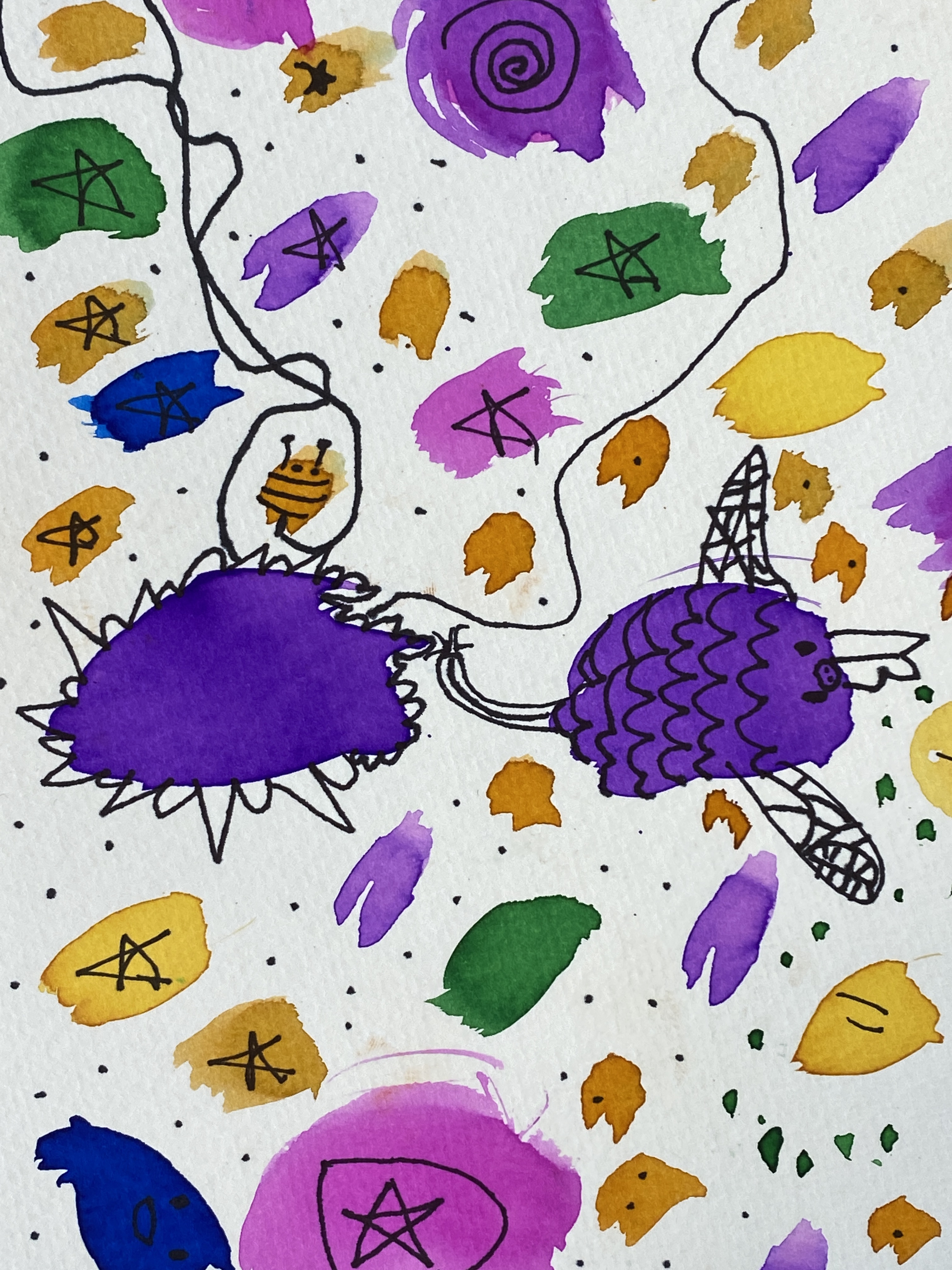
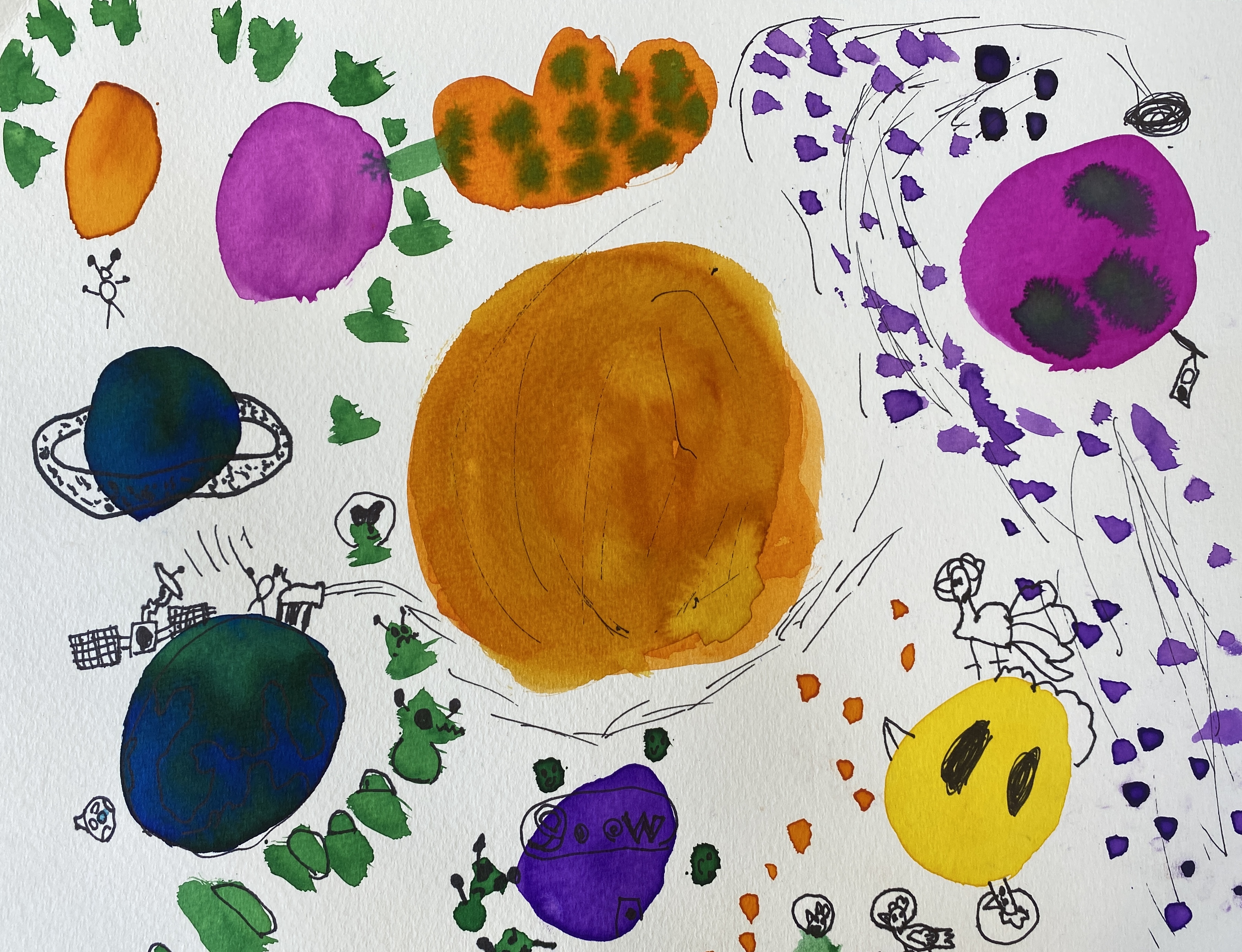
The week got dottier on Tuesday. We broke out the liquid watercolors and painted a page full of dots. These mostly 6-year-old artists knew that making the dots was just the start of this project. They would be transforming their dots into something else using a black sharpie marker the following day. They joyfully and freely painted dot after dot, experimenting with size and placement. They dripped one color onto another, while carrying on a constant narrative of alternative worlds, descriptive details about color, and oohs and aahs of their own discovery. We ended the day by reading Ish, yet another Peter Reynold’s book and talking about encouraging others and not judging our first attempts too harshly when we draw (or try other things too).

Wednesday was the day…International Dot Day! Students came to school dressed in dots and so did I. I l love their creativity in finding dots in their wardrobe. One child found a solar system shirt, each planet a dot. Another noticed the cat faces on her sweater were dots with more dots showing the natural coloring of the cat. There were polka-dotted masks (COVID makes us creative too), socks painted with dot markers, dotted bows in the hair, and I even found a pair of polka dotted earrings! With wardrobe dots in place, students were eager to get started transforming their watercolor dots from the previous day into beautiful pieces of art.

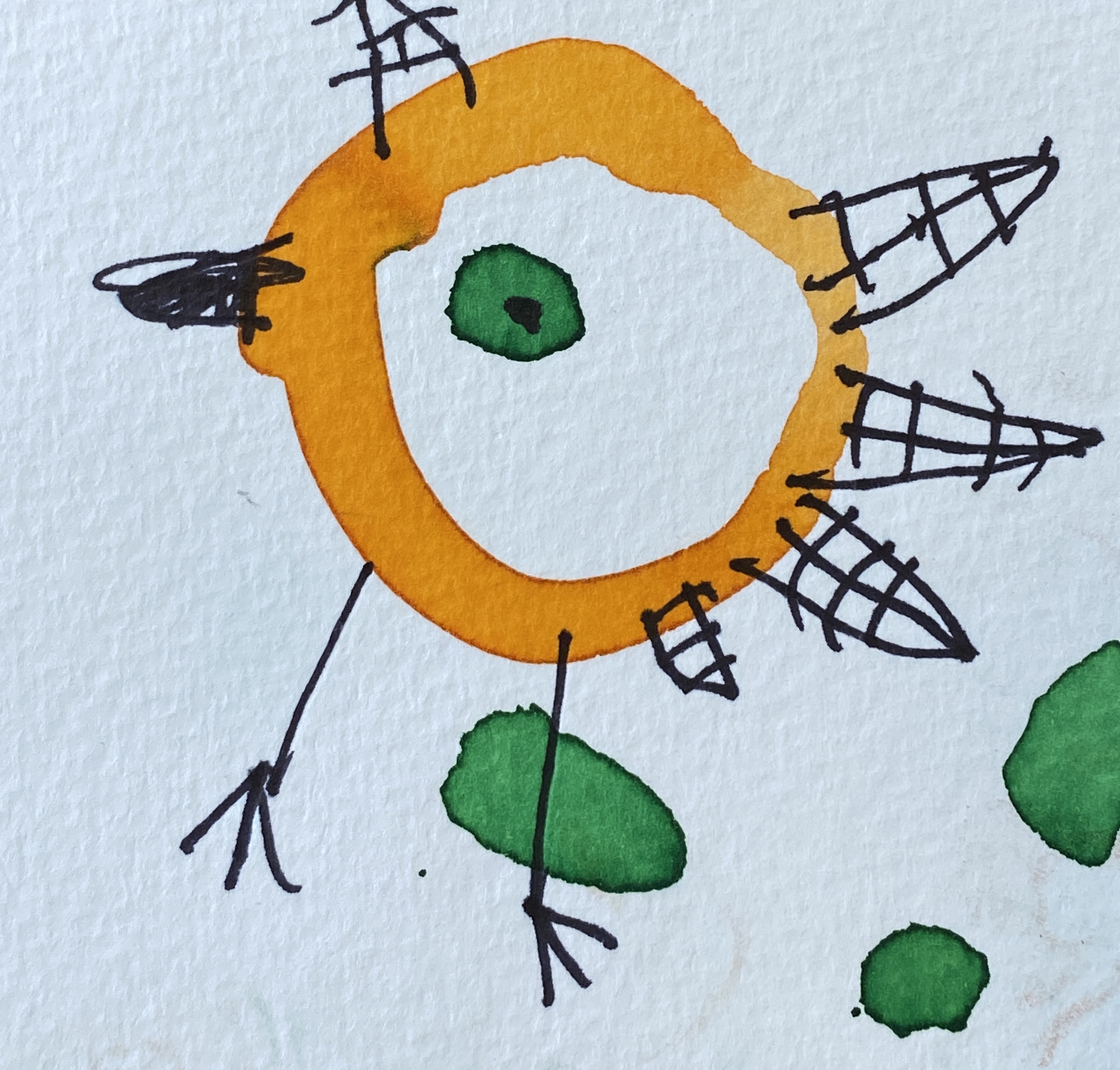
After a bit of modeling by showing what I might do with my own watercolor dots, I handed out the sharpie markers–a thicker one and a thinner one, and reminded students to start thinking about what story they might tell about the dot creation. I love the artistic freedom and courage of first graders. They uncap a permanent marker and confidently draw whatever is on their minds. Dots turned into chickens with space helmets, planets from unnamed galaxies, insects galore (bees, spiders, June bugs, ladybugs…), jellyfish, dragons, and of course, lots and lots of flowers. Along with the drawing was the buzz of conversation, telling the story of the things they were drawing. Clearly kids need to talk their ideas through as they draw.

Once the pens were capped and the drawings done, we took out our writer’s notebooks and set out to put down words to go along with the the art. We started with the simple frame, a dot can be… I showed how as a writer, instead of a sentence like A dot can be a bee, I could expand that sentence saying, A dot can be a pink bee buzzing from flower to flower leaving a trail of heart shaped pollen behind. (And they could see how that sentence also matched my drawing.) And with that short mini lesson, my students were off and writing.

Here’s a few examples:

A dot can be a bee.  And a monkey that is blue and yellow.  And a purple dragon and the purple dragon is swooping through the clouds. R

A dot can be a flower garden with a hot air balloon with a chicken and a bee and a sleeping cat.  The chicken is looking for food. C

The best part of the writing time was that every student, even those who are less confident writers, were engaged with their writing. I heard lots of sounding out to get the words on the page. And students began to stretch their ideas, adding details that bring writing to life. I hope as the year progresses that they become as fearless with their writing as they are with their artwork, knowing that small mistakes might just become a “beautiful oops” or the stepping stone to something magnificent. Risk taking is essential to learning, as is joy. We had a wonderful International Dot Day filled with playfulness, creativity, and lots and lots of learning.

What might you do with a dot? It’s never too late to make your mark!

First Days of First Grade

It’s still August, we’re deep into summer and yet school started on Tuesday. Now my days are filled with first graders. I love their unfiltered questions, their earnest effort, and unbridled joy. After a few years of not teaching these young ones, it’s refreshing to be reminded that these learners are eager to make things, to say things, and to play, play, play!

Tuesday was loooooooong. That first day back after summer’s break requires stamina that has dimmed since June. And on the first day of school in first grade, teachers are busy! Just remembering my new schedule took a crazy amount of effort!

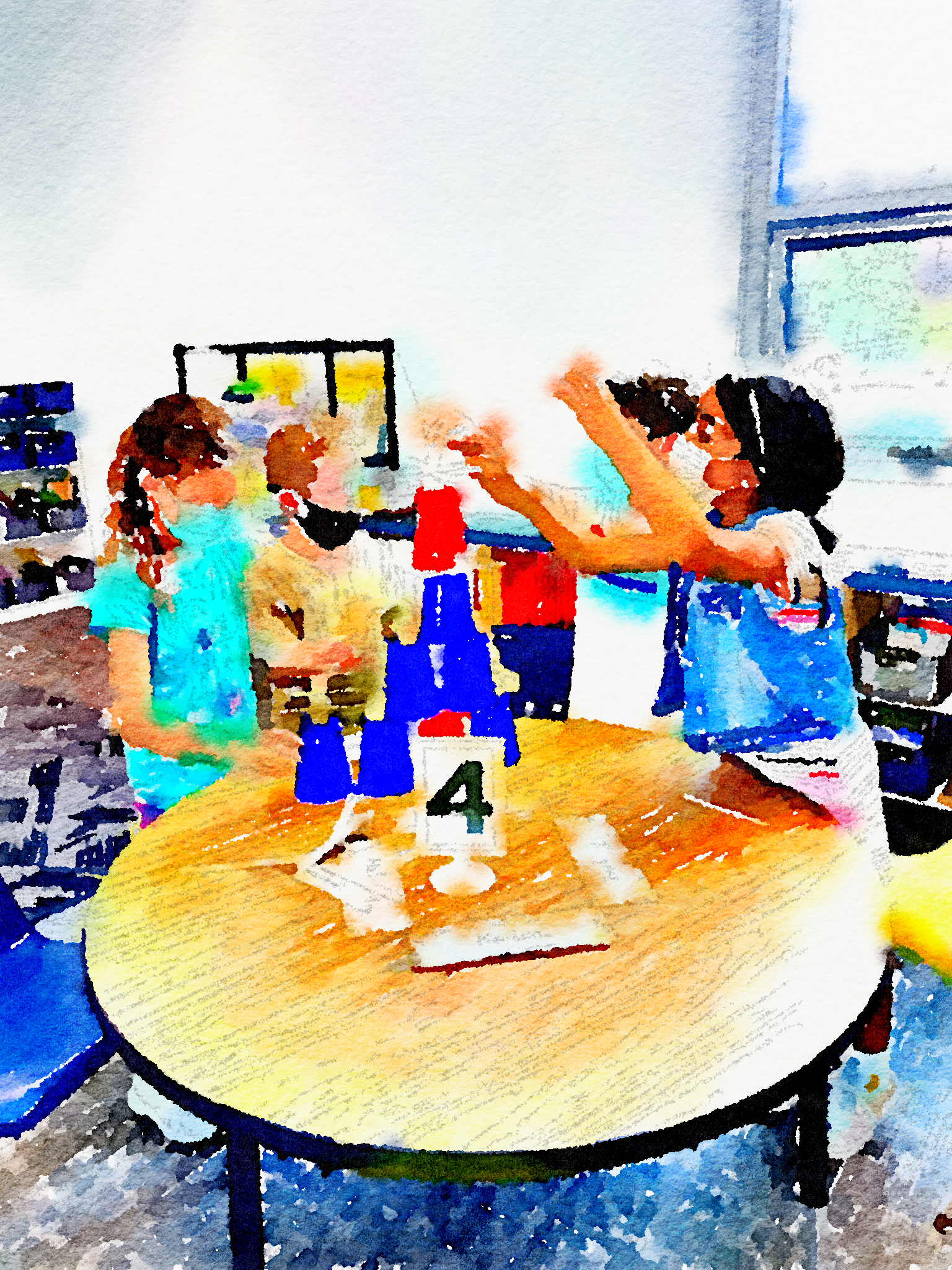
But there was also lots of room for fun (which also doubled as formative assessment for me). I braved the paint (on day one!) and students watercolored their self portraits. Collaborative tower building revealed gaps between students who already knew how to work smoothly with others and those who clearly wanted all the control of the build. For some groups, collaboration meant building separately and then looking for ways to combine the small builds into something larger.

Waterlogue 1.4.5 (128) Preset Style = Bold Lightness = Auto-Exposure Size = Large Border = No Border

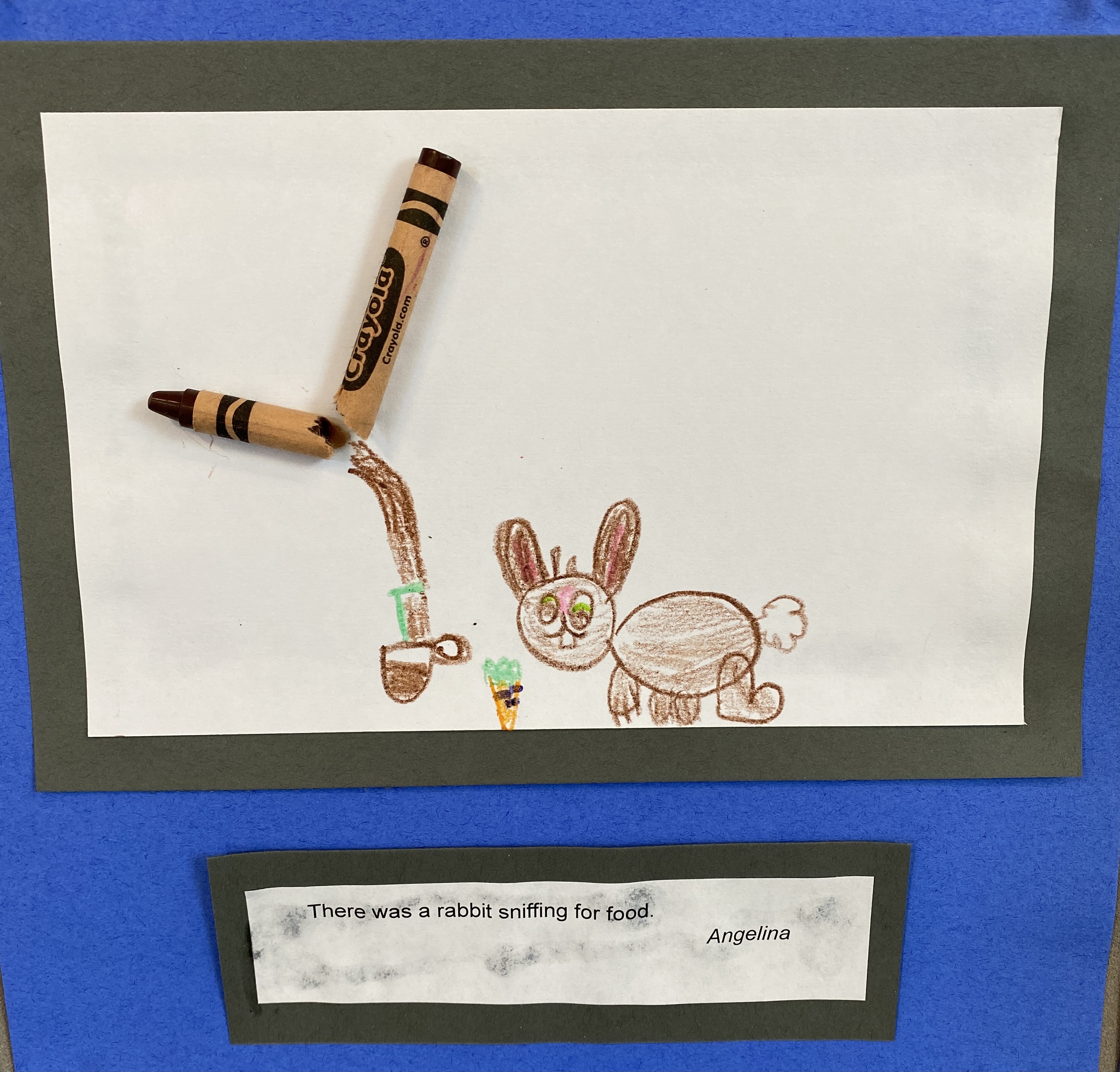
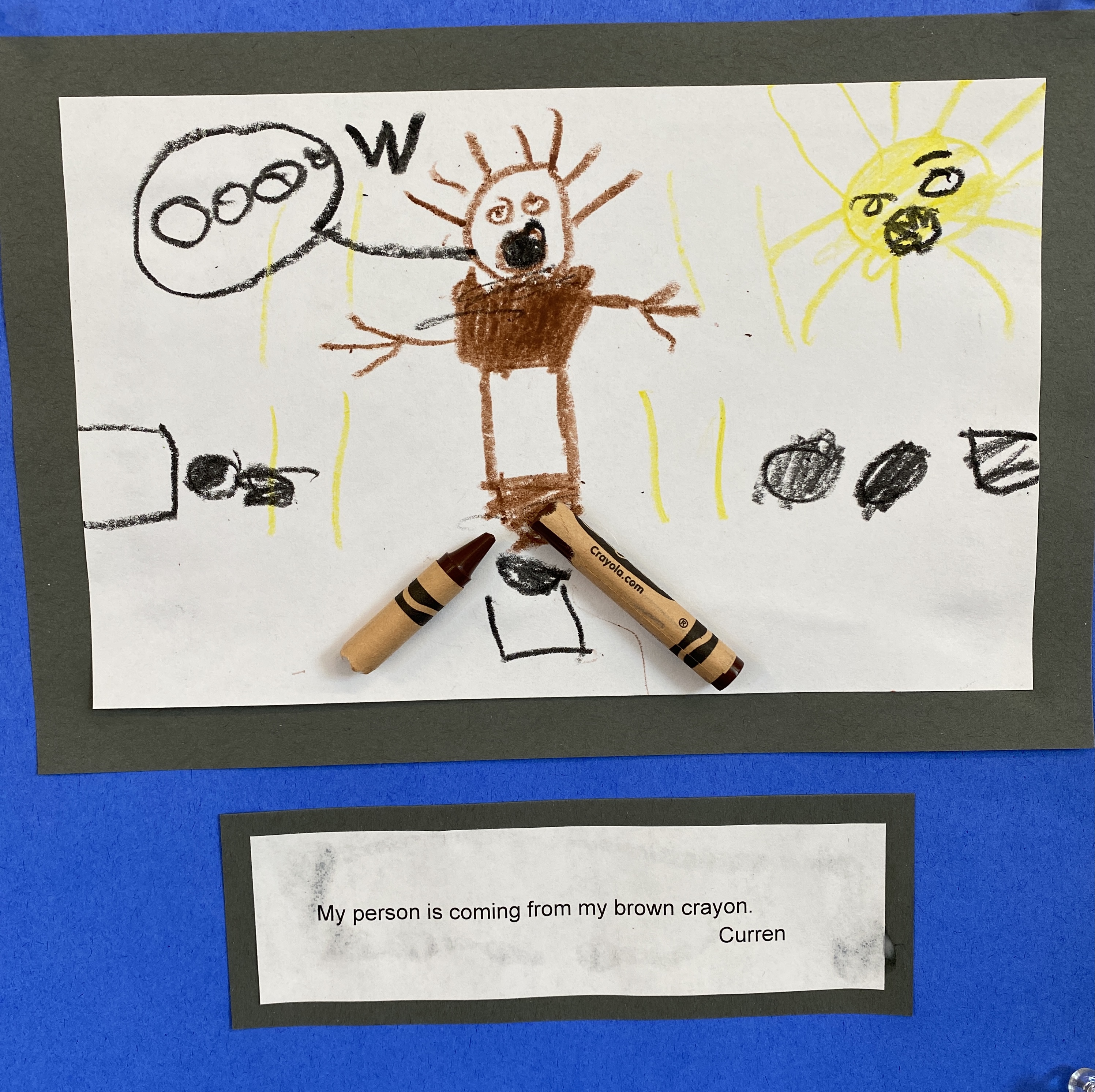
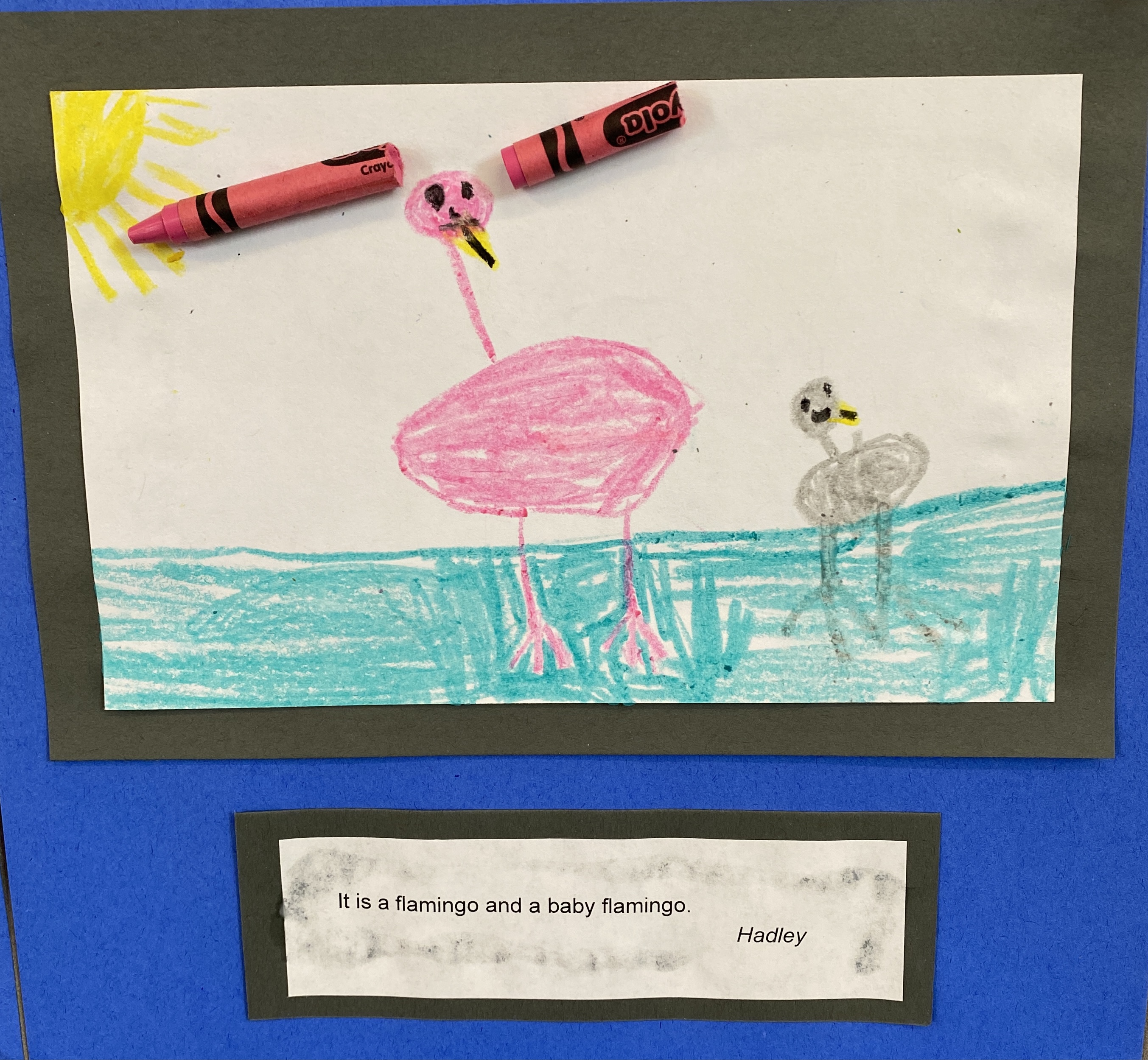
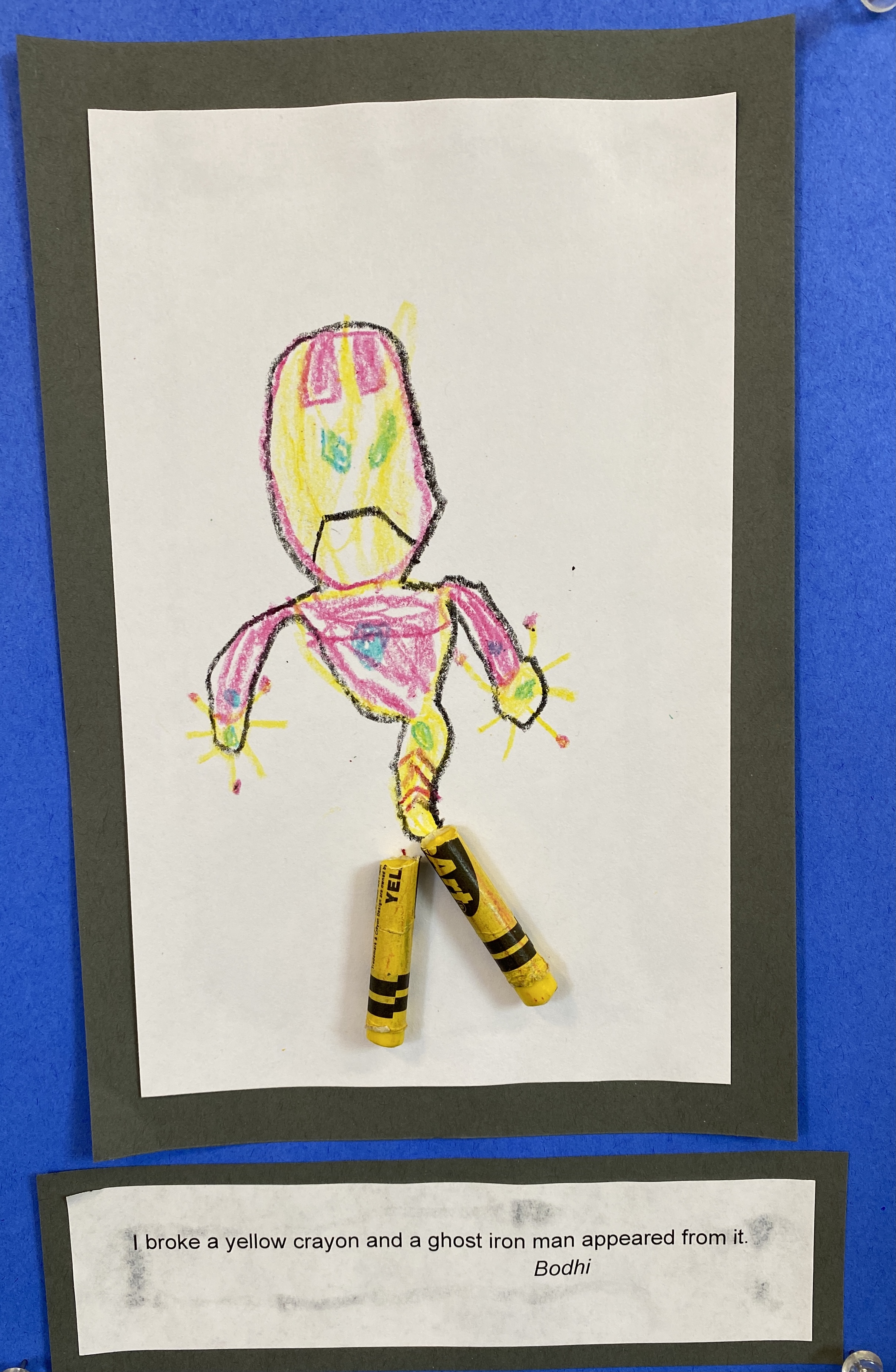
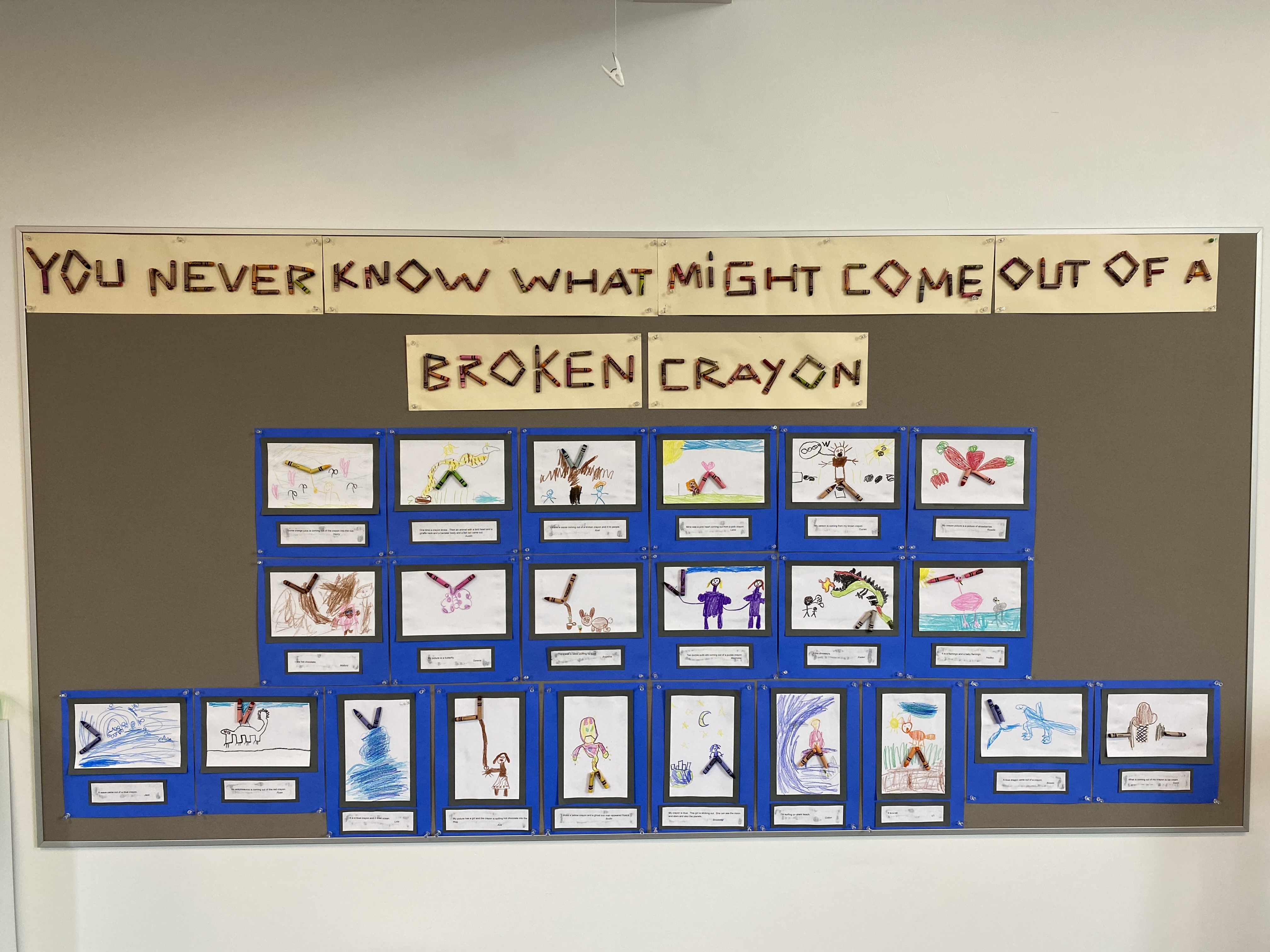
One of my favorite activities was inspired by author and artist Debbie Ohi. She has a series of illustrations created emerging from broken crayons. As part of our morning message yesterday, I asked each student what they could imagine coming out of a broken crayon. I heard about dragons, strawberries, flamingos and more.

We studied Valerie Worth’s poem, Crayons, noticing her use of the words grubby and stubs. We talked about how crayons work even if they are broken. And each student drew an illustration to accompany the poem.

But the true magic happened when each student selected a crayon, broke it, and created an image emerging from the broken crayon. After drawing, each 6-year old carefully glued their crayon pieces to their creation and carried their art over to a counter to dry. Then it was time to write.

I led with the assumption that they could all write. I reminded them that if they weren’t sure how to spell a word, they should write the sounds they hear when they say it. And they were off. I asked for a sentence about their crayon art. Some stayed safe, writing a simple sentence like, I made a cat. Others included more elaboration and showed confidence as writers. But all successfully used their imaginations and created something wonderful.

After school ended, I typed up their sentences and created a display for parents to browse when they come to school for Back to School Night next week. I hope they enjoy their children’s early first grade work as much as I do!

A Pandemic Field Trip

We want what we don’t have. At least I do.

I’m craving travel, exploration, connection, shared experiences, the opportunity to get out of the rut of the ordinary. So are my students.

Living and teaching during a pandemic is no picnic. But all of you know that. Uncertainty and change are the only constants…along with masks, hand washing, and physical distancing.

After three weeks of distance learning, my students came back to school last week. Sort of. Part time. I love, love, love having my students in the classroom again. But…

I have half of them at a time. One shift in the morning and a second shift in the afternoon after the janitorial staff comes in and disinfects the classroom. The AM group works independently in the afternoon from home, the PM group does the same in the morning before they come to school. And I am exhausted trying to keep up!

In spite of this hybrid schedule, I want students to have a rich and meaningful learning experience each and every day. I want them to think deeply and for curiosity to be an insatiable itch that only more reading, writing, observation, and investigation begins to scratch. I love to combine rich content with opportunities to explore, create, and connect. Science is often my go-to.

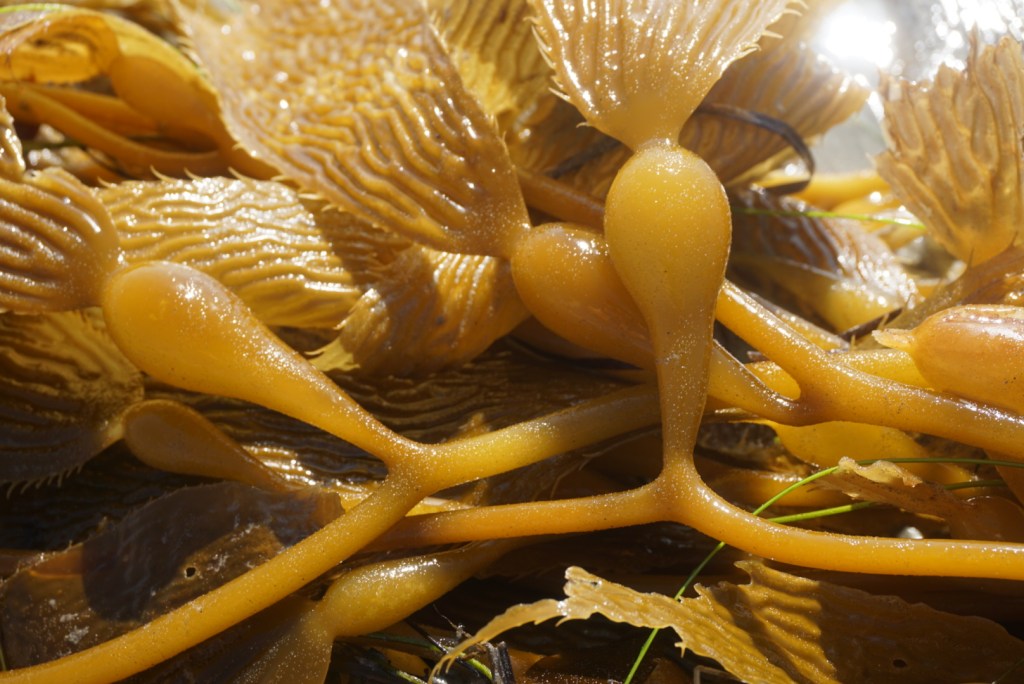
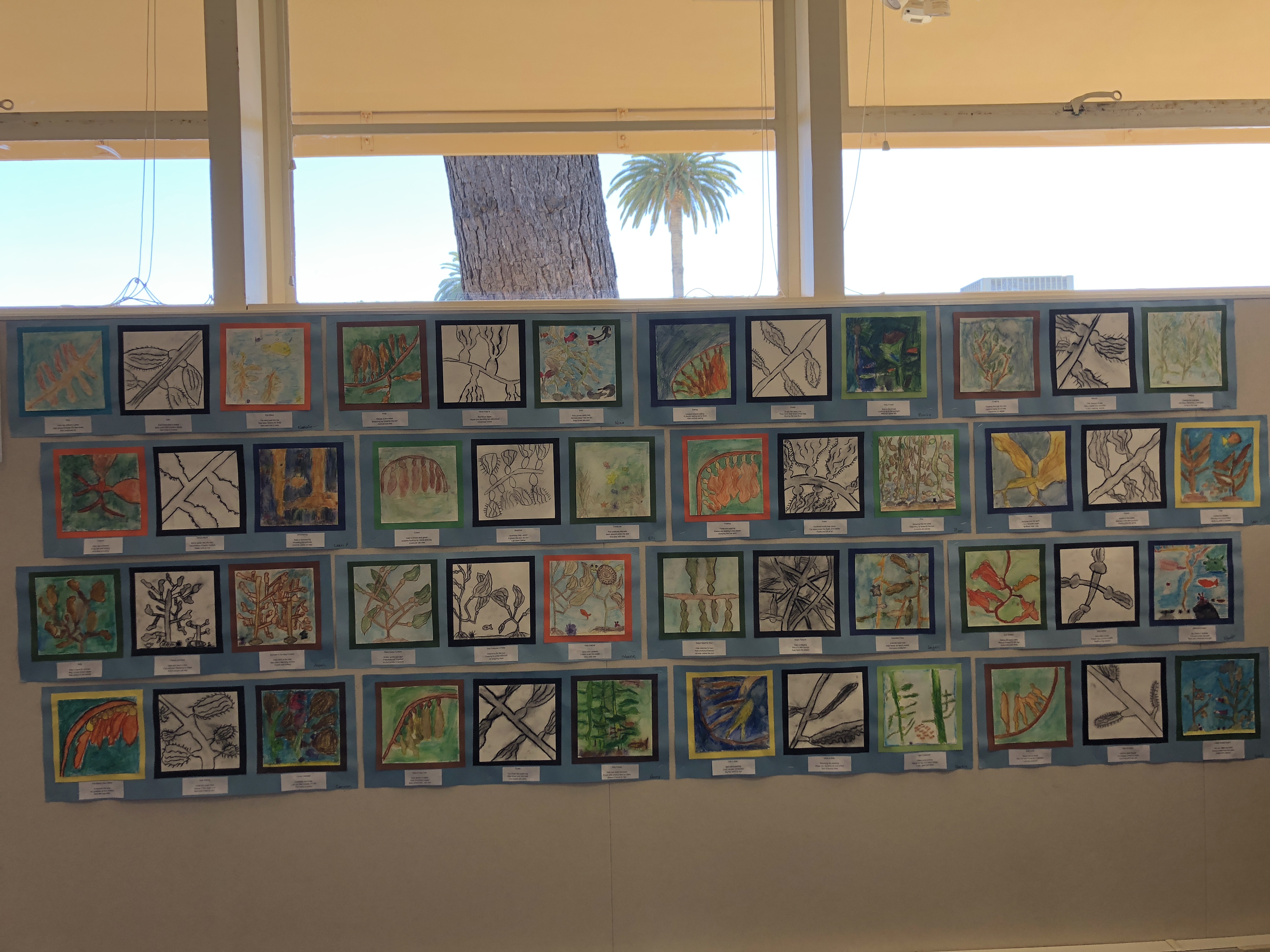
With the Pacific Ocean outside our door and plant and animal adaptations on our list of science standards, it makes all kinds of sense to study our local kelp forest. Macrocystis Pyrifera has become the basis of our study, the algae on which we build our knowledge.

We’ve done some reading, watched a video, and looked at some photos. Most years we head down to the beach and take a close up look or a parent heads in with a bucket full of these amber jewels. But not in coronavirus times.

So what could I do to breathe some life and variety into the learning in this hybrid classroom? What could I do to energize my own planning and teaching?

I decided on a field trip. Wait…the virus, the pandemic. I’m not even allowed to have all my students in the classroom at the same time!

Virtual field trip to the rescue.

My students don’t come to school on Wednesdays. I host a morning Zoom meeting with the entire class and then set them off to work independently for our minimum day. But this week, Wednesday became our field trip day.

I remembered that the Monterey Bay Aquarium had live cams and a huge kelp forest tank, so I headed to their website to see what kinds of opportunities might exist for my students. I uncovered a wealth of resources! This is a place I had always wished I could take my students to visit, but it is halfway up the state…well out of reach of a field trip even in the best of years!

So how would I organize this virtual field trip so my 8 and 9 year old students could access these resources independently? After some trial and error, I decided to create a slide deck to guide them through a variety of activities. I assigned some specific activities and offered choices for others. And to slow them down and encourage close observation and focused attention, I provided a paper packet for note taking…with a reminder that we will use these in class next week.

I know I was more excited about this virtual field trip than they were–there was great disappointment when they learned we weren’t actually going anywhere! But first indications suggest they did have fun…and learn some things. I’ll know more on Monday!

In the meantime, maybe you are in need of a field trip and an immersion into in the kelp forest. Here’s a link to my slide deck.

So, I didn’t get to travel…but I did get to explore and dig myself out of my usual lesson planning routine. I watched sea otters frolic, jellies undulate, and giant kelp sway. And I’m plotting how to put my students’ new found knowledge about the kelp forest ecosystem to creative use in the classroom next week.

I’m also already thinking about that next virtual field trip. Where should we go? What should we study? If you have great ideas about places with a variety of resources, I’d love to hear all about them!

#USvsHate: Going National!

How do you deal with hate in the classroom?  As teachers, I know we all work on building safe and productive learning communities–places where the young people entrusted to our care can thrive.  But sometimes the world creeps in. Kids hear hurtful comments and see hurtful actions–on media, from adults or others in the community, then bring them to school to test out their impact on their classmates and peers.  

And frankly, for whatever reasons, we live in a society where hate has become normalized.  So what do we do about it?

USvsHate screen shot

This is where #USvsHate comes in.  Mica Pollock and a small team of teachers in San Diego decided to take advantage of the many anti-hate lessons freely available through a variety of organizations (Teaching Tolerance, Facing History and Ourselves, the Anti-Defamation League, Rethinking Schools, the Bully Project and more) to open up spaces for students (kindergarten through college) to learn about the origins of hate, to explore their own experiences with hate, and to create messaging to publicly refuse hate.  

Last year, I was fortunate to join the leadership of this effort as director of the San Diego Area Writing Project (SDAWP) along with a team of SDAWP teacher leaders.  We piloted lessons–some directly from the organizations listed above, and some we had created or adapted for our own contexts and academic requirements–and had our students create anti-hate messaging.  I had a front row seat to the empathy and creativity of San Diego students as I helped judge entries from the #UsvsHate contests in November, February, and April. (And of course as I implemented #USvsHate into my own classroom!)

I traveled to the Southern Poverty Law Center in Montgomery, Alabama in July with our team as we presented #USvsHate to the team at Teaching Tolerance.  And it made its national debut this week!  

Join us in the effort to refuse hate and to amplify student anti-hate messaging.  Read the article in Teaching Tolerance for more background information and check out usvshate.org for lessons to use with students, examples of winners and finalists, and protocols and supports for opening up potentially difficult conversations in the classroom..  Our collective action can and will make a difference!

Time Travel

I’ve really been feeling the pinch of time in my classroom this school year.  My new schedule has me on campus only three days a week, handing my classroom over to a partner teacher for the other two school days.  I feel super productive when I am away from school, with long stretches of time to focus on specific work, flexible hours to schedule meetings and phone calls, and the ability to arrange most of my work travel on days I am not on campus.

But…I feel like time is taunting me when I am with my students.  Each lesson and project seems to take longer than anticipated, forcing me to leave work hanging across weeks instead of days. I’ve found myself prioritizing and rethinking everything I ask students to do.

My past practice has been to use Fridays as a day of reflection and work completion, giving students long stretches of time to read and write and think.  Without new instruction, they could dig deep, revise, rethink, and get projects done.  Today, Monday became that kind of day (I no longer have Fridays with my students).  I did have to spend some time reviewing expectations, reminding students of the work we started, but then they dug in…and that beautiful thing happened.  Work began to hum, students were engaged, working at their own paces, allowing me to help individuals as needed.  Time both stopped and flowed–no one needed to use the bathroom, roll around on the floor or annoy a classmate.  I wasn’t feeling the need to rush students with my eyes glued to the clock, dolling out minutes like rationed resources (I’m thinking about the water restrictions we experience in Southern California).

The reality was that still everything didn’t get done.  I’m already reevaluating and reprioritizing my plans for tomorrow, pushing off launching that new math concept to make space for a bit more finishing time, figuring out ways to make space to confer with students over a piece of writing they’ve been working on and provide feedback on another project.  And I’m excited about some new reading and writing I have planned for tomorrow…something I’m already anticipating taking more of that precious time than I initially allotted.

Somehow I will figure out how to travel through time this year, carefully balancing new content with time to dig deep, think carefully and produce meaningful, high quality work products.  I know I’ll still find myself with unfinished student work, lessons that run short and those that run long, requiring that continual rethinking of lesson plans.

I’m hoping that this will be the year that I learn to make time jumps, those science fiction leaps of faith:  pushing time forward to see which lessons produce the best results and scrapping those that end up as a waste of time.  But…just in case that doesn’t happen, I’ll keep paying close attention to my students, adjusting to their needs and reworking my plans to make sure school is more about learning than about time.

kelp haiku and art


A Day of Love and Learning

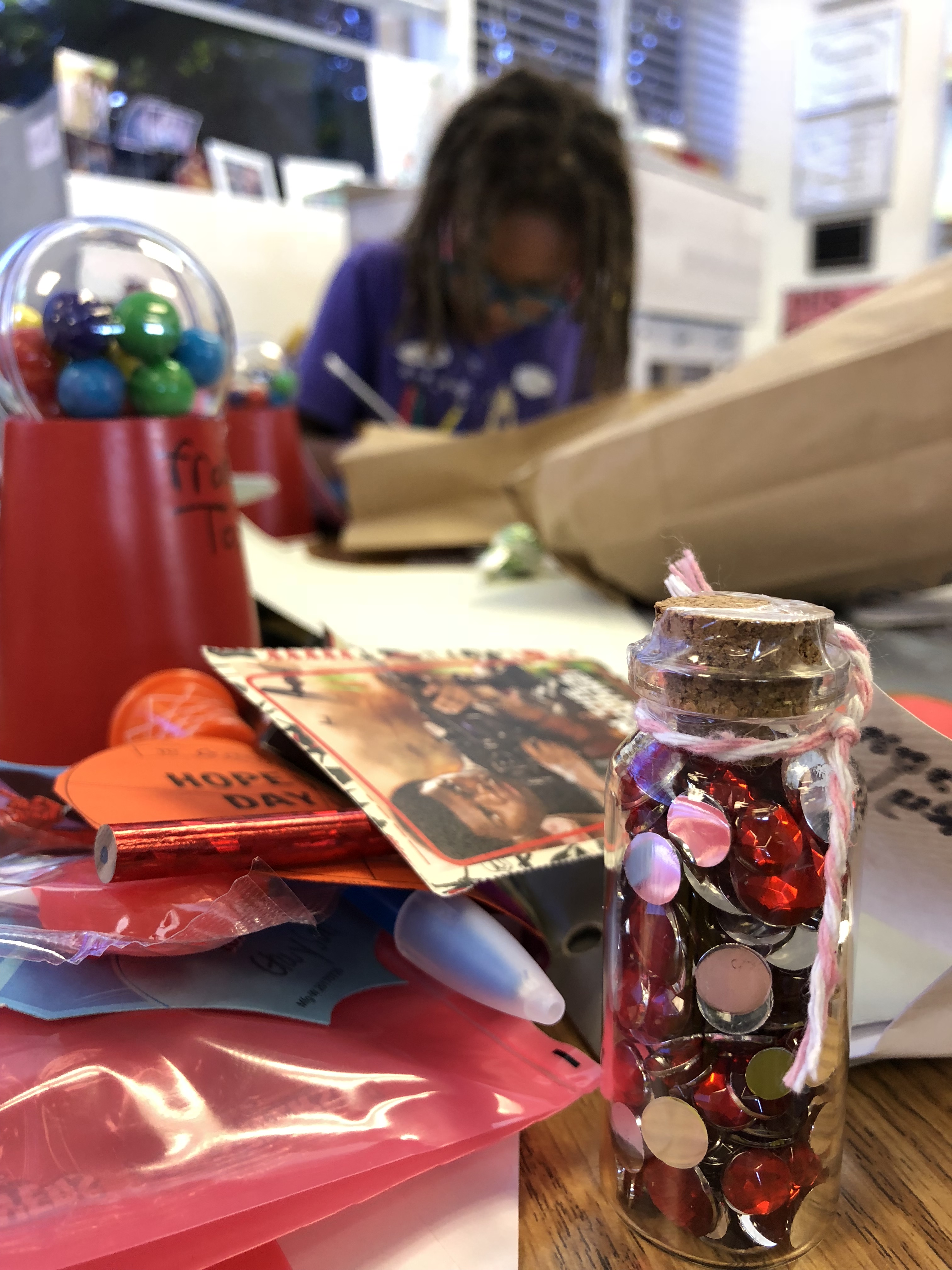
They practically danced in this morning, clutching bags of carefully labeled Valentines for their classmates.  Anticipation of candy, trinkets, and a day of celebration made the energy palpable.

I’ve spent years dreading Valentine’s Day.  Not because the holiday makes me feel sad or because I have any real complaint with the holiday overall, but because it has felt like a wasted learning day.  The high of Valentines and candy overshadowing math and reading and writing.  I tried ignoring Valentines, banning them outright, shoving them off to the side…none resulting in a satisfactory outcome.  I kept coming off as the Ebenezer Scrooge of February, ruining everyone’s fun.

So I decided to try something new this year.  After much thought, I approached my students a few weeks ago to talk about a potential plan for the day.  I started by asking my students if they wanted to bring Valentines for their classmates.  It was unanimous.  Every student wanted to bring them–some had already purchased them or started making and/or planning their hand-crafted gifts.  So I asked if they were interested in using their Valentines as a learning tool and having a Valentine’s themed day of learning.  Again, it was unanimous.

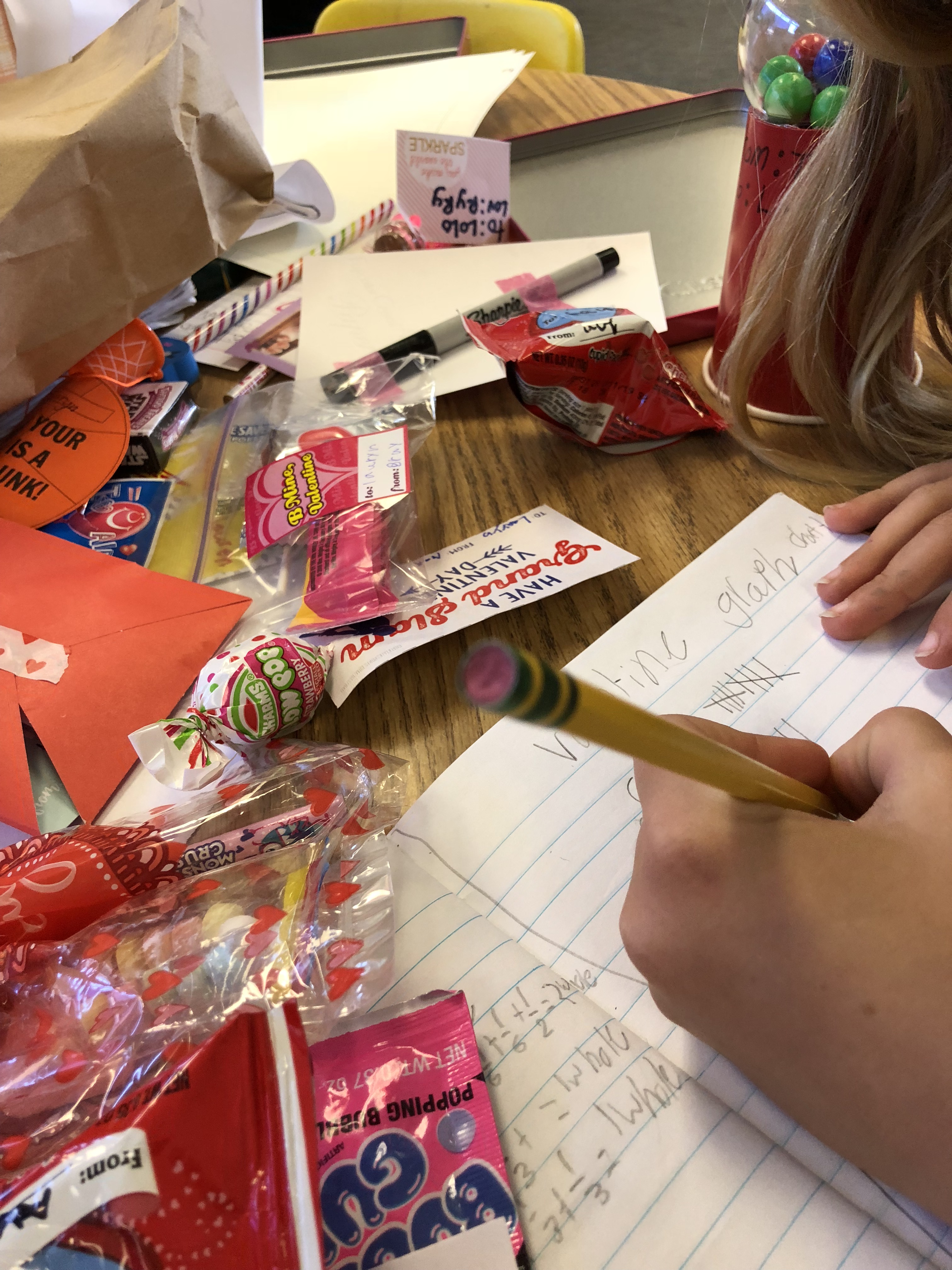
I didn’t want to just add hearts to math problems and read a Valentine picture book.  I wanted whatever we did to fully incorporate the actual Valentines and push our thinking and learning forward.  I decided on graphing and spent some time Monday and Tuesday reviewing the essential elements of a graph.  My students are already adept at interpreting graphs, but not quite as confident building their own.  Yesterday we explored creating a data set and practiced constructing our own graphs as a class.  Today, once the Valentines were all distributed, I asked students to sort their Valentines into 3-5 categories to create a data set for the bar graph they would create.  I loved watching the focus as the Valentines were sorted for a reason, data sets recorded in their math notebooks, and graphs created on “real” graph paper.  They willingly put the Valentines back into their bags and put them deep into their backpacks for the rest of the day.

glitter

data set

After recess I pulled out Love by Matt de la Pena.  I love a book that makes me think…and makes kids think.  I loved watching their faces as I read each page and showed the pictures.  Looks of confusion showed as they tried to figure out love defined as adults blocking the view of the TV and love as burnt toast.  Smiles appeared as the story turned to love as a game of horseshoes.  I heard a student gasp as the beautiful brown face appeared in the mirror. The discussion that followed brought up understandings about loss and love, death and memory.  We decided that we will re-read the book tomorrow, there is more that we want to explore.

The day flew by, we didn’t have enough time for all I wanted to accomplish today so we will continue tomorrow.  In my 29th year of teaching I continue to learn from my students.  When I listen to their needs and desires and combine them with my own goals, magic happens.  That crazy holiday energy that can make teachers want to pull our their hair became my friend today, pushing students to think and create…and yes, to learn. I’m already thinking about next year’s Valentine’s Day and how I will include my students in the planning to make the day productive and have fun doing it!  I #loveteaching every day, even on Valentine’s Day.

Valentine's Day