Tag Archives: poetry

Getting Ready for #CLMOOC

While I haven’t participated in #rhizo15, I have been intrigued by the ideas behind rhizomatic learning and the thinking that learners can direct themselves, learn from one another, and transform learning in the process.  (If I have that wrong…someone please correct me!)  And the Connected Learning MOOC, known as the #CLMOOC (massive open online collaboration) is starting up in a few weeks!

So instead of cleaning my house or working on report cards last week, I started playing with some photo apps, creating some photo art.  And then yesterday Margaret Simon initiated a #digilit challenge…with the first week being focused on creating #photoart.  How could I resist?

So I started with the image I had created using the app Waterlogue, creating a watercolor version of the photo I had taken.  Then, because Margaret modeled adding poetry to hers, I decided to create a haiku to express why I had stopped and snapped the photo in the first place.  I shared this image with her on Facebook yesterday.

Preset Style = Natural Format = 6" (Medium) Format Margin = Small Format Border = Sm. Rounded Drawing = #2 Pencil Drawing Weight = Medium Drawing Detail = Medium Paint = Natural Paint Lightness = Normal Paint Intensity = Normal Water = Tap Water Water Edges = Medium Water Bleed = Average Brush = Natural Detail Brush Focus = Everything Brush Spacing = Narrow Paper = Watercolor Paper Texture = Medium Paper Shading = Light Options Faces = Enhance Faces

And then today I decided to do some exploring and mess around with Thinglink to add some other media to the image.  I started by adding a link to the original photo I had taken before turning it into a watercolor painting.  I also decided to add a favorite piece of music, so I linked a YouTube video of Louis Armstrong’s What a Wonderful World.  And then, just for fun, I added the link to Margaret’s Pinterest page where there are examples of other’s #photoart.  Here’s my result:

https://www.thinglink.com/scene/659592420828119042

I hope you will also join in the fun…create some #photoart…and join us at the CLMOOC starting in June!

Enormous Smallness: April’s Photo a Day Challenge

Photography reminds me to appreciate moments, to slow down and notice light and shadow, a fleeting smile, the graceful curve of a limb and the reflection in a mirrored wall.  Another blogging photographer I admire, Joy of Joyfully Green, just today said, (photography) “…literally lets me stop time for a split second.”

There is something enormous about capturing the smallness of moments–making time stand still–so we can look more closely, study the details, and savor what is often unnoticed.  Paul Strand (among others) did that with his photography.  A friend of mine recently gifted me with some Paul Strand photo postcards from the recent exhibit at the Philadelphia Museum of Art…and I am inspired by the simplicity and grandeur of the everyday moments he captured.

IMG_4865

And I borrowed the title of this post from the title of a picture book I ordered today about the life of ee cummings–a poet who captured enormous smallness through his poetry.  It seems fitting to celebrate the special qualities that photography and poetry share during April…typically a month that celebrates poetry (at least in schools).

Just this afternoon I was mesmerized by the buds on the orchid plant that nearly didn’t survive some time outdoors during our recent kitchen remodel…and the afternoon sunlight highlighted the enormous smallness of these emerging blossom.

IMG_4921

And this tree that grows near my driveway often appears in photos when the sky catches my eye…like this sunrise a week or so ago.

IMG_4698

Sometimes the enormous smallness is found in places where I share experiences–and food–with friends and family.  And the people who accidentally appear in them serve to enhance that quality, like this photo of the Shake Shack in Washington DC…

IMG_4857

or this from the inside looking out from Milk and Honey in Baltimore.  (I like the way the words are reversed since I was photographing from the inside rather than the outside.)

IMG_4924

Sometimes it’s in the grandeur of the mirrored high-rise that I notice the reflection of the neighborhood…

IMG_4925

or the durability of historic architecture that reminds me that there is much to be learned by reading the world rather than solely depending on books.

IMG_4897

Then there is the interplay of past, present, and future in our nation’s capitol–the place where government resides, but doesn’t live.  Our laws and values are enacted in our neighborhoods and cities, but there is something about buildings like the capitol building that remind us that what is national is also local.

IMG_4870

And in my local community where this historic movie theatre still hosts first run films, a place where people gather in the shadows of those who settled this area before the streets and infrastructure that we take for granted existed, we see that our lives interact with those who came before and will influence those who come after us.

IMG_4917

So April’s photo-a-day challenge is to seek out enormous smallness, the beauty in the everyday, the complexity in simplicity, making meaning of seeming chaos.  If you need them, here are some prompts to get your started:

1. April Fools

2.  history

3.  place

4.  outdoors

5.  new

6.  family

7.  work

8.  poetry

9.  laughter

10.  inside

11.  misery

12.  in front of

13.  behind

14.  tears

15.  life

16.  tired

17.  energetic

18.  writing

19.  fear

20.  house

21.  wheels

22.  doors

23.  nature

24.  advocate

25.  old

26.  near

27.  eyes

28.  food

29.  small

30.  enormous

So for April, find the poetry in the everyday…be on the lookout for enormous smallness. Pick a single photo to post each day or create a gallery of your efforts. Post a photo or gallery each day with the hashtag #sdawpphotovoices to Twitter, Instagram, Flicker, Google+ and/or Facebook (the more the better!), so that we can all enjoy the posts. If you would like to expand your exploration, write the poem or the story of the photo, compose a blog post about a photo, a week’s worth of photos, write a photo essay, or make a video or slideshow. You are invited to create a pingback by linking to this url or post your blog address in the comment section. It’s fun for me to see what others are doing with the same prompts I am using!

You can post every day, once a week, or even sporadically throughout the month…whatever works in your life. You can post your pictures in the order of the prompts or post the one you find on the day you find it–or make up your own prompt for the day or the week! You get to make your own rules as you seek out your own enormous smallness. Be sure to share and tag your photos with #sdawpphotovoices so we can find them!

Appreciate those moments…and be on the lookout for instances of enormous smallness in your life.  I can’t wait to see what you capture through your lens!

Fall’s Nighttime Beach

As the season shifts from summer to fall

nighttime begins to stretch, lengthening shadows

and shortening the day

Light plays hide and seek with the sun and clouds

painting with colors only nature knows

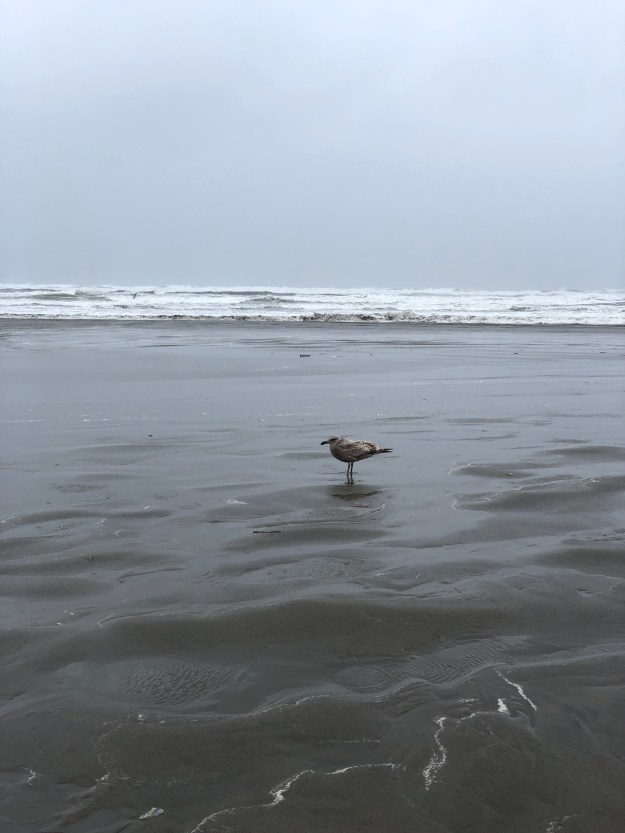
seagulls in the blue light

seagull in soft light

The photographer frames the bride in the glow

of the setting sun

and she turns, and smiles washed in the soft warmth of the sinking sun

sunset bride

and the dog frolics, running the gauntlet of kelp

through the rivulets of salty water as the low tide starts to rise again

sunset dog

At the edge of nighttime, light creates silhouettes

shadowy outlines framed by light

a bicyclist

sunset bicycle

a seagull

seagull silhouette

As I head for home, the lights come on

darkness is near

stone steps lights

Those who play at the beach into the night

build their bonfires

and settle in

to enjoy

fall’s nighttime beach

sunset bonfire


Finding Beauty in the Ordinary: July’s Wabi Sabi Photo-a-Day Challenge

Summer is about the ordinary, it’s often the time we rediscover our playful selfs as we encourage children (and maybe ourselves) to run through the lawn sprinklers, lick popsicles from the ice cream truck, and spit watermelon seeds as we sit on the front porch.  We roll up our sleeves, walk barefoot, and sip glass after glass of iced tea in tall frosted glasses that drip, almost crying with the pleasing coolness on a hot, summer day.

I first heard of Wabi Sabi from my friend Susan a few years ago when she asked her students to focus on the ordinary in research projects they were doing in her middle school English class.  I remember how excited she was that they were discovering the beauty in the “old school”—typewriters, rotary dial phones, handwriting…and so much more than I can’t even begin to remember now.  

Wikipedia offers us this definition:

Wabi-sabi (侘寂?) represents a comprehensive Japanese world view or aesthetic centered on the acceptance of transience and imperfection. The aesthetic is sometimes described as one of beauty that is “imperfect, impermanent, and incomplete”.

My photography has heightened my awareness of the complexities of beauty in the ordinary as I have learned to tune my eye to seek out the familiar in new ways.  So when Margit gifted me with the picture book, Wabi Sabi by Mark Weibstein, I found myself thinking about the Wabi Sabi around me.  Weibstein pairs his story of a cat named Wabi Sabi with Haiku, following the Americanized three-line, 5-7-5 syllable pattern, that helps the definition-seeking cat understand its name…and adds this definition, for us slower to understand folks, as well:

Wabi Sabi: a way of seeing the world. It finds beauty and harmony in what is simple, imperfect, natural, modest, and mysterious. It can be a little dark, but it is also warm and comfortable. It may best be understood as a feeling rather than as an idea. 

The more I have been thinking about this concept of Wabi Sabi, the more I want to explore it more intentionally through my lens.  

Here’s a few of my ideas…along with a Haiku attempt with each.  Each of these represents my interpretation of Wabi Sabi, an appreciation of the imperfect, often fleeting beauty I find through my lens.  Letting 17 syllables speak for me is a challenge, but an interesting one, creating another layer of Wabi Sabi for me.

Lizard_wabi sabi

A flurry and munch!

Time for posing and sunning

Scaly modeling

Mountains from Iron Mountain

Purple mountains stand

Off in the distance watching

Both desert and beach

broken sculpture ucsd

It’s a hard knock life

Reflecting privilege’s promise

Strong enough to thrive

kegs

Kegs and art mingle

Chatting on a street corner

Exchanging cultural news

And to stretch my exploration (and yours too) I have come up with a list of potential prompts or categories to consider.  (I notice that I tend toward nature for my photographic exploration of beauty–these prompts are meant to push my thinking and seeing in new ways.)

1.  On the corner

2.  Nature

3.  People

4.  Celebrate

5.  Inside

6.  Under

7.  Home

8.  Outside

9.  Places

10.  Animals

11.  Food

12.  Personal

13.  Things

14.  Mood

15.  Looking up

16.  Sitting down

17.  Looking down

18.  Early

19.  Growing

20.  Morning

21.  Sound

22.  Growing

23.  Feeling

24.  Places

25.  Night

26.  Light

27.  Hot

28.  Early

28.  Travel

29.  Between

30.  Smell

31.  Icy

So now it’s your turn.  Explore what Wabi Sabi means to you as you examine the ordinary in your life this summer.  After you shoot, post a photo each day with the hashtag #sdawpphotovoices to Twitter, Instagram, Flicker, Google+ and/or Facebook (the more the better!), so that we can all enjoy the posts. Try your hand at an accompanying Haiku and explore how it expands, defines, or changes the meaning of the image you share. You are invited to create a pingback by linking to this url or post your blog address in the comment section. It’s fun for me to see what others are doing with the same prompts I am using!

With summer in full swing, it’s the perfect time for some playfulness and experimentation…look for beauty and the unexpected in the ordinary–let it surprise and delight you!  You can post every day, once a week, or even sporadically throughout the month…whatever works in your life. You can play this game by posting your pictures in the order of the prompts or post the one you find on the day you find it.  You get to make your own rules!  Be sure to share and tag your photos with #sdawpphotovoices so we can find them!


What’s in Your Pocket?

Tomorrow is Poem in Your Pocket day, the day when poetry is celebrated by carrying a favorite poem in your pocket and sharing it with others.  So before we left school today, my teaching partner and I gathered poems for our students to choose from and she made a darling display of pockets that we stuffed with poems and hung on the door.

And when I got home I started thinking about the poem I will carry in my pocket tomorrow.  And it’s hard…there are so many wonderful poems out there.  I love different poems for different reasons.  As I started thinking about poems I know and love, I remembered a favorite that I haven’t revisited in a while.

Valentine for Ernest Mann

by Naomi Shihab Nye
You can’t order a poem like you order a taco.
Walk up to the counter, say, “I’ll take two”
and expect it to be handed back to you
on a shiny plate.

Still, I like your spirit.
Anyone who says, “Here’s my address,
write me a poem,” deserves something in reply.
So I’ll tell a secret instead:
poems hide. In the bottoms of our shoes,
they are sleeping. They are the shadows
drifting across our ceilings the moment
before we wake up. What we have to do
is live in a way that lets us find them.

Once I knew a man who gave his wife
two skunks for a valentine.
He couldn’t understand why she was crying.
“I thought they had such beautiful eyes.”
And he was serious. He was a serious man
who lived in a serious way. Nothing was ugly
just because the world said so. He really
liked those skunks. So, he re-invented them
as valentines and they became beautiful.
At least, to him. And the poems that had been hiding
in the eyes of skunks for centuries
crawled out and curled up at his feet.

Maybe if we re-invent whatever our lives give us
we find poems. Check your garage, the off sock
in your drawer, the person you almost like, but not quite.
And let me know.
– See more at: http://www.poets.org/viewmedia.php/prmMID/23872#sthash.CJvqErxc.dpuf

I love the idea that poems hide…and that you have to live in way that lets you find those
hidden poems.  I feel like photography is like that too.  It lets me look into the eyes of skunks
and find the beauty they hold.  It lets me see weeds as beautiful, tenacious survivors instead
of persistent pests.  Beauty is in the geometry, in the contrast of color, in the juxtaposition of
ideas, in the wonder that comes from noticing instead of just walking by.
I think I’ll carry a photo in my pocket tomorrow too.  To remind me to live in ways that allows
me to find poems…and pictures.
dandelion in the street
What will you carry for Poem in Your Pocket Day?  How will you live to let poems find you?

Wise Words Inspire: April’s Photo-a-Day Challenge

It seems like a chicken and egg dilemma: does the picture inspire the words or do the words inspire the picture? I’m never quite sure. I often go out and take photos of things that catch my eye and later go back and figure out how to make it work for the photo prompt of the day. On other days a single photo will bring a flood of words, and then sometimes with a word or words as prompt, my eye is tuned to find photo opportunities I wouldn’t have noticed otherwise.

With spring in the air (even though we in southern CA haven’t had much of a winter), I find myself looking for signs of the seasons: buds emerging, flowers blossoming, baby animals, warm breezes, rejuvenating rainfall, and all the poetry they evoke. My friend Janis was inspired to find some quotes for us to use as prompts for our April #sdawpphotovoices photo-a-day challenge.

So for April, let each prompt inspire a week of photos. Take the quote literally or figuratively. Take some photos and examine them with the quote in mind to find the intersections and connections or read and ponder the quote and then head out to find the images that the quotation evokes. You get to decide if your photo matches the prompt!

After you shoot, post a photo each day with the hashtag #sdawpphotovoices to Twiiter, Instagram, Flicker, Google+ and/or Facebook (the more the better!), so that we can all enjoy the posts. If you are game for some extra action, compose a blog post about a photo, a week’s worth of photos, write a photo essay, try a learning walk, or write some poetry or even a song! (More about learning walks here and here) You are invited to create a pingback by linking to this url or post your blog address in the comment section. It’s fun for me to see what others are doing with the same prompts I am using!

Week 1: April 1-6

Nature will bear the closest inspection. She invites us to lay our eye level with her smallest leaf, and take an insect view of its plain. —Henry David Thoreau

orange bud

Week 2: April 7-13
I had always planned to make a large painting of the early spring, when the first leaves are at the bottom of the trees, and they seem to float in space in a wonderful way. But the arrival of spring can’t be done in one picture. —David Hockney

orange flowers

Week 3: April 14-20
Look deep into nature, and then you will understand everything better. —Albert Einstein

purple fist bud

Week 4: April 21-27
Spring has returned. The Earth is like a child that knows poems. —Rainer Maria Rilke
and/or
Earth laughs in flowers.—Ralph Waldo Emerson

flowers red and pink

Week 5: April 28-30
What is the good of your stars and trees, your sunrise and the wind, if they do not enter into our daily lives? —E. M. Forster

sun on water

Let these wise words inspire your photographic art in April! Have fun, be creative, explore the limits of your photography…April is the perfect time for new beginnings. You can post every day, once a week, or even sporadically throughout the month…whatever works in your life. Be sure to share and tag your photos with #sdawpphotovoices so we can find them!


Dancing with Sandpipers

A while back there was a photo challenge on the Daily Post called three, which I misinterpreted to mean a photo about something with three in it.  Instead, their focus was to tell a story in three photos.  Ever since then, I’ve been meaning to tell a story in a series of photos.

Yesterday while walking on the beach, I noticed a group of sandpipers on the shore.  I love these birds with their long thin beaks and gangly teenager legs.  Most of the time I see them in twos or threes, but seldom in a large group.  I walked toward them with my phone, wanting to edge closer to them to capture a photo.  As I walked toward them, they walked away.  If I curved around the other side, they moved together at another angle.  I felt like I was herding these birds as they countered each of my moves with one of their own.

And then, all at once, they lifted off, wings in unison and landed in the surf a short distance away.

sandpipers on shore

taking flight

in the surf

And instead of a story told by these photos, a poem emerged. I’m not so sure it’s right yet.  I want to capture the elegance and the musicality of these birds on the beach.  I’d love your feedback.  What works for you?  Where do you wish for something more, or something else?

Dancing with Sandpipers

They move to the rhythms of the waves

and the tides

to music felt rather than heard.

In perfect unison

they pirouette on long thin teenage legs

dipping skinny beaks into the spongy sand

in search of tasty tidbits.

I move in close

and they echo, like dancing with a mirror

until the choreography takes them to the sky

leaving me behind

to solo

alone with my lens.

The Power of Multiple Mentor Texts

Writing is hard work.  Some days the writing flows and I know how to put my words together to achieve the desired effect…but at other times I feel  stuck or confused or unsure about how to approach the writing task in front of me.

That’s where mentor texts come in.  I look for pieces written by others that do what I am trying to achieve…and study them to learn from those writers who are acting as my mentors. Sometimes I learn about structure and how to organize my ideas.  Sometimes I am inspired by word choice and craft elements.  Sometimes I notice text features and literary devices.

And for the young writers in our classroom, we work for find mentor texts to support their development as writers.  We like to use multiple texts, knowing that not all texts work for all students…and to show that not all writers approach the same kind of writing in the same way.

And sometimes the just-right mentor text sings.

Last week our students studied four poets and their poems about snow as they got ready to write poems about snowflakes.  We started with an old friend, Valerie Worth.  Her small poems are a treasure: short and rich, filled with imagery and powerful language.  And then we turned to an unusual mentor text…an “old” poem with some unfamiliar language.

On a Night of Snow

Cat, if you go outdoors you must walk in the snow.  You will come back with little white shoes on your feet, little white slippers of snow that have heels of sleet.  Stay by the fire, my Cat.  Lie still, do not go.  See how the flames are leaping and hissing low, I will bring you a saucer of milk like a marguerite, so white and so smooth, so spherical and so sweet–Stay with me Cat.  Outdoors the wild winds blow.

Outdoors the wild winds blow, Mistress, and dark is the night.  Strange voices cry in the trees, intoning strange lore; and more than cats move, lit by our eyes’ green light, on silent feet where the meadow grasses hang hoar–Mistress, there are portents abroad of magic and might, and things that are yet to be done.  Open the door!

Elizabeth Coatsworth

The first response from my students was, “What?”  We reminded them to focus on what they understood about the poem rather than what they didn’t…and they picked up on the “little white shoes” right away.  Then one of our students pointed out that each of the stanzas was told from a different point of view…the first was talking to the cat, the second was the cat talking to the Mistress.  With that comment, one of our third graders, M,  couldn’t contain herself!  “Oh, now I see it!  I want to try that!”

When we went to write, she started immediately.  M had already talked about the metaphor she wanted to try on…an idea about a blank canvas to represent the whiteness of snow…when we had studied Valerie Worth’s poem the day before.

Here’s her poem:

The Snowflake Outside

Snowflake, you have no choice but to fall. So keep dancing down like a ballerina, making the world empty of color like a frustrated artist’s blank canvas. Snowflake, keep whirling magically and descend daintily onto my sleeve. From a great sky you fell.

Yes, from a great sky I fell so let me keep falling forever and ever. Don’t let me land on the frosty ground. I want to have my life forever. I want to show my style and unique ways. I don’t want to land, melt, or be unnoticed. Let me keep falling and blowing with the wild whistling wind.

M

There’s magic when the just-right mentor text provides the just-right support for the writer. You can see how M used the structure of Coatsworth’s poem as a container for her ideas, images, and feelings about snowflakes.  Before she was introduced to this poem she had already done some writing about snowflakes, thinking about movement, metaphor, and imagery.  The idea of shifting the speaker inspired her writing and gave her the shape she was looking for.

Most of the time we try to avoid mentor texts that directly address the topic/subject we are focused on.  But poems about snow are plentiful and we had many choices of mentor texts about snow…and our students have little experience with snow and snowflakes (except those they made by cutting paper) beyond what they have seen in books, movies, and photographs since it doesn’t snow where we live.

I love when a mentor text nudges a writer to try something new and stretch her wings.  And I am reminded that writers need a variety of mentor texts to learn from…rather than a single model.

What mentor texts have you used lately?

photo_2-2

Thinking about Poetry

Over at The Nerdy Book Club, Cindy has invited readers to share their favorite poets or poems.

I love poetry…especially in the classroom.  Each week in our classroom we study a poem, noticing what the poet is doing and paying attention to the images it creates in our minds.  We read it aloud and notice how the words feel in our mouths.  Individual students read and together we read chorally.

Later in the week, we revisit our poem and create an illustration that captures our understanding of the poem.  We glue our poem and illustration into a composition book we call our poetry anthology.  By the end of the school year, students have read, studied, and illustrated more than 30 poems…over the course of the three years they spend in our multiage classroom, they have close to 100 poems collected and illustrated to take home and treasure.

One of my favorite poets to share with my young students is Valerie Worth.  I love her short poems.  They are accessible to children.  And I love that she writes about ordinary things.  But these are not simple poems…they are full of imagery, word play, and figurative language.

One of my favorites is Safety Pin.

safety pin

Valerie Worth

Closed, it sleeps On its side Quietly,
The silver Image

Of some Small fish;

Opened, it snaps Its tail out
Like a thin Shrimp,

and looks
At the sharp Point with a Surprised eye.

photo

What poets and poetry do you love?