Tag Archives: teaching

Tulips and Poetry: SOL22 Day 29

As March comes to an end, National Poetry Month is right around the corner. To get a bit of a head start–especially since we begin our Spring Break next week–I decided we needed to immerse ourselves in some poetry this week.

Poetry is nothing new in our class. We study a poem each week and then illustrate it, creating an anthology of poems we’ve worked with during the school year. We’ve written some poems of our own here and there. But the time is right for a deeper dive.

Daniel Finds a Poem by Micha Archer is a perfect book to get started. The first graders loved that the poem Daniel wrote was a compilation of the answers from all the animals that answered Daniel’s question, “What is poetry?” And it set the perfect stage for our own Poetry Is… brainstorm. After a start yesterday, we took this idea further today, stretching out ideas and embellishing them with vivid description. Here’s a few examples:

  • Poetry is a glass of warm hot chocolate on a cold, snowy winter day.
  • Poetry is a grasshopper jumping and hopping and bouncing all around the fields.
  • Poetry is a coconut with the flavor inside and the outside is so hard and thick like a layer of armor.
  • Poetry is a slippery fish, as beautiful as a butterfly.
  • Poetry is the sound of my dad snoring.

And somehow, in my mind, poetry and flowers are a perfect pairing. I had purchased some tulips and daffodils from Trader Joes over the weekend, knowing I wanted students to have a close up look at these symbols of spring (that are not commonly found growing around here). Yesterday students used a black oil pastel on watercolor paper to do a directed drawing of tulips in a vase. Today, we used liquid watercolor to create vibrant paintings of these beautiful spring flowers. The results are stunning!

Watercolor paintings drying on the classroom floor.

I plan to matte them along with the “Poetry Is…” writing. And I think I may have each student contribute one line to create a class Poetry Is poem for a poster to hang on our door! After all, National Poetry Month is right around the corner!

Growing Advocates and Activists: SOL22 Day 12

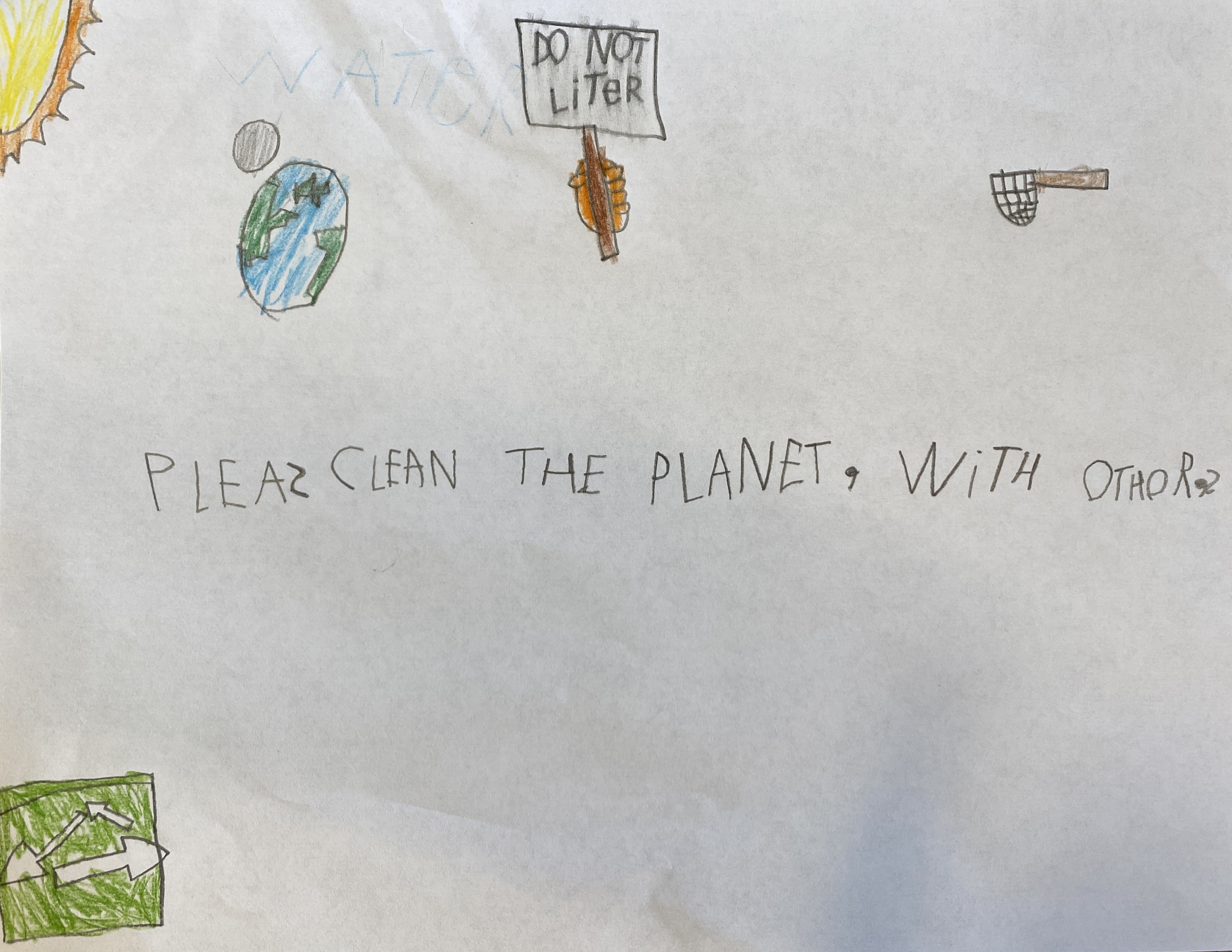
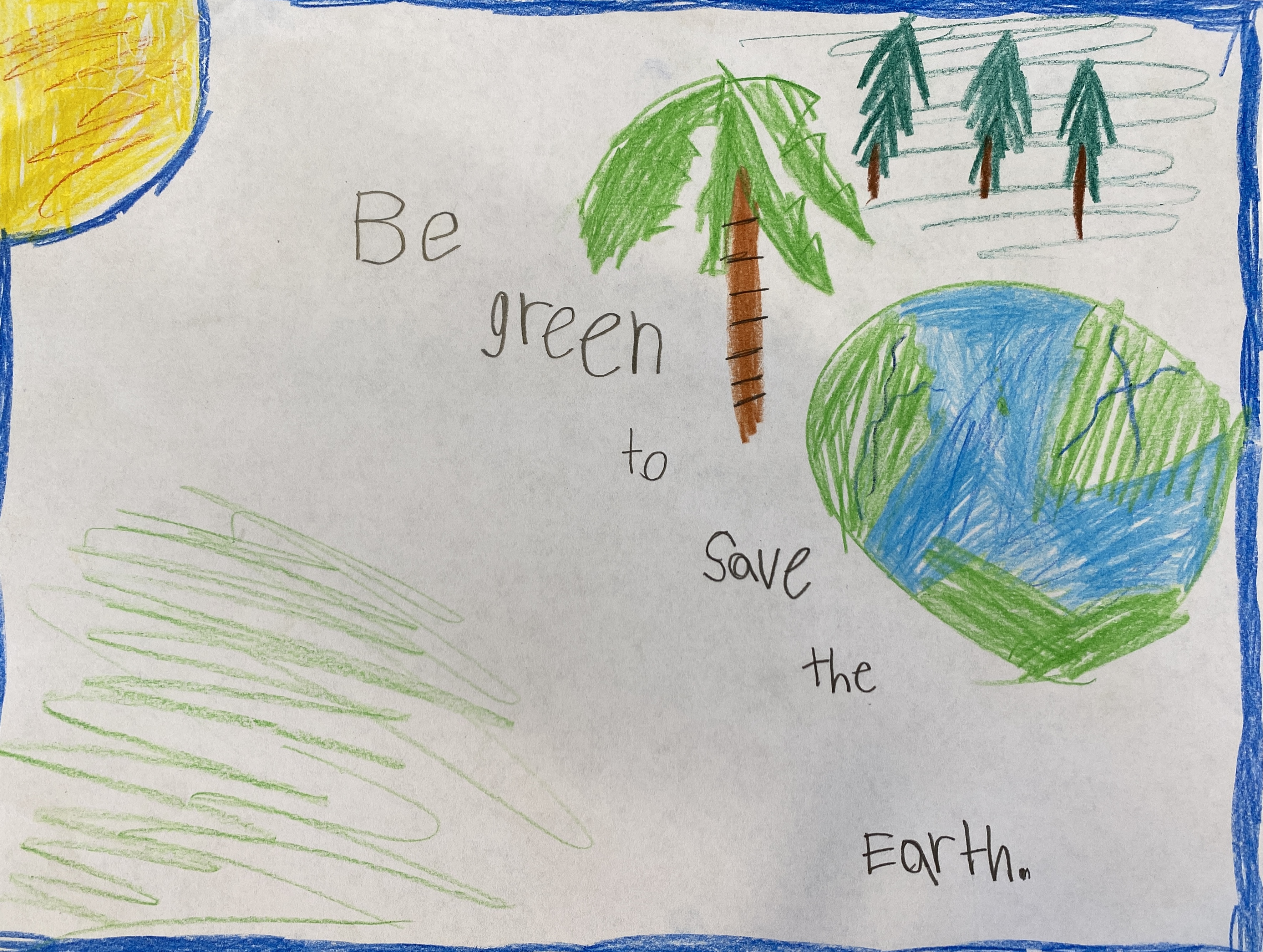
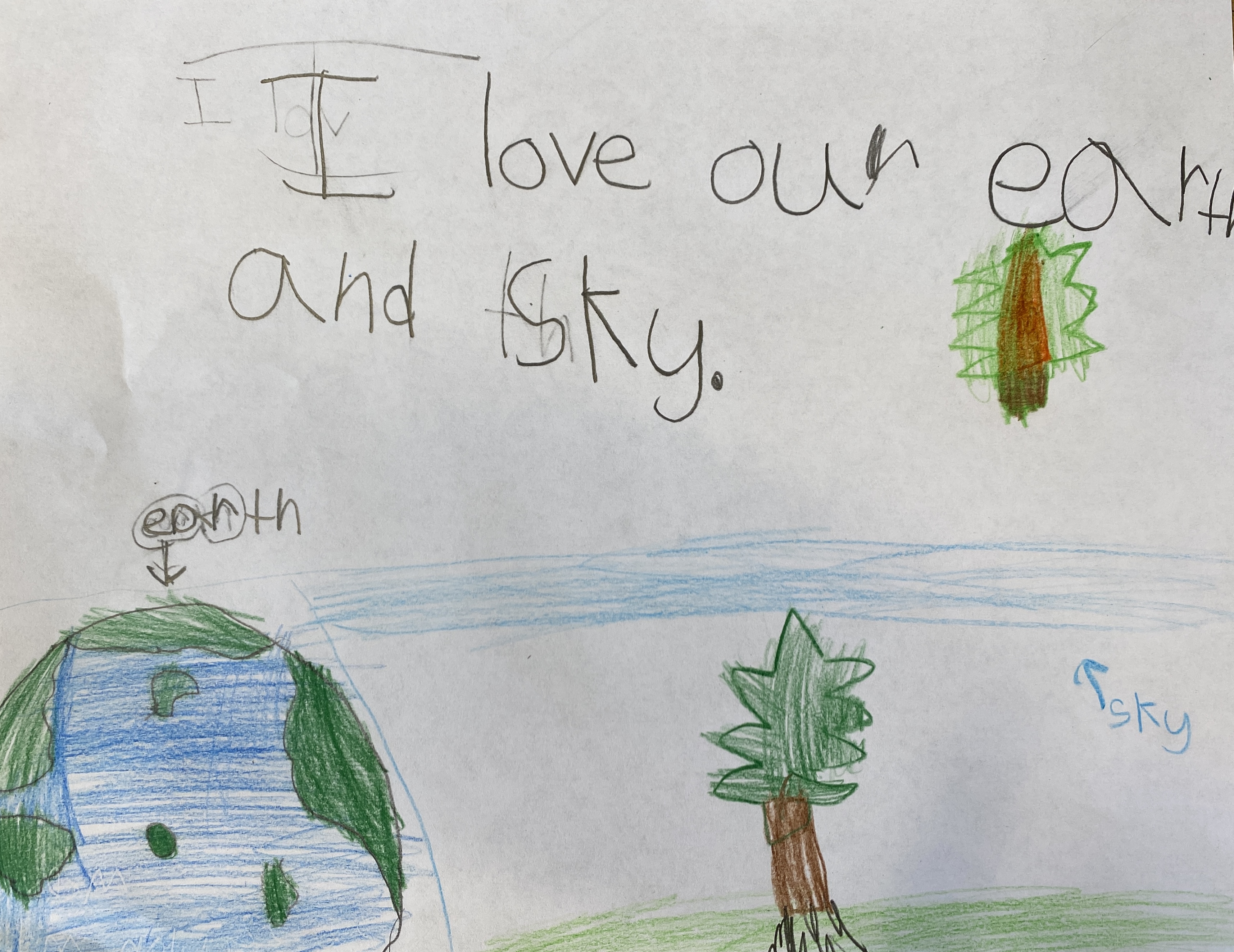
I love writing project work and the ways that teachers are the driving force behind proactive change. A conversation with a colleague a few years ago–about the need for climate/environmental education to become “ordinary,” something that students experience regularly, in all their classes, throughout their education career–has stuck with me. And as a result, this year in our local writing project, we convened a group of SDAWP educators to explore that very idea with an added twist: how can we make environmental literacy and justice both ordinary and also have writing at its center?

Today was our celebration and the opportunity to hear details about the work that teachers in this group accomplished. Each put together a 5 minute overview of the work, highlighting student engagement and involvement through writing.

Wow! I felt like I could see these young people growing into advocates and activists right before my eyes. They wrote and spoke with passion about our world, recognizing its beauty AND our need to take better care of it for their future. There were letters, informational pieces, persuasive essays, narratives, poems, artwork, speeches and more. I felt my heart grow three sizes just witnessing this incredible work facilitated by my writing project colleagues.

Our next step is to figure out ways to take this work beyond our group, to and beyond our larger writing project community, and to establish this as something students can expect throughout their schooling. The beauty is that these teachers did not take away anything they were required to teach, instead they worked this content into the learning the students were expected to experience anyway.

There will be more to come…

Surfing Pelican; @kd0602

On Saturday: SOL22 Day 5

It’s so hard to set that alarm clock on Saturday morning, and even harder to get up. Today was the San Diego Area Writing Project (SDAWP) Spring Conference, and despite how hard it was to get up, I knew that once I signed on and engaged that I would enjoy the experience. And my colleagues didn’t let me down.

As the SDAWP director, a lot of the work for the conference was already done. But today I still had some responsibilities to get the conference started and I had also agreed to introduce some of my colleagues and their work in the first and second sessions. I’m always nervous when I have to be in charge of Zoom stuff…luckily I was able to make my colleagues co-hosts and they took care of themselves. There were small glitches along the way–one of the Zoom rooms for the concurrent sessions wouldn’t work and we had to move it to another Zoom. But in spite of the technical difficulties, overall, things turn out well.

I so appreciate the SDAWP teachers who stretched themselves to present today. It’s such a hard time for teachers. We are tired and not feeling like our best selves in the classroom. It takes courage and a willingness to be vulnerable to share your practice with your peers in a conference setting. Our keynote by Christine reminded the teacher audience about the importance of teachers and their role in our society. She reminded us of Robert Fulghum’s credo All I Really Need to Know I Learned in Kindergarten from 1990 and shared an update from 2003. We spent a couple of minutes reading the two and noting some of the important concepts like clean up your own mess (seems like some corporations might need this reminder) and don’t take things that aren’t yours (hmmm…some powerful people might need to hear this message again). She ended with some data about what parents say about teachers and their effectiveness during the pandemic (a lot of positive numbers)–some things that are not what we continually hear in our mainstream media. That short keynote session with uplifting messages for teachers set the tone for the three rounds of teacher-led sessions.

I was inspired by beautiful short-form writing (Haiku and 6-word compositions) written by students about nature and protecting the environment, I learned about the ways teachers were finding relevant texts to help their students see themselves and the diversity of voices in our world, I saw examples of students using writing and their voices to influence change in their community, and I walked away with a renewed commitment to the power of education to make a difference in the lives of our students and in our communities.

I was also reminded that the work of teachers will never be done. Sometimes successes are hard to see and some days do not go as we plan or as we would like. Some gains are baby steps, finding a glimmer of hope in students’ early attempts to put new learning into written form. Some wins are obvious–like the teacher sharing her student’s essay about the need to ban “lighter than air” balloons and a news clip of the student speaking at a local city council meeting where after she spoke it was announced that the ban was passed unanimously. But even with that obvious win…you’ll still find balloons on the beach, like I did on my walk after the conference.

I’m glad I got up early this morning and learned with and from my colleagues. I left the conference with more energy than I had when it started, which is good since there is still so much work to be done.

Word-le-ing Around

Like so many others on social media (at least my feeds), I have been participating in the Wordle craze. I like that I can only play once a day, that it is limited to 6 guesses, that the words are all 5 letters long and that the whole world is playing this one word each day. There is something about limitations that funnels my focus, and while my first guesses often seem fruitless, somehow I usually pull it out by guess 4 or 5.

The first graders in my classroom have been playing a math game called digit place. In this game, I think of a 2-digit number and students make guesses to determine what it is. With each guess I indicate whether there are correct digits and whether they are in the correct place. For example, if my number is 12 and students guess the number 27 I would put a 1 in the digit column to represent a correct digit (the 2) and a 0 in the place column to show that it is not in the correct place. Subsequent guesses narrow down the possibilities leading students to a correct response. At first there were lots of random guesses, but the class is becoming strategic and quite successful. (I’ve had third graders who played this game with much less strategy and success!).

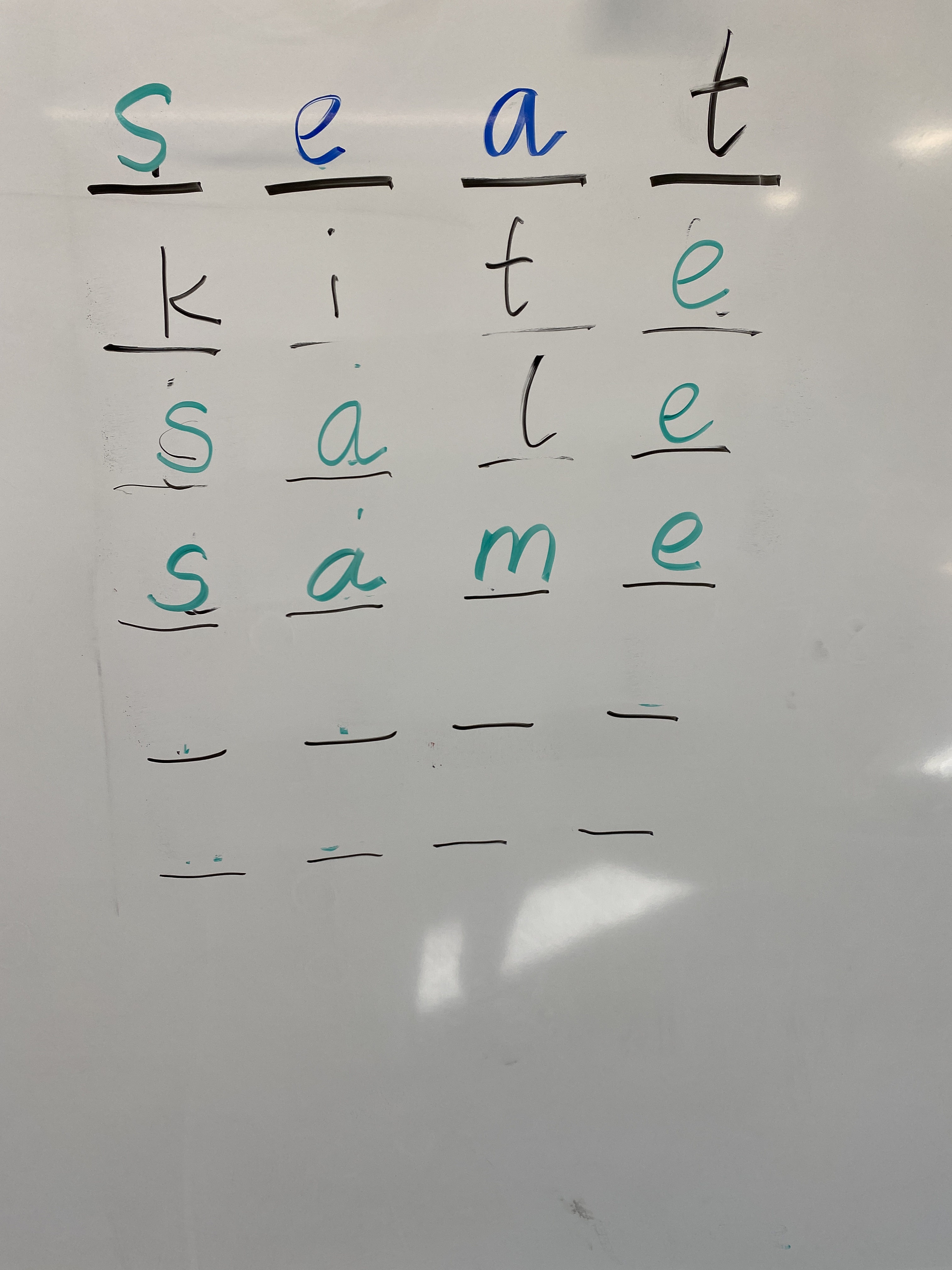
We’ve been focusing on 4-letter words ending with a silent e in the last week, building word ladders and noticing how this e causes the other vowel to be a long vowel. Students are building their skills and getting better at changing just a single letter to make another word that fits the rules of this ladder. Today, I found myself thinking about Wordle, digit place, and word ladders…and decided to try my own version of Wordle–first grade style.

So…I introduced this new game to my students. I drew 4 lines to represent the 4 letters in the word I was thinking of. I grabbed a black, blue, and green white-board marker announcing that letters in black were not in the word, blue meant the letter was correct but in the wrong place, and green meant the letter was correct and in the right place. I wasn’t sure how this game would work out–or if it would even make sense to my students. But…it was great! Students loved this process–and caught right on. I could hear them telling each other whether a guess was a good one (“…we already know there is not an “s” or “h” in the word…) and the game definitely caught their attention. We played several rounds today…and I remembered to take a photo of the last one.

My social media involvement was put to good use in the classroom today. I love having a new engaging, educational, and no prep game in my back pocket for those few minutes that need filling from time to time. Wordle for first graders–and we don’t even need the internet!

Bubbles

With the school year coming to a close, I wanted to come up with an activity for students that felt like play–like a party–and still provide academic content to satisfy my ever-present need to make use of all available instructional minutes. (Yes, even in the last week of school)

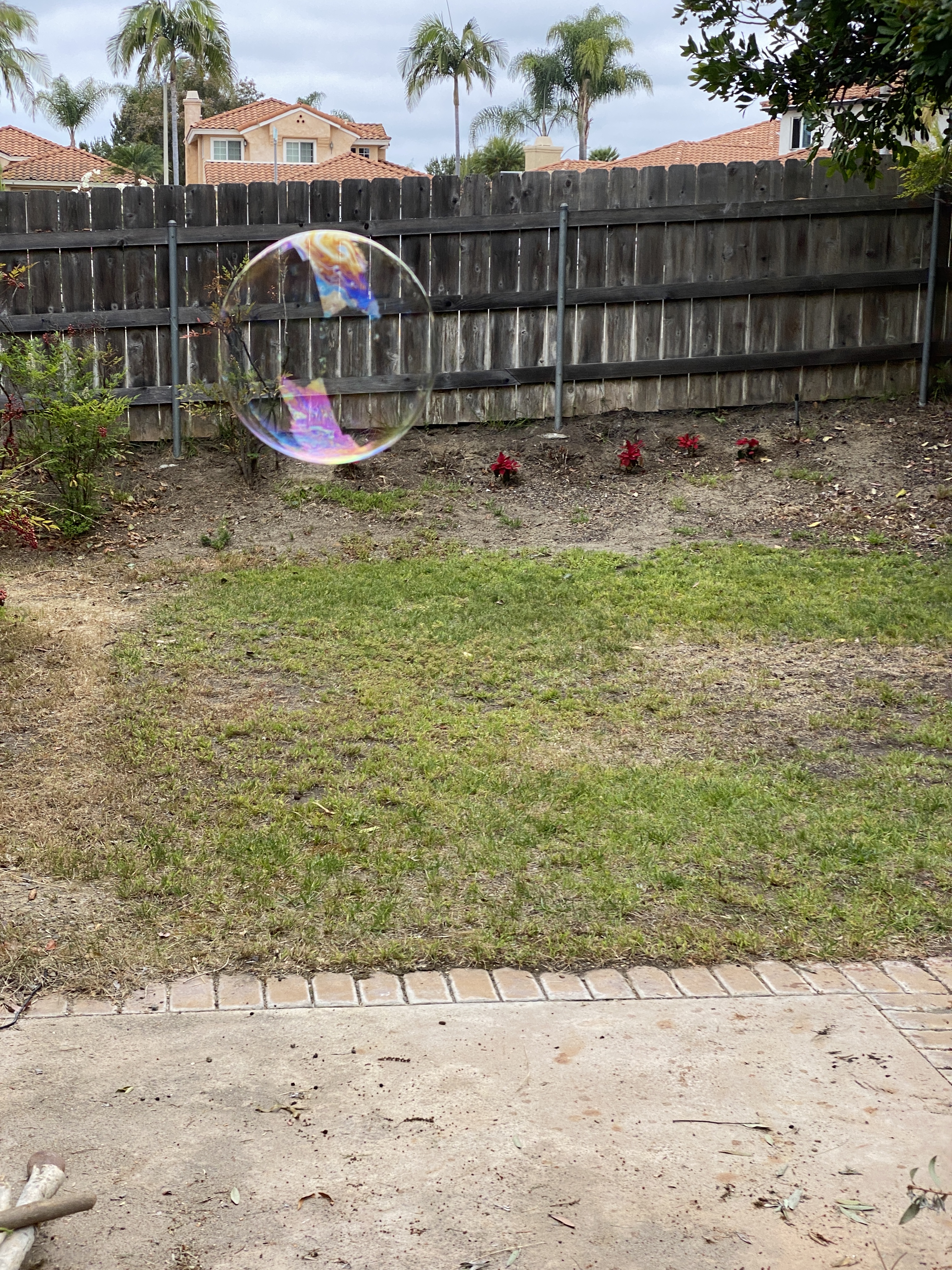
So, when I came across a blog post about making giant bubbles and bubble art, I knew I could turn this into a meaningful day of learning and fun…all wrapped up in a soapy bubble! I’m pretty fascinated by bubbles. I’ve spent quite a bit of time photographing giant bubbles at the beach and I’ve written about the “bubble man” a time or two (or more). I know that the trick to great bubbles is the solution–so prior to having my students explore and experiment, my husband and I tried our hand at bubbles over the weekend.

The basis of all bubbles is soap and water. But if you want the bubbles to be big and to have a bit of staying power, a bit of corn syrup and some glycerin need to be added to the mix. Using smoothie straws and yarn, I created a bubble wand that my students would be able to make on their own and started dipping and waving in my own attempt to create bubbles. This bubble thing is harder than it looks! I didn’t immediately get big beautiful bubbles flying from the wand. But with some patience, some tinkering, and some exploration of how to get a thin film filling with air onto my yarn…bubbles happened. At that point, with bubble solution pre-made, I was ready for a day of bubbles with third graders!

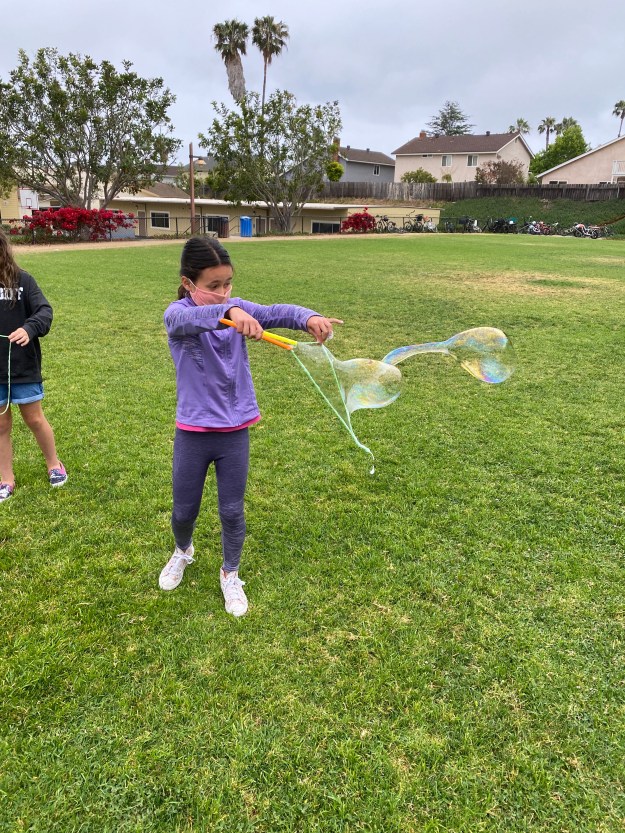
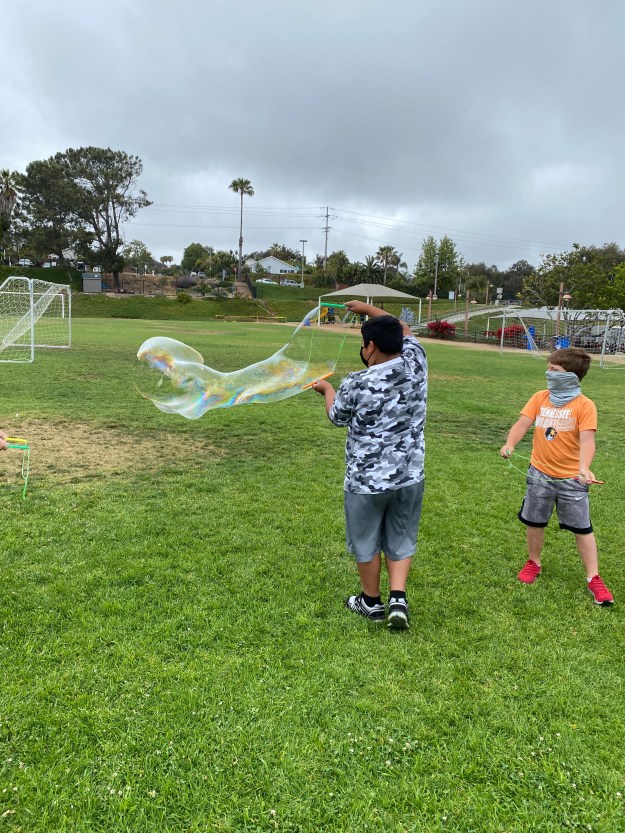
We started with a very interesting TED Talk titled, The Fascinating Science of Bubbles, from Soap to Champagne. We learned about surface tension, the geometry of bubbles and so much more. (If I were to do this in the future, I think I might devote an entire week rather than a whole day to bubbles!) Then we made our bubble wands and headed up to the field to make bubbles.

In spite of warning students that making these bubbles would take patience and experimentation, there was plenty of initial whining that “it’s not working!” I reminded them to keep trying. And then it happened…the first child experienced success! Like wildfire, bubbles emerged, filling the air with irridescent spheres.

The soap solution ran out before student interest waned, which is probably the best possible result! We headed back to the classroom with soapy hands, happy hearts and filled with visions and language about bubbles.

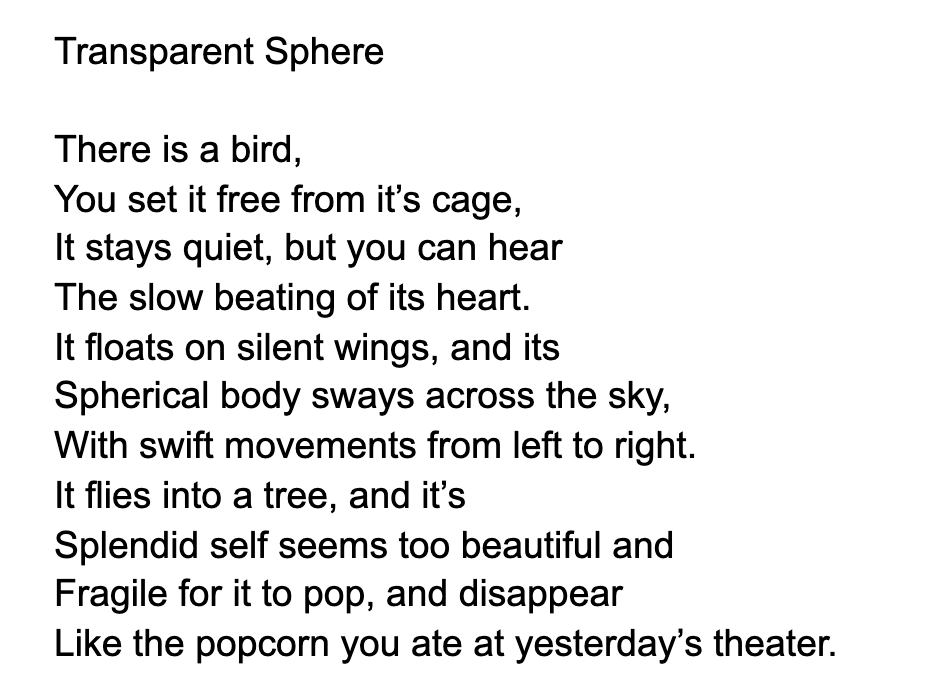
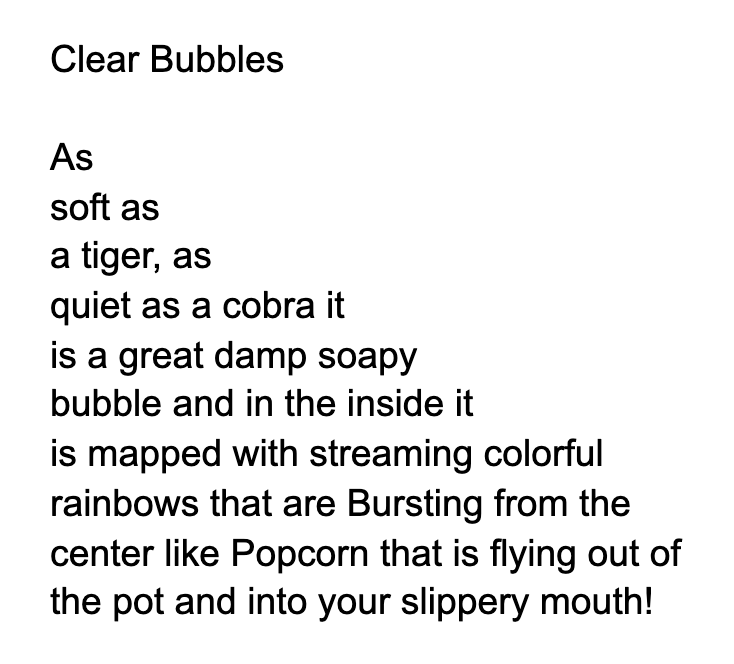
These young scientists are also prolific readers and writers, so after studying Valerie Worth’s short poem, Soap Bubbles, we created a list of bubble words and a list of potential bubble metaphors and then set the magic 7-minute writing timer and started writing. Like bubbles, colorful, delicate, evocative poems floated up, emerging from the points of students’ pencils.

Here’s a couple:

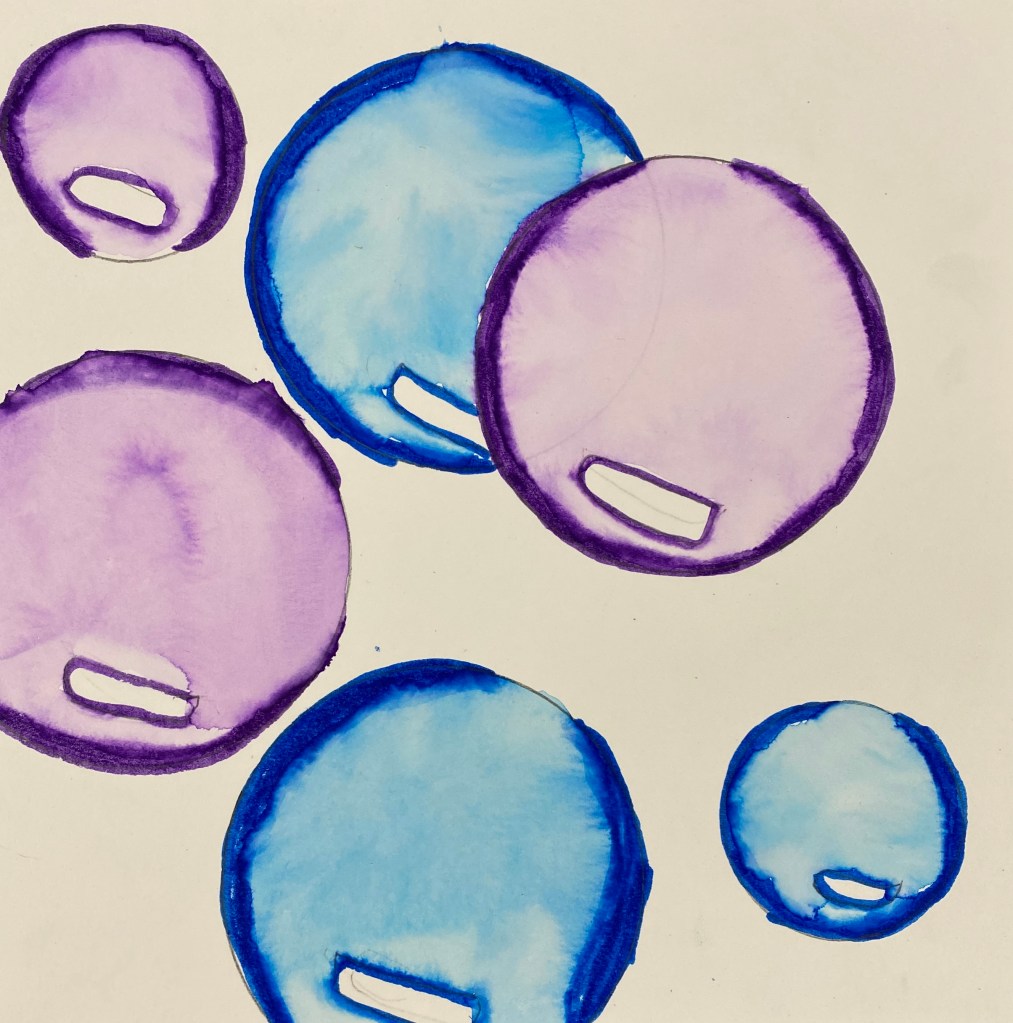
To complement the poetry and the elusive, temporary soap bubbles, we got out paper, pencils, water-based markers and some water and created bubbles…as art! Each artist created their own composition, tracing round shapes, adding a space where a light source reflected off each bubble. Then they added marker and finally, using just water and a paint brush, urged the marker to follow the water, creating beautiful dimensional bubbles on watercolor paper.

There is so much more we could have done with bubbles–including exploring the mathematics of spheres. Overall, it was an amazing day. Students could not believe that an entire school day had passed before they even realized it. Engagement was high, work quality was inspiring…it was an amazing last Monday of the school year! Based on this success, I know I will be working some bubble science into future teaching and learning!

Is it Worth it? Reflections on Poetry

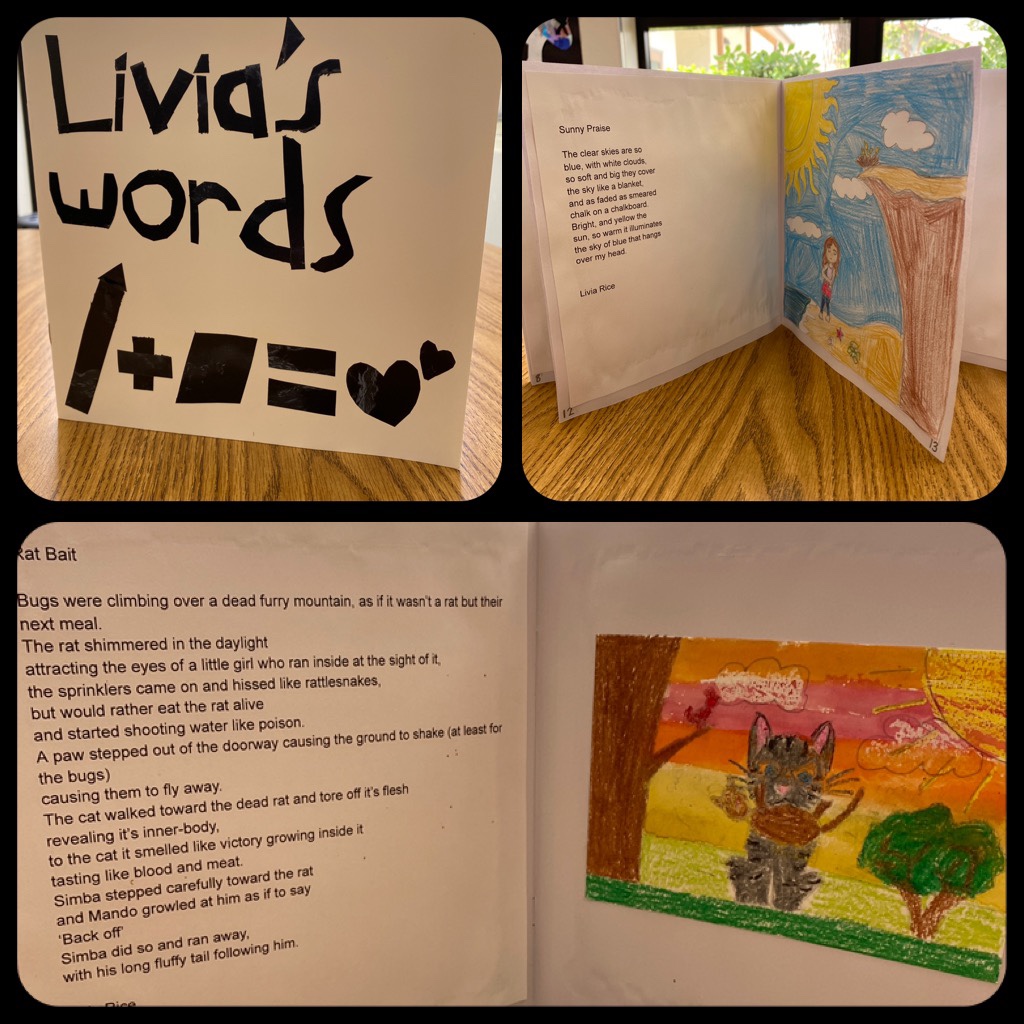
I wrote a poem a day during the month of April and challenged my students to do the same. And while not every student wrote every day, they did write a lot of poems. When you put that much effort into daily writing, it seems that something more needs to happen. I knew from past experience that drafting a poem each day is just the first step in moving my students toward seeing themselves as writers. So as the month of April wound down, my students and I started the process of curating a personal anthology of poems.

It’s not enough to simply select a poem and call it done. I had to move my students toward meaningful revision–and that meant giving them strategies and techniques to make their poems better. They re-read each poem they selected and considered how they might add a comparison (simile or metaphor), how they might personify an animal or object, how more specific details could help the reader “see” the ideas being expressed. So no matter how small the change was, each poem was revised. Because I had 16 page blank books for each student, we selected and revised ten poems and created five art pieces to go along with them.

As we worked through this intensive process, I kept asking myself, “Is it worth the time and energy–theirs and mine–to put this anthology together?” As I read poem after poem (25 students times 10 poems each), I started to see these young writers in a new way. They had gained confidence and knew what it meant to revise. I watched them own each poem, claiming their writing and making changes that satisfied each of them. I noticed some started poems from scratch. For them, the original poem was simply a pre-writing activity and a new idea emerged when faced with revision. For others, revision meant adding on to a poem, further developing the kernel of an idea that they had started earlier. Some revisions were the change of a single word–the poets were satisfied with their original effort and only went through the motions to satisfy the revision mandate.

And as we finished the last touches, gluing the final poems into place and typing up a table of contents I asked myself again…was this project worth it? There is no Open House celebration this year where families will come through and admire displays of student work products and ooh and aah the hard work done specifically for their benefit–something that has always made projects like this a necessity in the past. But still…my answer is yes, this intensive focus on poetry for more than a month has been totally worth it. Here are a few reasons why:

  • Students see themselves as writers. They confidently write daily and have developed both fluency and style. All those poetry techniques also make other kinds of writing better.
  • Revision has become ordinary. We do this routinely and resistance to going back to a piece of writing has dropped. Writers revise and we are writers.
  • All of our writing matters in our community of writers. Everyone will share their writing and everyone can pick out bits of excellence when they hear it in each other’s writing.
  • A project gives everyone a reason to persist. No one wants a half-finished book, so everyone pushed through, developing stamina as they worked through the revision of all ten poems.

250 student poems later and ten more of my own and we have created 26 individual anthologies of poetry. They are beautifully imperfect and incredibly perfect at the same time. And totally worth the time and effort.

Teacher-Writer

What does it mean to identify as teacher-writer?

I write with my students, I write for my students, I write to understand my students, I write to understand my teaching and my students’ learning. That’s probably the definition of teacher-writer.

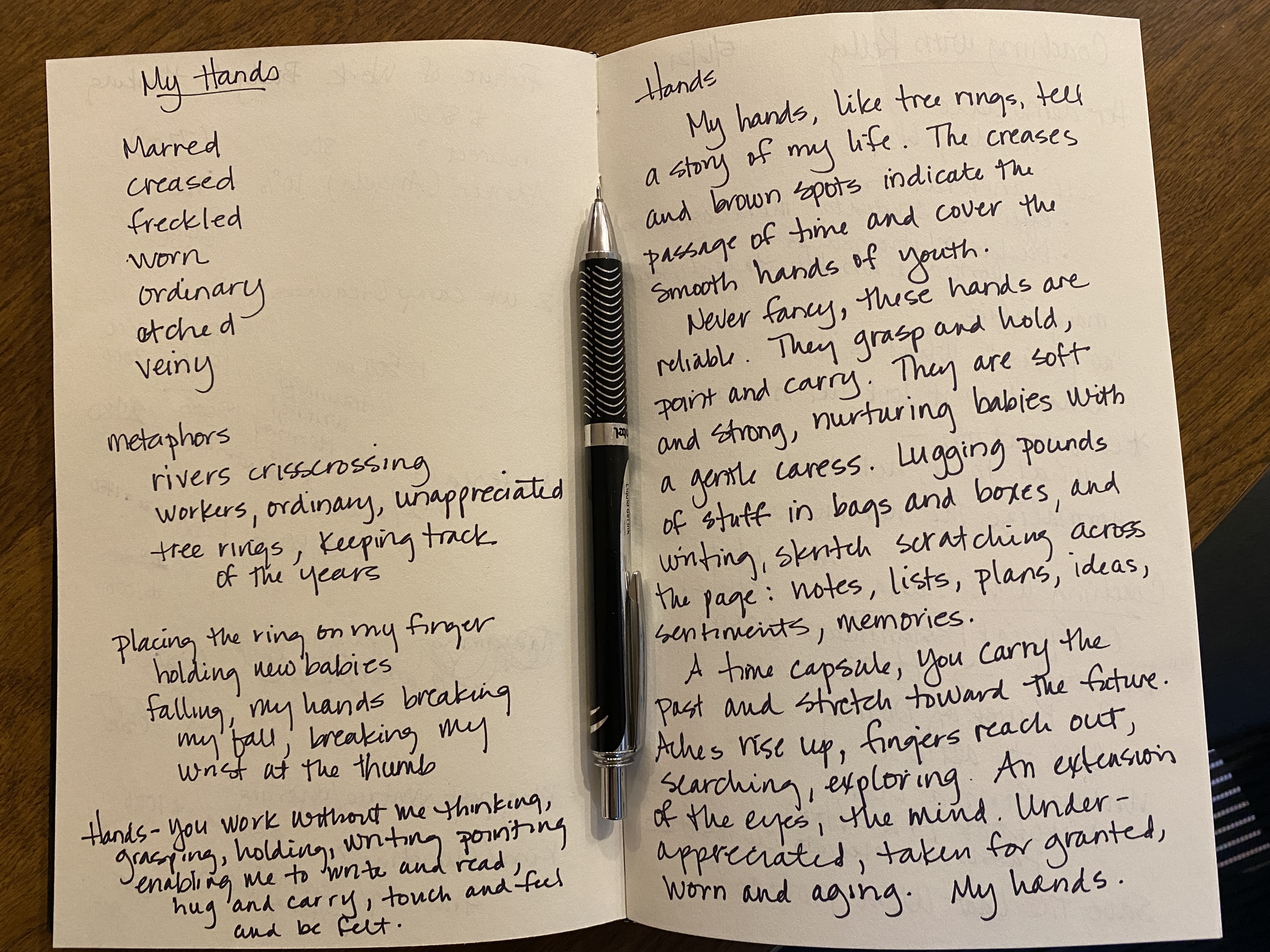
Today I experimented with a writing provocation I found in a Teachers and Writers Magazine article. It attracted my attention because it began with doing–actually with a blind contour drawing. I love to have students do something as a provocation for writing–probably because I like to DO as a way to instigate my own writing.

So, following the directions in the article, I used my non-dominant hand to draw my hand, keeping my eyes on my hand and not on the drawing. I tried not to lift my pen, keeping my pen following all the lines and shapes I saw on my hand.

After drawing I opened my notebook and began a list of words evoked by my examination of my hand. then I came up with some metaphors. I thought back to memories about what my hands had touched or done, capturing some of those thoughts in my notebook. I went on to express my gratitude to my hands.

The next step was to write about my hand, using the ideas generated before–or not–for about 7 minutes (my favorite writing time!).

Finally, using a different colored pen, I added words to my blind contour drawing of my hand, creating a collage of sorts. I didn’t directly copy my writing, just added some of the words and phrases I had generated.

Students could go on to write an essay or ode about their hands, having generated a plethora of ideas.

Having tried this writing on as a writer myself helps me identify how it might or might not work for my students. My young students might do better studying their non-dominant hand and using their dominant hand for drawing. I know they will worry about how the drawing might come out–I’ll have to show them some strategies and perhaps do a practice or two before we start for real. We may brainstorm words about their hands as a group before they begin their individual lists. But, I think I’ll try this project with my students. I love the blind contour aspect, the close examination, and the way that careful attention leads to more interesting writing.

What strategies do you use to keep the writerly part of yourself sharp? How do you hone your skills as a teacher-writer? Does anyone know a great picture book that focuses on one body part that is not about hands?

Poetry is Sunshine: NPM #28

Today we studied Francisco X Alarcon’s poem: Words are Bird as our mentor text. My students noticed that way words were described as birds, something that was new for them to think about. It took a bit of work and experimentation for the kids to find their own metaphors. Some that they came up with included: hand sanitizer is a warrior, trees are magical, and words are gum in your hair. I was a bit skeptical about that last one–and expressed that while I wouldn’t rule it out, it seemed like a difficult one to write for a word lover like me (and this student happens to be a word lover). While I don’t have the text in front of me to share with you all, let me tell you that she did manage it…in some interesting ways!

I may have taken the easy way out, writing my poem about poetry. Here’s the draft I wrote with my students today:

Poetry is Sunshine

Poetry is sunshine

that brightens each day

shining its light

on words

emotions

new ways to think

about the world.

Some poems reach deep

burning a little

touching on something

tender and sore.

Sometimes poetry

warms us from the outside in

when we’re struggling

to warm ourselves from the inside out.

Poetry blazes

even when we don’t see it.

Covered by clouds

it waits,

until we’re ready

finally burning its way through

the thick marine layer.

It’s the center

of our solar system

the gravitational pull of words

that express

our humanity.

®Douillard

Oops: NPM #19

A week or so ago I experimented with 6-room poetry with the poem Yellow Bird. Today my students and I tackled this approach–using a moment from our weekend as the topic for the poem. I wish you could have heard my students’ efforts–the one about the dead rat (really?) described as a mountain of fur, the outdoor haircut, and more.

Of course I wrote alongside the kids, using my unexpected dousing by a rogue wave on my walk on Sunday as my moment for the poem. And here it is:

Oops

April beach day

full sun

birds squawking

kids squealing

laughter floating

on the gentle sea breeze

Sun’s shine sparkles

dancing on the endless blue

birds dine

darting in and out of the surf

I squat low, creeping close

slowing turning my lens

to focus

on those long beaks, curved like straws

Out of the corner of my eye

I see it

I hear the rush

whoosh, shush

My movements seem

like slow motion as I stand

and run toward the shore

Too late!

I feel the cold

creep up, soaking

my leg from ankle to thigh

my jeans heavy

from the briny wetness

Surprise floods my brain

Phew! Luckily my camera

is dry

Click, click, click

®Douillard

Snowy Egret Questions: NPM #15

Today was my first day back with my full class, full day, now on a 5-day a week schedule. I’ve challenged them (and myself) to writing a poem-a-day during the month of April. Today I started by reading them Little Black Crow by Chris Rascka–a picture book written entirely of questions. And we revisited the poem Yellow Weed by Lilian Moore–a question poem. Then we set off to write our own question poems.

I love writing with my students–and I love when they make no hesitation before beginning to write. And better yet, when after 7 minutes, I asked who would like to share their question poem–more than half the class shot their hands into the air! What fun to hear their question poems and the variety of topics they picked to write about. And they were not surprised at all to hear than I chose to write my question poem about snowy egrets.

So here is my poem:

Snowy Egret

Feathery friend, what brings you to the beach today?

Is it the tasty orange shrimp in the low tide soup?

Feathery friend, do those bright yellow feet

bring critters near as you stomp and stir?

Are they a beacon shining bright in the salty sea grass?

When you spread your delicate white wings

do you feel like a plane

or a kite lofted into the gentle sea breeze?

Feathery friend, what do you think when you see

my eye pressed to my camera lens?

Am I intruder or a familiar-faced friend?

Feathery friend, where do you go when you leave the beach?

Do you fly away home? Do you live alone?

I look for you on all my beachside walks

my lucky charm

a sign of good fortune.

Good bye snowy egret,

will I see you soon?

®Douillard