In the Rain: NPM20 Day 6

Even though today is technically spring break for me and my students, I found evidence of poetry writing in our Google Classroom. I scheduled a mentor poem for each day this week to inspire and support my young poets–all poems we had studied earlier this school year. Today’s poem was The Blue Between by Kristine O’Connell George.

The steady downpour of rain was another influence evident in my poem and my students’ poems. I’m trying to appreciate the much-needed rain and to find ways to make this week feel like a break. Instead I’m feeling cooped up, without the escape of neighborhood walks. I tried to duck out early this morning, thinking I would beat the rain–just to pull the door open to the skies opening up! I rode that stationary bike…but it’s just not the same for me.

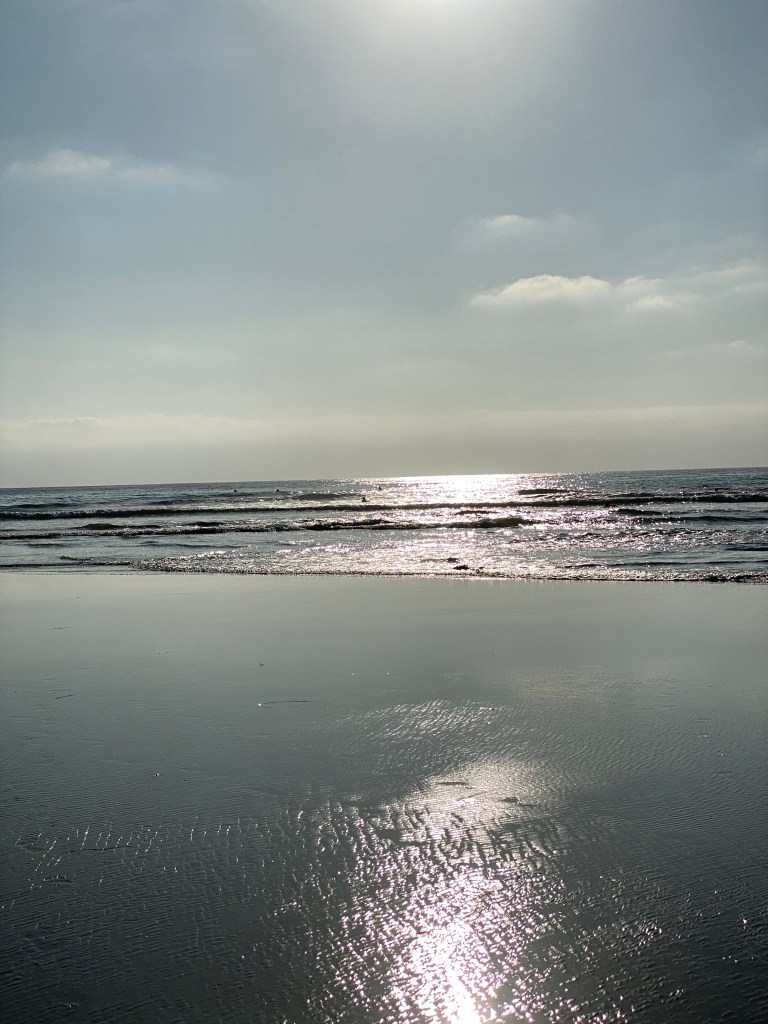
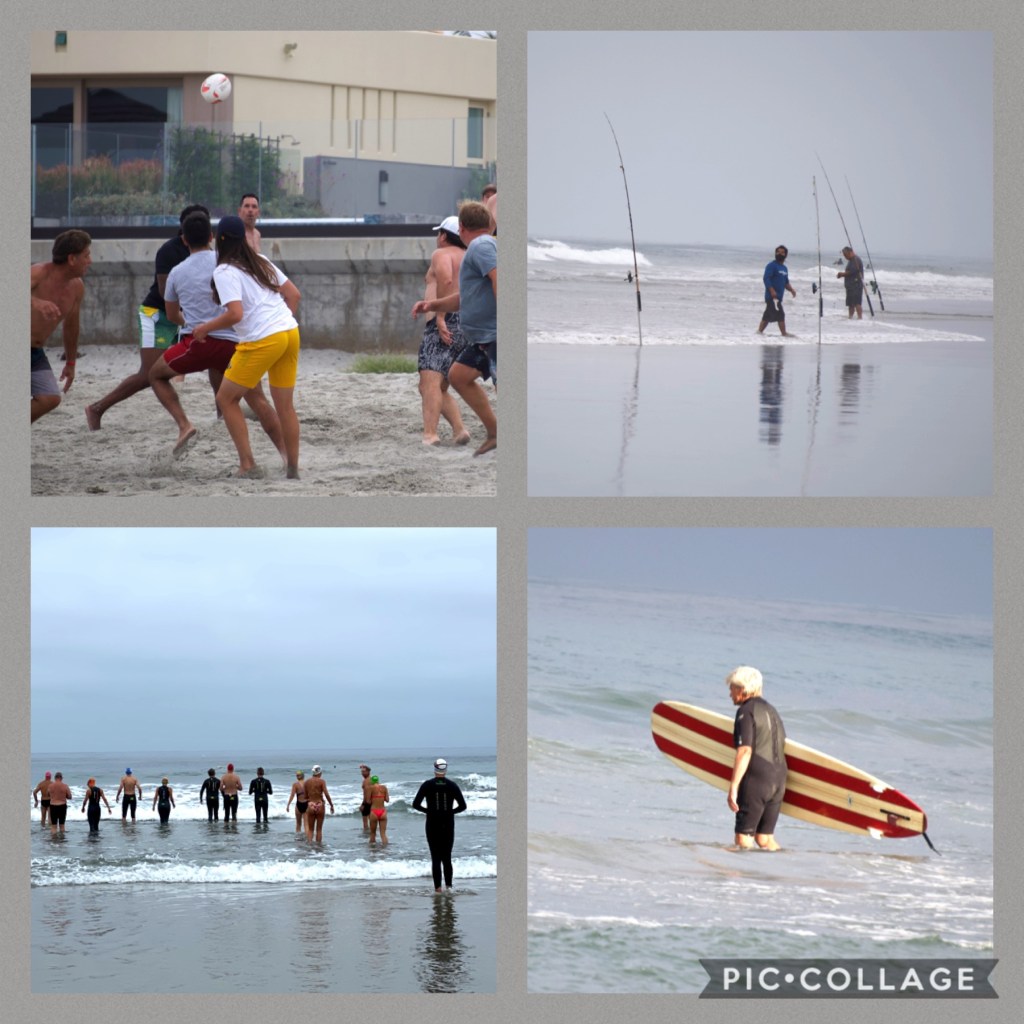
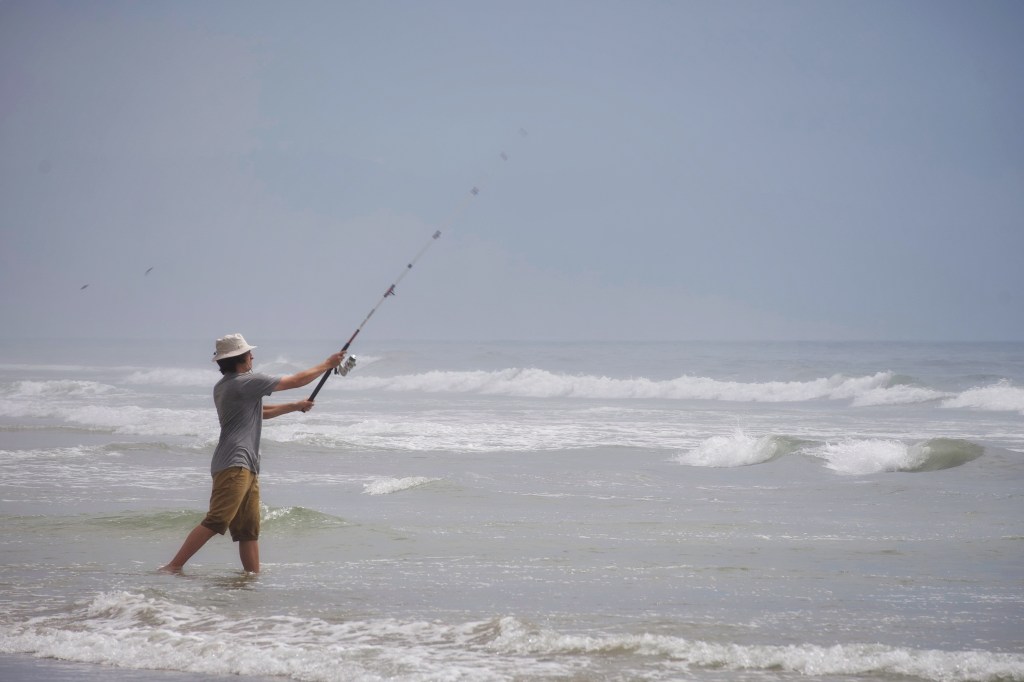
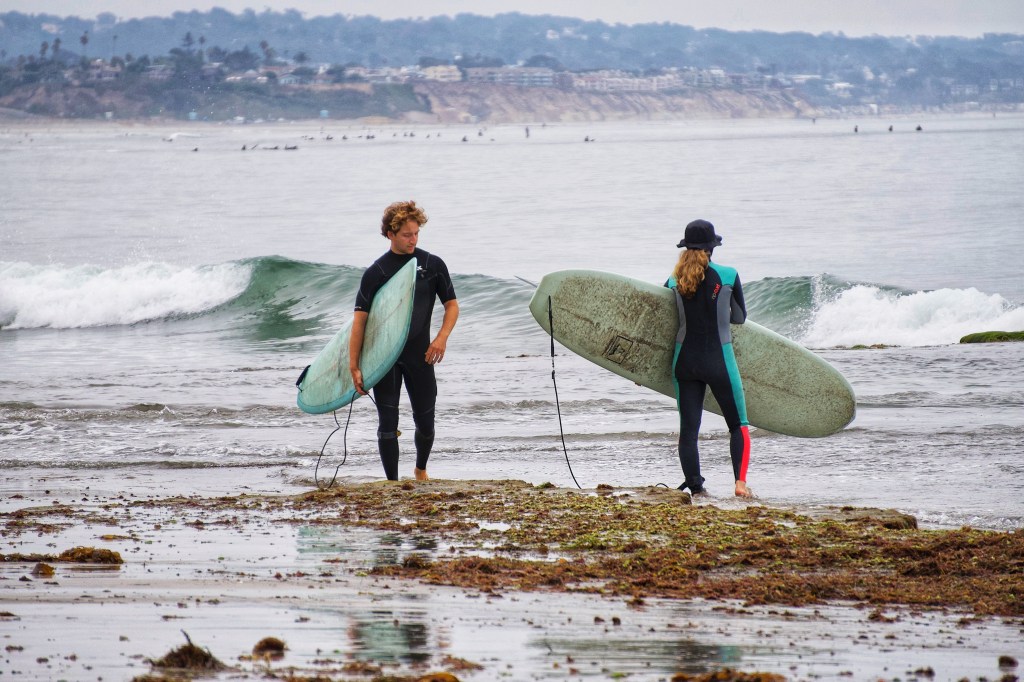
For escape, we took a drive up the coast in the pouring rain. The sight of the stormy ocean was a refreshing change from the walls of the house–even if viewed only through the car window.

My poem:

Raindrops

Raindrops fall

dripping dropping

teardrops

across sky cheeks

Gray on gray

blotting out color

a palette

of monochrome

And yet

precious moisture

dampens fire risk

feeds parched

creeks

ponds

rivers

lakes

reservoirs

Look closely at each

raindrop

and find the hope

reflected

inside

®Douillard

And a student poem by E–also inspired by the rain:

Rain

Everyone hates the rain, sulking in their raincoats, 

Hiding themselves under their umbrellas.

I see rain differently,

I see the fun between—

The water to run and splash in

The fun trails to dash across,

Arching up across puddles..

The rain dancing down,

Making gallons of fun,

A river of joy,

Slithering around every house.

In those cloudy days,

I see a different scene.

In those rainy times,

I see the fun between.

And by M (not inspired by rain):

The Gaps Between

Many people see one whole 

I see the gaps between 

               The face standing there

                with only one eye.

                The pigeon flying by

                 The trees in a band 

                 The concrete is Atlas

                holding up the Stones. 

Those rough dark places

I see a different picture

I see the gaps between

Looking at Weeds: NPM20 Day 5

Today’s poetry invitation on SDAWPoetry was Wallace Steven’s Thirteen Ways of Looking at a Blackbird. I realized I’ve been thinking a lot about weeds and wildflowers–especially after the comment from a colleague the other day. He started to direct us into “the weeds of our work,” and then corrected himself to direct us into the wildflowers.

I spent some time wandering around my backyard today. Taking photos of the blossoms that somehow managed to escape my husband’s mowing yesterday. I love the idea that they get down low and avoid the lawnmower–that they are wily and resilient along with their ability to brighten up an otherwise drab space.

So here is today’s poem:

Looking at Weeds

I. They sprout and bloom in

the unlikeliest of places

are they unwanted

simply because they

weren’t planted?

II. Get down low and look close

see the tiny blossom

shaded under the tall stem

of another unplanted sprout

III. Rain and sun

and a bit of neglect

are perfect conditions to bloosom

IV. Perhaps children, too, need a bit

of benign neglect

to blossom

space to grow at will

rather than in straight rows

and in perfectly tended gardens

V. Wind and bees

tend the wild, sending messages

on air current

and hairy legs

spreading, planting, seeding

VI. How do I seed ideas

critical thought

unbridled learning

so that it thrives like

the wildflowers

we so often call weeds?

®Douillard

What I Keep Learning: NPM20 Day 4

This piece in progress was inspired by What I Learned this Week by Angela Narcisco Torres. While it doesn’t yet feel finished to me, it does have some ideas that I am happy to have captured.

What have you been learning as we all do our best to shelter-in-place? Those of you who are teachers, what are you learning as you work to support students through some kind of remote learning?

What I Keep Learning

What matters when your students are names on a screen

Rather than physical beings that you see and interact with each day?

When you hear the echoes of their voices 

Through typed comments

That pop up continuously throughout what used to be the school day.

Quiet students are still quiet

Rarely leaving a trail of their thoughts or needs

And body language is no longer

A text to be read

The chatterers still chat

Loud and long, filling my inbox

With every possible question, ‘sup, and emoji 

They tap their chat to me, to each other, to themselves

Filling empty ears with imagined sounds of school

Assignments matter now more than ever

I see the ways the mundane

Assignment-for-assignment-sake

Deflates, dissipating energy

Leaving us all unsatisfied and wrung out

Like that washcloth left on the edge of the sink

We need learning opportunities that connect us

Build on experiences and passions

Each student holds close

Allowing ideas to soar and words to take flight

Writing matters, that’s what I keep learning

®Douillard

Free Organic Lemons: NPM20 Day 3

I’ve been writing poetry every day this week. I’ve written with my students, on Zoom calls with my National Writing Project colleagues, and in response to poetry shared on our San Diego Area Writing Project SDAWPoetry padlet.

I try to keep my poetry on the lighter side for sharing with my students, but find myself wallowing in the fear and uncertainty of pandemic living in the spaces where adults are writing. My energy lags at the end of the week, the crush of video conferences building throughout the week, the lack of time for thoughtful lesson planning looking me in the eye as the weekend beckons, and all my other responsibilities slipping and sliding as I keep juggling the balls, trying to keep them all in play.

I’ve discovered that a quick walk down the street is now a necessity, an escape from the never-ending screen time and a welcome break from the hard, wooden kitchen chair that has become my home office/classroom/work space. I’m starting to recognize my neighbors now that I spend so much time at home!

On today’s second jaunt down the hill, we noticed a sign…a sign that provoked a very different poem than the one I had contemplated first thing this morning.

The morning prompt, after some 4×4 breathing, was to take this line for a walk: It is possible that things will not get better…

Free Organic Lemons

It is possible that things will not get better

and then I saw the sign:

Free Organic Lemons

and I read

hope

community

possibilities

When life gives you lemons

lemonade is on the horizon

Look for the signs

®Douillard

An Invitation to Connect and Make Poetry: NPM20 Day 2

Last night on our National Writing Project connecting the network zoom call, my colleague and I were asked to facilitate a “making” session–a place for a small group to make something together. And since writing is making, we thought about some way to have our group engage in a small writing piece that collectively made something bigger.

Inspired by the Springtime in Washington Haiku Contest: Poems on a Pandemic article another colleague shared with me earlier in the week, we decided to create a shareable slide deck of our own version of Coronavirus Haiku. We invited participants in our breakout session to create a Haiku (short poem, 17 syllables, 5-7-5 pattern), and then add the poem and an image to a slide in the collaborative deck.

I offered my own as example:

So this post serves as an invitation to all of you. Take a few minutes to write a Haiku or other short poem about some aspect of your coronavirus experience. It can be funny, somber, documentary, whimsical, sad, angry…

You can access the slide deck here: Coronavirus Haiku: Short Poems Documenting Life During a Pandemic. Writing is not only making, it is also connecting. And can be healing as well. A few years back I wrote a post about my response to another blogger and colleague’s invitation to write #haikuforHealing–a balm for the tired spirit. So let’s connect and heal as we write together.

Let the Poetry Begin! #npm20

It’s April 1st–the “official” start of National Poetry Month. But really, do we only “do” poetry in April? Poetry plays a role all year in my classroom, but I love to ratchet up the poetry volume in April by getting my students to participate in the poem-a-day challenge. We warmed up Monday and Tuesday, pretending April had already begun, starting with shorter, accessible poems. You can see day1 and day 2 here.

Today our mentor poem was Words are Birds by Francisco X. Alarcon. The first responses (in the comments on our Google Classroom site) were, oh no! This looks hard! Do I have to write something this long? Had I overestimated what my students could do, especially since they are all learning at a distance from me?

I was working on my own poem at the same time–I’ve been adding my poem to the Google Classroom site around mid-morning, to support those who need an extra example, but not offering mine up as the only possibility. And I had scheduled a Google Meet this morning as an Open Mic opportunity–instructing students to be prepared to read one of the poems they have written this week. I wondered if students would still want this video meeting if they had to read a poem and not just have a social check in.

At 10am student faces started to pop into my camera screen. At first I couldn’t hear them–but they could hear me (and apparently each other too). After a restart, both faces and voices came into range, a cacophony of sound. With their mute buttons in place we began our Open Mic. 14 students read their poems this morning, some reading an extra just because. I can see their poetry confidence growing and their skills growing too. And it’s only day 1! (Or day 3 if you count our pre-start!)

Here are a couple of student drafts from today:


And here is my poem for today:

Poems are Clouds

Poems

are clouds

that arrive unscheduled

they love

readers

writers

thinkers

lovers

kids

some poems gather

dark and tall

casting shadows

forcing thoughts

to fear

uncertainty

some poems

are light as the shine

of the sun

on the wet sand

reflecting

joy

    contemplation

                    gratitude

and others

clear the sky

leaving the blue

to stand

alone

freeing writers

to create 

their own clouds

cumulous

stratus

cirrus

billowing, stretching, towering

leaving behind

the weather of feelings and

lightning strikes

of

inspiration

Kim Douillard

4/1/20


Will you celebrate poetry in April? Use poetry as a way to calm frayed nerves, express fears, find comfort in words? I hope so…and I hope I will get to read some of your poems too this month.

SOLC Day 31: On the last day…

I thought I would have something pithy to say on my 31st consecutive post. Instead, I offer the poem I wrote (virtually) with my students today. Our mentor poem today was William Carlos Williams The Red Wheelbarrow.

The Black Crow

Today’s quarantine inspiration

depends upon

the black crow

in the sun-dappled tree

framed by the endless

blue sky

next to the empty

parking lot

®Douillard

And a student version by S:

My shoes 

So many steps

I take 

They may be

muddy 

Beside the concrete 

porch

I will miss writing my daily slice–but have committed to writing and posting a poem a day for the month of April. Maybe some of the rest of you will join me!

SOLC Day 30: Urban Pinecones

With April right around the corner, I launched the poem-a-day challenge with my class today. I am practiced at this launch in the classroom. I know just how to motivate my students, get them engaged with language play, give them feedback on their early attempts and keep the momentum going throughout the month.

But this year, as we all know, is different. I made a short video of myself explaining the challenge. I sent my students out around their homes today in search of “tiny perfect things.” I asked them to pick one of those things and create a list of 10 great words related to one of the tiny perfect things…and then introduced a mentor text poem.

Today’s poem was one I thought would be highly accessible. Things to do if you are a Pencil by Elaine Magliaro Is vivid and fun, and encourages the use of strong verbs and metaphorical thinking. In the remote learning environment, I realized that my examples became even more important and that my feedback was necessary to push students toward more detail and elaboration.

I’ve asked my students to both keep a physical notebook for their poems in progress and to post them on a slide deck that I started for them in Google Classroom. Here are a few examples of student pieces on day 1.

I love that they each found something they cared about to use as their subject. I’m thrilled to see traces of the mentor text, and that there is strong language use even in these first drafts. I am excited to see what day 2 brings.

And here is my poem for the day:

Urban Pinecones

Be tough and hang on tight as cars whiz by

creating a storm of dust and wind.

Prepare to roll

kicked by joggers, bumped by strollers,

slobbered on by neighborhood dogs.

Listen to the stoplight chatter

“Wait”

and heed the warning.

Hope to land above the curb

where the soil awaits.

Hear the echoes of squirrels and coyotes

and the caws of the crows.

And dream of forests

from your pile on the side of the road.

SOLC Day 29: Tasting the Nurturing

I don’t cook. Lucky for me, I married someone who does…and does it well. And he not only cooks, but uses food preparation as a way of nurturing, a way of showing his love.

Most days, breakfast is a grab your own system. He makes coffee, I grab my yogurt from the fridge, dress it up with granola or fruit or not and eat as I check those early morning emails before I leave the house (back when I left the house). That routine is still in place on the weekdays. But on the weekends, breakfast is always something more special.

This morning was homemade buttermilk biscuits.

I love biscuits. Light and fluffy with a slight crunch, slathered with butter and honey. Perfection. And it takes some work. He starts with a fork and butter into flour, eventually adding wet ingredients until it is ready to roll.

He’s learned this folding and rolling technique that creates space between the layers of the biscuit that contributes to the light and flaky texture. When it is rolled just right, he starts the cutting. with the biscuit cutter we bought on a trip to Nashville (where the biscuits are good)!

Transfer to the pan and into the oven they go until they come our golden brown with just the right crunch on the outer layer.

And to balance out this decadence, scrambled eggs with cheese and turmeric and some orange slices round out the breakfast plate.

In each and every bite, I can feel my husband’s love and care. I hope my students can feel that kind of nurturing in the work I ask them to do. Especially during these remote learning days, when I am not able to teach my lessons through my voice, my body, through the interactions of students with me and with each other, I am carefully constructing and deconstructing my own plans and planning process to convey energy, motivation, and reasons to engage to my students. I want them to taste the sweetness in the writing I ask them to do. I look for ways for us to connect–through video, through images, through words, through text. I want them to taste the love and nurturing just like I did this morning when I bit into that homemade biscuit…with honey dripping down their chins, hungering for more.

SOLC Day 28: Today is Saturday

Today is Saturday. I have to remind myself since all the days feel similar when work and home have become the same place. Saturday means not setting my alarm clock, not settling myself into my working space (at the kitchen table), and a yummy Saturday breakfast made by my husband (today was french toast, bacon, and fruit).

Since my beach walks are on hold for now, a neighborhood walk was in order. But it’s Saturday. So I talked Geoff into walking with me…and he talked me into walking to CVS so he could play Lotto (an essential task…for him).

I’m working to pay more attention to the photographic possibilities on these suburban treks. And I took a number of photos along my way. (I didn’t carry my camera, instead depending on my phone camera for the shots.)

It was coronavirus-empty today. Traffic much lighter than usual and not many people out and about. I couldn’t help but notice the sign waver guy across the way, perched on the fire hydrant. I’m glad he has work and will get paid, but it made me wonder about which jobs people are still heading out for each day. Is the iPhone repair place still open for business? Does the sign waver make a difference in its business?

So what will Sunday bring? Another neighborhood walk, some time spent reading, some last minute lesson planning (getting ready to launch a month full of poetry reading and writing), time on the stationary bike while I watch some Netflixs (i just discovered the new season of Ozarks), and more time than I want to spend at home. I’m desperately missing errands, impromptu adventures, and the beach. But I’m staying home, even though today is Saturday.