One of the things my colleague Wendy talked about yesterday during her conference session was how Haiku doesn’t have to be all about syllable count (our American school version)–instead, she talked about Haiku being a poem in one breath.
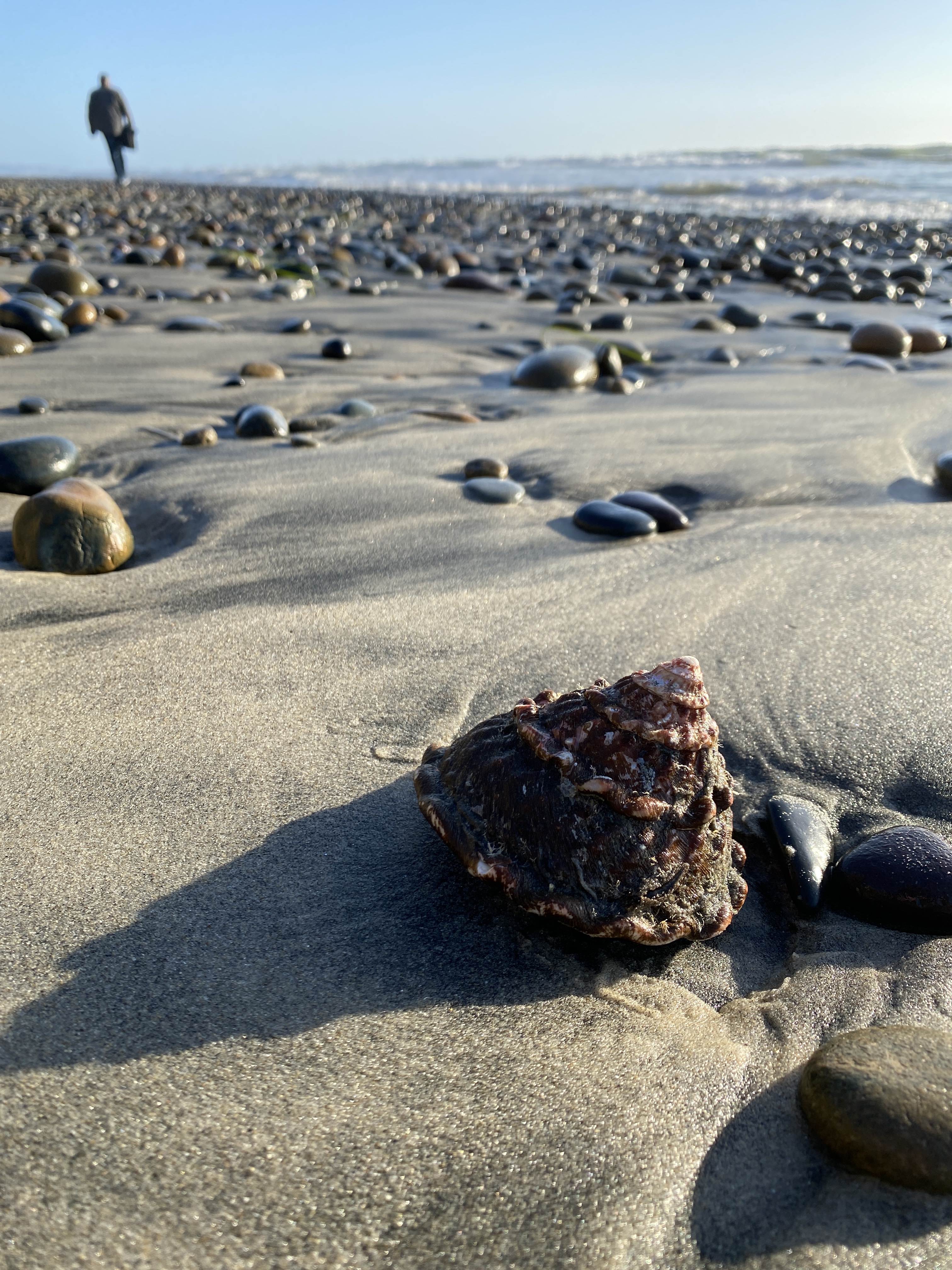
I love that idea! So I thought I would try it out–inspired by the wavy turban snail shell I saw on the beach this afternoon. I picked it up to see if the snail was inside, but it was empty–just the shell resting on the shore.
On the sandy shore
a castle spirals upward
but no one is home
@kd0602
Ironically, this one fits the 5-7-5 syllable format without even trying! I’d love for you to try one–with or without counting syllables, but aiming for a single breath. Feel free to leave your Haiku as a comment.
It’s so hard to set that alarm clock on Saturday morning, and even harder to get up. Today was the San Diego Area Writing Project (SDAWP) Spring Conference, and despite how hard it was to get up, I knew that once I signed on and engaged that I would enjoy the experience. And my colleagues didn’t let me down.
As the SDAWP director, a lot of the work for the conference was already done. But today I still had some responsibilities to get the conference started and I had also agreed to introduce some of my colleagues and their work in the first and second sessions. I’m always nervous when I have to be in charge of Zoom stuff…luckily I was able to make my colleagues co-hosts and they took care of themselves. There were small glitches along the way–one of the Zoom rooms for the concurrent sessions wouldn’t work and we had to move it to another Zoom. But in spite of the technical difficulties, overall, things turn out well.
I so appreciate the SDAWP teachers who stretched themselves to present today. It’s such a hard time for teachers. We are tired and not feeling like our best selves in the classroom. It takes courage and a willingness to be vulnerable to share your practice with your peers in a conference setting. Our keynote by Christine reminded the teacher audience about the importance of teachers and their role in our society. She reminded us of Robert Fulghum’s credo All I Really Need to Know I Learned in Kindergarten from 1990 and shared an update from 2003. We spent a couple of minutes reading the two and noting some of the important concepts like clean up your own mess (seems like some corporations might need this reminder) and don’t take things that aren’t yours (hmmm…some powerful people might need to hear this message again). She ended with some data about what parents say about teachers and their effectiveness during the pandemic (a lot of positive numbers)–some things that are not what we continually hear in our mainstream media. That short keynote session with uplifting messages for teachers set the tone for the three rounds of teacher-led sessions.
I was inspired by beautiful short-form writing (Haiku and 6-word compositions) written by students about nature and protecting the environment, I learned about the ways teachers were finding relevant texts to help their students see themselves and the diversity of voices in our world, I saw examples of students using writing and their voices to influence change in their community, and I walked away with a renewed commitment to the power of education to make a difference in the lives of our students and in our communities.
I was also reminded that the work of teachers will never be done. Sometimes successes are hard to see and some days do not go as we plan or as we would like. Some gains are baby steps, finding a glimmer of hope in students’ early attempts to put new learning into written form. Some wins are obvious–like the teacher sharing her student’s essay about the need to ban “lighter than air” balloons and a news clip of the student speaking at a local city council meeting where after she spoke it was announced that the ban was passed unanimously. But even with that obvious win…you’ll still find balloons on the beach, like I did on my walk after the conference.
I’m glad I got up early this morning and learned with and from my colleagues. I left the conference with more energy than I had when it started, which is good since there is still so much work to be done.
I woke with a jolt at 2am to the rumble of thunder, the room lighting up even under my closed eyelids. The patter of water on the roof followed, the predicted rain had arrived. Forecasts for rain are often unrealized promises in these parts as we watch the rain percentages on the weather app drain away as the appointed rainy day nears. We were lucky this time, we did get close to half an inch overnight.
Friday afternoons are blissfully usually Zoom-free, with most people being done with meetings as the week winds toward the weekend. That also means I can often squeeze in a walk on the beach if the tide conditions are right. And today was perfect. With a negative tide around 4pm, we would have plenty of beach to walk and explore. There is nothing like heading to the coast to make that separation between work and the weekend.
After a storm is a glorious time. The sea is wild with wind-whipped whitecaps and the shore is often empty as sun bathers stay away and water lovers wait out a few more hours before risking the swim. With temps in the high 50’s, the time was right for some exploration and deep breathing.
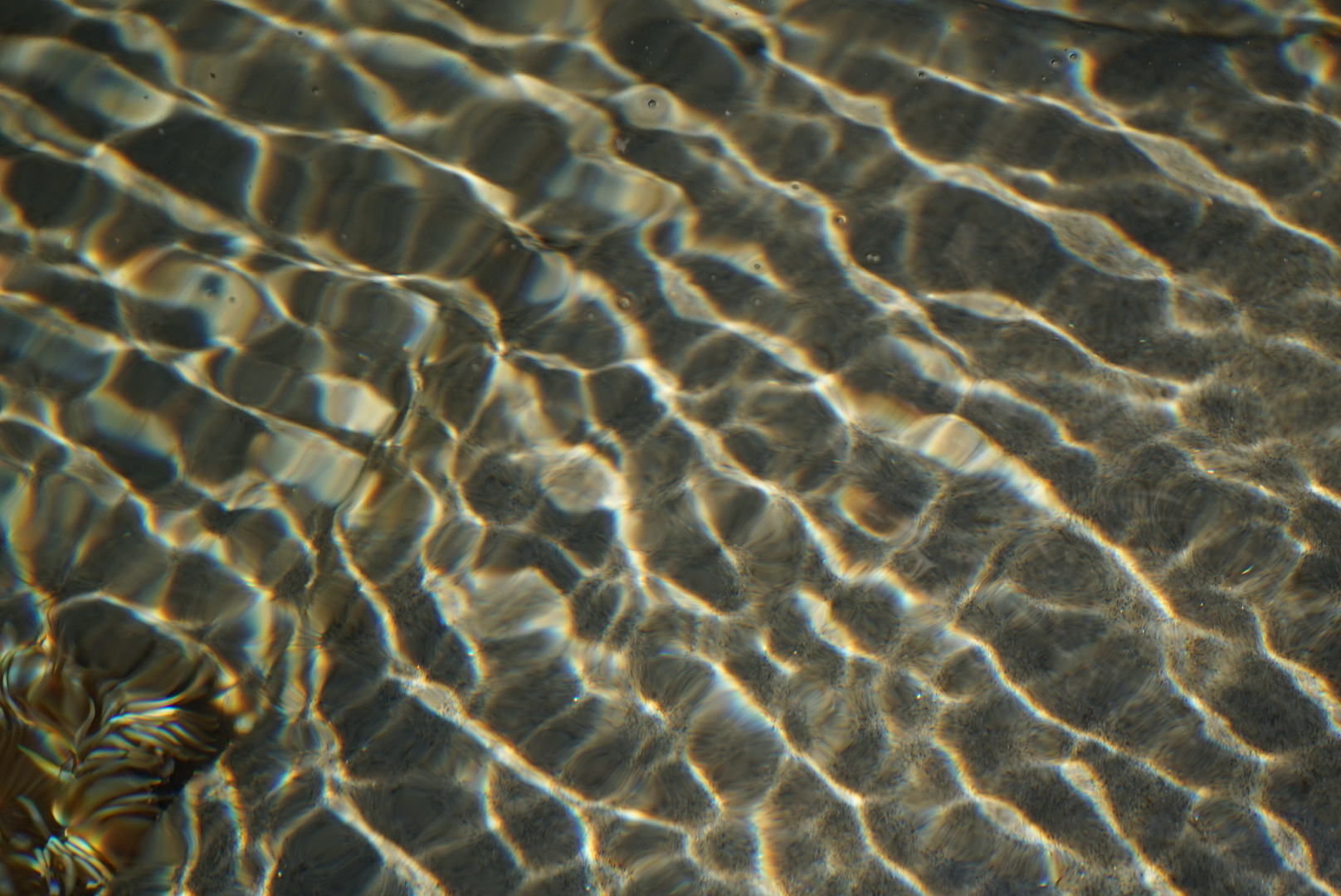
The tidepools beckoned. I stepped carefully, making sure to avoid the exposed sea anemones. And I found myself mesmerized by the ripples in the water, catching the light and dancing in the light sea breeze.
Geoff is an avid beach cleaner, always with a bag in hand to pick up any trash we encounter. Storms push the trash to shore and we came across an assortment of styrofoam pieces (from surfboards and from food containers), straws, bits of colorful plastic, and even this mostly intact plastic food/drink container. I couldn’t resist a shot with the seagull in the background before Geoff added it to his trash bag.
I love the way a walk on the beach unkinks my shoulders and smooths my brow. The white noise of the waves crashing clears my mind and helps me set my work aside and be present in the beauty of nature. I leave windblown and refreshed and this week, ready to host our San Diego Area Writing Project (SDAWP) Spring Conference tomorrow morning. Another beach walk may be in store tomorrow afternoon…
On a too many Zoom meetings day my walk begins at dusk. I notice the clouds gathering tinged with the deep pinks of the setting sun. Winds are picking up and temperatures are heading down. Some much needed rain is in the forecast.
If one good thing came from the pandemic it is the daily walk that has now become a regular habit–one we seldom miss. It is also a time for looking, noticing, watching…paying attention to whatever presents itself. The neighborhood walk is not my favorite. Manicured lawns, tract homes, and family cars feel mundane and routine. The occasional snail, lizard, or dandelion add interest and some variety.
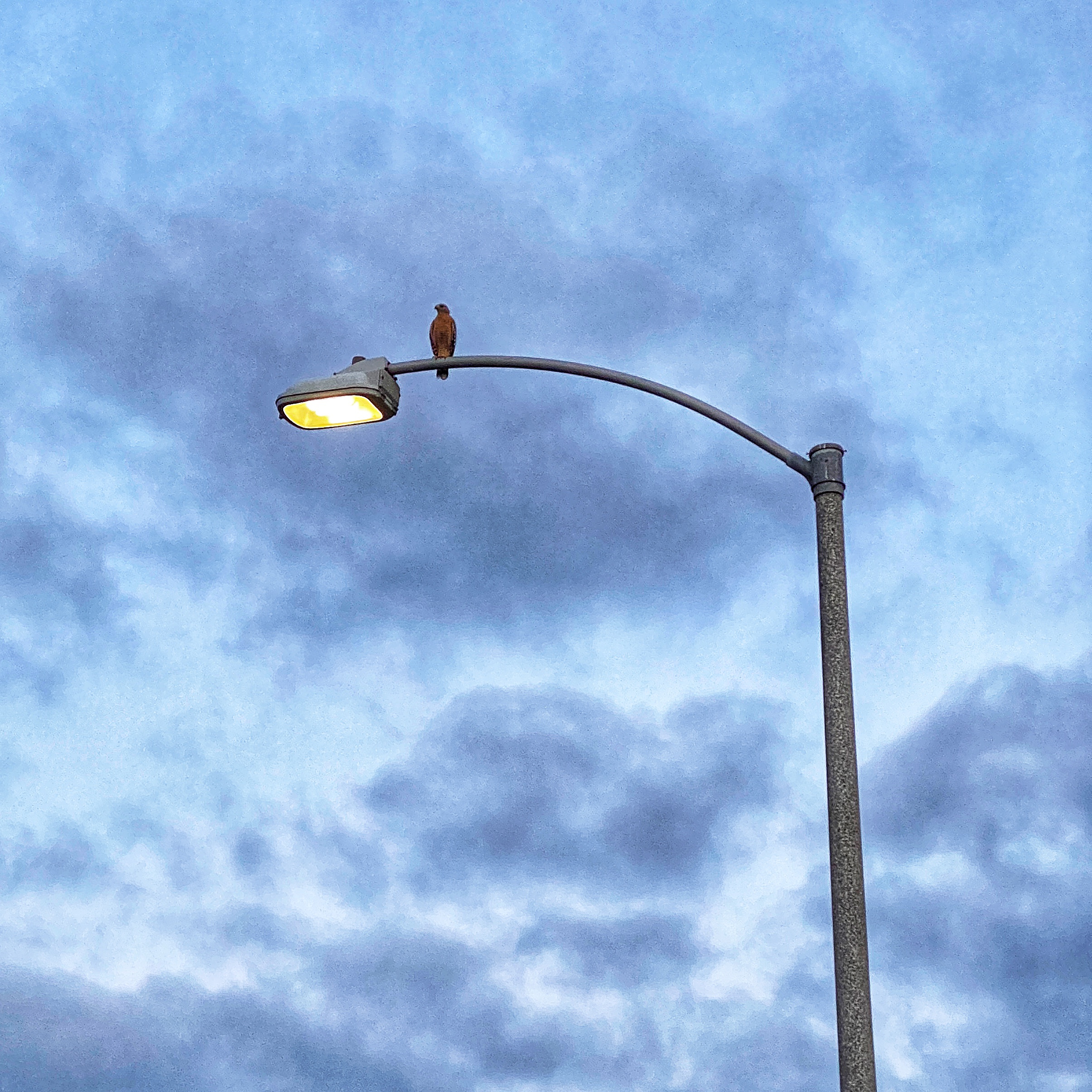
Some days I notice birds. The most common are of the corvid species–crows and ravens who converse raucously from the treetops. Today I spied a small bird of prey perched on the lamppost…watching the world while I watched it. I always wonder what those wonderful wild bird think from their suburban perch. Do they notice the carefully groomed yards, the small dogs in cute sweaters on reel-in leashes, the tweens on electric bikes buzzing down the sidewalks?
A hawk? A falcon? Something else? I don’t think my iphone photo offers enough clues for identification. But it did add interest to my walk.
Sometimes they are a field of tiny yellow suns brightening an empty lot.
They seem to sprout up in the most unlikely places. In small cracks in the sidewalk. Next to an abandoned building or in the cinder block wall. They thrive where they land, without the coddling or TLC that are usually lavished on typical landscaping.
As delicate white puffballs they are metaphors for possibility. Perfect rounds of magical stars beckon, urging breath. As we wish, tiny seeds take flight, swirling in the wind, dancing in the sunlight, spread by hope often in the spirit of play.
And yes, I know they are frequently described as weeds, despised by many. I watch my husband mow them down, dig them out, and cast swear words in their direction. But still they thrive…much to my delight.
They catch light and my imagination…and on today’s walk they also caused me to pause, to notice, and to photograph. And to come home and write.
Schedules at school have been challenging this year. COVID protocols meant staggered lunches and as the newest member of the grade level team, I started this school year with a lunch time so early it felt like brunch! The problem with an early lunch is that the afternoon (with 6 years olds) felt interminable. I was able to negotiate a slightly later lunch after the first couple of weeks–and 20 minutes really did help, but afternoons continued to be a struggle.
A few weeks ago as the Omicron surge began to level off, the rumbles of change started vibrating through our staff. Could we have students line up on the playground instead of waiting outside the classroom as they arrived on campus in the morning? What about letting students play before school for the 10 minutes before the bell rang?
And then a more seismic shift started, could grade levels share a common lunch time? A common afternoon recess? I was definitely in favor of this change–and a complete overhaul of my daily schedule. All of my recess times would change and I would gain precious instructional minutes in the morning and shorten that afternoon when student engagement was so troubling.
It was decided that our new schedule would begin when we came back from our February Family Week break…yesterday!
My Monday was magical! No, not perfect, but the difference was so significant that I felt like singing from the rafters! My students are engaged in meaningful learning right up to our 10am recess. They come back and continue with focus up until our 11:30 lunch. After lunch we settle in for 50 minutes until our afternoon recess and manage to maintain focus right up to our 2:35 dismissal–at least that was true for the last two days.
Honestly, these have been the best 2 days of the entire school year. Do schedules really make that much of a difference? Were these last 2 days just a fluke of timing? Can a shift of 25 minutes at the start of lunch change everything about how learning happens?
I don’t yet know for sure…but it feels like the best thing that has happened in a while. Maybe “normal” is in the little things, like lunch at lunch time, play before school, and breaks with my colleagues. This schedule change feels like a win.
I probably take thousands of photos in a year (I take photos every day–and some days I know I take hundreds of photos). Even though I post one each day, the photos build up in my camera roll, on my computer, and get a bit muddled in my mind. It’s sometimes hard to remember photos from last week, let alone last month. Last year after a battle with Instagram’s best 9, I curated a photo from each month of the year and wrote a “best of” post featuring 13 favorites from 2020.
So as 2021 was coming to an end, I sorted through my camera roll and picked out a favorite from each month. Some months this was an excruciatingly hard process–I had more than one that was my favorite. Other months it was a struggle to find a photo that I loved enough to be called favorite. But with some help from my hubby and some pretty strict criteria that I self-imposed, I narrowed my choices down to 12.
I probably could have done a best of in 12 birds or a best of in 12 seascapes, but I tried to include images from a variety of contexts–although you will notice that my images are heavily influenced by the Pacific Ocean.
Like 2020, last year was also heavily influenced by the worldwide pandemic. The year began with most of us hunkered down, staying close to home. Vaccines were not yet available, we were still masked most of the time, and travel was limited (if it existed at all).
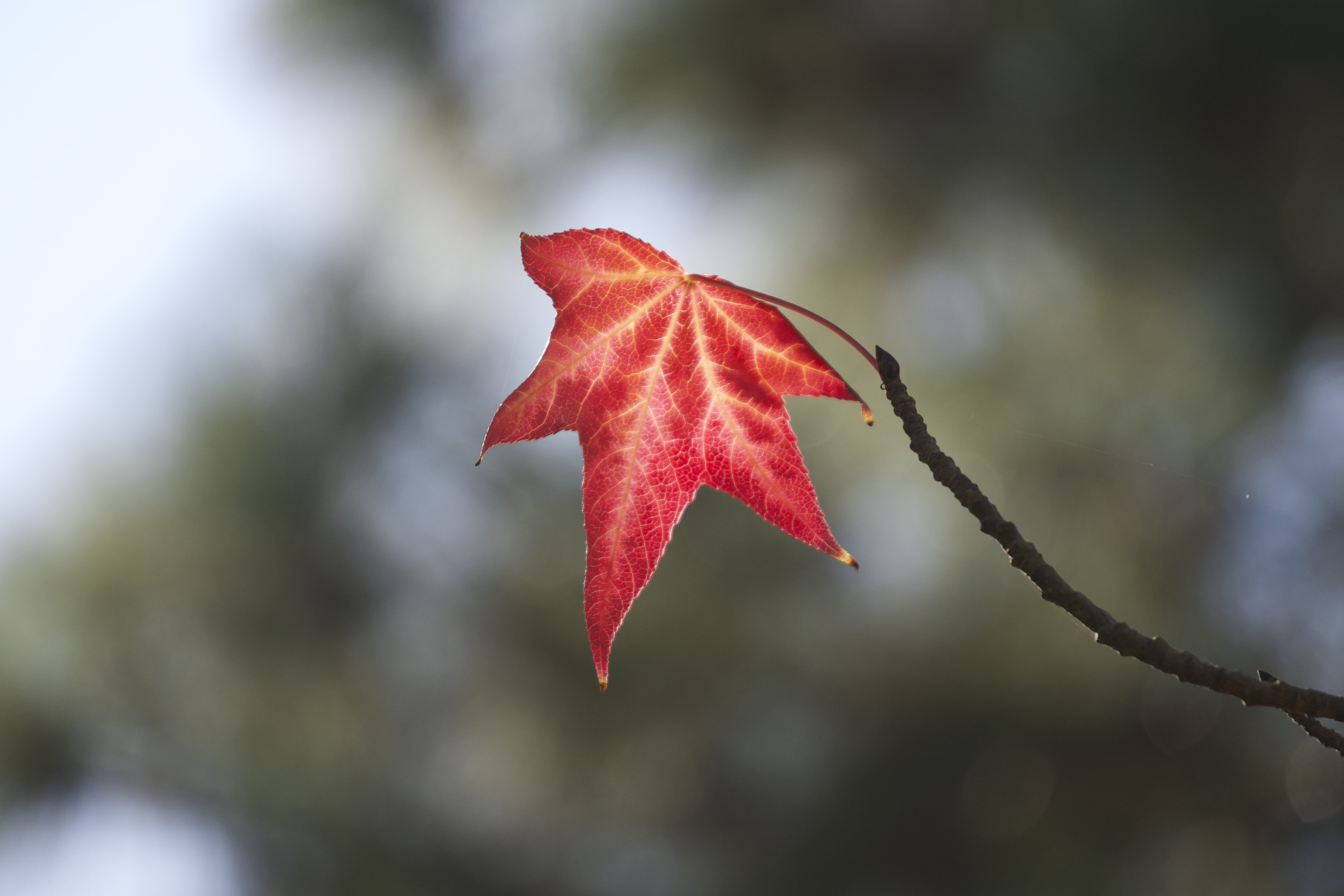
Finding interesting places to walk is an ongoing quest for us. Some days the tides at the beach simply don’t cooperate and there is no beach to walk at all. In January 2021 we found ourselves at our alma mater, UCSD, exploring old haunts and new construction, including the vending machines with COVID test kits that you swipe with your ID card to access. While we walked I couldn’t help but notice this gorgeous red leaf hanging on for dear life. Fall colors are neither dramatic nor timely in these parts, so this January gem seemed special and made for a beautiful harbinger for a new year.
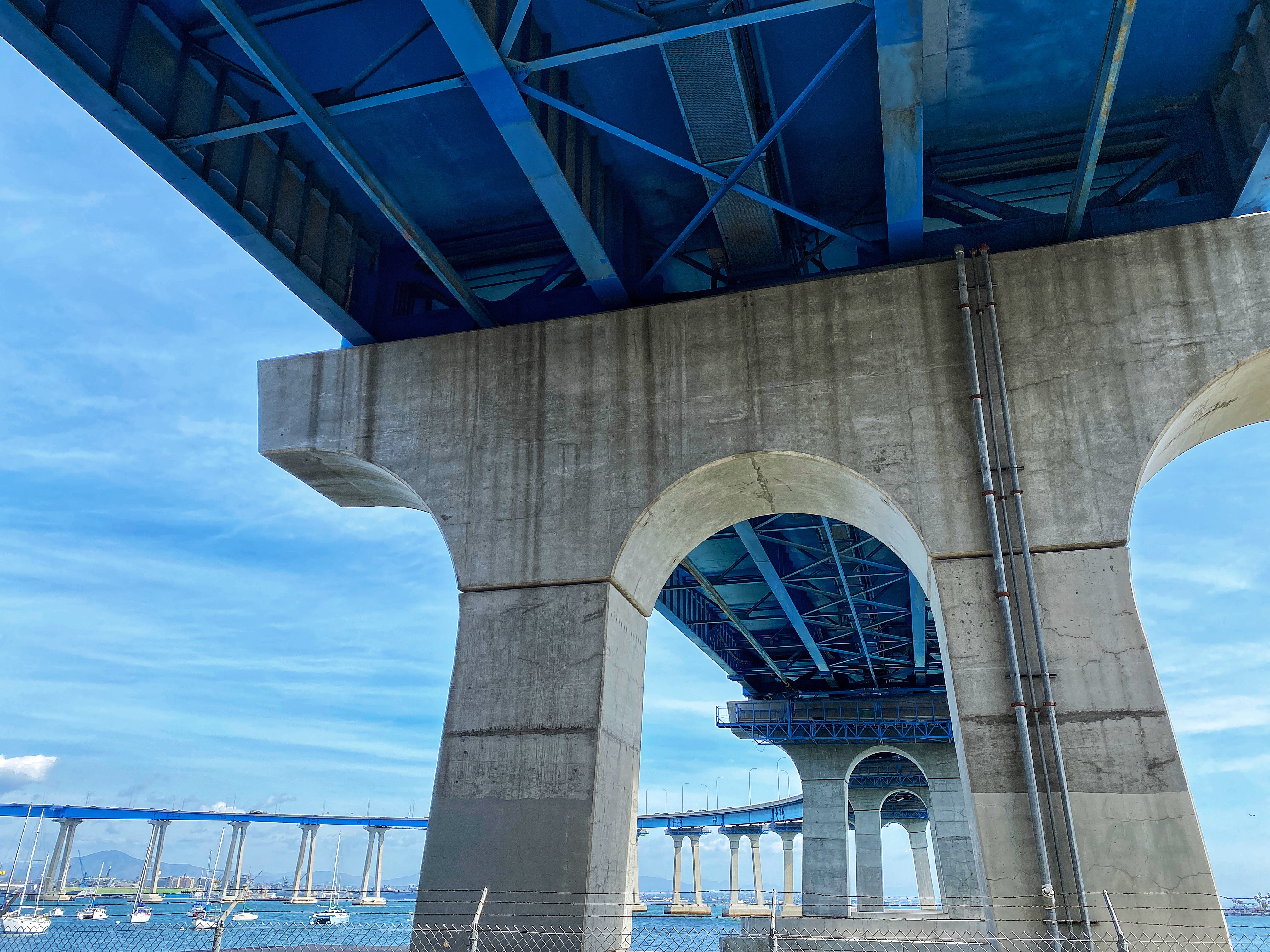
Valentine’s Day happened to fall on the first weekend of our February break in 2021, so to celebrate we decided to be tourists in our own town! We drove downtown, masked up, and took the ferry across the bay to Coronado. The Coronado Bay Bridge is an iconic landmark here and I couldn’t resist photographing from below, especially since the third graders in my class happened to be studying bridges at that time. I love the perspective that shows some of the under-supports along with the sweeping curve of the roadway with the boats, bay, and clouds on view too.
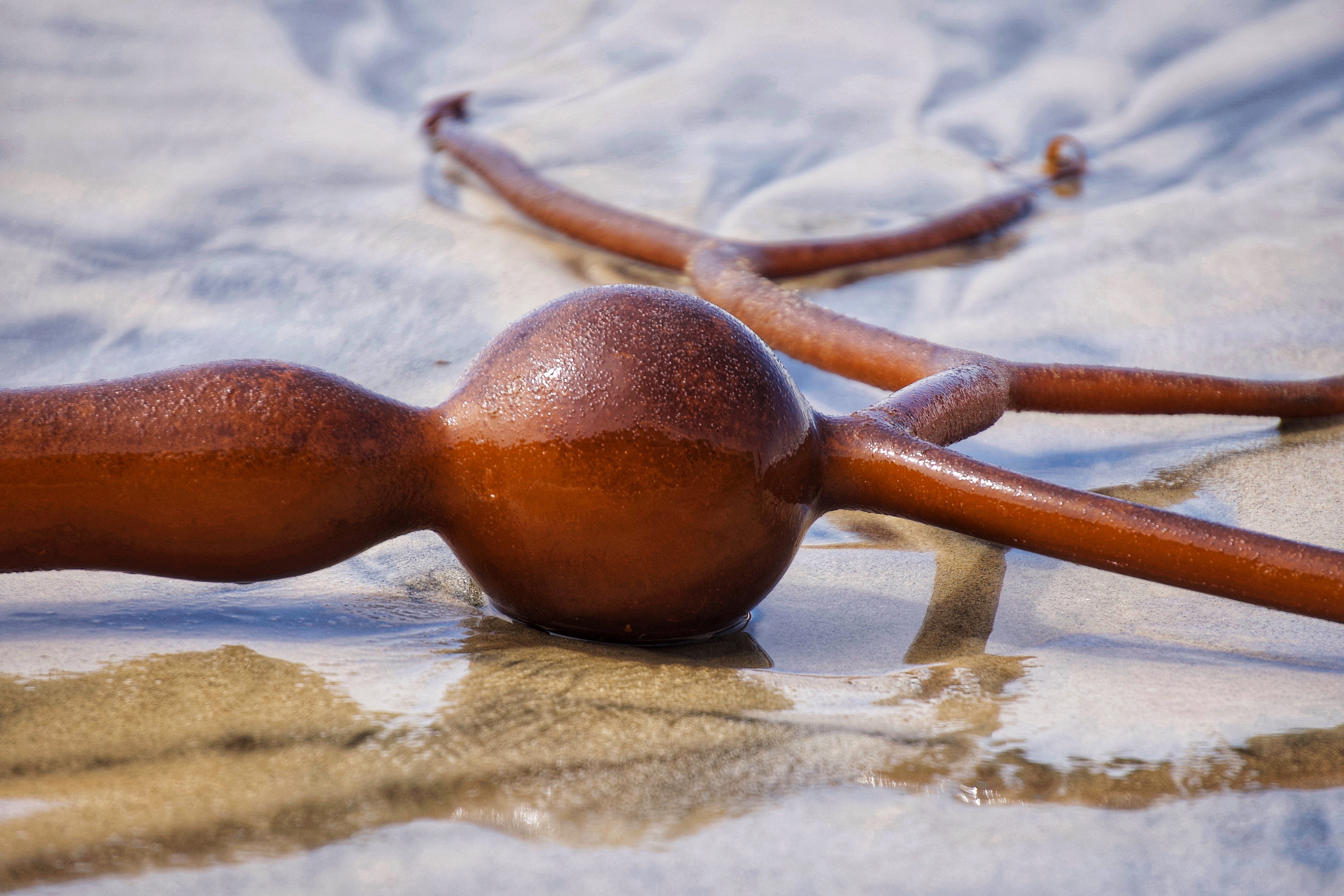
Giant kelp, macrocystis pyrifera, is a common sight on our beaches. But bull kelp, with enormous floats the size of softballs or larger is less common. This amber algae is native to our shoreline and is home to many fish and other sea life. And when it washes up on the shore, it becomes a favorite subject for a still life photo. There are no bad months for beach walking and March just happened to be the month when I came across a bull kelp still life opportunity on my favorite walking beach.
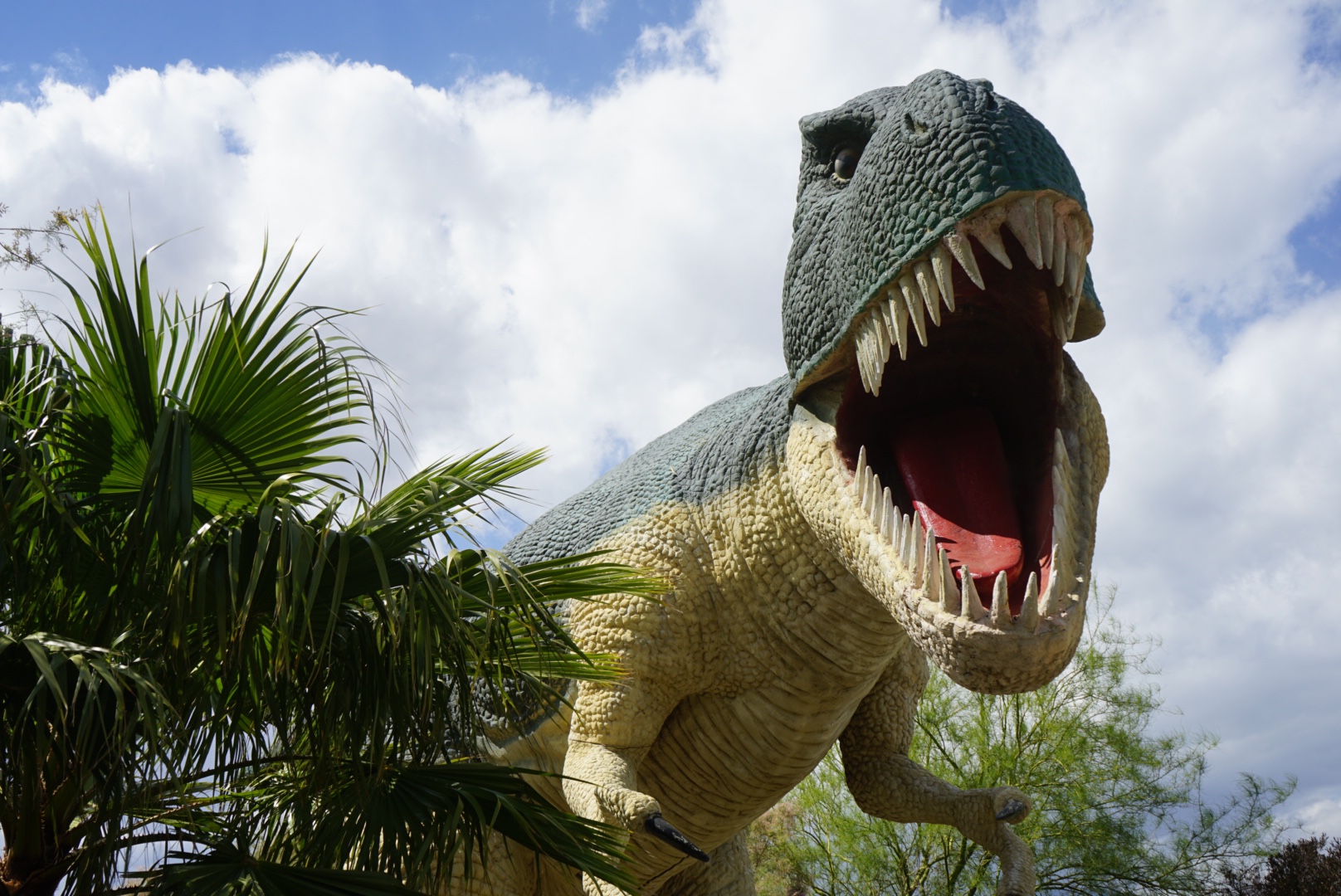
Art takes all forms and can take you back in time. In April a short road trip to Palm Springs took us back to the time of the dinosaurs and brought us face-to-face with a life sized T-Rex. The Cabazon dinosaurs is a throwback roadside attraction with huge cement dinosaurs–some realistic like the one above and some less so, like the pepto-pink brontosaurus that also houses a gift shop. Sometimes photos feel like art and at other times they are a documentation of life experiences. What funky roadside attractions can you find nearby?
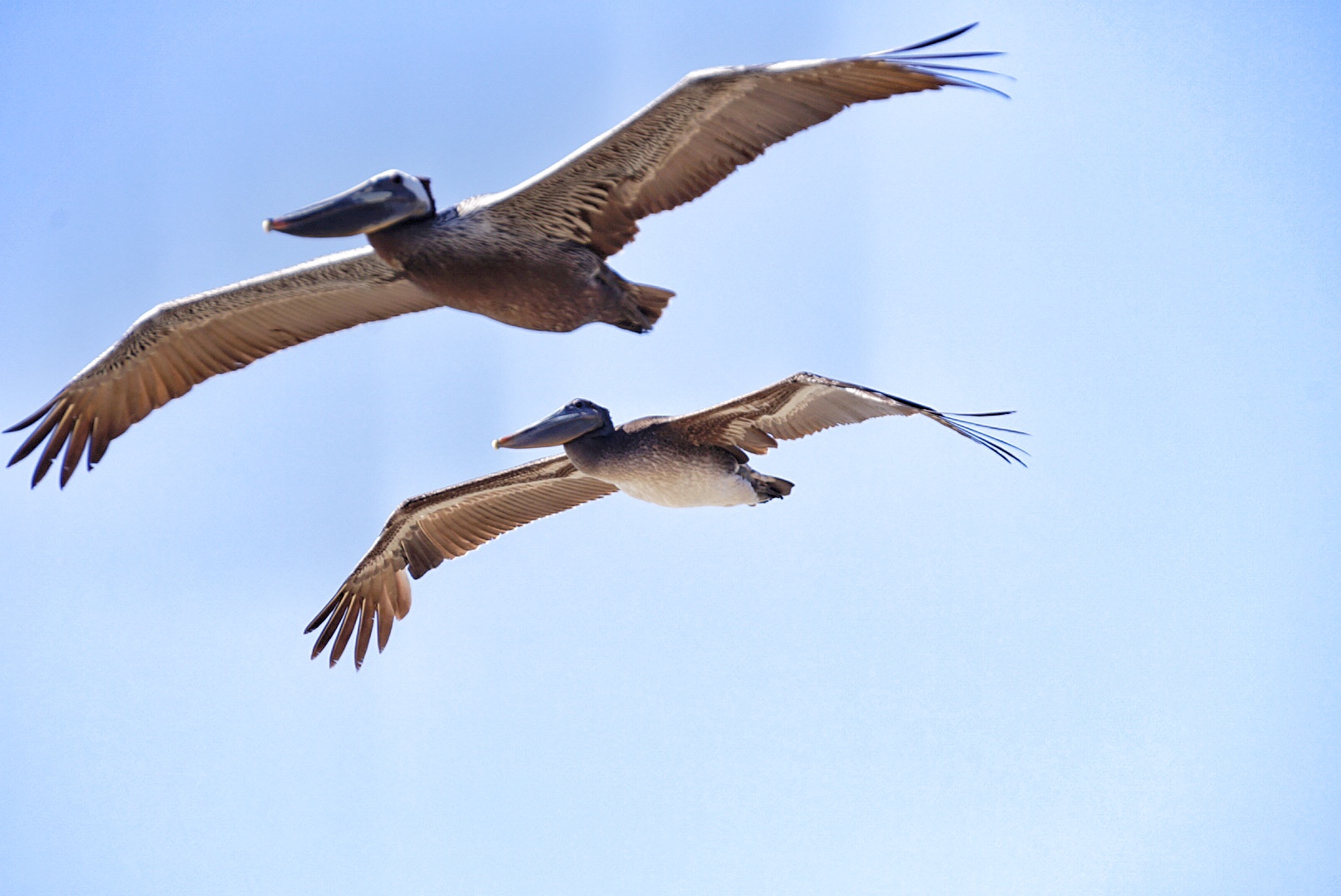
In May I headed up, climbing the stairs of another nearby beach. This place offers a vantage to watch seabirds above sea level. From this perch, pelicans come close, soaring by at eye level, bringing details into focus. The challenge is clicking that shutter at just the right time to freeze the image in sharp focus. I continue to work to achieve that ideal photo of a pelican in flight!
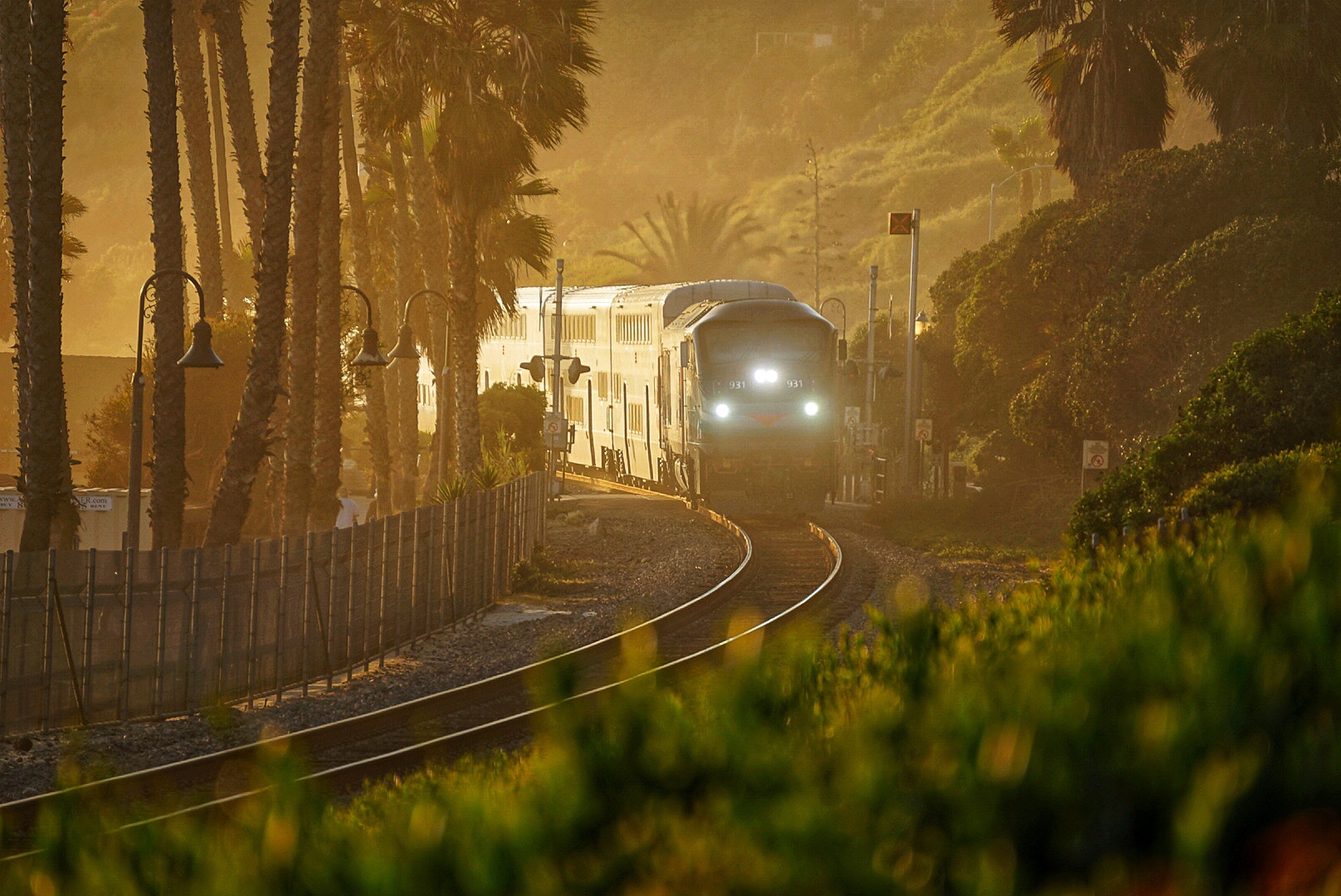
To celebrate our wedding anniversary in June we headed up the coast to San Clemente. If you know Southern CA, you know that June can be spectacular–sunny, clear and warm–or plagued with the infamous “June gloom” that grays out the coast, washing away color and cooling temperatures. Watching the Surfliner emerge from the foggy gloom around the bend with lights on created a mystical image. I love when the light is right and my camera is poised. You never know what may come out of the gloom!
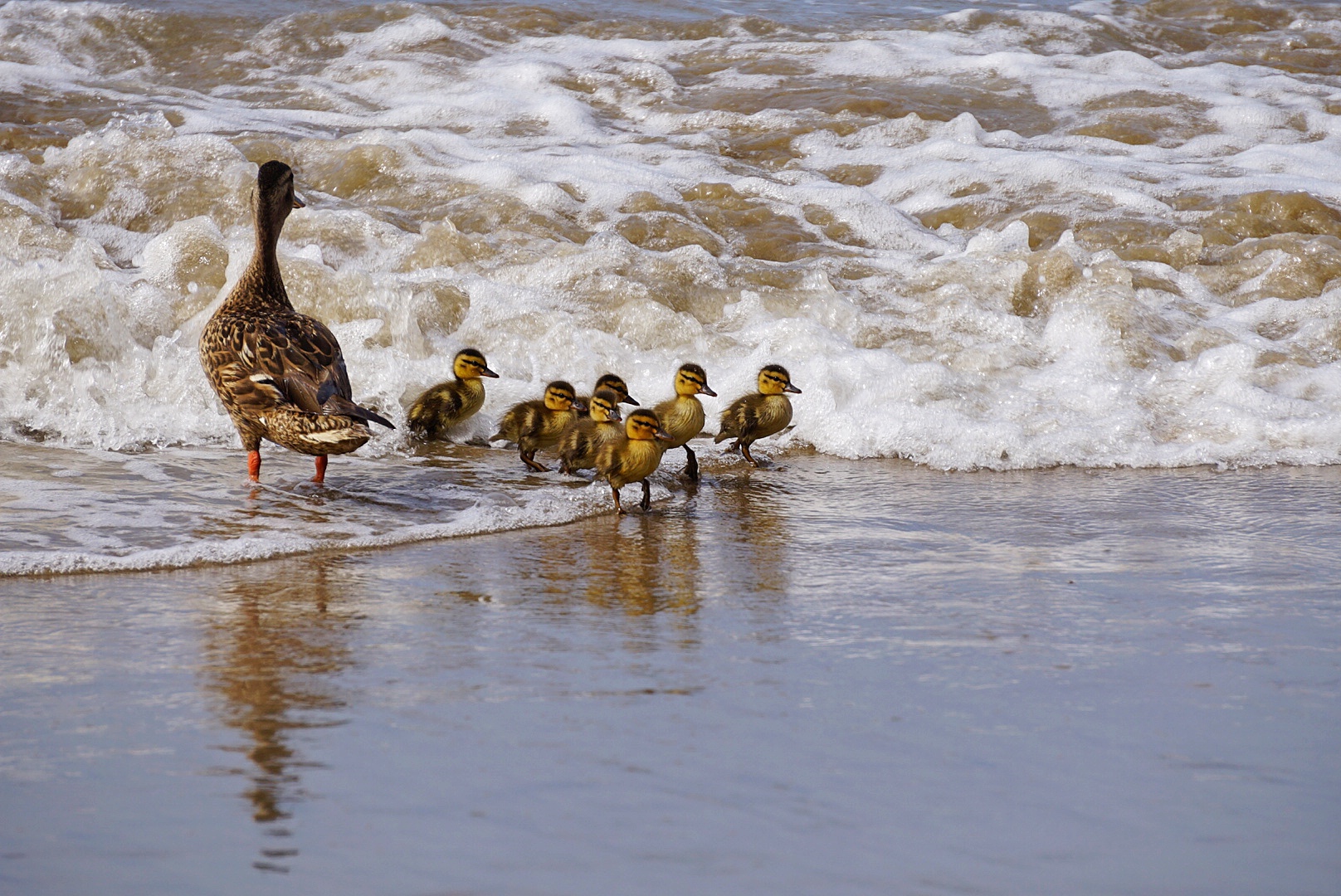
As I write and reflect, I realize that 2021 was a year of many short road trips. July was a rough month for me and my family. After my dad died mid-month, I needed to get away. So we headed to Santa Barbara, three hours up the coast. We walked beach after beach, not thinking or planning, just feeling cool sea air, watching sherbet colored sunsets, and noticing… This family of ducks caught my eye. Mama mallard and her ducklings out for a swim in the surf was fascinating to watch. Mama urged her babies out, they tumbled in the white water then regained their footing and tried it again. I don’t know if this is normal duck behavior, but it was fun to watch and photograph.
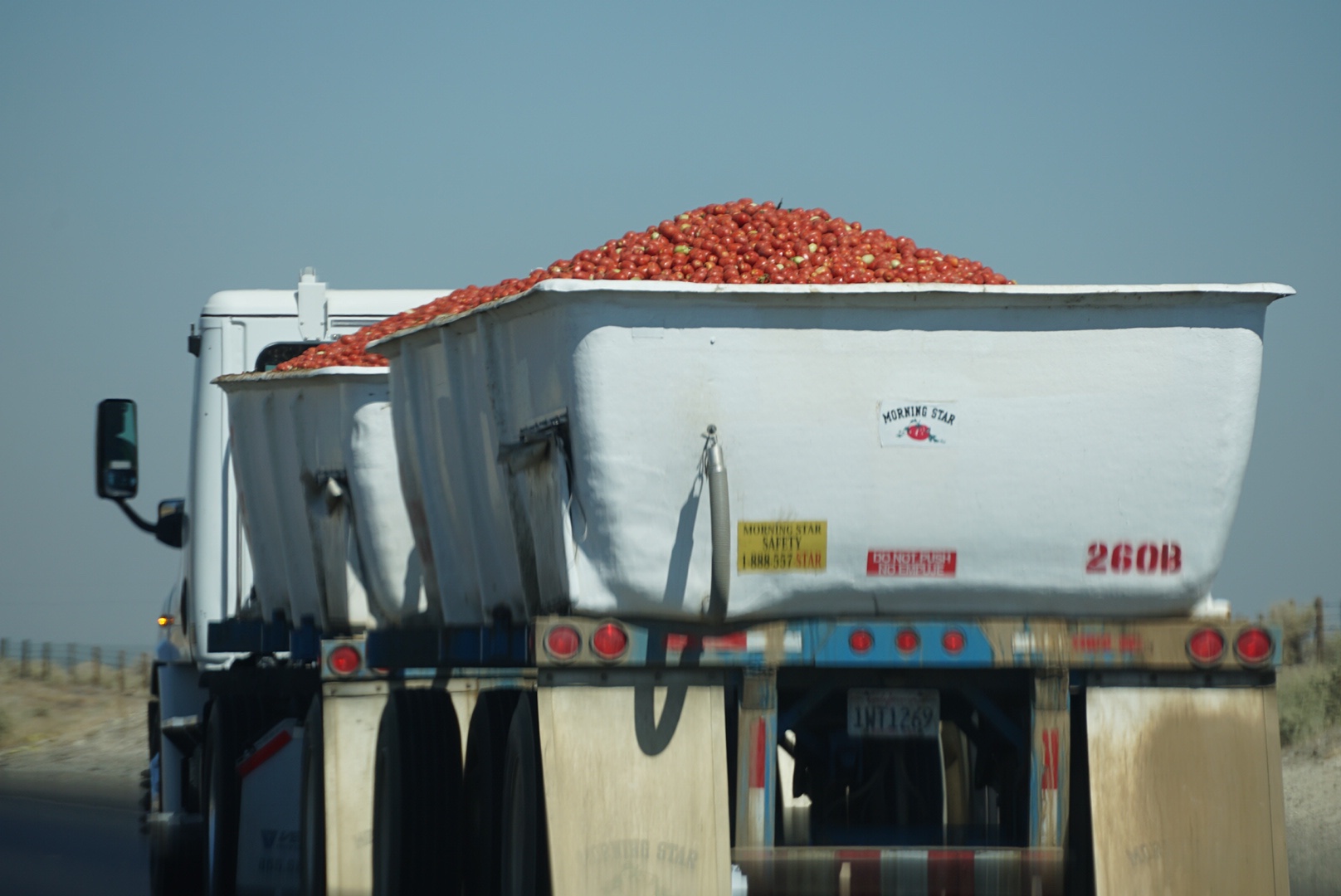
In August we made that long, seemingly endless trek up I-5 through the central valley to visit family in the Bay Area. In the summer tomato trucks are a usual sight. These trucks always remind me of my dad–a person who loved big equipment, driving, agriculture and farming, and had this weird wish to drive tomato trucks. I have gotten in the habit of taking photos of these trucks through the window as we drive up the 5, sometimes sending them to my dad, just for fun. This year, just a few weeks after his death, taking these photos made me feel close to my dad. I would notice the rich red of the tomato haul visible in the northbound trucks, bring them into focus as we approached, and then try again as we passed truck after truck after truck. Southbound trucks were empty, heading back to pick up another load and make that round trip again.
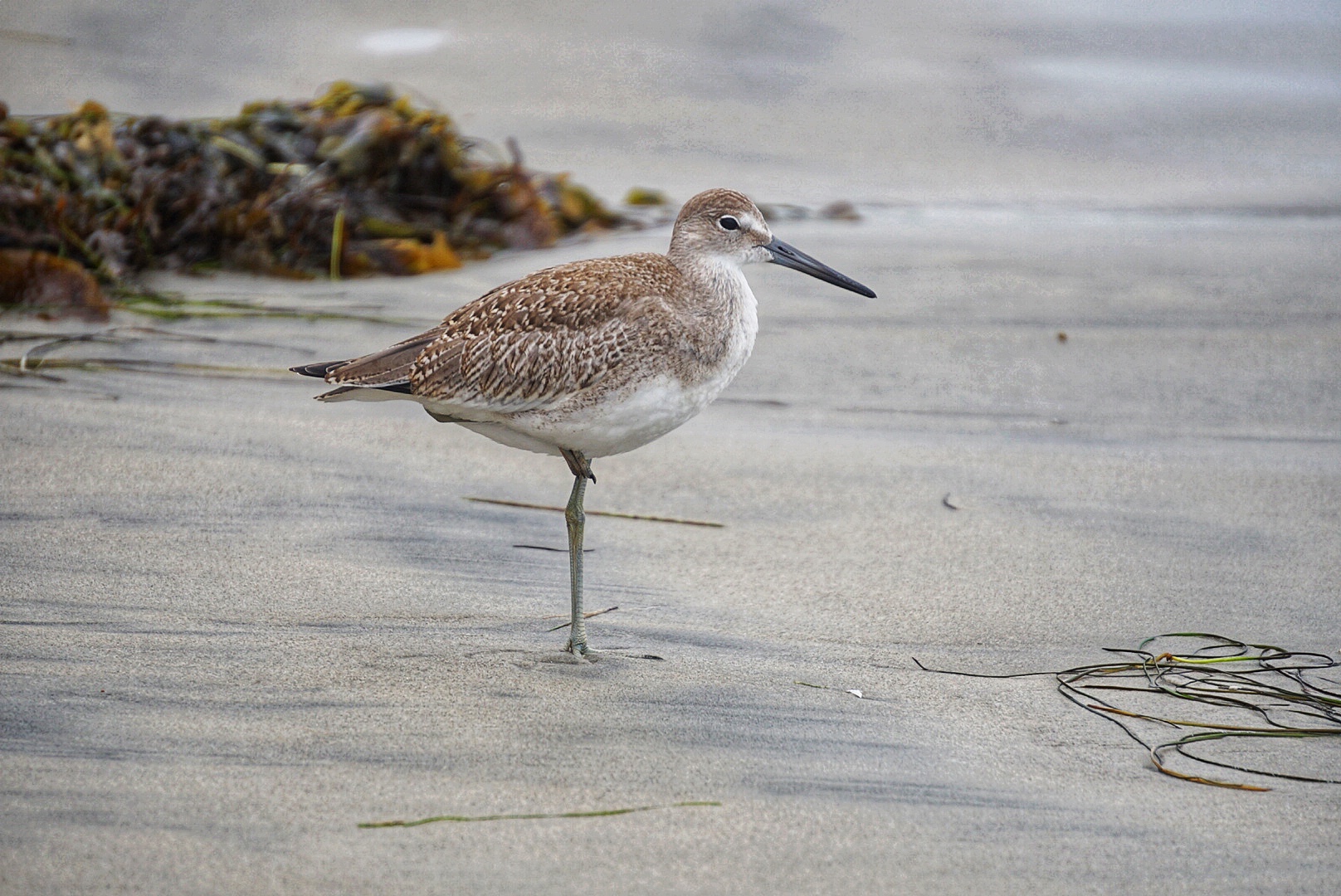
September meant back to school and fewer crowds on our local beaches. September is a perfect month for Southern CA beach going–and I think the shore birds agree. The skies are clear, the weather and the water warm, and the parking–while not exactly plentiful–is not like searching for a needle in a haystack! I like to station myself close to the birds, waiting quietly and creeping close to capture an interesting and (hopefully) different image. If you look closely, you’ll notice this bird is standing on one leg.
A Halloween birthday means my husband has spent much of his life celebrating with costumes and trick or treaters. This year we decided to make a trip to the Channel Islands on Halloween. We boarded a boat in Ventura and were treated to an amazing play session with a humpback whale on our way out and to hundreds and hundreds of dolphins dancing around our boat on our way back near sunset. While photos do not even begin to represent the phenomenal experience, this image does capture some of the beauty and grace of these amazing mammals and takes me back to my memories of the day.
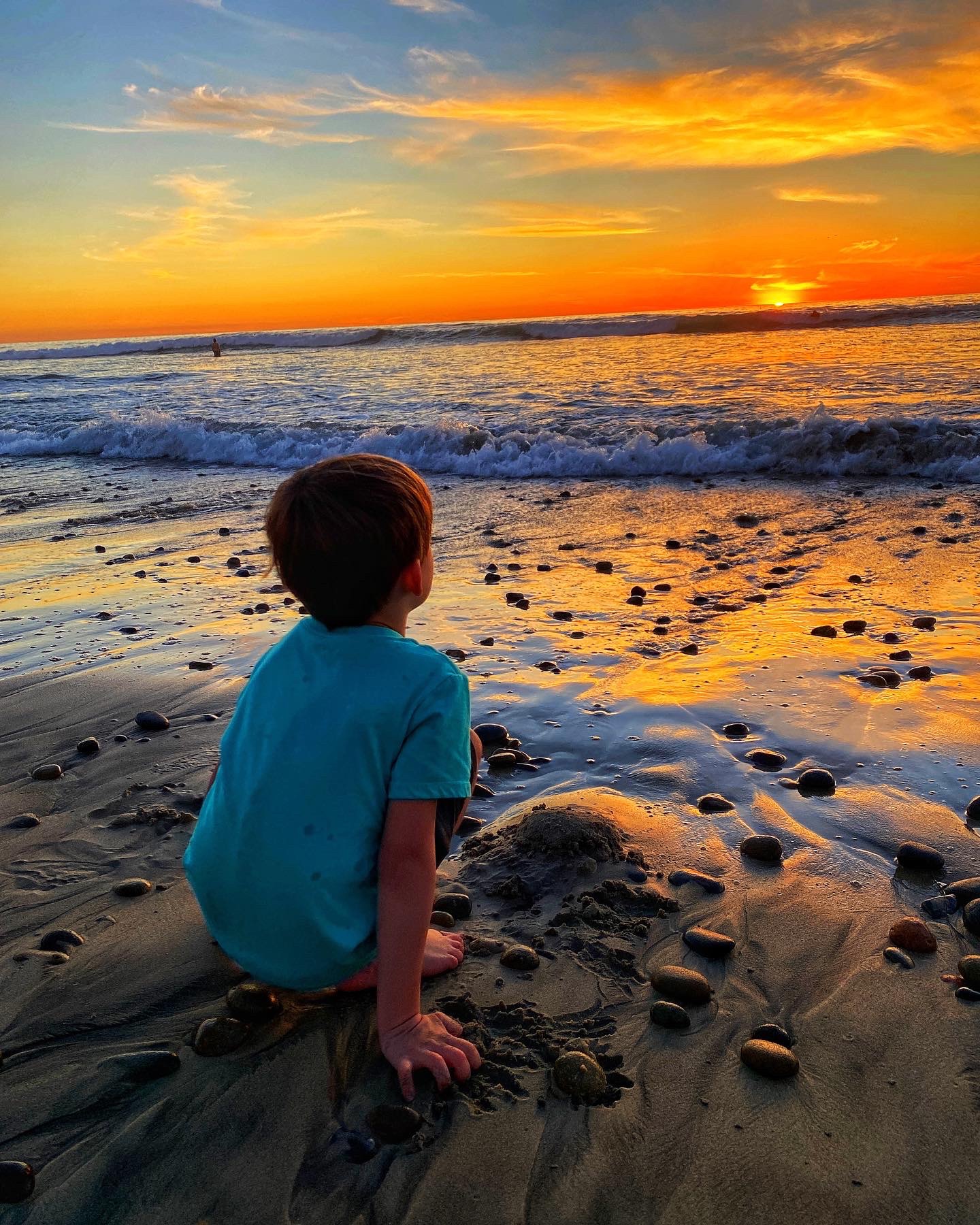
You’ve probably noticed that I seldom take photos of people, instead focusing mostly on nature with my photography. This November shot is a rare exception to my posting habit. I do take photos of some people–mostly family members and often my grandsons. But I tend not to post those on social media. We were lucky enough to have family gather with us during Thanksgiving week in 2021 and the week ended with a sunset visit to my favorite beach. I couldn’t resist this shot of my grandson mesmerized by the colorful sky as the sun sank into the sea.
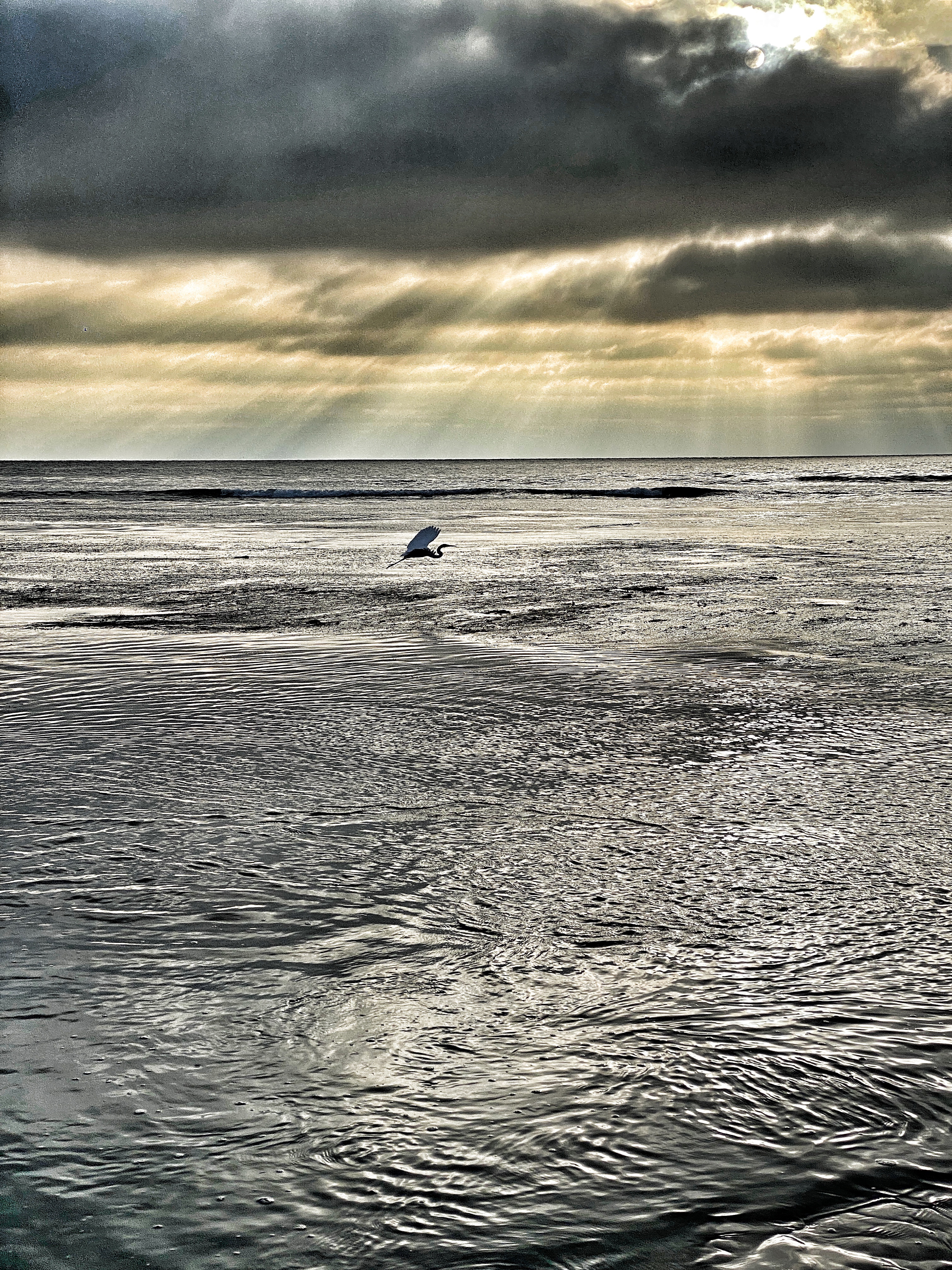
And could I really tell the tale of a year without including a photo of an egret? This shot features an egret in flight above the sun cracked waters on a cloudy December day. You have to look closely to notice the egret in silhouette in the distance. I love their distinctive shape, both in flight and when they are standing.
Twelve months, twelve photos, a year in review. I selected the photos before Christmas–before we explored the redwoods at the John Muir Forest and before we visited the monarchs wintering in Santa Cruz. But I’ll still stick to these twelve–they are my “best of” for the time frame when I did the selecting.
How might you go about selecting a best of collection to represent last year or last month or even last week? I’d love to know about your curation process.
Yesterday was International Dot Day, a day inspired by the creativity of Peter Reynolds and the power of each of us having the courage and confidence to “make our mark.” To celebrate dots and creativity and confidence, we began our week with the poem What is a Dot? by Laura Purdie Salas. The first graders in my class had an endless list of ideas of what a dot could be and eagerly illustrated the poem with their own “dotty” ideas. Of course, we also read and discussed The Dot by Peter Reynolds.
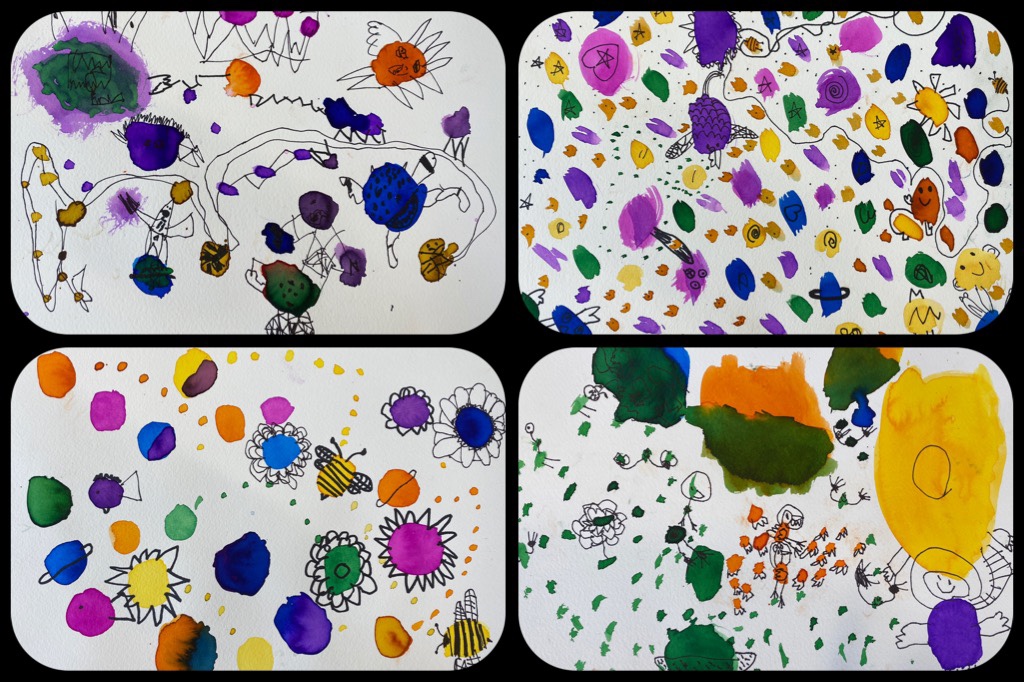
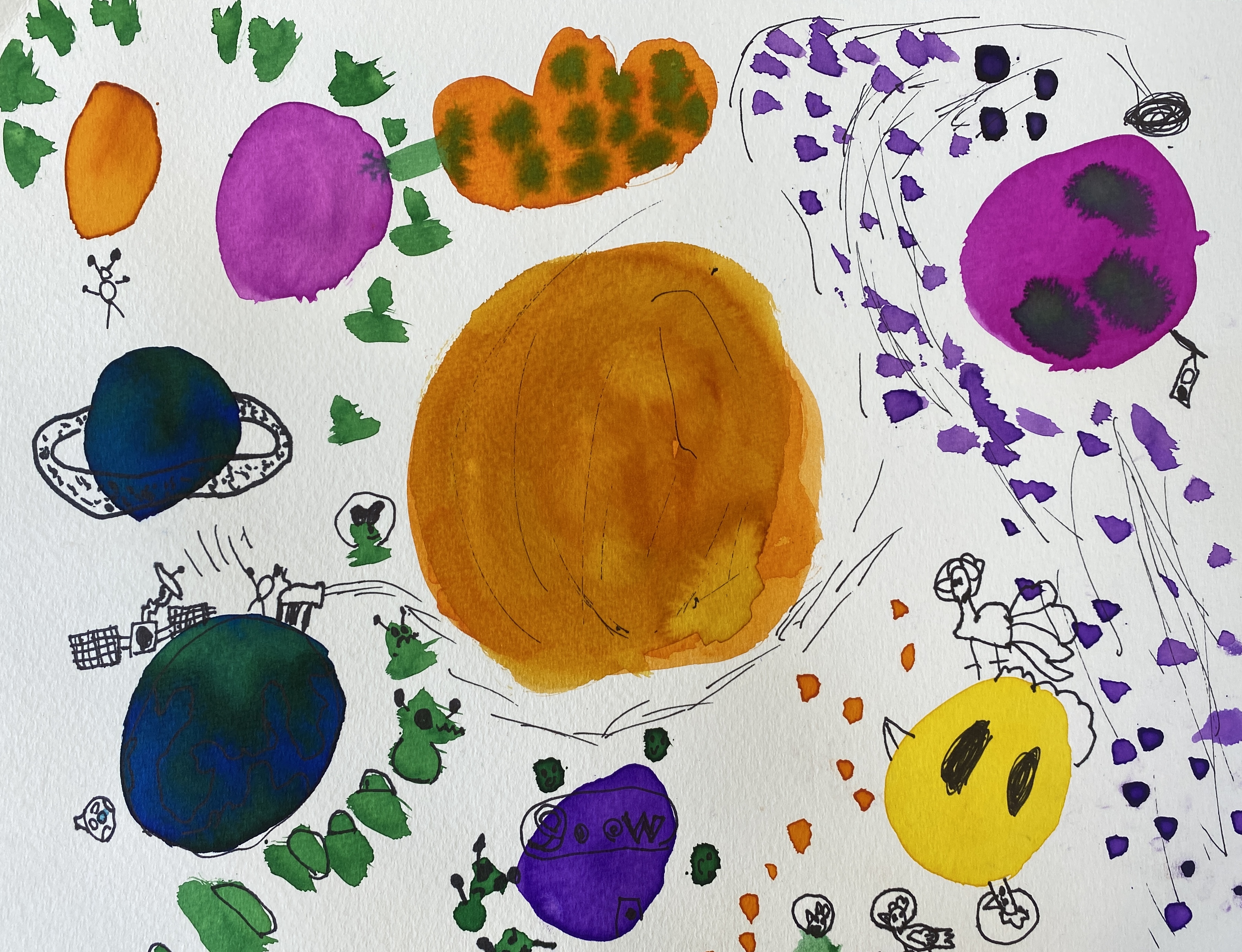
The week got dottier on Tuesday. We broke out the liquid watercolors and painted a page full of dots. These mostly 6-year-old artists knew that making the dots was just the start of this project. They would be transforming their dots into something else using a black sharpie marker the following day. They joyfully and freely painted dot after dot, experimenting with size and placement. They dripped one color onto another, while carrying on a constant narrative of alternative worlds, descriptive details about color, and oohs and aahs of their own discovery. We ended the day by reading Ish, yet another Peter Reynold’s book and talking about encouraging others and not judging our first attempts too harshly when we draw (or try other things too).
Wednesday was the day…International Dot Day! Students came to school dressed in dots and so did I. I l love their creativity in finding dots in their wardrobe. One child found a solar system shirt, each planet a dot. Another noticed the cat faces on her sweater were dots with more dots showing the natural coloring of the cat. There were polka-dotted masks (COVID makes us creative too), socks painted with dot markers, dotted bows in the hair, and I even found a pair of polka dotted earrings! With wardrobe dots in place, students were eager to get started transforming their watercolor dots from the previous day into beautiful pieces of art.
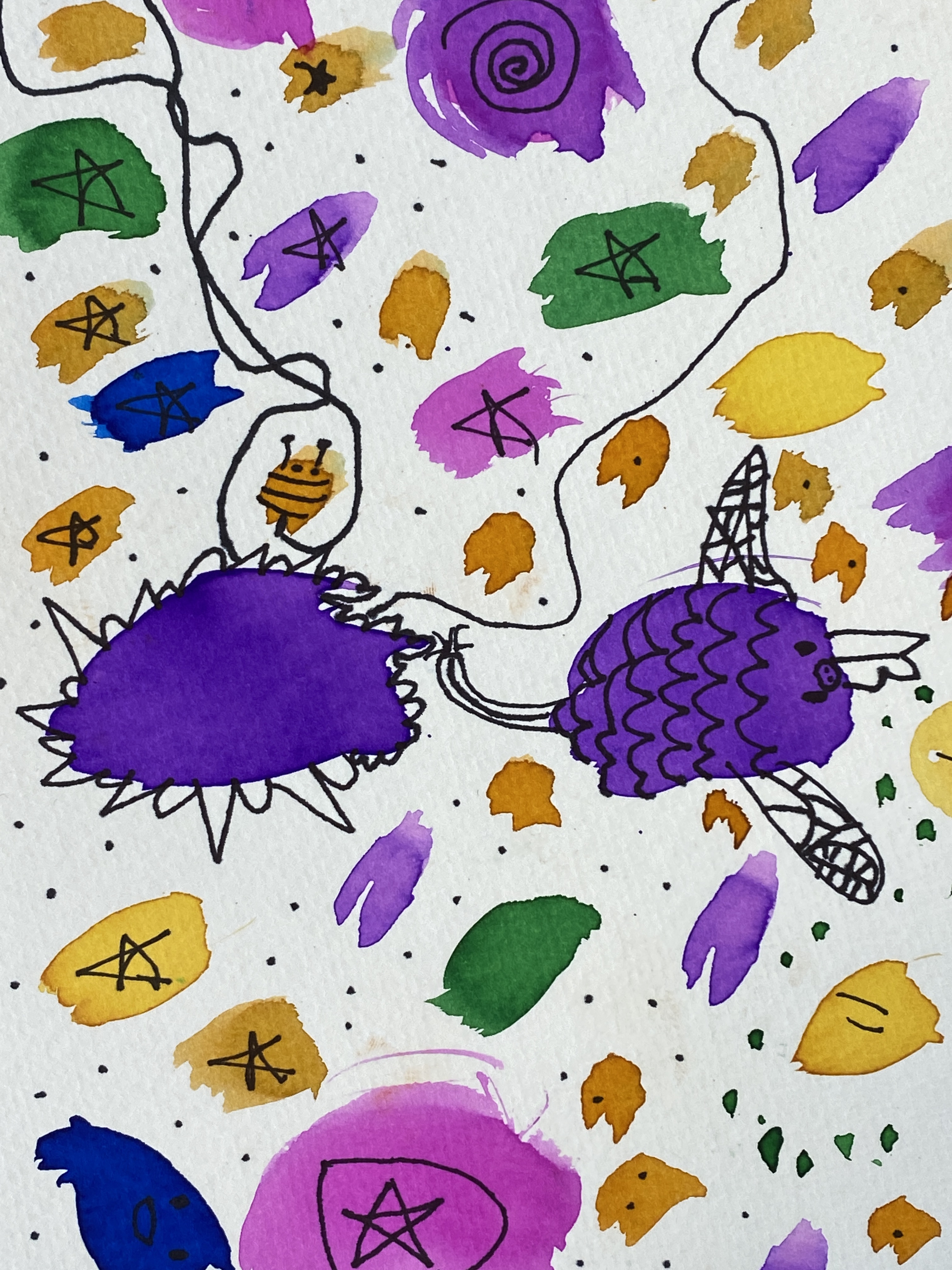
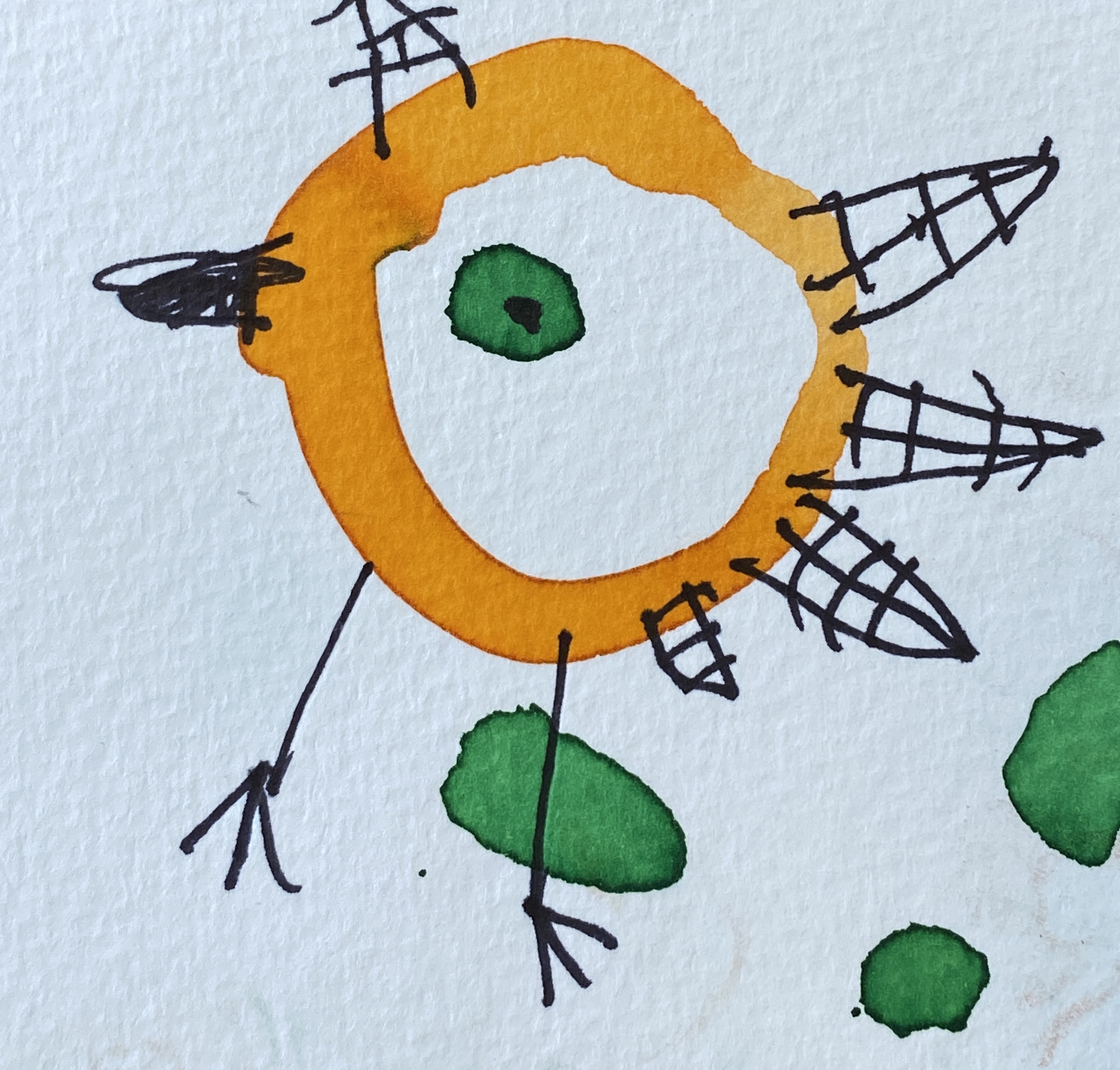
After a bit of modeling by showing what I might do with my own watercolor dots, I handed out the sharpie markers–a thicker one and a thinner one, and reminded students to start thinking about what story they might tell about the dot creation. I love the artistic freedom and courage of first graders. They uncap a permanent marker and confidently draw whatever is on their minds. Dots turned into chickens with space helmets, planets from unnamed galaxies, insects galore (bees, spiders, June bugs, ladybugs…), jellyfish, dragons, and of course, lots and lots of flowers. Along with the drawing was the buzz of conversation, telling the story of the things they were drawing. Clearly kids need to talk their ideas through as they draw.
Once the pens were capped and the drawings done, we took out our writer’s notebooks and set out to put down words to go along with the the art. We started with the simple frame, a dot can be… I showed how as a writer, instead of a sentence like A dot can be a bee, I could expand that sentence saying, A dot can be a pink bee buzzing from flower to flower leaving a trail of heart shaped pollen behind. (And they could see how that sentence also matched my drawing.) And with that short mini lesson, my students were off and writing.
Here’s a few examples:
A dot can be a bee. And a monkey that is blue and yellow. And a purple dragon and the purple dragon is swooping through the clouds. R
A dot can be a flower garden with a hot air balloon with a chicken and a bee and a sleeping cat. The chicken is looking for food. C
The best part of the writing time was that every student, even those who are less confident writers, were engaged with their writing. I heard lots of sounding out to get the words on the page. And students began to stretch their ideas, adding details that bring writing to life. I hope as the year progresses that they become as fearless with their writing as they are with their artwork, knowing that small mistakes might just become a “beautiful oops” or the stepping stone to something magnificent. Risk taking is essential to learning, as is joy. We had a wonderful International Dot Day filled with playfulness, creativity, and lots and lots of learning.
What might you do with a dot? It’s never too late to make your mark!
It’s still August, we’re deep into summer and yet school started on Tuesday. Now my days are filled with first graders. I love their unfiltered questions, their earnest effort, and unbridled joy. After a few years of not teaching these young ones, it’s refreshing to be reminded that these learners are eager to make things, to say things, and to play, play, play!
Tuesday was loooooooong. That first day back after summer’s break requires stamina that has dimmed since June. And on the first day of school in first grade, teachers are busy! Just remembering my new schedule took a crazy amount of effort!
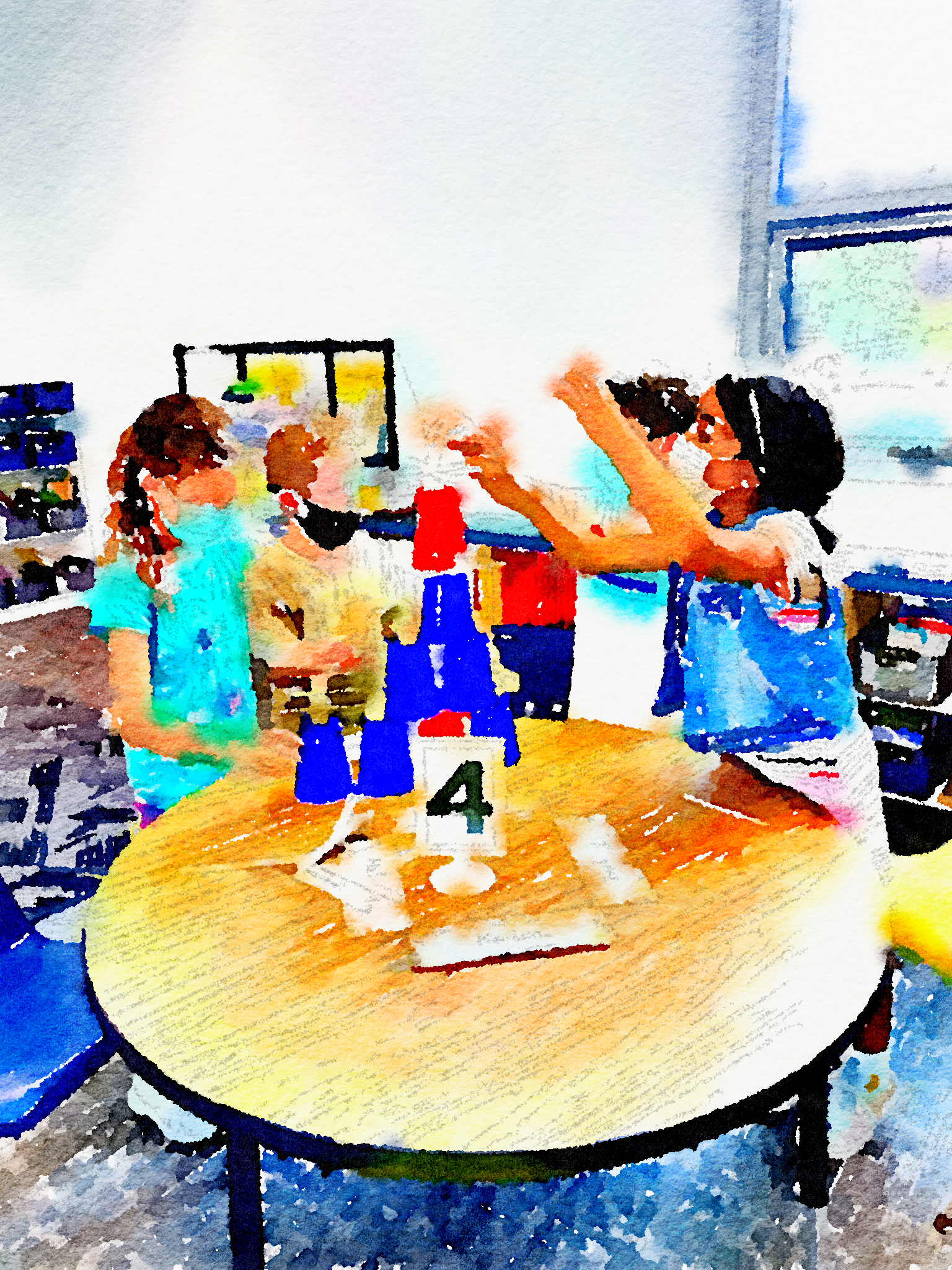
But there was also lots of room for fun (which also doubled as formative assessment for me). I braved the paint (on day one!) and students watercolored their self portraits. Collaborative tower building revealed gaps between students who already knew how to work smoothly with others and those who clearly wanted all the control of the build. For some groups, collaboration meant building separately and then looking for ways to combine the small builds into something larger.
Waterlogue 1.4.5 (128)
Preset Style = Bold
Lightness = Auto-Exposure
Size = Large
Border = No Border
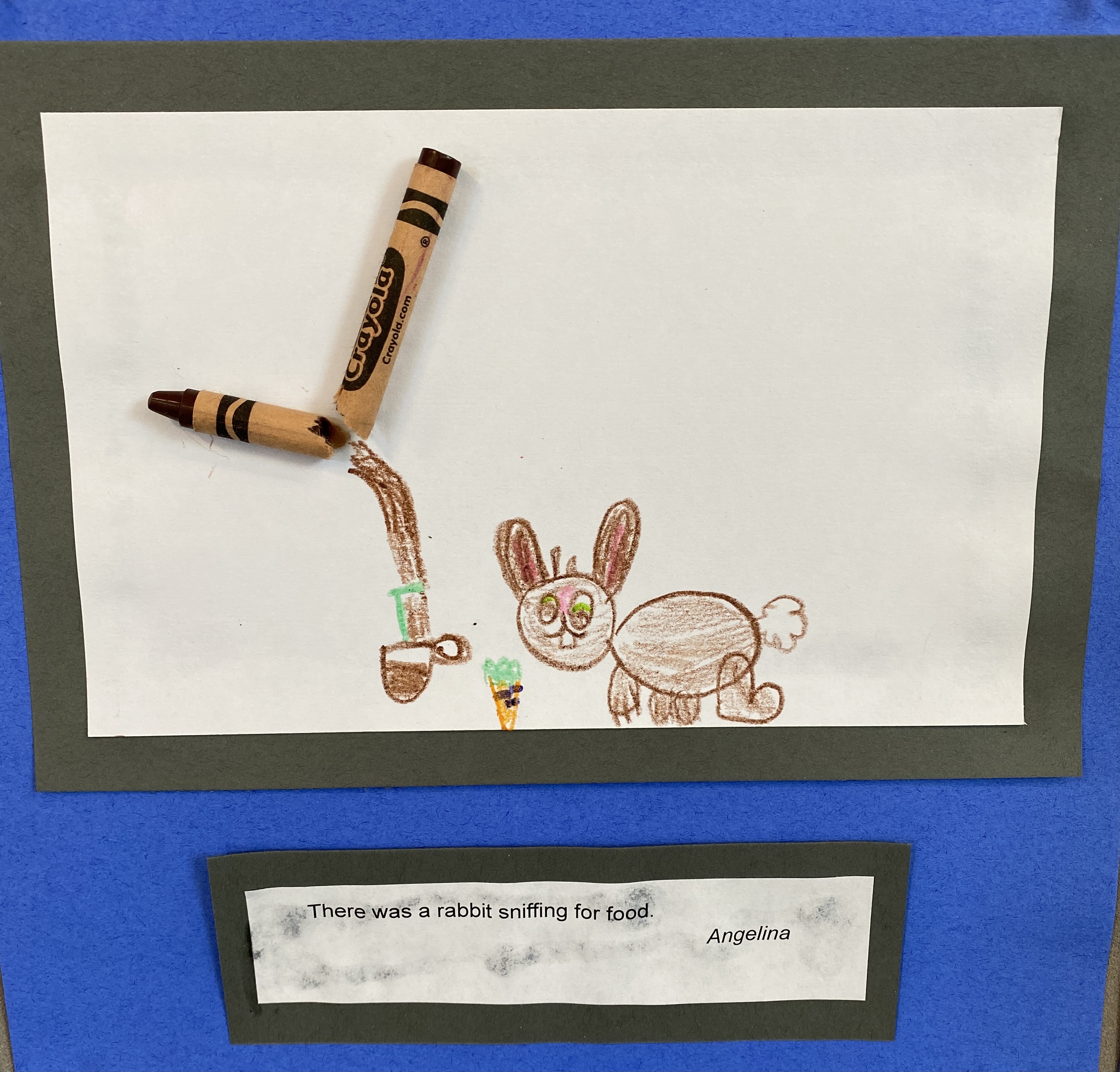
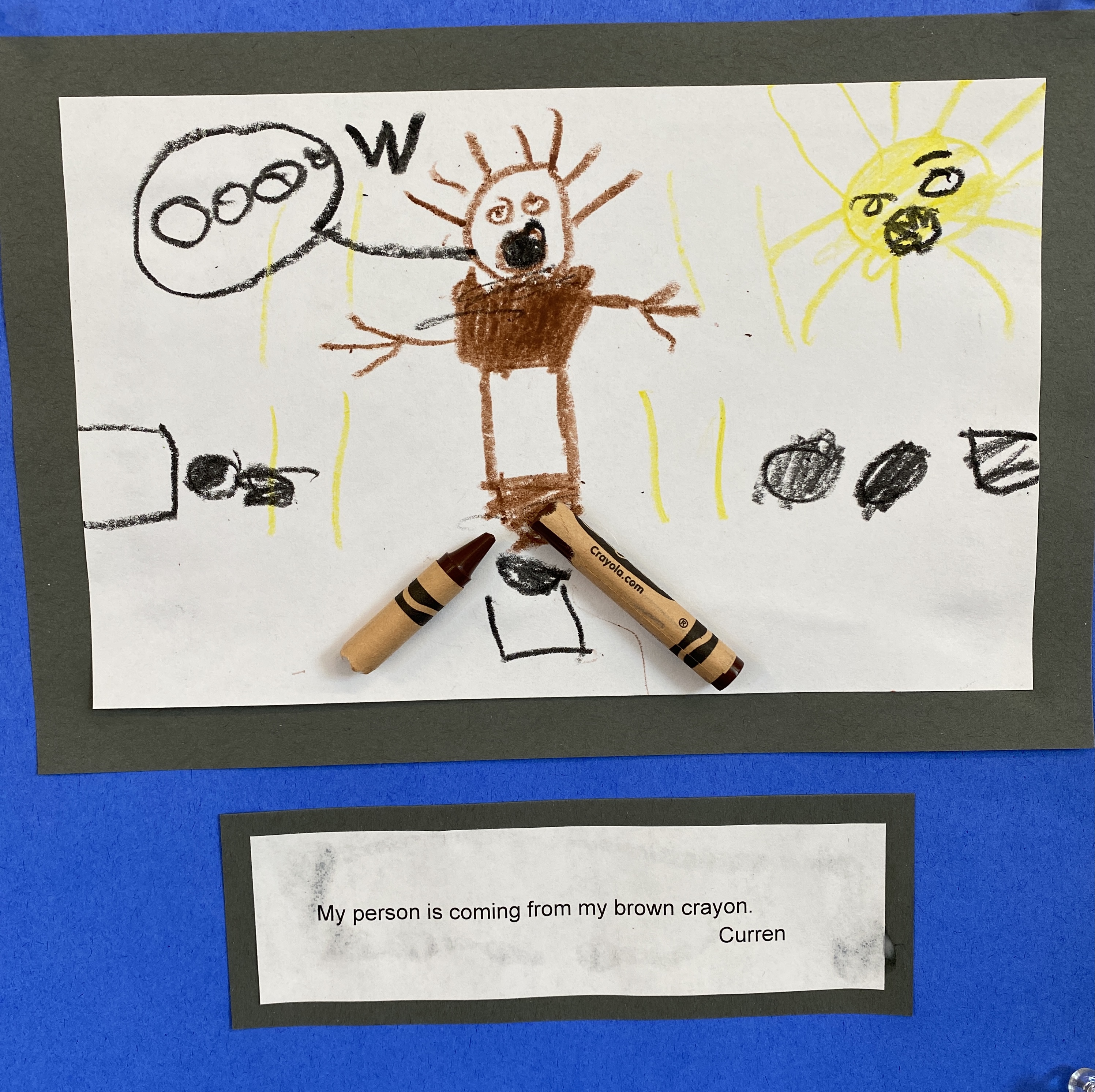
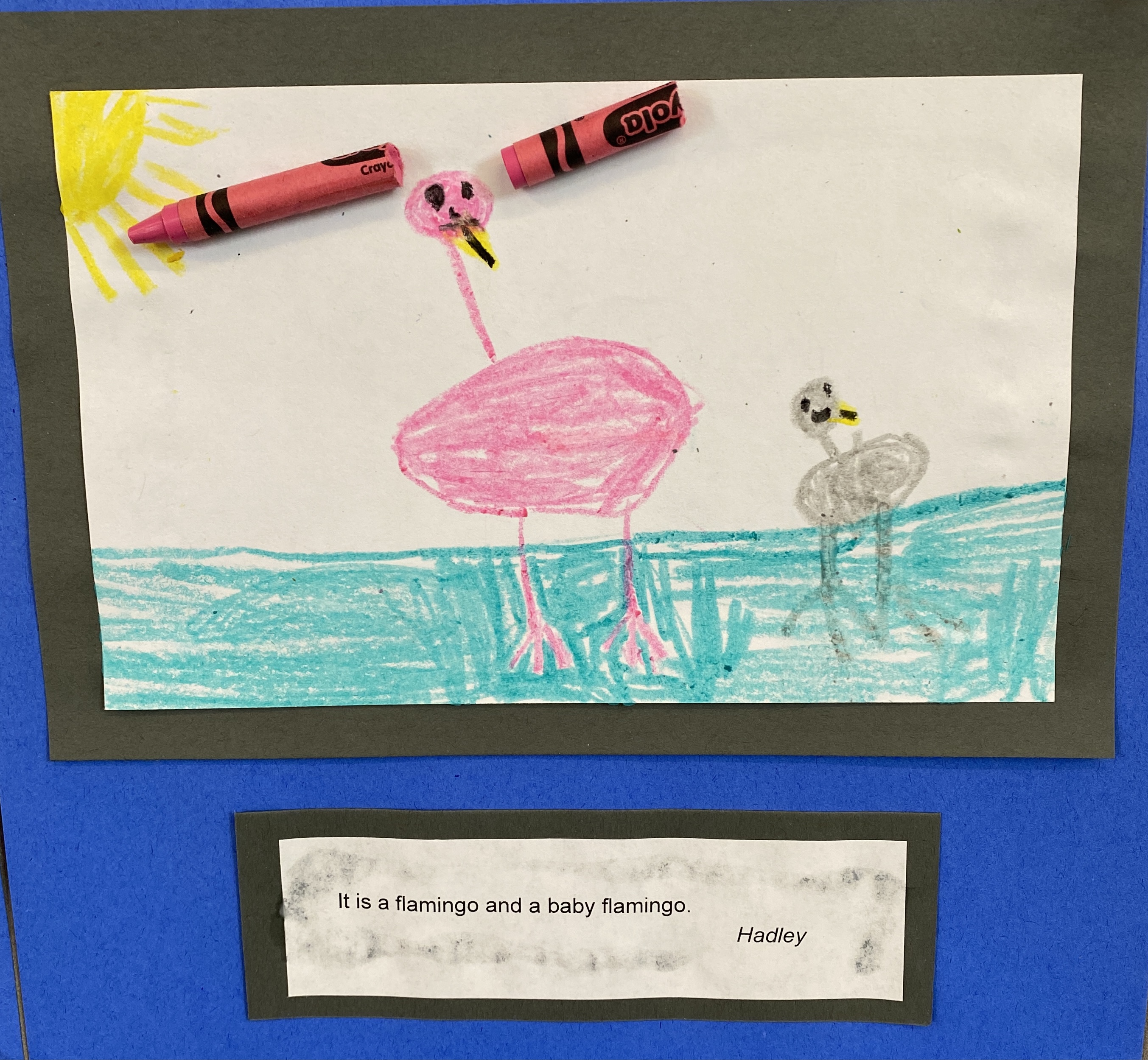
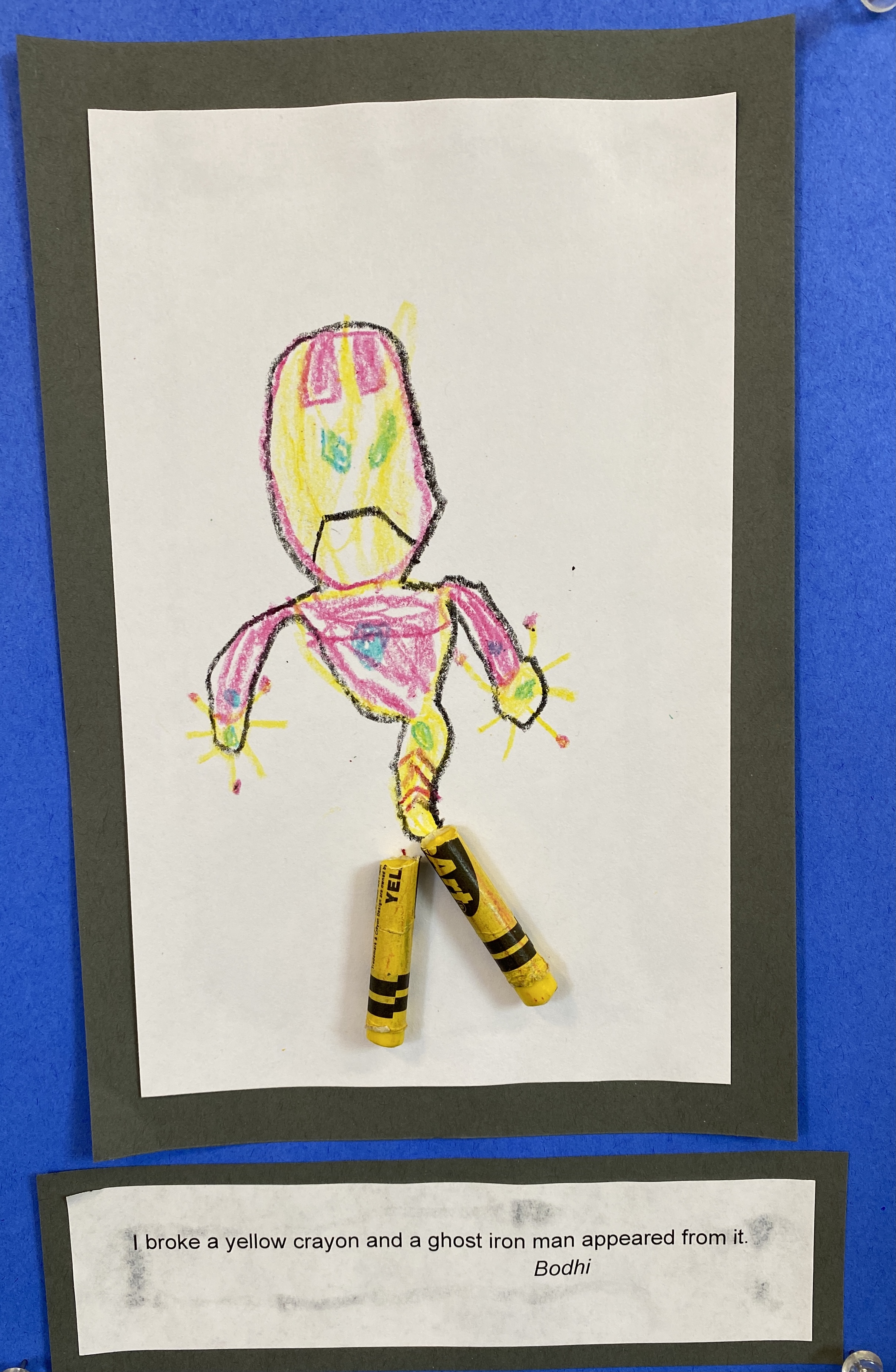
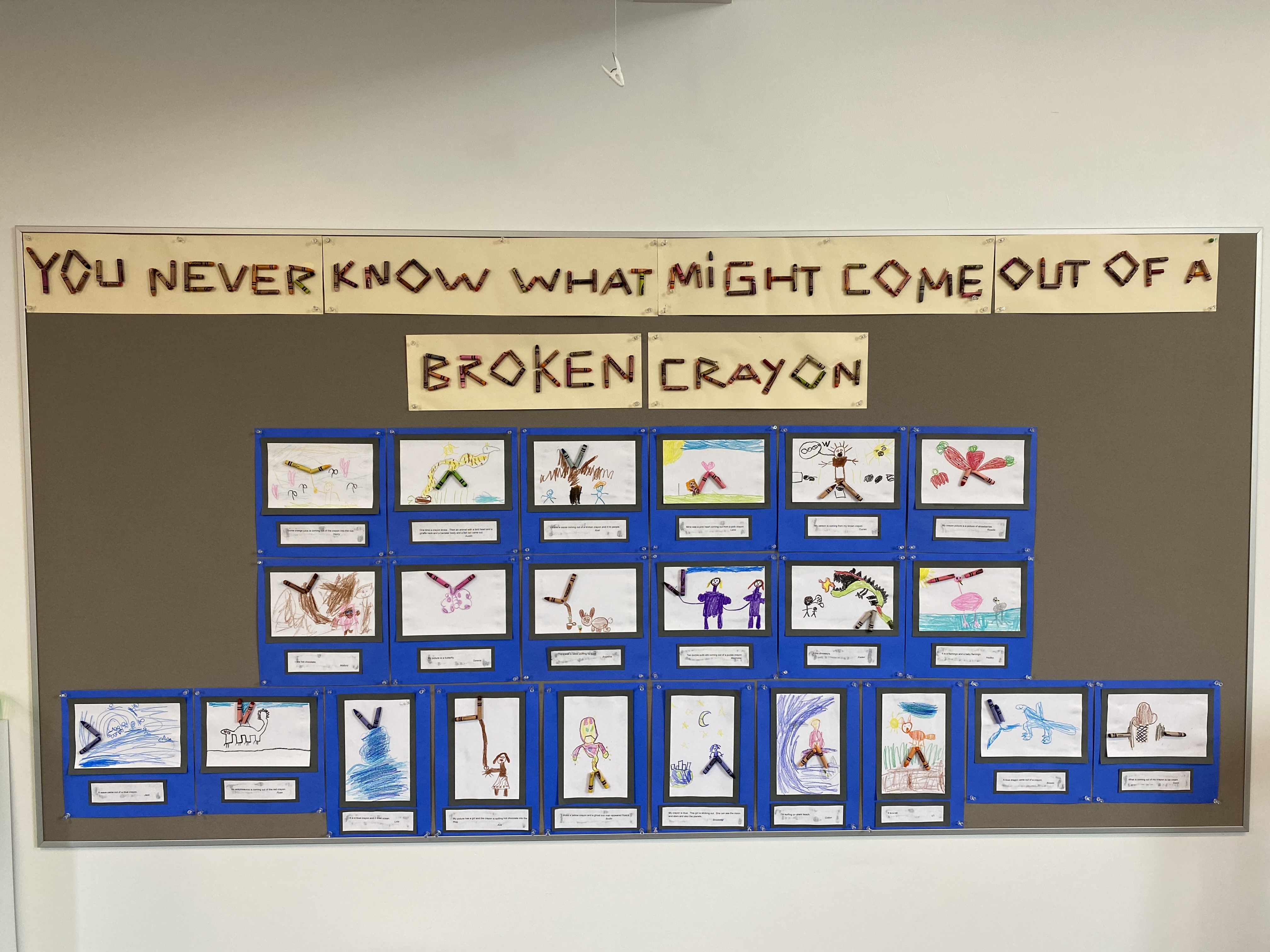
One of my favorite activities was inspired by author and artist Debbie Ohi. She has a series of illustrations created emerging from broken crayons. As part of our morning message yesterday, I asked each student what they could imagine coming out of a broken crayon. I heard about dragons, strawberries, flamingos and more.
We studied Valerie Worth’s poem, Crayons, noticing her use of the words grubby and stubs. We talked about how crayons work even if they are broken. And each student drew an illustration to accompany the poem.
But the true magic happened when each student selected a crayon, broke it, and created an image emerging from the broken crayon. After drawing, each 6-year old carefully glued their crayon pieces to their creation and carried their art over to a counter to dry. Then it was time to write.
I led with the assumption that they could all write. I reminded them that if they weren’t sure how to spell a word, they should write the sounds they hear when they say it. And they were off. I asked for a sentence about their crayon art. Some stayed safe, writing a simple sentence like, I made a cat. Others included more elaboration and showed confidence as writers. But all successfully used their imaginations and created something wonderful.
After school ended, I typed up their sentences and created a display for parents to browse when they come to school for Back to School Night next week. I hope they enjoy their children’s early first grade work as much as I do!
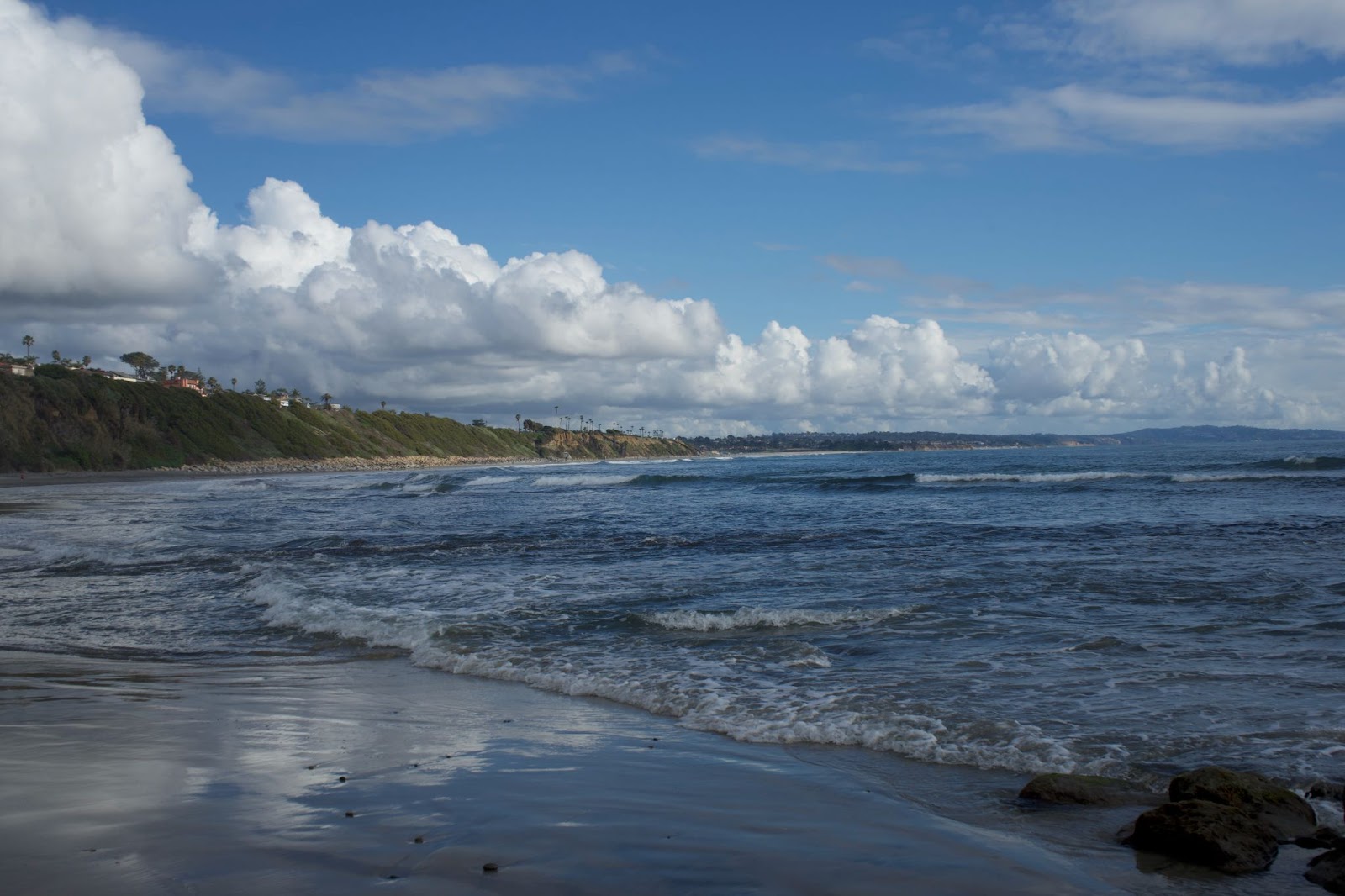
I walk the beach feeling the water-laden air kiss my cheeks as the breeze lifts my hair straight up, making me taller by inches. Water, clear as it pours from my water bottle, takes on every shade of blue as I look out to the sea on this sunny day. What is it about the qualities of water that allow us to see so many colors when we look out at the ocean? Water both absorbs and scatters light, swallowing the red, orange, yellow, and green wavelengths, leaving the shorter blues and violets for us to see as blue’s variations.
Water, also known by its formula H2O, is a miracle of chemistry. The magnetic-like attraction of hydrogen and oxygen pulls the atoms together to create this unparalleled life-giving substance. Water is a magical shape-shifter. When it heats up, it becomes a gas we call steam, rising nearly invisible into the air. When it cools down, it becomes hard and cold and incredibly strong. We call it ice and as it warms and melts, it becomes liquid water once again. Water evaporates, condenses, and precipitates in a constant state of movement through the water cycle, creating our weather, refreshing our reservoirs, blanketing mountains with snow, watering crops, cooling the surface of our planet. Earth’s surface is 70% covered by water. Scientists are constantly seeking evidence of water on other planets as a gauge for the possibility of life as we know it.
We not only depend on water, we are made of water. Human bodies are 60% water. Water quenches our thirst, cleans our bodies, refreshes us on a hot summer’s day, runs through our veins, flushes through our organs. We crave water, fear water. It lulls us to sleep and shouts for our attention.
My memories are saturated with water.
The birth of my first child came with the unexpected gush of a river of meconium-stained amniotic fluid, right after my husband told me, “Let’s not have the baby tonight–I’m exhausted.” That flow of water set in motion the activity, the worry, the joy, and the endless nature of parenting with the arrival of the most perfect baby boy–unrivaled until his brother joined us a couple of years later. And with that flow and the baby that accompanied it came more attention to bodily waters. Suddenly liquid intake and output became something to measure and worry about. Is he getting enough milk? Peeing enough back out? I found myself swimming through waves of information seeking that perfect watery balance.
We hear all the time that we should drink eight 8-ounce glasses of water each day. It seems that everyone carries large bottles of water around with them. Is it too late to drink once you feel thirsty? Can you drink too much water? I’ve heard the stories of people dying simply by drinking too much water. Water intoxication, also known as hyponatremia, happens during major sporting events, fueled by the fear that dehydrating would be worse. Water is both necessary for life and can take life away–and sometimes make it unpleasant, even when you are trying to have fun. It’s not always about drinking water, sometimes it’s the movement of water that is the culprit.
The rhythmic motion pounded, creating that endless swirl like a washing machine, constant steady movement against my forehead, from the inside out, as I tried to push against it. Then it migrated to the pit of my stomach before bouncing back, heading toward my throat. Maybe I’ll feel better in the water I thought as I adjusted my goggles and snorkel. Geoff was watching the boys as they dipped into the ocean in search of brightly colored reef fish, and trying not to watch and worry about me. Somehow the motion of the water was an exact match to the stomach churning rhythm of the boat, today was not going to be my day for snorkeling fun. Why is it that even as I love being on the water and in the water, that it can cause me so much distress?
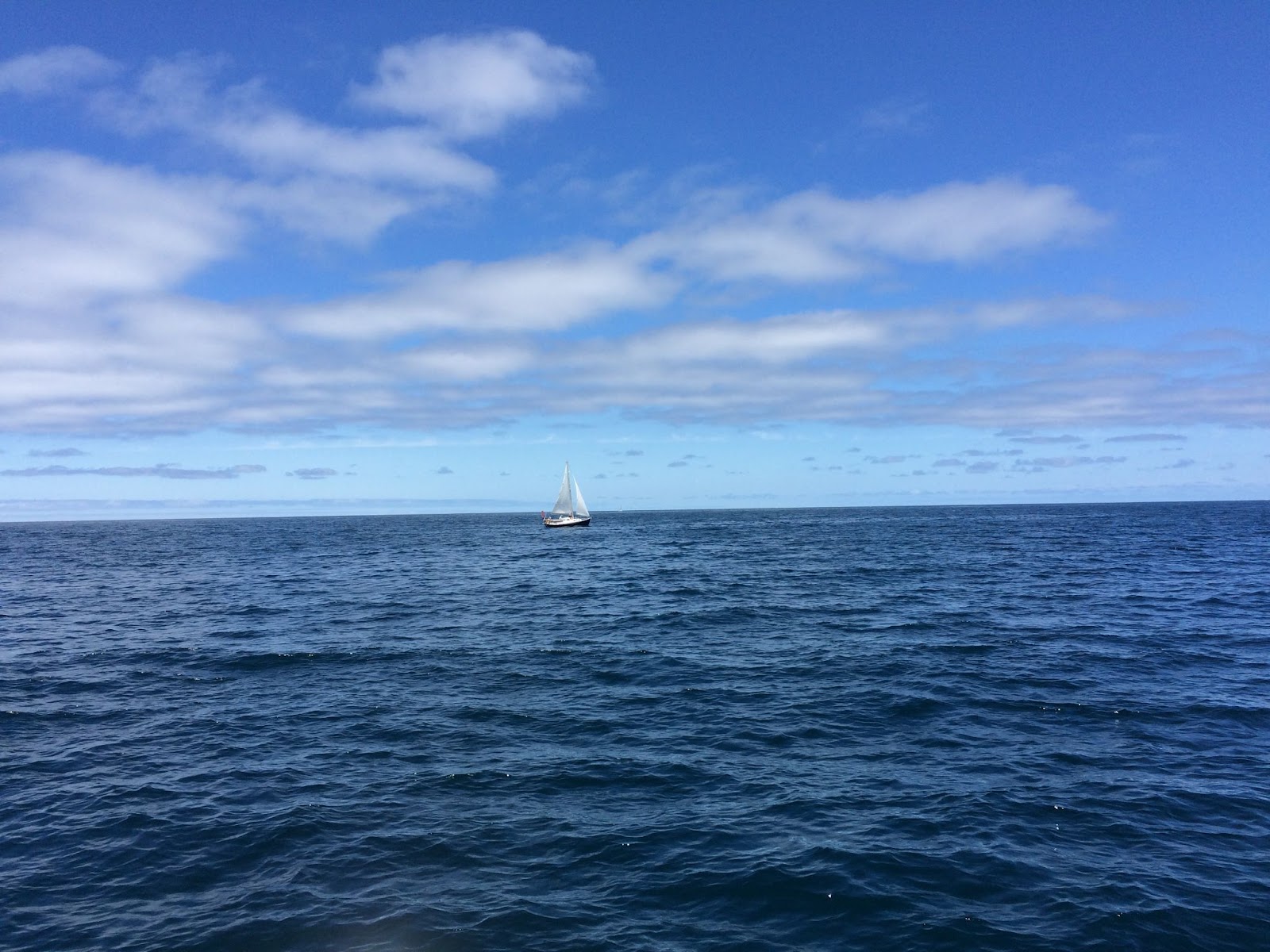
But distress is not my constant companion in watery experiences. There’s an exhilaration and playfulness that splashes over some of these watery memories. “This boat is nearly impossible to flip.” Did Dad mean it as a dare as he generously allowed my sister and I and our partners to sail out into the bay,–without him? A light wind and a sunny summer’s day enticed us to believe, inexperienced as we were, that, of course, we could sail this little sailboat without mishap. Luckily, we were all swimmers and our young men were strong enough to pull the boat upright after some ineffective sailing techniques tested the limits of the flippability of that boat.
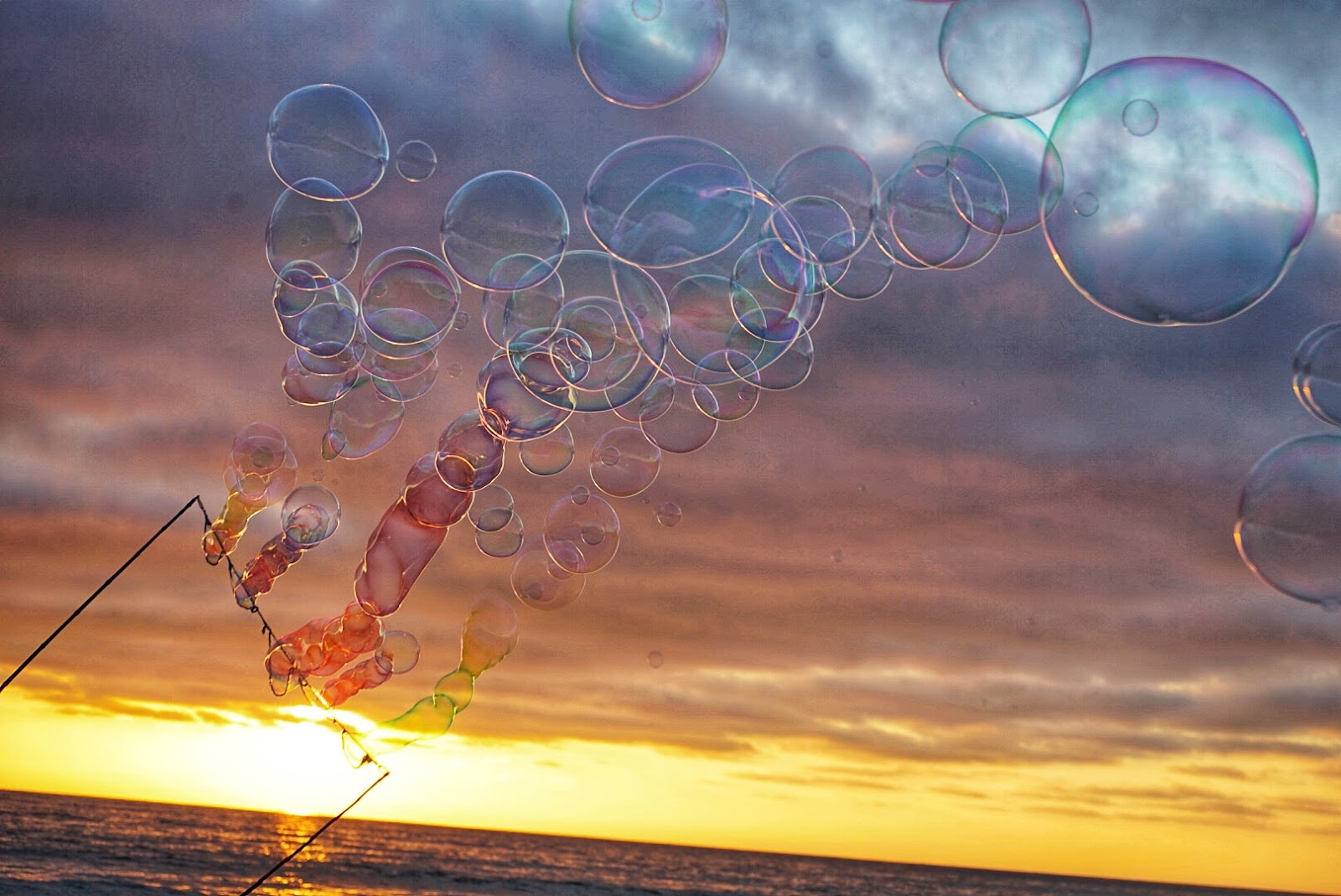
And tinier, much more usual moments can also bring so much joy. I am drawn to the beach, mesmerized by the funky smell–fishy and salty and wet, the whoosh and roar of waves as they hit the shore–echoes of the push and pull of blood through my heart, and the ever changing landscape–sculpted and shifted by tidal changes. Some days I spy the bubble man with his magic wand. He lifts his arms to the sea breeze and bubbles–a magic potion of soap and water–stretch and dance, reflecting all the colors of the rainbow. I stand transfixed, my camera at the ready, watching children–magnetized by the spectacle–running and jumping, chasing these orbs until they pop.
I wake in the night feeling water seeping from my still closed eyes, dreams and nightmares locked in an embrace, a tortured dance of real-life and deep subconsciousness. The cancer slowly erodes his strength and independence, taking away so much of what he loves about life. The smallest joys–walking around the neighborhood to see what is going on in the community, morning coffee at the local coffee shop to spin lies with the other old men–are no longer possible. There is not enough breath, not enough blood to take those extra steps, to carry on an extended conversation. He’s alive, but is he living? My tears spill over, dampening my pillow, offering relief, if only for a moment. I know the dam will burst at some point, but like him, I hold it back as a show of my strength and independence. Like father, like daughter.
***
Nature’s mirror, water reflects its surroundings. Some days you can walk on clouds, watch egrets admire their image, and see details of the landscape you missed while looking straight on. Other days are gray and flat, colors muted by the lack of sun. When the clouds are low it’s like being submerged in a small damp box, trapped inside with only your own watery thoughts to splash through. Moist thoughts stick, working their way from my head to my heart. Sometimes they gather and rise, churning, lifted by invisible forces, a storm waiting to unleash. At their best they shine, gathering the light, refracting into rainbows of colorful ideas ready to be unleashed in the world. Water is life, water takes life, and like fish, we swim in it, through it, beyond it, drinking in its lessons, flooded with memories…of water, our lifeblood.











 Thinking Through My Lens