Tag Archives: Slice of Life

#writeout for NDOW: Exploring Senses in the Garden

I picked today…October 20ish…to celebrate the National Day on Writing (NDOW) with my students. And since we are also into #writeout, we combined the two.

We are lucky to have a school garden and while it is not exactly exploding with plant life (yet), it does have some plants growing, some rustic seating, shade (essential on a sunny fall day like today), and hosts bugs and worms and dirt and all the other things kids love.
So, after recess today when I walked my students back to the classroom, I read them the book Outside In by Deborah Underwood. This gorgeous book talks about the wonders of the natural world–and the ways we often do not pay attention to those wonders. It also includes all five senses in wonderfully descriptive and somewhat subtle ways.

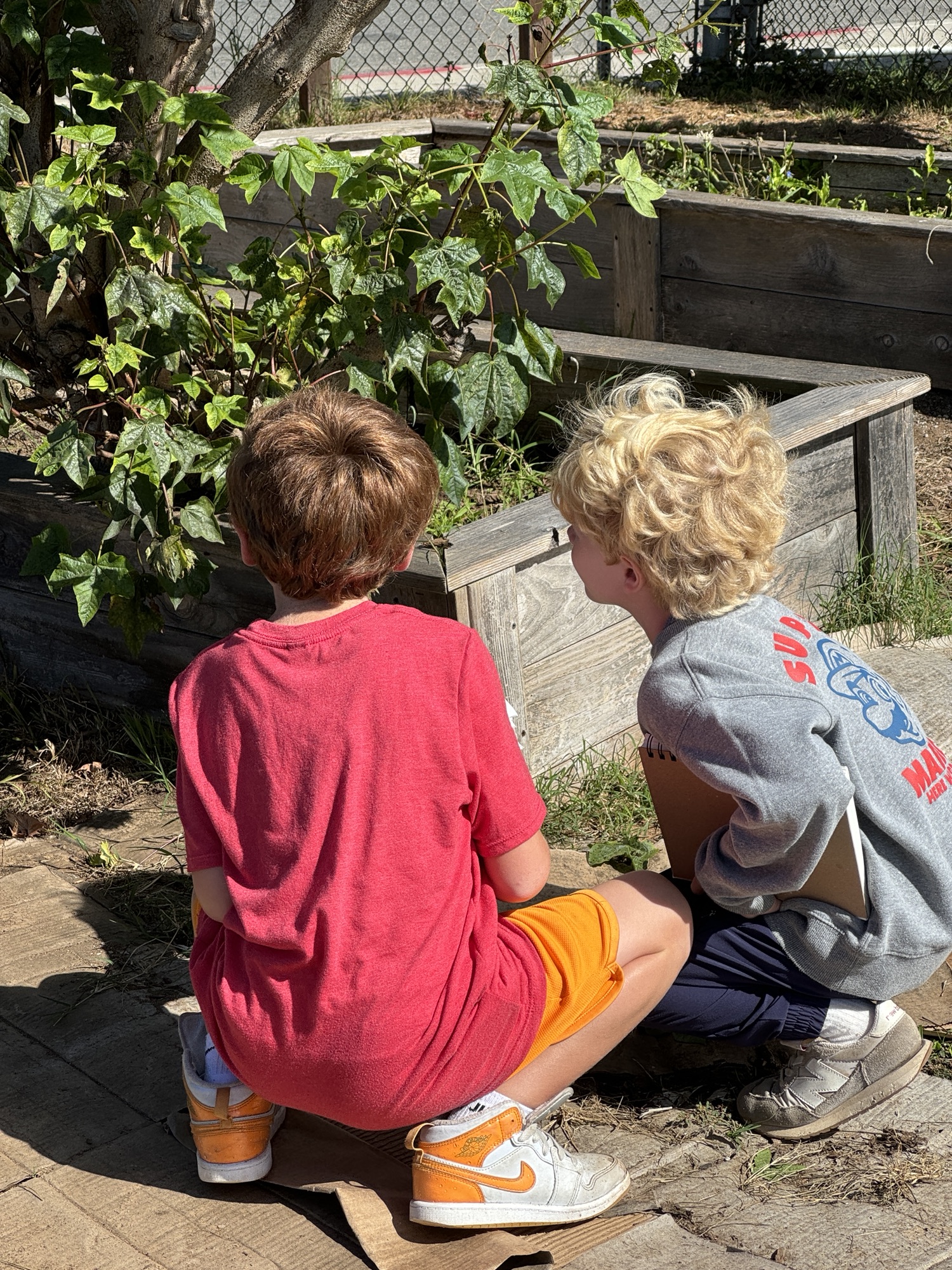
I recently had the opportunity to interview author Kate Messner, who is serving as an author ambassador for the National Writing Project’s #writeout, as part of their Write Time series. In response to one of my questions, she talked about the power of the senses to help students (and writers) extend their writing. So before we headed out with our sketchpads to write, I asked my students to pay attention to not only to what they saw, but to all five senses. As we walked we noticed…and once we arrived at the garden, we began to write.
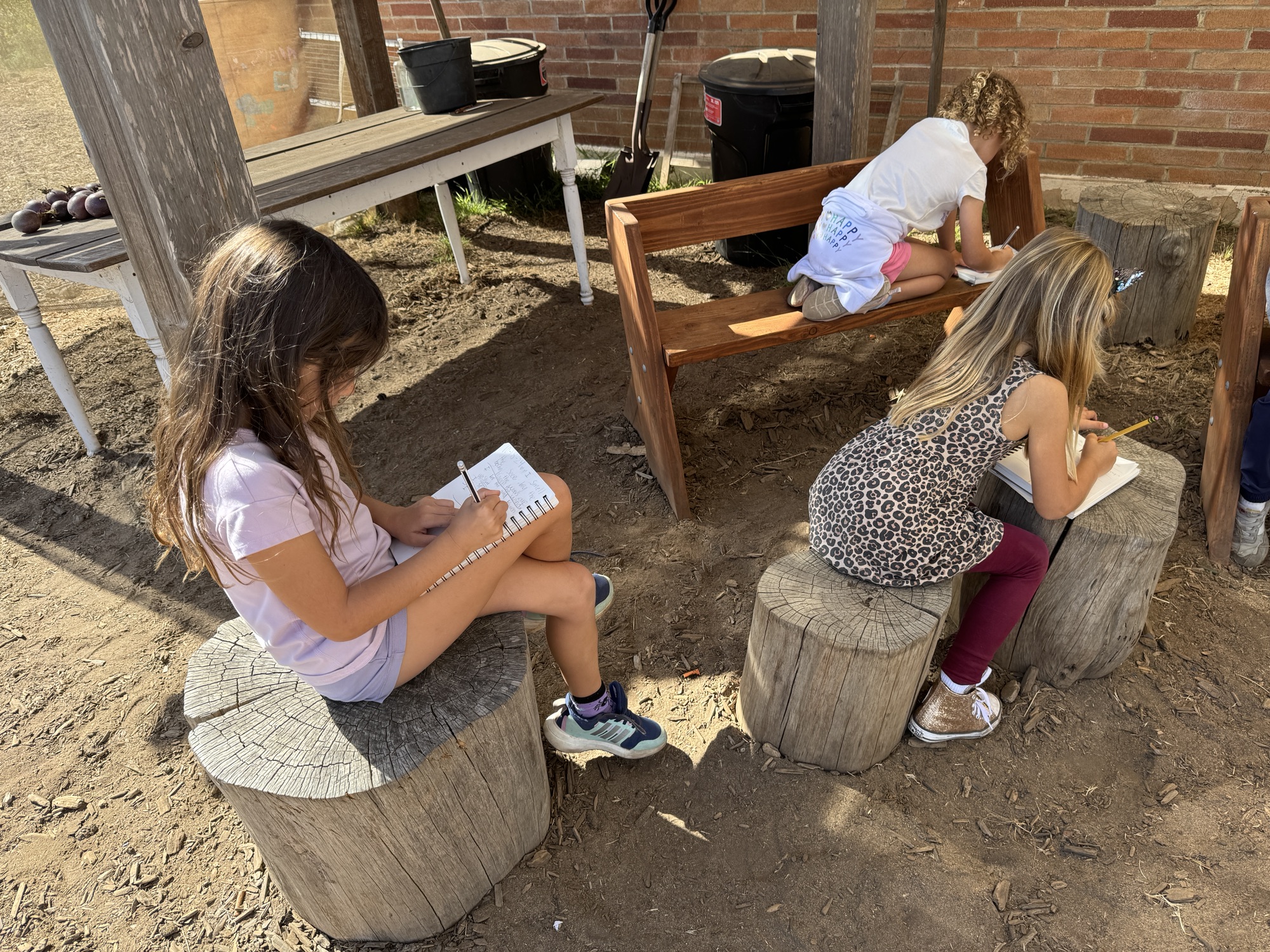
Students listened and sniffed. They rubbed leaves, touched pumpkins, and imagined the taste of fruits and vegetables. And they noticed bugs and birds and spider webs. When they needed inspiration, they moved around the garden and wrote some more.
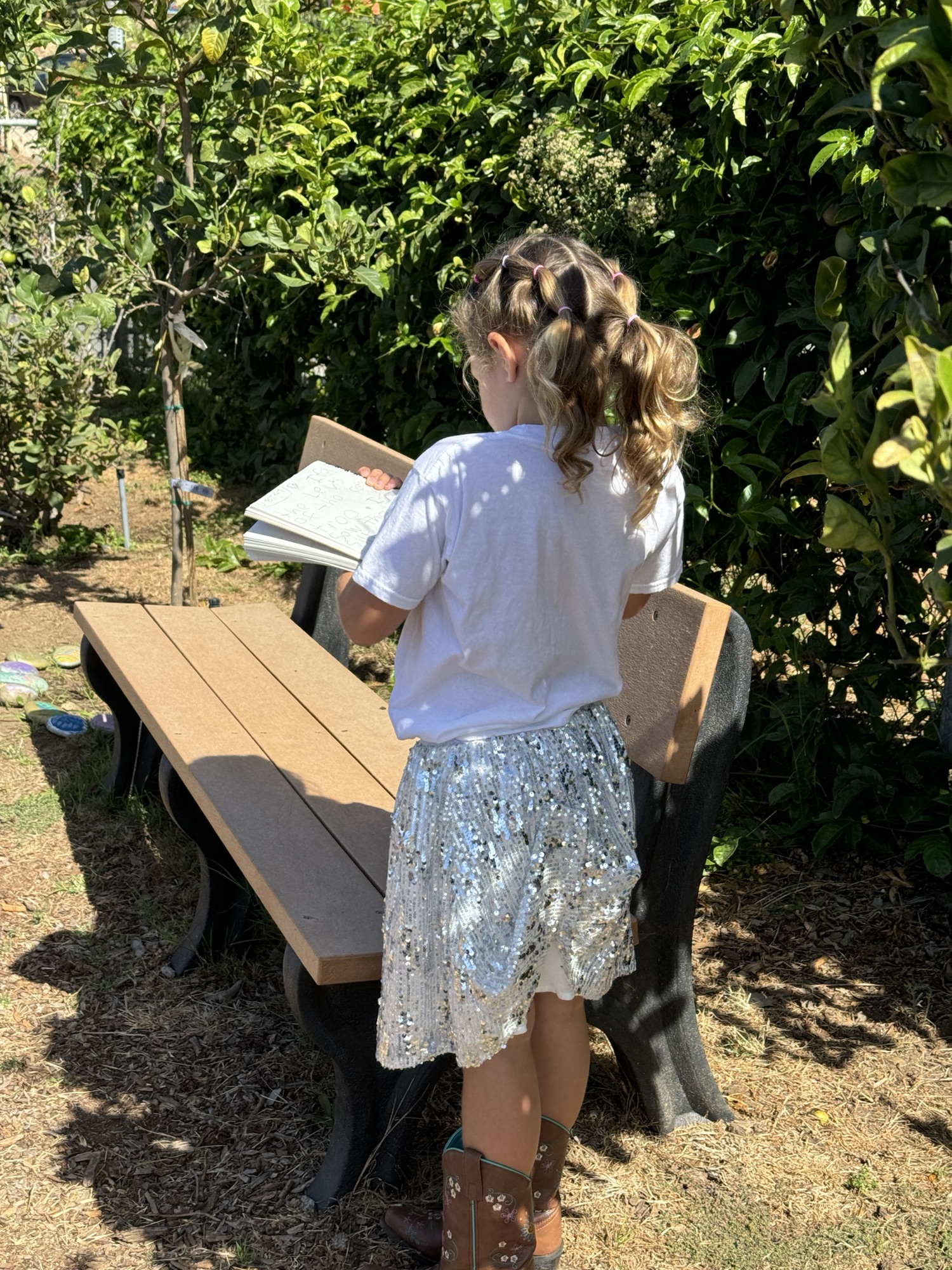
I love watching my students develop stamina and confidence as writers. There is something freeing and motivating about writing outdoors, writing in a sketchbook, sitting on a stump, and even writing standing up. Writing still takes effort when you are six or seven. Putting all that wonderful thinking onto the page is an opportunity to put phonics into action, exercise those developing fine motor skills, and focus attention for a sustained period of time.
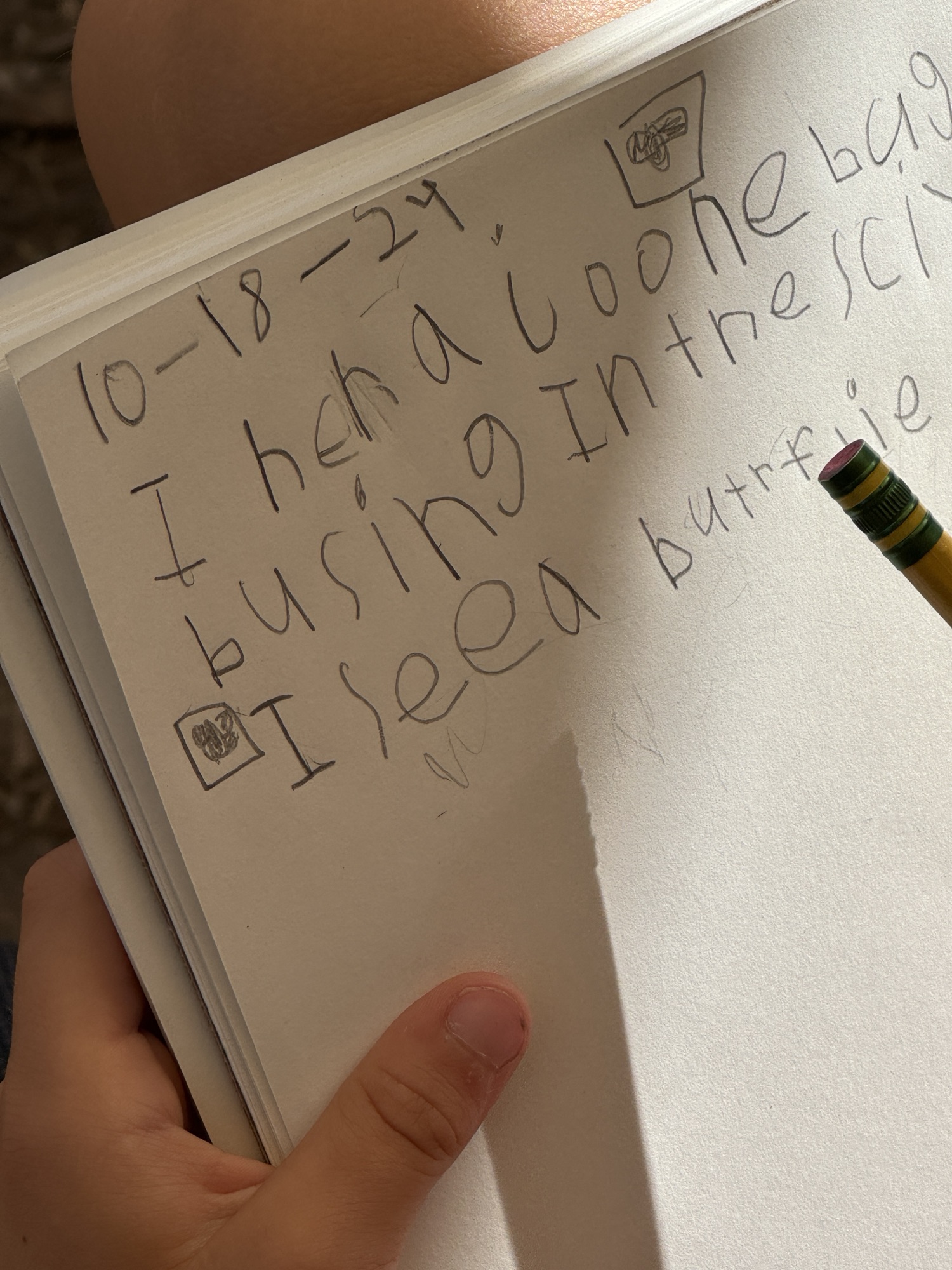
I hear a June bug buzzing in the sky.

When we returned to the classroom, I asked student to pick their favorite sensory description to read in a classroom whip around. Student were all willing to pick and read their descriptions, creating a symphony of voices celebrating our garden and our community of writers.

Here is the collaborative poem that includes a line from each student in our first grade class.

Senses in the Garden

A National Day on Writing Celebration

I hear a car.  It sounds like a dinosaur roaring.  Rooaarr!

I see the leaves swirling in the wind going to land on the ground.

I smell the sea by the beach.  The waves are blowing in the wind.

Taste is like tasting popcorn.

I hear a june bug buzzing in the sky.

I hear the tip tap of my shoes. I see the reflection of my sparkle skirt.

I hear the birds chirping in the sky.

I see the spiky squash on a stem.

I can hear a hummingbird humming.  It was sucking pollen.

I see a passion fruit on the table.

I touched a pumpkin.  It was soft and it had a hole in it.

I hear waves crashing on the shore that the surfers ride on.

I can smell oak sap flowing down the bark of the tree.

I can taste blackberries getting eaten by me.

I smell a passion fruit.

I spy with my little eye someone walking by.  A game!

I feel a pencil in my hand.

I see a moth fly like a jet.

I hear birds chirping and flying.

I smell the acorns.  They are like the seed and the trees.

I see a big pile of dirt.

I hear leaves getting smashed.

I see and feel and hear the garden.

By Room 3 First Graders

10/18/24

How will you and/or your students celebrate the National Day on Writing (and #writeout) on or around October 20th? My students and I would love to see what you do!

How to Add Some Joy to Teaching

I can be a bit serious. Okay, maybe a lot serious. And sometimes that means that the classroom can seem like all work and no play…and we all know that first graders (and maybe all students) both want and NEED some play to help learning move along.

For some reason, my school decided that again this year our winter holidays (two weeks of no school) would bump right up against Christmas. I’ll be loving the holiday when January gets here, but to be honest, it’s brutal right now. Instead of children who are focused on learning to read and write (and all our other subjects of study), they have visions of sugarplums dancing in their heads! (Or maybe that is just the candy cane overload coursing through their bodies!)

I made a deal with myself as I planned lessons for this week–leave spaces for play, expect silliness and louder than usual volume, smile and laugh more, enjoy the moments.

So…I planned a small writing lesson.

I remembered this wonderful book of poems called The Proper Way to Meet a Hedgehog and Other How To Poems selected by Paul Janeczko and started flipping through. If I had my students write a “how to” something, they would have many choices of topic and could draw on all that they already know. But which poem would work as a useful mentor text to get them started? There are many good choices…but I was looking for something short, a bit whimsical, and an idea that my students might find unexpected. How to Scare Monsters by Rebecca Kai Dotlich was just right! It starts out easy, “Keep a light on, that’s the thing… and turns a bit in the second (of two) stanzas with “Aim for the toe (did you know this?)…

I read it a few times, letting students soak into the language. They noticed the strange notation (parentheses) and were intrigued. We talked about the extra information in there and they definitely picked up on the personal, friendly tone. We brainstormed things we are “experts” at doing, and that list included A LOT of sports! After I wrote a poem in front of them (How to take Photos of Egrets), they opened their notebooks and began their own How To poems.

Students immediately got to their writing (along with plenty of talking) and a number of them included the parentheses in their poems. As they began to finish and read their writing to me, I could feel the smile genuinely creeping onto my face. The poems were fresh and their voices came through loud and clear. Some of the topics were predictable, but some were not…like this one by O:

How to Catch a Rattlesnake

Go to a desert.

Find a hole.

(Maybe it’s a snake hole.)

If it’s a snake hole,

get a good stick.

And do not grab it by the tail,

grab it by the neck.

If you grab it by the tail

they will swing and bite you.

If you grab it by the neck

they will not move

except their tail.

Did you notice the parentheses? I had encouraged students to pick small topics rather than trying to explain a whole game. But, you know, some students want to do what they want to do. But somehow J captured this game in a nutshell. I bet you know what game it is!

How to Play Ball

Get two teams

9 is enough

9 innings

1,2,3 bases and 

one home plate in a square.

(One out is three hittable balls

Four balls you can not hit go to 1st base)

A hit

run as fast as you can go

until you are thrown out

or tagged out

You are out.

Three outs is an inning

touch home plate to get a point.

who has the most points wins

if you are tied

overtime.

And who doesn’t love a how to poem about riding a bike? It’s obviously a childhood classic! Here is O’s rendition. (This is a different O–I have many in this year’s class!)

How to Ride a Bike

This is how we ride a bike

without training wheels.

First put your helmet on

and then get on your bike.

And try not to look down

look straight ahead and pedal

and make sure nothing is in front of you.

And that is how you ride a bike

without training wheels.

And a short but sweet one by V who did take my advice and decided not to capture all of gymnastics but to instead focus on a single trick.

How to do a Cartwheel

Start in a lunge

Put your hands on the ground

Then when you put your hands on the ground

Kick your legs up

(One foot up first, then the other)

Land with hands by your ears.

These small poems started this week off with a dose of joy. Students enjoyed writing and reading them, I enjoyed hearing them and rereading them. No one whined that they had nothing to write about, no one got teary with frustration (including me), and we all enjoyed writing and sharing and teaching someone else about our individual expertise. 

Reminder to myself: be playful, small can be powerful, enjoy the wonders of childhood and read and write more poems!

So…if you need to add a bit of joy to your teaching or writing life, take a look at How to Scare Monsters and write some how to poems!

Dot Day Doings

Yesterday was International Dot Day, a day inspired by the creativity of Peter Reynolds and the power of each of us having the courage and confidence to “make our mark.” To celebrate dots and creativity and confidence, we began our week with the poem What is a Dot? by Laura Purdie Salas. The first graders in my class had an endless list of ideas of what a dot could be and eagerly illustrated the poem with their own “dotty” ideas. Of course, we also read and discussed The Dot by Peter Reynolds.

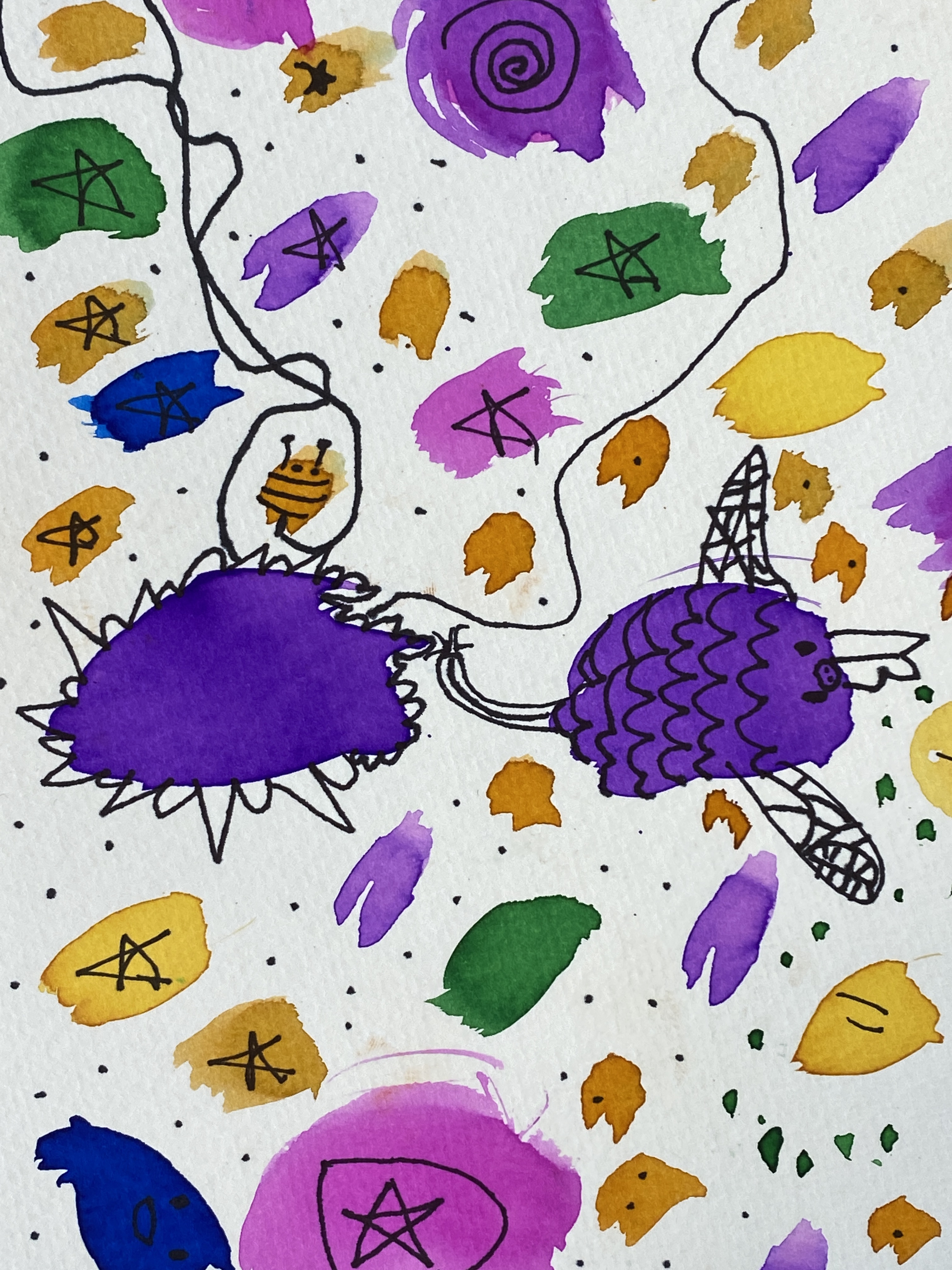
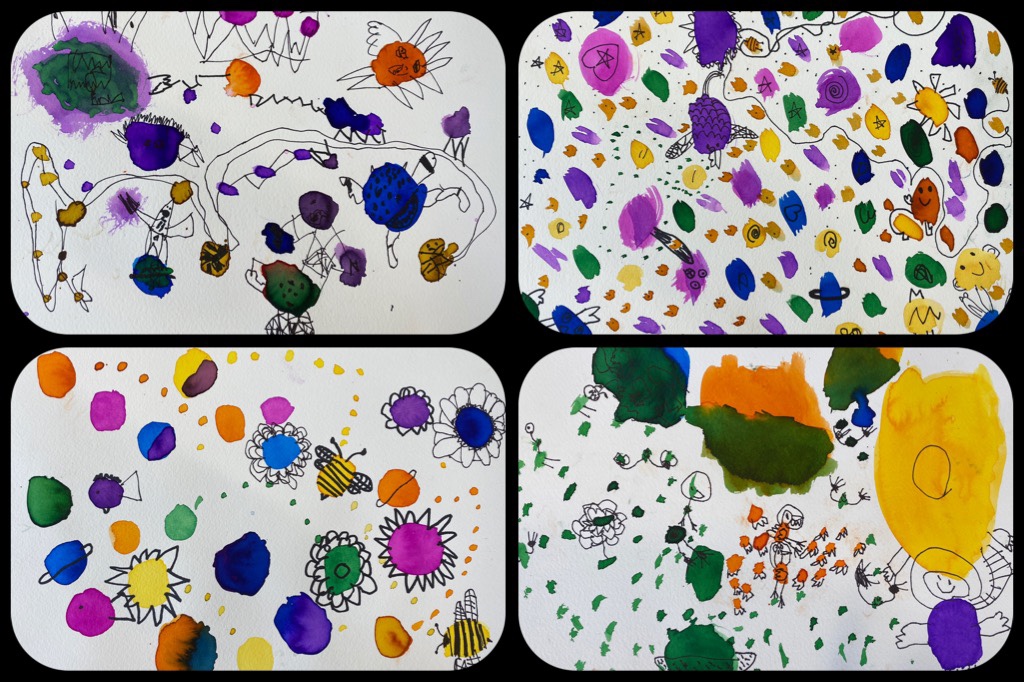
The week got dottier on Tuesday. We broke out the liquid watercolors and painted a page full of dots. These mostly 6-year-old artists knew that making the dots was just the start of this project. They would be transforming their dots into something else using a black sharpie marker the following day. They joyfully and freely painted dot after dot, experimenting with size and placement. They dripped one color onto another, while carrying on a constant narrative of alternative worlds, descriptive details about color, and oohs and aahs of their own discovery. We ended the day by reading Ish, yet another Peter Reynold’s book and talking about encouraging others and not judging our first attempts too harshly when we draw (or try other things too).

Wednesday was the day…International Dot Day! Students came to school dressed in dots and so did I. I l love their creativity in finding dots in their wardrobe. One child found a solar system shirt, each planet a dot. Another noticed the cat faces on her sweater were dots with more dots showing the natural coloring of the cat. There were polka-dotted masks (COVID makes us creative too), socks painted with dot markers, dotted bows in the hair, and I even found a pair of polka dotted earrings! With wardrobe dots in place, students were eager to get started transforming their watercolor dots from the previous day into beautiful pieces of art.

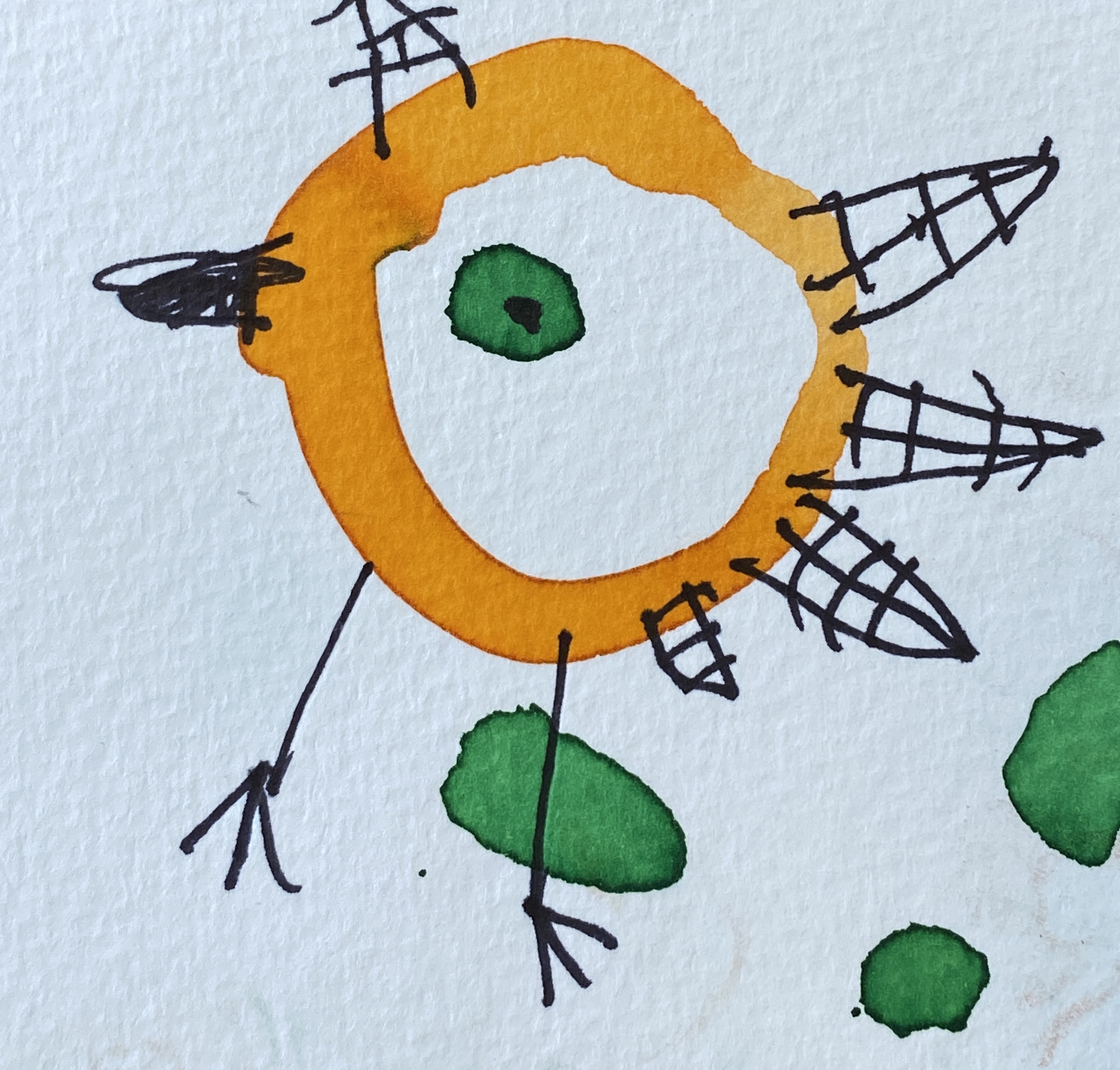
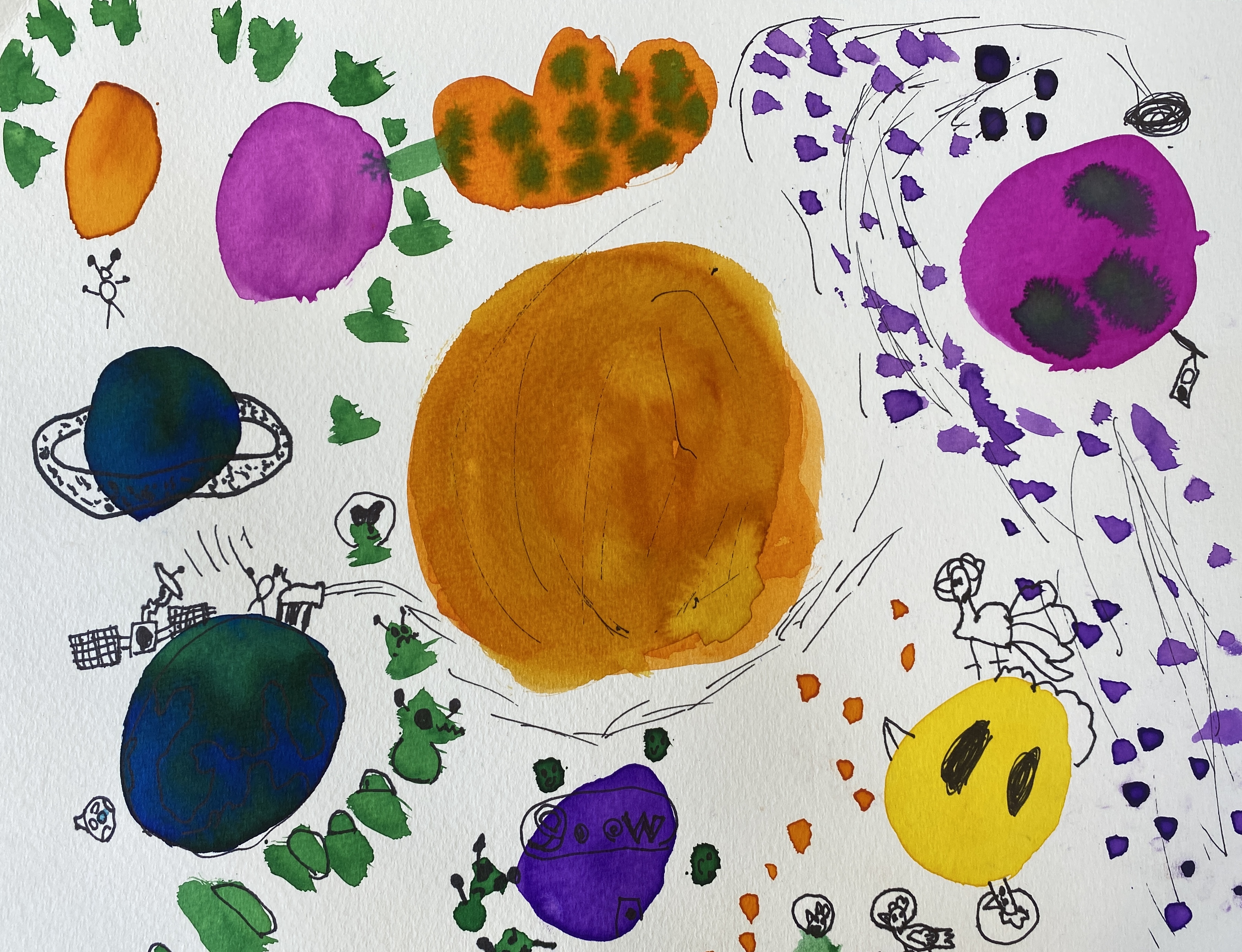
After a bit of modeling by showing what I might do with my own watercolor dots, I handed out the sharpie markers–a thicker one and a thinner one, and reminded students to start thinking about what story they might tell about the dot creation. I love the artistic freedom and courage of first graders. They uncap a permanent marker and confidently draw whatever is on their minds. Dots turned into chickens with space helmets, planets from unnamed galaxies, insects galore (bees, spiders, June bugs, ladybugs…), jellyfish, dragons, and of course, lots and lots of flowers. Along with the drawing was the buzz of conversation, telling the story of the things they were drawing. Clearly kids need to talk their ideas through as they draw.

Once the pens were capped and the drawings done, we took out our writer’s notebooks and set out to put down words to go along with the the art. We started with the simple frame, a dot can be… I showed how as a writer, instead of a sentence like A dot can be a bee, I could expand that sentence saying, A dot can be a pink bee buzzing from flower to flower leaving a trail of heart shaped pollen behind. (And they could see how that sentence also matched my drawing.) And with that short mini lesson, my students were off and writing.

Here’s a few examples:

A dot can be a bee.  And a monkey that is blue and yellow.  And a purple dragon and the purple dragon is swooping through the clouds. R

A dot can be a flower garden with a hot air balloon with a chicken and a bee and a sleeping cat.  The chicken is looking for food. C

The best part of the writing time was that every student, even those who are less confident writers, were engaged with their writing. I heard lots of sounding out to get the words on the page. And students began to stretch their ideas, adding details that bring writing to life. I hope as the year progresses that they become as fearless with their writing as they are with their artwork, knowing that small mistakes might just become a “beautiful oops” or the stepping stone to something magnificent. Risk taking is essential to learning, as is joy. We had a wonderful International Dot Day filled with playfulness, creativity, and lots and lots of learning.

What might you do with a dot? It’s never too late to make your mark!

Free Range: NPM #29

Back in March I wrote a slice of life about a new structure I had noticed behind a fence and hedge in my neighborhood. Today I noticed something new, which also became the subject for poem #29 (one day to go!).

Free Range

It started with license plates

  • Montana
  • Massachusetts
  • Hawaii
  • Utah
  • California

peeking up beyond the hedge

hinting at more inside

strung with lights

creating a romantic evening glow

What is behind the fence

beyond the hedge

beneath the license plates?

a playhouse for neighborhood children

a workshop for ambitious hobbyists

an escape for harried parents?

A clue emerged

pointing to the truth

or at least to the cardinal directions

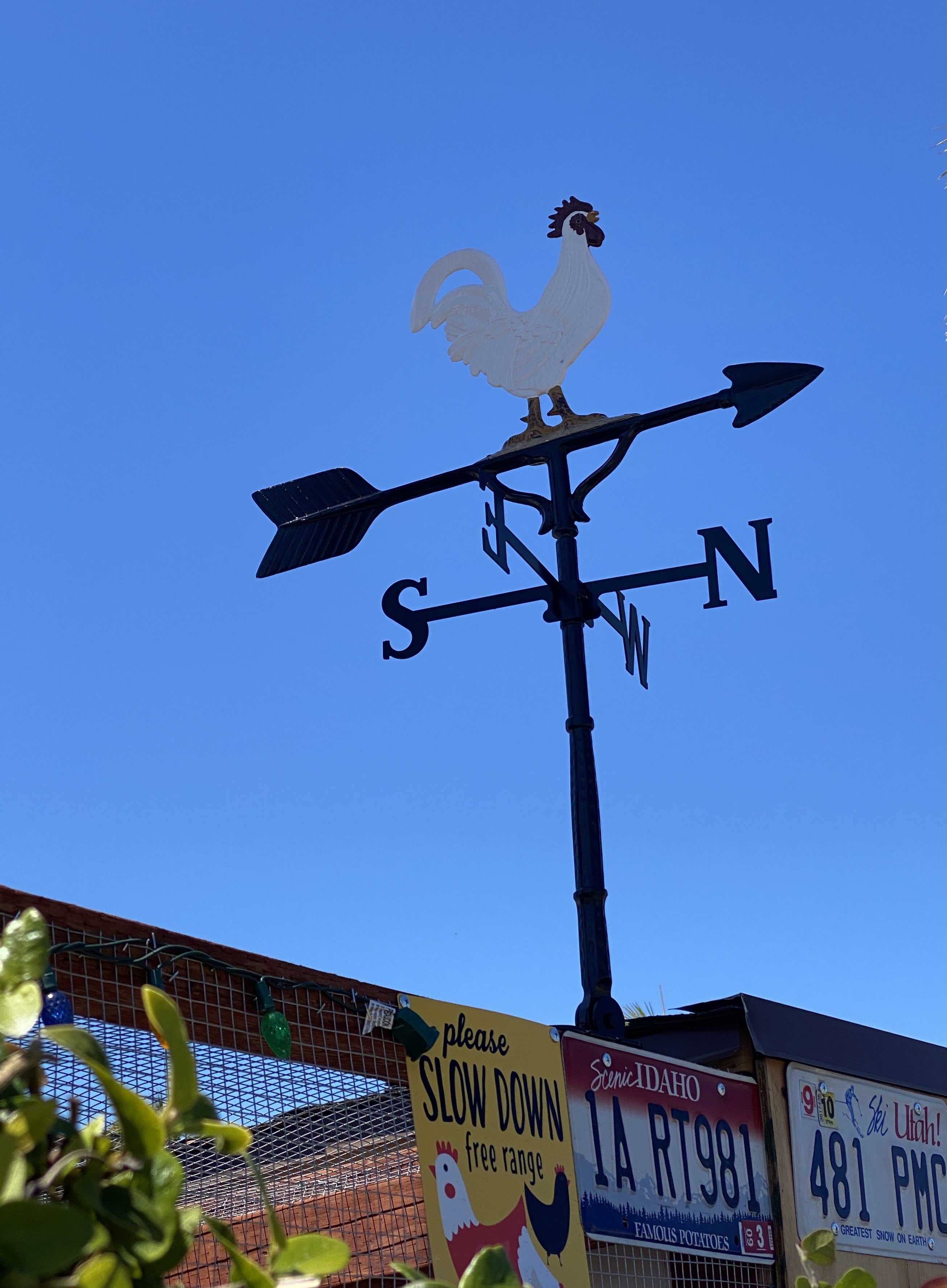
Atop the vane

the rooster crows

and when I looked down

it was announced

“Slow down”

“Free Range”

The chickens have

moved into

the neighborhood

®Douillard

Tag: NPM #12

Inspired by this blog post, I had my students write a slice of life poem this morning. They had plenty of fodder, coming off our spring break. And while they wrote, I wrote too. Here is my slice of life poem.

Tag

“You’re it Grandma”

they squeal and I chase them

“chase me” “and me too”

“you have to tag both of us!”

Spring green grass

tickles my toes

5-year-old giggles

fill my heart

I run

they run

We chase each other

until we collapse

in a pile of

hugs!

®Douillard

SOLC: Headlong into the Storm

I’m not sure why I need an “official” challenge to keep up the daily writing, but whatever the reason…here is day one of my entry in the Slice of Life Challenge.  Thanks to those at Two Writing Teachers for offering this annual event.

After a week of above average temperatures, the weather suddenly turned yesterday afternoon.  The wind picked up, the clouds gathered, and meteorologists are predicting winter storms.  That actually means we have a chance of rain here by the coast and there are forecasts for snow in our local mountains!  And as much as I love the summer-like mild temps and the fact that I have been venturing into open-toed shoes in the last week, we really need the rain and snow!  Drought is unfortunately too common here–and drought means the likelihood of a fierce fire season.  And that is terrifying!

I’ve been trying to walk everyday, for both my physical and mental health.  My camera is my motivation…and the beach is my favorite location.  I wasn’t sure I would squeeze my walk in today–my husband isn’t too keen in walking in the wind–and I had resigned myself to a lazy Sunday catching up on some work that got neglected during an overly busy work week last week.  I didn’t even pick up my camera today.  But as we headed out to run a couple of errands and to grab a quick lunch, conversation turned to the possibility of a walk–and I wasn’t saying no!  My camera was at home–but my phone was in my pocket.

I love the moods of the beach.  The sky and surf, the birds and wind, the sand and rocks create an ever-changing kaleidoscope of views and conditions.  I pulled my hood up against the wind and set off down the beach.  The seagulls were swirling and squawking above me as the salty wind rushed against my face and sunglasses.  The waves chased me…teasing as the tide moved the shoreline away from the cliffs with an occasional push higher, threatening to drench my shoes.  The sun played hide-and-seek, dancing with the clouds, swinging out now and then to brighten the day.  I couldn’t resist a little game of chase with the ever-present seagulls…grabbing my phone to capture a photo or two of them in motion.

Can I maintain both a daily walk and a daily slice of writing through the entire month of March?  I’m going to try!

img_5786


At a Snail’s Pace

In my profession, May roars, leaving me windblown and mud spattered in the wake of the urgency to squeeze in every last bit of learning, every memorable project, and all the performances, displays, meetings, and endless, but somehow necessary, paperwork before school ends in mid June.

lrg_dsc03276

And May is rich.  Students have blossomed into their most curious, creative, innovative, and independents selves.  They seem to peak as the rains ease and the skies warm, classroom routines providing the inner rhythm, the back beat, that allows imaginations and a year’s worth of learning to come together in perfect synergy.  The classroom is busy in May, with students leading the charge…both eager for school to end and reticent leave the comfortable place the classroom has become.

But there is a week in May where time crawls to a snails’ pace.  State testing, mandated in public schools, demands that my students spend hours demonstrating their learning.  During those times I hear each click of the clock reverberate against my eardrums.  The room is unnaturally quiet as students work through question after question designed to test their mastery of third grade.  The work is not too hard for my students, but it is too long…and requires them to operate very differently from our typical classroom routine.

It seems almost from birth, our students were encouraged to collaborate.  They’ve learned to work in groups, sort out misunderstandings through discussion and conversations, negotiate roles and responsibilities, turn to each other for support and critical feedback…until it’s time for the test.  Then they are asked to be quiet, to read and understand complex questions independently, write and revise without feedback, and sit for long stretches of time.

The minutes drag as I roam the room.  I check to make sure these first time test takers are progressing through their tests rather than spending inordinate amounts of time on any one question.  I search their faces, ready to intervene when signs suggest they are ready to crumble.  I remind them to use their tools, to take a breath, to stretch, and to check their work. That clock slows to a snail’s pace, each click requiring the coil of the snail’s body to snap forward, oozing its slimy self toward its destination.

img_0832

After the second day of testing I can feel the mood shift.  Novelty got us through day one and two, but day three feels heavy.  The hands of the clock are now mired in sludge.  Students need more encouragement to keep moving forward.  I need to summon some super powers to settle the boiling tummy, churning with uncertainty.  A walk and a talk helps, we are able to settle in again.

I’m proud of my students.  They did it.  All persisted, all persevered, all finished the tests in front of them.  And honestly, that is accomplishment enough at this stage of the game.  Now we can get back to the real learning–the noisy, messy, complex, interactive projects that bring joy to the classroom.  I’ll be the one who is windblown and mud spattered and reveling in the mess.

Learning from Writing: Reflections on the Poem-a-Day Challenge 2019

After 60 days of daily writing, it’s time to reflect on all I’ve learned from writing every day.  My first 30 days were entries classified as “slice of life,” vignettes and stories from life as I lived it. The second 30 days were poems, one each day of April as part of my classroom poem-a-day challenge.

The first and most important lesson learned is that daily writing makes daily writing easier. The more I write, the more I have to say.  That is not to say that writing is easy.  In fact, writing is work.  Every. Single. Day.  I have my share of “writer’s block,” but when I expect to write every day, I look for strategies to push through it.  Throughout my day I find myself paying attention to words, images, interactions…everything I encounter is potential fodder for my writing.

A tiny, furry caterpillar scurrying across the sidewalk grabs my attention and I stop to take a photo or two, knowing that there’s a story or a poem or a musing about life somewhere in that fuzzy body.  I’m reminded that attention to tiny, perfect things primes me for daily writing.

img_0727

I’ve also learned that my students need me to give them tips, techniques, and inspiring mentor texts to nurture them as writers.  They need to see me as not just their teacher, but as a fellow writer who also experiences challenges and successes, who starts and stops, and even stalls sometimes during the composing process.  My scribbles and scratch throughs show that writing takes effort and that it is worth the effort.  Being a writer in a community of writer breathes wind beneath our writerly wings.

lrg_dsc03017

I’ve learned to see revision as a gift rather than a chore.  Writing doesn’t have to be perfect as you lay the words on the page.  Revision invites opportunities to revisit and re-see, allowing for new ideas to reshape that thinking on the page.  I especially love what revision offers my students.  Once they push past the idea that “done” is the goal, they are willing to rework their writing, especially when they have specific techniques to experiment with and concrete feedback to focus the reworking.

The beautiful part of writing is that you don’t have to get it right the first time, unlike, say a brain surgeon.  You can always do it better, find the exact word, the apt phrase, the leaping simile.  Robert Cormier

I leave this post saying now what?  60 days of blogging challenges have kept me accountable to my daily writing.  Will I write tomorrow without a challenge to motivate me?  Will I invent a new challenge to keep myself going?  Can I keep up a daily writing practice without posting publicly?  And what will keep my students writing?  They will spend time over the next week or two curating their poems: selecting and revising to create a book that showcases ten of the poems written in April.

Habits are hard to form and easy to break, so I’ll be working to keep this writing habit alive…for myself and for my students.


Poetry Play

We challenged the SDAWP SI folks to transmediate their own writing by adding sound and/or animation.  And that meant that I had to figure it out too!  I know I am most comfortable with still photographs and words, so this pushed me out of my comfort zone.  After some frustrating attempts at other applications, I turned to iMovie for my make.  I used my original photos along with a couple others had taken of our group, added a poem I wrote on yesterday’s writing marathon around the UCSD campus, and then recorded my voice.

Here’s my first attempt:

I am wishing that I had taken some video on the writing marathon to add some other texture to the piece. What suggestions would you make to improve this piece?