Tag Archives: mentor text

Pocket Poems: NPM23 Day 25

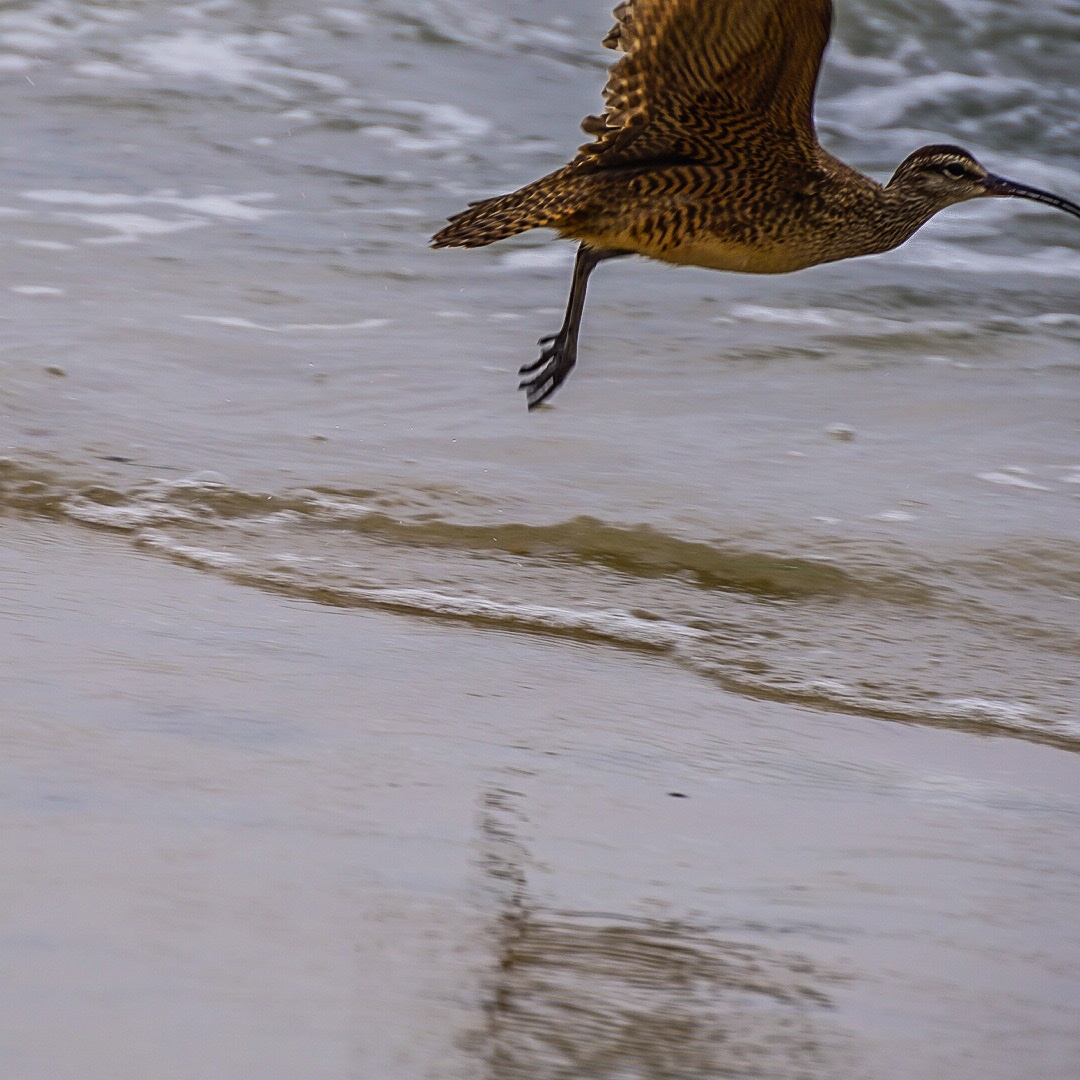
With Poem in your Pocket Day coming up on Thursday, we studied Amy Ludwig VanDerwater’s poem by the same name. In her poem, Amy sees a bird out her window and wonders, “if this bird had pockets, if this bird could write, would it scribble poems about nectar? humming?flight?” The poem comes from her book, If This Bird Had Pockets: A Poem in Your Pocket Day Celebration where she includes poems written from a variety of different animals’ point of view. So after reading a couple more poems from this book, of course we had to write our own pocket poems. While I suggested writing about a favorite animal, and after yesterday’s success with 16-word poems I encouraged students to try another short poem…students went in their own directions. And in a short period of time, pocket poems began to emerge from the pencils of the first graders in my class. Here’s a taste:

E who often writes about wolves and dogs, today wrote her pocket poem about friendship

You and Me

we walk to my

home

a tornado of

friendship

just you and

me

we are

together forever

C took me up on the animal invitation

Hedgehog

a spiky prickly ball

of sweetness uncurling

to its burrow

going to its mother

to eat breakfast

And G explored one of our favorite ocean animals

Dolphins are Amazing

dolphins zip to

me

leap up up

up

and back down

again

caring considerate and

loving

My own poem featured a hummingbird

Hummingbird

If this iridescent

jewel

had pockets they’d

hold

whipped-cream air

spun

from wings blindingly

fast

Maybe we’ll tuck these poems in our pockets tomorrow to share with those who cross our paths. How will you celebrate Poem in Your Pocket Day?

16 Words: NPM23 Day 24

I love short form poetry, especially when working with young children. Today we read 16 Words: William Carlos Williams and “The Red Wheelbarrow” by Lisa Rogers and learned about a poem made up of a mere 16 words. When my first grade students studied the text of the poem, they immediately noticed that there were four stanzas (awareness built of studying a poem each week). They also noticed that each stanza contained four words (how had I missed that detail?). They noticed the lack of capitalization and punctuation (“he broke the rules!”), something we have noticed with other poets and other poems.

Of course, we had to try our own 16-word poetry. And in a mere five minutes, students expressed their ideas following Williams’ text as their mentor. Here’s a few examples from 6 and 7 year old poets:

Horses

outside the stable

inside

a field of grass

waits in the sun

for horses to run

by A

A Bee Poem

buzzing in the

breeze

is a little

bee

sipping nectar from

flowers

to make yummy

honey

by G

Feelings

white blue and

red

sad and mad

happy

calm purple and

green

pink exciting brown

down

by C

And one by a student who is my unexpected poet–if I say the word poem, his entire body lights up…and he can’t wait to hear the poems and write his own!

The Yellow Bee

i sing with trees

i flew with clouds

i feel the breeze

i saw the earth

by R

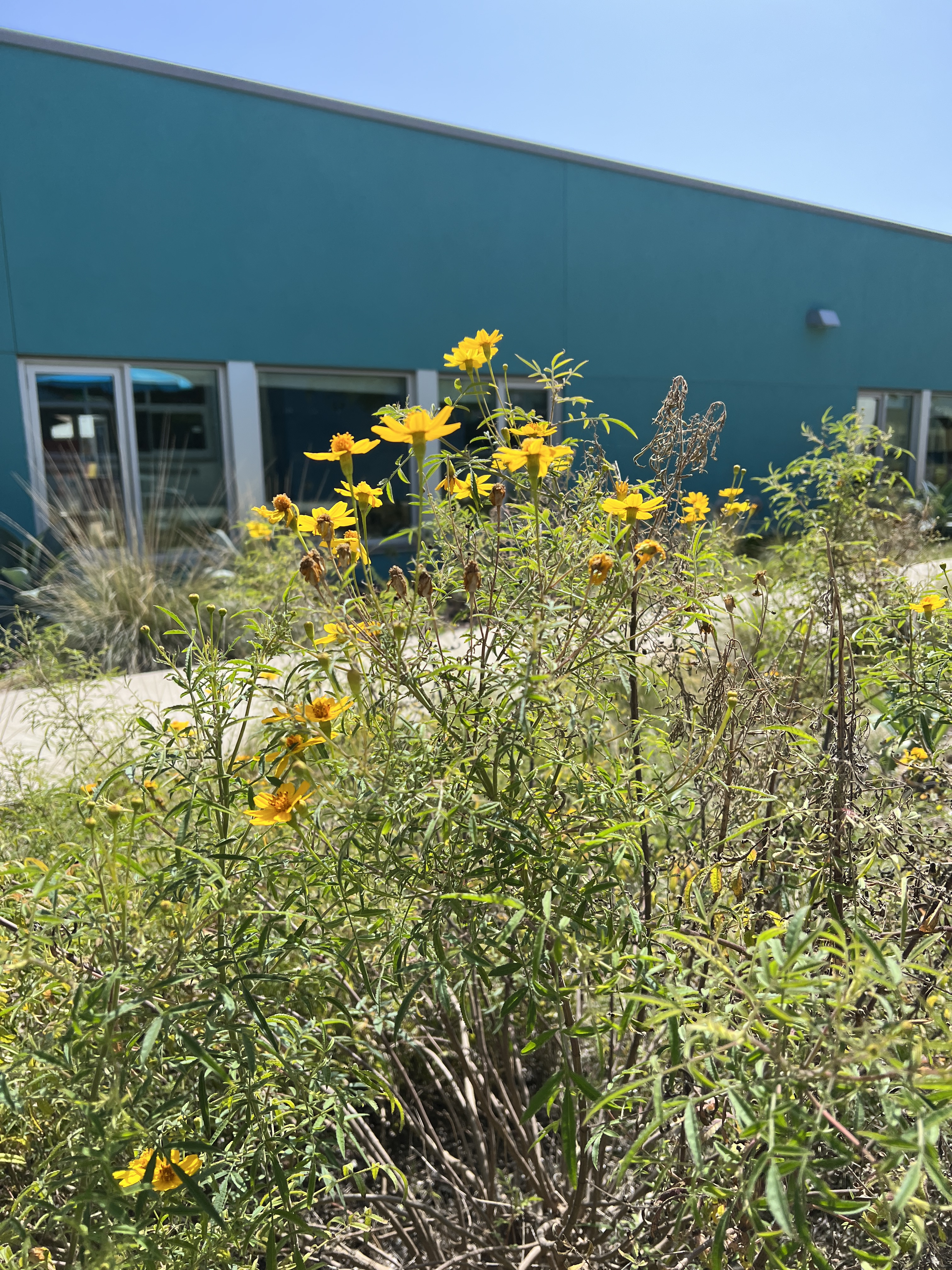
And mine, composed while writing with my class, inspired by looking out the window of my classroom.

Yellow Sunflowers

outside the classroom

door

yellow sunflowers sway

dancing

in the sea

breeze

children writing poems

inside

A Wonder Walk

First graders are naturally filled with wonder. It doesn’t take much to get them to look closely, to pay attention to details that many others miss.

Our school has the most amazing librarian. Last week I asked her about a book–a book I know I own, but cannot find in my classroom. And she not only found me a copy of that book, but she also suggested another that was new to me…and just what I needed today when I found it in my mailbox.

#writeout is a collaboration between the National Writing Project and the National Park Service that urges all of us to get outside and find inspiration in whatever nature is around us. We started #writeout yesterday with time in the school garden. Students learned about weeds, donned child-sized gardening gloves, and dug and pulled and delighted in seeing roots break free of the dry soil.

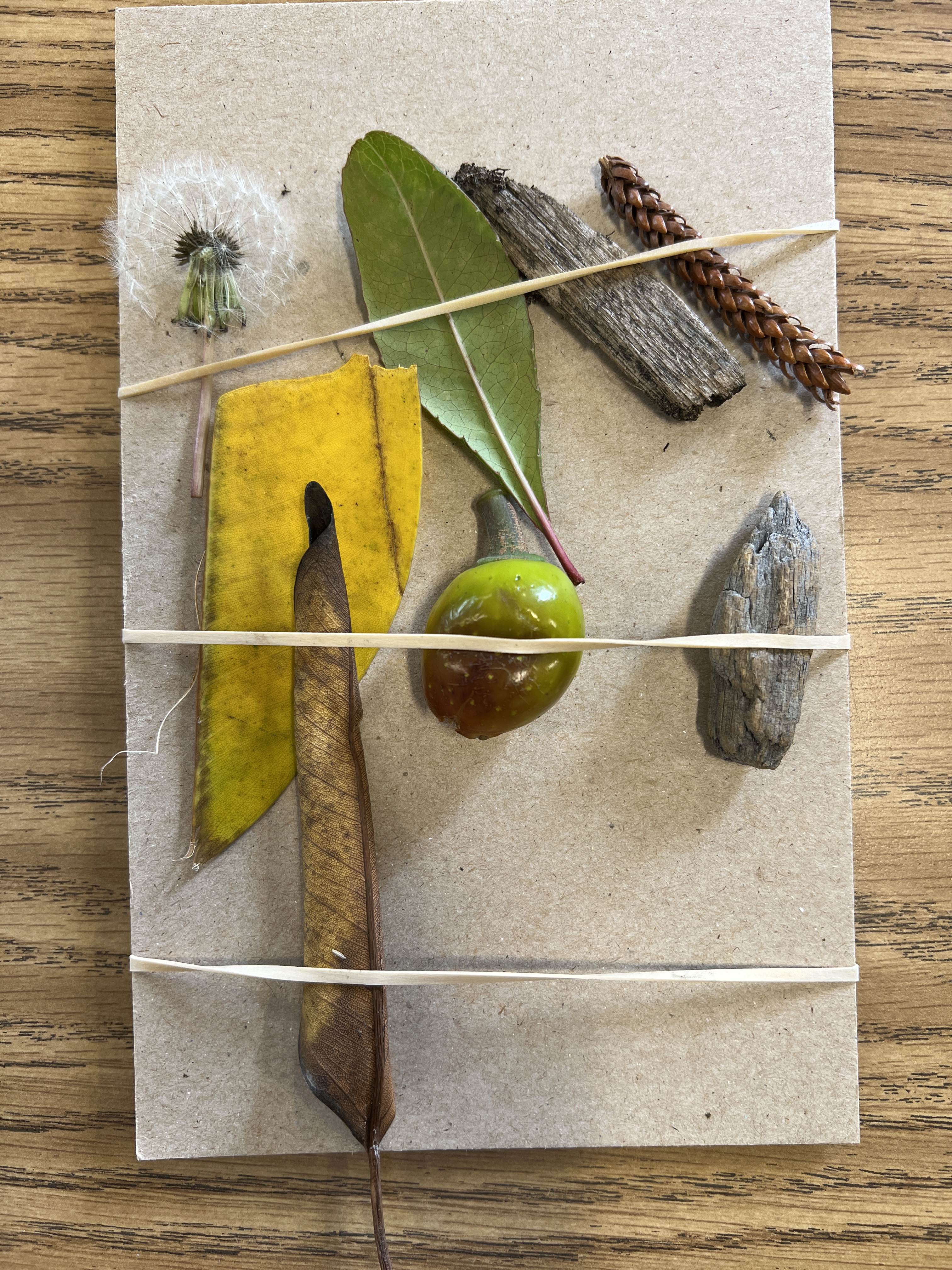
Today we read Wonder Walkers, that book our school librarian left in my mailbox. It was perfect for setting the stage for a wonder walk, time on our school grounds looking for interesting things (think leaves, seed pods, sticks, etc.) from nature that we collected using our collection tool (shout out to Little Pine Learners). Before we headed out we talked about what items we could collect and what we should not (living bugs, picking flowers and plants)–and students were excited to get started.

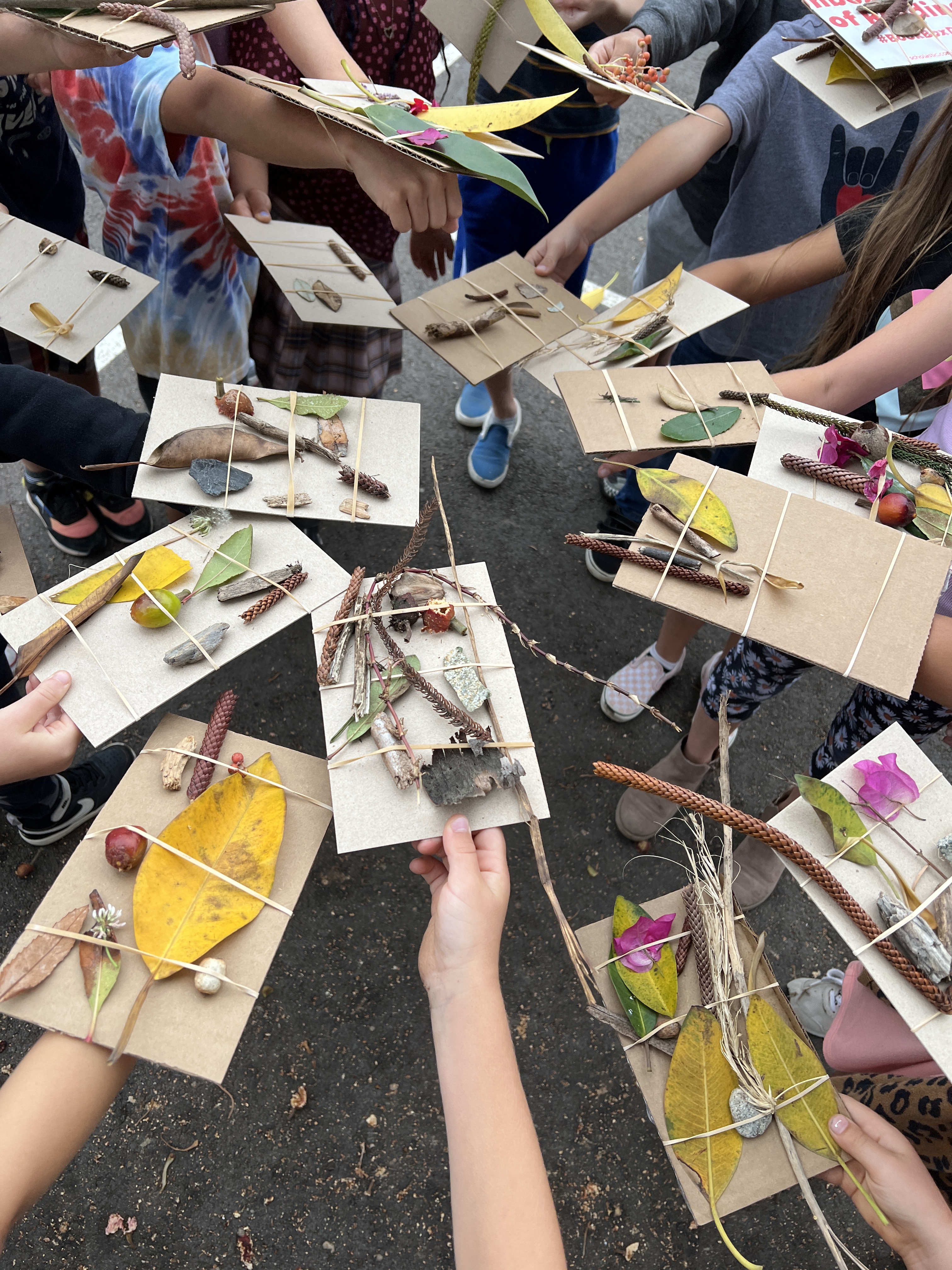
They looked carefully and their collectors began to fill. Some were exuberant and filled their spaces quickly, crowding dried roots and pine droppings with sticks and crunchy leaves. Others were more selective, leaving more spaces between the items collected. A child with sharp eyes found a dandelion puff that didn’t have to be picked, truly a treasure that her classmates envied!

Before we headed back into the classroom, I gathered students close and encouraged them to hold out the collectors so they could see each other’s collections and also so I could take a few pictures.

Once back in the classroom, students used their iPads to take a photo of their collector for future use. Then we settled to read another book. An old favorite, Weeds Find a Way by Cindy Jenson-Elliott, is a wonderful mentor text for students to use as a structure or frame for their writing. I loved the gasp when students realized that this book was non-fiction, yet so accessible with beautiful illustrations. They also remembered their experience with weeds from yesterday and the conversation with the garden teacher about how weeds are not “bad,” they are just not the plants you want in a particular space.

After comments and observations about the book, we tried on using the Weeds find a way… frame with objects from our collectors. “A red leaf finds a way to swish and swoosh through the air,” was one example that got us started.

We ended the day by starting a Zine to showcase our nature items through writing and drawing. We used a single sheet of copy paper to fold a small booklet (with a single cut and no tape or staples) that will soon become tiny treasures worthy of #writeout. More about that in another post!

Quirky: NPM22 Day 11

Quirky is a word I love, but still, when I saw it as the #verselove prompt by Kim over at Ethical ELA I felt at a loss. What poem will I write that fits this category?

It’s our first day back after Spring Break–and my first April day with my students. We primed ourselves for National Poetry Month before Spring Break at the end of March by writing a collaborative Poetry Is poem. And today, I brought out a favorite Eve Merriam poem, Peeling an Orange to serve as a mentor text for students. (You can see my experimentation on day 1 of National Poetry Month.) We’ve studied a poem each week of the school year, laying down an appreciation for and familiarity with poetry and the interesting language it is known for. And we write poetry regularly–I love short writing forms (for all ages) and the permission to break rules that poetry allows.

I lay out all of this to establish my own quirkiness as a teacher of writing. My expectations for the 6 and 7 year olds in my class are sky high–and when it comes to writing, they seldom let me down. I establish early on my love for egrets–they make a great writing topic that my students come to know and expect. While they didn’t know much about them early in the school year, they are quite familiar with them now.

Finally–get to the point already! When I picked my students up after lunch today they rushed me, so excited they simply couldn’t stay in line. Mrs. Douillard–there was a snowy egret! What?! I was looking around the playground. Really? A snowy egret on the playground? No–it was flying over the playground. I missed it–but they loved it and loved knowing that I would love it. So, inspired by my students and their excitement, my quirky poem is a Haiku capturing this moment.

snowy egret flies

yellow footed pistons tucked tight

playground showoff

@kd0602

And here I circle back to the first grade poets I love and teach and their Peeling an Orange inspired poetry.

B wrote about lizards

Catching a Lizard

skittering like

the second hand

in all different

shapes and sizes

not very easy to see

but they are still very

tiny.

R wrote her own quirky piece

Squirrels

A fuzzy bushy fearless fighter rodent

when he bites you you immediately put your hand on your cut

and you will get rabies

chattering in the trees

gathering nuts for the winter

And C chose turtle as a topic

Finding a Turtle

A turtle’s shell is hard.

But inside it is soft.

It’s slow but

its heart is fast.

Some turtles

have strong shells

some are weak.

Things I Know by Heart: NPM22 Day 2

Imagine my surprise this morning when the post by Ethical ELA was hosted by friend and colleague Emily Yamasaki! I was immediately drawn into both the mentor poem, things I have memorized by Maria Giesbrecht and Emily’s poem, Things I Know. I dove deeply into the cool pool of poems that emerged from Emily’s provocation, reading and feeling, admiring and analyzing as I began to think about my own writing for this second day of National Poetry Month.

Things I Know by Heart

The sleek curve of the egret’s neck

in the tidepool at low tide

The smells of love that fill our home

emanating from the kitchen

The silence of his last breath

matching the empty space in our family

My daily commute, etched in the recesses of my mind,

requiring no conscious thought

My childhood phone number

but not my passwords–they continue to elude me

The sweetness of little boys

now into the second generation

Fear of fire, seared into my memory

brought back by ashes that rain down like snowflakes

Fog’s gray blanket

an indicator that spring has arrived

Each of the traffic spots on the 5 between our house and theirs

no matter how long it takes, every trip is worth it

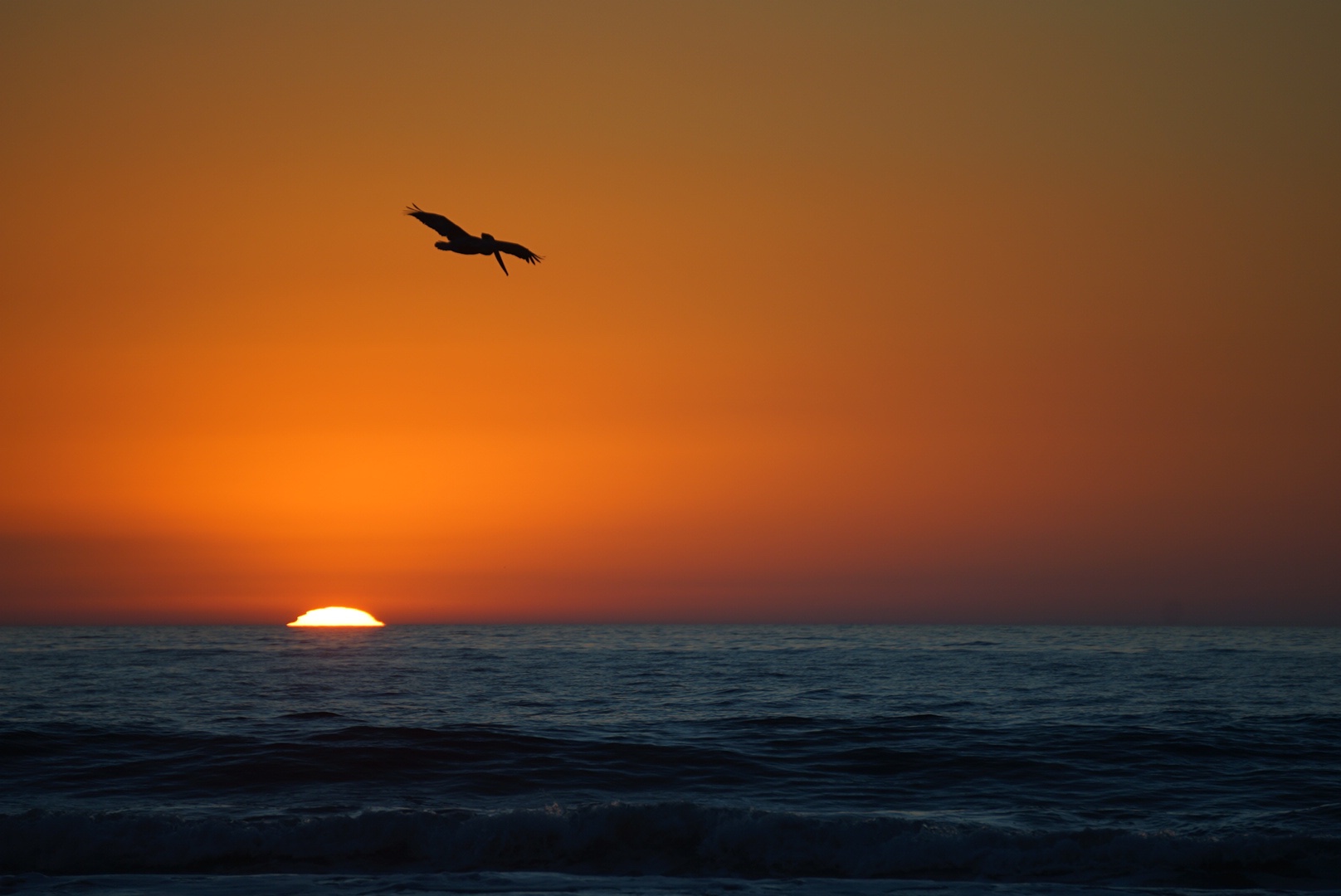
Sunset’s fiery sky painting

celebrating endings and promising new beginnings

@kd0602

Chasing a Snail: NPM22 Day 1

It’s April! And it’s the first day of National Poetry Month. I don’t profess to be a great poet–but I am able to share my love of words and poetry with my students–especially when I do the things I ask them to do.

So even though this is not a teaching day for me and even though Spring Break begins tomorrow and I won’t see my students until April 11th, I will write a poem each day. I know that I will be better able to coach and guide them if I am doing the poetry writing I want them to try.

I plan to use Eve Merriam’s Peeling an Orange with them when we get back to school after Spring Break, so why not experiment with it as a mentor text today? One of the techniques I notice in this poem is her use of the contrasting words carelessly and meticulously. So, since photos tend to inspire my writing, I took a peek through my camera roll and spotted this one of a snail from a neighborhood walk earlier this week. And here is the poem it inspired:

Chasing a Snail

Hurrying

all feet and shadow

risking the horrifying crunch

or moving in slowly

my phone a wall

as the telescoping antennae

stretch and reach

each centimeter forward

marked with a telltale spot

of drying slime

like invisible ink

in a race against

time and dryness

Taking Our Photos Further: SOL22 Day 16

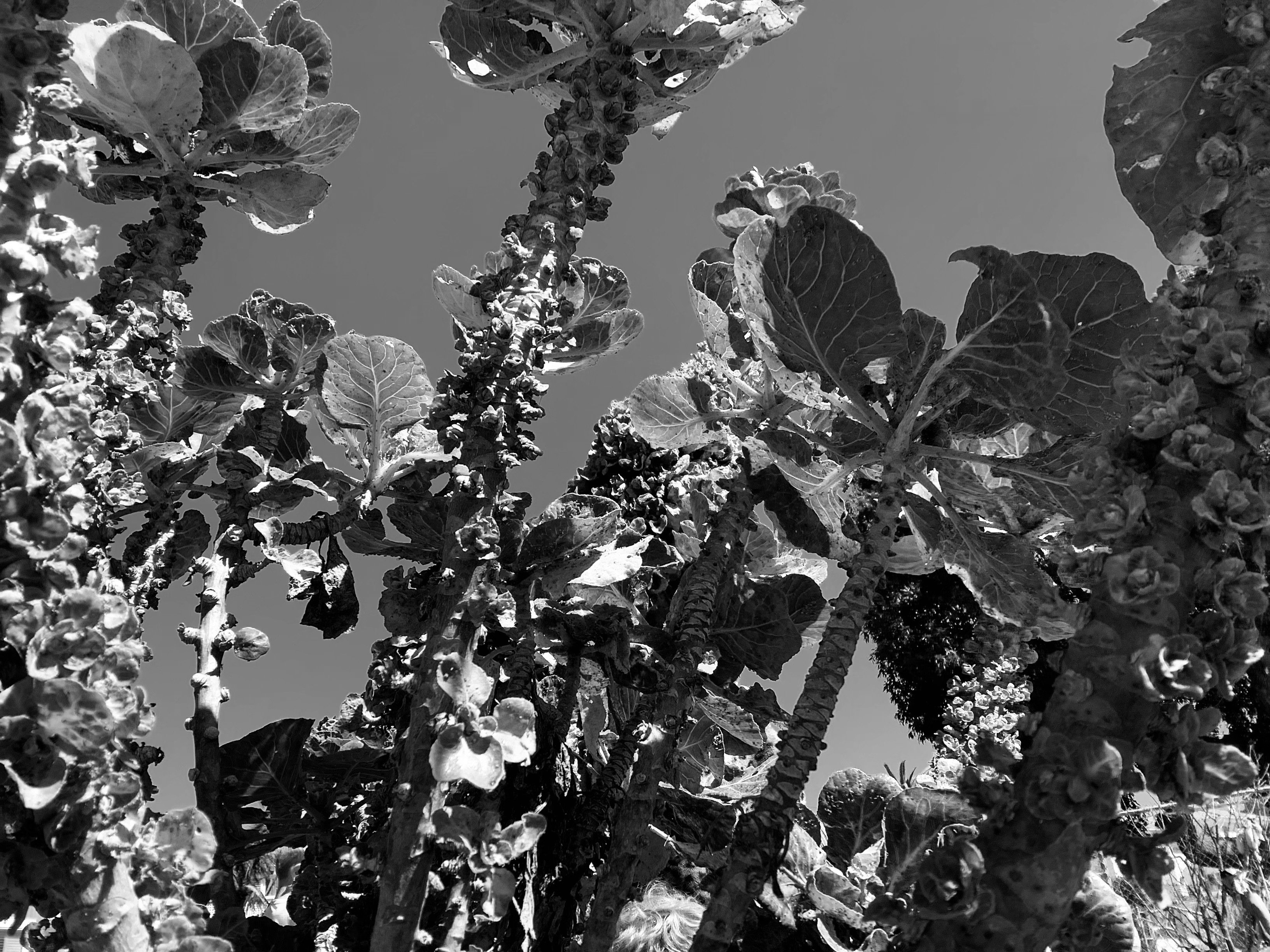
Back on Monday I wrote about my students and their foray into the garden to explore some photography techniques. We’ve been continuing our project, first by carefully examining each photo, noticing the technique used to take the photo, and then selecting their 3 favorites…one from each technique. Those three photos were then edited. I showed them two main function of the native iPad editing tool: how to crop and/or turn a photo and then had them use a filter to change their photo from color to black and white. (After all, we are studying Ansel Adams!)

Today, the choices got more difficult. They had to select their one favorite of the three edited photos to use as their inspiration for writing some captions–in the form of equations. One of my fellow slicers did a lovely photo essay (I wish I did a better job of keeping track of the blogs I read and leave comments for) where she used Amy Krouse Rosenthal’s This Plus That: Life’s Little Equations as her caption format. I knew this would be an excellent format for my young writers–and after reading and discussing what we noticed in Amy’s book, these 6 and 7 year olds set off to write their own–inspired by their black and white photos.

Here’s a few to share with you (along with the photo inspiration)…please keep in mind that these are first draft efforts!

I absolutely love B’s buckets–there is something perfect about the light and dark of them. Here’s one of his captions (he was quite pleased by this effort!):

Bucket + bucket = Buckets

Our warm weather obviously had an impact on A:

Fun + spring + warm = amazing

Only a few students risked subtraction, I love R’s sentiment!:

Trees – deforestation = Life

You’ve got to love the first grade angles! Here’s H’s view:

Love + joy + garden leaves = plants

This unusual view of sweet peas inspired C’s caption:

Plants + pollination = Flowers

In addition to the photography lesson, the actual photos, and the captions, students used technology to edit and also learned to upload photos to Google Drive, share them with me, and absolutely loved getting to choose from three different black and white filters.

And here is my own–I had to join in the fun!

Smooth stumps + tiny black ants = squirmy kids

Maybe you’ll want to head outside and give this a try! Be sure to share if you do!

Teacher-Writer

What does it mean to identify as teacher-writer?

I write with my students, I write for my students, I write to understand my students, I write to understand my teaching and my students’ learning. That’s probably the definition of teacher-writer.

Today I experimented with a writing provocation I found in a Teachers and Writers Magazine article. It attracted my attention because it began with doing–actually with a blind contour drawing. I love to have students do something as a provocation for writing–probably because I like to DO as a way to instigate my own writing.

So, following the directions in the article, I used my non-dominant hand to draw my hand, keeping my eyes on my hand and not on the drawing. I tried not to lift my pen, keeping my pen following all the lines and shapes I saw on my hand.

After drawing I opened my notebook and began a list of words evoked by my examination of my hand. then I came up with some metaphors. I thought back to memories about what my hands had touched or done, capturing some of those thoughts in my notebook. I went on to express my gratitude to my hands.

The next step was to write about my hand, using the ideas generated before–or not–for about 7 minutes (my favorite writing time!).

Finally, using a different colored pen, I added words to my blind contour drawing of my hand, creating a collage of sorts. I didn’t directly copy my writing, just added some of the words and phrases I had generated.

Students could go on to write an essay or ode about their hands, having generated a plethora of ideas.

Having tried this writing on as a writer myself helps me identify how it might or might not work for my students. My young students might do better studying their non-dominant hand and using their dominant hand for drawing. I know they will worry about how the drawing might come out–I’ll have to show them some strategies and perhaps do a practice or two before we start for real. We may brainstorm words about their hands as a group before they begin their individual lists. But, I think I’ll try this project with my students. I love the blind contour aspect, the close examination, and the way that careful attention leads to more interesting writing.

What strategies do you use to keep the writerly part of yourself sharp? How do you hone your skills as a teacher-writer? Does anyone know a great picture book that focuses on one body part that is not about hands?

List Poems: NPM #20

On day 20 of the poem-a-day challenge, we tackled the list poem. Using Eileen Spinelli’s Creativity as our mentor text, we studied how this list poem was constructed. Students noticed the list of ordinary objects, pointed out the rhyme, saw the punctuation and got ready to create their own lists.

Often, I base my poems on a photo I’ve taken. But today, I decided to write my list poem about poetry…and found myself putting bits of language from my students into it (including that rat from yesterday!). Here’s my first attempt:

Poetry

Poetry

swirls together

sights and sounds

popping like popcorn

then paints on details

like the furry mountain

that was once a rat

you can smell

the tropical sunscreen

slathered on tender skin

and climb the Eiffel Tower

to view the sights

of Paris below

Poetry

links animals and machines

growling and leaping

flowers and candy

sweet, tasty, colorful

blooming in my imagination

quenching my thirst

with cool, fizzy, wetness

that takes my to the seashore

where poetry lives

®Douillard

Planting Seeds: SOLC #29

We’ve been writing in 7 minute intervals. Every day. Sometimes several times a day. There’s something about the timer that seems to help my students focus intently on the writing. And when the timer sounds, someone always wants to share.

Of course, that 7 minutes is only the smallest part of what it means to write. That timer-influenced writing usually follows a stimulus of some kind (often a picture book or poem), conversation as a group and in partners, studying a mentor text and the moves that writers make, and sometimes drawing or some other kind of art.

Today we wrote about a place we love. But first, last week we read My Papi Has a Motorcycle by Isabel Quintero. We noticed how she focused on places she loved in her community and on her dad and family. We studied her writing. We marked the action words she used: zigzagged, cruised, revs, and roars. We notice the way she uses senses, including sounds and smells and textures, in her descriptions. We paid attention to her comparison of the experience of riding the motorcycle to a comet in the sky. Then we started to name places we love: Tennessee, Legoland, grandma’s house, the kitchen… We sketched a map of this place. And finally, after a quick demonstration of how I might use the mentor text to get started with my writing, I set the timer.

A hush fell over the room. Pencils raced across the page. And when the timer rang, hands started going up. Unfortunately, there was no time to share today. We’ll have to start there tomorrow. I can’t wait to hear how these much-loved places will be transformed into words on the page.

Writing with students is all about planting seeds. I can’t wait to see what blossoms.